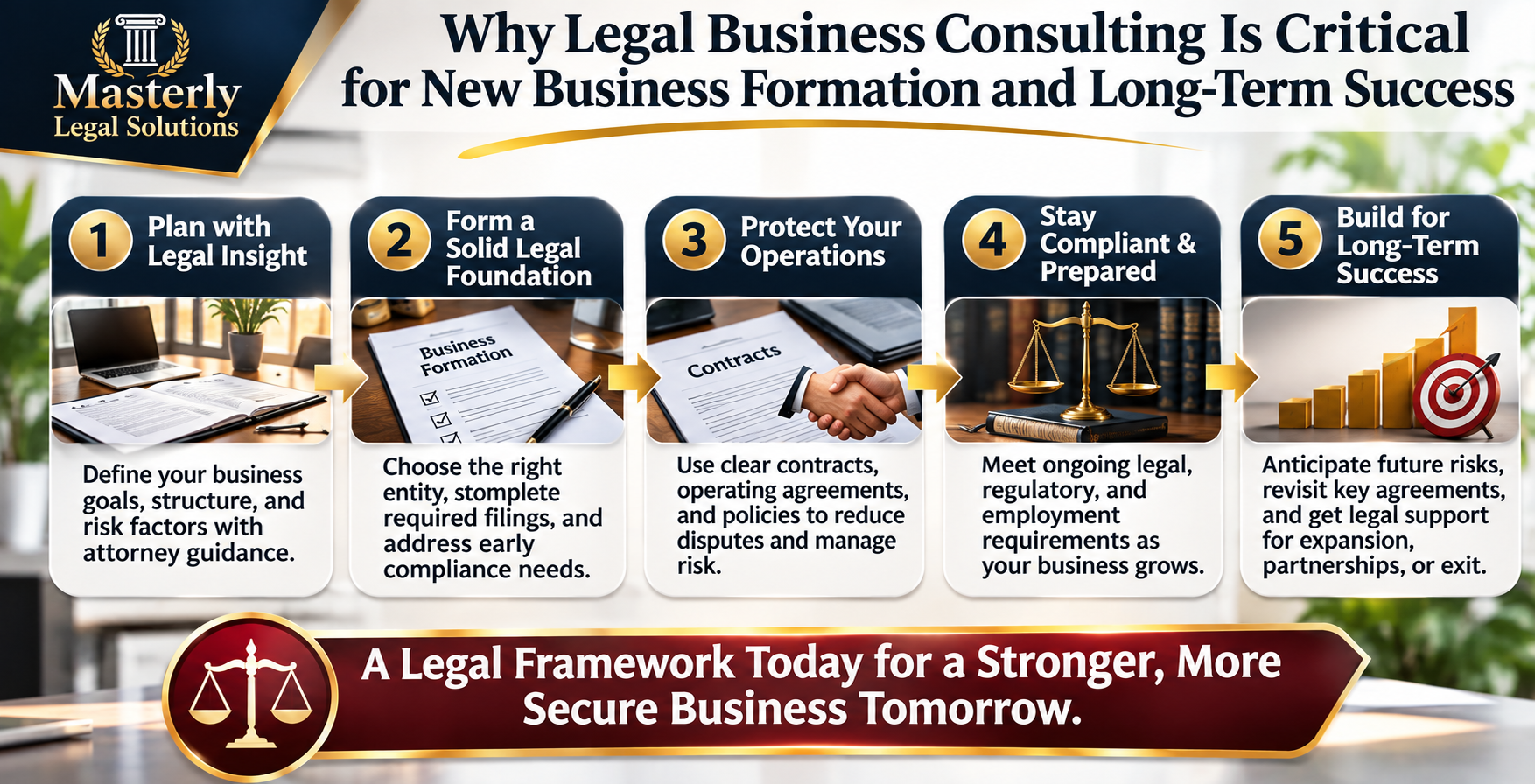
Why Legal Business Consulting is Critical for New Business Formation and Long-Term Success
Starting a business often involves decisions that seem simple until a legal problem appears. A founder may choose the wrong ownership structure, sign an unclear agreement, or enter a partnership without understanding who is responsible when disagreements occur.
These decisions can create financial exposure, interrupt operations, and threaten the future of a growing company.
Business legal consulting helps founders and business leaders understand legal obligations before making commitments that may be difficult or expensive to change.
From company formation to contract negotiations and regulatory compliance, legal issues affect how a business operates and protects its interests.
A business consultant may recommend a growth strategy or operational improvement. However, those recommendations do not replace legal advice about liability, enforceable contracts, ownership rights, or employment obligations.
Masterly Legal Solutions provides attorney-led guidance for businesses facing important legal decisions. Our firm works with organizations of different sizes, helping clients evaluate legal risks, address contractual concerns, and make informed decisions that support their long-term interests.
Legal Exposure During Company Formation
Choosing a business structure is one of the earliest decisions that can affect a company's legal and financial responsibilities.
A founder may focus on registration costs or how quickly the company can begin operating. However, the selected structure can also influence personal liability, ownership rights, governance, and future investment opportunities, which is why professional formation support may also help prepare and file formation documents. Using professional support can reduce filing errors, save time, and support long-term compliance.
Why Business Formation Requires Legal Review
Common business structures include sole proprietorships, partnerships, limited liability companies (LLCs), and corporations.
Each structure carries different legal consequences.
A sole proprietorship generally does not create a separate legal entity between the owner and business. This can expose the owner's personal assets to certain business liabilities.
An LLC or corporation generally provides a separate legal entity and potential liability protection, but those protections have limits and may depend in part on complying with state laws.
For example, personal guarantees, certain wrongful acts, or failures to maintain required legal distinctions may still create personal exposure.
A business formation legal review helps founders evaluate these issues before selecting the right business structure and deciding which is the best structure for their circumstances.
Ownership and Control Can Become Sources of Conflict
Business formation involves more than filing documents with a state agency, such as Articles of Organization for an LLC.
When several founders are involved, disagreements may arise over ownership percentages, decision-making authority, capital contributions, or responsibilities.
An arrangement that appears reasonable when everyone agrees may become difficult when one owner wants to leave or sell an interest.
Legal counsel can help evaluate whether the company's formation documents and governing agreements address these concerns. Multi-owner arrangements may also need attorney review of the operating agreement when ownership terms are complex.
Planning for Future Business Changes
The legal structure selected at formation may affect the company's future plan for investors, transfer ownership, or reorganize.
Changing structures later may involve additional filing requirements, contractual restrictions, or tax consequences.
For founders seeking long-term business growth, early legal review can help identify issues that deserve attention and help them plan for the business future before substantial commitments are made.
Masterly Legal Solutions can provide guidance on the legal considerations associated with business formation, governance, and ownership arrangements, tailored to a company's legal needs as it grows.
Contract and Operating-Agreement Decisions
Contracts establish rights and obligations that can affect a business long after an agreement is signed.
A company may enter contracts with partners, customers, suppliers, investors, or service providers without fully understanding the legal consequences. A systematic approach to contract review supports risk management and helps align agreements with business goals.
Unclear language about payment, performance, termination, or liability can create costly disputes, and standardizing contract language can reduce ambiguity, improve clarity, and help avoid financial loss, legal disputes, and reputational damage.
Effective contract oversight also includes ongoing monitoring of performance against contractual obligations.
Why Operating Agreements Matter
For an LLC with multiple members, an operating agreement may address important questions about ownership and management.
These may include:
- Who has authority to make important business decisions.
- How profits and losses are allocated.
- Whether additional capital contributions may be required.
- What happens when an owner wants to leave.
- How ownership interests may be transferred.
- What procedures apply when members disagree.
Corporate governance documents may address similar issues through bylaws, shareholder agreements, and other instruments.
A properly reviewed agreement can help clarify expectations before a dispute develops and help protect members’ interests through clear governance terms. Some owners also seek attorney consultations when deciding whether the LLC operating terms fit the company’s structure and control issues.
Contract Terms That Deserve Legal Attention
The relationship between contracts and business risk is especially important when agreements involve significant financial obligations.
Contract review may involve evaluating language and key clauses before obligations are accepted; the process starts with identifying what could create exposure, followed by a focused risk assessment:
- Payment terms, pricing structures, consequences of late payment, and whether unclear charges could lead to unexpected costs.
- Scope of services and performance obligations.
- Contract duration, renewal, and termination rights.
- Indemnification and limitations of liability.
- Confidentiality and data protection obligations.
- Intellectual property ownership.
- Dispute resolution and governing-law provisions.
Regular contract audits can uncover outdated terms, missed obligations, and other costly oversights.
These terms can determine how responsibilities are allocated when something goes wrong. Compliance risks arise when agreements fail to account for applicable regulatory requirements.
For example, a service agreement may require a company to cover certain third-party claims or limit the remedies available when the other party fails to perform.
A contract can appear commercially attractive while creating legal exposure that the business did not anticipate, including potential risks such as compliance issues, reputational damage, or operational restrictions.
Attorney-Led Contract Review and Negotiations
An experienced business law attorney can use their legal expertise and legal experience to assess the legal meaning of contract provisions and advise clients about their potential consequences.
Depending on the engagement, counsel may help revise agreements, evaluate proposed terms, and represent the business during contract negotiations. This type of support often falls within broader practice areas rather than isolated document review.
This differs from general consulting, which may focus on pricing, efficiency, or business performance without addressing enforceability and legal liability.
Business legal consulting provides attorney-led legal guidance that connects contract decisions with the company's rights, obligations, and broader business goals.
Employment, Vendor and IP Risks
As businesses expand, legal responsibilities often become more complex.
Hiring employees, engaging independent contractors, purchasing technology, and working with outside vendors can introduce new risks.
A growing company may have strong operational systems but incomplete legal documentation.
Employment and Contractor Classification
Businesses must consider applicable employment laws when hiring, managing, and separating from workers.
Issues may involve wage requirements, workplace discrimination, leave obligations, confidentiality, and worker classification.
For example, calling a worker an independent contractor does not automatically establish that classification under applicable law.
The actual working relationship and governing legal standards matter.
Misclassification may create wage, tax, or other regulatory concerns.
An attorney can evaluate employment agreements, workplace policies, and potentially sensitive personnel decisions before they develop into disputes.
Vendor Agreements and Operational Liability
Businesses increasingly depend on outside providers for technology, logistics, marketing, financial processing, and other services.
Vendor contracts may raise questions about responsibility for service failures, confidential information, security incidents, financial losses, and missed deadlines tied to performance, notices, or service levels.
Legal review can help determine whether agreements clearly address these risks. Unclear obligations can also cause operational disruptions.
A company should also understand the legal implications of allowing vendors to access customer information or important business systems.
Intellectual Property and Ownership Rights
Intellectual property can be one of a company's most valuable assets.
Brand names, software, original content, designs, and other creations may be subject to trademark, copyright, patent, trade secret, or contractual protections.
However, paying a contractor to create something does not always mean the business automatically owns every associated intellectual property right.
Ownership depends on the nature of the work and applicable law and agreements.
Attorney-led review can help businesses evaluate ownership provisions, licensing terms, confidentiality obligations, and potential disputes.
Regulatory Compliance Across Business Operations
Legal obligations vary by industry, location, and business activity.
A company may need to address licensing requirements, consumer protection, data privacy, employment rules, and other regulations, and regulatory compliance may require adherence to federal, state, and local regulations.
These obligations can change as operations expand into new markets. Changing regulatory requirements can create new compliance gaps if agreements and practices are not updated.
Legal counsel can help assess applicable requirements and identify potential compliance gaps before a problem becomes a formal dispute or enforcement matter.
Engaging Outside or Fractional Counsel
Not every company needs a full-time in-house legal department.
However, businesses still face important legal decisions involving contracts, employment, ownership, and regulatory obligations.
Outside counsel for businesses provides access to independent legal guidance without requiring a company to employ an attorney internally.
When Outside Legal Counsel Makes Sense
Business owners may consider engaging counsel when:
- Forming a company or changing its ownership structure.
- Negotiating an important commercial agreement.
- Bringing in a new investor or business partner.
- Hiring employees or changing workplace policies.
- Addressing intellectual property concerns.
- Responding to contractual disputes or regulatory notices.
- Preparing for an acquisition, restructuring, or major transaction.
Legal representation may be arranged for a single matter or through a broader ongoing engagement.
The appropriate arrangement depends on the company's needs, the legal services required, and whether flexible support is a better fit than traditional law firms.
What Fractional Legal Support May Involve
Fractional counsel generally refers to an ongoing, part-time arrangement in which an external attorney supports selected legal functions and related services.
Depending on the engagement, these responsibilities may involve contract review, legal risk assessments, governance advice, document management, and recurring questions from leadership. Outside counsel may also coordinate with business applications used by leadership or operations teams when contract information needs to stay current.
This arrangement is different from ordinary management consulting because the work involves legal analysis and professional legal responsibilities.
Businesses should clarify the scope of representation, communication procedures, fees, and the matters assigned to counsel.
How Masterly Legal Solutions Supports Business Clients
Masterly Legal Solutions provides legal services to businesses, startups, organizations, and corporate leaders, and when relevant, a law firm or internal team facing legal and operational challenges.
Our firm's Legal Services include support for organizations of different sizes and industries.
Depending on the matter and agreed scope, our attorneys can help clients evaluate business formation decisions, review contractual obligations, assess potential legal disputes, and address regulatory concerns. For formation matters, many providers also offer registered agent services and EIN assistance alongside filing support. Standard formation-service pricing often falls in the $150-$300 range before state fees or added support.
For companies seeking business law attorney consulting, our approach focuses on the legal issues behind important business decisions.
We recognize that legal risks can affect cash flow, business relationships, professional reputation, and future opportunities.
Our goal is to provide clear legal guidance that helps clients understand their obligations, available options, and competitive pricing in light of service scope and provider reliability.
No legal service can eliminate every business risk or guarantee financial success. However, qualified counsel can help identify legal concerns and support informed decision-making. Legal consulting may also support data analytics when contract or operational information needs to be assessed.
Why Professional Legal Protection Matters Beyond Online Legal Tools
Business owners often turn to online platforms such as Rocket Lawyer or emerging legal AI tools for basic documents, legal information, and convenient attorney access. While these resources may offer useful starting points, they do not always replace personalized legal help from a qualified business attorney. A complete guide or automated contract template may explain common legal issues, but it cannot fully evaluate a company's unique liabilities, contractual obligations, or regulatory requirements.
Businesses operating across different markets may also face currency fluctuations, contractual disputes, and compliance concerns that can lead to financial losses or reputational harm. Professional attorney services provide tailored legal protection by examining the facts, identifying potential risks, and advising on appropriate legal options. Masterly Legal Solutions offers attorney-led guidance to businesses seeking reliable legal support for contracts, regulatory matters, and important business decisions. Working with qualified counsel allows companies to address legal concerns with advice suited to their specific circumstances rather than relying only on general online resources.
Frequently Asked Questions About Business Legal Consulting
When should a business hire a lawyer?
A business should consider hiring a lawyer when forming a company, signing significant contracts, changing ownership, hiring employees, facing regulatory concerns, or responding to legal disputes. Early business legal consulting can help identify potential liabilities before major commitments are made and help a company stay in good standing as compliance obligations continue after formation.
What can consulting alone not resolve?
General business consulting cannot replace qualified legal representation. Issues involving enforceable contracts, legal liability, statutory obligations, litigation, and formal legal advice require an appropriately licensed attorney.
How does outside counsel work?
Outside counsel provides legal services under an agreed engagement. A business may hire an attorney for a specific transaction or arrange ongoing support for contracts, governance, compliance, contract risk management, and other recurring legal matters.
Request a Business Legal-Strategy Consultation
If your company is facing important formation decisions, contract concerns, ownership questions, or regulatory risks, business legal consulting can provide qualified guidance before those issues become more difficult to address.
Masterly Legal Solutions works with businesses and organizations seeking attorney-led advice on legal obligations, commercial agreements, and corporate decision-making.
Our legal team can review your circumstances, evaluate relevant documents, and discuss legal options appropriate to your business.
Whether you are establishing a new company, negotiating a major contract, or considering ongoing outside counsel, an individual consultation can help clarify the legal issues involved.
Call Masterly Legal Solutions at (972) 236-5051 or contact our office to request a business legal-strategy consultation.
Build your business decisions on a clearer understanding of your legal rights, responsibilities, and available options, without relying on promises of particular business or legal results.





Looking for Legal & Business Solutions? Contact Us Now
Fill in the form or call us to set up a meeting