

Early CPS Communication in West Palm Beach and the Risks Families Overlook
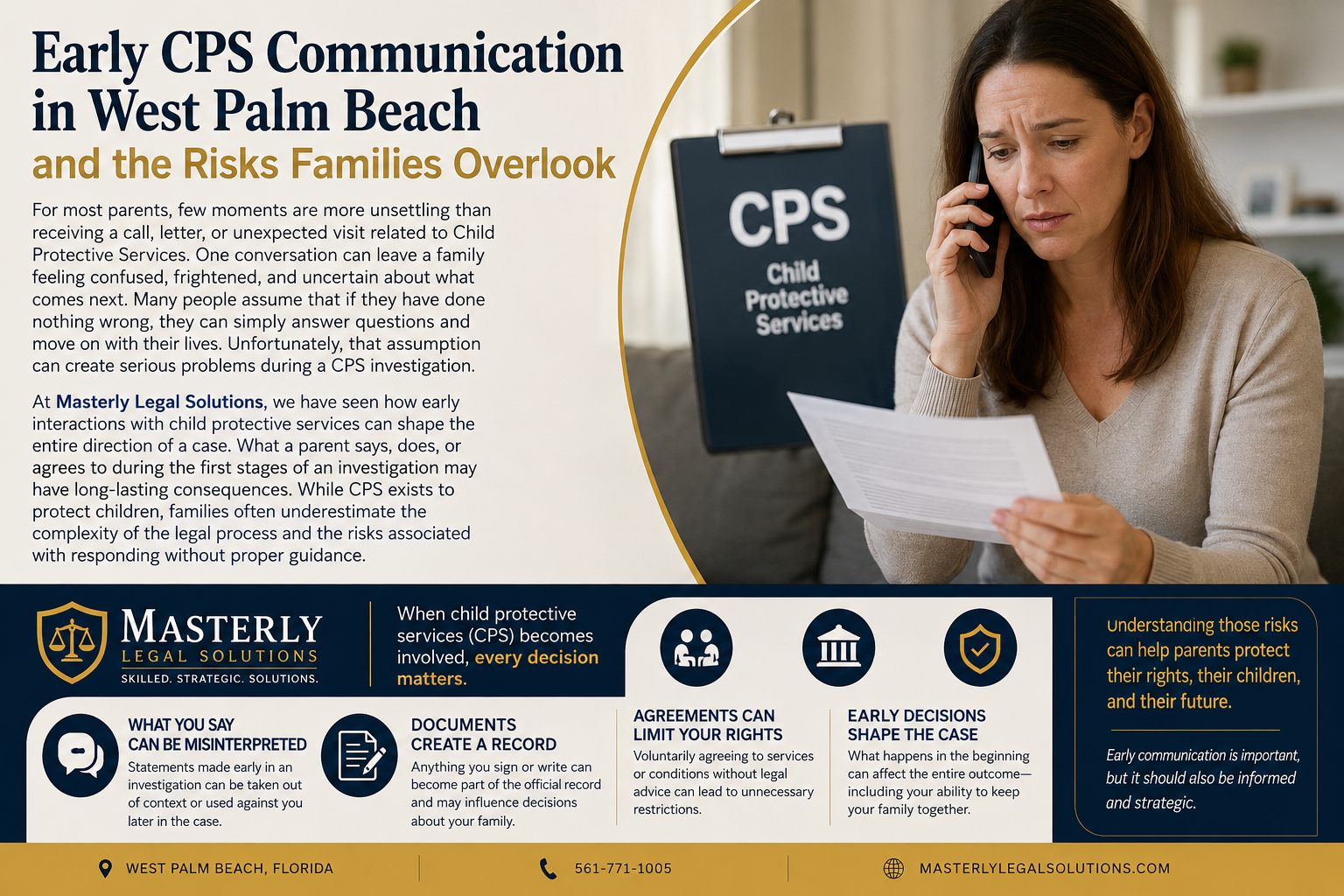
For most parents, few moments are more unsettling than receiving a call, letter, or unexpected visit related to Child Protective Services. One conversation can leave a family feeling confused, frightened, and uncertain about what comes next. Many people assume that if they have done nothing wrong, they can simply answer questions and move on with their lives. Unfortunately, that assumption can create serious problems during a CPS investigation.
At Masterly Legal Solutions, we have seen how early interactions with child protective services can shape the entire direction of a case. What a parent says, does, or agrees to during the first stages of an investigation may have long-lasting consequences. While CPS exists to protect children, families often underestimate the complexity of the legal process and the risks associated with responding without proper guidance.
When child protective services CPS becomes involved, every decision matters. Understanding those risks can help parents protect their rights, their children, and their future. Early communication is important, but it should also be informed and strategic.
Why Early CPS Communication Matters More Than Most Families Realize
The first contact from CPS often occurs when emotions are running high. A parent may feel pressured to answer every question immediately or provide information without fully understanding why the agency is involved.
Many families believe cooperating means agreeing to every request. While cooperation can be important, families should understand that statements made early in a CPS investigation can become part of the official record. Those statements may later influence decisions regarding custody, visitation, protective custody, or court proceedings.
An experienced attorney can help families understand what information should be provided, how to communicate effectively, and how to avoid unintentionally creating challenges later in the investigation process.
Understanding the Role of Child Protective Services
Child protective services investigates reports involving child abuse, neglect, and concerns about child safety. The agency's mission is to protect children who may be at risk of harm.
When CPS receives a report, the agency evaluates the allegations and determines whether further action is necessary. Depending on the circumstances, the agency may conduct interviews, review records, perform home visits, and gather evidence.
Not every report results in findings against parents. However, every report should be taken seriously because even unfounded allegations can affect a family if handled improperly.
What Triggers a CPS Investigation
A CPS investigation may begin after a report from many different sources. Teachers, doctors, neighbors, social workers, family members, and other individuals may report concerns involving a child.
Common reasons for a report include:
- Suspected child abuse
- Child abuse or neglect concerns
- Medical concerns involving a child
- School attendance issues
- Unsafe living conditions
- Alleged abuse within the home
- Reports involving neglect
- Concerns regarding child safety
Once CPS receives information suggesting possible abuse or neglect, the agency may begin an investigation to determine whether intervention is necessary.
The Emotional Impact of a CPS Investigation
Many parents describe a CPS investigation as one of the most stressful experiences they have ever faced. Even families who know the allegations are false often feel overwhelmed.
The uncertainty can affect every aspect of family life. Parents worry about their child, their reputation, and the possibility of losing custody. Children may become confused or anxious about why strangers are asking questions.
The investigation process can quickly become a difficult time for everyone involved. Having legal guidance early can help reduce confusion and provide clarity during an emotionally challenging situation.
Common Mistakes Families Make During Initial Communication
Speaking Before Understanding the Allegations
Many parents immediately begin explaining themselves before learning the nature of the report. Unfortunately, incomplete information often leads to statements that may later be misunderstood.
Before responding in detail, families should understand what allegations are being investigated and what concerns have been raised.
A CPS attorney can help parents evaluate the situation before important decisions are made, and educators facing related school investigations may also benefit from legal support for educators and TEA license defense.
Allowing Fear to Dictate Responses
Fear often causes parents to react emotionally. They may become defensive, angry, or overly cooperative in ways that unintentionally harm their position.
Investigators document interactions carefully. Maintaining professionalism and understanding the process can help families avoid mistakes.
Providing Inconsistent Information
When parents are stressed, they may unintentionally provide conflicting statements. Small inconsistencies can create additional scrutiny during an investigation.
Having an experienced lawyer involved early can help ensure communication remains clear and accurate.
How CPS Investigates Child Abuse Allegations
When child abuse allegations are reported, CPS may conduct interviews with parents, children, teachers, medical providers, and other individuals connected to the family.
The agency may review records from schools, healthcare providers, and social services organizations. Investigators often seek relevant information to determine whether abuse occurred.
A CPS caseworker may also observe the home environment and assess whether there are concerns regarding safety or well being.
Throughout this process, families should understand that the investigation is gathering information, not necessarily proving guilt or innocence.
Home Visits and What Families Should Know
Home visits are a common component of many CPS cases. During these visits, investigators may observe living conditions, interact with children, and ask questions regarding daily routines.
While home visits can feel invasive, families should understand that investigators are often evaluating specific concerns raised in the report.
Parents should remain respectful while understanding their rights. Decisions regarding access, interviews, and documentation should be made carefully and, whenever possible, with legal guidance.
The Role of a CPS Caseworker
A CPS caseworker serves as the primary point of contact during many investigations. The caseworker gathers information and prepares reports regarding the allegations.
The conclusions reached by a CPS caseworker can significantly affect the outcome of a case. Their observations may influence whether further action is recommended.
Because of this, communication with the caseworker should always be approached thoughtfully and professionally.
How Statements Can Affect CPS Findings
Many families underestimate how much weight may be given to statements made during interviews.
A parent may attempt to explain an event and unintentionally make comments that are later interpreted as admissions. Statements taken out of context can contribute to CPS findings that are difficult to challenge later.
This is one reason why consulting with a CPS lawyer early in the process is often beneficial.
Understanding Abuse and Neglect Allegations
Allegations involving abuse and neglect cover a broad range of situations. Some reports involve physical harm, while others concern supervision, living conditions, educational issues, or emotional well-being.
Not every allegation has merit. However, CPS must investigate reports involving potential child abuse and neglect.
Because the definition of neglect can be broader than many parents realize, legal guidance is often essential.
When Child Protective Services Determines Further Action Is Needed
Sometimes child protective services determines that additional intervention may be necessary. This can include ongoing monitoring, referrals for services, or court involvement.
When child protective services determines that risks remain unresolved, the agency may seek additional authority through legal proceedings.
At this stage, the involvement of a knowledgeable attorney becomes especially important.
The Risk of Criminal Charges
In certain cases, allegations may lead to criminal charges in addition to CPS involvement.
Child abuse charges can arise when investigators believe sufficient evidence exists to support criminal prosecution. Families facing both criminal and CPS proceedings often encounter overlapping legal issues.
An experienced attorney can help coordinate responses across multiple legal matters and protect important rights throughout the process.
Protective Custody and Emergency Removal Concerns
One of the greatest fears for many parents is the possibility that a child could be removed from the home.
In some circumstances, CPS may seek protective custody if investigators believe immediate action is necessary to protect children from imminent harm.
These situations often involve urgent court proceedings and require prompt legal intervention.
Understanding Court Orders in CPS Cases
Certain actions by CPS require judicial approval. A court order may be necessary before specific measures can be taken.
Families should understand that court involvement changes the nature of the case significantly. Legal deadlines, evidence requirements, and procedural rules become increasingly important.
Having a lawyer involved early helps families prepare for potential court proceedings.
How CPS Determines Whether Abuse Occurred
Many parents wonder how CPS determines whether allegations are substantiated.
Investigators typically review witness statements, medical records, photographs, school records, and other relevant information. The agency evaluates evidence and attempts to determine whether abuse or neglect occurred.
Because these decisions can affect parental rights and future opportunities, careful legal representation is essential.
Protecting Parental Rights During an Investigation
Parents maintain important parental rights even when an investigation is underway.
Those rights may include participation in proceedings, access to information, and opportunities to challenge certain findings. However, exercising those rights effectively often requires legal knowledge.
A CPS attorney can help parents understand available protections and advocate on their behalf.
The Importance of Evidence
Evidence plays a critical role in child protection cases.
Documents, photographs, medical records, text messages, and witness statements may all become important. Families should preserve information that may support their position.
Waiting too long to gather evidence can make defending against allegations more difficult.
Child Safety and Family Stability
Every CPS case ultimately centers on child safety.
While protecting children is the agency's mission, maintaining family stability is also important whenever possible. Many cases involve misunderstandings, incomplete information, or circumstances that can be addressed without separation.
An experienced lawyer can help families demonstrate their commitment to safety while protecting their legal interests.
The Connection Between Schools and CPS Reports
Schools frequently play a role in child protective services investigations.
Teachers, counselors, and administrators may be required to report concerns involving potential abuse. A school may provide records or participate in interviews during an investigation.
Understanding how school information influences CPS cases can help families respond more effectively.
Medical Reports and CPS Investigations
Medical professionals are often involved when allegations involve physical injuries or concerns about a child.
Medical records can be highly influential during investigations. However, those records do not always tell the complete story.
Families should ensure that all relevant medical information is reviewed before conclusions are reached.
Foster Care and Placement Concerns
When children are removed from a home, temporary placement options may be considered.
In some situations, children enter foster care while the case proceeds. In others, placement with family members may be explored.
The outcome often depends on the facts of the case and the available support network, as well as long-term planning tools such as estate planning and trust creation services.
Social Services and Family Support Programs
Many CPS cases involve referrals to social services programs.
These services may include counseling, parenting education, substance abuse treatment, or other forms of support. Participation can sometimes help address agency concerns, especially when paired with proactive steps like arranging essential legal documents for families.
However, families should understand the purpose of referrals and how participation may affect their case.
Administrative Hearings and Appeals
Certain CPS findings may be challenged through administrative hearings.
Families who disagree with agency conclusions may have options for review through an appeal process. Deadlines often apply, making timely action important.
An experienced lawyer can help evaluate available remedies and determine the best strategy.
Why Early Legal Representation Matters
The earliest stages of a CPS investigation are often the most important.
Decisions made during initial communication can influence the direction of the entire case. Early legal representation allows families to respond strategically rather than react emotionally.
The sooner an attorney becomes involved, the greater the opportunity to protect important rights.
How a CPS Lawyer Helps Families Navigate the Process
A CPS lawyer provides guidance throughout every stage of the investigation.
Legal counsel can:
- Review allegations
- Explain CPS requirements
- Prepare parents for interviews
- Communicate with investigators
- Protect parental rights
- Respond to court proceedings
- Challenge inaccurate findings
This support often provides families with greater confidence during a stressful situation.
The Importance of Protecting Children While Protecting Families
The goal of child protective services is to protect children. Most parents share that same goal.
The challenge arises when allegations are inaccurate, exaggerated, or based on incomplete information. Families deserve a fair process that considers all relevant facts.
Effective legal advocacy helps ensure that both child safety and family rights remain priorities.
Why Families in West Palm Beach Should Take Early CPS Contact Seriously
Families in Palm Beach and throughout surrounding communities often underestimate how quickly an investigation can develop.
A simple phone call can evolve into interviews, home visits, requests for records, and court proceedings. What begins as an inquiry may become a significant legal matter.
Taking early communication seriously helps families avoid mistakes that could affect the outcome of the case.
Understanding How CPS Workers Handle Reports and Allegations
When CPS workers begin reviewing a report, families are often unsure about what to expect or how to respond. In many situations, the investigation starts after accusations are made by a third party, and those claims may or may not be supported by evidence. The Texas Department and other agencies responsible for child welfare have procedures that investigators must follow when examining concerns involving a child. Families should remember that an allegation alone does not determine the outcome of a case.
Because CPS investigations can affect parental rights, custody arrangements, and other family law matters, it is important to take every communication seriously. Parents may have the right to submit a written request for certain records or information related to their case, depending on the circumstances. An experienced attorney can assist families in understanding their options, responding appropriately to investigators, and protecting their interests throughout the process, just as higher education institutions rely on counsel for college and university compliance and Title IX issues. Early legal guidance can often make a significant difference when responding to allegations involving child abuse, neglect, or other concerns raised during a CPS investigation.
How Masterly Legal Solutions Helps Families Facing CPS Investigations
At Masterly Legal Solutions, we understand how frightening it can be when CPS becomes involved in your family's life.
Our law firm works with parents who are facing allegations of abuse, neglect, child abuse allegations, and other concerns involving child protective services. We understand the legal process and the challenges families face during investigations.
Our team provides personalized legal services designed to protect parental rights, safeguard families, and pursue the best interests of children while helping clients navigate complex legal matters through a broader range of legal and business services.
Speak With a CPS Attorney Today
When child protective services contacts your family, every decision matters. Waiting too long to seek guidance can make an already stressful situation even more difficult.
At Masterly Legal Solutions, we help parents understand their rights, respond to investigations strategically, and protect what matters most. Whether you are dealing with a CPS investigation, child abuse allegations, neglect claims, custody concerns, or other legal issues, our team is ready to provide assistance through our diverse legal services at Masterly Legal Solutions, PLLC.
If CPS has contacted you, do not assume the matter will resolve itself. Contact our office today to schedule a free consultation. We can answer your questions, explain your options, and help you make informed decisions during this challenging time, and we also assist businesses and organizations through our broader legal and consulting services.
Call (972) 236-5051 today for your free consultation.
Disclaimer: This article is intended for informational and educational purposes only. It does not constitute legal advice and should not be relied upon as legal guidance. Every CPS case is different, and outcomes depend on the specific facts involved. Reading this article does not create an attorney-client relationship. If you need legal advice regarding child protective services, abuse allegations, neglect claims, custody disputes, or related matters, contact a qualified attorney, such as those offering comprehensive legal and business services, to discuss your individual situation.
Teacher Rights When Assaulted by a Special Needs Student: Safety, Reporting and Investigation Issues

Looking for Legal & Business Solutions? Contact Us Now
Fill in the form or call us to set up a meeting





