Ensuring Safety in the Stands: Navigating the Legal and Safety Complexities of Post-Game Court Storming

March 6, 2024

The thrill of college basketball victories often sparks fans to storm the court, a tradition fraught with risks of injury to players, officials, and fans alike, prompting many institutions to seek counsel from sports law firms to develop preventative measures. This emphasizes the critical need for enhanced safety protocols at collegiate athletic events, often underscored by legal advisors to protect the institution's license to host such events and adhere to the governing bodies' regulations. Masterly Legal Solutions (MLS) is at the forefront of addressing these concerns, combining a passion for sports with legal expertise to help institutions navigate the complexities surrounding sports events, including contract negotiations and NCAA compliance. Their comprehensive approach, often developed in collaboration with a sports law firm, ensures that the excitement of victory does not compromise the safety and legal responsibilities of collegiate sports.


II. The Safety Concerns of Court Storming


The phenomenon of court storming, while rooted in collegiate tradition and high spirits, has increasingly become a focal point for safety concerns within the professional sports community. To address this, employment of enhanced security measures and legal safeguards are recommended. This practice has led to numerous instances where the jubilation of a game's conclusion swiftly transitions into perilous chaos, endangering players, officials, and fans alike.


Universities often call our office seeking data on these incidents to come up with strategies for their arenas. The unpredictability and fervor of such moments strain existing security protocols and necessitate a reevaluation of safety strategies by universities. It's imperative that institutions not only develop but rigorously implement comprehensive safety plans, under the guidance of a sports law firm, to mitigate the risks associated with these post-game celebrations in professional sports. Ensuring the well-being of every individual involved requires a proactive approach to crowd management and emergency preparedness, highlighting the responsibility of academic institutions to prioritize safety in the midst of celebration.


III. Legal Implications for Universities


Universities face significant legal responsibilities, requiring advice from sports lawyers, to ensure the safety of players, officials, and fans during sports events, especially in the wake of court storming following major wins. This duty extends beyond mere precautionary measures, encompassing a broad spectrum of legal obligations under premises liability and duty of care principles, crucial in representing professional athletes and sports organizations. Failure to adequately address these responsibilities can expose institutions to severe legal consequences, including negligence lawsuits, which can tarnish their reputation and affect future event attendance negatively. It's imperative that universities engage with specialized legal counsel, such as Masterly Legal Solutions, to thoroughly assess and mitigate risks associated with sports events, taking into account the firm’s expertise in the sports industry. By leveraging MLS's extensive experience in sports law, including areas like NCAA compliance, internal investigations, and custom trainings for staff, universities can develop and implement comprehensive safety protocols that not only protect all event participants but also safeguard the institution against potential legal challenges.


IV. The Role of College Conferences

College conferences are instrumental in setting safety standards across collegiate sports, often in consultation with sports attorneys to ensure compliance with legal requirements and protect the athlete's career. They have the authority to enforce policies that ensure uniform safety measures and legal compliance, including crowd management and emergency response protocols, underpinning the need for corporate governance in sports associations. Standardized policies across member schools are essential for maintaining a safe sporting environment that honors the competitive spirit while protecting everyone involved. Conferences that do not take heed to govern this safety concern could see themselves in court in the very near future. It is recommended that college conferences create fines that high enough that member institutions will take it seriously.


V. Recommended Safety Measures

This section should outline the enhanced safety measures developed in consultation with sports attorneys and agents, focusing on safeguarding the employment and well-being of athletes.


To address the risks associated with court storming, universities are advised to consult with a sports attorney and implement several key safety measures: These consultations aim to benefit the safety and employment security of athletes while ensuring compliance with legal standards.


  • Increased Security Presence: A measure that, when combined with legal advice, can create a safer environment for all. Sports agents and legal advisors play a key role in advocating for these changes on behalf of athletes. Bolstering security can help manage crowd dynamics and deter unauthorized access to the court, a measure often recommended by legal representatives in professional sports leagues to protect the interests of clients and sponsors.
  • Designated Celebration Areas: Establishing these zones can help manage excitement and reduce risks, a strategy often discussed with sports agents to ensure athletes' safety and career longevity. Creating specific zones for fans to celebrate, based on agreements negotiated with legal counsel, can maintain excitement while preventing crowd surges onto the court, thereby safeguarding professional athletes and league operations.
  • Clear Exit Routes for Teams and Officials: Ensuring secure pathways is crucial for the safety and wellbeing of participants. Publish findings on effective exit strategies in our latest practice area review. Ensuring safe and secure exit pathways for participants can prevent injuries during celebrations and is often recommended by legal counsel, including those specializing in litigation, to mitigate liability.
  • Pre-Game Planning and Communication: Vital for coordinating efforts on behalf of athletes, ensuring smooth and secure event operations. Informing fans about acceptable behaviors through various channels, as agreed upon in the athlete and institution agreement, can promote a safe celebratory environment and protect the brand endorsement value of professional athletes.

VI. Masterly Legal Solutions: A Partner in Safety and Compliance


Masterly Legal Solutions (MLS), stands as a pivotal partner for universities and college conferences confronting the multifaceted challenges of sports law, offering services that cater to the client’s specific needs within the sports industry. By offering a comprehensive suite of services, including NCAA compliance, name image and likeness (NIL) training, and internal investigations, MLS equips institutions with the necessary tools to navigate the legal complexities of sports events safely and effectively. This expertise is especially crucial in the wake of increasing incidents of court storming, which not only pose significant safety risks but also potential legal repercussions, including disputes and liability issues, for universities with professional sports programs.


Through strategic counsel and proactive measures, MLS aids in the development and implementation of robust safety protocols and compliance strategies, often negotiating on behalf of professional athletes and leagues. Their deep understanding of sports law, combined with a hands-on approach, ensures that universities can foster a safe, compliant, and competitive environment, all while minimizing distractions and focusing on athletic and academic excellence.


VII. Implementing Change: Steps for Universities

To improve event safety, universities should partner with legal professionals experienced in professional sports to negotiate and implement effective measures, thereby aligning with the best interests of athletes' careers and their sponsors.


  • Review Current Safety Protocols: Evaluate existing safety measures to identify areas for enhancement, ensuring they are in line with the latest developments in contract law, rules and regulations, and the standards mandated by the sports industry.
  • Consult with Legal Experts: Engage with professionals like MLS and sports lawyers to understand liabilities and develop robust safety plans that cater to the legal aspects of the sports industry, ensuring that developments in safety protocols are published and easily accessible to all stakeholders.
  • Enhanced Safety Measures: Apply Enhanced Safety Measures as advised by sports attorneys and agents to negotiate better compliance and safety standards in league policies, ensuring the athlete's career is safeguarded. Such initiatives are often part of a broader practice area focusing on sports law and athlete representation. Implement the necessary changes, under the guidance of a law firm specializing in sports and contract law, to ensure a safe and compliant sporting environment for leagues and their professional athletes.


VIII. Final Perspective: Safeguarding Collegiate Sports


Navigating the intersection of enthusiasm and safety in collegiate sports, Andrew Rhoden's leadership at Masterly Legal Solutions (MLS) offers an unparalleled blend of legal acumen and sports insight, ensuring athletes' rights and interests are paramount. Rhoden’s extensive background, spanning sports coaching to legal advocacy, enables MLS to deliver targeted strategies that address the unique legal and safety challenges of post-game celebrations, particularly in the realm of professional sports. His expertise in sports law and complex legal issues is instrumental in guiding universities to maintain a balance between spirited traditions and the imperative of safeguarding all participants, ultimately benefiting the client's and the firm's reputation in the sports industry. Through Attorney Rhoden's direction, MLS provides comprehensive solutions, from NCAA compliance to risk management, ensuring the jubilance of victories does not compromise safety, legal responsibilities, or the need for amateur representation.


IX. Contact Information

Universities seeking consultation on sports law, safety protocols, or compliance strategies can rely on Masterly Legal Solutions for expert guidance and customized solutions, including legal services tailored to the needs of amateur sports associations. Contact us at 972-236-5051 to prepare your institution for safe and successful event management, including legal representation in complex legal matters, to safeguard your client's rights and interests.
November 5, 2026
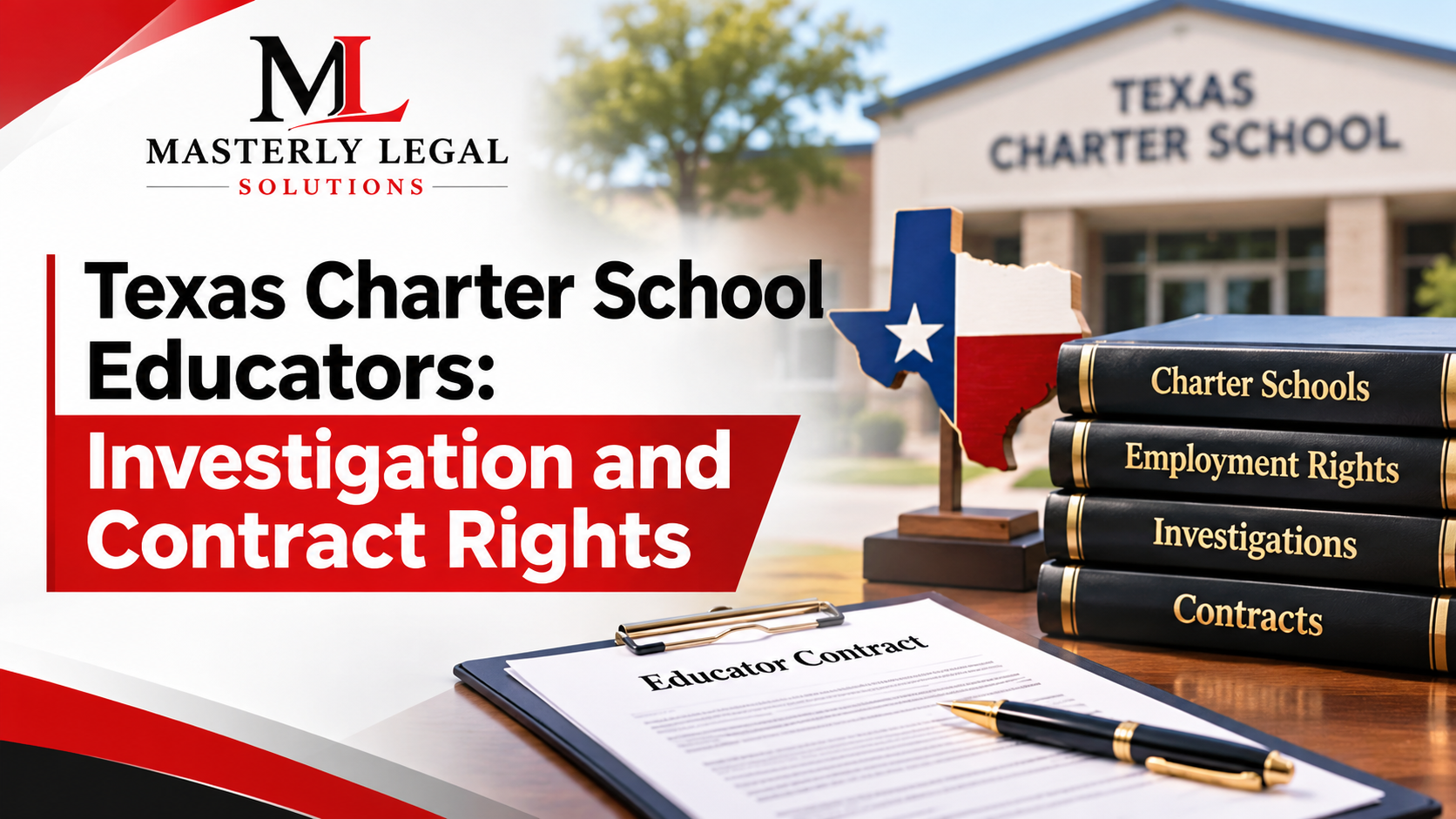
A complaint at a Texas charter school can quickly place an educator's employment, professional reputation, and future career opportunities at risk. A written allegation, unexpected leave notice, or contract dispute may leave teachers and staff unsure about their rights or what the school can legally require. Unlike traditional public school districts, Texas charter schools operate under different governance and employment rules. These differences can affect how investigations proceed, whether an employee has certain contract protections, and which grievance procedures apply. Understanding texas charter school educator investigation rights is important for certified teachers, administrators, and noncertified employees facing workplace allegations. A charter school investigation may involve internal policies, employment agreements, state education regulations, or professional certification concerns. The applicable rules depend on the school's structure and the employee's position. Masterly Legal Solutions provides legal guidance for Texas educators facing investigations, employment disputes, and professional disciplinary concerns. Early consultation allows an attorney to examine the relevant documents, identify possible deadlines, and assess the educator's legal options before important decisions are made. How Charter School Governance and Employment Documents Differ From Traditional Districts Texas open-enrollment charter schools are public schools, but their employment relationships do not automatically follow the same rules as independent school districts (ISDs). Traditional school districts generally employ certain educators under probationary, term, or continuing contracts governed by the Texas Education Code. These arrangements provide statutory rights and procedures that may apply to contract renewal, termination, or other employment decisions. Charter schools often operate differently. Some charter schools use written employment agreements with specific terms. Others employ staff under at-will arrangements, subject to applicable laws and contractual limits. As a result, an educator should not assume that the protections available to an ISD teacher automatically apply to a charter school position. Why Charter School Employment Agreements Matter A charter school's governing documents, employment agreement, and adopted policies may help determine: Whether employment is at-will or governed by a fixed-term agreement. Who has authority to investigate or make employment decisions. What procedures apply to employee complaints or discipline. Whether an employee has internal appeal or grievance rights. How contract renewal, nonrenewal, or termination decisions are handled. Whether specific notice requirements or deadlines apply. The school's legal structure also matters. An open-enrollment charter school, a district-authorized charter campus, and a campus operated through a district partnership may involve different legal arrangements. Charter schools are not simply private schools. They operate within Texas public education and remain subject to applicable state and federal requirements. However, public school s tatus does not automatically provide every employment protection available in a traditional district. Masterly Legal Solutions c an review the educator's employment relationship and applicable school policies to determine which legal protections may apply to the dispute. Early Steps After an Educator Misconduct Complaint, Temporary Removal, or Written Allegation An educator may first learn about an investigation through an email from human resources, a meeting request, a written complaint, or a notice of temporary administrative leave tied to alleged educator misconduct. Sometimes, the notice provides little information about the allegations, including claims involving abuse, and being placed on leave is not a final determination. The school may ask for a written statement, request an interview, restrict campus access, or place the employee on leave while reviewing the complaint. These actions can create serious uncertainty, which is why immediate legal review is often critical. Why an Investigation Notice Deserves Legal Attention Temporary removal does not automatically mean an employee has committed misconduct. Schools may use administrative leave while collecting information or reviewing complaints involving alleged educator misconduct or suspected abuse. However, the terms of that leave may affect compensation, benefits, access to records, and employment status, and leave is not a final determination. An attorney may need to determine whether the notice is consistent with the employee's agreement, applicable policies, and due process protections. Legal review is especially important when the allegations involve: Student safety or inappropriate conduct. Professional boundary concerns. Workplace harassment, discrimination, or civil rights complaints. Failure to follow school policies. Alleged contract violations or performance concerns. Misuse of school resources or confidential information. Conduct that could trigger a report to the Texas Education Agency. Certified educators may face concerns beyond their current employment. Certain misconduct allegations can lead to review by the Texas Education Agency (TEA), and the available evidence may affect possible action involving the State Board for Educator Certification (SBEC) and an educator's certificate. Noncertified employees may also face state-level employment eligibility concerns in certain misconduct cases. An internal school investigation and a state regulatory investigation are separate matters. Their legal standards, procedures, and possible consequences may differ, especially where Texas law, state law, or school district reporting requirements may require a principal or superintendent to provide notice, ensure a report is filed within seven business days, or address related reports while administrators comply with agency rules. Obtaining legal advice before providing a detailed written response can help an educator understand which process is involved, protect process rights, prepare for possible disciplinary actions or administrative hearings, and assess whether allegations tied to children, special education services, procedural errors, or other issues could expand beyond an internal employment matter. What to Preserve: Contract, Handbook, Assignment, Communications, and Notices Texas charter school educator investigation rights often depend on documents that explain the employee's responsibilities, the school's policies, and the decisions made during an investigation. A legal consultation becomes more useful when counsel can examine reliable records rather than relying only on verbal descriptions. Several categories of documents may be especially important. Employment Contracts and Appointment Documents Signed contracts, offer letters, renewal agreements, and employment amendments can establish the terms of the working relationship. These records may show whether employment is at-will, whether notice provisions apply, and what contractual obligations exist. They can also help counsel evaluate allegations involving contract violations or termination. Employee Handbooks and Governance Policies Employee handbooks may explain workplace conduct rules, investigation procedures, grievance processes, and disciplinary standards. The version in effect when the relevant events occurred may be particularly important. An attorney can examine whether the school's actions are consistent with applicable policies and whether those policies create enforceable obligations. Job Assignments and Performance Records Job descriptions, assignment letters, duty schedules, evaluation records, and previous performance notices may help explain an educator's responsibilities. These materials can provide context when an allegation concerns supervision, workplace expectations, professional duties, or performance. Emails, Messages, and Written Communications Relevant communications may include messages from administrators, human resources personnel, supervisors, and other individuals involved in the matter. Dates, wording, and context may help establish a timeline. Educators should preserve records they are legally permitted to retain. They should not access restricted systems, remove confidential student information, or forward protected records to personal accounts without proper authorization. Investigation Notices, Disciplinary Actions, and Contract Actions Written allegations, leave notices, meeting invitations, disciplinary letters, proposed separation agreements, and termination notices may establish important facts and deadlines. These documents can help counsel determine whether immediate legal action or a timely response may be necessary. Related reports or other evidence tied to the communication chain may also matter when evaluating the investigation timeline, response, and any resulting disciplinary actions, including situations where school action may continue after a resignation. Preserving records does not mean collecting every school document . It means identifying relevant, lawfully accessible information while respecting student privacy and confidentiality requirements. Masterly Legal Solutions can help educators determine which materials are relevant to their legal circumstances and whether additional records should be requested through appropriate procedures. Questions for Counsel Before a Written Statement or Grievance Decision An educator may feel pressure to respond immediately after receiving an allegation. However, statements made during an employment investigation can become part of the school's decision-making record. In some circumstances, information may also be reviewed by outside agencies. Before responding, legal counsel can examine the allegations, the employment relationship, and any deadlines. Does the Charter School Have Authority to Take the Proposed Action? A lawyer can review whether the relevant administrator or governing body has authority under the school's policies and employment arrangements. The review may also address whether required notices or procedures apply. Is a Written Statement Required? The answer depends on the applicable employment terms, policies, and legal circumstances. Counsel can assess the request, the scope of the allegations, and the potential consequences of providing a statement. The goal is to make an informed decision without overlooking an existing duty to cooperate or respond. Is a Formal Grievance the Appropriate Response? Not every employment dispute follows the same grievance route. Texas charter schools may maintain their own employee complaint procedures, with specific filing requirements and deadlines. TEA directs many local employment concerns to the school or charter operator's internal grievance process rather than handling the underlying workplace dispute itself. Missing an applicable deadline can limit available options. An attorney can review whether a grievance, contractual claim, agency complaint, or another legal process may be appropriate. Could the Investigation Affect Professional Certification or Texas Education Agency Reporting? Certified educators should consider whether the allegations may involve TEA or SBEC review. An employment decision and a certification matter can have different consequences. Counsel can evaluate the relationship between these proceedings and help determine what representation or response may be needed.  Why Legal Representation Matters Before a Decision An employment investigation can involve several connected issues, including contracts, workplace policies, regulatory duties, and professional reputation. Without a careful legal review, an educator may misunderstand which procedures apply or overlook a significant provision in an employment agreement. Masterly Legal Solutions provides individualized legal guidance based on the educator's documents, allegations, and professional circumstances. The firm can assess applicable rights, explain available legal options, and assist with appropriate responses or proceedings based on the scope of representation.
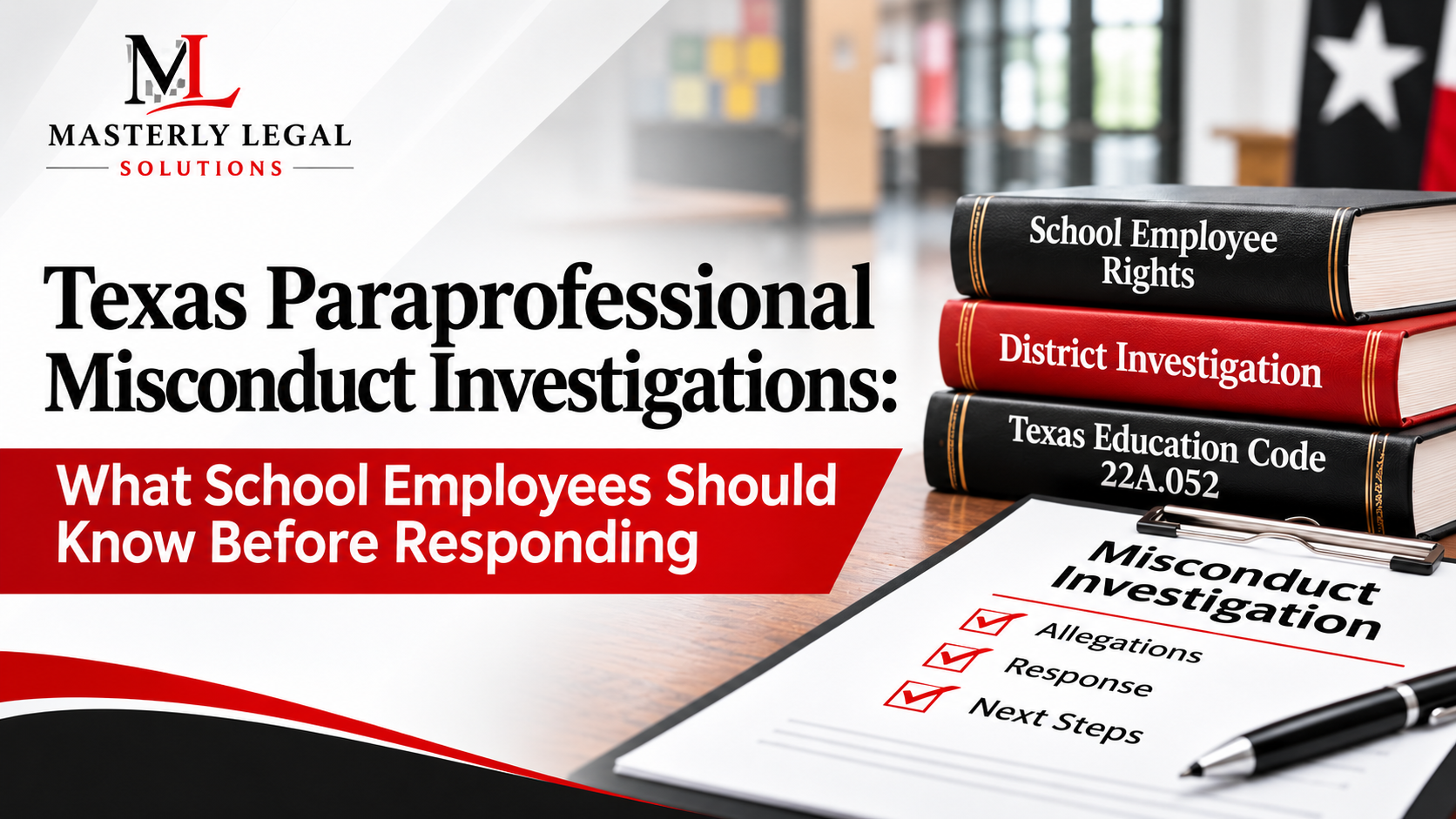
Texas paraprofessional misconduct investigation and legal defense.
November 4, 2026
Facing a Texas paraprofessional misconduct investigation? Understand allegations, reporting requirements, and how experienced legal counsel can protect your rights.
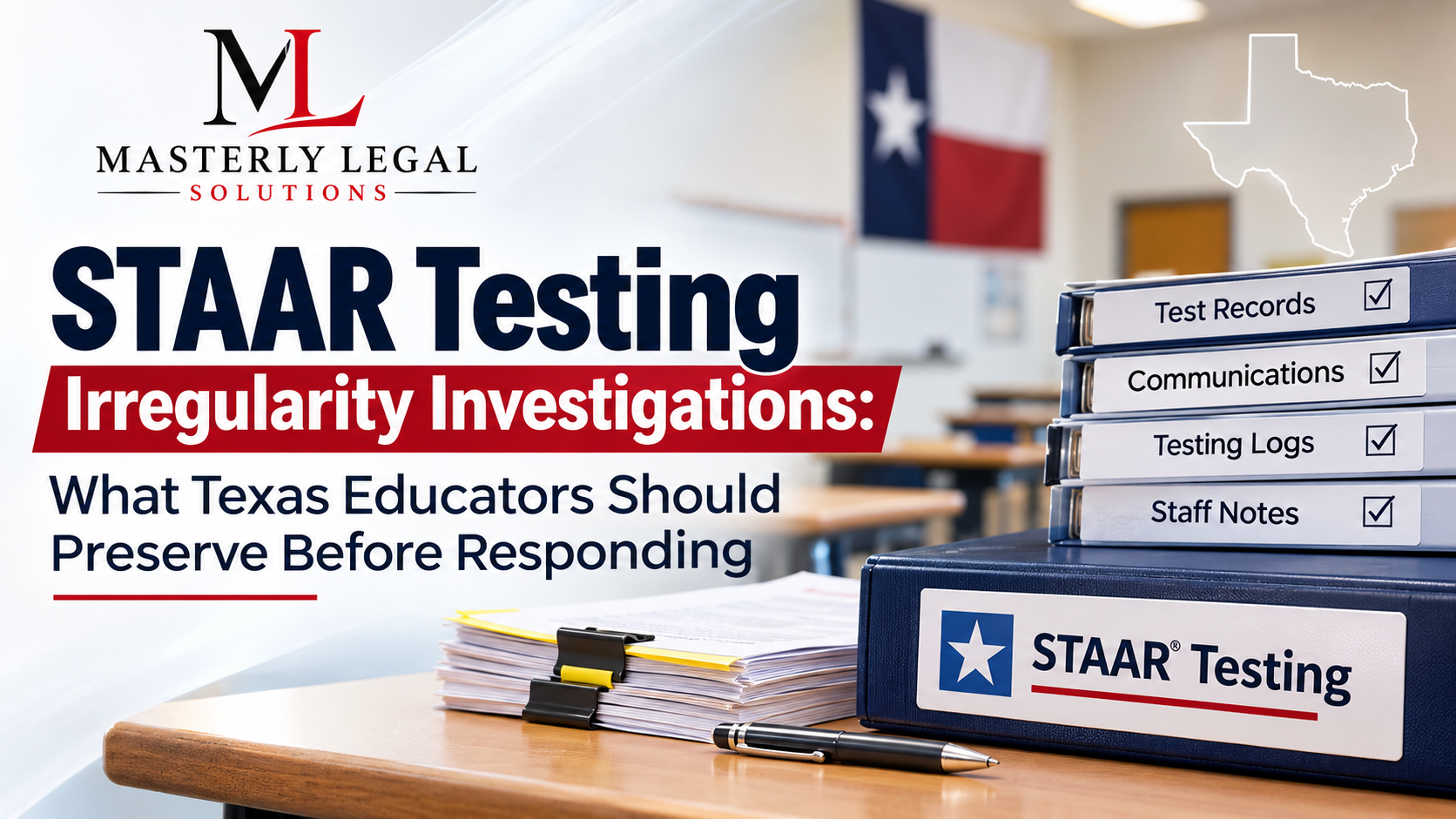
STAAR testing irregularity investigation involving Texas educators and test security allegations.
November 3, 2026
Facing a STAAR testing irregularity investigation? Masterly Legal Solutions defends Texas teachers, coordinators, and campus administrators facing allegations.
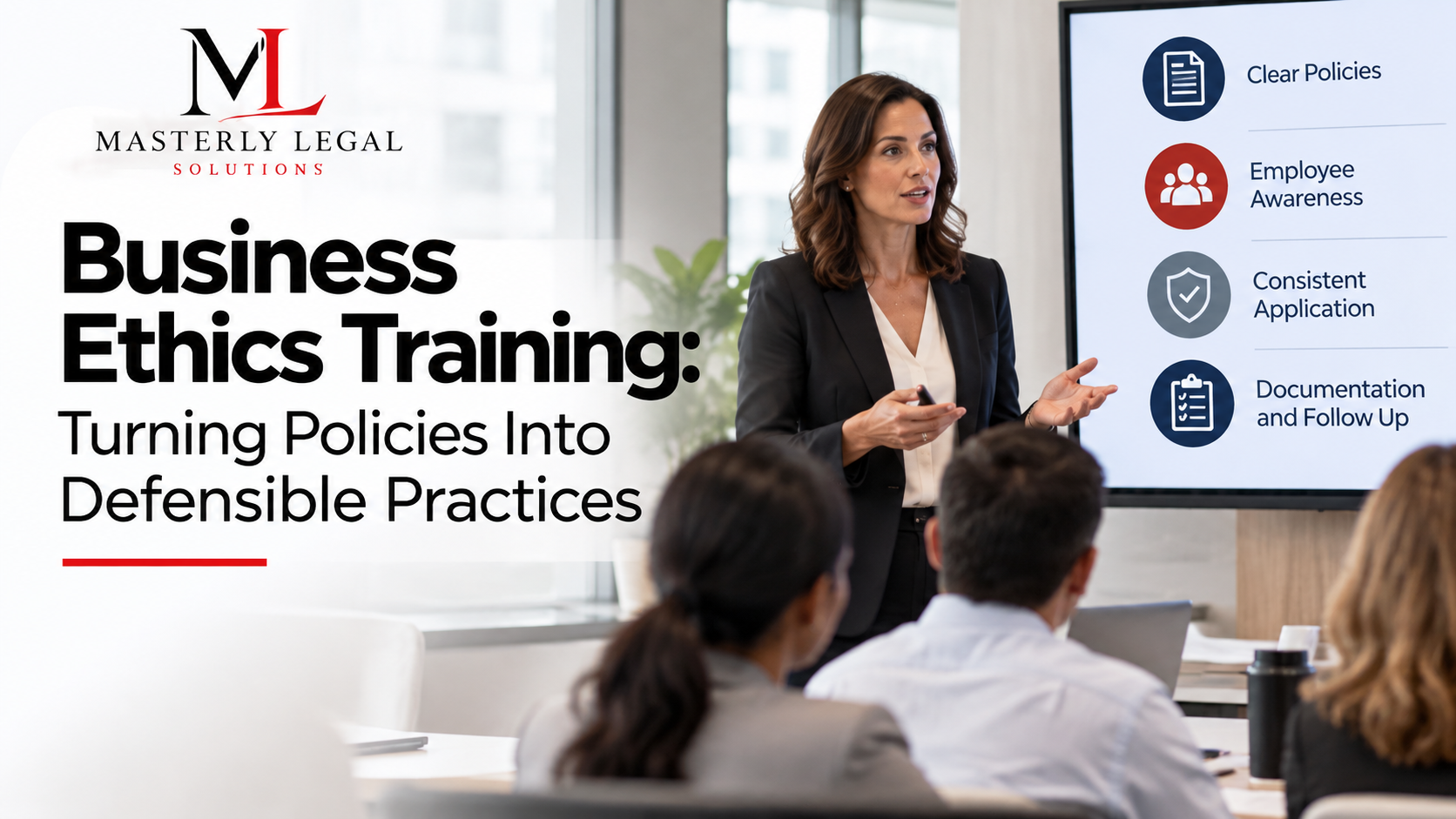
Business ethics training on workplace policies and compliance.
October 26, 2026
Business Ethics Training: Turn workplace policies into defensible practices. Explore compliance, employee conduct, and training needs with Masterly Legal Solutions.
Misappropriation of funds legal guidance and financial records review.
October 21, 2026
Understand what misappropriation of funds involves, how to preserve financial records, and when to seek experienced legal guidance before taking appropriate action.
NIL law, athlete contracts, and school compliance guidance
October 20, 2026
Explore NIL law in school athletics, institutional compliance, contract concerns, and when schools may need experienced legal guidance to protect their interests.
Texas Medical Board complaint, physician license defense, and legal guidance.
October 19, 2026
Texas Medical Board Complaint. Convert licensed physicians facing TMB complaint notices. Explore practical next steps and request a confidential consultation.
Title IX lawyer consultation, case review, and legal guidance.
October 19, 2026
Learn when a Title IX lawyer can help with allegations, interviews, case preparation, legal options, and next steps toward a confidential legal consultation.

Looking for Legal & Business Solutions? Contact Us Now

Fill in the form or call us to set up a meeting
(972) 236-5051
A black and white drawing of a straight line on a white background.