

Understanding CPS Compliance Standards Without Fear-Based Tactics
Why Fear Should Not Drive CPS Understanding
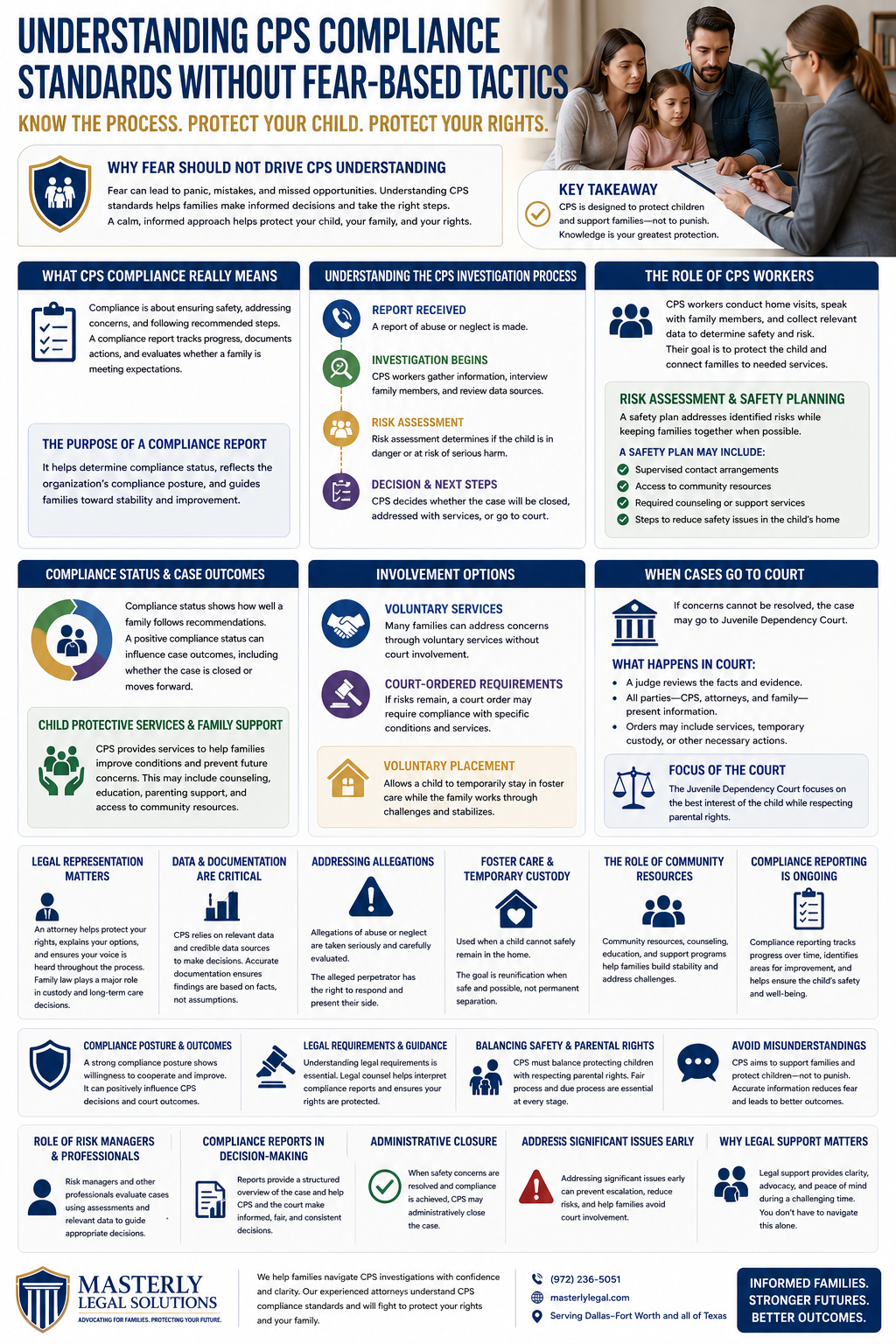
When families hear about CPS involvement, fear is often the first reaction. The idea of child protective services stepping into a family’s life can feel overwhelming, especially when there is confusion about what compliance actually means. However, understanding CPS standards without fear-based tactics allows families to make informed decisions instead of reacting out of panic.
A calm, informed approach helps parents and guardians better navigate the cps investigation process. Instead of assuming the worst, it is important to understand how compliance works and what is expected at each stage. This knowledge can protect both the child and the rights of the family.
What CPS Compliance Really Means
CPS compliance is not about punishment. It is about ensuring the child’s safety and well being while addressing any safety concerns that may arise during an investigation.
A compliance report is often used to track progress, document actions taken, and evaluate whether a family is meeting expectations. These reports rely on relevant data gathered throughout the investigation process.
The Purpose of a Compliance Report
A compliance report serves as a structured way to evaluate whether families are following recommended steps. It also reflects the organization’s compliance posture and helps determine the compliance status of a cps case.
Rather than being a tool for intimidation, effective compliance reporting is meant to guide families toward stability and improvement.
Understanding the CPS Investigation Process
The cps investigation process begins when a report of abuse or neglect is received. From there, cps workers begin investigating allegations and gathering information to assess risk.
This process is designed to protect the child, not to assume guilt. Each cps case is evaluated based on facts, observations, and interviews.
The Role of CPS Workers
CPS workers play a central role in the investigation. They conduct home visits, speak with family members, and review data sources to determine whether a child is safe.
Their goal is to identify risk factors and provide services when needed, not to create unnecessary conflict.
Risk Assessment and Safety Planning
Risk assessment is a key part of CPS investigations. It helps determine whether a child is in immediate danger or at risk of serious harm.
Based on this assessment, a safety plan may be created to address any identified issues.
What a Safety Plan Includes
A safety plan is designed to protect the child while allowing the family to remain together whenever possible.
It may include:
- Supervised contact arrangements
- Access to community resources
- Required counseling or support services
- Steps to reduce safety issues in the child’s home
These plans are meant to be practical and supportive, not punitive.
The Role of Compliance Status in CPS Cases
Compliance status refers to how well a family is following the recommendations outlined in a compliance report.
Maintaining a positive compliance status can influence the outcome of a cps case, including whether the case moves forward or reaches administrative closure.
Child Protective Services and Family Support
Child protective services cps does more than investigate. It also works to provide services that help families improve conditions and prevent future concerns.
This may include connecting families to child and family services, counseling, or educational programs, as well as support from legal professionals who provide tailored services for individuals and organizations.
Voluntary Services vs. Court-Ordered Requirements
Not all CPS involvement leads to court action. In many cases, families can participate in voluntary services to address concerns.
However, if risks remain, a court order may require compliance with specific conditions.
Understanding Voluntary Placement
Voluntary placement allows a child to temporarily stay in foster care while the family works through certain challenges.
This option can provide time for families to stabilize while maintaining involvement in the child’s care.
When Cases Move to Juvenile Dependency Court
If concerns cannot be resolved, a cps case may move to juvenile dependency court. This is where a judge reviews the situation and makes decisions about the child’s care.
The juvenile dependency court focuses on the best interest of the child while considering parental rights.
What Happens During a Court Hearing
A court hearing allows all relevant stakeholders to present information. This includes CPS workers, attorneys, and family members.
The court may issue orders related to services, temporary custody, or other necessary actions.
Legal Representation and Family Law Considerations
Having legal representation is critical when navigating CPS involvement. An attorney can help families understand their rights and respond effectively.
Family law plays a significant role in these cases, especially when decisions involve custody or long-term care arrangements, which can also be supported through early estate planning and essential legal documents for families.
The Importance of Data Collection in CPS Cases
Data collection is essential for building a clear picture of each situation. CPS relies on relevant data and data sources to evaluate risk and determine appropriate actions.
Accurate documentation ensures that decisions are based on facts rather than assumptions.
Addressing Allegations of Abuse or Neglect
Allegations of abuse or neglect are taken seriously, but they must also be carefully evaluated.
Not every report leads to findings of child abuse or neglect, and many cases are resolved without further action, including situations where families need legal defense and guidance against false allegations.
The Role of the Alleged Perpetrator
The alleged perpetrator has the right to respond to claims and provide their perspective.
CPS must consider all evidence before making conclusions.
Managing Safety Concerns Without Panic
Safety concerns should always be addressed, but they should not lead to unnecessary fear.
Understanding the process allows families to focus on solutions rather than reacting emotionally.
Foster Care and Temporary Custody
In some cases, CPS may determine that a child cannot remain in the child’s home.
This may result in foster care placement or temporary custody arrangements.
The Goal of Foster Care
Foster care is intended to provide a safe environment while families work toward reunification.
It is not meant to permanently separate families unless absolutely necessary.
The Role of Community Resources
Community resources play a vital role in supporting families during CPS involvement.
These resources may include counseling, education programs, and access to family and community resources that promote stability.
Compliance Reporting as an Ongoing Process
Compliance reporting is not a one-time event. It is an ongoing process that tracks progress and identifies areas for improvement.
This approach helps ensure that families continue moving toward a stable and safe environment for the child.
How Compliance Posture Affects Outcomes
A strong compliance posture demonstrates a family’s willingness to cooperate and improve.
This can influence decisions made by CPS and the court, including whether the case progresses to later stages.
The Importance of Legal Requirements and Guidance
Understanding legal requirements is essential for navigating CPS involvement.
Legal counsel can help families interpret compliance reports and ensure that their rights are protected.
Balancing Safety and Parental Rights
CPS must balance the need to protect children with respect for parental rights.
This balance is critical for maintaining fairness throughout the investigation process.
Avoiding Misunderstandings About CPS
Many misconceptions about CPS come from fear-based narratives.
In reality, CPS aims to provide services and protect children, not to punish families unnecessarily.
Recognizing the Role of Risk Managers and Professionals
Risk managers and other professionals may be involved in evaluating cases, similar to how organizations sometimes rely on outside counsel to conduct impartial internal investigations.
Their insights help ensure that decisions are based on accurate assessments and relevant data.
The Role of Compliance Reports in Decision-Making
A compliance report provides a structured overview of a case.
It helps CPS and the court make informed decisions based on documented progress and findings.
How Administrative Closure Works
Administrative closure occurs when CPS determines that no further action is needed.
This outcome is often influenced by compliance status and the resolution of safety concerns.
Addressing Significant Issues Early
Identifying and addressing significant issues early can prevent cases from escalating.
Proactive steps help families maintain stability and avoid court involvement.
Why Legal Support Matters in CPS Cases
Legal support can provide clarity and direction during a challenging time.
An attorney can help families understand their options and respond effectively to CPS actions.
Understanding Child Protective Investigations and What They Involve
Child protective investigations are structured processes designed to evaluate reports involving a child’s safety and well-being. During these investigations, agencies carefully investigate reports to determine whether there is evidence of abuse or neglect. The goal is not to assume guilt but to gather facts and assess the situation objectively. Each case is reviewed based on its own circumstances, ensuring that decisions are made in the best interest of the child and the family.
Resources Like the Texas Legal Services Center and Legal Aid
Families facing CPS involvement often benefit from outside support, including organizations like the Texas Legal Services Center and other legal aid providers. These resources help individuals understand their rights, navigate complex procedures, and respond appropriately to CPS actions. Access to legal aid can be especially important for families who may not otherwise have the means to secure legal representation. Having guidance early on can make a significant difference in how a case unfolds, much like how educators benefit from legal help with Texas teacher discipline and TEA rules.
What Happens During the Investigation Stage
The investigation stage is one of the most critical parts of a CPS case. During this phase, a cps investigator gathers information, interviews relevant individuals, and evaluates the child’s home environment. This stage sets the foundation for all future decisions, including whether further action is needed. Families should be aware that what happens during this period can directly influence the outcome of the case.
Addressing Allegations Involving Sexual Abuse
Allegations involving sexual abuse are taken very seriously and often require additional scrutiny. These cases may involve specialized investigators and coordination with law enforcement. The presence of alleged abuse does not automatically determine the outcome, but it does increase the level of concern and the need for careful evaluation. Protecting the child while ensuring fairness to all parties remains a priority throughout the process.
Evaluating the Organization’s Adherence to Standards
During a CPS case, the organization’s adherence to established policies and procedures is closely examined. This includes ensuring that investigations are conducted fairly and in compliance with applicable laws. Maintaining proper standards helps build trust in the system and ensures that outcomes are based on accurate and consistent practices. Families have the right to expect that these standards are followed throughout their case.
Considering Criminal History in CPS Decisions
In some situations, CPS may review an individual’s criminal history as part of the investigation. This information can help assess potential risks to the child and determine appropriate next steps. However, a criminal history alone does not automatically dictate the outcome of a case. Each situation is evaluated based on current circumstances and the overall risk level.
The Role of the Child’s Family in the Process
The child’s family plays a central role in any CPS investigation. Family members may be interviewed, asked to provide information, or involved in developing solutions. Their cooperation and participation can influence how the case progresses, and families may also choose to strengthen their planning through powers of attorney and other protections for their children. The goal is to work with the family to ensure a safe and stable environment for the child.
Determining Immediate Risk and Safety Needs
One of the primary objectives of CPS is to identify whether a child is at immediate risk. This involves assessing factors such as living conditions, supervision, and any potential threats to safety. If immediate risk is identified, CPS may take urgent steps to protect the child. These actions are intended to prevent harm while the investigation continues.
Understanding Broader Compliance Concepts Like the Sarbanes Oxley Act
While the Sarbanes Oxley Act is primarily associated with corporate compliance, its principles of accountability and transparency can be reflected in CPS practices. Agencies are expected to maintain accurate records, follow procedures, and ensure that decisions are properly documented. These standards help create a system that is both fair and reliable for families involved.
Providing Reasonable Accommodations During Investigations
CPS may offer reasonable accommodations to families who need additional support during the process. This can include adjustments for disabilities, language assistance, or scheduling flexibility. Providing these accommodations helps ensure that all parties can fully participate in the investigation. It also supports a more equitable and accessible process.
Resolving Cases Through Voluntary Agreement
In some cases, families and CPS may reach a voluntary agreement to address concerns without escalating the situation. This agreement may include specific steps the family agrees to take to improve conditions. Voluntary agreements can help resolve issues more quickly while avoiding court involvement. They also allow families to maintain a greater level of control over the outcome.
The Role of Drug Testing in CPS Cases
A drug test may be requested during an investigation if there are concerns about substance use affecting the child’s safety. These tests are used as part of the overall assessment and are not the sole factor in determining outcomes. Results are considered alongside other evidence to evaluate the situation comprehensively. Families should understand the purpose and implications of these requests.
When a CPS Case Becomes a Criminal Case
Some CPS investigations may overlap with a criminal case, particularly when serious allegations are involved. In these situations, law enforcement may work alongside CPS to gather evidence. This adds complexity to the process and may require additional legal guidance. Families should be aware of the differences between administrative and criminal proceedings.
Regional Differences, Including Southern California
CPS procedures can vary depending on location, including regions like southern california, just as education law procedures differ across states for teachers and educators seeking expert Texas education lawyers. While the overall goals remain consistent, specific processes and policies may differ based on state laws and local practices. Understanding these differences can help families better prepare for what to expect in their specific area.
Assessing Risk Level in CPS Investigations
Determining the risk level is a key part of any CPS case. This assessment helps decide what actions, if any, are necessary to protect the child. Factors such as past incidents, current conditions, and family dynamics all play a role. A clear understanding of risk level helps guide appropriate responses and solutions.
The Role of the CPS Investigator
A cps investigator is responsible for gathering facts, interviewing individuals, and evaluating the overall situation. Their findings are used to determine the next steps in the case. While their role is investigative, they are also tasked with ensuring fairness and accuracy. Their work has a direct impact on the outcome of the case.
When Courts May Order Services
In some situations, a judge may order services as part of resolving a CPS case, which may intersect with estate planning, wills, and probate considerations for the family. These services are designed to address underlying concerns and support the family in creating a safe environment. Court-ordered services may include counseling, education programs, or other forms of assistance. Compliance with these orders is often necessary to move forward and resolve the case successfully.
Contact Us for a Free Consultation
If you are facing a CPS case or trying to understand your compliance report, you do not have to navigate this process alone. At Masterly Legal Solutions, we focus on helping families move forward with confidence by providing clear guidance without fear-based pressure.
We understand how stressful it can feel when child protective services cps becomes involved in your life. Our team is here to help you understand your compliance status, respond to investigation results, and protect your rights every step of the way.
Call us today at (972) 236-5051 for a free consultation. Let us help you make informed decisions, protect your child’s future, and move toward a stable resolution with confidence.
This article is for educational purposes only and does not constitute legal advice. For guidance specific to your situation, please contact a qualified attorney or reach out using Masterly Legal Solutions’ Texas office contact information.



Looking for Legal & Business Solutions? Contact Us Now
Fill in the form or call us to set up a meeting