Private School Teacher Investigations in Texas: Contracts, Policies and Early Legal Decisions
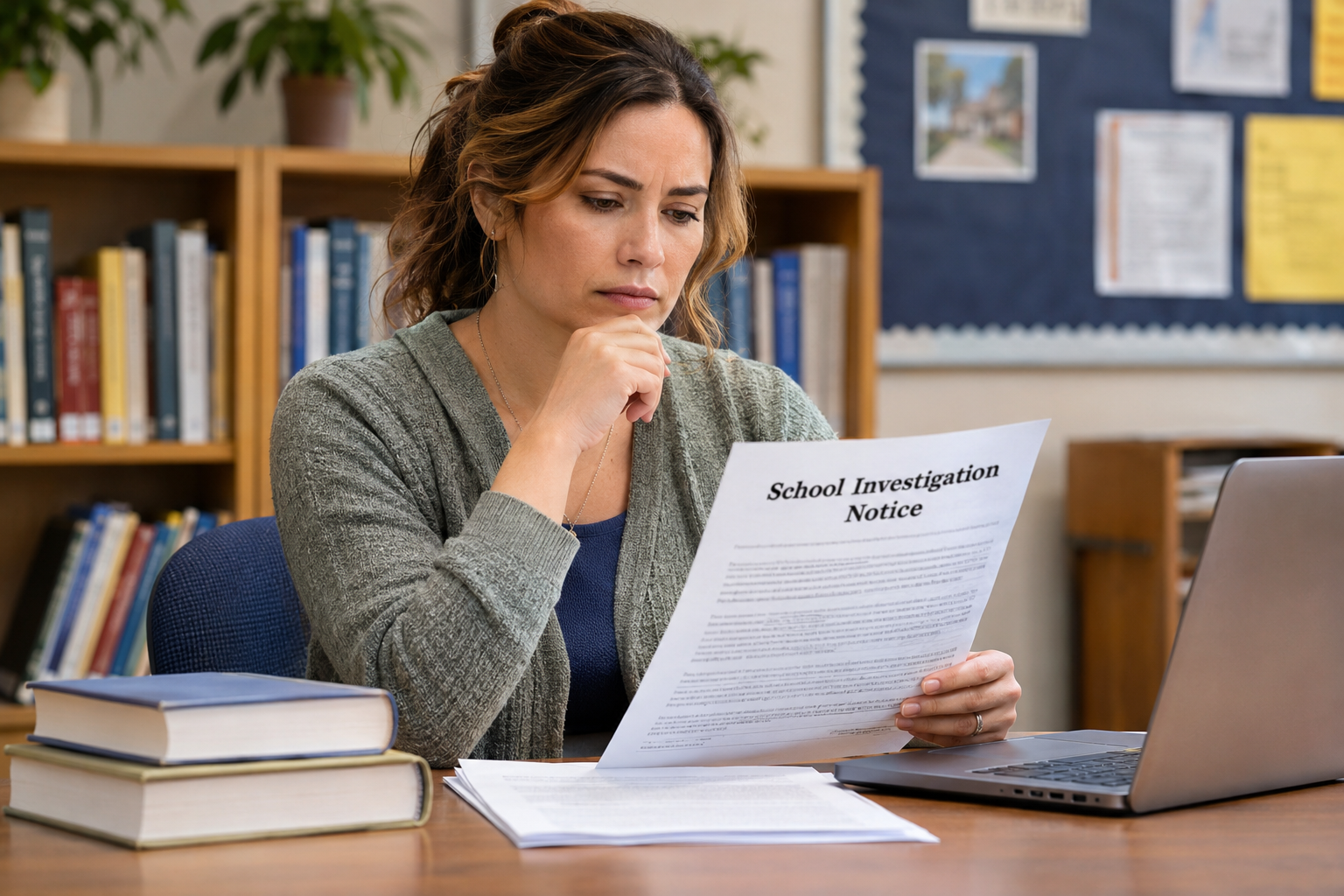
A parent files a complaint against you. Your school principal requests an unexpected meeting, and suddenly your teaching career feels uncertain. You may be asked to provide a written statement, accept administrative leave, or resign before you fully understand the allegations.
For Texas private school educators, these situations can raise serious questions about employment contracts, professional reputation, and future teaching opportunities.
Private school teacher employment investigations in Texas involve legal concerns that are not always the same as those faced by public school teachers. Employment agreements, staff handbooks, governing board procedures, and state reporting laws can all affect the outcome.
A complaint does not automatically prove misconduct. However, decisions made during an investigation may influence employment status, contractual rights, or educator certification.
Masterly Legal Solutions represents Texas educators and school employees facing workplace investigations, disciplinary concerns, and related professional matters. Qualified legal counsel can help evaluate the allegations, review applicable protections, and explain the legal consequences of important employment decisions.
Private School Teacher Investigations in Texas: Contracts, Policies and Early Legal Decisions
Private schools have different employment structures from public school districts. Understanding those differences is essential when a teacher faces a complaint or disciplinary investigation.
Texas public school teachers may receive statutory employment protections under Chapter 21 of the Texas Education Code, including certain contract and administrative procedures.
Private school teachers generally do not receive those same public school contract protections simply because they work in education.
Instead, their rights may depend on individual agreements, school policies, and applicable state and federal laws.
How Private School Employees' Employment Rights Differ
A private school may employ teachers under fixed-term contracts or at-will arrangements.
A fixed-term agreement may include conditions governing termination, renewal, compensation, and notice. An at-will relationship generally allows termination without advance notice unless an enforceable agreement or applicable law provides otherwise.
However, at-will employment does not permit every type of termination. Unlawful discrimination, prohibited retaliation, and other legal protections may still apply.
For religious private schools, additional constitutional issues can arise. The ministerial exception may limit certain employment claims involving employees who perform important religious duties.
That exception does not automatically apply to every private school employee.
Why Early Legal Decisions Matter
An employer may investigate a complaint before deciding whether to issue discipline, place a teacher on leave, or terminate employment.
During that process, the teacher may be asked to explain an incident or sign a document.
Those decisions deserve careful consideration because they can affect the available evidence and later legal arguments.
Masterly Legal Solutions can assess the employment relationship and determine which contractual, statutory, or constitutional protections may apply.
What to Retrieve From an Employment Agreement and Staff Handbook
A private school teacher contract often plays a central role in determining employment rights.
When an investigation begins, the precise language of the agreement may matter more than assumptions about how other schools handle complaints.
Employment Contracts and Termination Conditions
An attorney may review contract provisions in a contract or written agreement concerning employment duration, renewal, compensation, disciplinary action, and termination.
The agreement may also address resignation notice, professional conduct, and responsibilities involving students.
For example, a school may claim that alleged conduct violates a contractual standard. Whether that claim supports a particular employment action depends on the agreement, facts, and applicable law.
Legal counsel can evaluate whether the school has complied with enforceable contract terms.
Staff Handbooks and Internal Policies
School handbooks may describe employee expectations, complaint procedures, investigation practices, and disciplinary processes. Some schools treat these issues as personnel matters and limit what is shared during an active review.
Some schools also have separate policies governing communication with students, confidentiality, and administrative leave. Those policies should also account for privacy considerations and limited disclosure during an internal complaint.
However, handbook provisions do not automatically create enforceable contractual rights.
An attorney must consider the wording of the policies, any disclaimers limiting their legal effect, and any role assigned to human resources in complaints or discipline.
School Board and Governance Procedures
Private schools, including many independent schools, may operate under a board of trustees, governing board, religious authority, or independent administrative leadership.
The relevant policies may establish whether school leadership has authority to direct interviews, review findings, or approve employment decisions.
Unlike public school districts, private schools are not automatically subject to the same statutory hearing and appeal procedures.
Legal review can help determine whether the school followed its own governing documents and contractual obligations.
For teachers facing suspension or termination, these distinctions may be important in evaluating potential claims, especially where any appeal options depend on governance documents rather than collective bargaining rights.
How to Document a Parent or Student Complaint Without Contacting Witnesses
A parent or student complaint can affect a teacher's reputation before the school reaches a final decision.
Allegations may concern classroom management, communication, professional boundaries, student supervision, or other workplace conduct.
Even when a teacher strongly disagrees with the complaint, responding without understanding the investigation can create further concerns.
Why Witness Communication Requires Care
A teacher may want to contact the parent, student, or colleague involved to explain what happened.
However, direct contact during an active school employee investigation can raise questions about confidentiality, witness influence, or compliance with school instructions.
An informal message may later become part of the investigation.
Legal counsel can evaluate communication restrictions and explain appropriate options for addressing disputed facts.
Preserving Relevant Employment Records
Relevant information may come from multiple sources, including emails, authorized school communications, performance reviews, incident reports, and other workplace records.
Records involving other individuals should also be handled carefully if they are relevant to the allegations.
The documents relevant to a complaint depend on the allegations.
Student records and confidential school information require particular care.
Teachers should not assume they can copy protected student files, access restricted systems, or transfer school information to personal accounts.
An attorney can determine which records may lawfully be preserved or requested for legal review.
Protecting Professional Reputation
An unresolved allegation may influence workplace relationships, references, and future employment opportunities.
Where legally appropriate, counsel can evaluate whether the investigation involves inaccurate statements, contractual violations, discrimination, or retaliation.
Not every unfair or unfavorable employment decision creates a valid legal claim.
A proper assessment requires evidence, applicable legal standards, and an understanding of the school's employment obligations.
When an Investigator, School Leader or Licensing Body Becomes Involved
A private school investigation may begin with a principal or administrator but expand beyond an internal employment matter.
Depending on the allegations, an outside investigator, governing board, Texas Education Agency, or another authority may become involved.
Internal School Investigations
School leaders may review complaints and concerns about employee conduct, interview employees, examine records, and make disciplinary recommendations.
Some schools use outside investigators to examine serious allegations. The investigation process may also include gathering information from witnesses, documents, and other sources before recommendations are made.
The procedures depend on the institution's policies, governing structure, and employment agreements.
Teachers may face administrative leave, and some schools may place an employee on paid leave depending on the agreement or policy, or restrictions on workplace access while the matter is being investigated.
These steps do not automatically establish misconduct, but they may affect compensation and professional responsibilities. Schools often limit disclosure to the parties involved and maintain confidentiality to reduce defamation risk. Open matters can lead to different possible outcomes, including no action or disciplinary recommendations.
Texas Education Agency and Educator Misconduct Reporting
Texas Education Code Section 22A.301 establishes reporting obligations for certain misconduct allegations involving private school employees or applicants.
When a private school's chief administrative officer becomes aware of evidence of specified misconduct covered by the statute, the officer must submit the required report to the State Board for Educator Certification within 48 hours. TEA can also investigate certain non-certified private school employees when the reported conduct suggests a risk to students.
The law also addresses situations where an employee resigns before an investigation is complete.
This means resignation does not necessarily prevent a required misconduct report.
Importantly, not every parent complaint or employment disagreement meets the statutory reporting requirements.
The alleged conduct must be evaluated under the applicable legal provisions, and TEA and SBEC review allegations, enforce professional standards, and expect educators to meet high standards to protect students and support student safety.
A reporting obligation also does not mean the allegation has been proven.
For certified teachers, a separate licensing investigation may raise concerns about professional certification and future employment, and any disciplinary outcomes can be separate from a school's internal employment decision. Some cases may also affect employment through the Texas Do Not Hire Registry, which tracks individuals made ineligible for educational employment because of misconduct.
Other Agencies, Legal Proceedings and Disciplinary Outcomes
Some allegations may involve suspected child abuse, neglect, criminal conduct, or physical abuse.
Under Texas law, any person who believes a child's health or welfare has been adversely affected by abuse must report it within 24 hours.
These circumstances can trigger separate investigations involving Child Protective Services, the appropriate state department, or law enforcement.
An internal school review, a professional licensing matter, and a criminal investigation are different proceedings.
Each may involve separate rights, reporting requirements, safety concerns, applicable regulations, and consequences.
Masterly Legal Solutions can assess the relevant education-employment issues and determine whether additional legal representation is needed for matters outside the agreed scope.
Questions to Ask Counsel Before Written Statements, Resignation or Agreement
Teachers facing serious allegations may feel pressure to respond quickly, particularly when the school requests a written explanation or offers a separation agreement.
However, the legal consequences of those decisions may extend beyond the immediate employment dispute.
Before Providing a Written Statement
A written response may become part of an internal complaint file, personnel records, or another investigation.
An attorney can assess whether the requested statement raises contractual, licensing, employment, or other legal concerns. School leadership may ask for a written explanation before deciding next steps.
The appropriate response depends on the allegations, the reported behavior, available information, and any applicable obligations.
Before Agreeing to Resign
Resignation may appear to provide a quick resolution, especially when a teacher is concerned about public allegations or workplace pressure.
Yet resignation may affect contractual benefits, potential claims, professional references, and future employment opportunities.
Certain misconduct reporting duties may continue even after an employee resigns.
Counsel can review the legal implications before an employee accepts proposed resignation terms.
Before Signing a Separation Agreement
A separation agreement may include provisions addressing severance, confidentiality, release of claims, references, or future obligations.
The specific wording matters.
An attorney can determine whether the agreement affects existing rights or limits available legal options.
How Masterly Legal Solutions Can Help
Masterly Legal Solutions provides legal representation for educators facing school investigations and employment-related concerns.
Depending on the facts and agreed scope, legal services may include evaluating employment contracts, reviewing investigation procedures, assessing relevant documents, and advising on proposed statements or agreements.
The firm can also evaluate related professional licensing concerns when applicable.
No attorney can guarantee reinstatement, dismissal of allegations, favorable certification action, or a specific financial recovery.
The purpose of representation is to help clients understand their legal position and make informed decisions.
Formal Investigations and Employment Rights in Private and Charter Schools
Private school teacher employment investigations in Texas can become more serious when a parent or student complaint leads to a formal investigation involving school administrators, governing boards, or outside investigators. Teachers may face questions about their conduct, employment agreements, or professional responsibilities.
While private schools generally rely on employment contracts and internal policies, charter schools are part of the Texas public education system and operate under different legal requirements. The rights and procedures available to an educator depend on the type of school, applicable employment laws, and the circumstances of the complaint. Masterly Legal Solutions provides legal guidance for educators facing workplace investigations, helping them understand contractual protections, disciplinary concerns, and potential professional licensing consequences before making important employment decisions.
Legal Authority and Written Notice in Private School Investigations
When a private school teacher faces an employment investigation in Texas, understanding the school's legal authority and any applicable written notice requirements is important. A principal, administrator, or governing board may have authority to investigate employee complaints under the school's employment agreements and internal policies.
However, that authority does not automatically give the school unlimited power to discipline or terminate an employee without regard to enforceable contracts and applicable employment laws. A written notice may explain the allegations, investigation procedures, or proposed disciplinary action, but its required contents and timing depend on the governing agreement and law. Masterly Legal Solutions helps educators evaluate investigation notices, contractual protections, and school procedures before making decisions that could affect their employment and professional reputation.
Frequently Asked Questions
Do Private-School Teachers Have the Same Rights as Public-School Teachers?
Key Takeaways
No. Texas private school teachers generally do not receive the same statutory contract and employment procedures available to qualifying public school teachers. Their rights may depend on individual contracts, school policies, and applicable employment laws.
What Records Should I Preserve Before an Interview?
Relevant materials may include an employment agreement, staff handbook, investigation notices, performance reviews, existing authorized communications, and, when they exist, hiring or screening documents that contain criminal history information, though some private schools may not require criminal-history checks for teachers. Confidential student information must be handled according to applicable law and school policies.
When Should I Seek Legal Advice About a School Investigation?
Legal advice may be appropriate when allegations could lead to discipline, termination, administrative leave, licensing concerns, or a formal written response. A consultation may also be important before signing a resignation or separation agreement.
Can a Private School Report Alleged Teacher Misconduct to the State?
Yes. Texas Education Code Section 22A.301 requires private school administrators to report evidence of specified misconduct. Not every employment complaint meets the reporting requirements, and reporting does not establish guilt. In some cases, private schools may report misconduct allegations to the state, which can trigger a separate review by TEA or SBEC. Any disciplinary outcomes at the state level can be separate from the school's employment decision.
Does Resigning End a Private School Investigation?
Not necessarily. Certain reporting obligations may continue after resignation, and separate employment, licensing, or legal matters may remain unresolved.
Request a Confidential Education-Employment Consultation
A private school investigation can place your employment, professional reputation, and future opportunities under serious pressure.
You may be facing questions about a parent complaint, an administrative interview, contractual obligations, or a proposed resignation.
These decisions deserve legal consideration based on your circumstances.
Masterly Legal Solutions assists Texas educators and school employees with investigation-related employment concerns and professional matters.
A confidential consultation allows the firm to review the nature of your concerns, identify relevant legal issues, and determine whether representation is appropriate.
Phone: (972) 236-5051
Website: https://www.masterlylegal.com/
Contact Masterly Legal Solutions to discuss your private school employment investigation and explore the legal guidance available for your situation.
Disclaimer: This article provides general legal information and is not legal advice. Employment rights, investigation procedures, and reporting obligations depend on the facts and applicable law. Contacting the firm does not automatically establish an attorney-client relationship.

Looking for Legal & Business Solutions? Contact Us Now
Fill in the form or call us to set up a meeting