Texas Medical Board Lawyer for Physicians Facing License Investigations and Discipline
Protect Your Medical License Before One Administrative Decision Changes Your Career
A complaint, subpoena, investigation notice, or proposed order from the Texas Medical Board can place your medical license, career, hospital privileges, and professional reputation at risk. The decisions you make during the first stages of the process can affect what happens later.
Masterly Legal Solutions provides statewide administrative defense for Texas physicians facing complaints, investigations, Informal Settlement Conferences, proposed sanctions, restrictions, suspensions, and reporting consequences. If you need an experienced Texas Medical Board lawyer, our team can help you understand the allegations, organize your records, prepare your response, and protect your professional interests throughout the administrative process.
Texas Medical Board Administrative Defense for Physicians
Most physicians never expect to become the subject of a medical board investigation. When a notice arrives, the uncertainty can be overwhelming.
You may be asking:
What should I say to the investigator?
Should I send the requested records immediately?
Is my license at risk?
Will my employer or hospital learn about the complaint?
Could this affect credentialing or insurance participation?
Should I accept a proposed order?
The right response depends on the allegations, the evidence, the stage of the investigation, and the possible professional consequences.
A TMB attorney can help you evaluate the matter before you make statements, submit documents, or agree to terms that may affect your ability to practice medicine.
Our Administrative Defense Services
Masterly Legal Solutions assists physicians with:










Clear Scope of Representation
Our Texas Medical Board services focus on administrative representation before the Board and related administrative proceedings.
Unless separately agreed to in writing, this service does not include judicial appeals, district court litigation, civil litigation, appellate representation, medical malpractice defense, or criminal defense.
Our goal is to help physicians respond effectively during the administrative process without suggesting that court or appellate representation is included.
Texas Medical Board Complaint and Investigation Stages
A Texas Medical Board matter may begin with a patient complaint, employer report, hospital referral, professional concern, law enforcement notice, or other information received by the Board. The first communication may appear routine, but it often marks the start of the investigative process and your response can become part of the official administrative record.
The investigation may include:
List of Services
-
List Item 1List Item 1
An initial complaint review
-
List Item 2List Item 2
A complaint letter or written inquiry from the Board
-
List Item 3List Item 3
Medical records collection
-
List Item 4List Item 4
Communications with investigators
-
New List Item
Review by medical experts
-
New List Item
Requests for clarification
-
New List Item
An Informal Settlement Conference
-
New List Item
A proposed disciplinary action
Written Responses and Medical Records Requests
Written responses are often one of the most important parts of the disciplinary process in a Texas Medical Board investigation.
A written explanation
Patient charts
Treatment records
Prescribing documentation
Consent forms
Billing records
Practice policies
Electronic communications
Employment information from other agencies when relevant
Supporting documents
Every submission should be complete, accurate, organized, and consistent with the physician’s position.
Our legal team helps physicians:
The purpose is not to hide information. It is to make sure the Board receives an accurate and organized explanation of the facts and to help physicians seek legal counsel when needed.
- Review the complaint and request
- Organize medical records
- Identify documentation gaps
- Develop a clear chronology
- Prepare a written response
- Address factual misunderstandings
- Provide appropriate supporting evidence
- Avoid unnecessary or confusing statements
Texas Medical Board Subpoenas and Document Requests
An administrative subpoena may request medical records, communications, billing information, employment records, policies, or other evidence. A subpoena should not be ignored. It should also not be answered without understanding the scope of the request.
Before responding, physicians should consider:
- The response deadline and the specified date listed in the subpoena or request
- What records are included
- Whether additional records must be preserved
- Whether the request relates to a broader investigation
- How the documents may be interpreted
- Whether clarification should be requested
Our team reviews the subpoena, evaluates the requested materials, helps organize the response, and communicates with the appropriate parties when necessary as part of legal representation that helps physicians respond.
Informal Settlement Conference Representation
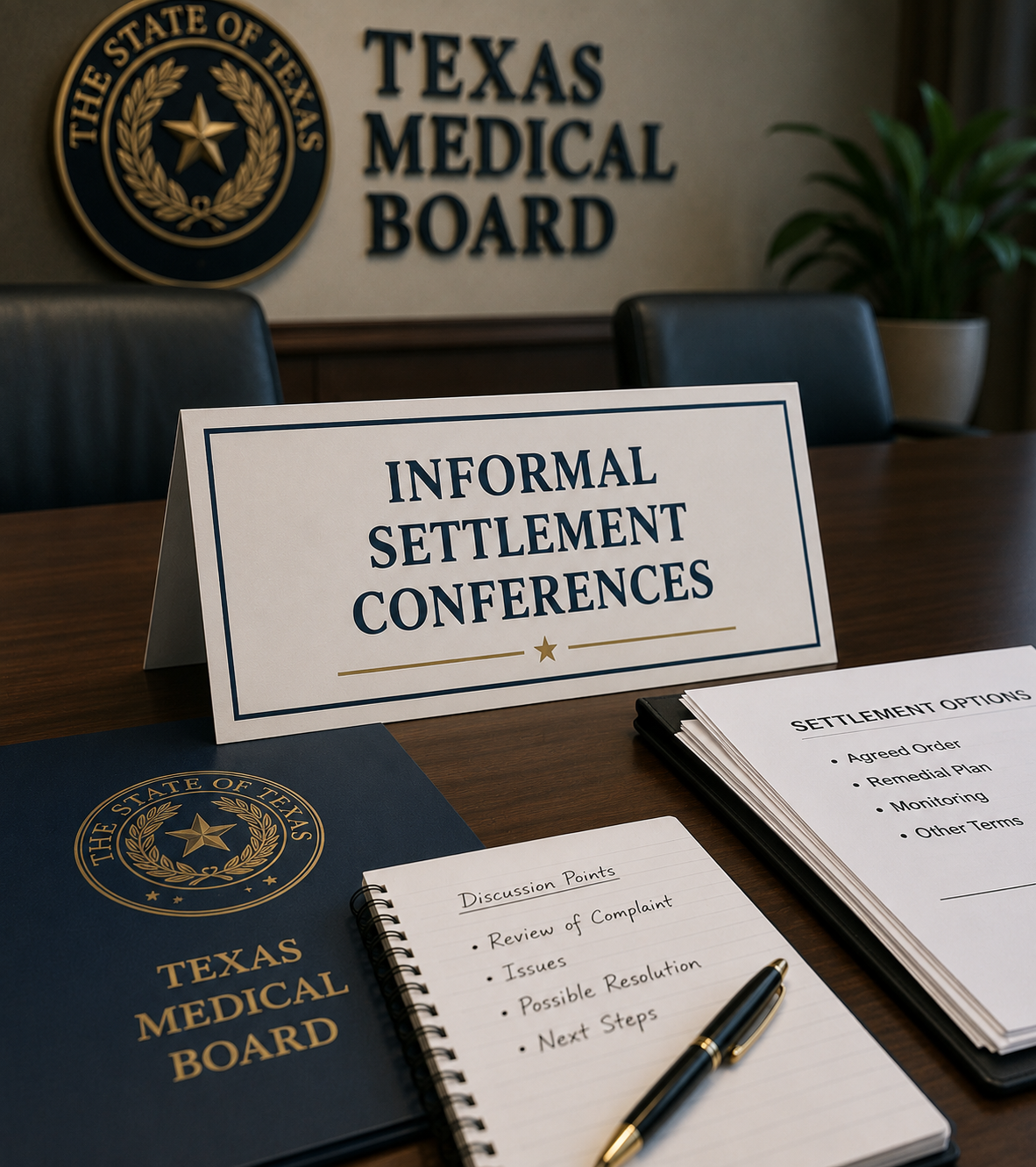
An Informal Settlement Conference, often called an ISC, can become one of the most important stages of a Texas Medical Board case, and the ISC requires careful preparation and active participation. The conference gives the physician an opportunity to address the Board’s concerns directly with TMB representatives before final disciplinary action is imposed. Although the meeting is described as informal, the possible consequences are serious.
Preparation may include:
Masterly Legal Solutions helps physicians prepare for the conference, present their position clearly, and evaluate any proposed resolution, including whether a non disciplinary remedial plan may be available.
Reviewing the complaint and investigative file
Evaluating medical records
Identifying strong and weak evidence
Preparing for likely questions
Developing a clear explanation
Reviewing expert opinions
Discussing possible resolutions
Preparing supporting documents
Emergency Restrictions and Temporary Suspensions
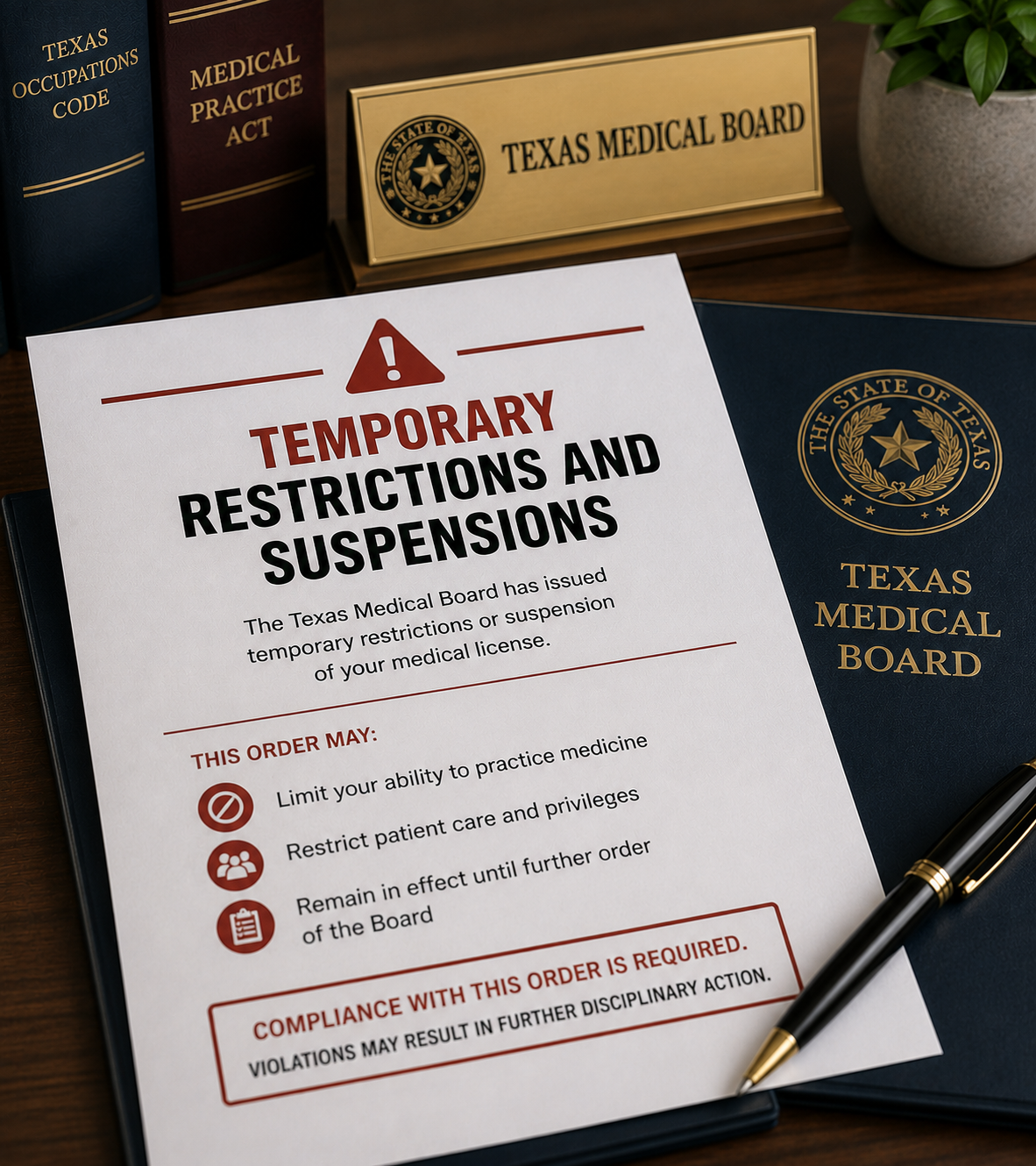
Some Texas Medical Board matters move quickly because the Board may act fast when it believes a physician presents a continuing threat.
Emergency actions may include:
List of Services
These cases can affect a physician’s ability to see patients, prescribe medication, work at a hospital, or continue operating a medical practice.
Prompt legal review is critical because the response period may be short. A physician license defense lawyer Texas physicians trust can help review the allegations, organize available evidence, prepare for administrative hearings, and explain the immediate professional risks.
Agreed Orders, Restrictions, and Administrative Sanctions
A proposed Agreed Order may appear to offer a way to resolve the investigation. However, the terms can affect a physician long after the case is closed.
A proposed order may include:
Public reprimand
Administrative penalties
Continuing medical education
Practice monitoring
Chart review
Prescribing restrictions
Supervision
Probation
Drug screens or alcohol testing
Mental or physical evaluations
Reporting requirements
Before signing an Agreed Order, physicians should understand how the terms may affect their daily practice, hospital privileges, credentialing applications, insurance contracts, employment, and future license renewals, as well as the risk of revocation in serious cases.
Our team reviews proposed terms, explains the possible consequences, and helps physicians evaluate their administrative options.
Prescribing, Impairment, Records, and Boundary Allegations
Texas Medical Board investigations may involve many types of professional conduct. Each allegation requires a defense strategy based on the facts, medical records, applicable standards, and possible sanctions.
Prescribing Allegations
Prescribing investigations may involve controlled substances, pain management, refill practices, patient monitoring, documentation, or compliance with prescribing rules.
These cases often require careful review of patient charts, medication history, clinical decision-making, and treatment protocols.
Impairment Allegations
Impairment cases may involve physical health, mental health, substance use, substance abuse, chemical dependency, medication use, behavior concerns, or fitness-to-practice questions.
These matters can result in evaluations, testing, monitoring, restrictions, or temporary action. They should be handled with care because both professional and personal information may be involved.
Medical Records Complaints
Medical records cases may focus on incomplete charts, delayed entries, informed consent, treatment plans, continuity of care, missing documentation, or inconsistent records.
Even when patient care was appropriate, weak documentation can make the physician’s decisions more difficult to explain.
Professional Boundary Allegations
Boundary complaints may involve communications, personal relationships, physical contact, social media, gifts, or conduct outside the clinical setting.
These allegations often depend on detailed facts, context, communications, and credibility. Early evidence preservation may be especially important.
Why Physicians Choose Masterly Legal Solutions
Texas physicians need legal counsel from an experienced attorney who understands that a medical license is connected to far more than a single Board matter under the medical practice act. It supports the physician’s income, professional identity, patient relationships, hospital access, and future career opportunities.
Masterly Legal Solutions provides:
- professional license defense
- Careful complaint and evidence review
- Clear communication
- Personalized legal strategy
- Written response preparation
- Informal Settlement Conference preparation
- Agreed Order review
- Statewide representation across Texas
- Guidance regarding professional consequences
Our approach is professional, organized, and focused on helping physicians make informed decisions throughout the administrative process, with a strategy designed to protect the physician’s best interests and medical career.
Frequently Asked Questions (FAQs)
When should I contact a Texas Medical Board lawyer?
You should contact a Texas Medical Board lawyer and a medical license defense attorney as soon as you receive notice from the Board, including a complaint notice, subpoena, records request, investigation letter, conference notice, proposed order, restriction, or suspension. Early review may help preserve more administrative options.
Does every Texas Medical Board complaint result in discipline?
No. Some complaints are dismissed or closed without disciplinary action. The result depends on the allegations, evidence, response, medical records, and Board review.
Can a TMB attorney prepare my written response?
Yes. A physician license defense attorney can review the complaint, organize records, identify issues, and prepare a focused response that addresses the Board’s concerns.
What happens at an Informal Settlement Conference?
During an ISC, the physician may answer questions and respond to concerns identified during the investigation. The Board representatives may recommend dismissal, further investigation, an Agreed Order, or another administrative action. If the matter is not resolved at the conference, it may proceed to a contested hearing before the state office that handles these formal proceedings.
Should I sign a proposed Agreed Order?
A proposed order should be reviewed by a license defense attorney before it is signed. Restrictions, monitoring, reporting duties, and public discipline may affect credentialing, employment, insurance participation, and future licensing.
Can a Board matter affect my hospital privileges?
Yes. Board actions may lead to credentialing reviews, disclosure requirements, privilege concerns, or employment consequences. The effect depends on the outcome and the terms of any order.
Does this service include court appeals?
No. This service hub describes administrative representation before the Texas Medical Board. Court litigation, judicial review, and appellate representation are not included unless separately agreed to in writing.
Request a Confidential Texas Medical Board Consultation
Masterly Legal Solutions represents physicians throughout Texas in administrative matters involving complaints, written responses, subpoenas, Informal Settlement Conferences, Agreed Orders, restrictions, suspensions, sanctions, and reporting consequences before the Texas Board or another regulatory agency.