

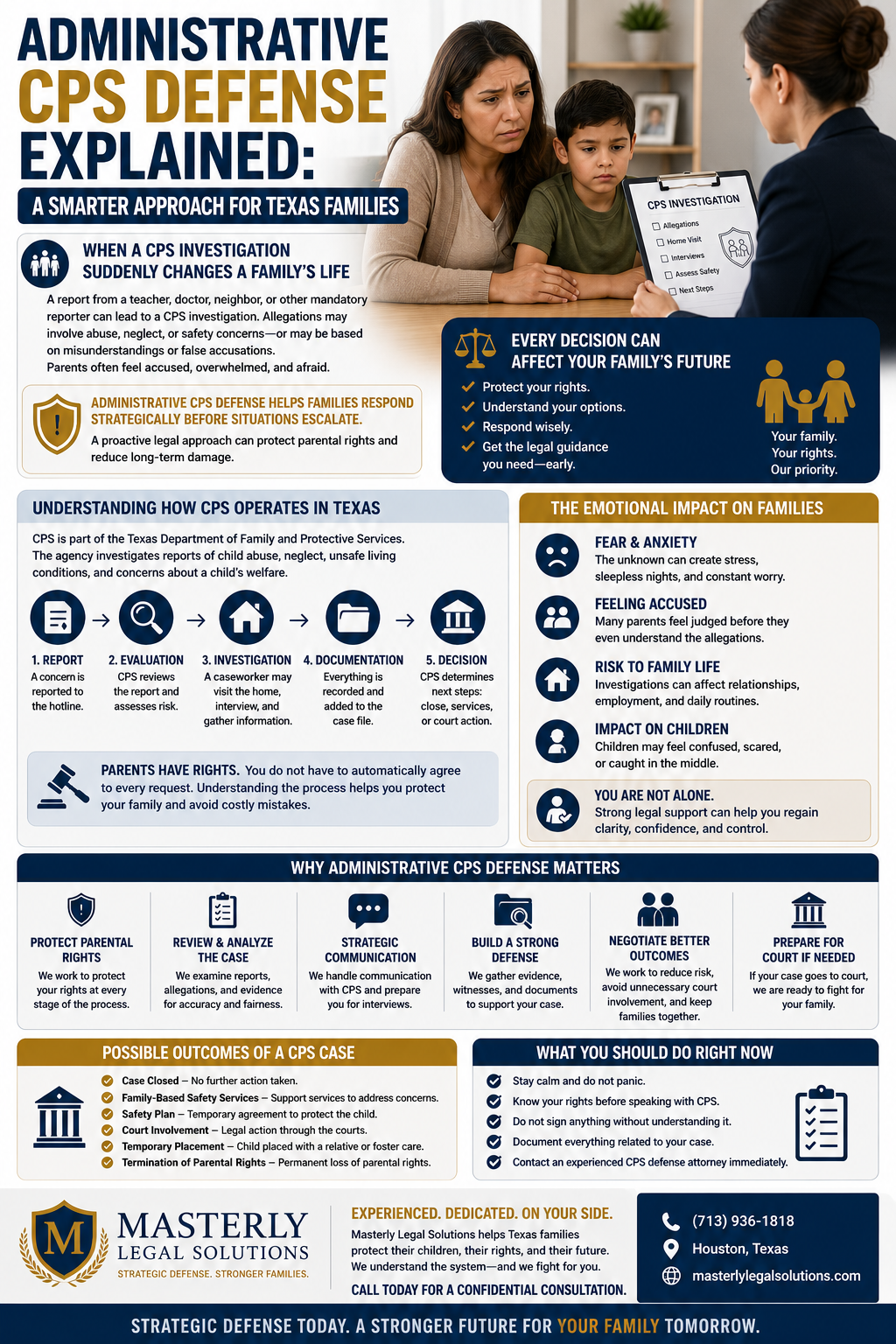
Administrative CPS Defense Explained: A Smarter Approach for Texas Families
When a CPS Investigation Suddenly Changes a Family’s Life
Most parents never expect to hear from Child Protective Services. One moment, life feels normal, and the next, a CPS investigator is asking questions about the safety of a child inside the home. For many Texas families, the experience feels confusing, emotional, and deeply personal. Parents often feel accused before they even understand why the investigation started.
A CPS investigation can begin after a report from a teacher, doctor, neighbor, school counselor, social worker, or other mandatory reporter, and educators in particular may face their own education law investigations and disciplinary processes. Sometimes the allegations involve suspected child abuse, child neglect, or concerns about the child’s safety. Other times, misunderstandings or false accusations lead Child Protective Services CPS to become involved even when no actual abuse occurred. Regardless of how the report begins, families often feel overwhelmed by fear and uncertainty.
At Masterly Legal Solutions, we understand how stressful CPS cases can become. Many parents worry about losing custody, damaging their reputation, or facing long lasting consequences that affect the entire family’s future. Administrative CPS defense focuses on helping families respond strategically and intelligently before situations escalate further. A proactive legal approach may help protect parental rights while reducing unnecessary damage during the investigation process.
Understanding How Child Protective Services Operates in Texas
Child Protective Services operates under the Texas Department of Family and Protective Services. The agency investigates allegations involving child abuse or neglect, unsafe living conditions, and concerns about a child’s welfare. The purpose of protective services is to determine whether a child may face danger or immediate danger within the home environment.
When a report is received, the department evaluates the allegations and decides whether the concerns justify opening a CPS investigation. If investigators believe there may be abuse or neglect, the case may move quickly. A CPS caseworker or CPS investigator may visit the child’s home, interview family members, inspect living conditions, or contact schools and medical providers.
The CPS system has broad authority to investigate concerns involving children, but parents still maintain important legal rights throughout the process. Many parents mistakenly believe they must automatically agree to every request made by CPS workers. Understanding how the process works often helps families respond more carefully and avoid unnecessary mistakes during stressful situations.
The child welfare system also focuses heavily on documentation. Every statement, observation, interview, and report may later appear in court records or future investigations. This is one reason why strong CPS defense strategies often begin early before misunderstandings grow more serious.
Why Administrative CPS Defense Matters
Administrative CPS defense focuses on protecting families during the early and middle stages of CPS involvement before situations become even more severe. Many people think CPS defense only matters once court hearings begin. In reality, important decisions often happen long before a judge becomes involved.
Administrative defense may involve responding to requests from CPS workers, reviewing allegations carefully, preparing parents for interviews, or challenging inaccurate information during the investigation. These early actions can significantly affect how the agency views the family moving forward.
At Masterly Legal Solutions, we often explain that a smarter defense strategy begins with preparation rather than panic. Parents who understand the process and receive legal guidance early are often in a stronger position to defend themselves effectively. Administrative CPS defense is designed to help families avoid unnecessary escalation whenever possible.
This approach may also help protect the family’s future by reducing misunderstandings, preserving evidence, and ensuring parents are treated fairly throughout the process. When handled carefully, strategic early intervention may help families avoid deeper involvement with the court system.
Common Reasons CPS Investigations Begin
Many parents are surprised by the common reasons CPS investigations start. Some cases involve legitimate concerns regarding child abuse or neglect. However, other cases begin because of misunderstandings, exaggerated reports, or emotional conflicts between adults.
Common reasons investigations may begin include:
- Allegations of physical abuse
- Claims involving child neglect
- Concerns about supervision
- Reports involving drug abuse
- Domestic violence concerns
- Unsafe living conditions
- Medical neglect allegations
- School attendance issues
- Emotional abuse accusations
Sometimes family members, former spouses, or other family individuals make reports during custody disputes or personal disagreements, and in some situations parents need focused help from a false accusation attorney to defend against unfounded claims. In other situations, a teacher or doctor may contact Child Protective Services after observing something they believe requires investigation.
Regardless of the circumstances, once the agency opens a case, parents should take the situation seriously. Even false allegations may create serious legal and emotional consequences if the investigation is handled poorly.
The Emotional Reality Families Face During CPS Cases
Many parents describe CPS involvement as one of the most stressful experiences of their lives. The fear of losing a child or facing allegations of abuse creates emotional pressure that affects every part of daily life. Parents often lose sleep, struggle at work, and feel constant anxiety while the investigation continues.
Children may also experience confusion and fear during the process. Interviews with CPS workers, social services representatives, or law enforcement can feel intimidating for young children who do not fully understand what is happening. Tension inside the household may also increase while the investigation remains open.
Some families feel isolated after CPS becomes involved. They worry about judgment from neighbors, schools, churches, or extended family members. False accusations may damage relationships even before investigators determine whether the allegations are true.
At Masterly Legal Solutions, we understand that these cases involve real people and real families, not just legal paperwork. Strong legal representation often helps clients regain clarity and confidence during emotionally overwhelming situations.
The Difference Between Criminal and Administrative CPS Matters
Many CPS investigations involve administrative processes rather than immediate criminal charges. However, families often confuse the two because CPS investigations may involve police, social workers, and legal proceedings simultaneously.
Administrative CPS defense focuses on protecting the family during agency investigations, safety plans, interviews, and internal reviews conducted by protective services. Criminal investigations, by contrast, may involve law enforcement evaluating whether alleged abuse violated criminal law.
Sometimes both systems become involved at the same time, and families may benefit from working with a firm that handles both CPS defense and broader education law and related legal services in Texas. For example, allegations involving severe child abuse may trigger both a CPS investigation and police involvement simultaneously. Statements made during administrative interviews may later affect criminal matters as well.
This overlap is one reason families should proceed carefully during investigations. An experienced attorney can help determine how different parts of the process may affect one another and help clients avoid unnecessary legal risks.
Understanding the CPS Investigation Process
The CPS investigation process usually begins shortly after the agency receives a report. A CPS caseworker or investigator reviews the allegations and determines whether immediate action is necessary to protect the child.
The investigation process may include:
- Home visits
- Interviews with parents
- Interviews with the child
- Contact with schools or doctors
- Review of medical records
- Communication with other relevant individuals
Investigators may attempt to determine whether abuse or neglect occurred and whether the child currently faces any danger. The agency may also evaluate the overall condition of the child’s home and the family environment.
Many parents mistakenly believe cooperating fully guarantees the case will close quickly. While cooperation may sometimes help, parents should still approach the process strategically and carefully. Statements made during investigations often become part of permanent records that may later appear in court proceedings.
Why Parents Often Feel Accused Immediately
One of the hardest aspects of CPS involvement is that many parents feel accused before anyone fully explains the allegations against them. A CPS investigator may arrive unexpectedly and begin asking deeply personal questions about parenting, discipline, medical care, or household conditions.
Even when parents know they did nothing wrong, the experience often feels intimidating. Many people feel defensive, embarrassed, or angry during early conversations with CPS workers. Emotional reactions sometimes lead parents to say things that later create additional complications.
Parents should understand that CPS investigators are trained to gather information, evaluate safety concerns, and document observations carefully. Their reports may later influence court decisions, custody disputes, or future CPS cases.
Remaining calm and strategic during these early stages often becomes extremely important. Families who panic sometimes make decisions that unintentionally harm their position later.
What CPS Workers Are Looking For
CPS workers evaluate multiple factors during investigations involving alleged abuse or neglect. Their primary focus is determining whether the child’s safety may be at risk inside the home.
Investigators may examine:
- Living conditions
- Parent-child interactions
- School attendance
- Medical care
- Discipline practices
- Supervision arrangements
- Substance abuse concerns
- Emotional stability within the household
The agency may also review whether previous allegations or investigations exist involving the same family. Prior reports sometimes increase scrutiny even if earlier accusations were never proven.
Understanding what investigators are evaluating may help families better prepare during the process. Administrative CPS defense often involves helping parents present relevant information clearly and professionally during these interactions.
The Importance of Protecting Parental Rights
Parents maintain important parental rights throughout CPS investigations, even when allegations involve child abuse or neglect. Unfortunately, many families do not fully understand these rights during the early stages of the process.
Parents may have rights involving legal counsel, court hearings, evidence review, and communication with investigators. However, fear and confusion sometimes cause families to waive protections without realizing the long-term consequences.
At Masterly Legal Solutions, we believe parents deserve to understand their legal position clearly before making major decisions during CPS investigations. Strong CPS defense often focuses on helping clients protect parental rights while still responding strategically to the agency’s concerns.
Protecting these rights matters because decisions made early in the process may later affect custody arrangements, court orders, and even termination of parental rights proceedings in severe cases.
How False Allegations Create Serious Problems
False accusations involving abuse or neglect can still create major legal and emotional consequences. Even when allegations lack evidence, the investigation itself may disrupt the family’s life for months or longer.
False allegations sometimes arise during difficult divorces, custody disputes, or conflicts between family members. In other situations, mandatory reporters may misunderstand injuries, discipline methods, or medical conditions and contact Child Protective Services out of caution.
Unfortunately, once CPS becomes involved, the agency generally treats every report seriously until the investigation concludes. Families may still face interviews, home inspections, and possible court involvement even when accusations are inaccurate.
This is why families should never dismiss CPS allegations casually. A strategic administrative defense may help reduce misunderstandings and protect the family from unnecessary escalation.
Safety Plans and Why Families Must Read Them Carefully
One of the most misunderstood parts of CPS cases involves safety plans. A safety plan is usually a written agreement outlining specific conditions the family must follow during the investigation.
The agency may request supervision requirements, restrictions involving certain adults, temporary living arrangements, or participation in services. Parents often feel pressured to sign immediately because they fear refusal will lead to child removal.
However, safety plans can carry significant consequences. Violating the agreement may later become evidence used against the parents in court. Some families unknowingly agree to terms that create major problems later.
An attorney for CPS matters may help families review these agreements carefully before signing anything. Understanding the long-term impact of a safety plan is extremely important.
The Fear of Child Removal
Nothing creates fear faster than hearing CPS may remove a child from the home. Child removal is one of the most serious actions the agency can take during an investigation.
CPS may seek removal if investigators believe the child faces immediate danger or ongoing risk involving abuse or neglect. Temporary placement may involve relatives, foster care, or emergency arrangements approved through the court system.
Parents often feel devastated and helpless during these moments. The speed of emergency court proceedings leaves many families emotionally overwhelmed and unsure how to respond effectively.
Strong CPS defense strategies focus heavily on protecting the child’s safety while also defending the family against unnecessary separation whenever possible. Early legal intervention may sometimes help families avoid more severe outcomes.
Family Reunification and Why Early Action Matters
In some CPS cases, the agency’s long-term goal involves family reunification rather than permanent separation. This means CPS may attempt to provide services designed to address concerns while eventually returning the child to the parents.
Services may include:
- Parenting classes
- Counseling
- Drug treatment programs
- Supervised visitation
- Home evaluations
- Mental health assessments
However, parents should understand that participation in these services may still affect future court proceedings and custody decisions. Every recommendation should be reviewed carefully with legal guidance.
The earlier families begin building a strong defense strategy, the better positioned they may be to pursue positive outcomes involving reunification and long-term family stability.
Why CPS Cases Sometimes Escalate Quickly
Many parents initially believe the investigation will remain informal. However, CPS cases may escalate rapidly depending on the allegations, evidence, and concerns identified by investigators.
For example, allegations involving severe abuse, repeated neglect, or drug abuse may lead to emergency hearings or requests for court intervention. In some situations, the department may seek a court order restricting parental access or authorizing temporary placement.
Parents who fail to respond strategically during the early stages sometimes find themselves facing more aggressive agency action later. Administrative CPS defense is designed to help families address concerns before the situation worsens unnecessarily.
Quick action often matters because once court proceedings begin, the stakes become even higher for the entire family.
How Courts Become Involved in CPS Cases
When CPS believes significant safety concerns remain unresolved, the agency may file legal action through the court system. Judges then review evidence and determine what steps should be taken regarding the child’s welfare.
Court involvement may include decisions involving:
- Temporary custody
- Visitation rights
- Placement arrangements
- Service requirements
- Safety plans
- Future hearings
The court’s primary focus is typically the best interests of the child. However, parents still maintain important legal protections throughout these proceedings.
An experienced attorney may help defend parents during hearings, challenge inaccurate allegations, and present evidence supporting the family’s position. Proper legal advocacy often becomes extremely important once the court system becomes involved.
Why Legal Representation Matters So Much
Families facing CPS investigations often underestimate the importance of legal representation during the early stages of the process. Many people assume they can explain the situation themselves without needing legal help.
However, CPS investigations involve complicated legal matters, procedural rules, and documentation practices that may significantly affect the outcome of the case. Statements made casually during interviews may later appear in reports, court filings, or testimony.
At Masterly Legal Solutions, our lawyers understand how overwhelming these cases can become for families. A CPS attorney may help clients understand their rights, prepare for interviews, respond strategically to allegations, and build stronger defenses throughout the process.
Legal representation often provides clarity and structure during situations that otherwise feel chaotic and emotionally exhausting.
What Families Should Avoid During Investigations
Parents sometimes make avoidable mistakes during CPS investigations because they react emotionally out of fear or frustration. Certain actions may unintentionally worsen the situation.
Families should avoid:
- Arguing aggressively with investigators
- Ignoring requests entirely
- Providing false information
- Posting details online
- Signing documents without understanding them
- Assuming the case will disappear on its own
Parents should also avoid making impulsive decisions based solely on panic. Administrative CPS defense focuses heavily on helping families remain calm, informed, and strategic during stressful situations.
Careful preparation often helps clients avoid unnecessary damage during investigations involving abuse allegations or neglect concerns.
The Role of Social Services During CPS Cases
Social services agencies sometimes become involved alongside Child Protective Services during investigations, similar to how organizations may rely on outside counsel for labor, employment, and internal investigation support when serious concerns arise. These services may include counseling providers, therapists, substance abuse treatment programs, or parenting support organizations.
The agency may recommend services designed to improve safety inside the home and reduce future risks to the child. In some cases, participation in programs becomes part of court proceedings or safety plans.
Parents should understand that social workers and service providers may also create reports documenting their observations and recommendations. These records may later influence CPS decisions and court outcomes.
An attorney may help families better understand how participation in services could affect the broader legal strategy during the case.
Why Families Often Feel Powerless
Many parents describe feeling powerless once CPS becomes involved. The agency appears to control interviews, schedules, investigations, and court filings while families struggle to understand what is happening.
Parents often feel afraid to ask questions because they worry disagreement will make the situation worse. Others become overwhelmed by fear after hearing terms like foster care, child removal, or termination proceedings.
At Masterly Legal Solutions, we understand these emotional realities. One major goal of administrative CPS defense is helping families regain confidence, knowledge, and strategic direction during difficult moments.
Understanding the process often helps reduce panic and allows families to make more informed decisions moving forward.
Why Administrative Defense Is Often Smarter Than Reactive Defense
Reactive defense happens when families wait until serious court action already begins before seeking legal guidance. Administrative CPS defense focuses on early preparation, strategic communication, and proactive planning before the situation escalates further.
This smarter approach may help:
- Reduce misunderstandings
- Clarify allegations earlier
- Preserve evidence
- Protect parental rights
- Prevent unnecessary escalation
- Improve communication with investigators
Families who respond strategically early often place themselves in stronger positions than those who wait until emergency hearings or removal proceedings occur.
At Masterly Legal Solutions, we believe preparation matters greatly during CPS investigations.
Why a CPS Defense Attorney Is Important During Serious Investigations
A CPS defense attorney may play a critical role when families are facing investigations involving allegations of abuse or neglect. Many parents feel overwhelmed after Child Protective Services becomes involved because they do not fully understand the legal process or how quickly situations can escalate. A strong defense strategy often focuses on protecting parental rights, responding carefully to investigators, and helping families avoid mistakes that could negatively affect custody or future court proceedings. Families dealing with CPS matters frequently need guidance from someone who understands both the emotional stress and the legal risks connected to these cases. Early legal support may help parents feel more prepared while protecting the long-term stability of the family.
How Child Abuse Allegations Can Affect an Entire Family
Child abuse allegations often create immediate fear and emotional strain for both parents and children. Even before investigators determine whether the accusations are true, families may experience tension, embarrassment, and uncertainty about what will happen next. Schools, doctors, counselors, and social workers may become involved in the investigation, increasing the pressure on everyone connected to the child, and teachers themselves often require legal protection and support when school investigations affect their careers. In some situations, false accusations or misunderstandings still lead to serious legal consequences if the case is not handled carefully from the beginning. Because child abuse allegations may affect custody, parental rights, and future relationships with the child, families should take every investigation seriously and seek guidance as early as possible.
Why Families Should Carefully Review Every Written Request From CPS
During a CPS investigation, parents may receive a written request asking for records, interviews, medical information, or access to certain documents connected to the child and household. Many families feel pressured to respond immediately because they fear noncompliance may worsen the case. However, every written request should still be reviewed carefully to understand how the information may later be used during court proceedings or official reports. Documents and statements provided during investigations often become part of the permanent CPS file. Understanding the purpose behind a written request may help families respond more strategically while protecting their legal interests.
Understanding the Serious Impact When CPS Remove a Child
When CPS remove a child from the home, the emotional and legal consequences can become overwhelming for the entire family. Parents often feel shocked by how quickly emergency hearings and placement decisions occur once investigators believe the child may face immediate danger. Depending on the circumstances, the child may stay temporarily with relatives, foster care providers, or another approved placement arrangement. Families frequently struggle emotionally during periods of separation while trying to meet court requirements and comply with CPS recommendations. Early legal advocacy may become especially important in cases involving child removal because the decisions made during the first stages of the case can affect long-term custody outcomes.
Why Extensive Experience Matters in CPS Cases
Families facing investigations involving abuse or neglect often benefit from working with attorneys who have extensive experience handling CPS matters. These cases involve complicated legal procedures, agency policies, court hearings, and emotional family issues that differ from many other areas of law. An attorney familiar with Child Protective Services investigations may better understand how to challenge weak allegations, prepare evidence, and identify problems within the agency’s process. Parents dealing with serious accusations frequently need guidance from someone who understands both the legal system and the emotional impact these investigations create. Strong legal experience may help families feel more confident and informed during difficult moments involving CPS and the court system.
The Important Role a Defense Attorney Plays During CPS Proceedings
A defense attorney may help parents navigate the stressful and confusing legal process that often follows a CPS investigation. Families are frequently overwhelmed by interviews, paperwork, court appearances, and communication with social workers or investigators. A strong defense strategy may involve reviewing CPS reports, gathering supporting evidence, preparing parents for hearings, and responding carefully to allegations involving abuse or neglect. Attorneys may also advocate for alternatives to foster care or challenge inaccurate information presented during the investigation. For many families, having a defense attorney involved provides structure, reassurance, and stronger protection during highly emotional situations.
How a Guardian May Become Involved in a CPS Investigation
In certain CPS cases, the court may appoint a guardian or guardian ad litem to represent the child’s interests during legal proceedings. This person may review records, interview family members, and provide recommendations regarding custody, placement, or visitation arrangements. Parents are often surprised to learn that multiple professionals may become involved once the case enters the court system. The guardian’s recommendations can carry significant influence when judges evaluate what arrangement serves the child’s best interests and long-term safety. Understanding the guardian’s role may help families better prepare for court hearings and communication throughout the case.
Why Parents Should Understand Consent During CPS Investigations
Questions involving consent often arise when CPS investigators request access to homes, interviews, medical records, or evaluations connected to the child and family. Many parents feel afraid to question these requests because they worry refusal may automatically lead to additional scrutiny or child removal. However, families should still understand what they are agreeing to and how certain decisions may affect future legal proceedings. Statements made during interviews and records provided voluntarily may later become evidence used in court or agency reports. Careful legal guidance may help parents better understand their rights while still responding professionally during the investigation process.
How Legal Expertise Can Strengthen a CPS Defense Strategy
Strong legal expertise can make a major difference when families are trying to defend themselves against allegations involving abuse or neglect. CPS investigations often move quickly, leaving parents emotionally overwhelmed and uncertain about how to respond appropriately. An attorney with expertise in Child Protective Services matters may help identify weaknesses in the agency’s claims, preserve important evidence, and prepare families for court hearings or interviews. Parents frequently feel more secure when they understand the process and receive guidance from someone familiar with Texas CPS law and court procedures. Effective legal expertise may help families better protect their rights, their child, and their future during one of the most stressful situations they may ever face.
The Importance of Relevant Information and Documentation
Strong CPS defense often depends heavily on documentation and relevant information, just as effective representation in other areas of law requires a client-centered, comprehensive legal strategy. Medical records, school reports, witness statements, photographs, and communication records may all become important during the investigation.
Families should preserve information carefully and avoid destroying or altering documents. Even small details may later help clarify misunderstandings or challenge inaccurate allegations.
An experienced attorney may help determine what evidence could support the family’s defense and how to organize materials effectively during court proceedings or administrative reviews.
The earlier evidence is preserved, the better positioned families may be to defend themselves strategically.
How CPS Defense Protects the Family’s Future
CPS cases often affect far more than the immediate investigation itself. Allegations involving abuse or neglect may create long lasting consequences involving employment, custody disputes, school relationships, and future investigations.
Strong CPS defense focuses not only on the current allegations but also on protecting the family’s future long after the case ends. Parents who handle investigations carefully may reduce the likelihood of ongoing legal or reputational problems later.
At Masterly Legal Solutions, we understand that every CPS case involves real families trying to protect their children and move forward safely, which is why we also emphasize tools like powers of attorney for children and related planning to support families outside the CPS process. Thoughtful legal advocacy may help preserve stability during uncertain times.
Families deserve the opportunity to defend themselves fairly while protecting the people they love most.
Speak With Masterly Legal Solutions About Attorney for CPS Defense
If your family is facing a CPS investigation in Texas, it is important to understand your rights and options as early as possible. Allegations involving child abuse, neglect, child protective services, or safety concerns can quickly become serious legal matters affecting custody, parental rights, and your family’s future.
At Masterly Legal Solutions, our lawyers understand how emotionally difficult CPS cases can become for parents and children, and we also provide legal support for educators facing TEA and school investigations. Whether you are dealing with a CPS investigator, safety plans, court proceedings, or allegations of abuse or neglect, we are prepared to help you build a smarter defense strategy focused on protecting your family.
Contact us at (972) 236-5051 for a free consultation. If you need an attorney for CPS matters, our team can answer questions about investigations, parental rights, custody concerns, protective services involvement, and legal defense options available under Texas law. Early legal guidance may make an important difference in the direction and outcome of your case.
Disclaimer: This article is intended for informational and educational purposes only and should not be considered legal advice or legal guidance. Reading this article does not create an attorney-client relationship with Masterly Legal Solutions. Every CPS case involves unique facts, laws, allegations, and circumstances that may affect the legal analysis and possible outcome. Families facing Child Protective Services investigations, abuse allegations, neglect claims, custody disputes, or court proceedings should contact a qualified attorney regarding their specific situation.


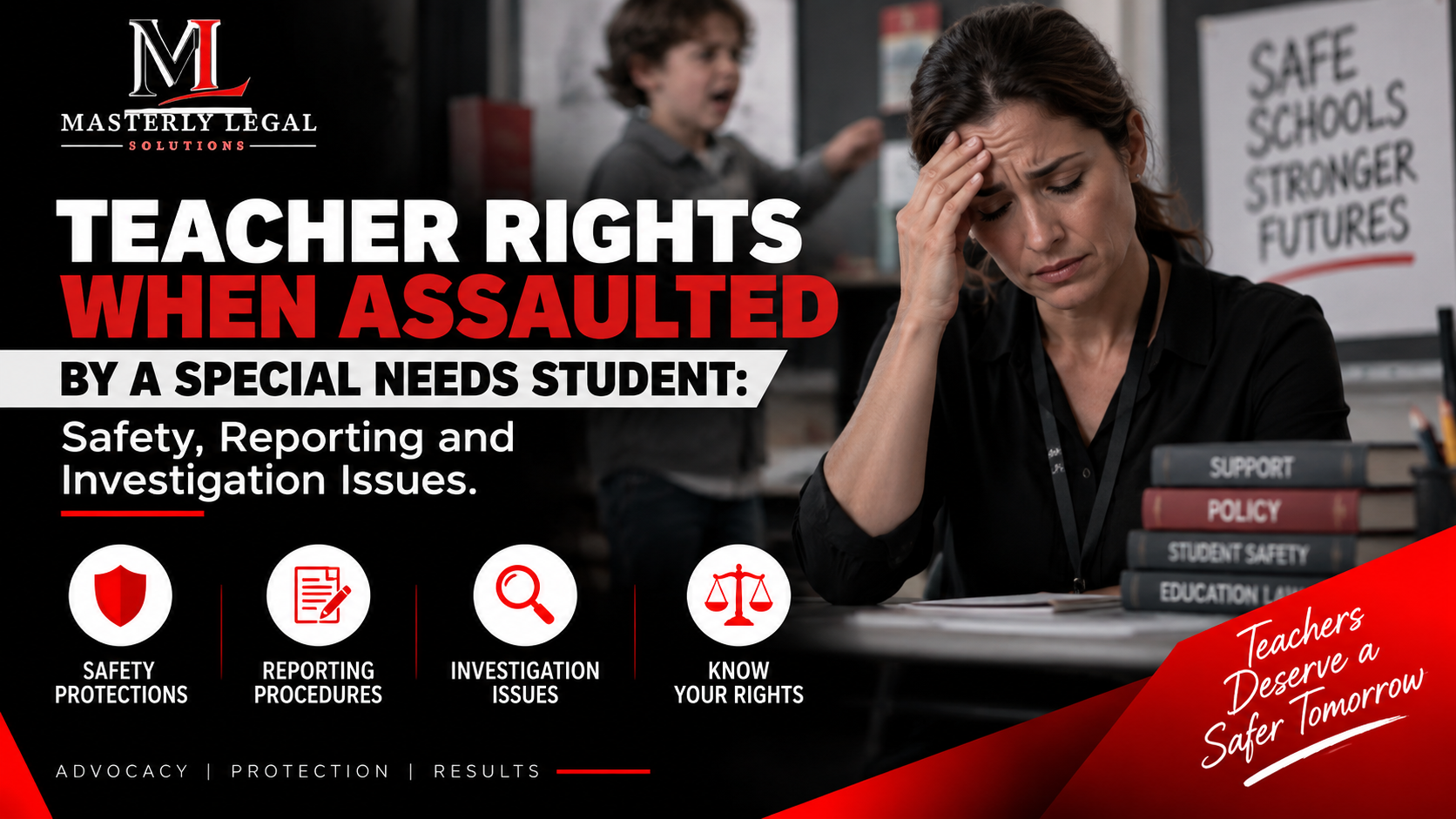
Teacher Rights When Assaulted by a Special Needs Student: Safety, Reporting and Investigation Issues


Looking for Legal & Business Solutions? Contact Us Now
Fill in the form or call us to set up a meeting





