

Administrative Leave and Retaliation at Work: What Teachers Should Know
Teaching is more than a profession. For many educators, it is a calling built on trust, responsibility, and a commitment to students. When issues arise at school that lead to administrative leave or retaliation, the experience can feel confusing, isolating, and overwhelming. At Masterly Legal Solutions, we work with teachers and other workers who are trying to understand their rights and protect their careers when an employer takes actions that feel unfair or unlawful.
This article is designed to help individual employees, especially teachers, better understand how administrative leave and retaliation work under federal and state laws. More importantly, it explains when retaliation occurs, what protections exist, and when it may be time to speak with experienced employment lawyers who understand the education system. Our goal is not just to inform, but to help you recognize warning signs and take steps to protect your professional future and well being.
Understanding Administrative Leave in the Education Setting
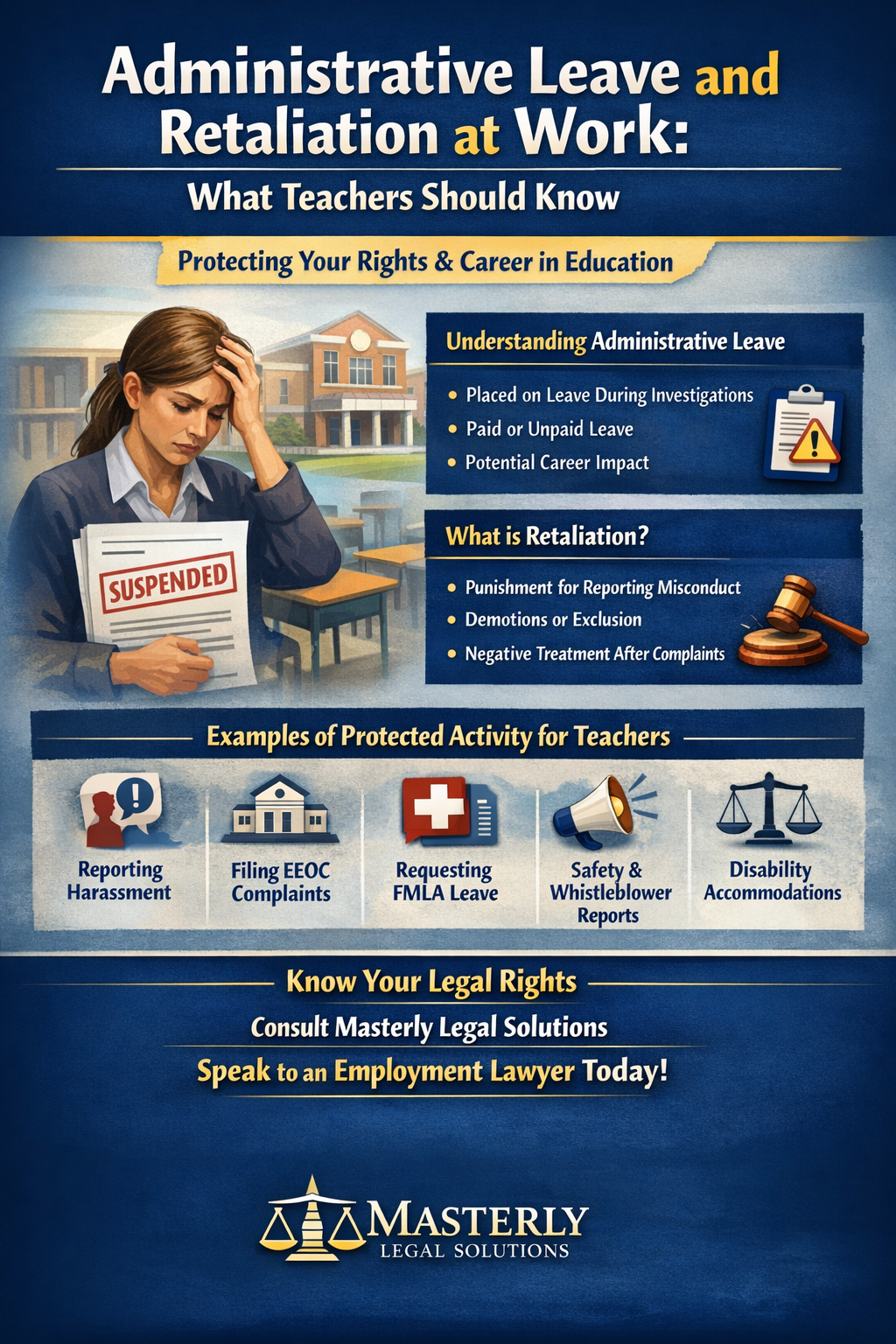
Administrative leave often sounds neutral, but its impact can be significant. Teachers may be placed on leave during investigations, disputes, or complaints involving workplace conditions or alleged misconduct. While some forms of administrative leave are paid time and temporary, others can quickly turn into a career-altering event.
From a legal standpoint, administrative leave may be lawful, but context matters. How the employer handles the leave, how long it lasts, and what happens afterward all affect whether the action is considered retaliatory or discriminatory. A reasonable employee in the same position may view certain actions as punishment rather than routine procedure.
When Administrative Leave Becomes a Legal Concern
Problems arise when administrative leave is used as a tool to punish or silence employees. If an employer places a teacher on leave shortly after a complaint, report, or other protected activity, it may raise concerns of retaliation. This is especially true when the leave results in lost wages, reputational harm, or removal from a desirable position.
Under many laws, including Title VII of the Civil Rights Act, adverse actions do not have to involve termination to be unlawful. Being sidelined, excluded, or reassigned to a less desirable position can still have a negative impact on a teacher’s career and overall employee morale.
What Retaliation Means Under Employment Law
Retaliation occurs when an employer takes adverse actions against employees because they engaged in legally protected conduct. This can include filing a complaint, participating in an investigation, requesting workplace accommodations, or reporting unsafe or unlawful practices.
Importantly, retaliation does not require that the original complaint be proven true. The law protects workers who act in good faith. If retaliation occurs when an employer responds to protected activity with punishment or intimidation, it may be a possible violation of federal law and state laws.
Examples of Protected Activity for Teachers
Teachers engage in protected activity more often than they realize. Many routine actions fall under legal protections designed to protect workers from retaliation.
Common examples include:
- Reporting workplace discrimination or harassment
- Filing a complaint with the equal employment opportunity commission
- Requesting job protected leave under the medical leave act or FMLA leave
- Reporting sexual harassment or unwanted sexual advances
- Raising concerns about occupational safety or physical harm risks
- Requesting accommodations related to disabilities act requirements
- Reporting violations of whistleblower laws
Each of these actions is legally protected when done properly, and retaliation for these actions is prohibited.
How Retaliation Can Appear in Subtle Ways
Retaliation takes many forms, and not all of them are obvious. In schools, retaliation often happens quietly, through changes that slowly erode a teacher’s role or reputation. These actions may be considered retaliatory even if the employer claims a neutral reason.
Examples of adverse actions include:
- Sudden placement on administrative leave
- Reassignment to a less desirable position
- Reduction in work hours or overtime pay
- Unfair disciplinary write-ups
- Exclusion from meetings or professional opportunities
- Negative performance evaluations after a complaint
When viewed together, these actions can show a pattern that retaliation occurs rather than isolated decisions.
The Role of Federal and State Laws in Teacher Protection
Teachers are protected by a combination of federal and state laws. Federal law sets minimum standards, while state laws often provide additional protections. Understanding how these laws interact is critical when evaluating whether an employer has crossed a legal line.
Key federal protections include Title VII, the employment act, the civil rights act, and laws enforced by the equal employment opportunity commission. These laws prohibit employment discrimination and retaliation based on protected characteristics and activities.
Title VII and Workplace Discrimination in Schools
Title VII is one of the most important laws protecting teachers. It prohibits discrimination based on race, color, national origin, sex, religion, and sexual orientation. It also protects employees who oppose workplace discrimination or participate in investigations.
If a teacher reports discrimination based on age discrimination, sexual orientation, immigration status, or national origin, and the employer responds with punishment, retaliation may be present. Even actions that affect job applicants or other employees can fall under these protections.
Retaliation Linked to Harassment Complaints
Harassment remains a serious issue in educational workplaces. Sexual harassment, repeated sexual advances, or hostile behavior from a co worker or supervisor can create an unlawful environment. Teachers who report harassment are engaging in protected activity.
When an employer punishes a teacher after a harassment complaint, such as placing them on leave or changing their working conditions, retaliation may occur. These actions can discourage other employees from speaking up, harming overall employee morale and workplace trust.
Whistleblower Laws and Reporting Misconduct
Teachers are often in a position to observe serious misconduct, including misuse of funds, unsafe practices, or violations of student rights. Whistleblower laws exist to protect workers who report these issues.
If an employer refuses to investigate concerns and instead targets the reporting teacher, this may be retaliation. Federal employees and state-level workers often have additional whistleblower protections, depending on the jurisdiction.
Family, Medical, and Caregiving Issues
Teachers may also face retaliation when requesting leave or flexibility related to family member needs or childcare responsibilities. Eligible employees are entitled to job protected leave under certain circumstances.
When an employer punishes or isolates a teacher for requesting FMLA leave, paid time off, or accommodations, retaliation may occur. These protections exist to prevent future discrimination against workers balancing professional and personal responsibilities.
Reasonable Accommodations and Undue Hardship
Teachers with disabilities or medical needs may request workplace accommodations. Under the disabilities act, employers must provide reasonable accommodations unless doing so causes undue hardship.
If an employer refuses to engage in the accommodation process and instead imposes discipline or places the teacher on leave, this can be evidence of retaliation or discrimination based on disability.
How Employer Intent Is Evaluated
In retaliation cases, the focus is often on timing and impact rather than stated intent. Occurs when an employer takes adverse actions shortly after protected activity, especially without consistent justification.
Courts often consider whether a reasonable employee would feel discouraged from reporting issues due to the employer’s response. This standard helps protect individual employees from subtle but harmful retaliation.
Administrative Leave and Employee Handbooks
Employee handbook may outline procedures for investigations and administrative leave. While policies matter, they do not override laws. Employers must follow their own policies consistently and lawfully.
If a handbook is applied selectively or used to target specific employees after complaints, this may indicate retaliation or employment discrimination.
The Impact on Employee Morale and the School Environment
Retaliation does not just harm one teacher. It affects other employees, overall employee morale, and trust within the workplace. When workers see colleagues punished for speaking up, they may stay silent about serious issues.
Schools thrive when teachers feel safe to raise concerns. Retaliation undermines that foundation and can lead to long-term damage to working conditions and educational outcomes.
Immigration Status and Retaliation
Teachers and school workers of varying immigration status are still protected under many employment laws. An employer cannot use immigration concerns as a weapon in response to protected activity.
Threats related to immigration status, job security, or reporting to authorities may constitute retaliation and discrimination based on national origin.
Retaliation Versus Legitimate Discipline
Not every disciplinary action is retaliation. Employers can discipline employees for legitimate reasons. However, when discipline follows protected activity closely and deviates from past practices, it raises red flags.
Employment lawyers often examine whether similar conduct by other workers was treated differently. Inconsistent treatment can be powerful evidence of retaliation.
Wrongful Termination After Administrative Leave
In some cases, administrative leave is a step toward wrongful termination. If a teacher is placed on leave without cause and later terminated after engaging in protected activity, legal action may be appropriate.
Wrongful termination claims often involve lost wages, damage to professional reputation, and emotional harm. In serious cases, punitive damages may also be available.
Filing a Retaliation Complaint
Teachers who believe retaliation has occurred may file a retaliation complaint with the equal employment opportunity commission or a state agency. Strict deadlines apply, and missing them can jeopardize a case.
Before filing, it is often helpful to speak with labor and employment lawyers who can assess the facts and guide the process.
Documentation and Evidence Matter
Strong retaliation cases are built on documentation. Emails, timelines, performance reviews, and witness statements can all support a claim.
Keeping records of complaints, responses, and changes in treatment helps establish a clear narrative of adverse actions and protected activity.
The Role of Human Resources
Human resources departments are meant to address complaints, but they also represent the employer. Teachers should be cautious and informed when dealing with HR during sensitive situations.
Statements made to HR can later be used in investigations or legal proceedings. Legal guidance can help teachers navigate these conversations carefully.
How Retaliation Affects Career Progression
Being placed on leave or labeled as a “problem employee” can follow a teacher for years. Retaliation can limit promotions, references, and future opportunities.
Understanding legal protections early can help teachers take action before long-term damage occurs.
Federal Employees and Public School Teachers
Federal employees and many public school teachers have additional procedural protections. However, retaliation laws still apply, and violations can occur at any level.
Knowing which federal and state laws apply to your specific role is essential.
Taking Action Before Future Discrimination Occurs
Addressing retaliation early can prevent future discrimination and further adverse actions. Silence often allows misconduct to escalate.
Teachers who act promptly help protect not only themselves but also other workers facing similar issues.
Why Legal Support Matters
Retaliation cases are complex. Employers often deny wrongdoing and justify actions as routine management decisions. Experienced employment lawyers understand how to uncover patterns and build strong cases.
At Masterly Legal Solutions, we focus on protecting educators and workers facing unfair treatment.
Standing Up Without Standing Alone
Facing an employer can feel intimidating, especially when your career and reputation are at stake. Legal protections exist so workers do not have to choose between silence and punishment.
With the right support, teachers can assert their rights and seek accountability.
Protecting Yourself and Your Profession
Education depends on integrity and fairness. Retaliation threatens both. Understanding your rights is the first step toward protecting your career and the learning environment you help create.
Teachers deserve respect, safety, and lawful treatment at work.
Speak With Masterly Legal Solutions
If you are a teacher dealing with administrative leave, retaliation, or workplace discrimination, you do not have to navigate this alone. At Masterly Legal Solutions, we offer free consultations to help you understand your options and answer your questions.
Every situation is different, and early guidance can make a meaningful difference. Contact us at (972) 236-5051 to discuss your concerns and learn how we can help protect your rights and your future.
Disclaimer: This article is for informational and educational purposes only and does not constitute legal advice. Reading this article does not create an attorney-client relationship. For legal guidance regarding your specific situation, contact a qualified attorney.



Teacher Rights When Assaulted by a Special Needs Student: Safety, Reporting and Investigation Issues



Looking for Legal & Business Solutions? Contact Us Now
Fill in the form or call us to set up a meeting