
The Difference Between Suspension, Revocation, and Restrictions
When a teacher, educator, or school employee receives notice of disciplinary action, the language alone can feel intimidating. Words like suspension, revocation, and restrictions carry serious professional and personal consequences. At Masterly Legal Solutions, we regularly speak with teachers, parents, and school employees who are unsure what these terms truly mean within education law and how they affect careers, licenses, and futures.
This article is designed to explain the difference between suspension, revocation, and restrictions in clear, practical terms. These disciplinary outcomes are often used by school districts, universities, and the state board in response to alleged violations. Understanding how each action works, and what rights exist under the law, can make all the difference when facing education law matters.
Why These Terms Matter in Education Law
In the education system, disciplinary labels are not interchangeable. Each action carries a different level of severity and long-term impact. Education law recognizes these distinctions because teachers and school employees deserve fair treatment, due process, and clarity.
For students, parents, and educators alike, knowing these differences helps protect civil rights and ensures decisions are made in the best interests of children and the broader school system.
The Role of Education Law in Disciplinary Actions
Education law governs how schools, school districts, and educational institutions discipline teachers, staff members, and students. These laws are shaped by federal law, state law, and regulations enforced by agencies such as the Texas Education Agency.
Education law specialists focus on ensuring that disciplinary proceedings follow proper legal standards. This includes notice, the opportunity to be heard, and access to legal representation during administrative hearings or disciplinary hearings.
Understanding Suspension in the Education Setting
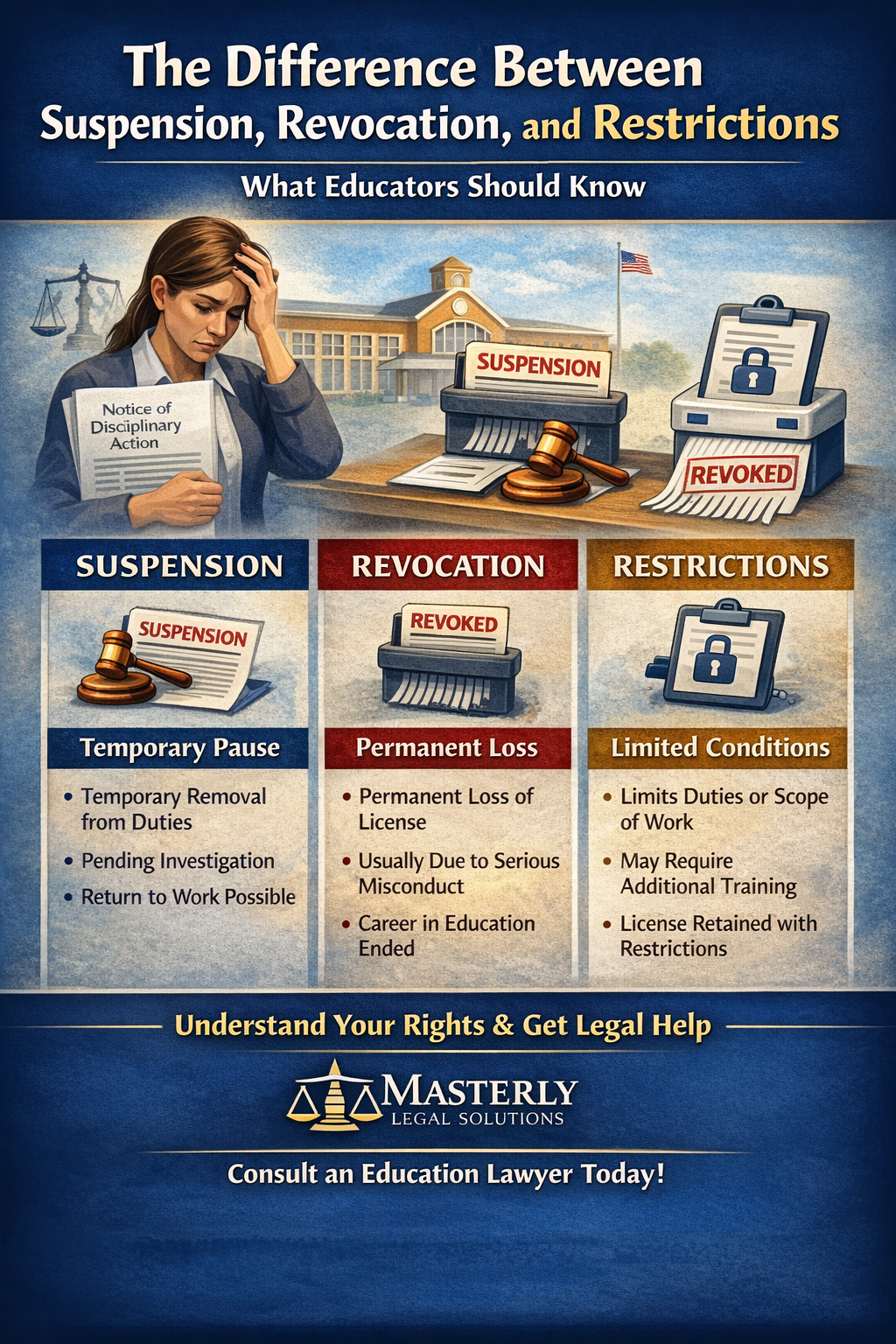
Suspension is often the first level of disciplinary action. In education law, suspension usually means a temporary removal from duties, privileges, or enrollment. For teachers and school employees, this may involve administrative leave while an investigation is ongoing.
Suspension does not necessarily end a career. However, it can still affect reputation, income, and professional standing within schools and universities.
Suspension for Teachers and School Employees
For teachers, suspension may occur during disciplinary proceedings related to alleged misconduct, policy violations, or Title IX complaints. School districts may suspend educators with or without pay, depending on the circumstances and applicable law.
Education attorneys often review whether the suspension followed required procedures and whether it aligns with teachers rights under education law and employment law.
Suspension of Students in Public and Private Schools
Students may also face suspension for disciplinary issues. In public education, suspensions must comply with civil rights protections and due process requirements. Private schools often have more flexibility, but they are still bound by contractual obligations and certain legal standards.
Representing students in suspension matters requires careful attention to students rights, school safety policies, and the educational setting involved.
What Revocation Means in Education Law
Revocation is the most severe disciplinary outcome. When a license, certification, or credential is revoked, it is permanently taken away unless reinstatement is later approved. For teachers, revocation can effectively end a career in public school systems and charter schools.
Education lawyers often describe revocation as a last resort used in serious cases involving misconduct, safety concerns, or violations of law.
Revocation and the State Board
In Texas education and many other jurisdictions, the state board plays a key role in revocation decisions. Administrative matters involving revocation typically include formal administrative hearings and extensive evidence review.
Education attorneys with years of experience understand how to present defenses during these proceedings and advocate for fair outcomes.
How Revocation Affects Educators and Universities
Revocation impacts more than employment. It can prevent educators from working in universities, private schools, and other educational institutions. It may also affect federal funding eligibility for certain programs tied to licensure requirements.
Because revocation carries lifelong consequences, legal help is essential as early as possible.
Understanding Restrictions as a Disciplinary Option
Restrictions fall between suspension and revocation. Rather than removing a license entirely, restrictions limit how, where, or under what conditions an educator may work. These limitations are often imposed to address specific concerns while allowing continued employment.
Restrictions are common in education law cases where remediation is possible and public safety is not immediately at risk.
Common Types of Restrictions in Education Law
Restrictions may vary depending on the case and the educational setting involved. They are often tailored to address the underlying issue.
Examples include:
- Prohibitions on working with certain age groups
- Required supervision by school administrators
- Mandatory training or counseling
- Limits on extracurricular involvement
Education law firm guidance can help ensure restrictions are reasonable and lawful.
Why Restrictions Are Sometimes Preferred
Restrictions can protect schools and students while allowing educators to continue contributing to education. From a legal perspective, restrictions may be appropriate when revocation would be excessive.
Education law specialists often advocate for restrictions as an alternative during disciplinary proceedings.
The Role of Administrative Hearings
Administrative hearings are central to suspension, revocation, and restriction cases. These hearings allow teachers, school employees, and students to present evidence and challenge allegations.
Administrative hearings differ from district court proceedings but still involve complex legal issues. Skilled lawyers with extensive experience in education law are critical during this stage.
Due Process and Fair Treatment
Education law emphasizes due process. This includes notice of allegations, access to evidence, and the right to be heard. Whether involving teachers, students, or parents, due process hearings help protect civil rights within the education system.
Failure to follow due process may invalidate disciplinary actions altogether.
Title IX and Disciplinary Outcomes
Title IX plays a major role in education disciplinary matters, particularly those involving sexual harassment and misconduct. Title IX investigations can lead to suspension, restrictions, or revocation depending on findings.
Education attorneys frequently represent teachers, students, and staff members during Title IX proceedings to ensure compliance with the law and protection of rights.
Sexual Harassment Allegations and Education Law
Allegations of sexual harassment are taken seriously across schools and universities. Education law requires prompt investigation and appropriate disciplinary responses.
However, accusations alone do not justify revocation or severe restrictions. Legal professionals help ensure that disciplinary proceedings remain fair and evidence-based.
The Impact on Teachers and School Employees
For teachers and other school employees, disciplinary actions affect income, reputation, and long-term career prospects. Even temporary suspension can create professional setbacks.
Represent teachers effectively requires a deep understanding of education law, employment law, and school system policies.
Representing Students and Families
Education law also focuses on representing students and protecting a child's rights. Disciplinary outcomes like suspension can disrupt learning and emotional well-being.
Parents often seek education attorneys to advocate for students rights, fair discipline, and continued access to education.
Special Education and Disciplinary Decisions
Special education cases require additional legal safeguards. Students with disabilities are entitled to special education services and protections under special education law.
Disciplinary actions involving special education students must consider IEP meetings, manifestation determinations, and the child’s rights.
The Importance of IEP Meetings
IEP meetings play a critical role when discipline affects students receiving special education services. Schools must evaluate whether behavior is linked to disabilities before imposing certain penalties.
Education law specialists help parents and schools navigate these complex requirements.
Public Schools Versus Private Schools
Public schools operate under stricter legal frameworks due to federal funding and civil rights obligations. Private schools have more discretion but must still follow contracts and applicable laws.
Education lawyers tailor legal services based on the type of school involved.
Charter Schools and Disciplinary Authority
Charter schools operate within unique legal frameworks. They often blend public school obligations with independent governance.
Education law matters involving charter schools require attorneys familiar with both systems.
The Role of School Districts
School districts are responsible for enforcing policies and ensuring compliance with education law. Disciplinary proceedings often originate at the district level.
Education attorneys frequently interact with school districts during grievance hearings and administrative matters.
Grievance Hearings and Appeals
Grievance hearings allow teachers and school employees to challenge disciplinary actions internally. These hearings can influence final outcomes or preserve issues for appeal.
Lawyers with years of experience understand how to present persuasive arguments during grievance hearings.
State and Federal Oversight
Federal law and state law both influence disciplinary outcomes. Agencies such as the Texas Education Agency oversee compliance and enforcement.
Education law firm representation ensures that decisions align with both state and federal requirements.
How Legal Representation Makes All the Difference
Facing suspension, revocation, or restrictions without legal help can be overwhelming. Education attorneys bring clarity, strategy, and advocacy to these situations.
At Masterly Legal Solutions, our law firm provides tailored legal services to clients facing complex education law issues.
Advocating for the Best Interests of Clients
Whether representing students, parents, teachers, or school employees, our attorneys focus on advocacy and protection. Each case is unique and requires thoughtful legal analysis.
Our clients rely on us to navigate new challenges and protect long-term opportunities.
Experience Matters in Education Law
Education law is highly specialized. Years of experience handling such cases allows attorneys to anticipate challenges and develop effective strategies.
From disciplinary proceedings to administrative hearings, experience matters.
Supporting Educators and Education Professionals
Educators play a vital role in communities. Disciplinary actions can threaten that role if mishandled.
Our education lawyers work to ensure fairness and accountability across the education system.
Serving Schools, Students, and Families
Education law impacts children, parents, teachers, and schools alike. Legal professionals must balance these interests while upholding the law.
Masterly Legal Solutions is committed to ethical advocacy and practical solutions.
When to Seek Legal Help
If you are facing suspension, revocation, or restrictions, early legal help can protect your rights. Delays may limit options or worsen outcomes.
A free consultation can clarify your situation and outline possible next steps.
Legal Matters That Require Experienced Guidance
Legal matters in education can quickly become complex, especially when they involve licensing, discipline, or the rights of teachers and students. Issues may arise from administrative hearings, disciplinary proceedings, Title IX investigations, or disputes with school districts and educational institutions. Without proper guidance, even small misunderstandings can lead to serious consequences that affect careers and academic futures. Working with experienced education attorneys helps ensure that legal matters are handled strategically, professionally, and with a clear understanding of how education law applies to each unique situation.
How Texas Education Lawyers Support Educators and Families
Texas education lawyers focus on navigating the laws and regulations that govern public schools, charter schools, private schools, and universities throughout the state. These legal professionals understand how state agencies, school boards, and administrators interpret and enforce education policies. Whether representing students, teachers, or school employees, Texas education lawyers advocate for fairness, due process, and compliance with state and federal requirements. Their role is to protect rights while helping clients move forward with confidence in an often challenging education system.
Serving Clients in San Antonio and Beyond
San Antonio is home to a diverse and growing education community that includes public school systems, private schools, and higher education institutions. Educators, parents, and students in San Antonio may face unique challenges tied to local policies, district procedures, and regional oversight. Access to knowledgeable education attorneys ensures that individuals in San Antonio receive informed guidance tailored to their circumstances. With a deep understanding of education law, legal professionals can provide effective advocacy that supports long-term success and stability within the education system.
Speak With Masterly Legal Solutions
If you have questions about suspension, revocation, or restrictions, we invite you to contact Masterly Legal Solutions for a free consultation. Our education law specialists work closely with teachers, students, parents, and school employees to provide clear guidance and strong advocacy.
Every education law matter is different, and personalized advice can make all the difference. Call (972) 236-5051 to speak with our team and learn how we can support you during this critical time.
Disclaimer: This article is for informational and educational purposes only and does not constitute legal advice. Reading this article does not create an attorney-client relationship. For legal guidance regarding your specific situation, consult a qualified education lawyer.

Teacher Rights When Assaulted by a Special Needs Student: Safety, Reporting and Investigation Issues

Looking for Legal & Business Solutions? Contact Us Now
Fill in the form or call us to set up a meeting