
CPS Administrative Appeals in Texas and When They Matter

April 14, 2026

When a family becomes involved with child protective services cps, everything can change overnight. Parents are often left trying to understand a complicated system while dealing with fear, uncertainty, and the possibility of losing time with their child. For many, the most confusing part comes after the initial investigation, when findings are issued and the question becomes: what happens next?


At Masterly Legal Solutions, our law firm works closely with clients across Texas who are navigating cps cases, administrative findings, and appeals, drawing on our comprehensive legal and business services. Many parents do not realize they have the right to challenge decisions made by child protective services, especially when those decisions impact their parental rights, employment, or future opportunities. CPS administrative appeals are not just procedural steps—they can be critical moments that shape the entire outcome of a case.


This guide walks you through how CPS administrative appeals work in Texas, when they matter most, and how having the right attorney can help protect families during this process.


Understanding the Role of Child Protective Services in Texas


What Child Protective Services Does

Child protective services is part of a broader network of government agencies tasked with protecting children from harm. The texas department responsible for these matters investigates claims of child abuse and child neglect, ensuring that children are safe and supported.


When a report is made, social workers begin investigating the situation. Their goal is to determine whether a child has been abused, exposed to neglect, or placed at risk.


How CPS Investigations Begin

Most cps investigations start with a report from a family member, teacher, or other individual connected to the child. In some cases, reports come from medical professionals or school staff who notice concerning signs.


Once the report is received, CPS begins gathering evidence, interviewing parents, and reviewing the child’s living environment. These early stages can feel overwhelming, especially when families are unsure of their rights.


What Happens After a CPS Investigation


Findings Issued by CPS

After completing an investigation, CPS issues findings. These findings may include:

  • Reason to believe abuse or neglect occurred
  • Ruled out allegations
  • Unable to determine


These decisions can affect everything from custody arrangements to employment opportunities, particularly for individuals working with children, including educators who may need legal support for TEA license defense and school investigations.


Why Findings Matter

A finding of abuse or neglect can follow a person for years. It may impact court hearings, professional licensing, and even personal relationships. That is why challenging incorrect findings through an administrative appeal is so important.


What Is a CPS Administrative Appeal


Defining Administrative Appeals

A CPS administrative appeal allows parents to challenge findings made during a CPS investigation. This process is separate from traditional court proceedings but can still carry significant consequences.


When Appeals Become Necessary

Administrative appeals often matter most when:

  • Findings are inaccurate or unsupported by evidence
  • The investigation process was flawed
  • The decision impacts parental rights or employment


In these situations, taking action quickly can help protect your future.


The Importance of Timing in CPS Appeals


Acting Immediately After Findings

Time is critical when filing an appeal. Once findings are issued, there are strict deadlines to request a review. Waiting too long can limit your ability to challenge the decision.


Why Delays Can Be Risky

Failing to act can allow CPS findings to become final. This can increase the risk of long-term consequences, including involvement in juvenile dependency proceedings or additional scrutiny in future cases.


How the CPS Administrative Appeal Process Works


Requesting a Review

The first step is submitting a request for review. This signals that you intend to challenge the findings made during the investigation.


Internal Review and Hearing

After the request is filed, CPS may conduct an internal review. If the issue is not resolved, the case may proceed to a formal hearing.

These hearings can resemble trial settings, where evidence is presented and arguments are made.


The Role of Evidence in CPS Appeals


Building a Strong Case

Presenting strong evidence is essential in any CPS administrative appeal. This may include:

  • Medical records
  • Witness statements
  • Documentation from school or social services


Challenging CPS Reports

In many cases, CPS relies heavily on written reports. These reports may contain errors or incomplete information. Identifying and correcting these issues can significantly impact the outcome.


How CPS Appeals Differ From Court Proceedings


Administrative vs Court-Based Processes

Administrative appeals are handled within the CPS system, while court proceedings involve a judge and formal legal rules. Both processes may be involved in a single case.


When Court Hearings Become Necessary

In some cases, disputes escalate into court hearings related to custody, removal, or dependency issues. Administrative appeals can influence how these cases unfold.


The Impact on Parental Rights and Custody


Protecting Parental Rights

One of the most important aspects of CPS appeals is protecting parental rights. Findings of abuse or neglect can lead to restrictions on contact with your child.


Custody and Reunification Concerns

Administrative findings may affect custody decisions and the possibility of reunification. A successful appeal can improve the chances of keeping or regaining custody.


Understanding Juvenile Dependency and CPS Cases


What Is Juvenile Dependency

Juvenile dependency cases arise when the state becomes involved in determining the care of a child. These cases often follow CPS investigations.


Connection to Administrative Appeals

Administrative appeals can play a role in shaping the direction of dependency cases. Correcting inaccurate findings can influence future decisions about the child’s placement.


Common Challenges Parents Face During CPS Appeals


Emotional and Legal Pressure

Facing CPS action can be emotionally draining. Parents often feel overwhelmed by the complexity of the system and the stakes involved.


Misunderstanding the Process

Many families do not fully understand their rights or the steps required to challenge findings. This can lead to missed opportunities to defend themselves.


The Importance of Legal Representation


Why an Attorney Matters

Having an experienced attorney can make a significant difference in CPS appeals. Legal professionals understand how to navigate the system and present a strong case.


How Lawyers Support Clients

An experienced lawyer can:

  • Review CPS findings and identify weaknesses
  • Gather and present evidence
  • Advocate during hearings
  • Provide right legal advice tailored to your situation


CPS Defense Strategies That Can Make a Difference


Developing a Case Strategy

Every CPS case is unique. Effective cps defense strategies are built around the specific facts of the case.


Addressing Allegations Directly

Whether the allegations involve neglect, abuse, or other concerns, addressing them head-on is essential. A strong defense can challenge assumptions and present a clearer picture of the situation.


The Role of Social Workers and Investigators


How Social Workers Influence Cases

Social workers play a central role in CPS cases. Their observations and reports often shape the direction of the investigation.


Evaluating Investigative Conduct

It is important to evaluate whether the investigating process was fair and thorough. Errors or bias can affect the validity of the findings.


Reunification and Long-Term Outcomes


What Reunification Means

Reunification refers to returning a child to their family after removal or separation. It is often the primary goal in CPS cases.


How Appeals Affect Reunification

Successful appeals can improve the chances of reunification by correcting inaccurate findings and demonstrating that the child is not at risk.


How CPS Cases Affect Families Beyond the Investigation


Impact on Daily Life

CPS involvement can disrupt every aspect of a family’s life. From work schedules to emotional well-being, the effects are far-reaching.


Long-Term Consequences

Even after a case is resolved, the impact can linger. This makes it critical to address issues early and seek proper legal help, ideally from a firm that offers tailored legal solutions in education, estate planning, and business law.


Choosing the Right Law Firm for CPS Appeals


Experience and Dedication Matter

Choosing the right law firm is one of the most important decisions you can make. Look for a team with extensive experience in CPS cases and a commitment to defending families, as well as a broad range of legal services like estate planning and HR consulting.


Personalized Support for Every Client

At Masterly Legal Solutions, we provide personalized support for every case. Our firm understands that each situation is unique and requires careful attention.


Helping Parents Navigate the CPS System


Guidance Through Every Step

We assist clients at every stage of the CPS process, from initial investigation to administrative appeals and beyond.


Protecting Families and Children

Our goal is to protect families and ensure that every child’s best interests are considered throughout the process, using client‑centric legal strategies for families and businesses.
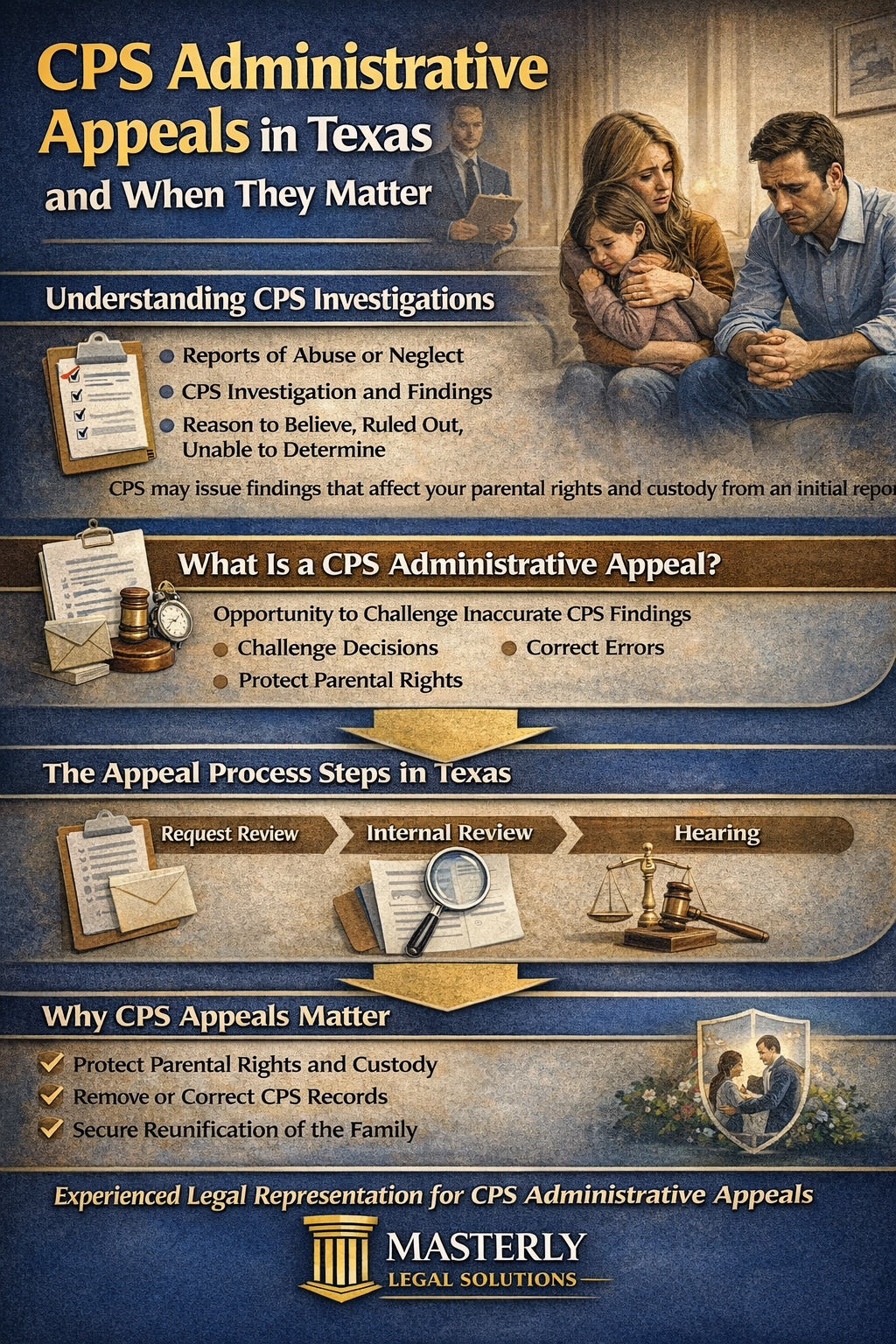
Infographic explaining CPS administrative appeals in Texas, outlining the investigation process, appeal steps such as requesting review, internal review, and hearings, and emphasizing how appeals help protect parental rights, correct records, and support family reunification.


Representing Parents with Strength and Experience in Family Law Matters

When it comes to representing parents in CPS-related cases, having a legal team with strong family law knowledge and real-world expertise in Dallas estate planning and asset protection can make a meaningful difference. At Masterly Legal Solutions, our goal is to defend parents while ensuring that their rights are protected throughout every stage of the process, supported by personalized legal services for corporations, nonprofits, and individuals. These cases often involve overlapping legal issues, including criminal defense, and may intersect with estate planning for families with minor children, especially when allegations raise concerns beyond administrative findings.


Whether a case originates in Texas or involves comparisons to procedures seen in places like Orange County or San Bernardino, the legal principles surrounding authority, safety, and due process remain critical. We guide our clients through every step, helping them understand court orders, the importance of consent, and how decisions may affect their kids and overall family stability, including planning tools like powers of attorney for children’s healthcare and financial decisions. Most importantly, we encourage parents to remain calm, seek reliable counsel, and focus on making informed decisions that support both their rights and their child’s well-being.


Contact Masterly Legal Solutions for Guidance

If you are dealing with CPS findings or considering an appeal, you deserve clarity and strong advocacy during this critical time. Navigating cps cases without proper guidance can increase the risk of unfavorable outcomes, especially when your parental rights and your child’s future are at stake.


At Masterly Legal Solutions, we understand how important it is to take action at the right moment. Our team works closely with clients across Texas, including those searching for a trusted cps lawyer san antonio, to provide focused strategies and practical solutions. We take the time to listen, evaluate your situation, and build a path forward that aligns with your goals.


If you have questions about CPS administrative appeals or need help understanding your options, we invite you to reach out. Contact us at (972) 236-5051 or through our Texas office locations and contact page for a free consultation so we can help you move forward with confidence and protect what matters most.


Disclaimer: This article is for informational purposes only and does not constitute legal advice. Every CPS case involves unique facts and circumstances, and you should consult a qualified attorney before making any decisions regarding your situation.

(972) 236-5051
Employee experiencing retaliation at work after reporting workplace misconduct.
May 29, 2026
Learn how to protect against retaliation in the workplace. Review employee rights, employer obligations, workplace retaliation law, harassment, and claims.
Education law attorneys assisting students and schools.
May 29, 2026
Find an education attorney or lawyer for school and education law matters. Compare top-rated education law attorneys, view ratings, and schedule a consultation.
CPS attorney defending parents during investigations.
May 29, 2026
Need a CPS attorney or CPS lawyer? Defend against CPS investigations and Child Protective Services actions. Protect your rights and your family—contact us today.
May 29, 2026
The First Call From CPS: What Every Parent Should Do Next Few phone calls create as much fear and uncertainty as hearing that Child Protective Services wants to speak with you about your child. For many parents, the moment feels unreal. One minute life seems normal, and the next, a CPS investigator is asking questions about your family, your home, and your ability to provide care for your children. The reality is that the first contact from CPS can have a lasting impact on the entire investigation. What parents say during that initial conversation, how they respond to requests, and whether they seek legal guidance can influence the direction of the case from the very beginning. Unfortunately, many families do not realize the significance of that first call until it is too late. At Masterly Legal Solutions , we help parents throughout Texas navigate Child Protective Services investigations with clarity and confidence. Our approach is proactive, strategic, and focused on protecting families before situations become more complicated. Understanding what to do after that first call may help protect your parental rights, your family, and your future. Why the First Call From CPS Matters Many parents assume the first phone call is simply a routine conversation. They believe that if they cooperate fully and answer every question immediately, the matter will quickly disappear. In reality, the first conversation often serves as the foundation for the entire CPS investigation. The information gathered during that initial contact may influence future interviews, home visits, assessments, and recommendations. Investigators often begin forming impressions based on these early interactions. While cooperation can be important, parents should also understand that they have rights. Knowing how to respond thoughtfully can make a significant difference throughout the investigation process. Understanding the Role of Child Protective Services Child Protective Services is part of the Texas Department of Family and Protective Services. The agency is responsible for investigating reports involving child abuse, neglect, exploitation, abandonment, and other concerns affecting children. The primary mission of child protective services is to protect children from harm and assess whether a child's safety may be at risk. When a report is received, CPS evaluates the information and determines whether an investigation should begin. Many people mistakenly assume that CPS only becomes involved in severe situations involving physical abuse. In reality, reports can involve a wide range of concerns relating to supervision, living conditions, medical care, educational issues, or allegations of neglect. What Triggers a CPS Investigation A CPS investigation may begin after someone submits a report regarding concerns about a child. Reports can come from many different sources. Common reporting sources include: Teachers Medical professionals School administrators Social services providers Family members Friends Neighbors Mandated reporters In some situations, the person making the report genuinely believes a child may be in danger. In others, misunderstandings or inaccurate information may result in allegations that ultimately prove unfounded. The Emotional Impact of Receiving a CPS Call Most parents experience immediate anxiety when CPS makes contact. Even parents who know they have done nothing wrong often feel overwhelmed. The thought of being investigated by a government agency can be intimidating. Many families fear losing custody of their children or being unfairly judged based on incomplete information. These emotions are completely understandable. However, decisions made during moments of panic can create additional challenges. Remaining calm and seeking guidance can help families avoid unnecessary mistakes. What CPS Is Looking For During Initial Contact The first call is often designed to gather basic information about the child, the family, and the reported concerns. Investigators may attempt to: Verify identities Confirm household members Discuss allegations Schedule interviews Arrange home visits Obtain relevant information Assess immediate danger concerns The agency is trying to determine whether additional investigation is necessary and whether there are any immediate safety risks that require urgent attention. Why Parents Should Take Every Report Seriously Many families assume that false allegations will quickly disappear once CPS learns the truth. Unfortunately, the process is often more complicated. Every report must generally be evaluated according to agency procedures. Even if allegations appear unreasonable, investigators are still required to conduct an assessment. Ignoring CPS communication rarely helps. Taking the matter seriously while responding strategically is usually the best approach. The Biggest Mistake Parents Make During the First Call One of the most common mistakes is speaking too much before understanding the nature of the allegations. Parents often become defensive and begin explaining events before learning exactly why CPS is involved. In an effort to appear cooperative, they may provide information that is incomplete, inaccurate, or easily misunderstood. The first conversation is not the time to panic. It is the time to become informed about the process and consider obtaining legal guidance. Understanding Child Abuse and Neglect Allegations Many CPS investigations involve allegations of child abuse or neglect. These terms often have broader meanings than parents realize. Child abuse may involve physical abuse, emotional abuse, sexual abuse, exploitation, or other actions that place a child at risk of harm. Neglect may involve inadequate supervision, failure to provide care, unsafe living conditions, or failure to meet a child's health needs. Not every allegation is supported by evidence. However, every allegation should be taken seriously because of the potential consequences involved. How Child Protective Services CPS Evaluates Reports When child protective services CPS receives a report, the agency reviews available information and determines the appropriate response. The agency may assess: The nature of the allegations The child's safety Prior CPS history Household conditions Available evidence Statements from involved individuals The goal is to determine whether the reported concerns require further investigation or intervention. Why Early Statements Matter Every statement made during a CPS investigation can become part of the agency's records. Parents sometimes believe they are simply having an informal conversation. In reality, investigators may document comments and observations that later become relevant during assessments or court proceedings. An experienced attorney can advise families on how to communicate effectively without creating unnecessary complications. Home Visits and Early Investigations In many cases, CPS may request a home visit shortly after making contact. Home visits allow investigators to observe living conditions, speak with household members, and evaluate potential safety concerns. These visits can feel stressful, especially for parents who are unfamiliar with the process. Understanding your rights before a home visit can help families make informed decisions and avoid misunderstandings. What Happens During Interviews Interviews are a critical component of many CPS investigations. Investigators may seek to speak with: Parents Children Guardians Teachers Medical providers Relatives Friends The information gathered during these interviews often influences the agency's assessment and recommendations. Why Children Are Often Interviewed One of the most concerning aspects of a CPS investigation for many parents is learning that investigators want to speak directly with their children. The agency often interviews children to gather information about their living situation, relationships, supervision, and overall well-being. Parents should understand how these interviews are conducted and what rights may apply during the process. Understanding Immediate Danger Assessments CPS investigators frequently evaluate whether a child faces immediate danger. An immediate danger finding may lead to more aggressive intervention measures. Investigators assess factors such as supervision, physical safety, medical needs, and environmental conditions. Fortunately, not every report results in findings of immediate danger. However, understanding how investigators assess risk can help parents prepare. The Importance of Child Safety Evaluations Protecting children is the primary responsibility of Child Protective Services. During every investigation, the agency evaluates a child's safety and attempts to determine whether concerns are substantiated. This evaluation often involves reviewing information from multiple sources. Parents who understand this focus can better navigate communications with the agency. How Medical Information May Affect a Case Medical records often play an important role during CPS investigations. Questions regarding a child's health, treatment history, or medical needs may become part of the assessment. In some situations, misunderstandings regarding medical conditions can contribute to allegations. Providing accurate and complete information can help ensure a more balanced review. School Involvement in CPS Cases Schools frequently become involved in CPS investigations. Teachers and school personnel are often mandated reporters who are legally required to report suspected child abuse or neglect. A school may also provide records or participate in interviews, and in some situations school districts or educators themselves may need education law and professional license defense representation . Understanding the school's role can help families better understand how investigations develop. The Risk of Overexplaining Many parents believe that providing lengthy explanations will help resolve concerns quickly. Unfortunately, overexplaining can sometimes create confusion. Additional details may raise new questions or lead to misunderstandings. An attorney can help parents determine how to respond appropriately while protecting their interests. Why You Should Not Assume CPS Believes You Are Guilty Being investigated does not mean you have been found responsible for abuse or neglect. CPS investigations are designed to gather information and assess concerns. The agency is tasked with determining whether allegations have merit. Parents should avoid assuming that an investigation automatically means adverse findings will occur. The Role of an Attorney During a CPS Investigation An attorney serves as a guide throughout the investigation process. Legal counsel can: Explain your rights Review allegations Advise on communication strategies Assist with documentation Prepare for interviews Protect parental rights Early involvement often helps families avoid common mistakes that can complicate investigations. Why Waiting Can Create Additional Risks Many parents delay contacting an attorney because they hope the investigation will quickly resolve itself. Unfortunately, early stages are often when the most important decisions are made. Waiting too long may limit available options or make it more difficult to address concerns. Taking proactive action can help protect your family and improve your ability to respond effectively. Understanding Court Involvement Not every CPS case results in court involvement. However, some investigations may eventually lead to court proceedings. A court order may be sought when the agency believes intervention is necessary to protect children. These situations often involve complex legal issues requiring immediate attention. Having legal guidance before matters reach court can be extremely valuable. Protecting Parental Rights Throughout the Process Parents have important parental rights during CPS investigations. Understanding those rights allows families to make informed decisions regarding interviews, requests, documentation, and agency interactions. Protecting parental rights does not mean refusing to cooperate. It means responding strategically while understanding the legal implications of each step. How Masterly Legal Solutions Assists Families At Masterly Legal Solutions, we understand how frightening a CPS investigation can be. Our team helps families understand the process, assess potential risks, and respond appropriately to agency requests. We provide strategic guidance designed to protect children while also protecting the rights of parents and guardians, drawing on our broader legal and business services for individuals and organizations . Every client receives individualized attention based on the specific facts of their situation. Why Knowledge Creates Better Outcomes Fear often causes families to make decisions without fully understanding the consequences. Knowledge allows parents to act confidently and make informed choices. Understanding how CPS operates can reduce uncertainty and improve communication throughout the investigation. Being informed is one of the strongest tools families have when dealing with Child Protective Services. The Importance of Acting Quickly The first days of a CPS investigation are often the most important. Information is gathered quickly. Assessments begin immediately. Decisions regarding interviews, home visits, and documentation may occur within a short period of time. Seeking legal guidance early may help save families from avoidable mistakes and strengthen their ability to respond effectively, and it can also be an opportunity to address broader planning needs such as essential legal documents for families before age 40 . What Families Should Expect Moving Forward Every investigation is different. Some cases are resolved quickly, while others require ongoing review. Parents should expect communication with the agency, requests for information, and possible follow-up interviews. Remaining organized and informed can help reduce stress throughout the process, especially when families also take time to secure their futures through personalized estate planning, wills, and trusts .  Understanding what to expect allows families to approach the situation with greater confidence.
HR consultancy experts providing human resource solutions.
May 29, 2026
HR consulting services for business growth. Our HR consulting firm delivers human resource solutions, HR function support, and expert consultant services nationwide.
Dallas-Fort Worth school districts and campuses
May 28, 2026
Explore Fort Worth ISD, a leading Texas school district in the Dallas-Fort Worth area, offering top-rated schools and independent school district programs.
.Child protection law firm attorney helping families
May 28, 2026
Protect your child with experienced child protection lawyers. Our law firm offers family law consultation for DYFS and new child protection cases in New Jersey.
Compliance report review and regulatory reporting process.
May 28, 2026
Our compliance report reviews the reporting process, regulatory adherence, and policies and procedures to strengthen compliance every step of the way for businesses.

Looking for Legal & Business Solutions? Contact Us Now

Fill in the form or call us to set up a meeting

(972) 236-5051
A black and white drawing of a straight line on a white background.