
How a CPS reason to Believe Finding Can Follow You and How Appeals Help.
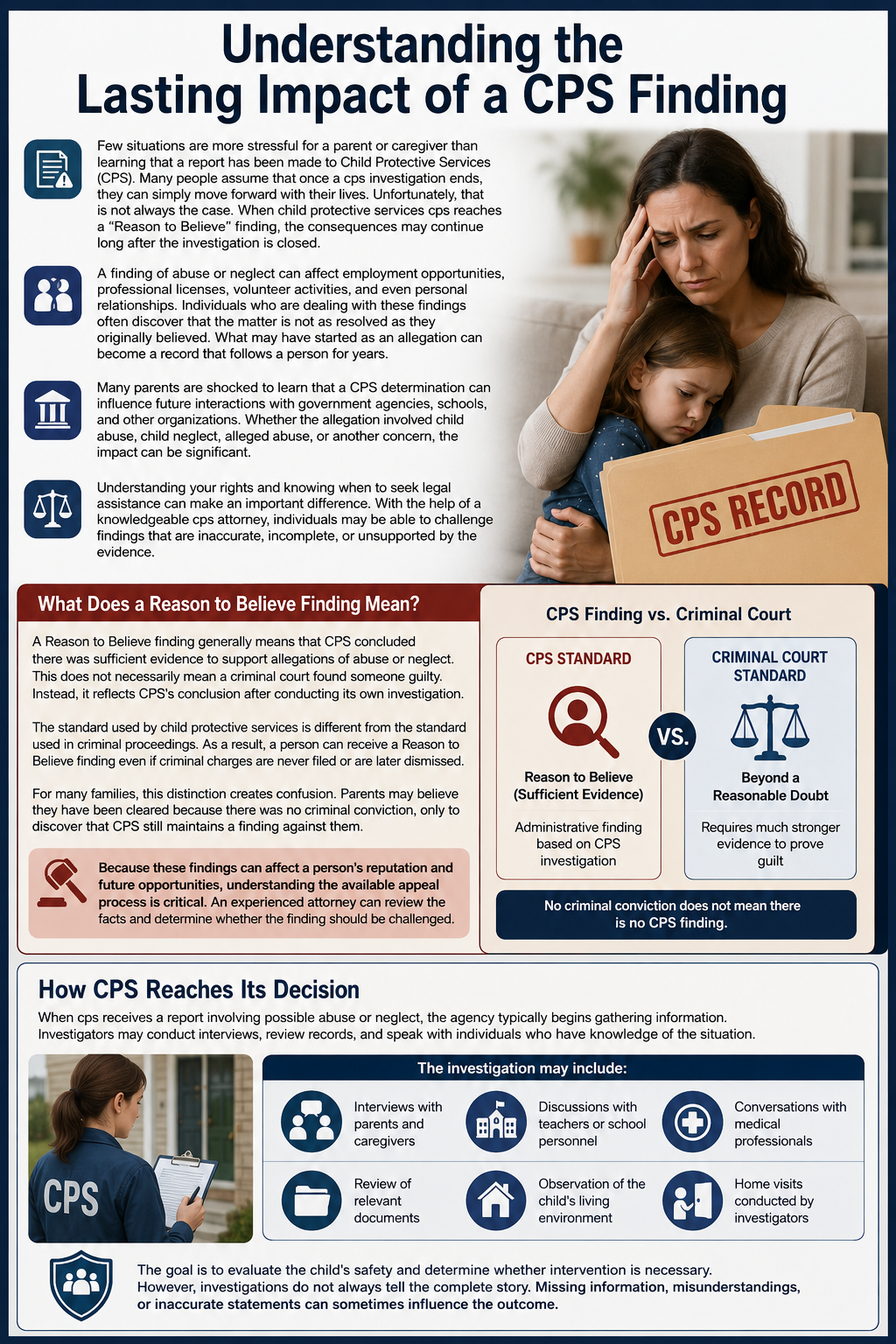
Understanding the Lasting Impact of a CPS Finding
Few situations are more stressful for a parent or caregiver than learning that a report has been made to Child Protective Services (CPS). Many people assume that once a cps investigation ends, they can simply move forward with their lives. Unfortunately, that is not always the case. When child protective services cps reaches a “Reason to Believe” finding, the consequences may continue long after the investigation is closed.
A finding of abuse or neglect can affect employment opportunities, professional licenses, volunteer activities, and even personal relationships. Individuals who are dealing with these findings often discover that the matter is not as resolved as they originally believed. What may have started as an allegation can become a record that follows a person for years.
Many parents are shocked to learn that a CPS determination can influence future interactions with government agencies, schools, and other organizations. Whether the allegation involved child abuse, child neglect, alleged abuse, or another concern, the impact can be significant.
Understanding your rights and knowing when to seek legal assistance can make an important difference. With the help of a knowledgeable cps attorney, individuals may be able to challenge findings that are inaccurate, incomplete, or unsupported by the evidence.
What Does a Reason to Believe Finding Mean?
A Reason to Believe finding generally means that CPS concluded there was sufficient evidence to support allegations of abuse or neglect. This does not necessarily mean a criminal court found someone guilty. Instead, it reflects CPS's conclusion after conducting its own investigation.
The standard used by child protective services is different from the standard used in criminal proceedings. As a result, a person can receive a Reason to Believe finding even if criminal charges are never filed or are later dismissed.
For many families, this distinction creates confusion. Parents may believe they have been cleared because there was no criminal conviction, only to discover that CPS still maintains a finding against them.
Because these findings can affect a person's reputation and future opportunities, understanding the available appeal process is critical. An experienced attorney can review the facts and determine whether the finding should be challenged.
How CPS Reaches Its Decision
When cps receives a report involving possible abuse or neglect, the agency typically begins gathering information. Investigators may conduct interviews, review records, and speak with individuals who have knowledge of the situation.
The investigation may include:
- Interviews with parents and caregivers
- Discussions with teachers or school personnel
- Conversations with medical professionals
- Review of relevant documents
- Observation of the child's living environment
- Home visits conducted by investigators
The goal is to evaluate the child's safety and determine whether intervention is necessary. However, investigations do not always tell the complete story. Missing information, misunderstandings, or inaccurate statements can sometimes influence the outcome.
Why CPS Findings Can Affect Your Future
Many people underestimate the long-term effects of a CPS finding. Even when there is no criminal conviction, a finding can remain in agency records and become relevant in future matters.
A CPS determination may impact employment opportunities in fields involving children, healthcare, education, social work, and related professions. Employers who conduct background screenings may review information connected to abuse or neglect investigations.
Individuals seeking professional licenses may also encounter questions regarding prior CPS findings. In some situations, agencies reviewing applications may request additional documentation or explanations.
These challenges can become even more serious when future family law issues arise. A prior finding may be raised during disputes involving child custody, visitation, or other matters affecting the family's future.
Effects on Employment Opportunities
Many positions require employees to work directly with children or vulnerable individuals. Employers often place significant emphasis on safety concerns when evaluating applicants.
A Reason to Believe finding may create obstacles for individuals pursuing careers in:
- Education
- Childcare
- Healthcare
- Counseling
- Social work
- Youth organizations
- Government agencies
Even if the allegations were disputed, employers may view the finding negatively. This is one reason many individuals seek legal representation immediately after learning about a CPS determination.
Professional Licensing Concerns
Licensing boards often take allegations involving child abuse and neglect seriously. Depending on the profession, a CPS finding may trigger additional review procedures.
Professionals may be required to explain the circumstances surrounding the investigation. In some cases, licensing authorities may request copies of investigative records or findings.
An attorney experienced in CPS matters can help evaluate potential consequences and develop a strategy to address concerns raised by licensing agencies.
The Impact on Child Custody Matters
One of the most significant concerns involves future custody disputes. Family courts focus heavily on the best interests of the child, and CPS findings may become part of that analysis.
A prior finding can be introduced during proceedings involving:
- Child custody
- Parenting plans
- Visitation schedules
- Guardianship matters
- Family court proceedings
Even when circumstances have changed, opposing parties may attempt to use the finding to question a parent's judgment or ability to provide a safe environment.
Because family court judges prioritize the well being of children, any allegation involving abuse or neglect may receive careful scrutiny.
How Findings Can Influence Family Court Decisions
Family courts examine a wide range of information when making decisions involving children. CPS records may become relevant if they relate to parenting ability or household safety.
Judges may consider:
- The nature of the allegations
- Whether the allegations involved physical harm
- Claims of sexual abuse
- Concerns regarding substance abuse
- Evidence presented by both parties
- The age and needs of the child involved
Although a CPS finding does not automatically determine custody outcomes, it can influence how a court views the facts.
This is one reason parents should take these findings seriously and explore available appeal options as early as possible.
The Emotional Toll on Families
Beyond legal consequences, CPS investigations can create lasting emotional strain. Families often feel overwhelmed by uncertainty, fear, and frustration throughout the process.
Parents may worry about their reputation within the community. Children may become confused about interviews, investigations, and changes in family routines. Extended family members may also experience stress while trying to support loved ones.
Even after a case closes, the emotional effects can linger. Many individuals feel as though the allegations continue to follow them despite their efforts to move forward.
The emotional burden can become even greater when the allegations are based on misunderstandings or incomplete information. In these situations, pursuing an appeal may provide an opportunity to seek a more accurate outcome.
When Allegations Are Based on Mistakes
Not every report made to CPS ultimately reflects what actually occurred. Investigators often work under significant time pressures and must evaluate large amounts of information quickly.
Mistakes can occur when:
- Witnesses provide incomplete accounts
- Records are misunderstood
- Communication problems arise
- Important evidence is overlooked
- Statements are taken out of context
When these issues affect the outcome of an investigation, obtaining experienced legal representation may be critical.
Common Situations That Trigger CPS Investigations
Many people assume CPS only becomes involved in extreme situations. In reality, investigations can begin for a wide variety of reasons.
Reports may originate from teachers, medical professionals, neighbors, relatives, or other individuals who believe a child may be at risk. Once a report is made, CPS typically evaluates whether further investigation is necessary.
Common allegations include:
- Physical abuse
- Emotional abuse
- Child neglect
- Educational neglect
- Medical neglect
- Exposure to domestic violence
- Concerns involving substance abuse
- Claims of alleged child abuse
In some situations, reports arise from misunderstandings rather than actual danger. However, CPS may still conduct a full investigation to determine whether intervention is required.
The Role of Mandatory Reporters
Certain professionals are legally required to report suspected abuse or neglect. These individuals are often referred to as mandatory reporters.
Examples include teachers, doctors, nurses, counselors, and other professionals who regularly interact with children.
If these individuals observe signs they believe may indicate suspected child abuse, they may be required to file a report. Once that report is submitted, CPS may initiate an investigation regardless of whether the concerns ultimately prove accurate.
Mandatory reporting laws are designed to protect children, but they can also lead to investigations that stem from misunderstandings or incomplete information.
What Happens After CPS Intervenes?
When cps intervenes, the agency begins gathering information to evaluate risk and determine whether protective action is necessary.
Investigators may interview children, parents, relatives, teachers, and healthcare providers. They may request records from schools and medical facilities and assess conditions within the home.
Depending on the circumstances, CPS may recommend services, monitoring, safety plans, or other interventions. In severe cases, the agency may seek a court order involving placement decisions or additional restrictions.
The specific path depends on the facts of the case and the perceived level of risk to the child.
When Foster Care Becomes a Concern
In certain situations, CPS may determine that temporary removal is necessary while concerns are addressed. This can lead to placement in foster care or with relatives.
These cases often involve allegations of serious abuse, neglect, unsafe living conditions, or immediate threats to safety. Because removal decisions can have a profound impact on parents and children alike, legal advocacy is often essential.
An experienced cps defense attorney can help parents understand the process, protect their rights, and respond appropriately to agency actions.
How a CPS Reason to Believe Finding Can Follow You and How Appeals Help
How the CPS Appeal Process Works
Receiving a Reason to Believe finding does not necessarily mean the matter is over. Many individuals are surprised to learn that there may be opportunities to challenge the outcome through an appeal. Understanding the available options can be an important step toward protecting your reputation, career, and family.
The appeal process exists because CPS investigations are conducted by people, and people can make mistakes. Evidence may be misunderstood, witnesses may provide inaccurate information, or key facts may never be considered during the original investigation.
When a finding appears unsupported by the facts, an appeal may provide a path toward correcting the record. Taking prompt action is often important because strict deadlines may apply.
An experienced cps attorney can evaluate the circumstances and determine the most effective strategy for pursuing relief.
Why Appeals Matter
Many people assume there is little they can do once CPS reaches a conclusion. However, appeals serve an important purpose by allowing individuals to challenge findings they believe are unfair or inaccurate.
An appeal can provide an opportunity to:
- Correct factual errors
- Present additional evidence
- Challenge unsupported conclusions
- Protect future employment opportunities
- Defend parental rights
- Reduce long-term consequences
For families facing serious repercussions from a CPS finding, the appeal process may be one of the most important legal options available.
Understanding Administrative Hearings
Many CPS appeals involve administrative hearings, which differ from traditional court proceedings. These hearings are designed to review the agency's decision and determine whether the finding should remain in place.
During the hearing process, both sides may have the opportunity to present information and explain their positions. Evidence can be reviewed, witnesses may testify, and legal arguments may be presented.
Although administrative hearings are not criminal trials, they are still serious legal proceedings. The outcome may affect a person's record and future opportunities for years to come.
Because these hearings involve procedural rules and evidentiary requirements, professional guidance is often beneficial.
What Happens During a Hearing?
The exact procedures vary depending on the circumstances, but administrative hearings generally involve a review of the evidence relied upon by CPS.
The hearing officer may examine:
- Investigative reports
- Witness statements
- Medical records
- School records
- Relevant documentation
- Additional evidence presented by the parties
The goal is to determine whether sufficient evidence supports the finding. If problems with the investigation become apparent, the decision may be reconsidered.
Preparing thoroughly for the hearing can significantly affect the outcome.
The Importance of Presenting Evidence
One of the most critical aspects of an appeal is the ability to present evidence that may not have been fully considered during the original investigation.
Evidence can help provide context and clarify misunderstandings. In some situations, documentation obtained after the investigation reveals information that directly contradicts CPS conclusions.
Effective evidence may include medical records, expert opinions, witness testimony, photographs, communications, and other forms of documentation, and can work alongside a well-structured estate plan that protects your family's interests.
A skilled lawyer can help identify which materials are most relevant and persuasive.
Building a Strong Appeal
Every case is unique, but successful appeals often involve careful preparation and attention to detail.
Important steps may include:
- Reviewing the investigative file
- Identifying factual inaccuracies
- Gathering supporting documents
- Interviewing witnesses
- Obtaining expert opinions when necessary
- Preparing legal arguments
Strong preparation, along with having key family legal documents in place before problems arise, allows families to make informed decisions about how to move forward.
The earlier this process begins, the more opportunities there may be to strengthen the appeal.
Reviewing the CPS Investigation
A thorough review of the original investigation is often one of the first steps in challenging a finding. Many individuals are surprised to discover inconsistencies or omissions within the agency's records.
Investigations frequently involve multiple interviews, documents, and observations. When large amounts of information are collected, important details can sometimes be overlooked.
Examining the investigative file can help identify weaknesses in the agency's conclusions. In some situations, evidence supporting the accused individual may have received little attention.
Careful review allows a legal team to determine whether the finding is supported by the available facts.
Looking for Missing Information
Not every investigation includes every relevant piece of evidence. Sometimes investigators must make decisions before all information becomes available.
Examples of missing information may include:
- Updated medical evaluations
- School records
- Statements from additional witnesses
- Documentation regarding family circumstances
- Information explaining injuries or incidents
When these materials become available later, they may play a significant role in an appeal.
Protecting Parental Rights During CPS Proceedings
One of the greatest concerns for many families is protecting their parental rights. CPS involvement can create fear that parents may lose decision-making authority or experience restrictions regarding their children.
While CPS has an important role in promoting safety, parents also possess legal rights that deserve protection. Understanding these rights is essential when responding to allegations.
Parents should take every stage of the process seriously, including interviews, document requests, and hearings. Statements made during the investigation can have lasting consequences.
Obtaining knowledgeable legal representation early in the process may help avoid unnecessary complications.
Why Legal Guidance Matters
The CPS system can be difficult to navigate without professional assistance. Investigations often move quickly, and individuals may not fully understand how their responses could affect future proceedings.
An experienced attorney can help clients:
- Understand procedural requirements
- Evaluate potential risks
- Respond appropriately to requests
- Protect important legal interests
- Prepare for hearings
- Challenge inaccurate findings
Having legal support often provides clarity during an otherwise overwhelming experience.
How CPS Findings Affect Future Investigations
A prior finding may become relevant if CPS becomes involved again in the future. Even when a new report concerns different allegations, agency records may contain information from previous investigations.
This can create challenges for parents who have already faced allegations in the past. Investigators reviewing a new report may examine prior findings as part of their assessment.
As a result, an inaccurate finding can continue affecting a family long after the original case has ended.
Appealing unsupported findings may help reduce the risk of future complications.
The Importance of Clearing the Record
When a Reason to Believe finding remains in agency records, it can influence how future concerns are evaluated.
A successful appeal may help:
- Protect professional opportunities
- Strengthen future custody positions
- Reduce reputational harm
- Prevent misunderstandings
- Protect the family's future
For many individuals, clearing the record is about more than correcting a mistake. It is about preserving opportunities and moving forward without the burden of unsupported allegations.
Allegations Involving Child Abuse and Neglect
Cases involving child abuse and neglect often carry significant emotional and legal consequences. Even when allegations are ultimately disputed, the investigation itself can affect families in profound ways.
Reports involving abuse or neglect frequently trigger extensive review by CPS. Investigators may examine household conditions, family dynamics, medical history, and educational records.
These cases can become particularly complex when multiple allegations are involved. For example, a report may include claims of both physical abuse and neglect.
Careful analysis of the evidence is essential when responding to these accusations.
Distinguishing Allegations from Proven Facts
A report to CPS is not the same as proof that misconduct occurred. Many investigations begin based on concerns that later prove unfounded or exaggerated.
Unfortunately, some people assume that the existence of an investigation means wrongdoing occurred. This misunderstanding can create reputational harm even before the facts are fully examined.
The appeal process provides an opportunity to focus on evidence rather than assumptions. This distinction can be critical when challenging a Reason to Believe finding.
Cases Involving Alleged Sexual Abuse
Allegations involving sexual abuse are among the most serious matters handled by CPS. These cases often involve extensive investigations and heightened scrutiny from multiple agencies.
The consequences of such allegations can be severe, even before any formal determination is made. Employment, community standing, and family relationships may all be affected.
Because of the seriousness of these accusations, it is especially important to ensure that findings are supported by reliable evidence.
Individuals facing these allegations should consider seeking immediate legal guidance.
The Need for Careful Investigation
Cases involving alleged sexual abuse frequently require specialized evaluations, interviews, and professional assessments.
Important considerations may include:
- Consistency of statements
- Medical findings
- Witness observations
- Expert evaluations
- Context surrounding the allegations
A thorough review of all available evidence is essential to ensuring fair treatment throughout the process.
Substance Abuse Allegations and CPS
Claims involving substance abuse often arise during CPS investigations. Concerns may involve alcohol, prescription medications, or illegal substances.
The agency's primary focus is whether the alleged substance use affects the child's safety and well-being. However, not every allegation accurately reflects the circumstances.
In some situations, reports may be based on misunderstandings, outdated information, or isolated incidents that do not represent ongoing risk.
Appeals may help challenge findings that fail to account for the complete picture.
Evidence That May Be Relevant
When responding to substance abuse allegations, relevant information may include:
- Treatment records
- Drug testing results
- Medical documentation
- Professional evaluations
- Witness statements
These materials can help provide a more accurate understanding of the circumstances and may support an appeal, just as carefully drafted trusts and related planning documents can help safeguard a family's long-term stability.
The Role of Social Services in CPS Cases
Various social services agencies may become involved during CPS matters. These organizations often provide resources intended to support families and address identified concerns.
Services may include counseling, parenting education, substance abuse treatment, housing assistance, or other programs designed to improve family stability.
Participation in recommended services does not necessarily mean a parent agrees with CPS findings. However, compliance may sometimes play a role in demonstrating commitment to a child's well-being.
Understanding how these services fit into the larger legal process can be beneficial.
Working Toward Positive Outcomes
Families facing CPS involvement often benefit from a proactive approach. Taking steps to address concerns, gather documentation, and seek guidance can improve the overall situation.
Whether the goal is preserving custody, challenging findings, or protecting future opportunities, informed decision-making is essential.
Professional legal support can help families evaluate options and move forward with confidence.
Why Choosing the Right Law Firm Matters in CPS Appeals
When facing a CPS finding, selecting the right law firm such as Masterly Legal Solutions, a comprehensive Texas-based practice can have a significant impact on the outcome of your case. CPS appeals often involve detailed investigations, strict deadlines, and complex legal procedures that require careful attention. A firm familiar with CPS matters can help identify weaknesses in the agency's findings, gather supporting evidence, and develop a strategy tailored to your circumstances. Having knowledgeable legal guidance throughout the process can help families make informed decisions while protecting their rights and future opportunities.
Working With a Dedicated Law Office During a CPS Matter
A trusted law office that offers a diverse range of client-focused legal services can provide valuable support during every stage of a CPS investigation or appeal. From reviewing records and communicating with agencies to preparing for hearings, legal professionals help clients understand what to expect and how to respond effectively. Many parents feel overwhelmed by the legal process, but having experienced advocates available to answer questions and explain options can make a difficult situation more manageable. Early legal involvement often helps prevent mistakes that could affect the case later.
How CPS Lawyers Help Protect Families
Experienced cps lawyers who are familiar with wide-ranging legal services for individuals and organizations understand the challenges families face when dealing with allegations of abuse or neglect. They can review investigative findings, evaluate evidence, prepare appeals, and represent clients during administrative hearings and court proceedings. Because CPS cases can affect employment, custody rights, and family relationships, having legal representation, especially when defending against false or exaggerated accusations that threaten your reputation, can be critical. A lawyer's goal is not only to challenge inaccurate findings but also to help protect the family's future and ensure fair treatment throughout the process.
Understanding CPS Requirements During an Investigation
Many families are unsure about the cps requirements they may encounter during an investigation. Depending on the circumstances, CPS may request interviews, home visits, documentation, or participation in certain services. Understanding what is required and how those requirements may affect your case is important. Complying appropriately while protecting your legal rights can be a delicate balance, which is why many individuals seek professional legal guidance throughout the process.
Why a Written Request May Be Necessary
In some situations, obtaining important information from CPS may require a written request. This can include requests for records, investigative documents, or information related to agency findings. Access to these materials can be essential when preparing an appeal or reviewing the basis for a Reason to Believe determination. By examining the records carefully, families and their attorneys may identify inaccuracies, missing information, or procedural concerns that could affect the outcome of the case.
Schedule a Complimentary Consultation to Discuss Your Options
Every CPS case presents unique challenges, and understanding your options with help from a Texas-based, full-service legal team is often the first step toward protecting your rights. A complimentary consultation can provide an opportunity to discuss your situation, learn more about the legal process, and receive answers to important questions. Whether you are considering an appeal, responding to allegations, or trying to understand a CPS finding, speaking with a legal professional can help you make informed decisions about the next steps.
CPS Findings and Families on Long Island
Families on Long Island face many of the same challenges experienced by parents throughout the country when dealing with CPS investigations and appeals. Allegations of abuse or neglect can affect employment, custody matters, and personal reputations regardless of where a family lives. Understanding the legal process and responding appropriately to agency actions can make a substantial difference in the outcome of a case. Seeking legal guidance early may help families better protect their rights and interests.
The Value of Extensive Experience in CPS Cases
When choosing legal representation, extensive experience handling CPS matters can be an important advantage. Attorneys who regularly work with CPS investigations, appeals, administrative hearings, and family law issues often have a deeper understanding of the procedures and challenges involved. This knowledge can help identify effective strategies, anticipate potential obstacles, and advocate more effectively on behalf of clients. When a CPS finding threatens a family's future, experience and a firm with deep expertise in education and family-related legal matters can play a meaningful role in pursuing a favorable resolution.
When CPS Cases Lead to Court Proceedings
Not every CPS matter results in a court case. However, some situations escalate beyond the investigation stage and require judicial involvement.
When CPS believes intervention is necessary, the agency may request a court order affecting custody, visitation, services, or other family-related issues. In severe cases, court proceedings may determine where a child will live while concerns are addressed.
Court involvement can be intimidating, especially for parents who have never participated in legal proceedings before. Understanding the process can help reduce uncertainty and improve preparation.
An experienced cps defense attorney can help families understand what to expect and advocate for their interests throughout the proceedings.
What Judges Consider in CPS Matters
Judges focus primarily on the child's safety and best interests. When reviewing CPS cases, courts may examine a wide range of information before making decisions.
Factors may include:
- Evidence presented by CPS
- Witness testimony
- Medical information
- Educational records
- Home environment
- Recommendations from professionals
- Prior CPS findings
The court's goal is not to punish parents but to determine what arrangements best protect children while respecting legal rights whenever possible.
How CPS Findings Can Affect Divorce and Family Law Matters
Many parents are surprised to discover that CPS findings can influence unrelated family law disputes. A prior investigation may become relevant during proceedings involving divorce, custody modifications, or visitation disagreements.
When parents disagree about parenting arrangements, attorneys may introduce evidence regarding prior CPS involvement. Even if the investigation occurred years earlier, the finding may still be discussed during litigation.
Because family courts prioritize children's welfare, allegations involving abuse or neglect often receive significant attention.
This is one reason many individuals seek to challenge questionable findings before they become issues in future legal disputes.
Child Custody and Parenting Disputes
In contested custody cases, each parent may attempt to demonstrate that their proposed arrangement best serves the child.
A CPS finding may be used to argue that one parent presents concerns related to:
- Supervision
- Household safety
- Decision-making
- Stability
- Child welfare
Whether those concerns are justified depends on the facts. However, unresolved findings can create challenges that might otherwise be avoided through a successful appeal.
Child Support and CPS Matters
Although child support and CPS cases involve different legal issues, the two can sometimes overlap. For example, custody changes resulting from CPS involvement may affect support obligations.
If a child is temporarily placed with another caregiver, questions may arise regarding financial responsibilities. Courts may need to address support issues while the underlying CPS matter remains ongoing.
These situations often become legally complex because multiple proceedings may be occurring at the same time.
Families facing both CPS and child support concerns should carefully evaluate how decisions in one case could affect the other.
Understanding the Bigger Picture
Legal matters rarely exist in isolation. A CPS finding can influence numerous areas of a person's life, including employment, licensing, custody, support, and future investigations.
Taking a comprehensive approach often helps families identify risks and opportunities that may otherwise go unnoticed.
Experienced legal counsel can help coordinate strategies across multiple legal issues when necessary.
Why Early Legal Representation Matters
Many people wait until problems become overwhelming before seeking legal help. Unfortunately, delays can sometimes limit available options.
Early legal representation may allow an attorney to begin gathering evidence, reviewing records, and identifying weaknesses in the agency's case before critical deadlines pass.
Prompt action can also help individuals avoid mistakes that may complicate future proceedings. Statements made during investigations, interviews, and hearings can have lasting consequences.
Seeking legal guidance early often provides greater flexibility when developing a defense strategy.
Benefits of Experienced Legal Representation
Working with a legal professional who handles CPS matters regularly can provide valuable advantages.
Potential benefits include:
- Understanding agency procedures
- Protecting parental rights
- Evaluating evidence
- Preparing for hearings
- Challenging inaccurate findings
- Navigating court proceedings
When a family's future is at stake, informed advocacy can make a meaningful difference.
Choosing the Right CPS Attorney
Not every attorney handles CPS matters regularly. Because these cases involve unique procedures and legal standards, selecting the right legal professional is important.
Families should look for an attorney experienced in CPS cases and administrative proceedings. Knowledge of agency procedures, evidentiary issues, and family law concerns can be particularly valuable.
The right attorney should take the time to understand the facts, explain available options, and develop a strategy tailored to the client's circumstances.
Strong communication and preparation are often essential components of effective representation.
Questions to Ask During a Consultation
Before hiring a lawyer, individuals may wish to discuss several important topics.
These may include:
- Experience with CPS cases
- Familiarity with administrative hearings
- Approach to appeals
- Potential timelines
- Available legal strategies
- Communication expectations
Asking questions can help families make informed decisions regarding legal representation.
Common Mistakes People Make After Receiving a CPS Finding
The period immediately following a CPS determination can be overwhelming. Unfortunately, some individuals unintentionally make decisions that hurt their ability to challenge the finding later.
One common mistake is assuming that the finding will simply disappear over time. In reality, CPS findings may continue affecting employment, licensing, and family law matters long after the investigation ends.
Another mistake involves failing to review the agency's records. Without understanding how the finding was reached, it can be difficult to identify weaknesses or errors.
Waiting too long to seek legal advice may also reduce available options.
Steps to Consider After Receiving a Finding
Although every situation is different, individuals often benefit from taking proactive measures.
Possible steps include:
- Requesting records when appropriate
- Reviewing investigative materials
- Preserving relevant evidence
- Consulting an attorney
- Understanding applicable deadlines
- Evaluating appeal options
Taking action early can improve the likelihood of protecting important rights and opportunities.
Protecting Your Family's Future
A CPS Reason to Believe finding can create challenges that extend far beyond the initial investigation. Employment opportunities, professional licenses, custody disputes, and future interactions with government agencies may all be affected.
For many families, the greatest concern is protecting their reputation and preserving opportunities for the future. While the situation can feel overwhelming, it is important to remember that options may still be available.
Appeals provide an opportunity to challenge findings that are unsupported, inaccurate, or incomplete. Through careful preparation, thorough review of the evidence, and effective advocacy, individuals may be able to seek a more favorable outcome.
Understanding your rights and acting promptly can make a significant difference when facing the long-term consequences of a CPS finding.
Understanding the Child Protection Team West Palm Beach in CPS Cases
The child protection team west palm beach may become involved in cases where there are concerns about a child’s safety, well-being, or development. These teams often assist with evaluating allegations and gathering professional input during complex investigations. While their role is important in identifying potential risks, their findings are only one part of the broader child protective services process. Families should understand that these evaluations do not automatically determine guilt or confirm abuse. Instead, they are used alongside other evidence to help guide CPS decision-making during sensitive family situations involving children.
How Child Protective Services Handles Allegations and Investigations
Child protective services plays a central role when a report of suspected harm is made involving a child. Once a report is received, CPS may begin an investigation to assess whether there is any risk related to abuse or neglect. This process can include interviews, home visits, record reviews, and communication with schools or medical providers. Although the goal is to protect children, the process can sometimes lead to misunderstandings or incomplete conclusions. Because of this, families often need to carefully review findings and understand their rights throughout the investigation process.
Why a CPS Defense Attorney Is Important in Abuse or Neglect Cases
When allegations of abuse or neglect are made, having a skilled cps defense attorney can make a significant difference in the outcome of a case. These legal professionals understand how CPS investigations work and can help challenge findings that are inaccurate or unsupported by evidence. They also assist in gathering documentation, presenting witness statements, and advocating during hearings or appeals. Because CPS cases can affect custody, employment, and a family’s future, legal representation helps ensure that parents and caregivers receive fair treatment under the law while protecting their parental rights.
Contact Masterly Legal Solutions for a Free Consultation
When CPS allegations threaten your reputation, parental rights, or family stability, obtaining knowledgeable legal guidance and knowing how to contact Masterly Legal Solutions offices in Texas can be one of the most important decisions you make. Whether you are dealing with a CPS investigation, a Reason to Believe finding, administrative hearings, custody concerns, or allegations involving child abuse or neglect, understanding your legal options is essential.
At Masterly Legal Solutions, we understand how stressful CPS matters can be for parents and families. These cases often involve complex legal procedures, tight deadlines, and decisions that may affect your future for years to come. Our team is committed to helping clients understand the process, evaluate their options, and pursue the strongest path forward.
If you have questions about CPS findings, appeals, child protection team west palm beach matters, parental rights, custody concerns, or related legal issues, we encourage you to reach out today. A timely review of your situation may help identify opportunities to protect your rights and your family's future.
Contact Masterly Legal Solutions at (972) 236-5051 for a FREE consultation. We are ready to discuss your situation, answer your questions, and help you better understand the options available to you.
Disclaimer: This article is provided for informational purposes only and should not be considered legal advice, legal guidance, or a substitute for speaking directly with a qualified attorney. Reading this article does not create an attorney-client relationship. Every CPS case is unique, and outcomes depend on the specific facts and circumstances involved. If you need legal advice regarding your situation, contact a qualified attorney for individualized assistance.







Looking for Legal & Business Solutions? Contact Us Now
Fill in the form or call us to set up a meeting