

Physician Credentialing Appeals: Responding to Hospital Privilege Denials
Receiving notice of a credentialing denial, restricted hospital privileges, or an adverse recommendation can place your medical career at risk. These decisions often involve strict deadlines, complex hospital procedures, and lasting professional consequences. Waiting too long to respond may reduce your options. A timely physician credentialing appeal can help you protect your privileges, your reputation, and your future opportunities.
At Masterly Legal Solutions, we represent physicians facing hospital credentialing disputes, privilege restrictions, adverse recommendations, and appeal proceedings. We help physicians evaluate their options, prepare strong responses, and navigate complex hospital processes with careful legal guidance.
When a Credentialing Decision Threatens Your Career
Hospital credentialing affects where and how physicians practice medicine. Losing privileges or receiving a negative recommendation may impact current employment, future credentialing opportunities, referrals, and professional standing.
Credentialing concerns may arise from:
- Quality-of-care reviews
- Professional conduct allegations
- Clinical performance concerns
- Peer review findings
- Documentation issues
- Credentialing committee recommendations
- Hospital policy concerns
Even when physicians disagree with the findings, responding strategically is essential.
A properly prepared physician credentialing appeal provides an opportunity to address concerns before final decisions have broader professional consequences.
Why Acting Before Appeal Deadlines Matters
Many physicians focus on understanding why a decision was made before reviewing the appeal process itself. However, hospitals often establish strict deadlines for requesting review or challenging recommendations.
Missing an important deadline may affect available procedural rights.
Early legal guidance allows time to:
- Review credentialing records
- Analyze committee findings
- Evaluate hospital bylaws
- Prepare supporting documentation
- Develop a strategic response
- Preserve important procedural protections
Prompt preparation often creates stronger opportunities to present your position effectively.
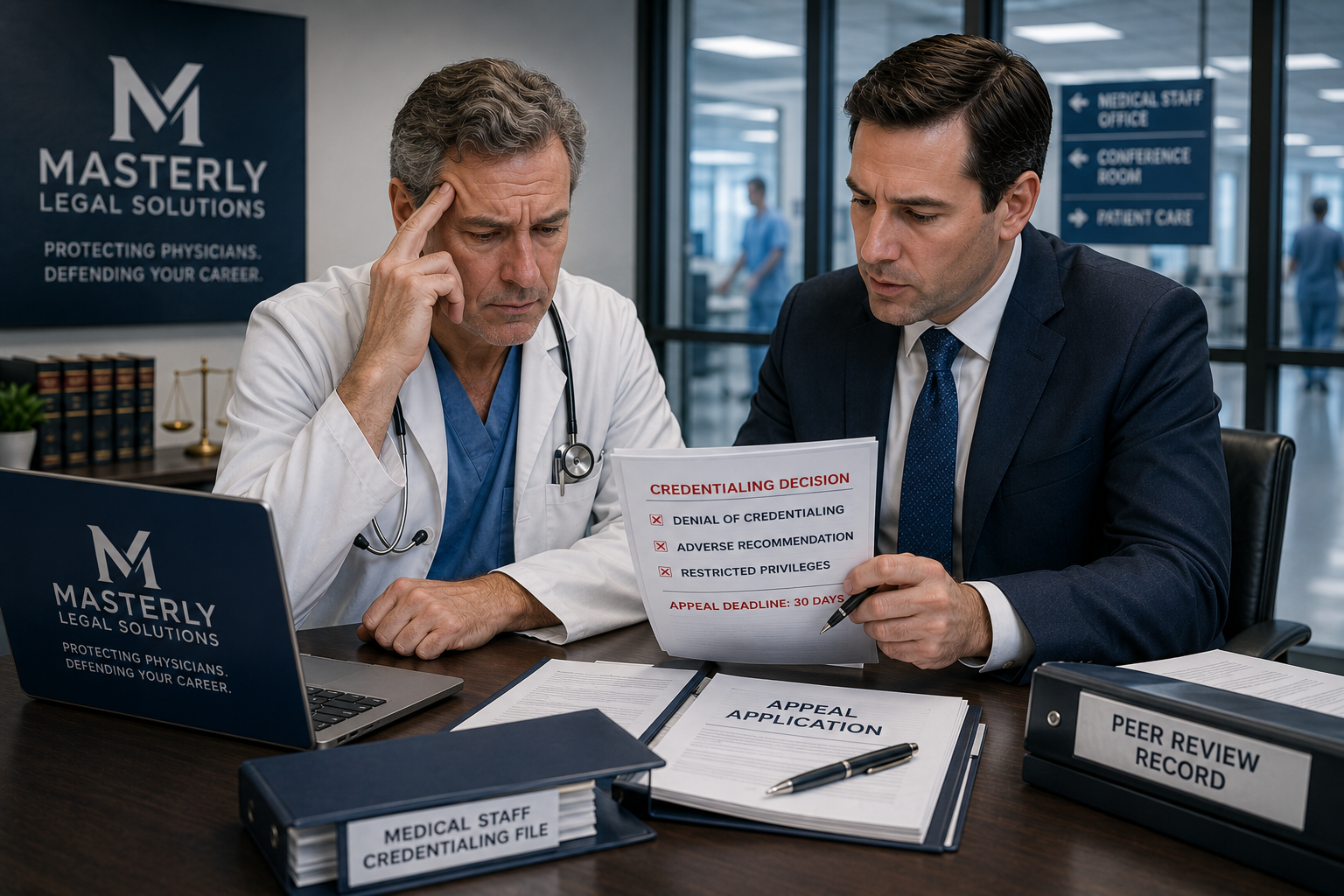
Understanding the Physician Credentialing Appeal Process
Every hospital follows its own credentialing procedures, although the credentialing process has grown more complex over the last 20 years and many processes still share similar stages.
Credentialing has been practiced in healthcare for over 1000 years.
Initial Credentialing Decision
A credentialing committee reviews qualifications, experience, documentation, and other relevant information during the application process, including education, training, licensure, references, and other documents; different hospital departments may also be involved as materials are reviewed to confirm the provider is qualified for the privileges requested.
Adverse Credentialing Committee Recommendation
The committee may issue an adverse recommendation or initial denial involving privileges, appointments, or credentialing status, and should identify the grounds for the decision and whether privileges were denied or restricted.
Appeal Rights
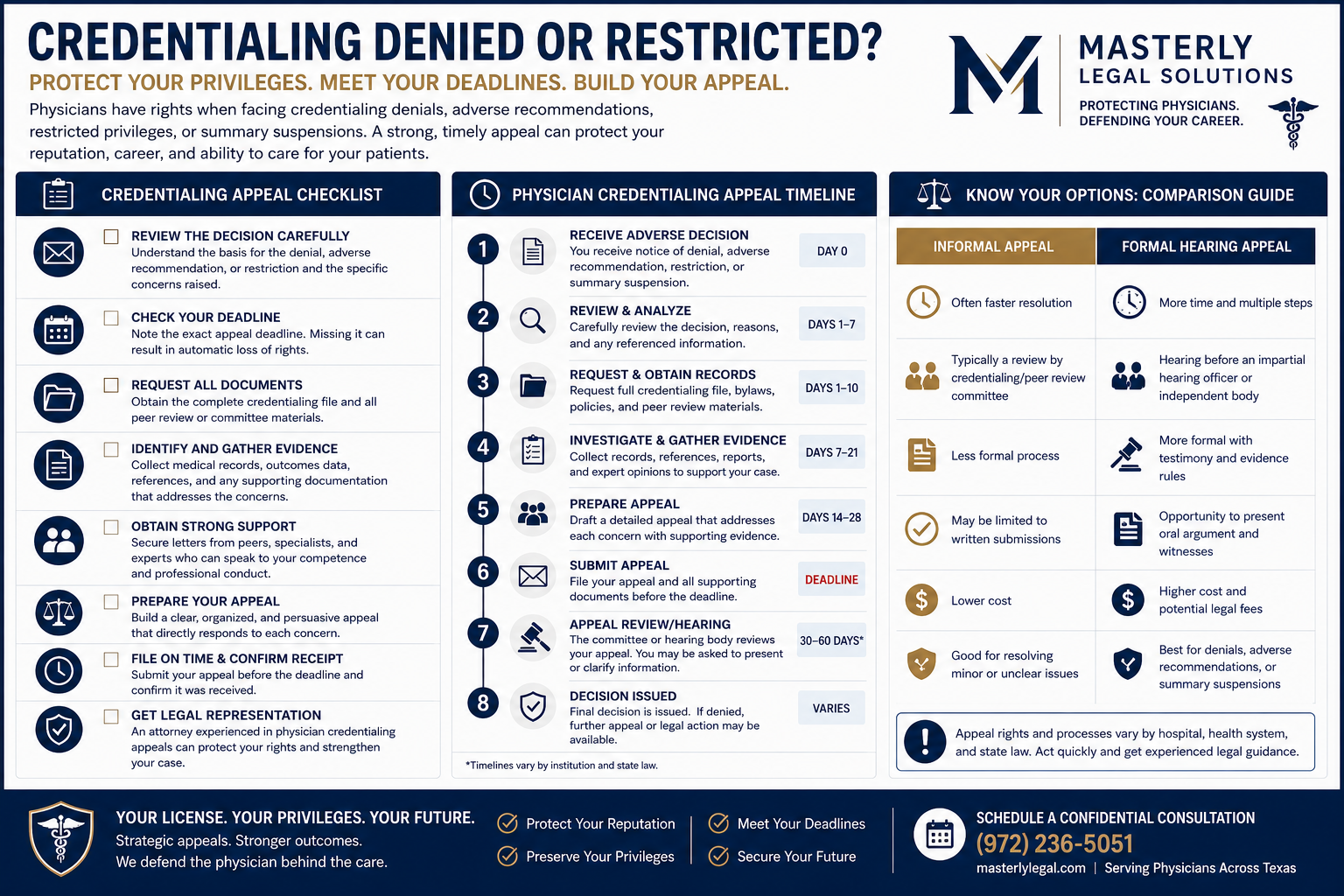
Depending on hospital bylaws, physicians may have the opportunity to request a hospital privileges appeal or additional review and may need to submit that appeal in writing within the deadline stated in the bylaws.
Some external appeal rights, including HPAB appeals where applicable, must be filed within 90 days of the decision.
Medical Staff Hearing
Some hospitals provide a medical staff hearing before final action is taken, and when denial is based on competence or professional conduct, a hearing may be required for healthcare providers.
Understanding each stage helps physicians prepare more effectively.
Common Reasons for Credentialing Denials
Every credentialing matter is unique, but hospitals frequently review concerns involving common issues such as malpractice claims, disciplinary actions, and other red flags in a physician’s history:
Professional Conduct
Questions regarding workplace interactions, professional behavior, or ethics may affect credentialing decisions.
Clinical Performance and Patient Safety
Hospitals may evaluate treatment outcomes, patient safety concerns, or quality improvement findings to review whether physicians can safely treat patients and provide accepted patient care under the requested privileges; in some cases, concerns also involve the level of supervision needed for certain procedures or services they assist with.
Documentation Issues
Incomplete records or administrative deficiencies sometimes become part of credentialing reviews, especially when missing or inconsistent documents create delays or raise an error concern during review. Hospitals may verify information through sources such as the National Practitioner Data Bank, which collects data on healthcare providers, the American Board of Medical Specialties, which certifies over 150 medical specialties, and state medical boards’ license verification programs.
Peer Review Findings and Malpractice Claims
Recommendations arising from peer review proceedings may influence credentialing decisions, and those findings may include input from colleagues or support a request for external review when impartiality is in question, including where a conflict of interest may affect the process.
Hospital Policy Compliance
Failure to satisfy hospital requirements or credentialing standards may affect appointments or privileges, including problems with office records, required disclosure obligations, or access to necessary credentialing materials; hospital policies and mandate-driven standards can vary by system or organizations.
Each situation deserves careful legal analysis before determining the most appropriate response.
How a Hospital Privileges Appeal Can Help
A hospital privileges appeal provides physicians with an opportunity to respond to concerns before final decisions become effective.
The appeal process may include reviewing committee findings, presenting additional documentation, addressing factual misunderstandings, and responding to the hospital's stated concerns.
Preparation often helps ensure that the physician's perspective is fully presented during the review process.
Preparing for a Medical Staff Hearing
A medical staff hearing is often one of the most important stages of a credentialing dispute.
Preparation may include:
Reviewing Hospital Bylaws
Understanding applicable procedures helps physicians prepare appropriately, confirm they received the relevant bylaws and policies, and keep any signed receipt or acknowledge receipt form.
Organizing Supporting Documentation
Medical records, credentialing documents, references, licensure records, and education or training verification may become important, and organized resources can help legal counsel review the file more efficiently.
Preparing Responses
Professional, accurate explanations often communicate more effectively than emotional reactions, and responses should be in writing where required. Your response should address the challenge identified by the hospital and explain any corrective steps.
Understanding Hearing Procedures
Knowing what to expect during the hearing helps physicians participate with greater confidence, including how the procedures define the method for presenting evidence, the board or hospital board review path, which members take part in the decision, and how to contact the appropriate office before the hearing if clarification is needed.
Careful preparation strengthens the overall presentation of your position.
Protecting Physician Due Process
Hospitals generally establish procedures designed to promote physician due process during credentialing matters.
Following those procedures helps ensure physicians have appropriate opportunities to understand the allegations, respond to committee concerns, and participate in available review processes.
An experienced attorney can evaluate whether the hospital's procedures have been followed while helping physicians prepare a thoughtful response based on the facts of the case.
Developing a Fair Hearing Plan
Every credentialing matter requires careful planning.
A comprehensive fair hearing plan may involve reviewing documentation, identifying procedural issues, organizing supporting evidence, and preparing for committee presentations or hearings.
Rather than reacting under pressure, physicians benefit from developing a structured legal strategy that addresses both immediate concerns and long-term professional goals.
Why Physicians Choose Masterly Legal Solutions
Credentialing disputes require legal counsel that understands both hospital procedures and the importance of protecting a physician's professional reputation.
Masterly Legal Solutions represents physicians facing credentialing denials, adverse recommendations, privilege restrictions, and appeal proceedings with experienced legal guidance tailored to each client's circumstances.
Physicians choose our firm because we provide:
Individualized Legal Strategy
Every credentialing appeal involves unique facts, hospital bylaws, and professional considerations.
Thorough Case Preparation
We carefully review credentialing records, committee findings, and supporting documentation before developing recommendations.
Clear Communication
We explain complex legal and procedural issues in straightforward language so physicians understand every stage of the process.
Reputation-Focused Representation
Our goal is to protect both your immediate credentialing interests and your long-term medical career whenever possible.
Frequently Asked Questions
When should I begin a physician credentialing appeal?
You should begin a physician credentialing appeal as soon as you receive notice of a credentialing denial, restricted privileges, or an adverse recommendation. Hospitals and payers typically require appeals or denial responses within 30 to 60 days, so physicians should act immediately after notice. Early preparation helps protect important deadlines.
What is a credentialing denial?
A credentialing denial occurs when a hospital declines an application for appointment, privileges, renewal, or another credentialing request based on its review process, often due to concerns about qualifications, documentation, malpractice claims, disciplinary actions, or failure to meet hospital standards, which may affect a provider’s ability to serve patients at that facility.
What is a hospital privileges appeal?
A hospital privileges appeal allows eligible physicians to seek review of certain credentialing or privilege decisions under applicable hospital procedures.
What happens during a medical staff hearing?
A medical staff hearing generally allows physicians to respond to committee findings, present information, and participate in the hospital's review process according to its bylaws.
Why is physician due process important?
Physician due process helps ensure credentialing matters are handled according to established procedures while providing physicians an opportunity to respond before final decisions are made. This is especially important when a denial, restriction, or termination could affect a physician’s career and future credentialing. Fair procedures also help confirm the decision was based on established standards.
Request a Physician Credentialing Appeal Review
If you have received a credentialing denial, adverse recommendation, restricted hospital privileges, or notice of appeal deadlines, do not wait until your options become more limited. Contact the firm promptly by phone so you can evaluate the decision, prepare your response, and protect your professional future. Masterly Legal Solutions assists physicians and other providers across the country with these matters when they arise.
Masterly Legal Solutions represents physicians facing hospital credentialing disputes with experienced, confidential legal counsel focused on protecting careers, professional reputations, and hospital privileges.
Call Masterly Legal Solutions today at (972) 236-5051 to request a physician credentialing appeal review. The firm provides related legal services for these disputes.






Looking for Legal & Business Solutions? Contact Us Now
Fill in the form or call us to set up a meeting





