

How CPS Uses Reports and Interviews to Build a Case Against Parents
When a Knock on the Door Changes Everything
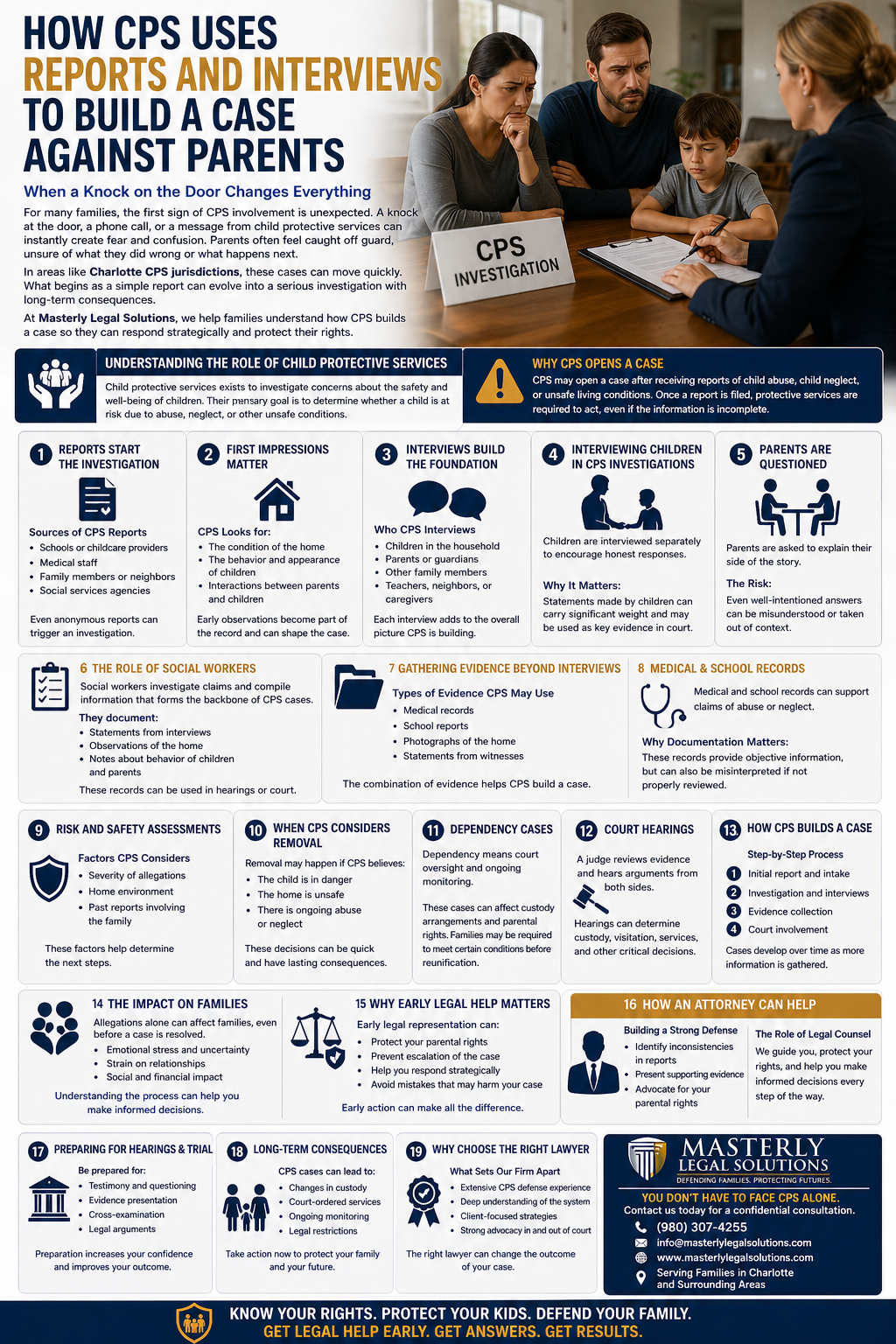
For many families, the first sign of CPS involvement is unexpected. A knock at the door, a phone call, or a message from child protective services can instantly create fear and confusion. Parents often feel caught off guard, unsure of what they did wrong or what happens next.
In areas like charlotte cps jurisdictions, these cases can move quickly. What begins as a simple report can evolve into a serious investigation with long-term consequences. At Masterly Legal Solutions, we help families understand how CPS builds a case so they can respond strategically and protect their rights.
Understanding the Role of Child Protective Services
Child protective services exists to investigate concerns about the safety and well-being of children. Their primary goal is to determine whether a child is at risk due to abuse, neglect, or other unsafe conditions.
Why CPS Opens a Case
CPS may open a case after receiving reports from individuals such as teachers, neighbors, or medical professionals. These reports often involve allegations of child abuse, child neglect, or unsafe living conditions. For educators, understanding legal support for teachers facing school investigations and TEA issues can be especially important when reports originate in the classroom. Once a report is filed, protective services are required to act, even if the information is incomplete.
How Reports Start the Investigation Process
Reports are the foundation of every CPS case. They provide the initial information that leads to an investigation.
Sources of CPS Reports
Reports can come from many places, including:
- Schools or childcare providers
- Medical staff who notice signs of abuse
- Family members or neighbors
- Social services agencies
Even anonymous reports can trigger an investigation. This means parents may not always know who made the complaint or why.
The Importance of First Impressions in CPS Cases
The first interaction with CPS can shape how the entire case develops. Social workers often form early opinions based on what they observe during initial visits.
What CPS Looks for During Initial Contact
During the first visit, CPS may evaluate:
- The condition of the home
- The behavior and appearance of children
- Interactions between parents and children
These observations become part of the official record and may influence the direction of the case.
How CPS Uses Interviews to Build Evidence
Interviews are one of the most powerful tools CPS uses when investigating families. They allow social workers to gather information directly from those involved.
Who CPS Interviews
CPS may interview:
- Children in the household
- Parents or guardians
- Other family members
- Teachers, neighbors, or caregivers
Each interview contributes to the overall picture CPS is building.
Interviewing Children in CPS Investigations
Children are often interviewed separately from their parents. This is done to encourage honest responses without outside influence.
Why Child Interviews Matter
Statements made by children can carry significant weight. CPS may rely on these interviews to support allegations of abuse or neglect. In some cases, these interviews are used as key evidence in court proceedings.
How Parents Are Questioned During Investigations
Parents are usually asked to explain their side of the story. These conversations may seem informal, but they are part of the official investigation.
The Risk of Miscommunication
Even well-intentioned answers can be misunderstood or taken out of context. This is why it is important to understand your rights before answering detailed questions.
The Role of Social Workers in Building a Case
Social workers are responsible for investigating claims and compiling information. Their reports often form the backbone of CPS cases.
How Social Workers Document Findings
Social workers document everything they observe and hear. This includes:
- Statements from interviews
- Observations of the home environment
- Notes about the behavior of children and parents
These records can later be used as evidence in hearings or court, and families may also need to consider related planning tools such as powers of attorney for children’s medical and financial decisions when long-term arrangements are in question.
Gathering Evidence Beyond Interviews
While interviews are important, CPS also collects other types of evidence to support their findings.
Types of Evidence CPS May Use
Evidence may include:
- Medical records
- School reports
- Photographs of the home
- Statements from witnesses
The combination of these elements helps CPS build a case.
The Role of Medical and School Records
Medical and school records can play a significant role in CPS investigations. These documents may be used to support claims of abuse or neglect.
Why Documentation Matters
Records from doctors or teachers can provide objective information. However, they can also be misinterpreted if not properly reviewed.
How CPS Determines Risk and Safety
CPS evaluates whether children are in danger based on the information collected. This assessment determines the next steps in the case.
Factors Considered in Risk Assessments
CPS may consider:
- The severity of allegations
- The home environment
- Past reports involving the family
These factors help determine whether immediate action is needed.
When CPS Considers Removal of Children
Removal is one of the most serious actions CPS can take. It occurs when the agency believes a child is at immediate risk.
What Leads to Removal Decisions
Removal may happen if CPS believes:
- The child is in danger
- The home is unsafe
- There is ongoing abuse or neglect
These decisions are often made quickly and can have lasting consequences.
Understanding Dependency Cases
When a case advances, it may enter the dependency system. This involves court oversight and ongoing monitoring.
What Dependency Means for Families
Dependency cases can affect custody arrangements and parental rights. Families may be required to meet certain conditions before reunification is considered.
The Role of Court Hearings in CPS Cases
Court hearings are a critical part of CPS cases. They determine what actions will be taken moving forward.
What Happens in Hearings
During hearings, a judge reviews evidence and hears arguments from both sides. These proceedings can influence custody, visitation, and other important decisions.
How CPS Builds a Case Over Time
CPS cases are not built overnight. They develop over time as more information is gathered.
The Step-by-Step Process
The process often includes:
- Initial report and intake
- Investigation and interviews
- Evidence collection
- Court involvement
Each step adds to the overall case against parents.
The Impact of Allegations on Families
Allegations alone can affect families, even before a case is resolved. The emotional and social impact can be significant.
Facing the Challenges Head-On
Families may experience stress, uncertainty, and fear. Understanding the process can help reduce anxiety and improve decision-making.
Why Legal Representation Matters Early
Having legal representation early in the process can make a major difference. An attorney can guide you through each step and help protect your rights.
The Advantage of Early Action
Early legal help allows families to respond strategically. It can also prevent mistakes that may harm the case later.
How an Attorney Can Help Defend Parents
An experienced attorney can help defend parents by reviewing evidence, challenging claims, and presenting a strong case.
Building a Strong Defense Strategy
A defense may involve:
- Identifying inconsistencies in reports
- Presenting supporting evidence
- Advocating for parental rights
These strategies can influence the outcome of the case.
The Role of Legal Counsel in CPS Cases
Legal counsel provides guidance and support throughout the process. They help families understand their options and make informed decisions.
Why Guidance Matters
Without proper guidance, families may unknowingly make decisions that weaken their position. Having an attorney ensures that every step is handled carefully.
Preparing for Hearings and Trial
Preparation is essential when facing CPS hearings or trial. Understanding what to expect can improve your confidence and effectiveness.
What to Expect in Court
Court proceedings may involve testimony, evidence presentation, and legal arguments. Being prepared can make a significant difference.
The Long-Term Consequences of CPS Cases
CPS cases can have lasting effects on families. These may include changes in custody, ongoing monitoring, or legal restrictions, making it even more important to have essential legal documents for your family in place to protect your long‑term interests.
Protecting Your Future
Taking action early can help minimize long-term consequences. It can also improve your chances of a favorable outcome.
How Masterly Legal Solutions Supports Families
At Masterly Legal Solutions, we focus on defending families and protecting parental rights. Our law firm has extensive experience handling CPS cases and guiding clients through complex situations.
A Client-Focused Approach
We collaborate closely with our clients to comprehend their requirements and create customized plans. Our goal is to provide clear guidance and strong advocacy.
Why Choosing the Right Lawyer Matters
Selecting the right lawyer can make a significant difference in your case. Experience, knowledge, and dedication all play a role.
What Sets Our Firm Apart
Our team is committed to helping families navigate CPS cases with confidence. We bring expertise and a deep understanding of the system.
Moving Forward With Confidence
Facing CPS involvement can feel overwhelming, but you are not alone. With the right support, you can take.
Representing Parents in Complex CPS Matters
Representing parents in CPS cases requires a careful and strategic approach. These situations often involve serious allegations, and families need strong advocacy to ensure their side of the story is heard. An experienced attorney focuses on protecting parental rights while addressing concerns raised by child protective services. Effective representation can help shift the direction of a case and prevent unnecessary escalation.
Focusing on the Best Interests of the Child and Family
CPS often emphasizes decisions based on the best interests of the child, but that standard can be interpreted in many ways. It is important to ensure that decisions are not made without considering the full context of the family’s situation. Parents have the right to present evidence and demonstrate that their home provides safety, stability, and support. A balanced approach helps protect both the child and the family unit.
Understanding the Role of the Department in CPS Cases
The department handling a CPS case plays a central role in investigating claims and making recommendations. This agency collects information, interviews individuals, and evaluates whether further action is needed. Their findings can influence whether a case moves forward into court or dependency proceedings. Understanding how the department operates helps families respond more effectively.
How the Department’s Findings Impact Your Case
The department’s reports and conclusions can shape the direction of a CPS case. These findings are often presented in hearings and may be relied upon by a judge. If the information is incomplete or inaccurate, it can create serious challenges for parents. This is why it is critical to review and, when necessary, challenge the department’s conclusions.
Our Commitment to Defending Families
At Masterly Legal Solutions, PLLC, our commitment is centered on defending families and protecting their rights. We understand how overwhelming CPS cases can be and work closely with clients to provide clear guidance. Our goal is to ensure that every client feels supported throughout the process. Strong advocacy can make a meaningful difference in the outcome of a case.
The Importance of Consent in CPS Investigations
Consent plays an important role in CPS investigations. Parents are often asked to allow home visits, interviews, or access to records. While cooperation is important, it is equally important to understand what you are agreeing to before giving consent. An attorney can help you evaluate these decisions and protect your rights.
Why Acting Immediately Can Protect Your Rights
When CPS becomes involved, acting immediately can have a significant impact on your case. Early action allows you to gather information, understand your options, and avoid mistakes. Exploring tailored, client-centric legal services can also help you align your strategy with your family’s specific needs. Delays can make it harder to challenge claims or present evidence effectively. Taking prompt steps helps protect your position from the start.
Addressing Allegations of Exploitation
In some cases, CPS investigations may involve allegations of exploitation. These claims can be serious and may require detailed review of financial, personal, or caregiving arrangements. It is important to respond carefully and provide accurate information. Legal guidance can help ensure that these allegations are addressed properly.
When a CPS Case Leads to a Lawsuit
A CPS case may escalate into a lawsuit if disputes arise over decisions or actions taken by the agency. This can involve challenges to custody determinations or claims of rights violations. Legal representation is essential in these situations to ensure your position is clearly presented. Understanding the process can help you prepare for what lies ahead.
Protecting Your Rights During a Lawsuit
When facing a lawsuit related to a CPS case, it is important to take a structured and informed approach. This includes reviewing evidence, preparing testimony, and understanding legal procedures. An attorney can guide you through each step and advocate on your behalf. Proper preparation can influence the final outcome.
Why It Is Important to Hire the Right Attorney
Choosing to hire the right attorney can make a major difference in your CPS case. Experience, knowledge, and a strong understanding of the system are critical factors. The right legal team can help you navigate challenges and build a solid defense. This decision can directly impact your future and your family.
Reviewing Every Detail of Your Case Page
Every case has a record or page that documents findings, reports, and actions taken by CPS. Reviewing these details carefully is essential to understanding how your case is being presented. Errors or omissions in these records can affect decisions. An attorney can help identify and address any issues.
Ensuring Proper Care for Children During Investigations
CPS cases often focus on the level of care provided to children. This includes physical, emotional, and educational needs. Demonstrating that your child is receiving proper care can help counter allegations, and having a personalized estate plan with wills and trusts can further show long‑term planning for your child’s stability. Clear documentation and consistent support are important factors.
Balancing Care and Legal Challenges
While addressing legal issues, families must also focus on maintaining stability and care for their children. This balance can be difficult during a CPS investigation. Support from legal professionals and trusted individuals can help families manage both responsibilities effectively, and establishing trusts and related estate planning tools can be part of securing long‑term stability for children.
The Role of DSS in Child Protection Cases
In some areas, DSS (Department of Social Services) is the agency responsible for handling CPS cases. Their role is similar to other child protective services agencies, focusing on investigating reports and ensuring child safety. Understanding how DSS operates can help families navigate the process more confidently, and working with a firm experienced in education law, estate planning, and business consulting can provide a broader legal perspective on related issues.
When Parents Are Charged in CPS Cases
In more serious situations, parents may be charged with offenses related to abuse or neglect. These cases often involve both CPS proceedings and criminal investigations. The stakes are significantly higher, making legal representation essential. A strong defense is critical in protecting your rights and your future.
When Families Are Asked to Leave the Home
CPS may require a parent to leave the home as part of a safety plan. This can be a temporary measure while the investigation continues. While it may feel disruptive, it is important to understand the terms and implications. Legal guidance can help ensure that your rights are preserved.
The Importance of Expert Involvement in CPS Cases
Experts can play a key role in CPS cases, particularly when specialized knowledge is needed. This may include medical professionals, child psychologists, or other specialists. Their input can help clarify complex issues and support your case. Working with the right experts can strengthen your position and improve your chances of a favorable outcome.
Contact Masterly Legal Solutions for Guidance
If you are dealing with a CPS investigation or concerned about how reports and interviews are being used against you, now is the time to take action. These cases can move quickly, and engaging a firm that handles a wide range of legal services for individuals and organizations can provide valuable support. Early intervention can make a meaningful difference.
At Masterly Legal Solutions, we are dedicated to defending families and helping parents navigate difficult situations. Our team is ready to assist you, answer your questions, and provide the guidance you need.
Call us at (972) 236-5051 for a free consultation. Let us help you understand your rights, protect your family, and take the next steps with confidence.
Disclaimer: This is not legal advice; it is merely meant to be informative. An attorney-client relationship is not established by reading this content. Please speak with an experienced lawyer for advice tailored to your circumstances.



Looking for Legal & Business Solutions? Contact Us Now
Fill in the form or call us to set up a meeting