

Placed on Leave After Speaking Up? Retaliation at Work in School Investigations Explained
When Doing the Right Thing Leads to the Wrong Outcome
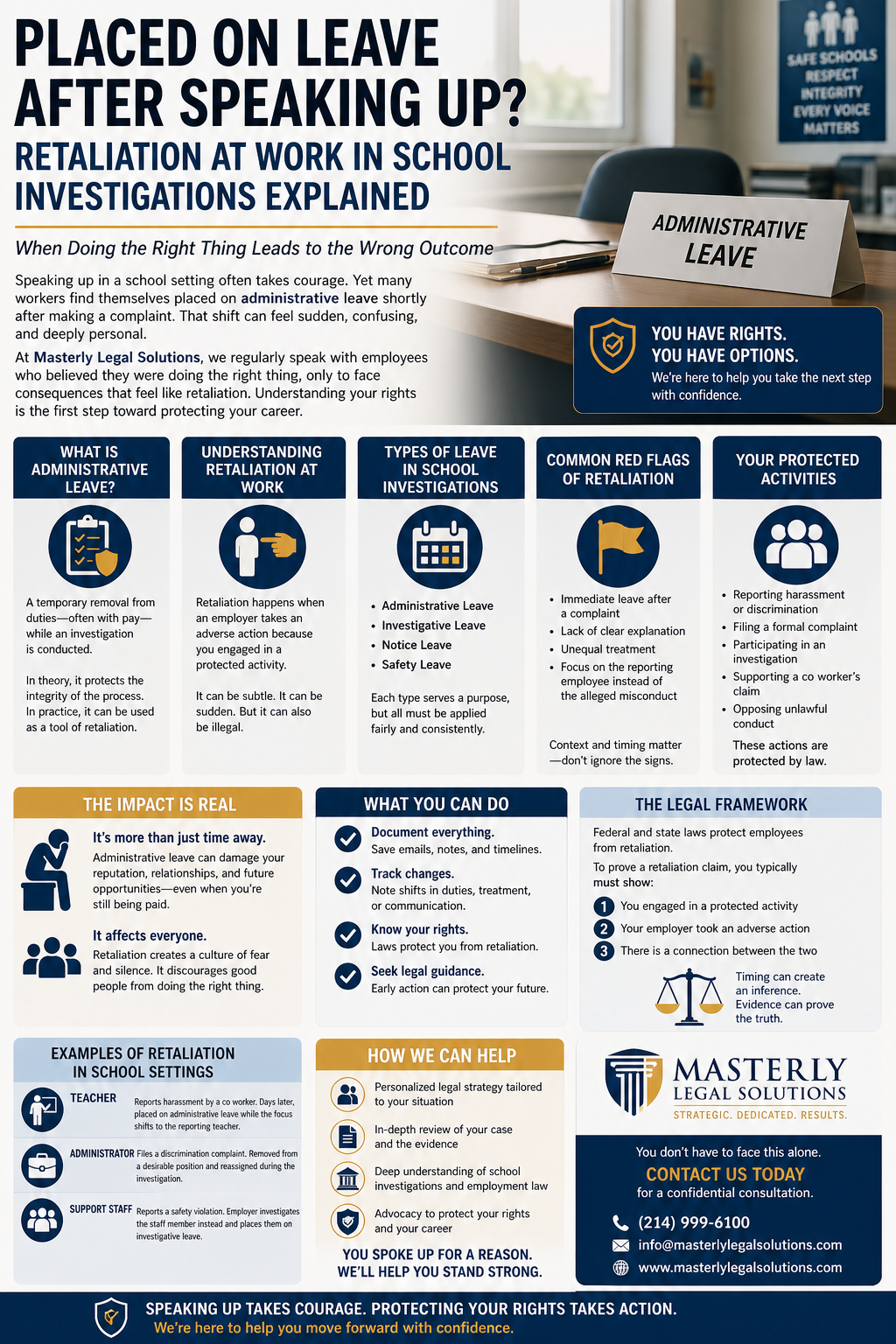
Speaking up in a school setting often takes courage. Whether you are a teacher, administrator, or support staff member, raising a concern about harassment, discrimination, or a possible violation of policy should be a protected action. Yet many workers find themselves placed on administrative leave shortly after making a complaint. That shift can feel sudden, confusing, and deeply personal.
At Masterly Legal Solutions, we regularly speak with employees who believed they were doing the right thing, only to face consequences that feel like retaliation. If you have been removed from your duties, reassigned, or placed on paid administrative leave after reporting misconduct, it is important to understand what may actually be happening behind the scenes.
What Administrative Leave Means in School Investigations
Administrative leave is often presented as a neutral step. In many school investigations, an employer may temporarily remove an employee from their role while reviewing allegations. This is sometimes framed as an excused absence, especially when the leave is with pay.
The Purpose Behind Administrative Leave
In theory, administrative leave allows an agency or school district to conduct an investigation without interference. It can help preserve evidence, maintain order, and protect both the employee and other employees involved. In some cases, the agency determines that removing someone temporarily is necessary to support the agency's mission.
However, the situation becomes more complicated when administrative leave follows a protected activity, such as reporting discrimination or harassment. That is when questions about retaliation at work begin to surface.
Paid Administrative Leave Versus Punitive Actions
Not all leave is equal. Paid administrative leave may sound harmless, but it can still carry a negative impact. Being removed from your employee's current position, especially without clear explanation, can affect your reputation, relationships, and future opportunities.
Even if your pay remains intact, the emotional and professional consequences can feel like an adverse action. Courts and legal professionals often look at how a reasonable employee would interpret the situation when evaluating whether retaliation occurs.
Understanding Retaliation at Work in School Settings
Retaliation at work happens when an employer takes an adverse action against an employee because they engaged in a protected activity. In school environments, this can involve teachers, administrators, or staff members who report misconduct, and many choose to consult a retaliation lawyer for help with workplace law and employment issues.
What Counts as Protected Activity
Protected activity includes actions such as:
- Reporting harassment or discrimination
- Filing a formal complaint
- Participating in an investigation
- Supporting a co worker’s claim
- Opposing unlawful conduct in the workplace
These actions are protected under various laws, including provisions within the united states code and guidance applied to federal agencies and educational institutions.
How Retaliation Can Appear
Retaliation is not always obvious. Sometimes it shows up as a transfer to a less desirable position, removal from a desirable position, or a sudden change in duties. Other times, it may involve administrative leave, notice leave, or investigative leave that seems directly related to the complaint.
For example, a teacher who reports harassment may suddenly be placed on investigative leave while the alleged misconduct is reviewed. If that leave appears to punish the reporting employee rather than address the alleged misconduct, it may support a retaliation claim that could benefit from guidance from a dedicated retaliation lawyer focused on workplace retaliation and law.
Administrative Leave and Retaliation: Where the Line Blurs
When Administrative Leave Becomes an Adverse Action
Administrative leave is not automatically retaliation. Employers may argue that they are following agency policies or conducting internal reviews. However, the timing and context matter.
If an employee is placed on leave immediately after filing a complaint, and there is no clear justification tied to the alleged misconduct, the action may raise concerns. Courts often examine whether the leave would discourage a reasonable employee from engaging in protected activity.
The Role of Human Resources and Agency Officials
Human resources departments and agency officials play a key role in determining whether to grant administrative leave. In some cases, the agency head or other authorized agency officials may approve the decision based on internal policies.
However, those decisions must be consistent with opm regulations, opm guidance, and applicable law. When agency judgments appear inconsistent or selectively applied, it may suggest improper motives.
Investigative Leave in School Environments
What Is Investigative Leave?
Investigative leave is a specific type of administrative leave used during an active investigation. It is often applied when there are allegations of misconduct or false accusations that require expert legal defense that require immediate review.
How It Is Used in Practice
Schools and educational agencies may place an employee on investigative leave to allow internal reviews without disruption. This can include situations involving alleged misconduct, safety concerns, or possible violation of policies.
However, investigative leave must be used carefully. If it is applied in a way that punishes an employee for reporting issues, it may cross into retaliation at work.
Notice Leave and Other Forms of Leave
Understanding Notice Leave
Notice leave occurs when an employee is required to stay away from the workplace during a notice period. While it can be appropriate in certain circumstances, it should not be used as a substitute for disciplinary action without proper justification.
Comparing Different Types of Leave
Schools and agencies may use various forms of leave, including:
- Administrative leave
- Investigative leave
- Notice leave
- Safety leave
Each type serves a different purpose, but all must be applied in accordance with agency policies and the law, especially for Texas teachers navigating administrative leave decisions.
The Legal Framework Behind Retaliation Claims
Laws That Protect Employees
Federal and state laws protect workers from retaliation. These laws are designed to encourage reporting of wrongdoing without fear of punishment.
Under these protections, an employer cannot take an adverse action against an employee for engaging in protected activity. This includes actions that affect pay, job status, or working conditions.
The Elements of a Retaliation Claim
To establish a retaliation claim, an employee typically must show:
- They engaged in protected activity
- The employer took an adverse action
- There is a connection between the two
For example, if an employee files a discrimination claim and is placed on administrative leave shortly after, the timing may support an inference of retaliation and potentially justify filing a retaliation or labor complaint with the Department of Labor.
Examples of Retaliation in School Investigations
Example Involving a Teacher
A teacher reports harassment by a co worker. Within days, the employer places the teacher on paid administrative leave without explanation. The investigation focuses heavily on the reporting teacher rather than the alleged misconduct. This may raise concerns about retaliation.
Example Involving an Administrator
An administrator files a complaint about discrimination. The agency head removes them from their desirable position and assigns them to a less desirable position during the investigation. Even if labeled as administrative leave, the action could be viewed as adverse.
Example Involving Support Staff
A staff member reports a possible violation involving safety procedures. Instead of addressing the concern, the employer initiates an investigation into the reporting employee’s conduct and places them on investigative leave. This scenario may suggest retaliation occurs.
The Impact on Employees and Workplace Culture
Effects on Employee Morale
When retaliation occurs, it does not just affect the individual. It can damage overall employee morale and discourage other employees from speaking up.
Broader Workplace Consequences
Retaliation can create a culture of fear. Workers may hesitate to report issues, which can lead to ongoing harassment, discrimination, or safety risks. This undermines the agency's mission and the integrity of the workplace.
How Employers Justify Administrative Leave
Common Employer Arguments
Employers often argue that administrative leave is necessary to:
- Maintain order during an investigation
- Protect both the employee and others
- Preserve evidence
- Ensure fairness
While these reasons can be valid, they must be applied consistently and without discriminatory intent.
The Importance of Internal Policies
Employers are expected to issue internal policies consistent with legal standards. These policies should clearly outline when administrative leave is appropriate and how it will be implemented.
Red Flags That Suggest Retaliation
Signs to Watch For
Certain patterns may indicate retaliation at work:
- Immediate leave after a complaint
- Lack of clear explanation for the leave
- Unequal treatment compared to other employees
- Focus on the reporting employee instead of the alleged misconduct
Evaluating the Circumstances
Each case depends on its circumstances. A careful review of timing, communication, and actions taken by the employer is essential.
The Role of Timing in Retaliation Cases
Timing is often one of the most important factors. When an adverse action closely follows a protected activity, it can suggest a connection between the two.
For example, if an employee reports discrimination and is placed on administrative leave within days, it may raise questions about the employer’s motives.
How Investigations Should Be Conducted
Fair and Balanced Approach
A proper investigation should focus on the alleged misconduct, not punish the reporting employee. It should involve neutral decision-making and respect for all parties involved.
Avoiding Retaliation During Investigations
Employers must ensure that their actions do not discourage employees from reporting issues. This includes careful use of administrative leave and clear communication throughout the process.
Special Considerations in School Settings
Unique Challenges
Schools often face unique challenges due to their structure and responsibilities. Issues involving students, staff, and public trust can complicate investigations.
The Role of Agency Policies
Educational institutions must follow agency policies, opm guidance, and other applicable regulations. These frameworks are designed to balance fairness with the need to address concerns effectively.
Protecting Your Rights as an Employee
Steps You Can Take
If you believe you have experienced retaliation, consider the following steps:
- Document all communications and actions
- Keep records of your complaint and any responses
- Note changes in your job status or duties
- Seek legal guidance
Why Documentation Matters
Accurate records can help establish a timeline and support your claim. This is especially important in cases involving administrative leave and investigations.
The Importance of Legal Guidance
Navigating retaliation claims can be complex. Laws, policies, and agency procedures all play a role in determining whether an employer’s actions were lawful.
At Masterly Legal Solutions, we understand how overwhelming these situations can feel. Our goal is to help you understand your rights and take the appropriate steps to protect your career.
How We Help Clients Facing Retaliation
Personalized Legal Strategies
Every case is different. We work closely with clients to evaluate their situation, identify potential violations, and develop a strategy tailored to their needs.
Experience With School Investigations
Our team has experience handling cases involving school investigations, administrative leave, and retaliation claims, including representing teachers who need an education law attorney for expert guidance during investigations. We understand the nuances of these cases and how to address them effectively.
Why Acting Quickly Matters
Delays can make it harder to gather evidence and build a strong case. Taking action early can help preserve your rights and improve your chances of a favorable outcome.
Moving Forward With Confidence
Being placed on administrative leave after speaking up can feel isolating. However, you are not alone. Understanding your rights and seeking guidance can make a significant difference.
Employment Discrimination and Retaliation Overlap
Employment discrimination can sometimes be closely tied to retaliation, especially in school investigations. When an employee reports unequal treatment based on disability, race, or another protected category, that report becomes a protected activity. If the employer responds negatively—such as placing the employee on administrative leave or limiting opportunities—it may signal both discrimination and retaliation. These situations require careful review to determine whether the employer’s actions were justified or whether they crossed legal boundaries, particularly in higher education settings that may need specialized higher education law services and legal support.
Administrative Leave for Brief or Short Periods
In some cases, employers may place an employee on administrative leave for brief or short periods while gathering initial information. These short periods are often described as necessary to stabilize the situation and prevent disruption. However, even when labeled as temporary, these decisions must be reasonable and supported by facts. If the leave extends beyond what is necessary or appears targeted, it may raise concerns about fairness and intent.
Personnel Management and Leave Decisions
Decisions involving administrative leave often fall under personnel management responsibilities. Employers must balance workplace needs with employee rights, ensuring that any action taken aligns with established policies. Poor personnel management decisions—especially those made without clear documentation—can expose an employer to claims of retaliation or discrimination. Proper oversight is critical to maintaining trust and compliance.
When Leave Is Specifically Authorized
There are situations where administrative leave is specifically authorized under certain policies or legal frameworks. This may include circumstances involving safety concerns, ongoing investigations, or compliance requirements. Even when leave is specifically authorized, the employer must ensure that it is applied consistently and not used as a tool to penalize an employee for speaking up.
Understanding Brief Periods of Leave in Investigations
Employers may rely on brief periods of administrative leave to assess an issue before making longer-term decisions. These brief periods are intended to allow time for fact-finding without rushing to judgment, and organizations sometimes seek HR consulting services and training on internal investigations to structure these processes appropriately. However, the transition from a brief leave to extended absence should be carefully evaluated to avoid unnecessary harm to the employee’s role and reputation.
Paid Leave and Its Hidden Impact
Being placed on paid leave may seem less severe than unpaid suspension, but it can still carry consequences. Even when an employee continues to receive pay, removal from their duties can affect professional standing and future advancement. In some cases, paid leave may be perceived as a subtle form of discipline, particularly when it follows a complaint or report of wrongdoing.
Federal Guidance Through Presidential Directive
Certain workplace practices, including administrative leave policies, may be influenced by broader government frameworks such as a presidential directive. These directives can shape how agencies and institutions approach investigations and employee protections. While not always directly visible to employees, they often guide how policies are implemented at higher levels.
Policy Influence From a Presidential Memorandum
A presidential memorandum may also impact how administrative leave is structured within organizations. These memoranda can provide direction on handling investigations, employee rights, and workplace conduct. Employers are expected to interpret and apply these guidelines in a way that supports fairness and legal compliance.
Special Leave for Blood Donations and Civic Duties
Some forms of administrative leave are granted for positive and necessary activities, such as blood donations or civic participation. These are typically approved as short periods of excused absence and are often officially sponsored by the employer or recognized organizations. These types of leave highlight how administrative leave can serve beneficial purposes when applied appropriately.
Officially Sponsored Activities and Leave Approval
Employers may grant leave for officially sponsored events or programs that benefit the community or workplace. In these cases, the leave is not tied to misconduct or investigation but rather to participation in approved activities. This distinction is important, as it demonstrates that not all administrative leave carries negative implications.
Ad Hoc Decisions and Their Risks
Ad hoc decisions regarding administrative leave can create inconsistency and confusion. When employers make case-by-case choices without clear guidelines, it increases the risk of unequal treatment. Employees may feel singled out, particularly if others in similar situations are treated differently.
Other Provision Governing Administrative Leave
In addition to internal policies, other provision within legal frameworks may govern how administrative leave is applied. These provisions can include federal regulations, local laws, or institutional rules. Employers must ensure that their actions align with all applicable requirements to avoid legal exposure.
The Role of Executive Order in Workplace Policies
An executive order can also influence workplace policies, particularly within public institutions or federally connected entities. These orders may set standards for employee protections, investigations, and administrative procedures. Understanding these influences helps clarify why certain policies exist and how they should be applied.
Time Limited Basis for Administrative Leave
Administrative leave is often intended to be used on a time limited basis. This means the leave should not extend indefinitely without justification. Prolonged absence without resolution can harm the employee’s career and may suggest that the leave is being used improperly.
Short Periods Versus Extended Leave
Short periods of administrative leave are generally easier to justify than extended absences. When leave continues without clear progress in the investigation, it may indicate deeper issues. Employers must regularly reassess the need for continued leave to ensure it remains appropriate.
Tracking Leave Within a Calendar Year
Some organizations monitor administrative leave usage within a calendar year to ensure compliance with policies. Tracking helps identify patterns and prevents misuse. For employees, understanding these limits can provide insight into whether their leave is being handled appropriately.
Other Related Protected Activity in Retaliation Cases
Retaliation is not limited to a single type of complaint. It can arise from other related protected activity, such as supporting a colleague or participating in an internal review, or engaging in processes like a Title IX investigation where respondents must understand their rights. Employers must recognize that these actions are protected and should not trigger negative consequences.
The Supervisor’s Role in Leave Decisions
A supervisor often plays a direct role in recommending or approving administrative leave. Their perspective can influence how a situation is handled, making it essential that decisions are based on facts rather than personal bias. Employees should be aware of how their supervisor’s actions may impact the process.
Supervisor Conduct and Accountability
When a supervisor is involved in the events leading to a complaint, their involvement in leave decisions can raise concerns. Accountability is critical to ensure that decisions are fair and not influenced by personal interests or conflicts.
Police Involvement in School Investigations
In some cases, school investigations may involve the police, particularly when allegations include serious misconduct. Police involvement can add complexity and increase the stakes for everyone involved. It is important that administrative leave decisions remain fair, even when external authorities are part of the process.
When Police Reports Influence Leave Decisions
Employers may rely on police reports when determining whether to place an employee on administrative leave. While this can be appropriate, it should not replace a thorough internal review. Relying solely on external input may lead to incomplete or biased outcomes.
Balancing Police Investigations and Employee Rights
When police are involved, employers must balance cooperation with protecting employee rights. Administrative leave should not automatically follow police involvement unless there is a clear and justified reason.
Disability Considerations in Administrative Leave
Disability-related concerns require special attention in administrative leave decisions. If an employee’s disability is connected to the situation being investigated, the employer must take care to avoid discrimination. Failing to accommodate or fairly assess these circumstances can lead to additional legal issues.
Protecting Employees With Disabilities
Employees with disabilities are entitled to fair treatment and reasonable accommodations. When administrative leave is used, it should not disadvantage them or ignore their rights. Employers must ensure that their actions are inclusive and compliant with applicable laws.
Speak With Masterly Legal Solutions Today
If you have been placed on administrative leave after reporting harassment, discrimination, or another concern, it may be time to ask questions. What appears to be a routine investigation could involve retaliation at work.
Our team is here to help you make sense of your situation and explore your options. We take the time to listen, evaluate your case, and provide clear guidance tailored to your circumstances.
Contact us at (972) 236-5051 for a free consultation. Let us help you understand your rights, protect your career, and take the next steps with confidence.
Disclaimer: This article is for informational purposes only and does not constitute legal advice. Reading this content does not create an attorney-client relationship. For guidance specific to your situation, please contact a qualified attorney.








Looking for Legal & Business Solutions? Contact Us Now
Fill in the form or call us to set up a meeting





