

Texas CPS Investigation Defense: What to Do in the First 48 Hours After CPS Contacts You
When CPS Contacts Your Family Without Warning
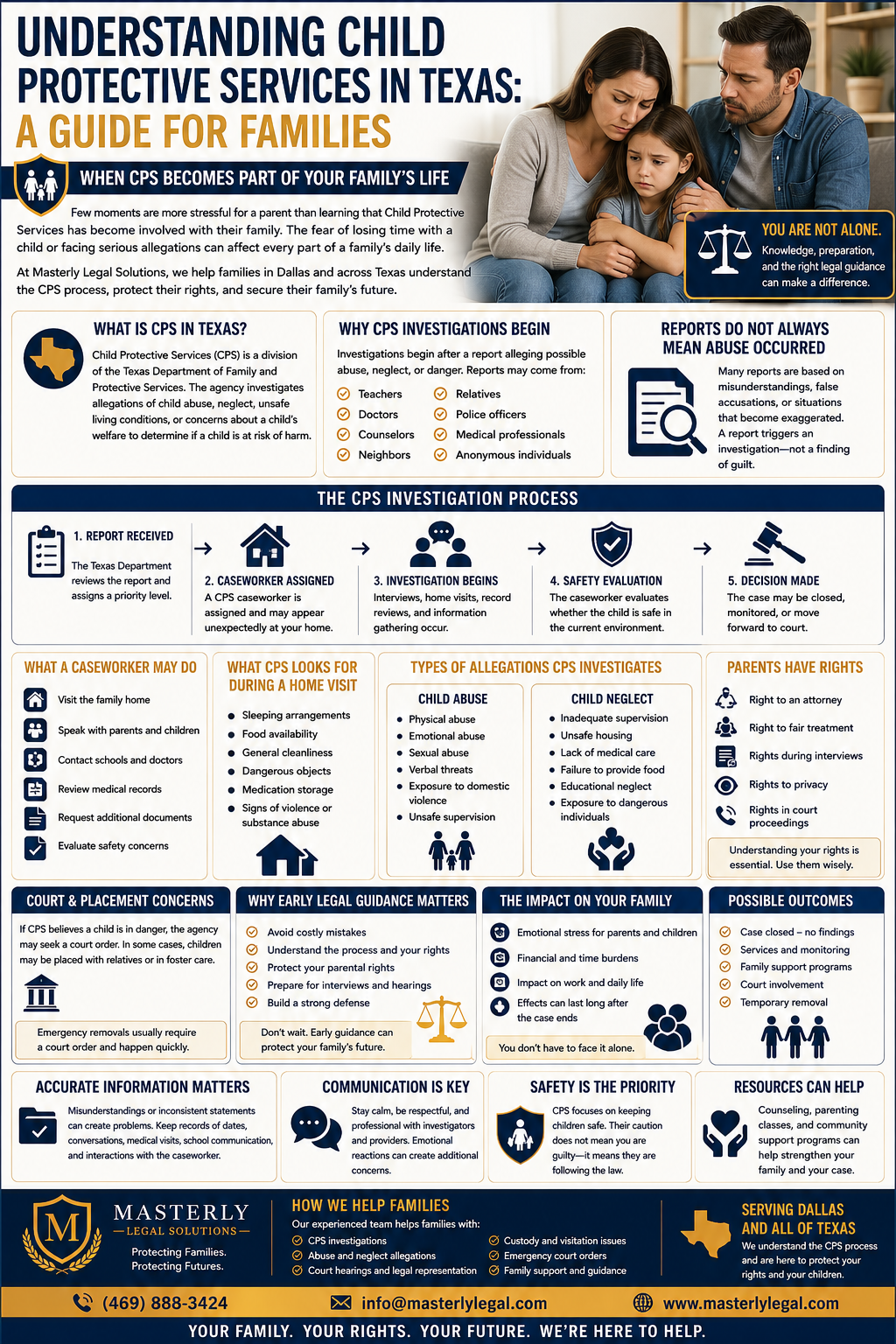
Few experiences create panic for parents faster than hearing that CPS wants to speak with them about their children. One unexpected phone call, voicemail, or knock at the door can instantly turn a normal day into a stressful and emotional situation. Many families feel shocked, confused, and afraid because they do not fully understand how the investigation process works or what could happen next. Parents often worry about whether their children could be removed from the home or whether the allegations will affect their reputation, employment, or future.
At Masterly Legal Solutions, we understand how frightening those first hours can feel. Families throughout Texas contact our firm because they need clear answers and immediate guidance after learning that Child Protective Services has become involved. The first 48 hours after CPS contacts you can significantly affect the direction and possible outcome of the case. Staying calm, informed, and prepared during this early stage may help families better protect their rights and the well-being of their children.
Understanding Child Protective Services in Texas
Child Protective Services, often referred to as Child Protective Services CPS, is part of the Texas child welfare system responsible for investigating allegations involving child abuse or neglect. The agency works under state and federal guidelines intended to help protect children who may be at risk of harm.
The Texas child welfare system is influenced by both state and federal laws, including legislation focused on child abuse prevention, family preservation, and child safety. These investigations may involve concerns related to physical abuse, emotional abuse, domestic violence, unsafe living conditions, or allegations involving neglect.
Although the agency’s stated purpose is to protect children, many parents quickly discover that the process can become emotionally overwhelming and legally complicated.
Why The First 48 Hours Matter So Much
The first two days after CPS makes contact are often the most important part of the investigation. During this period, investigators may begin gathering statements, interviewing children, reviewing records, and deciding whether they believe the child faces immediate danger.
Parents sometimes make emotional decisions during these first hours because they are scared or confused. Unfortunately, rushed reactions, arguments, or careless statements may later appear in official reports or court records.
This is why families should focus on remaining calm and making informed decisions immediately after contact from CPS.
Understanding Why CPS Opened the Investigation
Not every report to CPS involves severe abuse or criminal conduct. Some investigations begin after a teacher, doctor, neighbor, or counselor reports concerns involving possible child abuse and neglect. In other situations, domestic disputes, school concerns, or misunderstandings may trigger agency involvement.
Certain professionals are legally required to report suspected child abuse or concerns involving neglect. These mandatory reporters often include teachers, nurses, counselors, doctors, and law enforcement officers.
Even when allegations are false or exaggerated, CPS may still investigate the situation thoroughly.
Do Not Panic When CPS Contacts You
Many parents assume the worst immediately after hearing from CPS. Fear may cause families to overreact, argue with investigators, or make decisions without fully understanding the process.
The truth is that not every investigation results in child removal or court involvement. In many situations, the agency is simply attempting to gather information and evaluate whether any immediate safety concerns exist.
Remaining calm during the first 48 hours may help parents think more clearly and avoid unnecessary mistakes.
Learn What Allegations Have Been Made
One of the first things parents should do is attempt to understand the nature of the allegations. Families often feel confused because investigators initially provide only limited details about the report.
Understanding the allegations may help parents better prepare for conversations with investigators and gather important information connected to the case. This does not mean parents should become defensive or argumentative, but they should attempt to understand the general concerns being investigated.
Knowing what allegations exist may also help families protect themselves against misunderstandings later.
Be Careful About What You Say
During the first 48 hours, many parents feel pressured to explain everything immediately. While cooperation can sometimes help move the process forward, families should also understand that statements made during the investigation may later appear in official records or court proceedings.
Parents should avoid:
- Guessing about facts
- Speculating
- Becoming aggressive
- Making emotional accusations
- Providing inconsistent statements
It is important to remain respectful while carefully considering how to respond to investigators.
Understand the Role of the Child Welfare System
The Texas child welfare system exists to evaluate concerns involving children who may be unsafe or at risk of harm. Investigators are trained to focus primarily on the best interests and overall safety of the child.
However, many families feel overwhelmed because they believe the system views them as guilty before hearing their side of the story. Understanding how the agency approaches investigations may help parents better navigate the process.
At Masterly Legal Solutions, we help families understand how CPS investigations operate and how early decisions may affect the future of the case.
Ask Questions Before Agreeing to Major Requests
Many parents feel pressured to agree immediately to every request made by investigators. While cooperation may sometimes help the process, families should also understand the importance of asking thoughtful questions before making major decisions.
Parents may wish to ask:
- What allegations are being investigated?
- What information is being requested?
- What concerns does CPS currently have?
- Are there immediate safety concerns?
- What happens next?
Understanding the situation may help parents make more informed decisions during these stressful moments.
Do Not Automatically Consent to Everything
Investigators may ask for interviews, home inspections, medical records, or other forms of access during the investigation. Parents often feel intimidated and assume they must immediately agree to every request.
However, every situation is different, and families should understand their legal rights before providing broad consent. Decisions made during the first 48 hours may significantly affect the direction of the investigation.
This is one reason many families choose to speak with an attorney early in the process.
Why Home Visits Matter
A CPS visit to the home often becomes one of the most stressful parts of the investigation. During the home inspection, investigators may evaluate living conditions, supervision, sleeping arrangements, food availability, and general safety concerns.
The investigator may also look for signs of:
- Unsafe conditions
- Substance abuse
- Domestic violence
- Physical injuries
- Environmental hazards
Parents should remain calm and respectful during the visit while avoiding unnecessary arguments or emotional confrontations.
Gather Important Documents Early
Families should begin organizing important records as soon as possible after CPS contact occurs. Good documentation may help explain the family’s situation and provide useful information later.
Helpful records may include:
- Medical records
- School records
- Counseling records
- Text messages
- Photographs
- Witness contact information
Strong documentation may help families better protect their interests during the investigation.
Be Mindful of Social Media Activity
Parents should be extremely careful about social media activity during an active CPS investigation. Emotional posts, online arguments, or public discussions about the case may create additional problems later.
Investigators may review social media activity as part of the investigation process. Friends, relatives, or other individuals may also share information publicly without realizing how damaging it could become.
The safest approach is often to avoid discussing the case online entirely.
Child Abuse Allegations Can Escalate Quickly
Many investigations begin with relatively small concerns that later expand into broader allegations involving child abuse, neglect, or unsafe conditions. Families sometimes underestimate how quickly CPS cases can escalate during the early stages.
For example, an initial allegation involving supervision concerns may later involve questions about:
- Domestic violence
- Substance abuse
- Emotional abuse
- Educational neglect
- Unsafe home conditions
Early preparation can help families better respond to changing circumstances.
Why Child Safety Is the Agency’s Main Focus
Throughout the process, the agency’s primary concern remains the child’s overall safety and well-being. Investigators are trained to focus on whether children may face ongoing danger or emotional harm inside the home.
This emphasis on safety often explains why investigators move quickly when serious allegations arise. Parents sometimes feel frustrated because they believe the agency has not fully listened to their side before making decisions.
Understanding this perspective may help families communicate more effectively during the investigation.
Schools Often Become Involved During Investigations
Many CPS cases involve communication with a child’s school, including situations where educators may need legal support for school investigations and TEA license issues. Teachers, counselors, coaches, and administrators are mandatory reporters under Texas law and may provide information during investigations.
Investigators may review:
- Attendance records
- Behavioral concerns
- Statements made by children
- Academic performance
- Counseling records
Families are often surprised by how much information schools may provide once CPS becomes involved.
Medical Concerns May Become Part of the Case
In many investigations, medical professionals also become involved. Hospitals, therapists, pediatricians, and counselors may provide information if the agency believes it is relevant to the case.
Some investigations focus heavily on:
- Physical injuries
- Mental health concerns
- Medication compliance
- Developmental issues
- Emotional trauma
Parents should understand that medical information may play a significant role in the investigation process.
Understand the Difference Between Investigation and Removal
One of the biggest fears families experience is the possibility that CPS will remove the children immediately. However, not every investigation leads to removal or emergency intervention.
In many situations, investigators simply gather information and evaluate whether children can remain safely in the home while the case continues. Removal generally occurs only when the agency believes there is an immediate threat to the child’s safety.
Even so, families should take every investigation seriously from the beginning.
Why Families Should Avoid Panic Decisions
Fear often causes parents to make rushed choices during the first 48 hours. Some families sign documents without understanding them, agree to arrangements they later regret, or make emotional statements that complicate the case.
The best approach is usually to slow down, gather information, and remain calm before making major decisions. Careful preparation may help protect both the parents and the children involved.
CPS Cases Can Affect the Entire Family
A CPS investigation rarely affects only one person. These situations often create emotional stress throughout the entire family, especially when children become frightened or confused by the investigation.
Parents may worry about:
- Custody concerns
- Family relationships
- Public embarrassment
- Employment issues
- Emotional impact on children
The emotional pressure can affect every part of daily life during the investigation.
The Importance of Protecting Parental Rights
Many families feel powerless once CPS becomes involved, but parents still maintain important legal and constitutional protections. Understanding your parental rights during the investigation is critical.
Parents may have rights involving:
- Interviews
- Home entry
- Medical records
- Court proceedings
- Legal representation
Families should not assume they must surrender every right simply because an investigation has started.
Why Early Legal Guidance Matters
One of the most important steps families can take during the first 48 hours is speaking with an experienced attorney familiar with Texas CPS investigations. Early legal guidance may help families avoid mistakes that could negatively affect the case later.
At Masterly Legal Solutions, we understand how emotionally difficult these situations become for families trying to protect their children and future. Our legal team works to help families understand the process, evaluate the allegations carefully, and respond strategically from the beginning.
Child Welfare Laws Are Governed by State and Federal Rules
Texas CPS investigations are governed by a combination of state regulations and federal child welfare legislation. Several important laws influence how CPS handles investigations, removals, family reunification, and foster placement decisions.
Examples include:
- The Indian Child Welfare Act
- The Safe Families Act
- The Prevention Services Act
- The Increasing Adoptions Act
- The Child Abuse Prevention and Treatment Act
These laws are designed to help protect children while also balancing family rights and long-term child welfare concerns, similar to how our firm handles internal investigations and compliance matters for institutions.
Understanding the Child Abuse Prevention and Treatment Act
The Child Abuse Prevention and Treatment Act established important national standards related to child abuse investigations, prevention efforts, and state reporting requirements. This legislation influences how agencies respond to allegations involving abuse or neglect.
The law also encourages states to improve reporting systems, investigative procedures, and family support services designed to reduce harm to children.
The Role of the Safe Families Act
The Safe Families Act focuses heavily on child permanency and long-term stability. The legislation encourages agencies to move children into stable living environments when reunification is not immediately possible.
While the law aims to promote child safety, many families worry about how quickly CPS may move toward removal or placement decisions. This is why early legal guidance and strategic preparation matter so much during investigations.
Prevention Services Act and Family Support
The Prevention Services Act encourages agencies to provide preventive support programs that help children remain safely with their families whenever possible. These programs may include counseling, parenting support, mental health treatment, or substance abuse services.
The goal is to support families and reduce unnecessary removals whenever child safety can still be maintained, much like broader legal services and consulting support for families and organizations that aim to promote long-term stability.
Indian Child Welfare Act Protections
The Indian Child Welfare Act provides important protections for Native American children and tribal communities during child welfare proceedings. The law establishes special procedures for cases involving Native American children to help preserve tribal connections and cultural identity.
Families affected by these protections may face additional procedural requirements during CPS proceedings.
Foster Care and Foster Families
If CPS believes children cannot safely remain in the home, temporary placement in foster care may occur. Some children are placed with relatives, while others enter the broader foster system.
The state may also work with licensed foster parents or approved relatives during placement decisions. These situations are emotionally difficult for both children and parents because they often involve sudden separation from the home environment.
Adoption Concerns in CPS Cases
Some CPS cases eventually involve discussions about permanent placement or adoption if reunification efforts are unsuccessful. While many families work toward reunification, certain situations may lead the agency to explore alternative permanency options for the children.
In some situations, children may later become legally adopted by relatives or other caregivers. Cases involving adoptive families often involve additional legal procedures and court oversight.
Child Welfare Investigations May Involve Substance Abuse Concerns
Some investigations involve allegations connected to substance abuse, unsafe supervision, or dangerous living conditions. In these cases, investigators may request drug testing, counseling, or treatment recommendations.
The agency often focuses on whether substance use may place children at risk of harm or interfere with their overall well-being.
Why Child Welfare Focuses on Well Being
Modern child welfare policies focus not only on physical safety but also on emotional well being, mental health, educational stability, and long-term development. Investigators often evaluate whether the overall environment supports healthy childhood growth and stability.
The emotional well being of children may become especially important in cases involving domestic violence, emotional abuse, or ongoing family conflict.
Federal Legislation Influences CPS Procedures
Many CPS procedures are shaped by federal child welfare funding requirements and national legislation focused on protecting children and strengthening families. These laws influence how states investigate reports, place children, and provide family reunification services.
Understanding the broader legal framework may help families better understand why certain procedures exist during investigations.
Child Protection Services and Child Safety Goals
The larger child protection services system is designed to investigate reports involving child safety concerns and determine whether intervention is necessary. Although the process often feels overwhelming to families, the agency’s stated purpose is to protect children from harm and dangerous situations.
At the same time, many families feel the system sometimes moves too quickly or fails to fully understand the family’s perspective before making decisions.
Child Welfare Cases Often Involve Education and Health Issues
Investigators may also examine concerns related to education, school attendance, emotional development, and medical care during the case. In some situations, CPS may review whether children are receiving proper educational support, counseling, or healthcare services.
These concerns often become part of broader conversations about the child’s overall welfare and developmental needs.
Grandparents and Relatives Sometimes Become Involved
In certain situations, grandparents or other relatives may become involved during the investigation. Family members sometimes provide temporary placement, emotional support, or testimony about the child’s living conditions and relationships.
Relatives may also become involved if the agency considers placement alternatives outside the immediate household.
Why Prevention Matters in Child Welfare Cases
Many child welfare professionals focus heavily on child abuse prevention and family preservation strategies designed to reduce long-term harm to children. Preventive programs often aim to help parents improve stability, strengthen parenting skills, and reduce future risk factors.
Programs designed to strengthen families may include counseling, substance abuse treatment, parenting education, and mental health services, often working alongside comprehensive legal services for individuals, families, and businesses.
Social Services and Community Resources
Many investigations involve referrals to community resources or outside social services programs. Depending on the allegations, families may receive recommendations involving counseling, parenting classes, healthcare support, or other community assistance programs.
Participating in helpful services does not automatically mean the allegations are true. Sometimes it simply demonstrates that the family is committed to improving the situation and protecting the children involved.
Why Families Need Experienced Guidance
Families dealing with CPS investigations often feel isolated and uncertain about where to turn for help. These cases can become emotionally draining and legally complicated very quickly.
At Masterly Legal Solutions, our legal team has extensive experience helping families navigate difficult child welfare investigations throughout Texas, supported by our broader education law and business consulting practice. We work closely with parents to help them understand the process, evaluate allegations carefully, and protect their legal rights during stressful situations.
Helping Families Respond Strategically
The first 48 hours after CPS contact can shape the entire direction of the case. Families who remain informed, organized, and calm are often in a stronger position than those who react emotionally or impulsively.
Our firm focuses on helping families respond strategically while protecting their long-term interests and the safety of their children.
Why Families Deserve Compassionate Legal Support
At Masterly Legal Solutions, we understand that CPS investigations involve more than legal paperwork. These situations affect children, emotional health, family relationships, and the future of everyone involved.
Families deserve compassionate legal support during these difficult moments. Our team is committed to helping parents understand the process, protect their rights, and make informed decisions during emotionally overwhelming situations.
How CPS Cases Can Affect a Child's Life Long-Term
A CPS investigation can have a lasting impact on a child's life, especially when allegations involve abuse, neglect, or unsafe living conditions. Children involved in these situations often experience emotional stress, confusion, anxiety, and fear while trying to understand why investigators, schools, or outside agencies have suddenly become involved with their family. The emotional effects may impact school performance, relationships, mental health, and overall development during important stages of childhood and adolescence. At Masterly Legal Solutions, we understand how important it is to protect both the legal rights of parents and the emotional well-being of children during difficult CPS investigations, and we also help families plan ahead with essential estate planning documents before age 40. Early legal guidance and careful planning may help families reduce unnecessary trauma while working toward stability and safety for everyone involved.
Serious CPS Investigations May Involve Sex Trafficking Concerns
In some situations, CPS investigations become far more serious when allegations involve possible exploitation, criminal activity, or even sex trafficking concerns affecting minors. These cases often involve multiple agencies, including law enforcement, child welfare investigators, medical professionals, and specialized advocacy organizations focused on protecting vulnerable youth. Because these allegations are treated as extremely high-risk situations, investigators may move very quickly to determine whether children face immediate danger or require emergency intervention. Families dealing with allegations of this nature should seek experienced legal guidance immediately to better understand the investigation process and protect their legal rights during every stage of the case, which may also include considering tools like a power of attorney for their children’s needs.
When CPS Seeks a Court Order During an Investigation
If investigators believe children may be unsafe in the home, the agency may seek a court order allowing temporary intervention or emergency action during the investigation. These hearings can happen very quickly, leaving many parents feeling overwhelmed and emotionally unprepared for the legal process ahead. Once the matter reaches court, judges may review evidence, investigator reports, witness statements, and recommendations involving the children’s safety and future living arrangements. Because these proceedings can significantly affect parental rights and family stability, it is extremely important for families to understand the seriousness of court involvement and seek legal guidance as early as possible.
Why Youth Safety Is a Major Focus of Child Welfare Agencies
The Texas child welfare system focuses heavily on protecting vulnerable youth who may be exposed to abuse, neglect, unsafe environments, or dangerous situations inside the home. Investigators often evaluate emotional development, educational stability, medical care, and overall well-being while reviewing allegations involving children and teenagers. Older youth may face additional risks involving mental health concerns, substance abuse exposure, violence, exploitation, or unstable living conditions that can affect long-term development and future opportunities. At Masterly Legal Solutions, we understand how stressful these situations can become for families trying to protect their children while navigating difficult CPS investigations.
How Age Can Affect CPS Investigations
The age of the child involved often plays a major role in how CPS evaluates allegations and determines the level of concern during an investigation. Younger children may be viewed as more vulnerable because they depend heavily on adults for supervision, emotional support, medical care, and daily safety needs. Older children and teenagers may also face unique concerns involving school attendance, behavioral issues, mental health struggles, or outside influences that investigators believe could place them at risk of harm. Understanding how age affects child welfare investigations can help families better prepare for the types of questions and concerns that may arise during the CPS process.
Speak With Masterly Legal Solutions About Your CPS Investigation
If CPS has contacted you or your family, the decisions you make during the first 48 hours may significantly affect the future of your case. Early legal guidance may help you better understand your rights, protect your children, and prepare for the investigation process.
At Masterly Legal Solutions, we understand how frightening these situations can become for parents trying to protect their children and maintain stability at home. Our team works with families throughout Texas facing allegations involving abuse or neglect, child welfare concerns, foster care risks, and child safety investigations.
Whether you are dealing with a home visit, allegations involving child abuse, or concerns about your parental rights, our legal team is prepared to help you understand your legal options and protect your family’s future.
If you need experienced legal guidance after CPS contact, now is the time to seek help. Contact Masterly Legal Solutions today to schedule a confidential consultation and learn how our firm can help protect your rights, your family, and the best interests of your children.
Call Masterly Legal Solutions at (972) 236-5051 for a free consultation today, or visit our Texas office locations and contact page to connect with a team member and learn more about our estate planning and trust services.
Disclaimer: This article is provided for informational and educational purposes only and does not constitute legal advice. Reading this article does not create an attorney-client relationship with Masterly Legal Solutions or any attorney associated with the firm. Every CPS investigation involves unique facts and legal considerations, and individuals should seek qualified legal counsel regarding their specific circumstances before making legal decisions.



Teacher Rights When Assaulted by a Special Needs Student: Safety, Reporting and Investigation Issues



Looking for Legal & Business Solutions? Contact Us Now
Fill in the form or call us to set up a meeting





