
The Difference Between Cooperation and Self-Incrimination in Education Cases
Understanding the Pressure Faced by Educators During Investigations
Few situations are more stressful for educators and school professionals than being called into a meeting involving allegations, policy concerns, or accusations of misconduct. Many teachers, coaches, administrators, and school staff members walk into these meetings believing that if they simply cooperate, everything will work itself out. Unfortunately, that assumption can place a person’s career, reputation, certification, and future at risk.
In many education-related cases, there is a very fine line between cooperation and self-incrimination. Schools, government agencies, licensing boards, and law enforcement officers may ask questions that appear routine while quietly building a case against the person being questioned. What begins as an internal inquiry can quickly evolve into a disciplinary proceeding, criminal investigation, or professional licensing matter.
At Masterly Legal Solutions, our education lawyer team providing expert legal support for teachers and schools has seen how quickly an educator’s life can change after a single complaint or allegation. Whether the matter involves alleged misconduct, harassment, inappropriate communication, financial concerns, testing violations, discrimination claims, or student-related accusations, understanding your rights is critical before responding to investigators or school officials.
Many education professionals do not realize that statements made during an internal school meeting may later be used in court proceedings, employment hearings, or licensing reviews. In some cases, educators believe they are helping themselves by answering every question without legal guidance, only to discover later that their statements created serious legal problems.
Understanding the difference between cooperation and self-incrimination can help teachers and school employees protect themselves while still responding appropriately during an investigation.
Why Education Investigations Are Different From Other Workplace Matters
Education cases often involve overlapping systems of authority. An educator may face questioning from a school district, licensing agency, law enforcement department, or federal investigator at the same time. Unlike many other industries, schools operate under extensive state laws, federal regulations, and professional conduct standards.
An educator may simultaneously face:
- Employment discipline
- Certification review
- Criminal allegations
- Civil liability
- Administrative hearings
- Internal district investigations
This creates a complicated legal environment where even a simple statement can carry significant consequences. A teacher may believe they are merely assisting with an investigation while unknowingly admitting facts that later become damaging evidence.
Schools also face pressure to respond quickly to complaints involving students, parents, or staff members. Administrators often attempt to show that they are taking allegations seriously, which may lead to immediate interviews, forced written statements, or temporary administrative leave.
In some situations, school districts act aggressively to reduce liability exposure rather than protect the rights of individual employees. As a result, educators may feel isolated, pressured, or intimidated during the process.
What Cooperation Actually Means in Education Cases
Cooperation generally means complying with lawful requests made during an investigation while maintaining professionalism and honesty. Cooperation does not mean surrendering your constitutional rights or making statements that could harm your legal position.
A school employee can cooperate by:
- Attending required meetings
- Following district procedures
- Providing requested documentation
- Respecting investigation protocols
- Remaining professional during questioning
- Complying with lawful directives
However, cooperation should not be confused with unlimited disclosure. Many educators mistakenly believe they must answer every question immediately without understanding the consequences.
An investigation involving alleged harassment, discrimination, student misconduct, or policy violations may later involve police, licensing boards, or civil attorneys. Statements made early in the process often become central pieces of evidence.
A professional investigation requires careful communication. Educators should avoid guessing, speculating, or attempting to “fill in the blanks” during questioning and may benefit from guidance from an education law attorney for teachers and administrators.
What Self-Incrimination Means in School Investigations
Self-incrimination occurs when a person provides statements or information that may be used against them in a criminal, civil, or administrative proceeding. In education cases, self-incrimination often happens because educators feel pressure to explain themselves fully before obtaining legal advice.
This problem frequently occurs during:
- Internal district interviews
- Human resources meetings
- Licensing board inquiries
- Student misconduct investigations
- Allegations involving co workers
- Complaints involving inappropriate conduct
- Allegations of workplace discrimination
- Investigations involving social media communication
Many educators assume only criminal cases involve self-incrimination. That is incorrect. Statements made during employment investigations can affect certification status, employment rights, future job opportunities, and professional reputation.
An innocent explanation can sometimes be misunderstood or taken out of context. Even well-meaning attempts to cooperate may create inconsistencies that investigators later interpret negatively.
The Hidden Risks of Informal Conversations
One of the most dangerous moments in an education case often occurs before a formal investigation even begins. Administrators or supervisors may casually ask questions in hallways, offices, or private meetings while gathering information.
Educators frequently believe these conversations are informal and harmless. In reality, those statements may later appear in written reports, disciplinary findings, or legal proceedings.
For example, a manager or administrator might say:
- “We just want your side of the story.”
- “This is only a routine inquiry.”
- “If you cooperate, this will probably go away.”
- “You don’t need an attorney.”
- “Help us understand what happened.”
These statements can create a false sense of security. In many situations, the district may already be evaluating disciplinary action or preparing reports for outside agencies.
Once a statement is made, it becomes difficult to retract or clarify later.
How School Districts Conduct Internal Investigations
Most schools have policies that allow administrators to investigate complaints involving employees. These investigations may involve interviews, emails, surveillance footage, text messages, student reports, and personnel records.
The investigation process often includes:
Initial Complaint Review
A district receives allegations from a parent, student, employee, or outside agency. Administrators determine whether the complaint requires immediate action.
Administrative Leave Decisions
Many educators are placed on administrative leave while the district reviews allegations. Administrative leave does not automatically mean wrongdoing occurred, but it can create panic and confusion for the employee involved.
In some cases, administrative leave is paid. In others, the circumstances may become more serious depending on district policies or criminal allegations.
Witness Interviews
District officials may interview students, co workers, supervisors, and other related individuals. These interviews often occur before the accused employee has an opportunity to fully respond.
Employee Interview
The employee may be asked to provide a written statement or participate in questioning. This stage creates significant risk because statements may later be shared with licensing boards, police, or attorneys.
Final Findings
The district may determine whether policy violations occurred and whether disciplinary action is appropriate.
Why Educators Should Be Careful During Written Statements
Written statements are among the most damaging forms of evidence in education cases. Once submitted, a written statement can be reviewed repeatedly by investigators, attorneys, school boards, licensing agencies, and courts.
Educators sometimes make critical mistakes by:
- Writing emotional responses
- Including speculation
- Admitting facts without context
- Guessing dates or timelines
- Trying to explain too much
- Responding before reviewing evidence
A written statement intended to show cooperation may unintentionally create admissions that lead to discipline or certification problems.
Before preparing any written response, educators should understand the allegations, possible consequences, and legal implications involved.
The Role of Police in School Investigations
Many educators are surprised when police become involved in what initially appeared to be an internal school matter. School districts frequently share information with law enforcement agencies when allegations involve students, finances, technology misuse, or possible criminal conduct.
The involvement of police changes the situation dramatically, increasing the importance of education law legal protection for teachers.
A teacher who voluntarily speaks with police investigators without legal representation may unknowingly waive important rights. Officers often use conversational interview techniques designed to encourage people to keep talking.
Educators should remember:
- Police interviews are not casual conversations
- Statements may be recorded
- Investigators may already possess evidence
- Officers may test for inconsistencies
- Silence cannot legally be treated as proof of guilt
Even if an educator believes they did nothing wrong, careful legal guidance remains important.
Cooperation Does Not Mean Surrendering Your Rights
Many workers fear that requesting legal representation will make them appear guilty. In reality, seeking legal guidance is often the most responsible decision a professional can make.
A reasonable employee understands that investigations can become complicated very quickly. Protecting yourself does not mean refusing to cooperate. It means ensuring your rights remain protected throughout the process.
An attorney can help determine:
- Which questions require responses
- Whether statements create legal exposure
- What documents should be reviewed first
- Whether constitutional protections apply
- How district policies affect the case
- Whether investigators exceeded their authority
Without guidance, an employee may unintentionally damage their own defense.
How Retaliation Can Appear in Education Cases
Retaliation is another major issue in school-related employment matters. Retaliation occurs when an employer punishes a worker for engaging in legally protected activity.
Examples of protected activity may include:
- Filing a complaint about discrimination
- Reporting harassment
- Reporting safety concerns
- Participating in an investigation
- Reporting policy violations
- Cooperating with federal investigators
- Opposing unlawful conduct
Federal laws and state laws prohibit retaliation against employees who lawfully report concerns or participate in investigations.
Unfortunately, retaliation can still happen in subtle ways.
Common Signs of Retaliation in School Districts
Retaliation is not always obvious. Sometimes districts attempt to justify negative actions through performance reviews, scheduling changes, or reassignment decisions.
Possible examples include:
- Demotion to a less desirable position
- Removal from leadership opportunities
- Negative performance evaluations
- Sudden disciplinary scrutiny
- Loss of promotion opportunities
- Reduced pay or wages
- Exclusion from meetings
- Unfavorable scheduling
- Increased monitoring by a supervisor
- Transfer from a desirable position
Retaliation can have a major negative impact on employee morale and overall employee morale within a school environment.
When workers fear punishment for reporting concerns, the entire workplace culture suffers.
The Connection Between Discrimination and Education Investigations
Many school investigations also involve allegations of discrimination or harassment. Federal laws such as Title VII prohibit discrimination based on protected characteristics.
Education employees may face discrimination involving:
- Race
- Gender
- National origin
- Religion
- Disability
- Pregnancy
- Family responsibilities
- Age
Employment discrimination cases within schools can become extremely complex because districts often attempt to balance public relations concerns with internal legal exposure.
A person who reports workplace discrimination may later experience retaliation from supervisors or administrators.
How Harassment Complaints Affect Educators
Harassment allegations can severely damage an educator’s reputation even before findings are finalized. Schools often move quickly to address complaints involving inappropriate conduct, sexual advances, or alleged boundary violations.
Harassment claims may involve:
- Verbal conduct
- Text messages
- Social media activity
- Classroom interactions
- Workplace conversations
- Student allegations
- Conduct involving co workers
An investigation does not automatically prove misconduct occurred. However, school districts frequently act aggressively once complaints are made.
Educators should take every allegation seriously and avoid discussing details casually with others.
The Importance of Protecting Professional Licenses
For many educators, a teaching certificate or professional license represents years of education, training, and career development. Licensing agencies may investigate allegations separately from school districts.
This means an educator could face:
- Employment discipline
- Certification suspension
- License revocation
- Mandatory reporting obligations
- Public disciplinary records
Even if criminal charges are never filed, licensing consequences may still occur.
Protecting professional credentials requires a strategic legal approach from the beginning of the investigation, especially when navigating Texas Education Agency (TEA) investigations and license defense.
Why Teachers Often Feel Pressured to Speak Immediately
Teachers and school employees often enter the profession because they genuinely care about helping others. Many educators naturally want to cooperate with administrators and resolve concerns quickly.
Unfortunately, investigators may use that mindset to obtain statements before the employee fully understands the situation.
Educators commonly fear:
- Losing their job
- Public embarrassment
- Damage to reputation
- Suspension
- Administrative leave
- Media attention
- Conflict with administrators
This emotional pressure can lead individuals to speak impulsively or provide incomplete explanations.
When Federal Agencies Become Involved
Some education investigations involve federal agencies or federal employees, especially when allegations relate to discrimination, civil rights, student protections, or federal funding compliance.
The equal employment opportunity commission and the eeoc may become involved when allegations concern:
- Employment discrimination
- Retaliation
- Disability accommodations
- Harassment
- Protected activity
Federal investigators may review district records, interview witnesses, and analyze internal communications.
Federal involvement often increases the seriousness of the case significantly.
The Difference Between Internal Policy Violations and Criminal Conduct
One of the biggest misconceptions educators have is assuming that violating school policy automatically means criminal wrongdoing occurred. That is not always true.
Some actions may violate district rules without constituting criminal conduct. However, districts sometimes treat policy issues as potential criminal matters out of caution or liability concerns.
For example:
- Inappropriate communication policies
- Social media guidelines
- Student transportation rules
- Technology usage standards
- Reporting obligations
An alleged policy violation may still lead to termination or licensing consequences even without criminal charges.
Understanding this distinction is critical during any investigation.
How Investigators Build Cases Against Employees
Investigators often collect evidence gradually over time rather than revealing everything immediately. An employee may believe they are simply answering questions while investigators compare statements against documents, witness interviews, and digital evidence.
Investigators may analyze:
- Emails
- Phone records
- Security footage
- Classroom reports
- Student statements
- Attendance records
- Financial documents
- Personnel files
An inconsistent statement may later be used to challenge credibility.
This is one reason legal representation is so important before responding extensively.
The Risks of Trying to Explain Too Much
Many people believe more information automatically helps clear misunderstandings. In reality, excessive explanations can create additional problems.
For example, an educator may:
- Accidentally contradict earlier statements
- Speculate about facts
- Misremember timelines
- Mention unrelated conduct
- Create confusion about intent
Investigators may focus heavily on inconsistencies, even when they result from stress or memory issues rather than dishonesty.
Careful, accurate communication is far more important than lengthy explanations.
Administrative Leave Does Not Always Mean Guilt
Being placed on administrative leave can feel devastating for educators. However, administrative leave is often used while districts review allegations or gather facts.
Schools may place employees on administrative leave for reasons involving:
- Student safety concerns
- Pending investigations
- Public relations management
- Policy review
- Alleged misconduct
Although administrative leave can damage reputation and create anxiety, it does not automatically prove wrongdoing.
Educators should avoid assuming the district has already reached a final decision.
The Impact Investigations Have on Families
Education investigations affect more than just the employee involved. A spouse, family member, or close relative may also experience emotional and financial stress during the process.
Concerns may include:
- Loss of income
- Reputation damage
- Stress on children
- Community gossip
- Mental health strain
- Career uncertainty
Many educators feel isolated while under investigation, especially when districts instruct them not to discuss the matter publicly.
Strong legal guidance can help reduce uncertainty and create a structured response strategy.
How Social Media Creates Additional Risks
Social media frequently becomes part of modern education investigations. Investigators may review online activity, messages, photos, or posts to support allegations.
Even private accounts may become relevant if screenshots or shared content exist.
Educators should avoid:
- Discussing active investigations online
- Responding emotionally to accusations
- Posting about students or co workers
- Attempting to influence witnesses
- Sharing confidential information
A single post can significantly complicate an ongoing case.
Why Human Resources Does Not Represent the Employee
Many employees mistakenly believe human resources exists to protect them personally during investigations. In reality, human resources generally works to protect the employer and reduce organizational liability.
This does not mean HR staff members are dishonest or unfair. However, their primary responsibility typically involves protecting district interests.
An educator should not assume:
- Conversations are confidential
- Statements will remain internal
- HR personnel act as personal advocates
Employees should approach these meetings carefully and professionally.
Understanding Protected Rights During Investigations
Workers involved in school investigations still maintain important legal rights. Depending on the circumstances, these rights may involve constitutional protections, employment agreements, district policies, or federal protections.
Certain laws protect employees who report misconduct, oppose discrimination, or participate in investigations.
Employees may also have rights involving:
- Due process
- Representation
- Union participation
- Access to evidence
- Appeal procedures
Understanding these protections can significantly affect case outcomes.
Examples of Self-Incrimination in Education Cases
Consider the following example involving a teacher accused of inappropriate communication with a student.
The teacher believes the messages were harmless and voluntarily speaks with administrators without legal advice. During questioning, the teacher admits deleting messages because they feared the situation looked “bad.”
Even if the communication itself was innocent, deleting messages may create suspicion or suggest intentional misconduct.
In another example, an administrator accused of financial misconduct attempts to “clarify” missing records during an interview. The administrator accidentally admits bypassing district procedures, creating potential evidence for discipline or criminal review.
These situations demonstrate why careful legal guidance matters.
Why Early Legal Intervention Matters
One of the biggest mistakes educators make is waiting too long before contacting an attorney. By the time many employees seek legal help, they have already provided damaging statements or signed documents without understanding the consequences.
Early intervention allows attorneys to, especially an expert education lawyer offering legal support for schools and teachers, to:
- Review allegations
- Analyze evidence
- Prepare responses
- Communicate with investigators
- Protect constitutional rights
- Limit unnecessary disclosures
- Prevent procedural mistakes
An experienced attorney can also help determine whether district actions violated employee rights.
How Retaliation Claims Are Evaluated
Retaliation claims often require careful legal analysis. To determine whether retaliation occurred, investigators and courts may examine:
- Timing of disciplinary actions
- Changes in treatment after complaints
- Employment history
- Performance evaluations
- Internal communications
- Witness testimony
A possible violation may exist when negative treatment closely follows protected activity.
For instance, if an employee files a discrimination complaint and suddenly faces disciplinary scrutiny, investigators may examine whether unlawful retaliation occurred.
Understanding the Role of the EEOC
The eeoc investigates certain employment-related complaints involving discrimination and retaliation. School employees may file claims involving:
- Harassment
- Disability discrimination
- Religious discrimination
- Gender discrimination
- Retaliation claims
The Equal Employment Opportunity Commission reviews evidence and may attempt mediation or issue findings.
Filing deadlines can be strict, making early legal guidance extremely important.
Why Silence Is Sometimes Misunderstood
Many educators worry that remaining silent during questioning will make them appear guilty. However, exercising legal rights should never automatically be interpreted as wrongdoing.
Unfortunately, some investigators pressure employees by implying that innocent people should “have nothing to hide.”
This approach can create confusion and anxiety for employees who simply want to protect themselves legally.
A professional response often involves careful coordination with legal counsel rather than impulsive statements.
Balancing Cooperation With Legal Protection
The goal in most education cases is not refusing to cooperate entirely. Instead, the goal is balancing cooperation with intelligent legal protection.
An effective response may involve:
- Participating appropriately
- Providing necessary information
- Avoiding speculation
- Reviewing evidence first
- Consulting legal counsel
- Maintaining professionalism
Every case involves unique circumstances, making individualized legal analysis important.
How Employers Attempt to Limit Liability
School districts and other employers often focus heavily on reducing legal exposure during investigations. This can sometimes place the interests of the organization ahead of the individual employee.
For example, an employer may:
- Rush disciplinary findings
- Encourage quick resignations
- Limit employee access to information
- Attempt to avoid public controversy
- Prioritize institutional reputation
Educators facing serious allegations should understand that the district’s priorities may not align with their own interests.
Special Issues Involving Immigration Status
Some education employees face additional concerns involving immigration status during investigations or employment disputes.
Foreign-born workers or visa holders may fear:
- Job termination
- Licensing complications
- Reporting consequences
- Immigration-related concerns
These situations require especially careful legal guidance from a firm experienced in education law, TEA teacher license defense, and related legal services because employment actions may affect multiple areas of a person’s life simultaneously.
Why Documentation Matters in Education Cases
Keeping organized records can significantly help educators during disputes or investigations.
Important records may include:
- Emails
- Performance reviews
- Meeting notes
- Text messages
- Witness information
- Policy documents
- Personnel records
Proper documentation can help prove inconsistencies, unfair treatment, retaliation, or procedural problems and can be critical when working with an experienced education law attorney and lawyer legal services team.
Employees should preserve relevant records carefully and avoid altering evidence.
Common Mistakes Employees Make During Investigations
Many individual employees unintentionally hurt their cases by making avoidable mistakes.
Common errors include:
- Speaking impulsively
- Discussing allegations publicly
- Deleting records
- Resigning too quickly
- Assuming innocence guarantees protection
- Trusting verbal assurances
- Failing to request legal advice
Even highly respected professionals can make damaging decisions under stress.
The Importance of Strategic Communication
Every statement made during an investigation matters. Educators should understand that communication with supervisors, managers, investigators, or police may later become evidence.
A carefully planned strategy helps protect long-term interests rather than focusing only on immediate pressure.
Professional legal representation can help employees navigate difficult conversations while reducing unnecessary risk.
How Education Cases Affect Future Employment
Even unproven allegations can affect future employment opportunities. School districts often conduct background reviews, certification checks, and reference evaluations before hiring.
An unresolved investigation may impact:
- Future job opportunities
- Professional reputation
- Licensing status
- Career advancement
- Public perception
Protecting your record early in the process can make a major difference later.
The Emotional Toll of School Investigations
Education professionals often dedicate years to serving students and communities. Facing allegations can feel deeply personal and emotionally exhausting.
Many educators experience:
- Anxiety
- Depression
- Sleep problems
- Financial stress
- Fear of public embarrassment
- Damage to confidence
Seeking professional guidance early can help reduce uncertainty and restore a sense of control during the process.
Why Every Investigation Requires Individual Analysis
No two education cases are exactly alike. The facts, allegations, policies, evidence, and legal issues involved may differ dramatically.
An attorney must evaluate:
- District policies
- Applicable laws
- Evidence strength
- Witness credibility
- Constitutional concerns
- Licensing risks
- Employment consequences
A strategy appropriate for one case may be harmful in another.
Protecting Your Career Starts With Informed Decisions
Educators dedicate their careers to helping others succeed. Unfortunately, a single allegation, misunderstanding, or complaint can suddenly place everything at risk.
The difference between cooperation and self-incrimination often comes down to preparation, strategy, and understanding your legal rights before responding to investigators or administrators.
At Masterly Legal Solutions, a Texas-based firm focused on legal support for educators facing TEA license defense and school investigations, we understand the pressure educators face when their careers, certifications, and reputations are under scrutiny. Whether you are dealing with administrative leave, discrimination concerns, harassment allegations, retaliation claims, or a school district investigation, obtaining experienced legal guidance early can help protect your future.
Understanding Adverse Action in Education Employment Cases
In education-related employment disputes, an adverse action occurs when a school district, employer, or administrator takes negative action against an employee after a complaint, report, or protected activity takes place. This can include termination, suspension, demotion, loss of responsibilities, reduced pay, or reassignment to a less favorable role. In many cases, educators do not immediately realize that the disciplinary measures they are facing may be connected to earlier complaints or participation in an investigation. Schools and districts must be careful when making employment decisions because certain actions could violate federal protections and state laws. If an educator believes they were unfairly targeted after reporting concerns or cooperating in an investigation, it is important to speak with an attorney to evaluate whether improper retaliation or discrimination may have occurred.
How Other Related Protected Activity Can Impact an Education Case
Many educators understand that filing a formal complaint may qualify as protected conduct, but they often do not realize that other related protected activity may also receive legal protection. Actions such as supporting another employee during an investigation, assisting with an internal inquiry, reporting inappropriate conduct, or cooperating with federal investigators may still fall under protected legal categories. Teachers, administrators, and school workers should understand that even informal participation in an investigation can sometimes create legal protections against retaliation. School districts and employers must carefully evaluate how they respond to employees engaging in protected conduct to avoid possible legal liability. When retaliation follows participation in school investigations or workplace complaints, educators may need legal guidance to protect their rights and careers.
The Importance of Related Protected Activity in Retaliation Claims
In many school employment disputes, related protected activity becomes a central issue when determining whether retaliation occurred. Educators who report harassment, discrimination, unsafe conduct, or policy concerns often believe their only role is filing the initial complaint. However, participating in interviews, cooperating with investigators, or assisting another employee may also qualify as legally protected conduct under certain laws. When districts discipline or isolate employees after they engage in these activities, investigators may examine whether unlawful retaliation played a role in the decision-making process. Teachers and school employees should carefully document communications, disciplinary actions, and sudden workplace changes after participating in investigations. Proper legal representation can help determine whether school officials violated employment protections during the process.
When Education Investigations Lead to a Lawsuit
Some education-related investigations eventually escalate into a lawsuit when an employee believes their rights were violated during the disciplinary process. This may happen when a school district ignores due process protections, engages in discrimination, permits harassment, or retaliates against an educator who reported misconduct. Legal claims may involve employment issues, constitutional concerns, professional licensing matters, or wrongful termination allegations. In many situations, the school district attempts to resolve complaints internally before formal litigation begins, but not every dispute can be settled through administrative procedures alone. Educators facing serious allegations or disciplinary action should understand that statements, emails, and investigation records may later become important evidence if legal proceedings develop. Early legal guidance can help teachers and school employees avoid mistakes that may weaken their position later.
How School Investigations Can Affect the Entire Business of Education
Although schools primarily focus on education, they also operate as large organizations responsible for managing employees, policies, finances, and legal compliance. A major investigation involving harassment, discrimination, retaliation, or misconduct can impact the entire business of a school district. Allegations involving administrators, teachers, or staff members may create concerns about liability exposure, public trust, and organizational leadership. School officials often respond aggressively to complaints because they want to reduce legal risk and maintain confidence within the community. Unfortunately, these efforts can sometimes lead to rushed disciplinary decisions that place innocent employees under unfair scrutiny. Educators facing investigations should remember that districts may prioritize protecting the institution before protecting the individual employee involved.
Protecting Employee Benefits During an Education Investigation
An education investigation may place important employment benefits at risk for teachers, administrators, and school staff members. Depending on the circumstances, disciplinary action could affect retirement contributions, insurance coverage, paid leave, contract rights, or future employment opportunities. Educators placed on administrative leave often worry about whether their pay or long-term career benefits will remain protected during the investigation process. In some cases, districts attempt to pressure employees into resigning before fully understanding how the decision could impact future financial stability. Because these situations can become legally and financially complex, employees should carefully review contracts, district policies, and employment agreements before making important decisions. Seeking legal advice early may help preserve important workplace protections and career-related benefits.
Seeking Additional Information Before Responding to Investigators
One of the most important steps an educator can take during an investigation is requesting additional information before providing detailed statements. Many employees feel pressured to respond immediately without fully understanding the allegations, evidence, or possible consequences involved. However, asking for clarification about the nature of the complaint, district procedures, or investigation scope is often a reasonable and responsible step. Educators should avoid making assumptions or attempting to answer questions based on incomplete facts. In many cases, misunderstandings occur because employees respond too quickly without first reviewing relevant records, communications, or timelines. Careful preparation and legal guidance can help ensure that responses remain accurate, professional, and legally protected.
What Happens When an Employee Feels Discriminated Against
Teachers and school employees who feel they have been discriminated against often experience confusion, frustration, and uncertainty about what steps to take next. Discrimination in education workplaces may involve race, gender, disability, religion, age, pregnancy, or other protected characteristics. In some situations, employees notice unequal discipline, denied promotions, hostile treatment, or exclusion from opportunities compared to other workers in similar positions. These concerns can become even more serious when retaliation follows after the employee reports the issue internally. Schools and districts have legal obligations to investigate discrimination complaints fairly and take appropriate corrective action when necessary. Educators who believe unfair treatment occurred should document important details and seek guidance about their legal rights and options.
How an Attorney Arlington Can Help During School Investigations
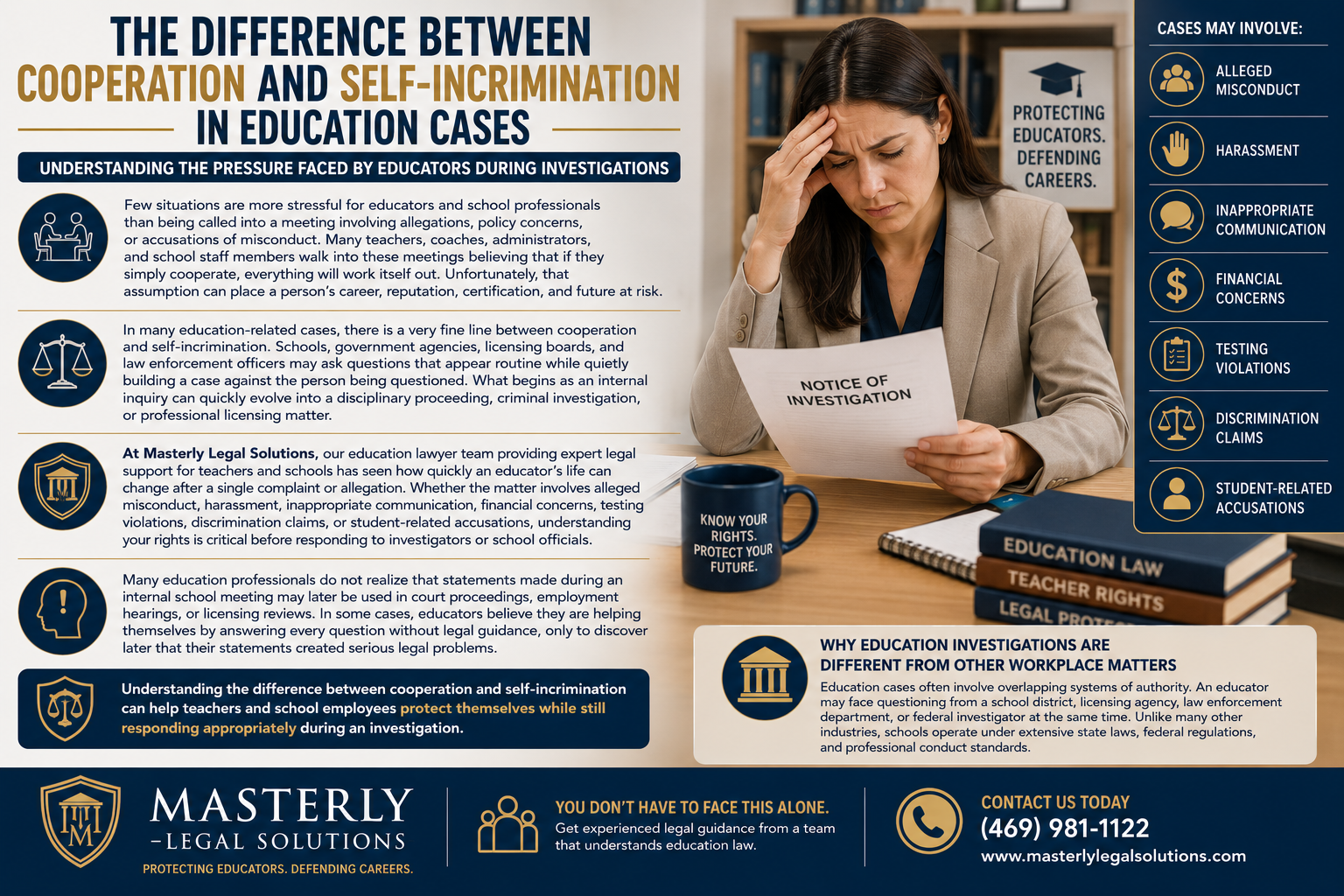
Facing an investigation within a school district can be overwhelming for teachers, coaches, administrators, and school employees. Allegations involving misconduct, retaliation, harassment, or policy violations can quickly place a person’s career and professional reputation at risk. An experienced attorney arlington can help educators understand their rights before they respond to investigators, administrators, or law enforcement officials. In many situations, employees unknowingly damage their cases by providing statements without fully understanding the legal consequences involved. Legal representation can help protect an educator during interviews, disciplinary hearings, licensing reviews, and employment disputes. Having an attorney involved early in the process may also help reduce the risk of self-incrimination and procedural mistakes that could affect future career opportunities.
Workplace Discrimination in Education Settings
Workplace discrimination remains a serious issue within many schools and educational institutions across the country. Teachers, administrators, and support staff may experience unfair treatment based on race, gender, age, religion, disability, pregnancy, or other protected characteristics. In some cases, discrimination appears through unequal discipline, denied opportunities, unfair evaluations, or exclusion from important workplace decisions. School employees who report inappropriate treatment may later face retaliation or increased scrutiny from supervisors or administrators. Federal laws and state protections exist to help protect workers from unlawful treatment in the workplace. Educators who believe they are being treated unfairly should carefully document incidents and seek legal guidance before the situation escalates further.
Understanding Employment Discrimination in School Districts
Employment discrimination cases involving schools can become extremely complex because educational institutions must comply with multiple federal and state regulations. A teacher or employee may believe disciplinary action resulted from legitimate concerns, only to later discover discriminatory motives played a role in the decision-making process. Employment discrimination may involve hiring decisions, promotions, contract renewals, wages, disciplinary actions, or wrongful termination. In some situations, districts attempt to justify adverse actions using vague performance concerns or policy violations while ignoring evidence of unequal treatment. Educators should understand that discrimination claims often require detailed evidence, witness testimony, and careful legal analysis. Seeking experienced legal counsel early may help employees better protect their rights, careers, and professional reputations.
The Role of the Equal Employment Opportunity Commission in Education Cases
The Equal Employment Opportunity Commission plays an important role in investigating claims involving discrimination and retaliation in educational workplaces. Employees who believe they experienced unlawful treatment based on protected characteristics may file complaints with the agency for review. The equal employment opportunity commission may investigate allegations involving harassment, disability discrimination, retaliation, religious discrimination, or other workplace violations affecting school employees. These investigations often involve reviewing personnel records, interviewing witnesses, and evaluating whether federal protections were violated. Filing deadlines and procedural requirements can be strict, making it important for educators to seek legal guidance before submitting claims. A properly prepared complaint may significantly affect the outcome of an investigation or future legal action, making support from an education law attorney providing expert legal guidance for teachers especially valuable.
How Family Responsibilities Can Affect Employment Decisions
Many educators struggle to balance demanding work obligations with important family responsibilities outside the workplace. Unfortunately, some employees experience unfair treatment after requesting schedule accommodations, family leave, or flexibility related to childcare or caregiving duties. School districts and administrators must be careful not to engage in discriminatory conduct against employees because of family obligations or caregiving roles. In some cases, workers may notice negative evaluations, reduced opportunities, or disciplinary scrutiny after addressing personal or family-related concerns. These situations can create emotional and financial stress for teachers and other education professionals attempting to maintain both career stability and family commitments. Educators facing these challenges should understand that certain legal protections may apply depending on the circumstances involved, and that similar principles apply when working with counsel focused on North Carolina educator misconduct defense and license protection.
How Another Type of Allegation Can Change an Education Investigation
In many school-related cases, an investigation that begins with one concern may quickly evolve into another type of allegation involving completely different legal issues. For example, a complaint about workplace conduct could later involve accusations related to harassment, discrimination, policy violations, or inappropriate communication. School districts often expand investigations once additional information, witness statements, or electronic records are reviewed. This can place educators in difficult situations where they believe they are responding to one issue while investigators quietly examine broader concerns. Because every other type of allegation may carry different legal consequences, teachers and school employees should approach all investigations carefully and avoid making assumptions about the scope of the inquiry. Obtaining legal guidance early can help educators better understand the risks involved and protect their professional future throughout the process.
Understanding Title VII Protections for School Employees
Title VII is one of the most important federal laws protecting employees from discrimination and retaliation in the workplace. This law prohibits employers from engaging in discriminatory practices based on race, color, religion, sex, or national origin. In educational settings, Title VII protections may apply to hiring decisions, promotions, disciplinary actions, workplace harassment, and retaliation against employees who report unlawful conduct. School districts, administrators, and supervisors must follow federal requirements designed to create fair and lawful work environments for employees. Educators who participate in investigations or report inappropriate conduct may also receive legal protection against retaliation under these federal standards. Understanding how these protections apply can help teachers and school employees make informed decisions when facing workplace disputes or investigations.
Understanding How Another Type of Investigation May Develop
Many educators are surprised to learn that one school inquiry can quickly lead to another type of investigation involving outside agencies or additional legal concerns. For example, an internal district review may later involve licensing boards, police investigators, child protective agencies, or federal authorities depending on the allegations involved. What initially appears to be a routine workplace matter can suddenly become far more serious if outside organizations begin reviewing records or conducting interviews. Because different agencies may have different standards, procedures, and legal authority, educators should approach every stage of the process carefully. Statements provided during the first investigation may later be reviewed by completely different investigators in another setting. Understanding the risks early can help school employees better protect their careers, reputations, and legal rights.
Speak With Masterly Legal Solutions About Your Education Case
If you are a teacher, coach, administrator, or school employee facing an investigation, disciplinary matter, or employment-related concern, the legal team at Masterly Legal Solutions is here to help. Our firm understands how quickly education cases can escalate and how important it is to respond carefully from the beginning.
We work with clients throughout texas who need guidance involving workplace investigations, retaliation, discrimination, employment disputes, certification defense, and school-related legal concerns. Whether you have been placed on administrative leave, asked to participate in an inquiry, or believe your rights were violated, our team can help you evaluate your legal options and determine the best path forward.
If you have questions about your rights, concerns about speaking with investigators, or need help understanding how laws may apply to your situation, contact Masterly Legal Solutions today. An experienced attorney arlington can review your circumstances, explain the legal process, and help protect your career and professional reputation.
Contact us at (972) 236-5051 for a free consultation.
Disclaimer: This article is provided for educational and informational purposes only and should not be interpreted as legal guidance or legal advice. Reading this article does not create an attorney-client relationship with Masterly Legal Solutions. Every case involves unique facts and circumstances, and outcomes may vary depending on the situation. Individuals facing legal concerns should speak directly with a qualified attorney regarding their specific matter.

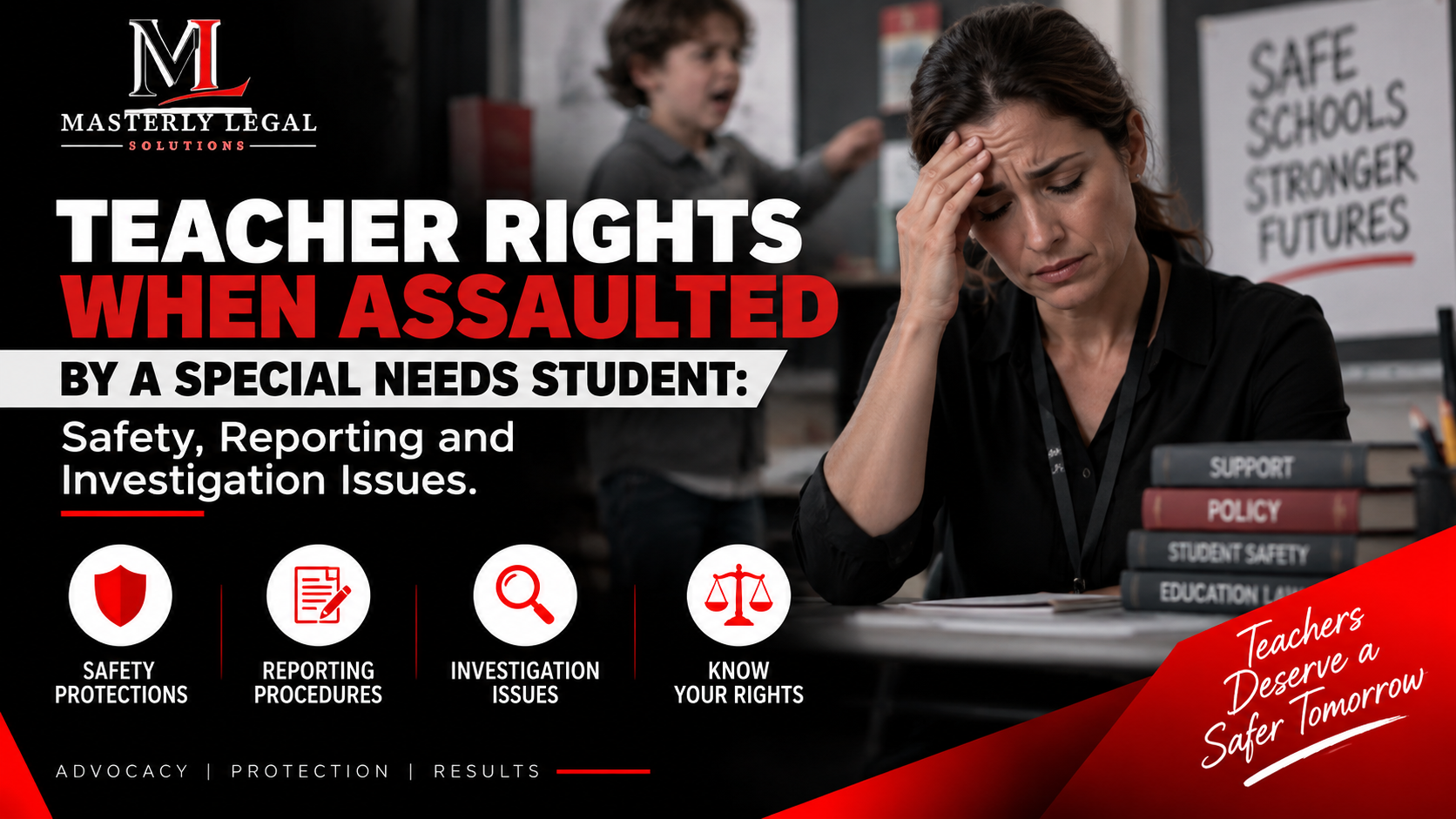
Teacher Rights When Assaulted by a Special Needs Student: Safety, Reporting and Investigation Issues


Looking for Legal & Business Solutions? Contact Us Now
Fill in the form or call us to set up a meeting