

The Red Flags That Signal Your Program Is at Risk for NCAA Violations
College athletics is built on opportunity, competition, and trust. Student-athletes dedicate countless hours to developing their skills, coaches invest in building successful teams, and universities work hard to protect their reputation within collegiate competition. Behind every successful athletic program, however, is a responsibility that extends far beyond wins and losses. Schools must also navigate an increasingly complex system of rules, regulations, and expectations that affect nearly every aspect of modern sports.
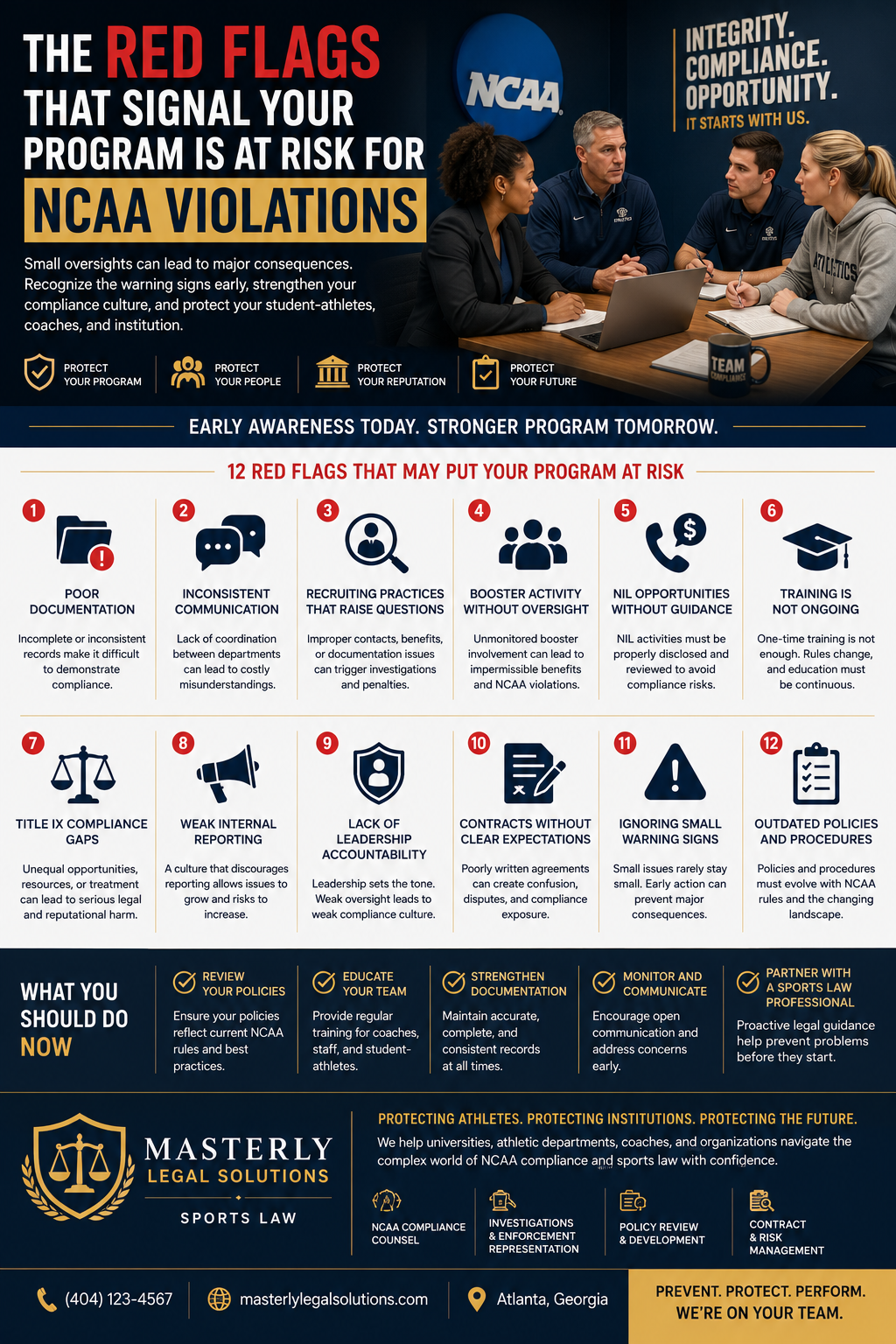
In today's environment, NCAA compliance has become far more challenging than many institutions anticipated. Changes involving title ix, recruiting practices, name image and likeness, transfer rules, booster involvement, and institutional oversight have expanded the responsibilities of universities across the country. A small oversight can quickly develop into a much larger issue if warning signs are ignored.
Many investigations begin long before an official notice arrives. They often start with small inconsistencies, overlooked policies, communication breakdowns, or repeated concerns that appear insignificant at first. Identifying those warning signs early gives universities, coaches, administrators, and athletic directors an opportunity to address concerns before they become formal enforcement matters.
At Masterly Legal Solutions, we understand that proactive legal planning often prevents costly problems later. Our experience in sports law allows educational institutions, administrators, coaches, and organizations to better understand compliance risks while protecting their programs and reputations.
Compliance Is an Ongoing Responsibility
Many people mistakenly believe NCAA compliance only matters during recruiting or championship seasons. In reality, compliance affects nearly every daily activity within collegiate athletics.
Every department, coach, administrator, staff member, booster, and student-athlete plays a role in maintaining institutional integrity. As the legal landscape continues evolving, universities must regularly evaluate policies, training, and internal procedures to reduce unnecessary risk.
Successful compliance programs focus on prevention rather than reacting after violations occur, including preparing for potential NCAA investigations and enforcement actions.
Small Problems Rarely Stay Small
Many NCAA investigations begin with issues that initially appear minor. An incomplete record, an informal conversation, an unauthorized benefit, or inconsistent documentation may seem insignificant until investigators begin reviewing broader institutional practices.
Ignoring these early concerns often increases exposure for universities and athletic departments. Addressing questions immediately demonstrates responsible management and a commitment to compliance before more serious legal issues develop.
Early intervention almost always creates more options than waiting, especially when institutions work with counsel experienced in higher education law and NCAA compliance.
Poor Documentation Creates Unnecessary Risk
Documentation remains one of the strongest defenses available during compliance reviews. When policies, approvals, educational sessions, and communications are poorly documented, institutions often struggle to demonstrate compliance.
Incomplete records may create unnecessary questions during internal investigations. Universities should establish consistent documentation practices for recruiting, financial assistance, eligibility reviews, and institutional decision-making.
Strong documentation supports transparency and accountability and also strengthens any internal investigations and workplace reviews the institution may need to conduct.
Inconsistent Communication Across Departments
Successful compliance requires cooperation between multiple university departments. Athletic staff, admissions, financial aid, compliance personnel, academic advisors, and university leadership must communicate consistently.
When departments operate independently without coordinated oversight, misunderstandings become more likely. These communication gaps can unintentionally create compliance concerns that affect both athletes and institutional leadership.
Effective collaboration reduces preventable mistakes.
Recruiting Practices That Raise Questions
Recruiting remains one of the most highly regulated areas within collegiate sports. Universities must carefully monitor interactions involving prospective student-athletes, families, boosters, coaches, and third parties.
Potential warning signs include inconsistent recruiting documentation, unauthorized benefits, improper communications, or activities that exceed permissible guidelines. Identifying concerns early helps institutions reduce exposure before they escalate into formal reviews.
Preventive education remains essential throughout the recruiting process.
Booster Activity Requires Careful Oversight
Booster involvement has become increasingly complex, particularly following changes surrounding name image and likeness opportunities. While community support benefits athletic programs, universities must also ensure booster activities remain consistent with applicable rules.
Educational outreach helps boosters understand institutional expectations while reducing misunderstandings. Clear guidance often prevents situations that may otherwise create unnecessary scrutiny.
Strong oversight protects both institutions and student-athletes, and experienced sports attorneys advising on NCAA compliance and sponsorships can help clarify expectations for everyone involved.
NIL Opportunities Require Careful Review
The introduction of name image and likeness opportunities has significantly changed collegiate sports. Student-athletes now have additional opportunities to benefit from personal branding, endorsements, and commercial activities.
These opportunities also require careful compliance oversight. Universities should regularly review institutional policies, educational programs, and communication practices to ensure NIL activities remain consistent with governing requirements.
As regulations continue evolving, proactive legal review becomes increasingly valuable, particularly when supported by specialized sports law and consulting services.
Training Cannot Be a One-Time Event
Compliance education should never occur only during orientation. Rules evolve, staff changes occur, and institutional responsibilities continue expanding throughout the academic year.
Regular educational sessions help coaches, administrators, compliance personnel, and athletic directors remain informed about changing expectations. Ongoing education also demonstrates institutional commitment should future questions arise.
Well-trained personnel reduce institutional risk.
Title IX Compliance Extends Beyond Athletics
Although title ix is frequently associated with athletics, its responsibilities reach throughout educational institutions. Athletic departments should continually evaluate participation opportunities, resource allocation, reporting procedures, and institutional policies.
Questions involving equal treatment, participation opportunities, scholarships, facilities, and institutional support may require careful legal evaluation. Universities benefit from reviewing policies before concerns become formal complaints.
Preventive compliance remains significantly less disruptive than corrective action.
Internal Reporting Should Be Encouraged
Organizations with strong compliance cultures encourage individuals to report concerns without fear of retaliation. Coaches, staff members, administrators, and student-athletes should understand how and where to report potential violations.
Prompt reporting often allows institutions to investigate concerns internally before external investigations occur. Early reporting also demonstrates organizational integrity and responsible governance.
Transparency strengthens institutional credibility.
Leadership Sets the Compliance Standard
University leadership significantly influences institutional culture. Administrators who consistently prioritize ethical decision-making encourage similar behavior throughout athletic departments.
When leadership emphasizes accountability, compliance becomes part of daily operations rather than an afterthought. This culture benefits coaches, administrators, student-athletes, and the institution as a whole.
Strong leadership remains one of the most effective compliance tools available.
Contracts Should Reflect Compliance Expectations
Many compliance responsibilities extend into written contracts involving employees, vendors, consultants, and outside service providers. Clearly written agreements establish expectations while reducing uncertainty.
Institutions should periodically review contract law considerations, institutional policies, and contractual obligations to ensure alignment with evolving NCAA requirements. Properly drafted contracts help reduce misunderstandings before disputes arise.
Legal review remains an important part of institutional risk management.
Employment Decisions Can Create Compliance Concerns
Athletic departments make important hiring and personnel decisions every year. Those decisions often involve employment, labor and employment obligations, institutional policies, and contractual responsibilities that extend beyond the playing season. Universities should ensure every employment decision reflects both NCAA expectations and broader legal requirements.
Questions involving discipline, workplace conduct, retaliation, or personnel policies may also intersect with employment matters and institutional compliance. Addressing concerns promptly with experienced attorneys can help reduce risk while protecting both the institution and the individuals involved.
Strong Governance Supports Strong Athletic Programs
Every successful athletic department benefits from clear leadership and responsible management. Universities that establish effective oversight procedures are better prepared to identify concerns before they become significant compliance issues.
Sound corporate governance practices help define responsibilities for coaches, compliance personnel, administrators, and university leadership. Clear reporting structures also improve accountability across departments while supporting consistent decision-making.
Compliance Officers Should Have Meaningful Authority
Compliance programs become far more effective when compliance officers have the authority and resources needed to perform their responsibilities. If concerns are ignored or delayed, small issues can develop into larger institutional challenges.
Successful universities encourage compliance officers to communicate openly with leadership, coaches, and athletic directors, often in coordination with legal counsel focused on NCAA compliance and athletics. Their role is not simply to enforce rules but to educate departments and help prevent unnecessary violations before they occur.
Contract Reviews Should Never Be Overlooked
Modern collegiate sports involve numerous contracts covering coaches, consultants, vendors, sponsorships, facilities, and service providers. Every agreement should be reviewed carefully to ensure it aligns with institutional policies and applicable NCAA requirements.
A thorough understanding of contract law allows universities to identify provisions that could create unnecessary exposure. Reviewing agreements before they are signed often prevents costly disputes, litigation, and compliance concerns later.
Agreements That Deserve Regular Legal Review
Several categories of agreements should receive ongoing legal attention, including:
- Employment agreements
- Vendor contracts
- Recruiting service agreements
- Facility use agreements
- Sponsorship agreements
- Marketing partnerships
- Licensing arrangements
- Consulting agreements
Careful review helps institutions protect both financial and compliance interests.
Media and Public Communications Matter
Today's media environment allows information to spread almost instantly. Public statements, interviews, recruiting announcements, and social media activity may all attract additional attention during compliance reviews.
Universities should establish communication procedures that ensure accuracy while protecting confidential information. Coordinating messaging with experienced legal counsel reduces the risk of creating unnecessary complications during ongoing reviews or investigations.
Third-Party Relationships Require Oversight
Many athletic departments work with outside vendors, consultants, recruiting services, and agencies. While these partnerships often provide valuable support, universities remain responsible for ensuring outside relationships comply with institutional expectations.
Third-party activities should be monitored through written contracts, regular communication, and clearly defined responsibilities. Proactive oversight reduces misunderstandings while strengthening institutional accountability.
Athletic Directors Face Increasing Responsibilities
Today's athletic directors oversee much more than game schedules and coaching staff. They frequently manage budgeting, compliance initiatives, personnel decisions, public relations, fundraising, and strategic planning.
Because their responsibilities continue expanding, athletic directors benefit from experienced sports lawyers who understand both institutional operations and the evolving legal landscape. Early legal guidance often prevents issues from becoming formal enforcement matters.
Sports Lawyers Help Programs Stay Ahead
Many universities seek assistance only after receiving notice of an investigation. In reality, experienced sports lawyers provide the greatest value before problems occur.
Working proactively with sports lawyers allows institutions to evaluate policies, review procedures, conduct compliance training, and identify potential risks. Preventive legal planning is often far less costly than responding to investigations or defending litigation later.
Title IX Reviews Should Be Ongoing
Compliance with title ix requires continuous attention rather than occasional reviews. Universities should regularly evaluate participation opportunities, scholarship allocation, facilities, and institutional support to ensure equal treatment for all student-athletes.
Routine evaluations help institutions identify potential concerns before formal complaints arise. Addressing issues early demonstrates a commitment to fairness while reducing long-term legal exposure.
The Sports Industry Continues to Change
The sports industry evolves every year through new legislation, court decisions, NCAA policy changes, and shifting expectations surrounding collegiate competition. Universities that rely on outdated policies may unintentionally increase compliance risks.
Maintaining a deep understanding of current developments allows institutions to adapt policies before new issues emerge. Continuous review helps universities remain prepared as the regulatory environment changes.
Legal Counsel Supports Better Decision-Making
Many difficult compliance questions do not have simple answers. Universities often benefit from experienced legal counsel when evaluating policy changes, responding to complaints, or reviewing complex institutional decisions.
Working with knowledgeable lawyers helps leadership evaluate potential risks before taking action. This collaborative approach supports stronger governance while reducing uncertainty in challenging situations.
Preparing for Investigations Before They Happen
No institution expects to become the subject of NCAA scrutiny, yet preparation remains one of the strongest risk-management strategies available. Universities that establish clear procedures before concerns arise are generally better positioned to respond effectively.
Preparation may include document retention policies, interview protocols, internal reporting procedures, and response planning. These measures help institutions respond quickly while demonstrating responsible organizational oversight.
Sports Law Protects More Than Competition
Modern sports law extends far beyond the playing field. It addresses compliance, governance, contracts, litigation, labor, institutional policy, and countless other legal responsibilities affecting colleges and universities.
As collegiate athletics continue evolving, institutions increasingly rely on experienced sports lawyers, attorneys, and trusted counsel to navigate complex legal matters. Proactive legal planning supports stronger programs while helping universities protect their reputation, student-athletes, and long-term success.
Governing Bodies Expect Consistent Compliance
Every institution participating in collegiate athletics is accountable to various governing bodies that establish and enforce rules designed to protect fairness and integrity. Universities that maintain consistent compliance programs are often better prepared when questions arise. Regular policy reviews, staff education, and internal audits demonstrate a commitment to responsible program management.
Maintaining open communication with governing bodies also helps institutions stay informed about evolving regulations affecting collegiate sports. As expectations continue to change, schools that proactively adapt their procedures place themselves in a stronger position to avoid unnecessary compliance challenges.
Sports Agents and Athlete Representation Require Careful Oversight
The relationship between student-athletes, sports agents, and third-party representatives has become increasingly important in today's collegiate environment. Institutions should educate student-athletes about permissible interactions while monitoring activities involving athlete representation and endorsement opportunities.
Universities benefit from working with experienced sports lawyers who understand how relationships with sports agents, marketing representatives, and outside advisors may affect eligibility and compliance. Clear institutional policies reduce confusion while helping individual athletes make informed decisions.
Managing Endorsements and Commercial Opportunities
As endorsement opportunities continue expanding, universities must carefully evaluate institutional policies involving endorsements, licensing, and promotional activities. Changes involving name image and likeness have created exciting opportunities, but they have also introduced new compliance responsibilities.
Programs should regularly review how endorsement activities interact with university policies, recruiting rules, and NCAA expectations. Legal review helps institutions and athletes pursue opportunities while minimizing unnecessary compliance risks.
Internal Policies Should Evolve With the Industry
Policies that worked several years ago may no longer address today's collegiate environment. The modern sports industry continues evolving through changes in legislation, technology, recruiting, NIL opportunities, and institutional governance.
Universities should periodically evaluate their compliance manuals, reporting procedures, and operational policies with experienced sports lawyers and institutional leadership. A good understanding of current developments allows programs to respond proactively instead of reactively.
Working With Outside General Counsel Strengthens Risk Management
Many colleges and universities benefit from working with outside general counsel when addressing complex compliance questions. External legal professionals can provide objective guidance while reviewing institutional policies, investigations, and emerging legal concerns.
This additional perspective often helps leadership identify vulnerabilities that may not be obvious during day-to-day operations. Working alongside university administrators and general counsel strengthens overall institutional decision-making while supporting long-term compliance.
Collaboration Between Legal and Athletic Leadership Matters
Successful compliance programs depend on cooperation between university leadership, general counsel, compliance personnel, coaches, and athletic directors. Every department contributes to protecting institutional integrity, and consistent communication reduces the likelihood of preventable mistakes.
When legal professionals and athletic administrators collaborate early, they can identify potential issues before they become formal investigations. That teamwork creates stronger policies and promotes a culture of accountability throughout the athletic department.
Sports Law Touches Every Area of Modern Athletics
Today's sports law affects nearly every aspect of collegiate and professional sports. From contract negotiations and drafting contracts to dispute resolution, labor and employment, and intellectual property, legal considerations are woven into daily athletic operations.
Universities, sports organizations, sports teams, sports leagues, coaches, and administrators all benefit from top sports lawyers with a thorough understanding of NCAA rules of the evolving regulatory environment. Preventive legal planning helps institutions manage challenges before they become costly disputes.
Preparing Future Leaders for Careers in Sports Law
Many students interested in attending law school hope to build a rewarding career path in sports law, whether by joining a top sports law firm handling NCAA matters or serving in higher education administration. Their future work may involve representing universities, professional athletes, sports teams, or governing organizations in a wide range of legal matters.
Developing strong legal skills, gaining a deep understanding of the sports world, and learning about contract negotiations, intellectual property law, and compliance all prepare future professionals for success. As the sports sector continues growing, opportunities for qualified legal professionals continue to expand.
Strong Legal Partnerships Strengthen Athletic Programs Before Problems Arise
Success in today's sports arena depends on much more than performance during competition. Universities, collegiate organizations, and athletic departments must also protect their programs through proactive legal planning and sound risk management. Experienced law firms that focus on sports law can assist athletes, coaches, and administrators while helping institutions navigate evolving compliance requirements. By building relationships with trusted legal advisors before issues develop, schools are better prepared to support new talent, manage challenges affecting teams leagues, and protect the long-term business interests of their athletic programs through thoughtful planning rather than reactive decision-making.
Masterly Legal Solutions Helps Institutions Navigate Complex Sports Law Challenges
Protecting an athletic program requires more than responding after a problem develops. It requires careful planning, experienced guidance, and proactive legal strategies designed to reduce risk before compliance issues threaten your institution. At Masterly Legal Solutions, we work with colleges, universities, educational organizations, administrators, coaches, compliance personnel, and clients seeking practical solutions for today's evolving sports law challenges, supported by our broader sports law and education-focused legal services.
Our team assists sports clients with compliance planning, internal investigations, title ix matters, contract law, drafting contracts, negotiating contracts, media rights, intellectual property, civil litigation, governance issues, employment, and other complex legal concerns affecting collegiate sports. We also advise sports agencies, sports leagues, sports teams, and institutions navigating changing NCAA expectations, helping them build stronger compliance programs while protecting their long-term interests.
Whether your institution is reviewing policies, responding to allegations, evaluating criminal charges, resolving disputes, addressing legal matters, managing an investor group relationship, or planning for future growth, experienced legal guidance can make a significant difference. Contact Masterly Legal Solutions today at (972) 236-5051 for a free consultation. We proudly serve educational institutions, athletic departments, coaches, administrators, and organizations throughout the country, providing strategic sports law counsel focused on prevention, compliance, and long-term success.
Disclaimer: This article is provided for general informational purposes only and should not be interpreted as legal advice or legal guidance. Reading this article does not create an attorney-client relationship. Because every situation is unique, you should consult a qualified attorney regarding your specific legal questions or circumstances before making decisions related to NCAA compliance, sports law, or other legal matters.
Teacher Rights When Assaulted by a Special Needs Student: Safety, Reporting and Investigation Issues



Looking for Legal & Business Solutions? Contact Us Now
Fill in the form or call us to set up a meeting





