

Can CPS Remove Your Child Without a Court Order in Texas?
A Knock on the Door No Parent Wants to Receive
For most parents, there are few things more frightening than hearing that Child Protective Services wants to speak with them. A visit from CPS can leave a family feeling overwhelmed, confused, and unsure about what happens next. Many parents immediately worry that their children could be removed from their home without warning.
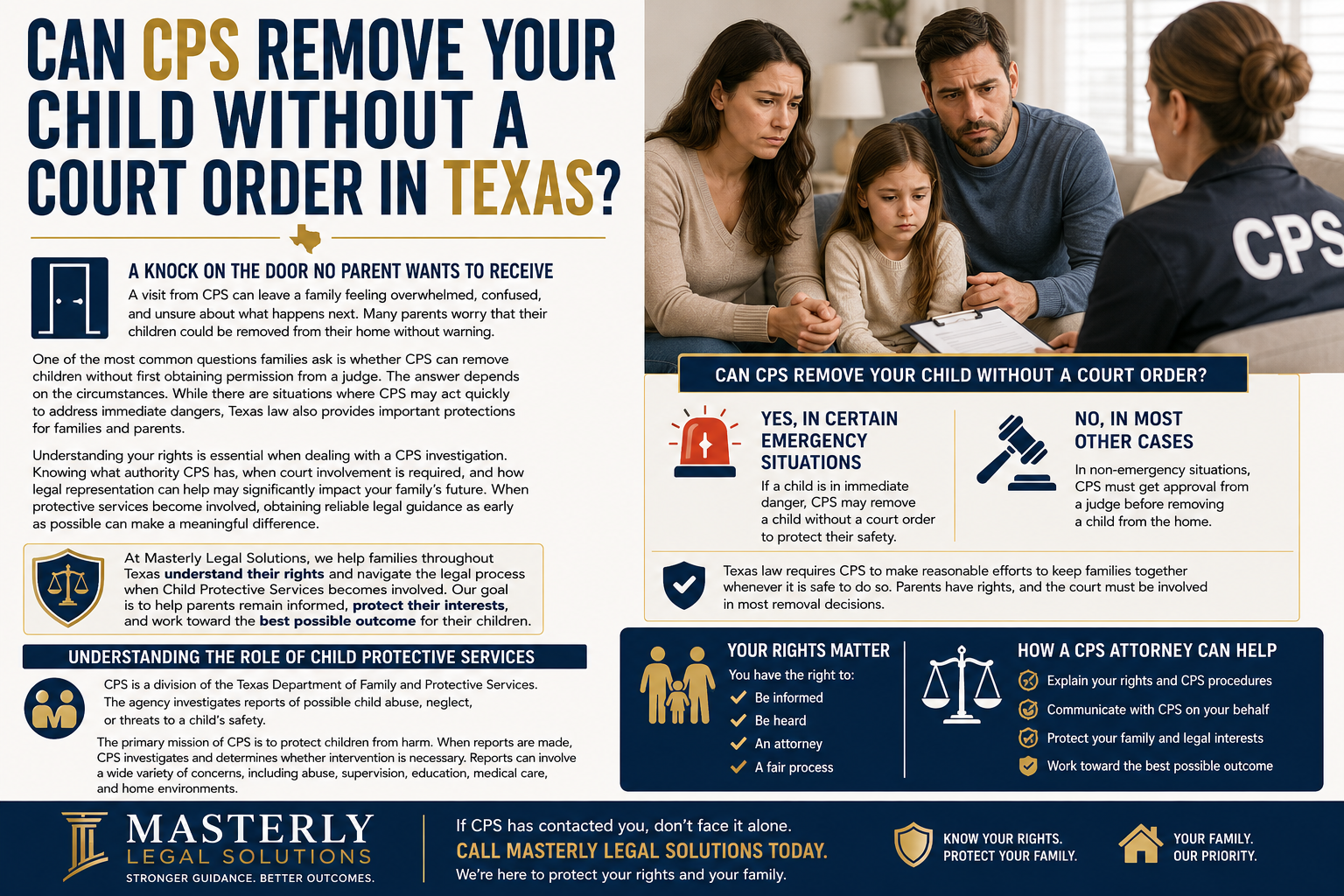
One of the most common questions families ask is whether CPS can remove children without first obtaining permission from a judge. The answer depends on the circumstances. While there are situations where CPS may act quickly to address immediate dangers, Texas law also provides important protections for families and parents.
Understanding your rights is essential when dealing with a CPS investigation. Knowing what authority CPS has, when court involvement is required, and how legal representation can help may significantly impact your family's future. When protective services become involved, obtaining reliable legal guidance as early as possible can make a meaningful difference.
At Masterly Legal Solutions, we help families throughout Texas understand their rights and navigate the legal process when Child Protective Services becomes involved. Our goal is to help parents remain informed, protect their interests, and work toward the best possible outcome for their children.
Understanding the Role of Child Protective Services
Child Protective Services is a division of the Texas Department of Family and Protective Services. The agency is responsible for investigating reports involving possible child abuse, neglect, or threats to a child's safety.
The primary mission of child protective services is to protect children from harm. When reports are made alleging abuse or neglect, CPS is required to investigate those concerns and determine whether intervention is necessary. In some situations, the investigation may conclude quickly. In others, CPS may recommend services, supervision, or court involvement.
Many people assume CPS only investigates severe cases. In reality, child protective services receives reports involving a wide variety of concerns, ranging from alleged abuse to questions about supervision, educational issues, medical care, and home environments.
What Triggers a CPS Investigation?
A CPS investigation often begins when someone makes a report regarding a child's welfare. Texas law requires certain professionals to report suspected child abuse or neglect when they become aware of possible concerns.
Reports may come from:
- Teachers
- Medical professionals
- Family members
- Neighbors
- Social workers
- Law enforcement officers
- Other individuals who believe a child may be at risk
Once the agency receives information, CPS evaluates the allegations and determines whether an investigation is necessary. Depending on the nature of the report, the department may classify the matter as requiring immediate attention or routine review.
Why Families Often Feel Unprepared
Most parents never expect to become involved in CPS cases. As a result, they often feel unprepared when investigators arrive at their home or begin asking questions.
The legal process can seem intimidating, especially when parents are unfamiliar with how child protective services operates. Many families are unsure whether they should answer questions, provide documents, or allow investigators into their home.
This uncertainty can lead to mistakes that may complicate an investigation. Understanding your rights early in the process can help you make informed decisions and avoid unnecessary problems.
Can CPS Remove Children Without a Court Order?
The short answer is yes, but only under limited circumstances. Texas law generally requires CPS to obtain a court order before removing children from their parents' care. However, there are exceptions when investigators believe a child faces immediate danger.
When CPS believes waiting for court approval could place a child at risk of serious harm, the agency may remove the child first and seek judicial review afterward. These emergency situations are often referred to as emergency removals.
Even in emergency situations, CPS must later explain its actions to the court and demonstrate why immediate intervention was necessary. The agency cannot simply remove children whenever it chooses without legal justification.
Understanding Emergency Removal Authority
Emergency removals are among the most serious actions that Child Protective Services can take. Because removing children from their family can have significant consequences, Texas law limits when these actions may occur.
Generally, CPS must show that there is an immediate threat to the child's safety. The agency may argue that delaying action would place the child at risk of physical harm, sexual abuse, abandonment, or other serious dangers.
The Texas Department of Family and Protective Services must still present evidence supporting its decision. Emergency authority is not unlimited, and courts carefully examine the circumstances surrounding a removal.
Situations That May Lead to Emergency Removal
Every case is unique, but there are certain situations that may increase the likelihood of an emergency removal.
Examples may include:
- Severe allegations of child abuse
- Evidence of sexual abuse
- Immediate threats to children's safety
- Dangerous living conditions
- Serious drug-related concerns
- Abandonment
- Significant medical neglect
Even when allegations involve serious concerns, CPS must evaluate available information before deciding whether removal is appropriate.
The Importance of the Child's Safety Standard
The central issue in most CPS cases is the child's safety. Investigators are tasked with assessing whether a child faces a substantial risk of harm.
This does not mean that every concern automatically results in removal. CPS must assess the facts, gather information, and determine whether less restrictive alternatives may adequately protect the child.
In many situations, protective services may consider options other than removal. These alternatives can include safety plans, supervision arrangements, or services designed to address concerns while allowing children to remain with their family.
What Happens After an Emergency Removal?
If CPS removes a child without first obtaining a court order, the agency must quickly appear before a judge. This hearing provides an opportunity for the court to review the removal and determine whether CPS acted appropriately.
Parents should take these proceedings seriously. Early hearings often shape the direction of the case and may influence future decisions regarding placement, services, and reunification.
Having an attorney present during these proceedings can help ensure that parents understand what is happening and that their rights are protected.
The Role of the Court in CPS Cases
The court serves as an important safeguard in CPS cases. Judges review evidence, hear testimony, and evaluate the findings presented by the department.
The court must determine whether the agency had sufficient justification for its actions. Judges also consider whether continued removal is necessary and what steps should occur moving forward.
Because these proceedings can significantly affect the family, legal representation is often essential. An attorney can present evidence, challenge unsupported claims, and advocate for the parents' interests throughout the process.
Understanding the Texas Department of Family and Protective Services
The Texas Department of Family and Protective Services oversees multiple programs designed to support vulnerable individuals and families. Child Protective Services is one division within the larger department.
The texas department of family and protective services investigates allegations involving child abuse and neglect, evaluates risk factors, and provides services intended to improve child welfare outcomes. The agency also coordinates with courts, schools, healthcare providers, and other organizations when necessary, similar to how legal counsel may assist with internal investigations and organizational compliance.
Although many people simply refer to CPS, understanding the broader role of the texas department of family and protective services can help families better understand how investigations are conducted and decisions are made.
Why Early Legal Guidance Matters
Many parents wait until a hearing is scheduled before seeking legal help. Unfortunately, valuable opportunities may be lost during that delay.
An experienced attorney can help families understand what to expect during a CPS investigation, explain their rights, and prepare them for interactions with investigators. Legal guidance can also help parents avoid statements or actions that may unintentionally harm their case.
The earlier an attorney becomes involved, the more effectively they may be able to protect a family's interests and address concerns raised by CPS.
Common Misunderstandings About CPS Authority
One of the biggest misconceptions is that CPS can remove children whenever allegations are made. In reality, protective services must follow legal procedures and justify their actions.
Another common misunderstanding is that cooperating fully means giving up legal rights. While cooperation is often important, parents should also understand the protections available to them under Texas law.
Being informed allows families to make thoughtful decisions rather than reacting out of fear. Understanding the limits of CPS authority can reduce anxiety and help parents navigate the process more effectively.
Why Every CPS Case Is Different
No two CPS cases are exactly alike. The specific facts, evidence, allegations, and family circumstances can all affect how an investigation proceeds.
Some investigations conclude quickly with no further action. Others involve extensive review, multiple interviews, and ongoing court involvement. Because every situation is unique, families should avoid assuming their case will follow the same path as someone else's.
Obtaining legal advice tailored to your circumstances can help you better understand your options and prepare for the road ahead.
What Parents Should Expect During a CPS Investigation
When CPS becomes involved, many parents are unsure what to expect. Investigators typically begin by gathering information regarding the allegations that triggered the report. This may involve speaking with parents, children, teachers, medical professionals, and other individuals who may have relevant information about the family.
The investigation process often includes reviewing records, conducting interviews, and evaluating the home environment. Investigators may also examine previous reports involving the family. Understanding how these investigations work can help parents remain calm and better prepared throughout the process.
A CPS investigation can move quickly, especially when allegations involve serious concerns regarding child abuse and neglect. Because the findings of an investigation may affect future decisions, families should take every stage of the process seriously.
How CPS Evaluates Risk Factors
One of the primary responsibilities of Child Protective Services is to assess whether children face a risk of harm. Investigators examine a variety of factors when determining whether intervention may be necessary.
These factors may include:
- The nature of the allegations
- The age of the children involved
- Prior reports
- Medical information
- Home conditions
- Statements made during interviews
- Evidence gathered during the investigation
The agency must assess all available information before making recommendations. This evaluation helps determine whether protective services believes further action is required.
The Importance of Accurate Information
Providing accurate information during a CPS investigation is critical. Incomplete or inaccurate statements can create confusion and may influence how investigators interpret a situation.
Parents should be careful when responding to questions and avoid making assumptions. If they are uncertain about certain facts, it is often better to clarify that uncertainty rather than speculate.
An attorney can help parents understand how to communicate effectively with investigators while protecting their legal rights. This guidance can be especially valuable when allegations involve complicated family circumstances.
How Interviews Influence CPS Findings
Interviews often play a major role in CPS cases. Investigators may conduct interviews with parents, children, teachers, relatives, and other individuals connected to the family.
The information obtained during these interviews frequently influences the findings reached by CPS. Because statements can be interpreted in different ways, families should understand the significance of every conversation with investigators.
Preparation is important. Parents who are informed about the process are often better positioned to respond appropriately and avoid misunderstandings that may affect the outcome of the case.
When Protective Services Recommends Further Action
Not every investigation results in court involvement. In some cases, protective services may determine that no additional action is necessary. In others, investigators may recommend services designed to address concerns while allowing children to remain safely at home.
However, there are situations where the agency believes stronger intervention is necessary. When that occurs, CPS may seek court oversight, request services, or recommend placement alternatives.
The recommendations made by protective services can significantly affect a family's future. Understanding these recommendations and responding appropriately is essential.
Understanding Temporary Foster Placements
If children are removed from their home, temporary placement arrangements may be necessary while the case proceeds. In some situations, family members may be considered as placement options before foster care is utilized.
The goal is often to place children in the least disruptive environment possible while ensuring their safety. Courts frequently consider whether relatives are available and capable of providing appropriate care.
When foster placement becomes necessary, parents should continue working toward compliance with court requirements and case goals. These efforts may play an important role in future reunification opportunities.
The Difference Between Foster Care and Foster Placement
Many people use the terms interchangeably, but there can be distinctions depending on the circumstances. Foster care generally refers to the broader system that provides temporary care for children who cannot remain with their parents.
A foster placement refers to the specific location where children are temporarily living. This may include licensed foster homes, approved relatives, or other approved caregivers.
The objective of both arrangements is to provide care and protection while legal proceedings continue. In many cases, reunification remains the long-term goal whenever it can be achieved safely.
Reunification Is Often the Primary Goal
One of the most important concepts in many CPS cases is reunification. Courts and the Texas Department of Family and Protective Services often prioritize efforts that allow children to safely return home whenever appropriate.
Reunification typically requires parents to comply with court orders, participate in services, and address concerns identified during the investigation. Progress is usually monitored throughout the case.
Successful reunification often depends upon demonstrating stability, cooperation, and commitment to meeting the needs of the children. Families who actively engage in the process may improve their chances of achieving a favorable outcome.
Protecting Parental Rights Throughout the Process
Parents retain important legal protections even when CPS becomes involved. Understanding these parental rights is crucial during every phase of the case.
These rights may include the opportunity to:
- Attend hearings
- Present evidence
- Challenge findings
- Consult with legal counsel
- Receive notice of proceedings
- Seek review of decisions
Because CPS cases can become complex, having an attorney helps ensure that these rights remain protected throughout the legal process by working with a Texas-based law firm offering broad legal services.
How Findings Can Impact a Family
The findings reached by CPS can have lasting consequences. Depending on the results of the investigation, families may face ongoing court involvement, service requirements, or other obligations.
Negative findings can also affect future CPS cases if additional reports arise later. This is one reason why parents should carefully address concerns raised during an investigation and take steps to protect their interests.
An attorney can review the findings, explain their implications, and discuss available options for responding appropriately.
Why Legal Representation Matters in CPS Cases
When facing allegations involving child abuse, neglect, or other concerns, many families benefit from professional legal representation. An attorney can explain the law, help organize evidence, and advocate on behalf of the family throughout court proceedings.
Legal representation is especially important when removal has occurred or when CPS seeks court intervention. Having knowledgeable counsel often helps families better understand their options and responsibilities.
The right attorney can also help ensure that parents remain informed about developments and deadlines throughout the case.
The Role of an Experienced Attorney
An experienced attorney brings valuable knowledge and perspective to CPS matters. These cases involve unique legal standards, procedural requirements, and evidentiary issues that may not arise in other areas of law.
A lawyer familiar with CPS cases can identify weaknesses in allegations, challenge unsupported conclusions, and help clients prepare for hearings. This expertise can be particularly important when the stakes involve the care and custody of children.
Families facing CPS involvement should not underestimate the value of experienced legal guidance during such a critical time.
What Families Should Know About Court Hearings
Court hearings are a common component of many CPS cases. During these proceedings, the judge reviews evidence, hears arguments, and determines how the case should proceed.
Parents should arrive prepared and understand the issues that will be discussed. These hearings often address placement decisions, service requirements, visitation, and other matters affecting the family.
Legal counsel can help parents prepare for hearings and present their position effectively before the court.
Navigating CPS Cases in Dallas
Families facing CPS cases in Dallas often encounter the same fears and uncertainties experienced by parents throughout Texas. However, local procedures, courts, and case management practices may vary depending on where a case is filed, making it important to know how to reach Masterly Legal Solutions’ Texas office locations when questions arise.
Whether a family resides in Dallas or elsewhere in the state, understanding local court expectations and legal requirements is important. Working with legal counsel familiar with CPS matters can provide valuable insight into how these cases are handled.
For many families, obtaining guidance early in the process can help reduce stress and improve decision-making during a difficult period.
Why Preparation Is Essential
Preparation can make a significant difference in how a CPS case develops. Families who understand the process, gather documentation, and remain engaged are often in a stronger position than those who simply wait to see what happens.
Being prepared may involve collecting records, organizing information, attending required meetings, and following court directives. Small details can sometimes have a major impact on the outcome of a case.
Parents should take every opportunity to demonstrate their commitment to their children and their willingness to address any concerns raised during the investigation, which can also include establishing a power of attorney for their children’s needs.
How Hiring the Right Attorney Can Make a Difference
One of the most important decisions a family can make during a CPS investigation is choosing the right legal representation. While no attorney can guarantee a specific outcome, having experienced counsel can provide valuable guidance during a stressful and emotional process.
An attorney can help explain legal options, review evidence, identify weaknesses in the allegations, and advocate for the family's interests. This support often helps parents feel more confident and informed as they navigate court proceedings and interactions with CPS.
When hiring legal counsel, families should look for a law office that understands the complexities of child protective services matters and has experience handling sensitive family-related cases.
Common Mistakes Families Make During CPS Investigations
Many parents unintentionally make mistakes because they are frightened or unsure of their rights. Unfortunately, these mistakes can sometimes complicate an already difficult situation.
Common errors include:
- Ignoring requests from CPS
- Failing to attend scheduled meetings
- Providing inaccurate information
- Becoming confrontational during interactions
- Missing court dates
- Waiting too long to seek legal advice
Avoiding these mistakes may help families present themselves more effectively and protect their legal interests throughout the investigation.
What CPS Looks for When Reviewing a Home
One aspect of many investigations involves evaluating the home environment. CPS may review whether the residence appears safe and whether children have access to appropriate food, clothing, supervision, and medical care.
The agency is generally focused on determining whether conditions create a danger to children. While every home is different, investigators often evaluate whether basic needs are being met and whether any conditions raise legitimate safety concerns.
Parents should understand that the goal of these reviews is to gather information, not necessarily to find reasons for removal. Being cooperative while understanding your rights is often beneficial.
How the Texas Department Reviews Allegations
The Texas Department of Family and Protective Services follows procedures designed to evaluate allegations fairly and thoroughly. The department gathers information from various sources and compares those facts against applicable legal standards.
Depending on the nature of the allegations, investigators may review records, conduct interviews, and consult professionals who may have knowledge relevant to the case. The findings generated through this review process often influence future decisions.
Because these findings can affect families long after an investigation ends, it is important to address allegations carefully and provide accurate information whenever possible, just as it is important to create Texas estate planning documents such as wills and trusts to protect your family’s future.
The Importance of Communication During a CPS Case
Communication plays a significant role in many CPS cases. Parents who remain engaged, responsive, and respectful throughout the process may be better positioned to address concerns raised by investigators and the court.
This does not mean giving up legal protections. Instead, it means remaining informed, asking questions when necessary, and seeking guidance before making important decisions.
An attorney can help facilitate productive communication and ensure that families understand what is expected of them at every stage of the case.
When Child Abuse and Neglect Allegations Are Unfounded
Not every report made to CPS is accurate. Sometimes allegations stem from misunderstandings, personal disputes, or incomplete information. In other situations, investigators ultimately determine that concerns are unsupported by the available evidence.
Even when allegations are unfounded, families may still experience stress and disruption. Parents often feel frustrated when they must defend themselves against claims they believe are untrue.
Having legal representation during these situations can help ensure that families are treated fairly and that inaccurate information is appropriately addressed.
Understanding the Role of the Family and Protective Services Division
The family and protective services division oversees numerous programs designed to support vulnerable populations throughout Texas. Within that structure, Child Protective Services is responsible for investigating allegations involving children.
The family and protective services system is designed to balance child protection with the rights of parents and families. While the agency's mission focuses on safety, courts also recognize the importance of preserving family relationships whenever possible.
Understanding how the family and protective services division operates can help families better navigate the legal process and make informed decisions, including when to consider creating trusts and related estate planning documents in Texas.
Why Dallas Families Need Reliable Legal Guidance
Families throughout Dallas face unique challenges when dealing with CPS matters. Whether the investigation involves allegations of abuse, neglect, supervision concerns, or other issues, the consequences can be significant.
Parents in Dallas often have questions about their rights, available options, and what they should expect as a case progresses. Seeking legal guidance early can help answer those questions and provide a clearer understanding of the process.
A knowledgeable attorney can help families evaluate their situation, discuss available strategies, and work toward a favorable resolution whenever possible.
How Masterly Legal Solutions Helps Families
At Masterly Legal Solutions, we understand how overwhelming CPS involvement can be for parents and children. Our team has helped clients navigate challenging legal matters involving child protective services and family-related concerns.
We believe every family deserves clear guidance, honest communication, and strong advocacy. Our approach focuses on helping clients understand their rights while developing strategies designed to protect what matters most.
For families facing difficult circumstances, having trusted legal counsel can provide peace of mind during an uncertain time, especially when discussing essential legal documents for families before age 40.
What to Expect During Your Initial Consultation
Many people hesitate to contact an attorney because they are unsure what will happen during an initial meeting. In most situations, the purpose of a consultation is to learn about the facts of the case and discuss potential options.
During this meeting, families can ask questions, share details about their situation, and receive information regarding the legal issues they may be facing. The attorney can also explain possible next steps and identify important deadlines or concerns.
This conversation often helps families feel more informed and better prepared to make decisions moving forward, whether they are addressing CPS concerns or planning ahead with a Dallas estate planning attorney for wills and trusts.
Questions Families Frequently Ask
Parents often have many questions when CPS becomes involved. Some of the most common questions include:
- Can CPS remove children without a court order?
- What rights do parents have?
- How long will the investigation last?
- What happens if allegations are false?
- Can children return home after removal?
- Should I hire an attorney?
Every case is different, which is why individualized legal advice is often essential. Understanding the facts specific to your situation can help determine the best course of action.
Protecting Your Family's Future During a CPS Case
A CPS investigation can affect nearly every aspect of a family's life. Decisions made early in the process may influence custody arrangements, court proceedings, reunification efforts, and long-term relationships between parents and children.
Because so much is at stake, families should take every allegation seriously and seek guidance when questions arise. Remaining informed, prepared, and proactive can help improve the likelihood of a positive outcome.
The goal is not only to address immediate concerns but also to protect the family's future and preserve important family relationships whenever possible.
Accessing Valuable Resources During a CPS Case
Families facing a CPS investigation often feel overwhelmed by the amount of information they must process in a short period of time. Fortunately, there are numerous resources available to help parents better understand their rights, responsibilities, and options throughout the process. These resources may include educational materials, parenting programs, counseling services, community support organizations, and legal guidance from qualified professionals.
Taking advantage of available resources can help families make informed decisions and demonstrate a commitment to addressing any concerns identified during an investigation. An attorney can also help identify reliable resources that may support a family's goals and strengthen their position as the case moves forward. Having access to accurate information and professional support can make a significant difference during a challenging time.
Decades of Legal Principles Continue to Shape CPS Cases
The laws governing Child Protective Services investigations have evolved over decades through legislative changes and court decisions designed to balance child protection with the rights of parents. These legal developments have helped establish procedures that require CPS to justify its actions, protect due process rights, and prioritize the well-being of children whenever intervention becomes necessary.
Because CPS cases are influenced by legal standards developed over decades, it is important for families to work with legal professionals who understand how those principles apply in modern cases. An attorney familiar with these long-standing legal frameworks can provide guidance that helps families navigate investigations, court proceedings, and reunification efforts more effectively.
Speak With a CPS Dallas Attorney Today
If CPS has contacted you, if your children have been removed, or if you are concerned about an ongoing investigation, do not wait to seek legal guidance. The earlier you understand your rights and responsibilities, the better prepared you may be to respond effectively.
At Masterly Legal Solutions, we help families throughout Dallas and across Texas navigate CPS matters with confidence. Whether you are dealing with emergency removal concerns, court proceedings, reunification issues, or questions about child protective services, our team is prepared to help.
We invite you to contact our office for a complimentary consultation to discuss your situation. Our team can answer your questions, review available information, and help you understand your legal options. If you need guidance regarding CPS Dallas matters, now is the time to schedule a consultation with an attorney who understands these complex cases.
Call Masterly Legal Solutions at (972) 236-5051 today to discuss your case and learn how we may assist you in protecting your family and your future.
Disclaimer: This article is provided for informational and educational purposes only. It is not legal advice and should not be relied upon as legal guidance for any specific situation. Reading this article does not create an attorney-client relationship with Masterly Legal Solutions. Every CPS case is unique, and outcomes depend on the specific facts and circumstances involved. Individuals facing CPS investigations or related legal matters should consult a qualified attorney regarding their particular situation.


Teacher Rights When Assaulted by a Special Needs Student: Safety, Reporting and Investigation Issues



Looking for Legal & Business Solutions? Contact Us Now
Fill in the form or call us to set up a meeting