

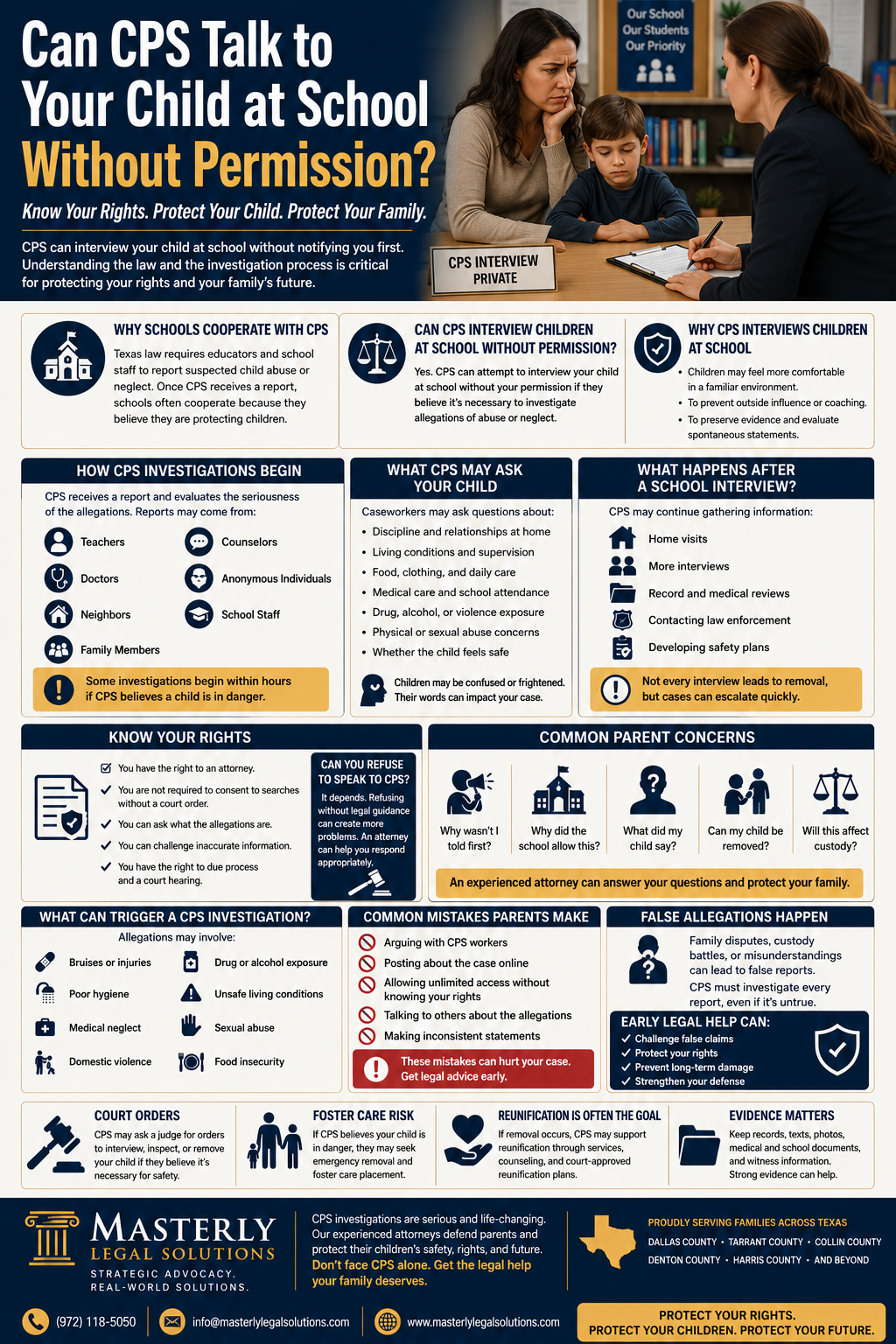
Can CPS Talk to Your Child at School Without Permission?
When Parents Learn CPS Spoke to Their Child Without Warning
Few moments are more shocking for a parent than discovering that CPS interviewed their child at school without notifying them first. Many families feel blindsided when a teacher, counselor, or even the child later reveals that someone from Child Protective Services asked questions during the school day. Parents often wonder whether CPS had the legal right to do this, why the school allowed it, and what happens next.
For many families in Dallas TX and throughout Texas, this situation creates immediate fear and confusion. Parents may worry that they are losing control of the situation or that CPS already believes abuse or neglect occurred before hearing their side of the story. These emotions become even more intense when the allegations involve sensitive topics such as child abuse, neglect, or sexual abuse.
At Masterly Legal Solutions, we understand how frightening a CPS investigation can become for families trying to protect their children and preserve their rights. Many parents contact our law office after learning that CPS spoke with their child at school without permission, and they are desperate for answers about the legal process. Understanding what CPS can and cannot do is critical for protecting your family, your children, and your future.
Why Schools Often Cooperate With Child Protective Services
Schools throughout Dallas, Houston, Fort Worth, and across TX regularly cooperate with Child Protective Services because educators are mandatory reporters under Texas law. Teachers, principals, counselors, nurses, and school staff may report suspected child abuse or neglect when they believe concerns exist involving a child’s safety or welfare, and in some cases those educators may also need legal support for school investigations and TEA license issues.
Once CPS receives reports involving allegations against parents or caregivers, the agency may begin an investigation quickly. In many situations, the school becomes one of the first places the department contacts because children spend large portions of their day there.
School personnel often cooperate because they believe they are helping protect children from possible danger. While many parents feel betrayed by the school’s involvement, administrators are often following procedures established by the Texas Department of Family and Protective Services.
Can CPS Legally Interview Children at School?
In many situations, yes, CPS can interview children at school without obtaining parental permission beforehand. Child Protective Services may attempt to speak with a child privately during a CPS investigation if the department believes immediate questioning is necessary to evaluate safety concerns.
The Texas Department of Family and Protective Services generally has authority to investigate allegations involving abuse or neglect. During the investigation process, CPS caseworkers may interview children, teachers, counselors, medical providers, and others connected to the family.
Parents are often surprised to learn they may not receive advance notice before the interview occurs. Schools sometimes allow the interview because they believe refusing cooperation could interfere with the agency’s investigation responsibilities.
However, every situation is unique, and parents still have important legal rights during CPS cases.
Why CPS Often Chooses to Interview Children at School
There are several reasons why CPS may decide to interview children at school instead of at home. The department frequently believes children may feel more comfortable speaking in a familiar environment away from parents or caregivers.
CPS workers may also believe interviewing a child at school helps:
- Prevent outside influence
- Preserve evidence
- Evaluate spontaneous statements
- Reduce the risk of coaching
- Assess emotional reactions privately
In some cases, CPS believes parents may interfere with the interview if notified in advance. This can create tension because many parents feel excluded from a process involving their own children.
Although CPS may have investigative authority, families still deserve fair treatment and legal protection throughout the process.
How a CPS Investigation Usually Begins
Most CPS investigations begin after the agency receives reports involving possible abuse, neglect, unsafe living conditions, or concerns about a child’s care. Reports may come from teachers, neighbors, doctors, family members, counselors, or anonymous individuals.
Examples of allegations may include:
- Bruises or injuries
- Poor hygiene
- Food insecurity
- Medical neglect
- Domestic violence concerns
- Sexual abuse allegations
- Drug exposure
- Unsafe living conditions
Once CPS receives a report, the department evaluates the seriousness of the allegations and determines how quickly to respond. Some investigations begin within hours if CPS believes emergency concerns exist.
The Emotional Impact on Families
Families often experience panic when they learn CPS has become involved. Parents may feel embarrassed, angry, or terrified about what could happen next. Children may also become confused or frightened after being questioned at school by strangers asking personal questions about their home life.
Many parents describe feeling powerless during the process because they do not understand what CPS is allowed to do. The fear of losing custody or facing court proceedings can create enormous emotional stress for the entire family.
These situations can affect:
- Family relationships
- Employment
- School routines
- Emotional health
- Parenting decisions
- Household stability
The earlier families understand their legal rights, the better prepared they may be to protect themselves during the investigation.
What CPS Workers Typically Ask Children During Interviews
A CPS caseworker interviewing a child at school may ask questions about many aspects of the child’s home life, relationships, and daily care. The exact questions depend on the allegations involved in the CPS case.
Topics may include:
- Discipline at home
- Living conditions
- Food and supervision
- Drug or alcohol exposure
- Medical care
- School attendance
- Family arguments
- Physical abuse concerns
Children may also be asked whether they feel safe at home or whether anyone has hurt them. In some situations, young children may not fully understand the questions or may become frightened during the interview process.
Why Parents Feel Frustrated After School Interviews
Many parents believe they should have been notified before CPS interviewed their child. They often feel excluded from a major decision affecting their family and children.
Parents may ask:
- Why wasn’t I contacted first?
- Why did the school allow this?
- What exactly did my child say?
- Can CPS remove my child next?
- Will this affect custody or foster care decisions?
These concerns are completely understandable. A CPS investigation can feel invasive and overwhelming, especially when families are uncertain about the outcome.
An attorney can help answer these questions while protecting the family’s legal interests during the investigation.
How Schools Balance Cooperation and Student Protection
Schools in Dallas TX and throughout Texas often face difficult decisions when CPS becomes involved. Administrators want to support students while also complying with reporting obligations under Texas law.
School personnel may believe cooperating with Child Protective Services helps ensure child protection and student welfare. However, schools must also consider privacy concerns, emotional impact on children, and communication with families.
The process can become especially sensitive when allegations later prove inaccurate or exaggerated.
What Happens After CPS Interviews a Child
After interviewing a child, CPS may continue gathering information from multiple sources. The agency may review records, visit the home, speak with parents, or contact medical professionals.
Depending on the allegations, CPS may:
- Request home visits
- Speak with other children
- Contact law enforcement
- Review medical evidence
- Interview additional witnesses
- Develop safety plans
Not every interview leads to removal or court involvement. However, parents should take the situation seriously because the investigation may escalate quickly if concerns increase.
Can Parents Refuse to Speak With CPS?
Parents often ask whether they are required to cooperate with Child Protective Services during an investigation or whether they should consider proactive planning tools such as a power of attorney for their children’s medical or care decisions. The answer depends heavily on the specific situation..
While parents may have rights regarding consent, refusing communication without legal guidance can sometimes increase tensions with the department. In certain situations, CPS may seek a court order if the agency believes cooperation is necessary to evaluate a child’s safety.
An attorney can help parents understand:
- What cooperation is legally required
- What information should be shared
- When court approval may be needed
- How to protect parental rights
- How to avoid unnecessary risks
Every case should be evaluated individually.
Understanding Court Orders in CPS Cases
In some CPS cases, the department may seek a court order authorizing certain actions during the investigation. This may include requests involving interviews, medical evaluations, home access, or temporary custody arrangements.
A judge reviewing the case may evaluate:
- Safety concerns
- Evidence of abuse or neglect
- Prior reports
- Living conditions
- Risk to the children
Parents should never ignore court proceedings connected to Child Protective Services. Missing hearings or failing to respond appropriately may negatively affect the outcome of the case.
How False Allegations Can Trigger CPS Investigations
Unfortunately, false allegations sometimes lead to CPS involvement. Family disputes, divorces, custody disagreements, or misunderstandings may result in reports that place innocent parents under investigation.
Examples may involve:
- Bitter custody disputes
- Misinterpreted injuries
- False school reports
- Anonymous complaints
- Exaggerated statements
Even when allegations are false, CPS may still conduct a full investigation before closing the case. Parents should avoid assuming the situation will resolve automatically without legal support.
Why Early Legal Representation Matters
One of the biggest mistakes families make is waiting too long before speaking with a lawyer. Parents often hope the investigation will disappear quickly if they cooperate fully without legal advice.
Unfortunately, early mistakes may create long-term problems. Statements made during interviews, home visits, or meetings with CPS workers may later appear in court proceedings or agency reports.
A lawyer can help:
- Review the allegations
- Explain the legal process
- Communicate with the department
- Protect parental rights
- Prepare for hearings
- Challenge inaccurate claims
Strong legal representation can make a significant difference in the outcome of a CPS case, just as thoughtful Texas estate planning with wills, trusts, and related documents can make a major difference in a family’s long-term security.
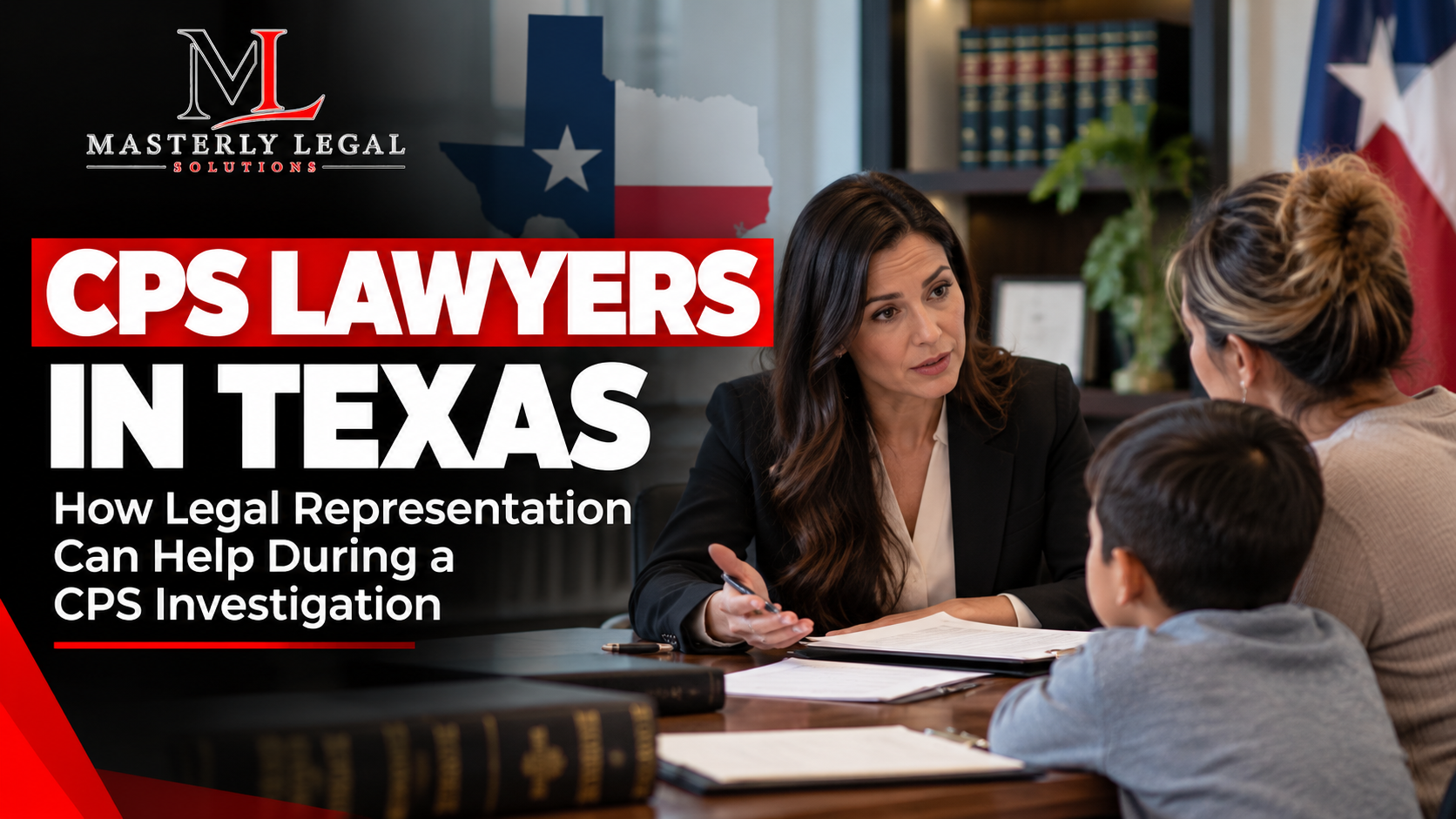
The Role of CPS Lawyers During Investigations
CPS lawyers assist families facing allegations involving abuse, neglect, unsafe conditions, or child welfare concerns. These cases often move quickly, especially when CPS believes children may face immediate danger.
CPS attorneys may help clients:
- Navigate investigations
- Defend against allegations
- Review CPS records
- Protect custody rights
- Respond to court filings
- Prepare evidence
- Challenge removal efforts
Families should understand that Child Protective Services cases involve serious legal matters that may affect their future for years.
Why CPS Cases Can Escalate Quickly
Many parents underestimate how quickly CPS investigations can intensify. A routine school interview may eventually lead to:
- Home inspections
- Emergency hearings
- Temporary removal requests
- Foster care placement
- Court supervision
- Safety plans
The department often moves quickly when concerns involve children’s safety, especially if prior reports or historical allegations exist.
Families should take every stage of the process seriously from the beginning.
How Foster Care Becomes Part of Some Cases
If CPS believes children cannot safely remain in their own homes, the department may seek temporary foster placement. These situations are extremely emotional for parents and children alike.
Removal decisions often involve allegations of:
- Severe abuse
- Ongoing neglect
- Drug exposure
- Unsafe living conditions
- Domestic violence
- Medical neglect
A judge may ultimately determine whether removal is necessary after reviewing the evidence and hearing arguments from the parties involved.
The Importance of Evidence in CPS Cases
Evidence plays a major role in determining the outcome of a CPS investigation. Families should preserve records and documentation connected to the allegations whenever possible.
Helpful evidence may include:
- Medical records
- School documents
- Text messages
- Photographs
- Witness information
- Counseling records
Strong evidence may help challenge inaccurate allegations or explain misunderstandings during the investigation process.
What Parents Should Expect During Home Visits
After a school interview, CPS may schedule a visit to the family home. Caseworkers may evaluate the environment, ask questions, and observe interactions between parents and children.
CPS workers often review:
- Cleanliness
- Food availability
- Sleeping arrangements
- Safety hazards
- Emotional interactions
- Overall care of the children
Parents frequently feel nervous during these visits because they fear every detail may be judged harshly.
Why Child Protective Cases Feel So Personal
Unlike many legal disputes, CPS investigations involve the most personal parts of a family’s life. Parents may feel judged not only as caregivers but also as people.
The process can feel invasive because CPS workers may ask about:
- Parenting styles
- Relationships
- Finances
- Medical history
- Discipline methods
- Mental health concerns
Families often experience deep emotional stress throughout the process, especially when children become involved in interviews or court proceedings.
Understanding the Texas Department of Family and Protective Services
The Texas Department of Family and Protective Services oversees CPS investigations and other protective services programs involving children, families, and vulnerable individuals throughout TX.
The department includes divisions connected to:
- Child protective investigations
- Foster care services
- Family support programs
- Reunification efforts
- Child welfare monitoring
Understanding how the department operates can help families better navigate the legal process during investigations.
Why Reunification Often Becomes a Major Goal
In many CPS cases, reunification between parents and children becomes an important long-term objective. Even if temporary removal occurs, the department may eventually support reunification if safety concerns are addressed appropriately.
Reunification plans may involve:
- Counseling
- Parenting classes
- Drug testing
- Home evaluations
- Supervised visitation
- Safety improvements
Families should understand that compliance with court requirements may significantly affect the outcome of the case.
How CPS Attorneys Help Families Navigate Complex Cases
CPS attorneys help families navigate difficult legal situations involving investigations, hearings, and allegations affecting children. Many parents feel overwhelmed because the process moves quickly and involves multiple agencies, court proceedings, and strict deadlines.
An attorney may assist by:
- Explaining rights
- Reviewing allegations
- Preparing for hearings
- Communicating with CPS workers
- Challenging unfair assumptions
- Protecting parental interests
Every family deserves strong legal support during stressful investigations involving children.
Why Children Need Emotional Support During Investigations
Children often experience confusion and fear during CPS investigations, especially after interviews at school or interactions with caseworkers. Some children worry they caused trouble for their parents simply by answering questions honestly.
Parents should remain calm and supportive while avoiding coaching or pressuring children about what to say. Emotional support and stability become very important during these situations.
Families may also benefit from counseling or outside support resources while the case proceeds.
Protecting Your Rights During a CPS Investigation
Parents still have important rights during CPS cases, even when the department is actively investigating allegations involving abuse or neglect.
These rights may involve:
- Legal representation
- Court hearings
- Challenging allegations
- Reviewing evidence
- Defending against removal efforts
Families should avoid making assumptions about what CPS can automatically do without judicial approval.
How CPS Investigations Can Affect Youth Emotionally and Academically
A CPS investigation can place enormous emotional pressure on youth who may not fully understand why they are being questioned at school or interviewed by investigators. Children often become anxious, withdrawn, or fearful after speaking with Child Protective Services, especially when they believe they are responsible for family problems. These investigations may also affect academic performance, friendships, and emotional stability during an already stressful time in life. Parents should remain supportive and calm while helping children understand that the investigation process does not define their future. Emotional support and legal guidance can both play important roles in protecting children during difficult family situations.
Why Hiring the Right CPS Lawyer Matters Early in the Process
Hiring an experienced lawyer early in a CPS case can make a major difference in how the investigation develops. Many parents wait too long before seeking legal help because they believe the situation will resolve on its own or that cooperating without representation is enough. Unfortunately, early mistakes during interviews, home visits, or conversations with CPS workers can later affect court proceedings and custody issues. A knowledgeable attorney can help families understand their rights, review allegations carefully, and develop a strategy focused on protecting both the parents and children. The sooner families seek legal guidance, the better prepared they may be to respond to serious allegations involving abuse or neglect.
Understanding the Point When a CPS Investigation Becomes More Serious
There is often a critical point during a CPS investigation when the case begins moving beyond simple information gathering and toward possible court involvement or removal concerns. Parents may notice increased communication from the department, requests for additional interviews, or repeated visits from a caseworker. In some situations, CPS may begin discussing safety plans, foster placement, or emergency concerns involving the children. Recognizing these warning signs early can help families take the situation seriously before it escalates further. Legal representation may become especially important once the investigation reaches this stage of the process.
Signs That CPS May Be Preparing for Court Action
Certain signs may suggest that CPS is considering stronger legal action involving the family or children. Parents should pay close attention if investigators begin requesting extensive records, scheduling multiple interviews, or discussing concerns about immediate safety or removal. Other signs may include increased involvement from supervisors within the department or sudden requests for drug testing, counseling, or parenting classes. While these actions do not automatically mean children will be removed from the home, they may indicate that the investigation is becoming more serious. Families should avoid ignoring these developments and seek legal guidance as quickly as possible.
Warning Signs Parents Should Never Ignore During a CPS Investigation
There are several important signs parents should never overlook once Child Protective Services becomes involved. Repeated calls from caseworkers, discussions about foster care, requests for medical evaluations, or questions involving school attendance may all signal deeper concerns within the investigation. Some families mistakenly assume CPS is only conducting a routine review when the department may already be evaluating whether court intervention is necessary. Paying attention to these warning signs can help parents respond more carefully and avoid decisions that could negatively affect the outcome of the case. Understanding the seriousness of the investigation early may help families better protect their rights and future.
How Families Can Build a Stronger Support Suite During CPS Cases
Families facing CPS investigations often benefit from building a strong support suite that includes legal guidance, emotional support, counseling resources, and trusted individuals who can help during the process, and some families may also need estate planning and will or trust preparation to protect their long-term interests. These situations can quickly become overwhelming, especially when parents are trying to protect children while also managing work, finances, and emotional stress. A strong support system may help families remain organized, meet court requirements, and communicate more effectively during the investigation. Parents should also carefully document important interactions, appointments, and communications connected to the case. Having the right support in place can make a meaningful difference during difficult CPS proceedings.
Why Every CPS Defense Strategy Needs the Right Legal Suite
Every CPS case is different, which is why families need a legal suite tailored to their specific situation and concerns. Some investigations focus on neglect allegations, while others involve abuse claims, school reports, medical concerns, prior CPS history, or related issues where education law attorneys for teachers and administrators may also become involved. An experienced attorney can help evaluate the evidence, identify weaknesses in the allegations, and develop a defense strategy designed to protect parental rights and family stability. Families should avoid relying on assumptions or informal advice from others who are unfamiliar with Texas CPS law. Strong legal preparation often becomes one of the most important tools for protecting children and securing the best possible outcome.
The Importance of Communication and Organization Throughout the CPS Suite of Proceedings
Many parents underestimate how complicated the full suite of CPS proceedings can become once court hearings, interviews, home visits, and agency reviews all begin happening at the same time. Staying organized and maintaining clear communication with legal counsel can help families better navigate the investigation process. Parents should carefully track appointments, deadlines, court dates, and requests made by CPS workers or the department. Keeping detailed records may also help attorneys review the situation more effectively and identify important evidence. A structured approach to the case can reduce confusion while helping families protect their rights and interests throughout the proceedings.
How Masterly Legal Solutions Helps Families Facing CPS Issues
At Masterly Legal Solutions, a Texas-based law firm offering comprehensive legal and business services, we understand how overwhelming CPS issues can become for families throughout Dallas TX, Houston, Fort Worth, and across Texas. Parents often feel terrified after learning CPS interviewed their child at school or began investigating allegations involving abuse or neglect.
Our law office works closely with clients to help them understand the legal process, protect their parental rights, and defend against unfair accusations. We know how important your children, family, and future are, and we fight to help clients pursue the best outcome possible.
Whether you are dealing with a new CPS investigation, emergency removal concerns, foster care issues, or questions about school interviews, our attorneys are prepared to assist you through every stage of the process.
Speak With Child Protective Services Dallas Attorneys About Your Case
If you recently discovered that Child Protective Services Dallas investigators spoke with your child at school without your permission, it is important to understand your legal rights as soon as possible. CPS cases involving allegations of abuse, neglect, or safety concerns can escalate quickly, especially when the Texas Department of Family and Protective Services believes children may face risk or danger.
At Masterly Legal Solutions, our CPS lawyers represent families throughout Dallas, Houston, and surrounding TX communities facing difficult child protective investigations. We understand how emotional these situations become for parents trying to protect their children, preserve their family relationships, and avoid unnecessary court involvement.
Our office is committed to helping clients navigate the legal process, answer difficult questions, review the details of the investigation, and develop strategies designed to protect their interests and children. We know families deserve experienced legal support during stressful CPS matters.
Contact us at (972) 236-5051 or through our Masterly Legal Solutions contact offices in Dallas, Houston, Austin, Grand Prairie, and Plano for a consultation. We can answer your questions, explain what to expect during the process, and help you understand how to protect yourself and your children during a CPS investigation.
Disclaimer: This article is provided for informational and educational purposes only and should not be considered legal advice. Reading this article does not create an attorney-client relationship with Masterly Legal Solutions. Every CPS case involves unique facts, allegations, and legal circumstances. If you are involved in a Child Protective Services investigation or facing allegations involving abuse, neglect, or child safety concerns, you should speak directly with a qualified attorney regarding your specific situation.


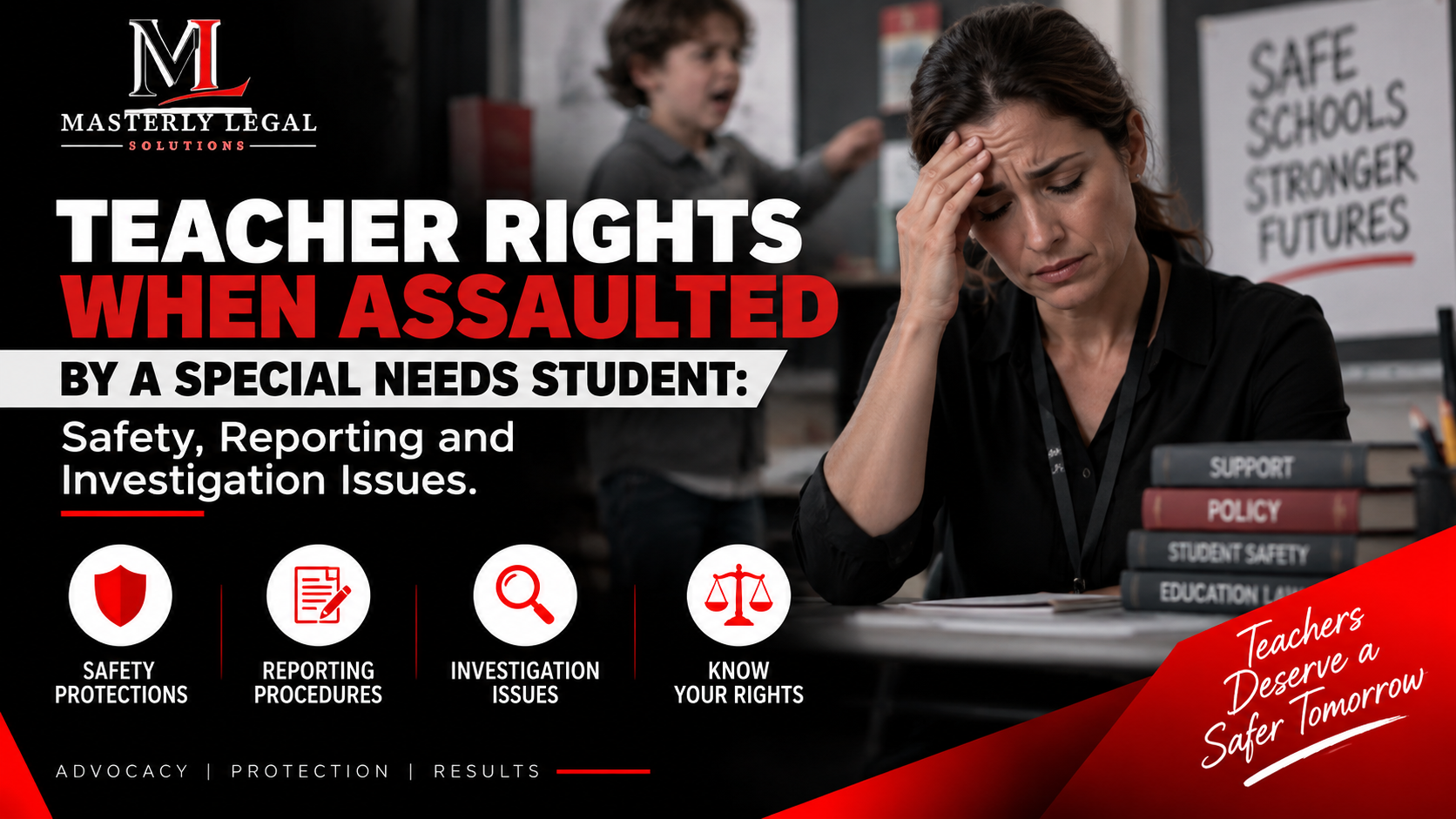
Teacher Rights When Assaulted by a Special Needs Student: Safety, Reporting and Investigation Issues


Looking for Legal & Business Solutions? Contact Us Now
Fill in the form or call us to set up a meeting