

Charlotte CPS: Why CPS Cases Often Start with a Teacher's Report
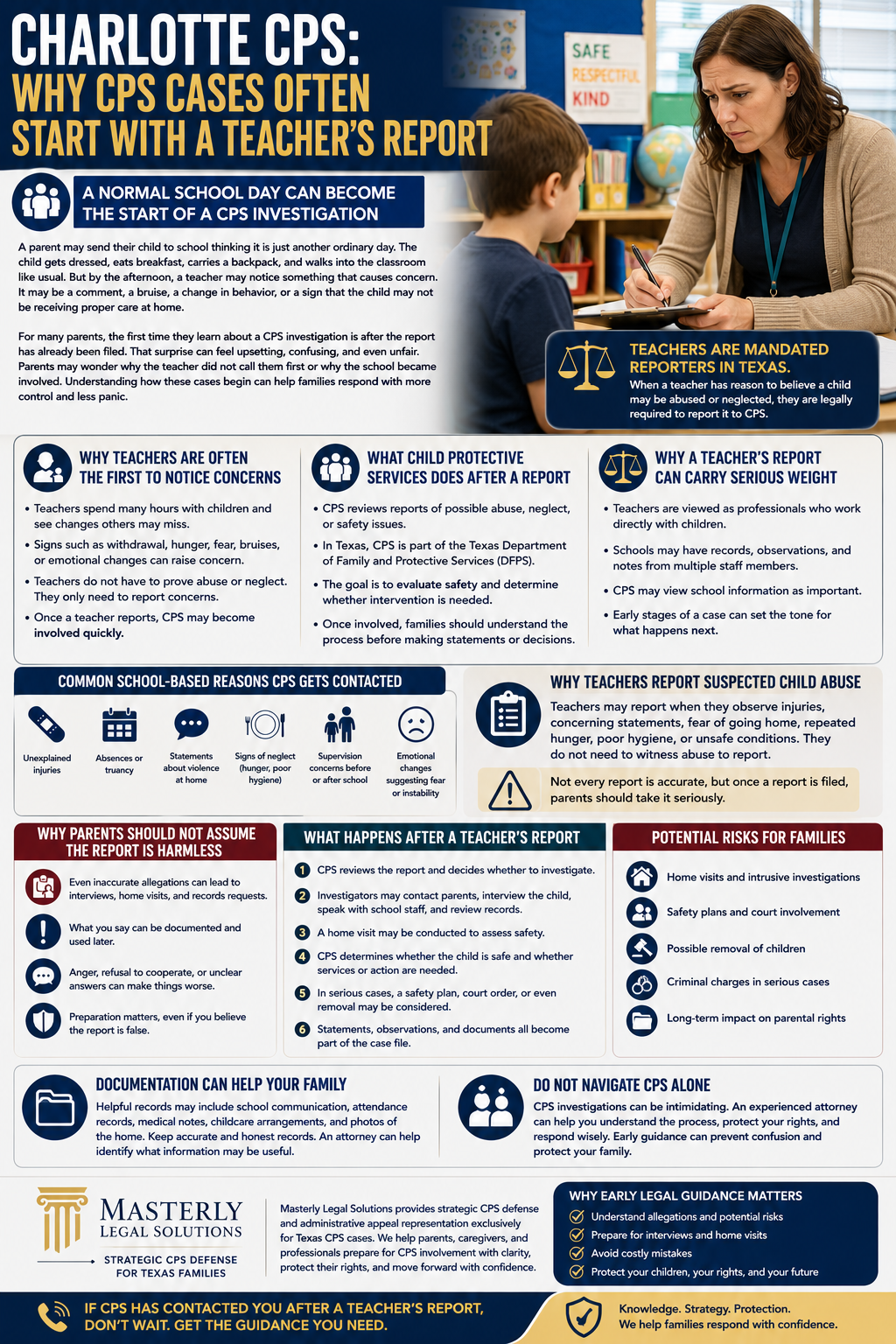
A Normal School Day Can Become the Start of a CPS Investigation
A parent may send their child to school thinking it is just another ordinary day. The child gets dressed, eats breakfast, carries a backpack, and walks into the classroom like usual. But by the afternoon, a teacher may notice something that causes concern. It may be a comment, a bruise, a change in behavior, or a sign that the child may not be receiving proper care at home.
For many parents, the first time they learn about a CPS investigation is after the report has already been filed. That surprise can feel upsetting, confusing, and even unfair. Parents may wonder why the teacher did not call them first or why the school became involved. Understanding how these cases begin can help families respond with more control and less panic.
Why Teachers Are Often the First to Notice Concerns
Teachers spend many hours with children during the school week. They see how children act, learn, communicate, and interact with others. Because of that daily contact, teachers may notice changes that other people miss. A child who suddenly becomes withdrawn, hungry, fearful, tired, or unusually emotional may raise concern, and educators in this situation may also need support from a Texas education law firm that protects teachers' licenses.
Teachers are not expected to prove that abuse or neglect occurred before making a report. Their role is usually to report concerns when they believe a child may be at risk. This can create frustration for parents who feel misunderstood. However, once a teacher raises a concern, child protective services may become involved quickly.
What Child Protective Services Does After a Report
Child protective services reviews reports involving possible child abuse, neglect, or safety issues. In Texas, CPS is part of the Texas Department of Family and Protective Services, commonly known as DFPS. This department receives and evaluates reports involving children who may be unsafe or improperly cared for. A report from school staff can trigger an investigation if the information meets the agency's criteria.
The purpose of protective services is to evaluate whether children are safe and whether intervention is needed. That does not mean the parent has done something wrong. It does mean the situation should be taken seriously. Once CPS becomes involved, the family should understand the process before making statements or decisions, and teachers who are part of the story may benefit from guidance from an education law attorney offering expert legal guidance for teachers.
Why a Teacher's Report Can Carry Serious Weight
A teacher's report often receives attention because teachers are seen as professionals who work directly with children. A school setting may also provide records, attendance information, behavioral notes, or observations from multiple staff members. If a concern is documented at school, CPS may view the information as important. This can make the early stage of the case especially important.
Parents sometimes assume the report is only one person's opinion and will disappear quickly. That may happen in some situations, but not always. If CPS believes the information suggests possible danger, neglect, abuse, or exploitation, the matter may move forward. The sooner a family understands the seriousness of the report, the better prepared they may be to respond, and a teacher facing parallel scrutiny may need a TEA license defense attorney to navigate investigations.
Why Teachers Report Suspected Child Abuse
Teachers may report suspected child abuse when they observe signs that concern them. These signs may include visible injuries, unusual explanations, fear of going home, repeated hunger, poor hygiene, or statements made by a child. A teacher may also report if a child describes being harmed, threatened, left alone, or exposed to unsafe conditions. The teacher does not have to personally witness the incident to make a report, but may benefit from guidance from an education law attorney for teachers and administrators when their actions are questioned.
In many situations, teachers are trying to protect children from possible harm. That does not mean every report is accurate. Sometimes a misunderstanding, family conflict, medical condition, or communication issue may lead to concerns. Still, once a report is filed, parents should avoid treating it casually, just as educators must take seriously any Texas Education Agency investigation into their conduct.
Common School-Based Reasons CPS Gets Contacted
Many CPS cases begin with concerns that arise during the school day. The issue may seem small to the parent but serious to the school. A child may say something that sounds alarming, or staff may notice a repeated pattern. These concerns can lead school personnel to contact protective services.
Common school-related triggers may include:
- A child arriving with unexplained injuries
- Repeated absences or truancy concerns
- Statements about violence in the home
- Signs of neglect such as hunger or poor hygiene
- Concerns about supervision before or after school
- Emotional changes that suggest fear or instability
A single concern may not always lead to a major case. However, repeated concerns can cause CPS to investigate more closely.
When a Child's Words Are Misunderstood
Children sometimes say things in ways adults misunderstand. A young child may describe discipline, conflict, or a family situation without context. A child may repeat something heard from another person. A child may also exaggerate because they are upset, tired, or confused.
Even so, school staff may feel required to report what they heard. Once those words become part of a CPS report, the parent may need to explain the situation carefully. A rushed or emotional response may create more confusion. This is one reason legal guidance can be valuable early in the process, both for parents and for educators who may need an education lawyer providing expert support for teachers and schools.
Why Parents Should Not Assume the Report Is Harmless
Some parents believe that if the allegations are false, they do not need to worry. Unfortunately, even inaccurate allegations can still lead to interviews, home visits, records requests, and documentation. CPS may ask questions about family routines, discipline, supervision, medical care, and living conditions. The process can feel invasive even when the parent believes there is nothing to hide.
A false report may still create stress and risk if parents are unprepared. Statements made during the investigation can be written down and reviewed later. A parent who becomes angry, refuses to cooperate without understanding the consequences, or provides unclear answers may unintentionally make the situation harder. Preparation matters even when the family believes the report is wrong.
The Role of Child Protective Services CPS in Texas
Child protective services cps in Texas is responsible for reviewing reports involving possible abuse, neglect, or unsafe conditions involving children. The agency may contact parents, interview children, speak with school staff, and gather relevant information. The goal is to determine whether a child is safe and whether services or further action are needed. This process can move quickly once a report is accepted.
Parents should understand that CPS is not simply having a casual conversation. The agency is gathering information that may affect the direction of the case. What a parent says, what the child says, and what school staff report can all become part of the file. Because of this, families should respond carefully and thoughtfully.
What CPS May Ask After a Teacher's Report
After a teacher's report, CPS may ask about the child's home life, discipline, medical care, supervision, and daily routine. The investigator may want to know who lives in the home and whether any family member has a history of violence, substance abuse, or prior CPS involvement. Parents may also be asked about school attendance, behavior, and any recent changes in the child's life. These questions may feel personal, but they are often part of the investigation.
Parents should answer truthfully, but they should also understand the importance of clear communication. Guessing, minimizing, or becoming defensive may create problems. If a parent is unable to answer a question accurately, it may be better to say so than to provide information that later appears inconsistent. Careful responses can make a difference.
Why a Home Visit Can Become Important
A home visit is common in many CPS investigations. During the visit, CPS may observe the environment where the children live. The investigator may look at sleeping arrangements, food availability, cleanliness, safety hazards, and whether the home appears appropriate for the child's needs. Parents may feel judged during this process, but the visit can become an important part of the case.
If CPS sees something concerning, that observation may be documented. If the home appears safe and stable, that may also be documented. Parents should not stage a false picture of family life, but they should make sure the home is safe and organized. Small issues can sometimes look more serious when viewed through an investigative lens.
How Neglect Concerns May Arise at School
Neglect allegations often begin with patterns rather than a single event. A child may frequently arrive hungry, tired, dirty, or without necessary supplies. School staff may worry that the parent is not providing proper care. These concerns may lead to a report even if the parent is struggling with work, transportation, finances, or communication issues.
Neglect does not always involve intentional harm. Sometimes families are dealing with hardship, illness, unstable housing, or limited resources. However, CPS may still investigate if the child's basic needs appear unmet. Parents should be prepared to explain the full situation and show the steps being taken to care for the children.
When Abuse Allegations Come From School Observations
Allegations of abuse may arise when a teacher notices injuries, hears concerning statements, or observes behavior that suggests fear. The school may not know what actually happened. Still, if staff believe a child may have been abused, they may file a report. Once that report is filed, the parent may be investigated.
Parents often feel hurt or angry when they learn a teacher made a report. That reaction is understandable, especially if the parent believes the concern is false. However, reacting with anger toward the teacher or school can make matters worse. It is usually better to focus on responding to the investigation clearly and responsibly.
Why Medical Issues Can Be Misread as Abuse
Some children have medical conditions that cause bruising, fatigue, weight changes, behavioral issues, or other symptoms. Without full context, school staff may misinterpret those signs. A child with a medical condition may appear neglected or injured when there is a legitimate explanation. Parents should be prepared to provide documentation when appropriate.
Medical records can sometimes help explain concerns raised in a school report. However, parents should be careful about how and when they provide private information. An attorney can advise families on how to present documents in a way that supports the case without creating unnecessary confusion. Proper organization can help protect the family's position.
Why School Reports Can Affect Working Parents
Many parents are balancing full-time work, childcare, transportation, and school responsibilities. A teacher may notice a child being picked up late, missing assignments, or arriving unprepared. Sometimes these issues are connected to a parent's work schedule rather than intentional neglect. Still, CPS may become involved if the school believes the child is at risk, and schools themselves may turn to an education law firm offering experienced legal services when investigations or policy questions arise.
Working parents should be ready to explain childcare arrangements, emergency contacts, and supervision plans. If a parent must leave children with relatives, neighbors, or older siblings, CPS may ask whether those arrangements are safe. The goal is to ensure children are protected. A clear explanation can help reduce misunderstandings.
What Happens If CPS Wants to Interview Your Child
CPS may seek to interview the child as part of the investigation. This can be one of the most stressful parts of the process for parents. Parents may worry about what the child will say, whether the child will be confused, or whether the interview will happen at school. In some situations, CPS may speak with children outside the parent's presence.
Parents should understand their rights and the limits of those rights before agreeing to or objecting to interviews. The wrong response can increase tension with CPS. At the same time, parents should not feel pressured to agree to everything without understanding the consequences. Legal guidance can help families navigate this step.
When CPS Believes a Child May Be in Danger
If cps believes a child is in immediate danger, the case may move much faster. The agency may seek emergency action, a safety plan, or court involvement. In serious situations, CPS may attempt to remove the child from the home. This is why early action is important when a parent learns about a school-based report.
Parents should not wait until the situation becomes urgent to seek help. A report that seems minor at first may grow more serious if CPS receives additional concerns. The best time to prepare is often before the agency has already made major decisions. Early preparation may help the family respond more effectively.
Safety Plans and Pressure to Agree
Sometimes CPS may ask a parent to agree to a safety plan. This may involve supervision by another adult, temporary placement with a relative, restrictions on contact, or changes in household routines. Parents may feel they have no choice but to agree immediately. However, safety plans can have serious practical consequences.
Before agreeing, parents should understand what the plan requires and how long it may last. They should also understand whether the plan affects custody, contact, or daily parenting decisions. A parent who signs something without understanding it may later feel trapped. Legal guidance can help families evaluate the risks and options.
When a Court Order Becomes Part of the Case
In some situations, CPS may seek a court order. A court order can authorize certain actions or require a parent to follow specific conditions. Court involvement often means the case has become more serious. At that point, a judge may make decisions affecting the family.
Parents should not assume they can handle court proceedings alone. The court may review evidence, reports, testimony, and recommendations. The outcome can affect parental rights and the child's living arrangements. Having an attorney involved can help parents understand what to expect and how to prepare.
Why Removal Is a Serious Risk
Removal is one of the most frightening possibilities for any parent. It means CPS is seeking to remove children from the home because of safety concerns. This does not happen in every case, but it can happen when the agency believes the child cannot remain safely in the home. Parents should take any mention of removal seriously.
If removal is discussed, the parent should act quickly. This is not the time to guess, argue emotionally, or rely on internet advice. A lawyer can help the parent understand the situation and defend the family's rights. The sooner the family responds, the more prepared they may be.
Why Criminal Charges Can Become a Concern
Most CPS matters are administrative or child welfare investigations. However, some allegations can also lead to criminal charges. This may occur when the report involves serious physical injury, sexual abuse, severe neglect, or other conduct that law enforcement may investigate. Parents should understand that statements made to CPS could potentially matter later.
This is one reason families should be careful during interviews. A parent may want to explain everything quickly, but not every explanation helps. If there is any concern about criminal exposure, legal guidance becomes even more important. Protecting the family also means protecting the parent's rights.
Why Child Protective Services May Continue Investigating After One Report
A single teacher's report may lead CPS to gather information from several sources. The agency may contact school staff, medical providers, relatives, neighbors, or others who know the family. CPS may also look at prior reports, even if those reports were closed. This can make the process feel larger than expected.
Parents may wonder why so many people are being contacted. The agency is often trying to determine whether the concern is isolated or part of a broader pattern. This is why families should not assume the investigation will be limited to the original report. Once CPS opens a case, the review may expand, and many families also use this time to address broader planning needs such as essential legal documents for families before age 40.
Why Parents Should Avoid Retaliating Against the Reporter
It can be painful to believe a teacher or school employee reported your family. Some parents want to confront the person who made the report. That reaction may be emotionally understandable, but it can create new problems. Angry contact with school staff may be documented and used to suggest instability or poor judgment.
Parents should avoid threats, public accusations, or emotional messages to the school. Instead, they should focus on building a calm and organized response. The priority is to protect the children, protect the family, and address the allegations. Professional guidance can help parents stay focused when emotions are high.
How False or Exaggerated Reports Still Create Problems
Not every CPS report is accurate. Some reports are based on misunderstandings, incomplete information, or exaggerated concerns. A child may describe something unclearly, or a teacher may interpret a situation without knowing the full background. Still, the family may be investigated.
This can feel unfair, but parents should not ignore the process. Even a weak allegation can create stress if it is not handled properly. The goal is to provide clear, relevant information that helps CPS understand the truth. A careful response may help prevent a misunderstanding from growing into a larger issue.
Why Documentation Can Help Your Family
Parents should keep organized records once CPS becomes involved. Helpful documentation may include school emails, attendance records, medical notes, childcare arrangements, photographs of the home, or communication with teachers. These documents may help explain the situation and correct inaccurate assumptions. Good records can make a difficult case easier to understand, especially when paired with proactive steps like establishing a power of attorney for your children.
Documentation should be accurate and honest. Parents should never create false records or pressure children to say certain things. Instead, the goal is to provide reliable information that supports the family's position. A lawyer can help determine which documents may be helpful.
How Masterly Legal Solutions Approaches CPS Defense
Masterly Legal Solutions provides strategic CPS defense and administrative appeal representation exclusively for Texas CPS cases. Our approach is administrative, proactive, and investigation-focused. We help parents, caregivers, and professionals understand what CPS is asking, what the risks may be, and how to respond appropriately. We do not believe families should wait until the situation becomes overwhelming before seeking guidance.
Our law firm helps clients prepare for CPS involvement with clarity rather than fear. We assist with understanding allegations, organizing relevant information, preparing for interviews, and evaluating agency requests. We also help clients understand how CPS findings may affect future rights, employment, or professional concerns. The goal is to help families respond wisely before avoidable mistakes occur.
Why Early Legal Guidance Can Make a Difference
When CPS contacts a parent, time matters. The first conversation, first home visit, and first written response may affect the direction of the case. An experienced attorney can help parents understand what to say, what not to say, and how to prepare. Early guidance may prevent confusion from turning into a larger problem.
Parents often wait because they hope the case will go away. Sometimes it does, but sometimes it does not. Waiting too long may limit available options. When children, family stability, and parental rights are involved, early preparation is often the safer path.
What an Attorney Can Help You Understand
An attorney can explain the CPS process, review the concerns being raised, and help parents decide how to respond. Legal support may be especially important when allegations involve abuse, neglect, safety concerns, removal threats, or possible court involvement. A lawyer can also help parents avoid statements that may be misunderstood. This guidance can provide clarity during a stressful time.
An attorney does not replace the parent's role. Parents remain responsible for caring for their children and making important decisions. However, legal guidance can help ensure those decisions are informed. When the stakes are high, informed choices matter.
Why Families Should Not Navigate CPS Alone
CPS investigations can feel intimidating because parents may not know the rules, timelines, or consequences. The agency may seem familiar with the process while the family feels lost. That imbalance can create anxiety and lead to rushed decisions. Families deserve support when allegations affect their home and children.
Masterly Legal Solutions helps families understand what is happening and what may happen next. We help clients prepare instead of panic. Whether the concern began with a teacher's report, a school communication, or another source, the family should take the matter seriously. The right guidance can help parents respond with confidence.
Charlotte CPS and the Importance of Taking the First Step
Families searching for Charlotte CPS information are often already worried about what a report may mean. They may be asking whether CPS can come to the home, whether they must speak to investigators, or whether their children could be removed. These concerns are real, and they deserve careful attention. The first step is understanding that CPS involvement should not be ignored.
If your family has been contacted by CPS after a teacher's report, do not assume the situation will resolve itself. The earlier you understand the process, the better prepared you may be. You do not have to face the investigation alone. Guidance from a law firm familiar with Texas CPS matters can help you make informed decisions.
How Social Services and CPS Often Work Together
Many parents do not realize that social services agencies and CPS may work together when concerns are raised about a child's welfare. Depending on the circumstances, families may be offered support programs, counseling resources, parenting assistance, or other services designed to address safety concerns. While these services can sometimes help families stabilize difficult situations, parents should still understand how information shared during the process may be documented and reviewed. Knowing the purpose of these programs can help families make informed decisions while protecting their rights throughout the investigation.
Why Ignoring a CPS Case Could Lead to a Lawsuit or Court Action
Some families assume a CPS report will simply disappear if they refuse to participate or avoid communication with investigators. Unfortunately, failing to respond appropriately can sometimes increase the likelihood of formal legal proceedings. In certain situations, unresolved allegations may result in a lawsuit, court intervention, or requests for judicial oversight regarding a child's care and safety. While not every investigation reaches that stage, parents should take every report seriously and understand the potential consequences. Early action often provides more opportunities to address concerns before the situation becomes more complicated.
The Importance of Legal Expertise During a CPS Investigation
A CPS investigation can involve complex issues related to child welfare, parental rights, school reports, home visits, and potential court involvement. Families often benefit from working with a legal team that has the expertise to evaluate allegations, explain procedures, and identify potential risks. Understanding how CPS operates can help parents avoid common mistakes and make more informed decisions throughout the process. When children and family relationships are involved, knowledgeable guidance can provide clarity during an otherwise stressful and uncertain situation.
Contact Masterly Legal Solutions for a Free Consultation
If a teacher's report has led to CPS contact, now is the time to understand your options. A school-based report can raise questions about neglect, abuse, safety, supervision, home conditions, and parental rights. Even when the allegations are false or exaggerated, the way a parent responds can affect the direction of the case. You deserve clear guidance before making decisions that may impact your family.
Masterly Legal Solutions helps parents, caregivers, and professionals navigate Texas Child Protective Services investigations with preparation and strategy. Our team can review your situation, explain the process, and help you respond appropriately to CPS concerns. We also assist families with broader planning needs through our Dallas estate planning services for wills and trusts. If you have questions about a CPS report, school-based allegations, or the next step in the investigation, contact us today.
Call (972) 236-5051 for a free consultation. We are ready to listen, answer your questions, and help you understand how to protect your family during a stressful CPS matter.
Disclaimer: This article is provided for educational and informational purposes only. It is not legal advice and should not be relied upon as legal guidance for any specific situation. Reading this page does not create an attorney-client relationship with Masterly Legal Solutions. CPS matters depend on the specific facts, agency actions, and applicable law. If you are involved in a CPS investigation or have questions about your rights, consult a qualified attorney regarding your specific circumstances.

Teacher Rights When Assaulted by a Special Needs Student: Safety, Reporting and Investigation Issues


Looking for Legal & Business Solutions? Contact Us Now
Fill in the form or call us to set up a meeting





