
Teacher Investigations at Schools: Protecting Your Career and Reputation
Receiving notice of a school investigation can put your teaching career at risk. You may be asked to attend an investigative interview, submit a written statement, or remain on administrative leave while allegations are reviewed. Even when you disagree with the complaint, the uncertainty can affect your reputation, income, and professional future.
For Texas educators, a district investigation may also raise questions about teaching certification. Allegations involving professional conduct, student safety, or violations of educator standards can lead to a separate state-level review.
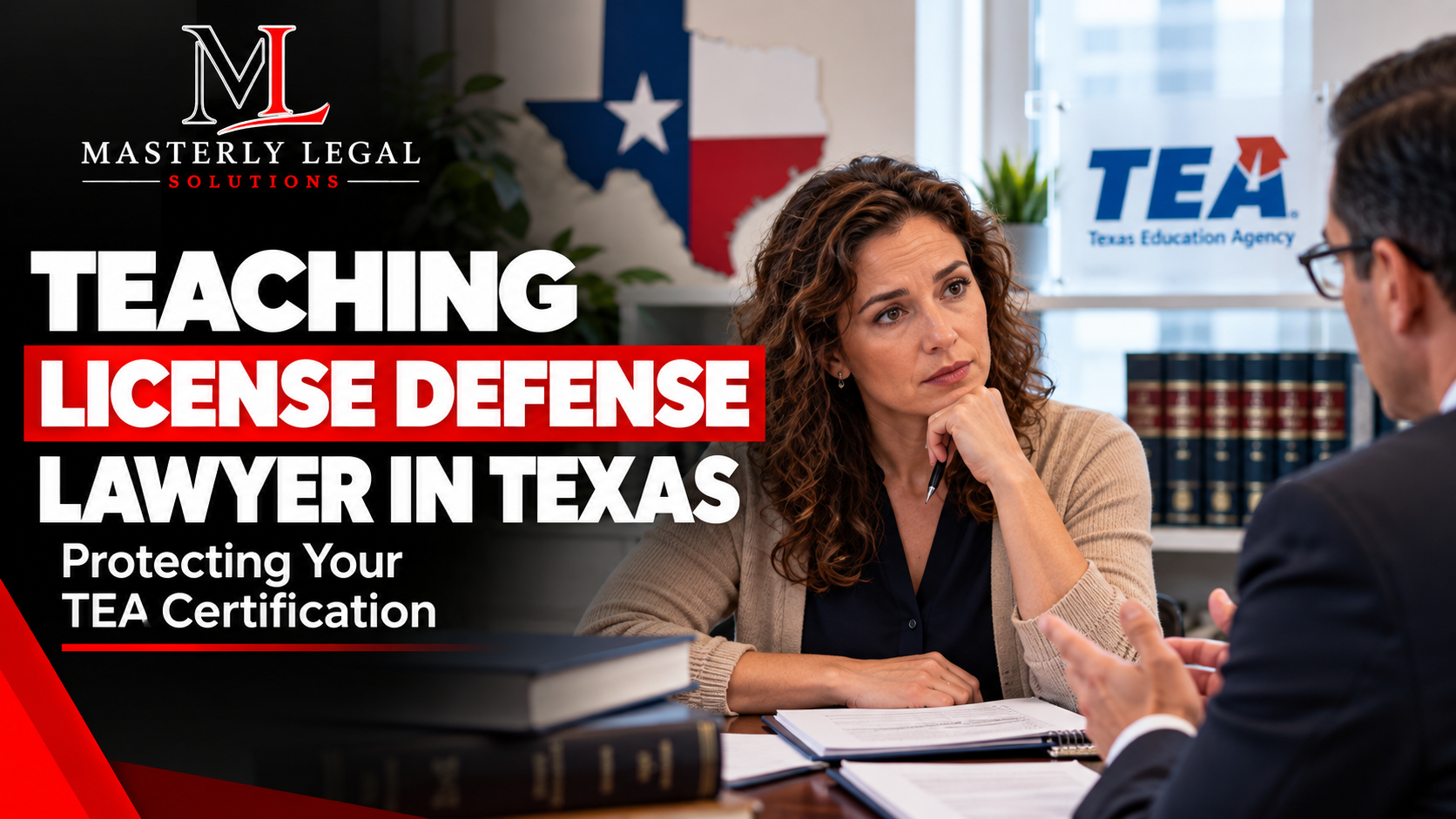
A teacher license defense lawyer can help you understand the allegations, protect your legal interests, and respond appropriately before important decisions are made.
Masterly Legal Solutions provides education-law counsel for teachers, administrators, and other school professionals facing investigations and disciplinary concerns. When your certificate, employment, or professional reputation is at stake, qualified legal representation can help you navigate the process with greater clarity.
When Teacher Certification Exposure Begins
A school investigation does not automatically mean a teacher will lose their certification. However, certain allegations may lead to further review by the Texas Education Agency (TEA).
Certification concerns may arise from complaints involving professional misconduct, student safety, inappropriate communications, testing irregularities, alleged violations of the Educators' Code of Ethics, or serious accusations such as child abuse or sexual misconduct.
A report from school districts, parents, or another source may lead TEA to examine whether the allegations fall within its authority.
Some cases involve conduct outside the classroom under standards tied to the Texas Education Code. Others arise from disputed incidents at school, conflicting witness statements, or questions about an educator's professional responsibilities.
For teachers, the concern is often whether an internal employment matter could become a separate certification proceeding.
Depending on the circumstances, TEA may open an investigation and determine whether the matter warrants further action. Certain cases may also result in an investigative notice appearing on an educator's certification record.
Not every investigation leads to disciplinary action. The outcome depends on the evidence, applicable regulations, and the legal standards governing the case.
An experienced educator license defense attorney can evaluate whether a complaint presents certification exposure and help the educator understand the potential consequences.
Masterly Legal Solutions assists education professionals facing allegations that could affect their employment, credentials, and long-term careers.
District Investigation Versus Certification Proceedings
A district investigation and a state certification proceeding are separate processes, even when they involve the same allegations. State-board administrative proceedings operate differently than civil court cases.
A school district may investigate an employee to determine whether workplace policies, contractual duties, or professional expectations were violated.
Depending on the circumstances, the district or charter schools may consider corrective measures, reassignment, administrative leave, nonrenewal, or termination.
A certification proceeding focuses on whether alleged conduct warrants action against an educator's state-issued credentials.
In Texas, TEA investigates educator misconduct allegations, while the State Board for Educator Certification (SBEC) has authority over certain certificate disciplinary decisions.
Possible certificate-related outcomes may include a reprimand, which is a formal warning on the educator's record, suspension, meaning temporary removal of the teaching license, revocation, or other authorized action.
These two processes can overlap.
For example, a teacher accused of inappropriate communication with a student may face an internal district investigation. The district may also have reporting obligations that bring the matter to TEA's attention.
A resignation or resolution of the employment matter does not necessarily prevent a separate certification review.
Likewise, being placed on administrative leave does not automatically establish that the teacher committed misconduct.
For an educator searching for a Texas educator investigation lawyer, understanding these distinctions is important because the same facts may affect different legal rights.
Masterly Legal Solutions provides education-law guidance for professionals dealing with employment disputes, investigations, and potential certification consequences that may affect a teaching license.
Legal Protection Before a Statement or Interview
An investigative interview can become an important part of a teacher's employment or certification case.
School administrators may request information about an alleged incident, communications with students, workplace conduct, or compliance with district procedures.
In some cases, an educator may also receive a request for a written statement.
The information provided during these stages may later become part of an official investigative record.
A teacher may believe that offering an immediate explanation will resolve the matter. However, incomplete records, unclear questions, or differences between witness accounts can complicate the review.
Legal representation before an interview can help clarify the nature of the allegations, explain due process rights, and identify important procedural concerns.
A teacher license defense lawyer may assist with:
- Reviewing investigation notices and available allegations
- Evaluating employment and certification risks
- Examining relevant district policies and contracts
- Assessing documents and disputed evidence
- Preparing for a preliminary meeting, interviews, and written statements
- Identifying applicable response requirements and deadlines
A lawyer can also evaluate whether the educator has representation rights under relevant employment agreements, district policies, or applicable law.
Some investigations involve additional legal concerns, particularly when alleged misconduct may also be referred to law enforcement. In some matters, questions about possible criminal conduct or potential criminal charges can change how an educator should respond.
In those circumstances, coordinated legal advice may be important before making statements that could affect more than one proceeding.
Teacher disciplinary defense is not simply about responding to an accusation. It also involves protecting due process, addressing inaccurate information, and ensuring the educator's position is properly presented.
Masterly Legal Solutions helps education professionals approach sensitive investigations with informed legal counsel.
Evidence and Communication Checklist for Teacher Investigations
Documents and communications often play an important role in resolving allegations against school employees.
An investigation may involve events that occurred several weeks or months earlier. During that time, records may become difficult to locate, and participants may remember events differently.
Relevant evidence may include:
- District investigation notices and written allegations
- Employment contracts and personnel policies
- Emails and professional communications
- Classroom records and incident reports
- Relevant student or parent correspondence
- Witness statements and interview records
- Administrative leave notices
- TEA correspondence and certification documents
- Prior evaluations or other relevant employment records
Not every document will be appropriate to collect, retain, or disclose. Student records, confidential personnel information, and district-owned materials may be subject to legal restrictions.
An attorney can help determine which materials are relevant and how records should be handled lawfully.
Communication is equally important.
Statements made to administrators, investigators, or other parties may be reviewed alongside written evidence. Differences in wording or missing context can create questions about what occurred.
When an educator receives notice of a formal complaint, the applicable TEA complaint process may also involve specific procedural requirements.
A legal review can help distinguish informal communications from official requests requiring a formal response.
For school administrators and superintendents, accurate documentation and consistent procedures also support responsible institutional decisions.
For teachers, relevant records can help ensure that allegations are evaluated with the appropriate factual context.
Masterly Legal Solutions provides legal counsel focused on evaluating documentation, addressing disputed allegations, and protecting professional interests during investigations.
How Legal Representation Can Organize a Certification Response
A teacher certification investigation may involve several parties, including school administrators, TEA investigators, witnesses, and legal representatives.
As a result, an educator may receive different types of correspondence, requests, and notices.
Each document may carry separate legal significance.
An experienced teacher license defense lawyer can assess the allegations and identify which issues require immediate attention.
Legal representation may involve reviewing the evidence, evaluating the applicable educator standards, examining procedural requirements, understanding the specific administrative procedures of the state board, and preparing an appropriate response.
If the investigation develops into a formal disciplinary matter, counsel may also represent the educator during negotiations, administrative proceedings, or hearings, where appropriate, including seeking a settlement agreement or another resolution aimed at lesser sanctions instead of revocation.
Some contested certification cases may proceed before the State Office of Administrative Hearings (SOAH), subject to the applicable legal process.
Other cases may be resolved without a contested hearing.
The appropriate strategy depends on the circumstances and the available evidence.
An attorney may evaluate questions such as whether a complaint accurately describes the events, whether relevant records have been considered, or whether a proposed disciplinary action is supported by the applicable standards.
Legal representation can also help address overlapping employment matters when an educator faces suspension, administrative leave, or possible dismissal.
Attorneys handling these administrative proceedings should also have experience with licensing boards and the regulations that govern educator discipline.
Teacher certification defense should account for both immediate allegations and the potential long-term impact on professional credentials.
A disciplinary finding can affect an educator's ability to continue working in the profession. Even when the final outcome is less severe, some disciplinary actions may be reported to national databases and affect future employment opportunities, while an investigation may also create financial stress and reputational concerns.
Masterly Legal Solutions provides legal services tailored to teachers and school professionals facing serious education law matters and administrative cases.
Qualified Consultation and Certification Response Deadlines
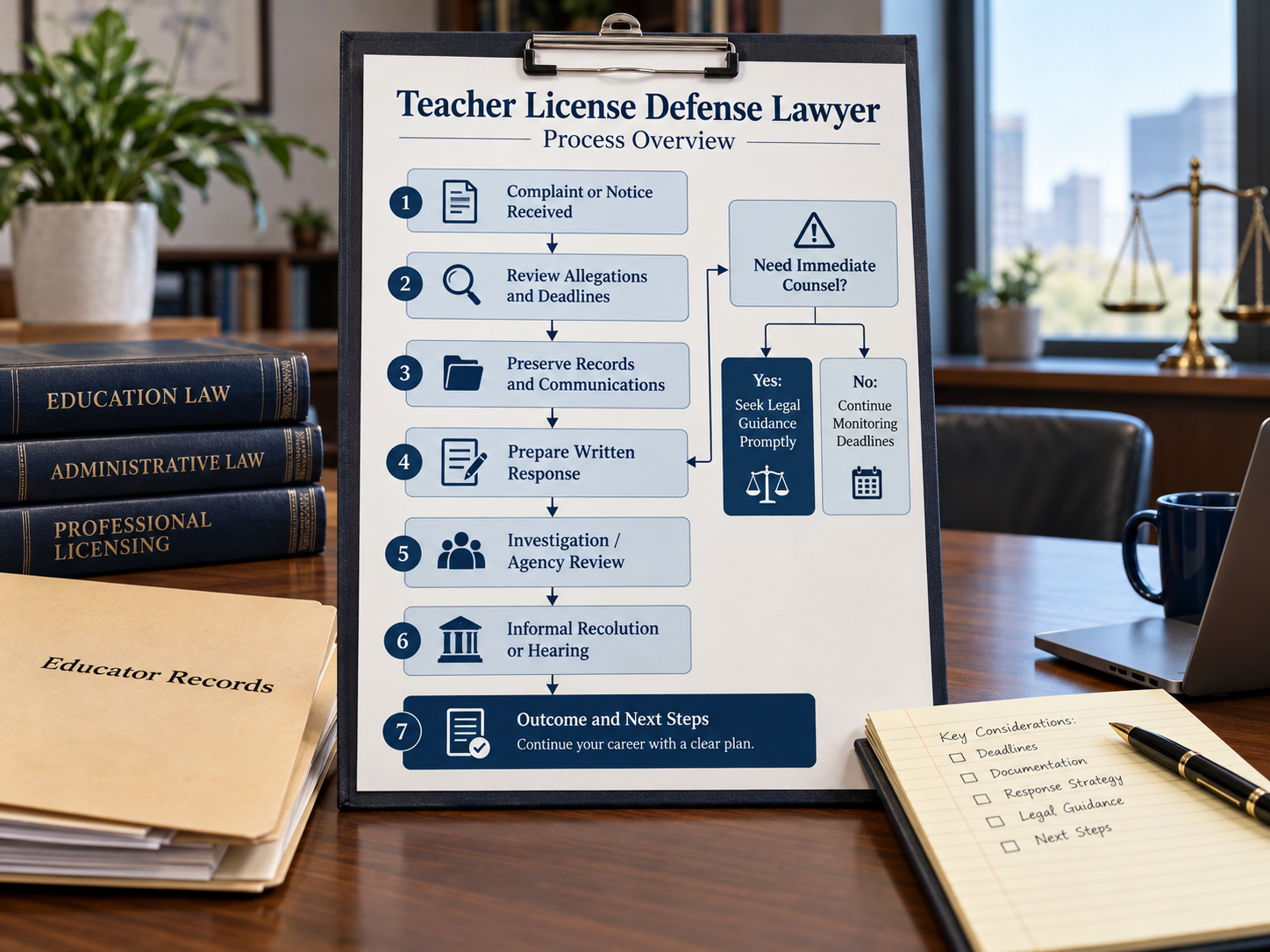
Timing matters when a teacher receives a formal investigation notice or certification-related communication.
Certain procedures include deadlines for submitting responses, requesting hearings, or challenging particular actions. Depending on the notice and procedure involved, a teacher may have 15 days to request a hearing after disciplinary action.
For example, Texas certification rules provide a limited opportunity to respond to certain investigative notices. Other stages of the disciplinary process may involve different time limits. An appeal from a final order may need to be filed within 30 days of denial.
There is no single deadline that applies to every teacher investigation.
The appropriate response depends on the type of notice, the issuing authority, and the procedural rules involved.
Missing an applicable deadline may limit available options or affect the educator's ability to contest an action, and in some matters it can result in automatic license revocation without a hearing.
This makes qualified legal review particularly important when an educator receives official TEA or SBEC correspondence and needs to understand available legal options during the investigation process.
A teacher license defense lawyer can evaluate certification response deadlines, review the notice, and determine which legal procedures may apply.
Teachers placed on administrative leave may also need guidance about employment contracts, district investigations, and related professional concerns.
For administrators and superintendents facing individual allegations, legal counsel can help evaluate personal certification risks separately from the institution's interests.
Masterly Legal Solutions assists education professionals with legal matters that may affect employment, certification, and professional standing.
Seeking counsel before providing a significant written statement or participating in a formal investigative interview may help ensure that important rights and responsibilities are considered.
Frequently Asked Questions About Teacher License Defense
Can an investigation affect a teaching certificate?
Yes. Certain allegations may lead to a Texas Education Agency investigation and possible certification disciplinary proceedings that can affect a teaching license or other professional license. However, a school investigation does not automatically result in suspension, which is temporary, while more serious disciplinary actions can include revocation or restrictions.
Should a teacher speak to investigators without preparation?
Teachers may benefit from consulting an education law attorney before a formal interview or written statement. Legal counsel can help explain the allegations, the educator's process rights, and the potential consequences before any formal interview or written statement.
What does a teacher license defense lawyer do?
A teacher license defense lawyer, or teacher license defense attorney, represents educators facing allegations, certification investigations, and disciplinary proceedings. Legal services may include evidence review, legal advice, response preparation, and representation through the entire process of a certification matter.
Can a teacher lose certification after being placed on administrative leave?
Administrative leave alone does not mean a certificate will be revoked. However, allegations underlying the leave may lead to separate TEA or SBEC proceedings if they involve possible educator misconduct.
How does the TEA complaint process affect teachers?
TEA may review complaints and other reports of educator misconduct, including a mandatory report from a district or charter school. Depending on the facts, it may open an investigation, request information, or pursue a disciplinary process that can lead to disciplinary actions affecting certification.
Can a teacher challenge disciplinary allegations?
Depending on the circumstances, educators may have opportunities to respond to allegations, seek a hearing, contest certain actions, or use the appeal process. Available rights and deadlines depend on the specific case.
When should a teacher contact a defense attorney?
Legal consultation may be appropriate when a teacher receives an investigation notice, faces administrative leave, is asked for a formal statement, receives a proposed termination notice or other formal written notice, or learns that allegations may affect certification or employment. Early contact can help a lawyer explain urgent legal issues and build a strong defense.
Request a Confidential Consultation Before an Investigative Interview or Written Statement
A school investigation can place your teaching certificate, employment, and professional reputation at risk. Whether you are facing misconduct allegations, administrative leave, a TEA complaint, or possible disciplinary proceedings, obtaining qualified legal guidance can help you understand your rights and available options. For Texas teachers, that is especially important when employment and certification concerns overlap and put a professional license at risk.
Masterly Legal Solutions is a firm that provides experienced legal counsel on educator investigations and other education-law matters for teachers, administrators, superintendents, and other education professionals navigating serious employment and certification concerns in Texas, including cases that may proceed to hearings in places such as San Antonio.
Call (972) 236-5051 today to request a confidential consultation with a teacher license defense lawyer. Discuss the allegations, important deadlines, legal options, and whether the matter may involve school discipline, certification exposure, or related criminal charges before making decisions that could affect your career.
Website:https://www.masterlylegal.com/



Looking for Legal & Business Solutions? Contact Us Now
Fill in the form or call us to set up a meeting