

Compliance Reporting in Child Protective Services Investigations
Understanding Why Compliance Reporting Matters in CPS Cases
When a CPS case begins, most families are focused on the immediate stress of the situation. However, one of the most important and often overlooked aspects is compliance reporting. This process plays a critical role in how child protective services evaluates a family, determines risk, and decides what services may be required. For parents, understanding compliance can make a meaningful difference in the outcome of a case.
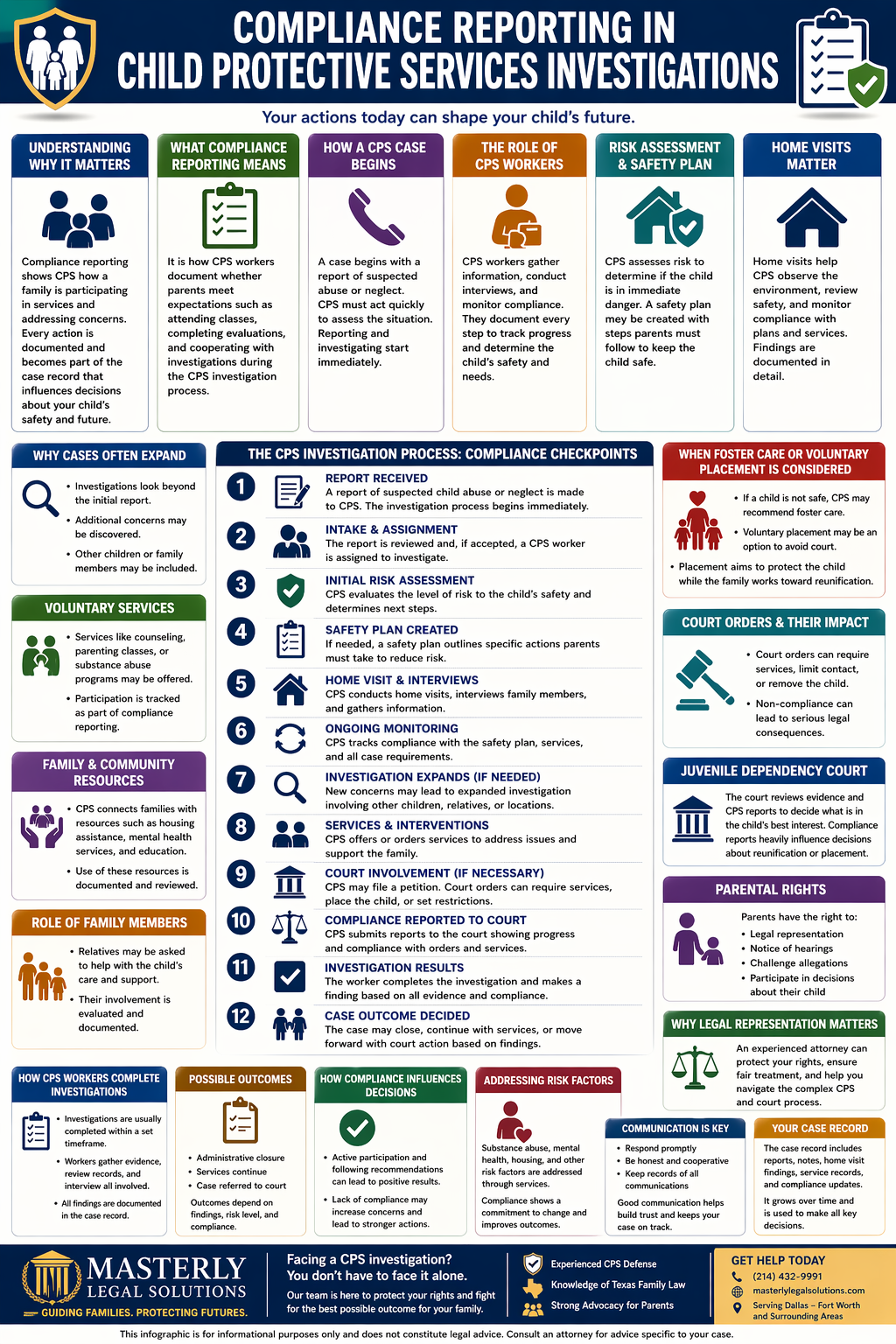
Compliance reporting is not just paperwork. It is how CPS workers track whether parents are following recommendations, participating in services, and addressing concerns related to child abuse or neglect. Every interaction, every home visit, and every completed requirement becomes part of the official case record. That record ultimately influences decisions about the child’s safety and future.
What Compliance Reporting Means in the CPS Investigation Process
Compliance reporting refers to how CPS workers document whether parents are meeting expectations during the cps investigation process. These expectations often include attending classes, completing evaluations, or cooperating with investigations. The process can feel overwhelming, especially when families are trying to understand what is required of them.
The stages of cps investigation process often include multiple checkpoints where compliance is evaluated. From the initial report to the final investigation results, CPS workers continuously monitor participation. This ongoing review helps determine whether the child remains safe in the child’s home or whether additional intervention is needed.
How a CPS Case Begins and Why Reporting Starts Immediately
A cps case usually begins with a report of suspected child abuse or neglect. Once that report is received, child protective services cps must act quickly to assess the situation. The investigation process starts almost immediately, and compliance reporting begins at the same time.
During the early stages, cps workers focus on gathering information and conducting a risk assessment. They may conduct a home visit, interview family members, and review any available records. These early observations are documented carefully because they set the tone for the entire case.
The Role of CPS Workers in Monitoring Compliance
CPS workers are responsible for documenting every step of the investigation. They are trained to investigate reports, evaluate risk factors, and determine whether a child is in immediate danger. Their notes and reports become the foundation of the cps case, much like how independent legal professionals conduct impartial internal investigations in organizational settings.
Each cps investigator plays a key role in ensuring that compliance is tracked accurately. This includes recording participation in services, responses to requests, and any changes in the child’s care. The goal is to build a clear picture of the family’s progress and the child’s well being.
Initial Risk Assessment and Its Impact on Reporting
One of the first steps in any investigation is the risk assessment. This process helps determine whether the child faces immediate risk or potential harm in the near future. The results of this assessment influence the level of oversight and the types of services required.
If the risk level is considered high, CPS may implement a safety plan right away. This plan outlines steps that parents must follow to keep the child safe. Compliance with the safety plan becomes a central part of reporting throughout the investigation stage.
Creating and Following a Safety Plan
A safety plan is one of the most important tools used in cps investigations. It is designed to address safety concerns and reduce risk factors that could lead to serious harm. The plan may include supervision requirements, restrictions on certain individuals, or participation in services.
Parents are expected to follow the safety plan closely. CPS workers will monitor compliance through home visits and ongoing communication. Failure to follow the plan can lead to more serious consequences, including court involvement.
How Home Visits Contribute to Compliance Reporting
Home visits are a standard part of the investigation process. During these visits, cps workers assess the child’s home environment and observe interactions between family members. These observations are documented in detail.
The information gathered during a home visit helps determine whether the child is safe. It also provides insight into whether parents are complying with the safety plan and other requirements. These visits play a critical role in shaping the direction of the cps case.
When CPS Investigations Expand Beyond Initial Allegations
In many cases, cps investigations do not remain limited to the original report. As cps workers investigate reports, they may uncover additional concerns. This can lead to expanded investigations and increased scrutiny.
For example, a report involving alleged abuse may lead to questions about neglect occurred in other areas. The investigation process is designed to look at the entire situation, not just the initial concern. This broader approach can make compliance reporting even more important.
Understanding Voluntary Services and Their Role
In some situations, CPS may offer voluntary services to families. These services are intended to address concerns without court involvement. Examples may include counseling, parenting classes, specialized legal guidance or training, or substance abuse programs.
Even though these services are labeled voluntary, compliance is still closely monitored. CPS workers document participation and progress as part of the case record. Choosing to engage with these services can positively influence the investigation results.
How Family and Community Resources Are Used
CPS often connects families with family and community resources to support their needs. These resources may include housing assistance, mental health services, or educational programs. The goal is to provide services that strengthen the family and improve the child’s care.
Participation in these resources is also part of compliance reporting. CPS workers track whether services provided are being utilized effectively. This information helps determine whether additional intervention is necessary.
The Role of Family Members in the Investigation
Family members can play an important role in cps cases. In some situations, relatives may be asked to provide support or assist with the child’s care. This involvement can help keep the child safe while addressing concerns.
However, the actions of family members are also documented. CPS workers evaluate whether relatives are contributing positively to the situation. Their involvement can impact decisions about placement and services, and may prompt discussions about trusts and broader estate planning for the child’s future.
When Foster Care or Voluntary Placement Becomes Necessary
If CPS determines that the child is not safe in the child’s home, they may consider foster care or voluntary placement. These options are used when there is an immediate risk that cannot be addressed through a safety plan alone.
Foster care is typically a temporary solution while the family works toward resolving issues. In some cases, voluntary placement may be offered as an alternative to court intervention. Compliance with services remains critical during this time.
Court Orders and Their Impact on Compliance
In more serious cases, CPS may seek a court order to enforce certain requirements. This can include removing the child, mandating services, or restricting parental rights. Court involvement often means the case has reached a higher level of concern.
Once a court order is in place, compliance becomes even more important. Parents must follow all requirements outlined by the court. Failure to comply can result in additional legal consequences.
The Role of Juvenile Dependency Court in CPS Cases
The juvenile dependency court oversees cases where the child’s safety is in question. This court reviews evidence, hears testimony, and makes decisions about the child’s care. CPS workers present compliance reports to support their recommendations.
These reports help the court determine whether parents are making progress. They also influence decisions about reunification, foster care, or other outcomes. The court relies heavily on accurate documentation.
Investigating Allegations and Identifying the Alleged Perpetrator
During the investigation, CPS must identify the alleged perpetrator and evaluate the credibility of the allegations. This process may involve interviews, background checks, and reviewing criminal history.
If the case involves sexual abuse or sexual exploitation, the investigation may also include a criminal investigation. These cases require careful handling and coordination with law enforcement.
How Criminal Cases Intersect With CPS Investigations
When allegations involve serious offenses, a criminal case may be opened alongside the CPS investigation. This adds another layer of complexity to the process. CPS workers must coordinate with law enforcement while continuing to monitor the child’s safety.
The outcomes of a criminal case can influence CPS decisions. However, CPS focuses primarily on the child’s well being, regardless of the criminal proceedings.
Understanding Parental Rights During a CPS Case
Parents have legal rights throughout the cps investigation process. These rights include the ability to seek legal representation and challenge decisions. Understanding these rights is essential for navigating the process, especially for parents who are also educators and may face education-law-specific risks such as TEA license investigations.
Working with an attorney can help parents protect their parental rights and respond effectively to allegations. Legal counsel can also help ensure that compliance reporting is accurate and fair.
The Importance of Legal Representation in CPS Cases
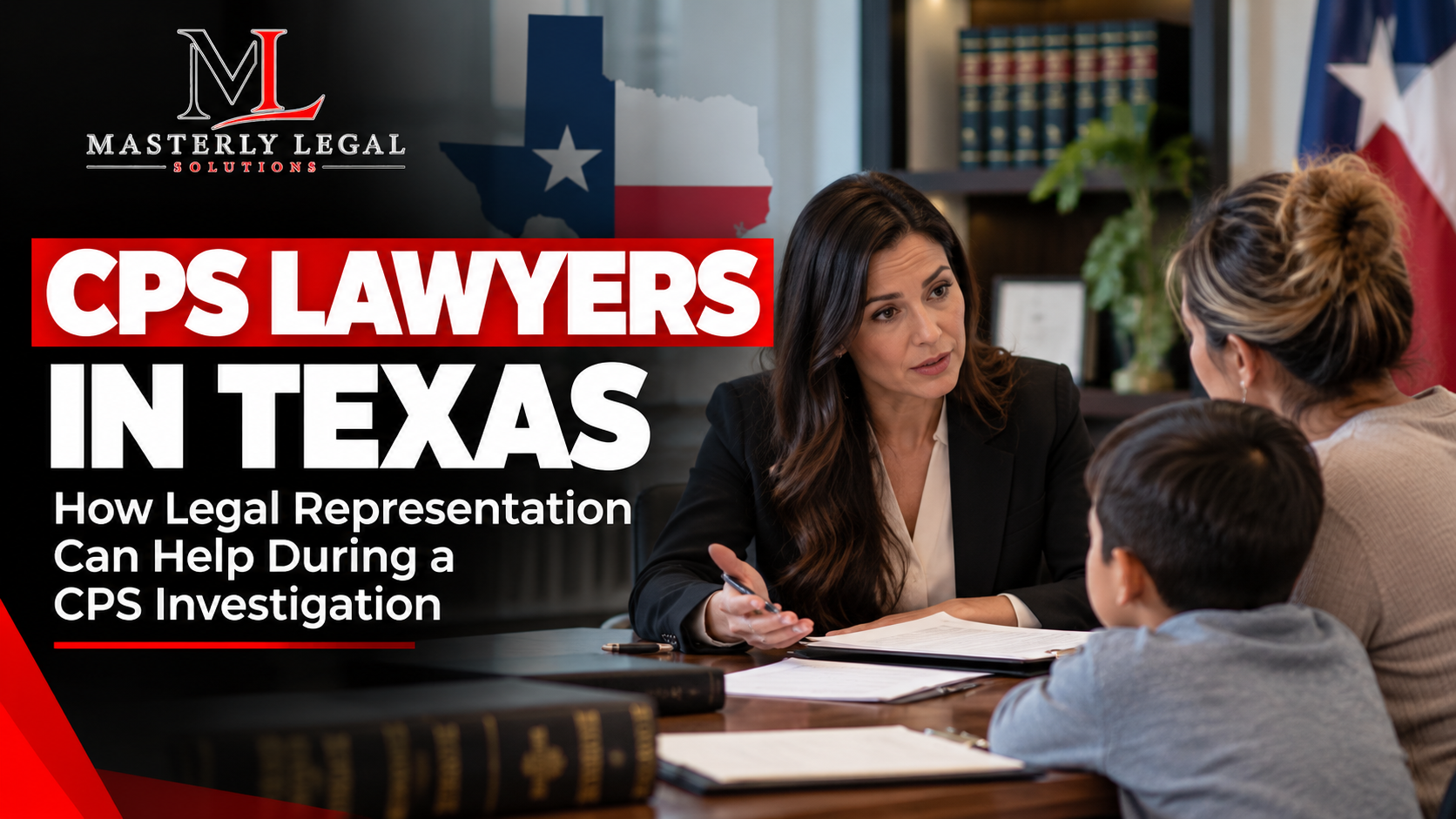
Having legal representation can make a significant difference in a cps case. An experienced attorney understands the investigation process and can advocate for the family.
Legal representation ensures that parents’ rights are protected and that they receive fair treatment. It also helps address any misunderstandings or errors in compliance reporting and can coordinate with essential family legal planning, such as wills and powers of attorney.
How CPS Workers Complete Investigations
CPS workers are required to complete investigations within a certain timeframe. During this period, they gather evidence, conduct interviews, and evaluate compliance.
The final investigation results are based on all collected information. These results determine whether the case will be closed, whether services will continue, or whether further action is needed.
Possible Outcomes of a CPS Investigation
At the end of the investigation, CPS may take several different actions. These outcomes vary depending on the findings and the level of risk.
Common outcomes include:
- Administrative closure if no concerns are found
- Continued services to address issues
- Court involvement for more serious cases
Each outcome is influenced by compliance reporting and the overall case record.
How Compliance Reporting Influences Decision Making
Compliance reporting is central to decision making in cps cases. It provides a detailed record of the family’s actions and progress. This information helps CPS determine the best course of action.
When parents actively participate in services and follow recommendations, it can positively impact the case. On the other hand, lack of compliance may raise additional concerns.
Addressing Risk Factors and Safety Issues
Risk factors such as substance abuse, mental health challenges, or unstable housing can affect the child’s safety. CPS works with families to address these issues through services.
Compliance with these services is critical. It demonstrates a commitment to improving the situation and protecting the child.
The Importance of Communication With CPS Workers
Open communication with cps workers can help reduce misunderstandings. Responding promptly to requests and providing accurate information is essential.
Building a cooperative relationship can also make the process smoother. However, it is important to balance cooperation with protecting your rights.
How the CPS Case Record Is Built Over Time
The case record is a comprehensive file that includes all documentation related to the cps case. This includes reports, notes, and compliance records.
Every interaction contributes to this record. Over time, it becomes the primary source of information used to make decisions.
When a Case May Lead to a Court Hearing
In some situations, a court hearing may be scheduled to review the case. This typically occurs when there are significant concerns about the child’s safety.
During the hearing, CPS presents evidence and compliance reports. The court then determines the next steps based on the information provided.
The Role of Child and Family Services in Long-Term Outcomes
Child and family services play a key role in supporting families throughout the process. These services aim to improve the child’s care and strengthen the family unit, much like ongoing general counsel services support organizations in managing long-term legal and compliance risks.
Long-term outcomes often depend on the effectiveness of these services and the family’s willingness to engage. Compliance reporting helps track progress over time.
How Masterly Legal Solutions Can Help
At Masterly Legal Solutions, we understand how complex and stressful cps investigations can be. Our firm is committed to helping families navigate the process with confidence and clarity, drawing on a broad range of supportive legal services.
We provide guidance on compliance reporting, legal representation, and protecting parental rights, backed by comprehensive legal and business services for individuals and organizations. Our goal is to help you achieve the best possible outcome for your family.
Take the First Step Toward Protecting Your Family
If you are facing a cps case, taking action early is essential. Understanding the investigation process and your rights can make a significant difference, and our firm’s experience in education law, estate planning, and compliance matters can help align your broader legal needs.
Working with experienced legal professionals can help you navigate each stage of the process and protect your child’s future.
Contact Us for a Free Consultation
If you are dealing with CPS investigations or have questions about the stages of cps investigation process, our team at Masterly Legal Solutions is here to help. We know how overwhelming it can feel when protective services become involved, and we are ready to guide you through every step as part of our full-service legal support for families and businesses.
Contact us today at (972) 236-5051 for a free consultation. We will take the time to listen to your concerns, review your situation, and help you understand your options moving forward. Your family’s future matters, and we are committed to helping you protect it.
Disclaimer: This article is for educational purposes only and does not constitute legal advice. For guidance specific to your situation, please contact a qualified attorney.

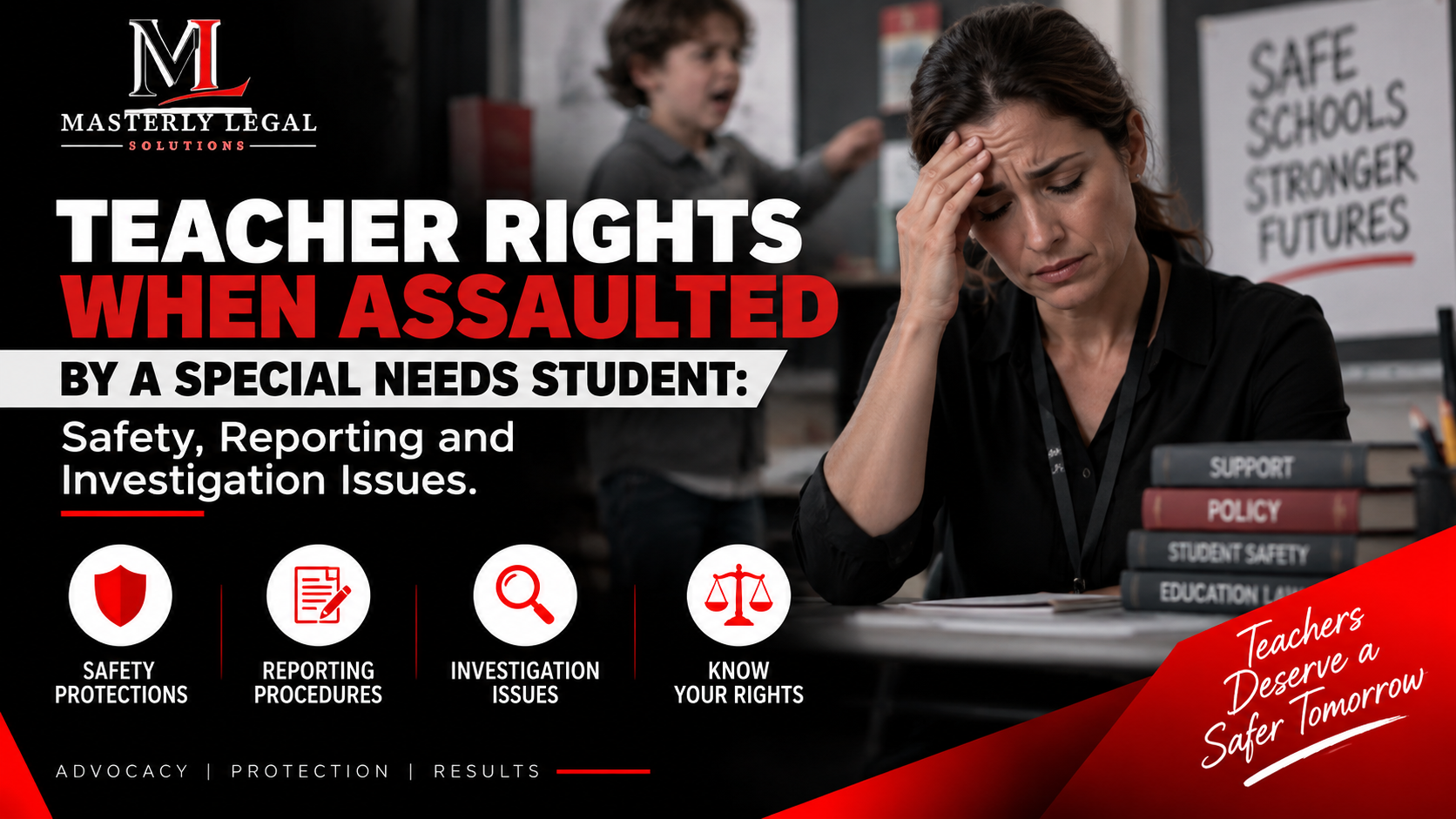
Teacher Rights When Assaulted by a Special Needs Student: Safety, Reporting and Investigation Issues
Looking for Legal & Business Solutions? Contact Us Now
Fill in the form or call us to set up a meeting