

From Complaint to Investigation: How Retaliation at Work Begins for Teachers
When Speaking Up Becomes Risky
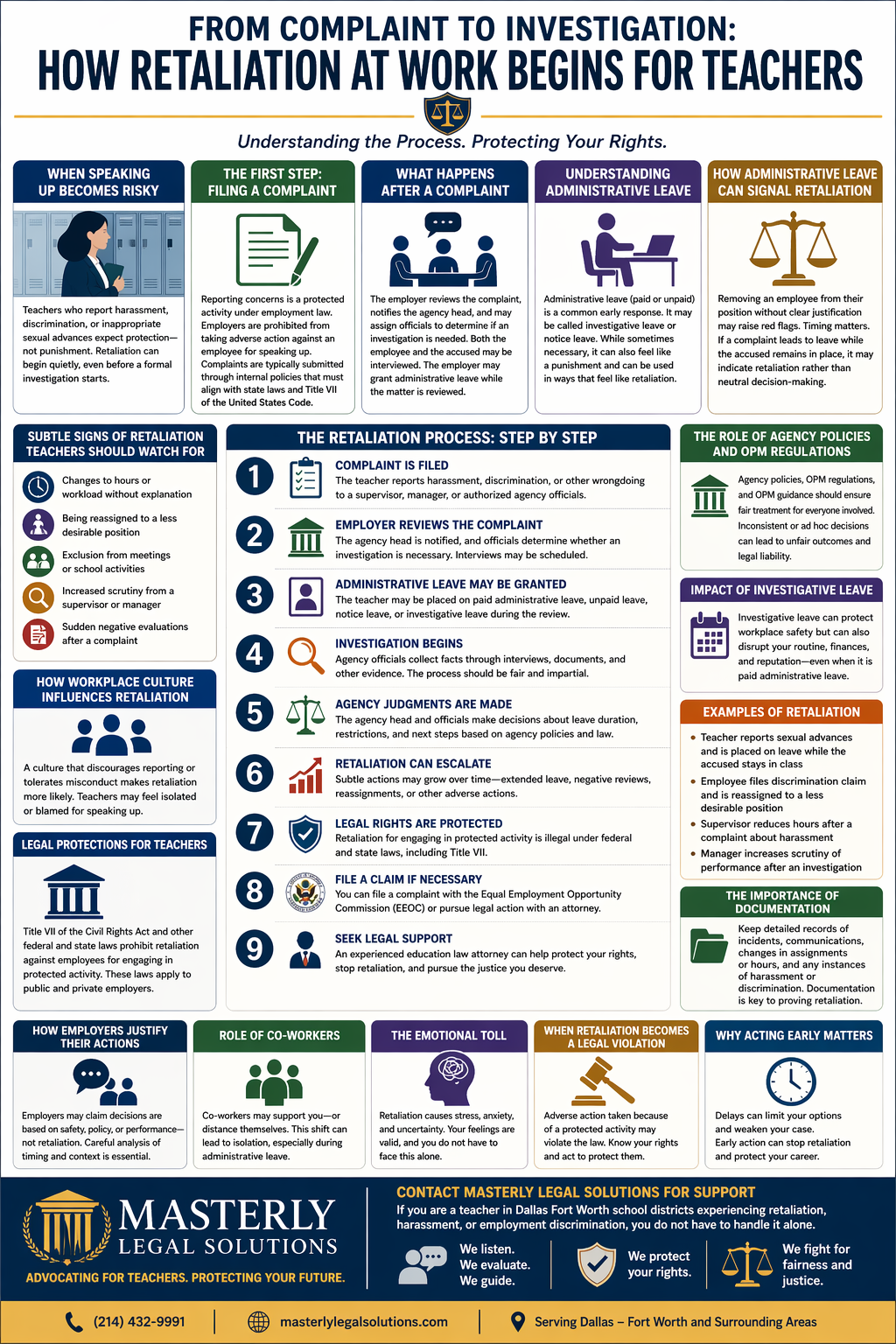
For many teachers, the decision to file a complaint is not taken lightly. It often comes after weeks or even months of dealing with harassment, uncomfortable sexual advances, or concerns about workplace safety. In dallas fort worth school districts, educators are expected to uphold professional standards, but they are also entitled to a workplace that treats them with fairness and respect. When an employee finally speaks up, they expect the system to protect them—not put them at risk.
Unfortunately, retaliation can begin quietly, sometimes before a formal investigation even starts. The employer may not openly admit to retaliating, but subtle changes in behavior, assignments, or communication can signal that something has shifted. Understanding how retaliation begins is critical for teachers who want to protect their rights under the law.
The First Step: Filing a Complaint
The process often starts with a formal complaint. A teacher may report workplace harassment, employment discrimination, or inappropriate sexual advances to a supervisor, manager, or authorized agency officials. This step is considered a protected activity under employment law, meaning the employer is prohibited from taking adverse action against the employee for speaking up.
In many cases, the complaint is submitted through internal policies designed to handle workplace concerns. These policies are meant to issue internal policies consistent with both state laws and federal standards such as Title VII under the United States Code. However, even though the law is clear, retaliation can still occur in many forms.
What Happens Immediately After a Complaint
Once a complaint is filed, the employer or agency typically begins reviewing the situation. This may involve notifying the agency head, assigning agency officials, and determining whether an investigation is necessary. At this stage, both the employee and the accused may be interviewed.
In some situations, the employer may grant administrative leave while the matter is reviewed. This decision is often presented as neutral, but it can feel like a punishment to the employee, especially if it disrupts their employee's work schedule or separates them from their classroom.
Understanding Administrative Leave in School Settings
Administrative leave is one of the most common early responses to a complaint. It can be either paid administrative leave or unpaid leave, depending on the circumstances and agency policies. In many cases, the employer will grant administrative leave for brief or short periods while gathering facts.
This type of leave may also be referred to as investigative leave or notice leave. While it is sometimes necessary to maintain workplace safety, it can also be used in ways that feel like retaliation. Teachers placed on administrative leave may feel isolated or stigmatized, even if no wrongdoing has been proven.
How Administrative Leave Can Signal Retaliation
While administrative leave can serve a legitimate purpose, it can also be misused. When an employee is removed from their employee's current position without clear justification, it may raise concerns about retaliation. The employer may claim the decision is based on agency judgments, but the timing often tells a different story.
For example, a teacher who reports harassment may suddenly be placed on paid leave while the accused remains in a desirable position. This shift can feel unfair and may indicate that the employer is prioritizing convenience over fairness. In some cases, placing employees on administrative leave becomes an ad hoc decision rather than a carefully considered action.
The Role of Agency Policies and OPM Regulations
Agency policies often guide how complaints and investigations are handled. These policies may be influenced by OPM regulations and OPM guidance, especially in institutions that align with federal standards. While these rules are designed to protect both the employee and the agency’s mission, they can sometimes be applied inconsistently.
The agency determines how long administrative leave will last, whether it will be paid leave, and what restrictions apply. These agency judgments can significantly impact the employee’s experience during the investigation. When policies are not followed properly, it can create additional legal concerns.
Subtle Signs of Retaliation Teachers Should Watch For
Retaliation does not always appear as an obvious disciplinary action. In many cases, it begins with subtle changes that are easy to overlook. Recognizing these early warning signs can help employees take action before the situation escalates.
Common signs include:
- Changes to hours or workload without explanation
- Being reassigned to a less desirable position
- Exclusion from meetings or school activities
- Increased scrutiny from a supervisor or manager
- Sudden negative evaluations after a complaint
These actions may not seem severe on their own, but together they can create a pattern of retaliation.
How Workplace Culture Influences Retaliation
The culture within a school or agency plays a major role in how complaints are handled. In some environments, co workers and supervisors may support the employee who reported the issue. In others, the employee may feel isolated or even blamed for creating conflict.
When the workplace culture discourages reporting, retaliation becomes more likely. Employees may hesitate to speak up if they fear being treated differently or placed on administrative leave for raising concerns.
The Investigation Process Begins
Once the employer decides to move forward, a formal investigation is launched. This process typically involves interviews, document reviews, and fact-finding efforts. Agency officials are responsible for ensuring that the investigation is fair and thorough.
However, the investigation itself can become a source of stress. Employees may feel like they are under scrutiny, especially if they are the ones placed on administrative leave. The experience can be particularly challenging for Texas teachers placed on administrative leave when the accused remains active in the workplace.
Investigative Leave and Its Impact
Investigative leave is another form of administrative leave that is specifically tied to an ongoing investigation. Education law attorneys help protect teacher rights when this type of leave is used and when the employer believes that removing the employee from the workplace is necessary.
While investigative leave can protect workplace safety, it can also disrupt the employee’s routine. Being placed on leave for extended periods, even if it is paid administrative leave, can create financial and emotional strain.
The Role of the Agency Head in Decision-Making
The agency head often plays a key role in determining how the investigation proceeds. This includes decisions about administrative leave, notice leave, and other measures taken during the process.
These decisions must align with agency policies and applicable laws. However, when the agency head relies too heavily on agency judgments without considering the employee’s perspective, it can lead to unfair outcomes.
How Retaliation Can Escalate Over Time
Retaliation rarely happens all at once. Instead, it often develops gradually as the investigation unfolds. What begins as a simple reassignment or change in hours can evolve into more serious actions.
For example, an employee may initially be placed on administrative leave for brief periods. Over time, those periods may extend, or the employee may face additional restrictions. In some cases, this can lead to termination or long-term career damage.
Legal Protections for Teachers Under Federal and State Laws
Teachers are protected by several laws that prohibit retaliation. Title VII, along with other provisions under the United States Code, makes it illegal for an employer to retaliate against an employee for engaging in protected activity, and an experienced retaliation lawyer for workplace law and employment can help enforce these protections.
State laws also provide additional protections, ensuring that employees are not punished for reporting violations. These laws are designed to protect workers in both public and private sectors.
The Role of the Equal Employment Opportunity Commission
The Equal Employment Opportunity Commission plays a critical role in handling retaliation and discrimination claims. Employees who believe they have experienced retaliation can file a complaint with the EEOC or pursue retaliation and labor complaints with legal support.
The EEOC investigates claims related to employment discrimination, harassment, and retaliation. Their findings can support legal action and help employees seek justice.
Examples of Retaliation in School Investigations
Understanding real-world examples can help teachers identify retaliation. While each case is unique, certain patterns appear frequently.
Example scenarios include:
- A teacher reports sexual advances and is placed on administrative leave while the accused remains in the classroom
- An employee files a discrimination claim and is reassigned to a less desirable position
- A supervisor reduces an employee’s hours after a complaint about harassment
- A manager increases scrutiny of an employee’s performance following an investigation
These examples highlight how retaliation can take many forms.
How Employers Justify Their Actions
Employers often argue that their decisions are based on legitimate business reasons. They may claim that administrative leave was necessary for workplace safety or that changes in the employee’s schedule were unrelated to the complaint, but a retaliation lawyer for workplace retaliation claims can help scrutinize these explanations.
While these explanations may sometimes be valid, they can also be used to mask retaliation. Determining whether an action is justified requires careful analysis of the circumstances.
The Importance of Documentation
Documentation is essential for any employee facing retaliation. Keeping detailed records can help establish a pattern of behavior and support a legal claim.
Employees should document:
- Dates of incidents
- Communications with supervisors or managers
- Changes in hours or assignments
- Any instances of harassment or discrimination
This information can be critical when working with an attorney.
How Co Workers May React During an Investigation
Co workers can play a significant role during an investigation. Some may offer support, while others may distance themselves out of fear or uncertainty.
This shift in relationships can make the workplace feel uncomfortable. Employees may feel isolated, especially if they are placed on administrative leave and lose daily contact with colleagues.
The Emotional Toll of Retaliation
Retaliation can have a significant emotional impact on employees. Being removed from the workplace or treated differently can lead to stress, anxiety, and frustration.
These feelings are normal, but they also highlight the importance of taking action. Employees should not have to endure retaliation simply for reporting a concern.
When Retaliation Becomes a Legal Violation
Not every negative experience qualifies as retaliation under the law. However, when an employer takes adverse action because of a protected activity, it may constitute a violation.
Understanding the legal definition of retaliation is essential for determining whether to pursue a claim. This is where experienced legal guidance becomes invaluable.
How an Attorney Can Help You Protect Your Rights
An attorney with experience in employment law can help employees navigate complex situations. They can evaluate the circumstances, identify potential violations, and recommend next steps, and an education lawyer providing expert legal support can be especially valuable for teachers.
Working with a knowledgeable attorney ensures that your rights are protected throughout the process. This support can make a significant difference in the outcome of your case, particularly when you consult an education law attorney for teachers.
The Importance of Acting Early
Timing is critical when dealing with retaliation. Waiting too long to take action can limit your options and make it harder to build a strong case.
Employees should seek guidance as soon as they notice signs of retaliation. Early action can help prevent further harm and strengthen your position.
Protecting Yourself During an Ongoing Investigation
Even while an investigation is ongoing, employees can take steps to protect themselves. This includes maintaining professionalism, documenting interactions, and staying informed about their rights.
Taking these steps can help minimize the impact of retaliation and ensure that you are prepared for any outcome.
Contact Masterly Legal Solutions for Support
If you are a teacher in dallas fort worth school districts experiencing retaliation, harassment, or employment discrimination, you do not have to handle it alone. At Masterly Legal Solutions, we understand how complex and stressful these situations can be for employees.
Our firm is dedicated to helping workers protect their rights and navigate the legal process with confidence. We take the time to listen, evaluate your situation, and provide clear guidance tailored to your needs as an education law attorney for teachers and administrators.
How Policies Involving Other Authorized Agency Officials and Personnel Management Shape Leave Decisions
In many school systems and structured workplaces, decisions about administrative leave and investigations are not made by one individual alone. Instead, they often involve other authorized agency officials and personnel management teams who review the situation collectively. These agency officials are responsible for ensuring that actions taken against an employee are consistent with internal guidelines and applicable law. In some cases, federal agencies provide a framework that influences how local employers respond, especially when policies are specifically authorized under broader compliance standards. The goal is to balance fairness to the employee with the agency’s responsibility to maintain workplace integrity and safety.
Understanding Special Leave Categories Like Excused Absence and Safety Leave
Not all leave during an investigation is punitive. Some forms of leave, such as excused absence or safety leave, are designed to protect both the employee and other employees during sensitive situations. For example, an employer may grant administrative leave as an excused absence if circumstances directly related to workplace safety require temporary separation. In certain situations, safety leave may be used when there is a credible concern about harm or disruption. These decisions are often guided by agency policies and may apply on a time limited basis to ensure they are not overly restrictive or unfair.
Federal Guidance and Executive Orders That Influence Workplace Investigations
Workplace investigations and leave decisions can also be influenced by federal-level guidance. Policies may be shaped by a presidential directive, presidential memorandum, or executive order that outlines expectations for how agencies handle employee concerns. These directives often aim to protect employees, promote fairness, and ensure consistency across different organizations. While these rules are more commonly associated with federal agencies, their principles can influence practices in other workplaces, including education systems. Employers may rely on these frameworks to justify decisions, particularly when actions are officially sponsored or tied to broader compliance requirements.
Unique Situations Involving Officially Sponsored Activities and Employee Status
There are times when administrative leave decisions intersect with unique circumstances, such as participation in officially sponsored activities. For instance, employees may be granted leave for events like blood donations or other approved programs within a calendar year. These situations are generally considered beneficial and unrelated to disciplinary concerns. However, issues can arise if an employer treats similar leave differently depending on the employee’s complaint history, immigration status, or prior involvement in an investigation. When leave decisions appear inconsistent or directly related to a complaint, it may raise concerns about fairness and potential retaliation.
Speak With Our Team for a Free Consultation
If you believe your employer has engaged in retaliation or placed you on administrative leave unfairly, now is the time to take action. Contact Masterly Legal Solutions at (972) 236-5051 for a free consultation. Our team is here to answer your questions, explain your options, and help you determine the best path forward.
We are committed to helping employees protect their rights and seek fair treatment in the workplace. Every case matters, and we are ready to stand by your side as Masterly Legal Solutions, a law firm for educators.
Disclaimer: This article is for educational purposes only and does not constitute legal advice. For guidance specific to your situation, please contact a qualified attorney directly.






Teacher Rights When Assaulted by a Special Needs Student: Safety, Reporting and Investigation Issues
Looking for Legal & Business Solutions? Contact Us Now
Fill in the form or call us to set up a meeting





