

Steps to Take After Experiencing Retaliation in a School Investigation
Understanding What Retaliation Means in a School Workplace
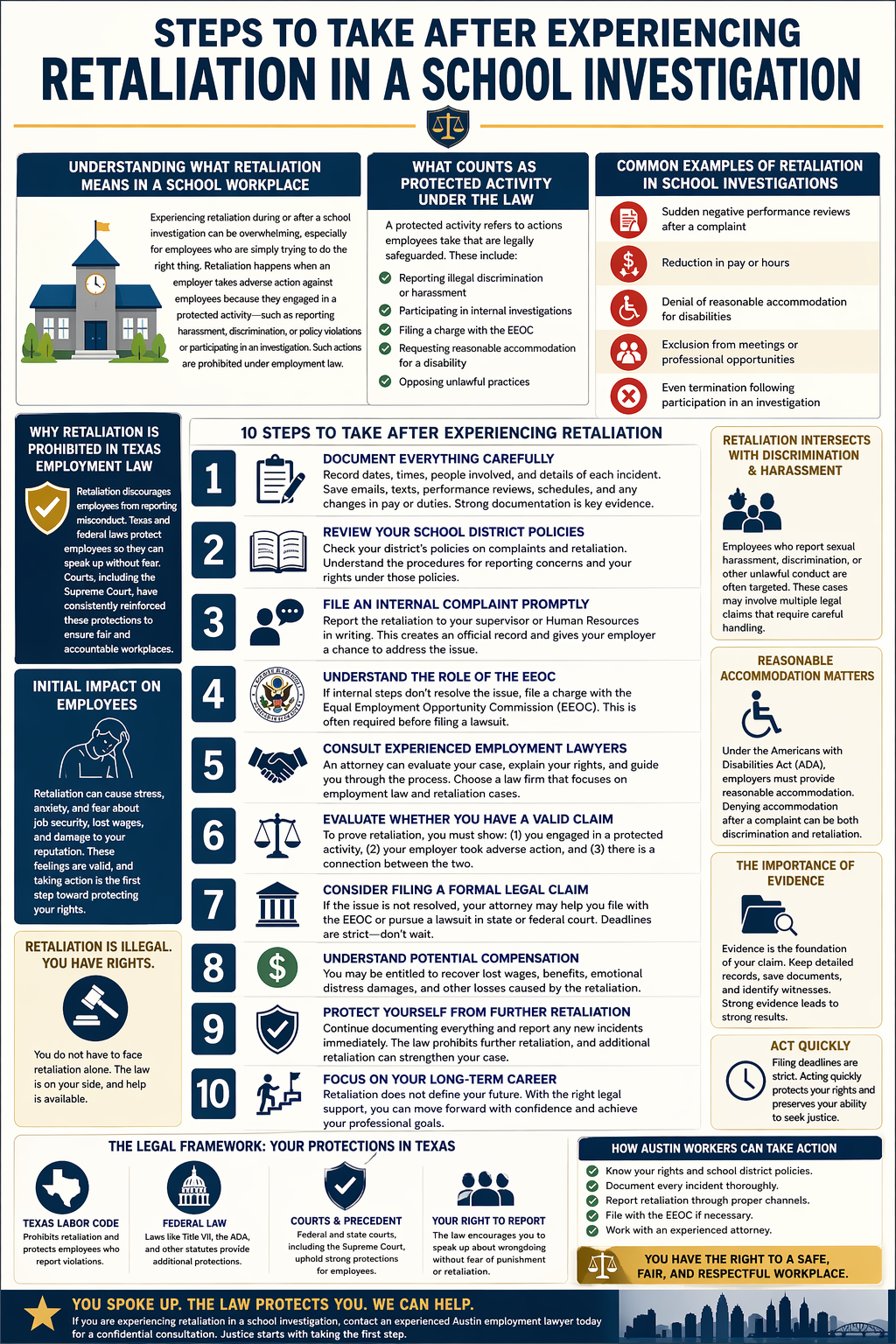
Experiencing retaliation during or after a school investigation can be overwhelming, especially for employees who are simply trying to do the right thing. In many school districts, including school districts in Austin, employees are encouraged to report concerns such as workplace harassment, discrimination, or policy violations. However, when an employer responds negatively to those reports, it may cross the line into unlawful retaliation. Understanding what retaliation looks like is the first step toward protecting your legal rights.
Retaliation happens when an employer takes adverse action against employees because they engaged in a protected activity. This could include reporting sexual harassment, filing a complaint about workplace discrimination, or participating in an investigation. Such actions are prohibited under employment law, yet they still occur in many forms across Texas workplaces, which is why working with a dedicated retaliation lawyer for workplace claims can be so important.
What Counts as Protected Activity Under the Law
A protected activity refers to actions employees take that are legally safeguarded. These actions are essential to maintaining fairness and accountability in the workplace. When employees raise concerns, the law aims to protect them from being punished for speaking up.
Protected activities often include reporting illegal discrimination, participating in internal investigations, or filing claims with the equal employment opportunity commission (EEOC). In some circumstances, employees may also need to pursue retaliation and labor complaints with the Department of Labor to fully protect their rights. Whether the issue involves disabilities, national origin, or other forms of unlawful discrimination, the law provides a framework to protect employees from employer retaliation.
Common Examples of Retaliation in School Investigations
Retaliation can take many forms, and it is not always obvious at first. Employees in Austin school systems may notice subtle changes in how they are treated after raising concerns. Recognizing these patterns is critical to building a strong retaliation claim.
Some common examples include, particularly in school settings where retaliation lawyers for workplace and school cases frequently see patterns such as:
- Sudden negative performance reviews after a complaint
- Reduction in pay or hours
- Denial of reasonable accommodation for disabilities
- Exclusion from meetings or professional opportunities
- Even termination following participation in an investigation
These adverse actions can create a hostile work environment and may form the basis of retaliation claims under Texas labor code and other laws. In some situations, employers also turn to HR consulting and internal investigation services to address these issues and improve compliance.
Why Retaliation Is Prohibited in Texas Employment Law
Retaliation is prohibited because it discourages employees from reporting misconduct. Without legal protections, many workers would remain silent about illegal activity, workplace harassment, or discrimination. Employment law in Texas and federal law both aim to ensure that employees can report concerns without fear.
The law recognizes that retaliation undermines the integrity of workplace investigations. Courts, including the Supreme Court, have consistently reinforced protections for employees who engage in protected activity. This legal framework helps maintain fairness in Austin employment environments.
Initial Emotional and Professional Impact on Employees
Facing retaliation can feel isolating and stressful. Employees often worry about job security, lost wages, and damage to their professional reputation. These concerns are valid, especially when an employer begins retaliating in ways that affect daily work life.
In most cases, employees experience anxiety, confusion, and frustration. It becomes difficult to focus on job responsibilities while dealing with unfair treatment. Understanding that these reactions are normal can help employees take the next step toward addressing the issue.
Step One: Document Everything Carefully
The first and most important step after experiencing retaliation is to document every detail. Keeping accurate records strengthens your claim and helps employment lawyers evaluate your situation.
Make sure to record:
- Dates and times of each incident
- Names of individuals involved
- Copies of emails, messages, or performance reviews
- Any changes in pay, duties, or schedule
This documentation can serve as critical evidence in employment law cases and help retaliation lawyers build a strong case.
Step Two: Review Your School District Policies
School districts in Austin often have internal policies that address complaints and retaliation. Reviewing these policies can help you understand your rights and the procedures available for reporting concerns.
These policies may outline steps for filing a complaint with the Texas board or internal human resources department. Following these procedures can strengthen your position if you later pursue legal action.
Step Three: File an Internal Complaint Promptly
Filing an internal complaint is often a necessary step before pursuing external remedies. When an employee complains about retaliation, the employer is required to investigate the issue, and organizations sometimes seek outside help from firms that provide employment investigations and workplace legal services.
Submitting a complaint creates a formal record and demonstrates that you took reasonable steps to address the problem. In many cases, this can also help resolve the issue without escalating to litigation.
Step Four: Understand the Role of the EEOC
The EEOC plays a vital role in handling retaliation claims. Filing with the equal employment opportunity commission is often required before pursuing a lawsuit.
The EEOC investigates claims related to discrimination, harassment, and retaliation. Their findings can support your claim and may lead to a resolution or permission to pursue legal action in court, particularly when coordinated with legal support for educators in school investigations.
Step Five: Consult Experienced Employment Lawyers
One of the most critical steps is to contact experienced employment lawyers. Working with an education law attorney for teachers and administrators at a firm that also focuses on employment law ensures that your case is handled properly.
Austin employment lawyers understand the complexities of retaliation claims and can determine the best strategy for your situation. A board certified attorney with legal specialization in employment law can provide guidance tailored to your case.
Why Choosing the Right Law Firm Matters
Not all firms have the same level of experience handling retaliation cases. Choosing a firm with a strong track record in employment law cases can make a significant difference.
A reputable law firm with super lawyers recognition and board certified attorneys is better equipped to represent employees effectively. These professionals understand how to navigate complex legal issues and fight for justice.
Step Six: Evaluate Whether You Have a Valid Claim
Not every negative action by an employer qualifies as retaliation. An experienced attorney will help determine whether your situation meets the legal criteria.
To establish a claim, you must show that:
- You engaged in protected activity
- The employer took adverse action
- There is a connection between the two
This evaluation is essential before moving forward with filing or pursuing compensation.
Step Seven: Consider Filing a Formal Legal Claim
If internal efforts do not resolve the issue, the next step may involve filing a formal claim. This could include filing with the EEOC or pursuing legal action in court.
Retaliation lawyers can guide you through this process, ensuring that all deadlines and requirements are met. Filing properly is crucial to protecting your legal rights.
Step Eight: Understand Potential Compensation
Employees who experience retaliation may be entitled to compensation. This can include lost wages, emotional distress damages, and other financial losses.
In some cases, compensation may also cover unpaid wages or benefits that were withheld due to employer retaliation. Understanding what you may recover helps you make informed decisions.
Step Nine: Protect Yourself From Further Retaliation
Once you take action, it is important to protect yourself from additional retaliation. Continue documenting any new incidents and maintain communication with your attorney.
Employers are prohibited from continuing such actions, and further retaliation can strengthen your case. Staying proactive helps ensure your rights remain protected.
Step Ten: Focus on Your Long-Term Career
Retaliation can disrupt your career, but it does not define your future. Working with experienced Austin employment lawyers, including an education law attorney who guides teachers through investigations, can help you move forward with confidence.
Whether you remain in your current role or seek new opportunities, addressing retaliation ensures that your professional path remains intact.
How Retaliation Intersects With Discrimination and Harassment
Retaliation often overlaps with discrimination and harassment. Employees who report sexual harassment or workplace discrimination are frequently targeted by retaliating employers.
These cases require careful handling, as they may involve multiple legal claims. Employment lawyers can help identify all potential violations and build a comprehensive case.
The Importance of Reasonable Accommodation in Schools
Employees with disabilities are entitled to reasonable accommodation under the disabilities act. Denying these accommodations as retaliation is unlawful.
If an employer refuses to provide accommodations after a complaint, it may strengthen a discrimination claim. This is particularly important in school environments where inclusivity is essential.
Recognizing a Hostile Work Environment
A hostile work environment can develop when retaliation continues over time. This includes ongoing harassment, exclusion, or unfair treatment.
Such conditions can impact both job performance and mental health. For educators, understanding legal protection for teachers and their rights is essential. Addressing these issues promptly is critical to maintaining a safe workplace.
Legal Framework Governing Retaliation in Texas
Texas law, including the Texas labor code, provides protections against retaliation. These laws work alongside federal regulations to ensure fairness.
Understanding how these laws apply to your situation helps you and your attorney build a strong case. Legal knowledge is a powerful tool in these situations.
The Role of Evidence in Retaliation Claims
Evidence is the foundation of any successful claim. Without proper documentation, it becomes difficult to prove that retaliation occurred.
Employment lawyers rely on records, witness statements, and timelines to demonstrate a pattern of behavior. Strong evidence increases the likelihood of a favorable outcome.
How Austin Workers Can Take Action
Austin workers facing retaliation should act quickly to protect their rights. Delays can impact your ability to file a claim or seek compensation.
Taking proactive steps ensures that your case remains strong and that you have the best chance of success.
When to Escalate Your Case to Court
Not all cases require litigation, but some situations demand it. If internal processes and EEOC filing do not resolve the issue, pursuing legal action may be necessary.
An experienced attorney will help determine when escalation is appropriate. This decision is based on the strength of your case and the actions of your employer, and may be especially important for Texas teachers who are already on administrative leave and weighing next steps.
How Retaliation Lawyers Support Employees
Retaliation lawyers play a critical role in guiding employees through complex legal processes. They provide advice, representation, and strategic planning.
Their goal is to protect employees and ensure that justice is achieved. Working with skilled professionals makes a significant difference in outcomes.
Building a Strong Legal Strategy
Every case is unique, and building a strong strategy requires careful planning. Attorneys consider all aspects of your situation, including evidence, timelines, and applicable laws.
A well-prepared case increases the chances of success and helps you seek compensation effectively.
The Importance of Acting Quickly
Time is a critical factor in retaliation claims. Filing deadlines can impact your ability to pursue legal action.
Acting quickly ensures that you meet all requirements and preserve your rights under the law.
Seeking Justice After Retaliation
Seeking justice is about more than compensation. It is about holding employers accountable and protecting future employees.
By taking action, you contribute to a safer and more equitable workplace environment.
How Masterly Legal Solutions Can Help
At Masterly Legal Solutions, we are committed to representing employees who have experienced retaliation. Our firm understands the challenges you face and is dedicated to helping you navigate the legal process.
Our team includes board certified professionals and super lawyers with extensive experience in employment law. We work closely with clients to build strong cases and pursue the best possible outcomes.
Take the Next Step Toward Protecting Your Rights
If you believe you have been subjected to retaliation in a school investigation, it is important to take action. Our Austin employment lawyers are here to help you understand your options and protect your legal rights.
Contact Us for a Free Consultation
If you are dealing with retaliation, workplace harassment, or discrimination in school districts in Austin, you do not have to face it alone. At Masterly Legal Solutions, we are ready to listen to your concerns, evaluate your situation, and help you determine the best path forward.
We invite you to contact our firm at (972) 236-5051 for a free consultation. Our experienced employment lawyers are committed to helping Austin workers protect their rights and seek compensation when employers act unlawfully. Every situation is unique, and we take the time to understand your case and provide clear guidance.
Please note that this article is for educational purposes only and does not constitute legal advice. To receive advice specific to your situation, you should contact a qualified attorney directly.







Teacher Rights When Assaulted by a Special Needs Student: Safety, Reporting and Investigation Issues
Looking for Legal & Business Solutions? Contact Us Now
Fill in the form or call us to set up a meeting