

CPS Investigations Involving Schools or Daycares: How Cases Expand Beyond the Original Report
When a Simple Report Turns Into Something Much Bigger
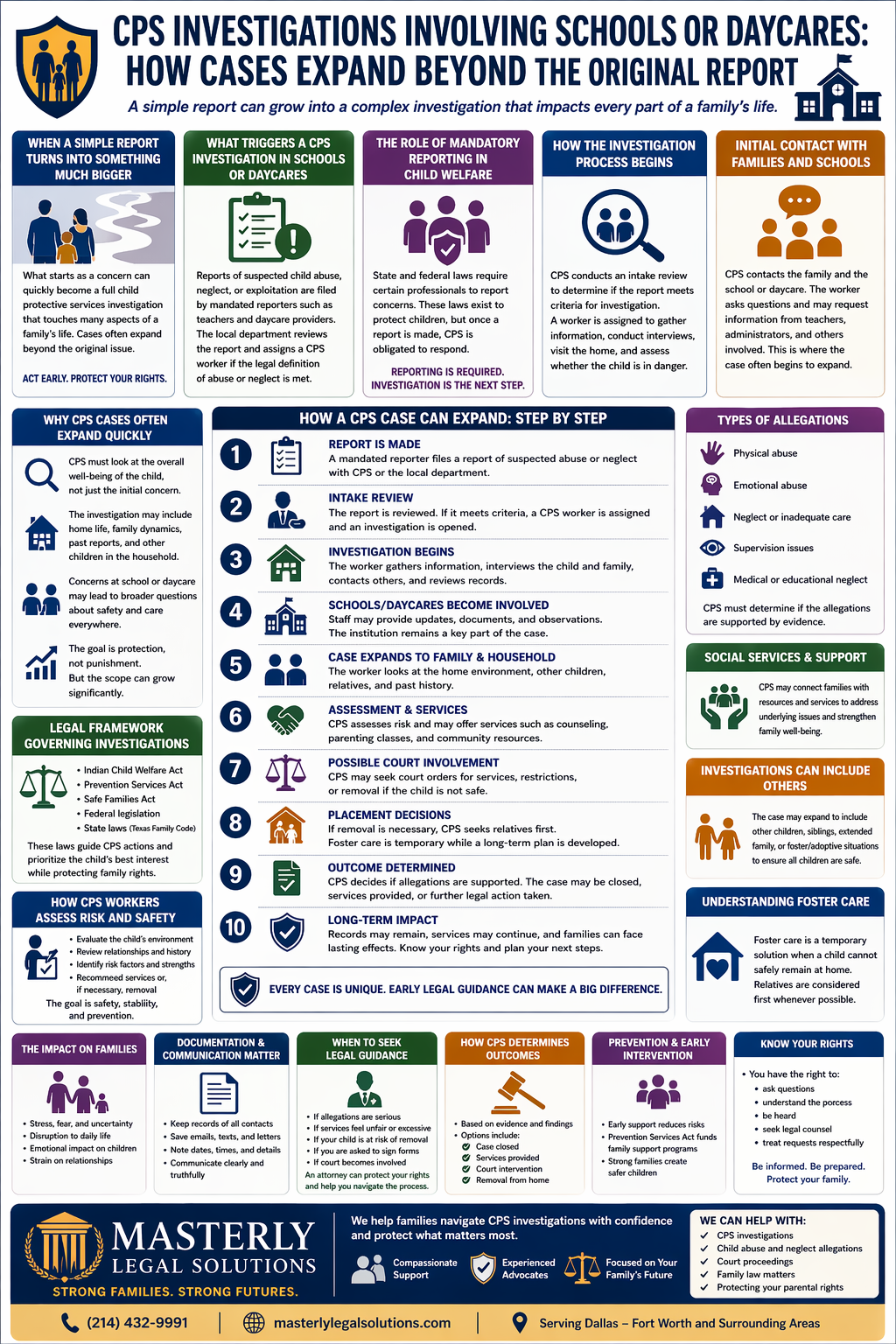
For many families and professionals, a CPS case begins with a single report. A teacher, daycare worker, or concerned individual may notice something that raises questions about a child’s safety or well-being. What starts as a concern can quickly grow into a full child protective services investigation process that touches many aspects of a family’s life. In some situations, parents are caught off guard by how quickly the scope expands beyond the original issue.
Understanding how these cases evolve is critical for anyone involved. Whether you are a parent, educator, or caregiver, knowing what to expect can help you protect your rights and make informed decisions. At Masterly Legal Solutions, we often see how quickly CPS cases can move and how important it is to act early.
What Triggers a CPS Investigation in Schools or Daycares
Most CPS cases begin with a report of suspected child abuse or neglect. In schools or daycare settings, staff members are often required by law to report concerns. Teachers and childcare providers are considered mandated reporters, meaning they must act when they suspect abuse, neglect, or exploitation.
Once a report is filed, child protective services CPS begins reviewing the information. The local department within the Texas Department or another jurisdiction determines whether the report meets the legal definition of child abuse or neglect. If it does, an investigation is opened, and a CPS worker is assigned to the case.
The Role of Mandatory Reporting in Child Welfare
Mandatory reporting laws play a central role in the child welfare system. These laws are designed to protect children by ensuring that concerns are reported quickly. Federal laws and state laws both support this process and require certain professionals to act when they suspect harm.
While the goal is child abuse prevention, the reality is that not every report leads to confirmed abuse. However, once a report is made, CPS is obligated to respond. This is where many families first encounter the child protective system.
How the Child Protective Services Investigation Process Begins
The child protective services investigation process typically starts with an intake review. During this stage, the department evaluates the report and decides whether further action is necessary. If the report meets the criteria, the case is assigned to a worker for investigation.
The CPS worker will gather information, conduct interviews, and assess the situation. This may involve visiting the home, speaking with the child, and contacting other individuals involved. The goal is to determine whether the child is in danger and whether immediate action is required.
Initial Contact With Families and Schools
After the investigation begins, CPS will usually contact the family and the school or daycare involved. This first interaction can feel overwhelming, especially for parents who are unfamiliar with the process.
The worker may ask questions about the child’s environment, health, and daily routine. In school-related cases, teachers and administrators may also be asked to provide information. This is where the case often begins to expand beyond the original report.
Why CPS Cases Often Expand Quickly
CPS cases rarely stay limited to the initial concern. Once an investigation begins, the worker is required to look at the overall well-being of the child. This includes reviewing the home environment, family dynamics, and any past reports.
For example, a report about possible neglect at a daycare could lead to questions about the child’s home life. Similarly, concerns raised at school may prompt CPS to evaluate other children in the household. This broader approach is intended to protect children, but it can feel invasive for families.
The Legal Framework Governing CPS Investigations
CPS investigations are governed by a combination of federal legislation and state laws. Key laws include the Indian Child Welfare Act, the Prevention Services Act, and the Safe Families Act. These laws establish guidelines for how cases should be handled and how children’s best interest should be determined.
In Texas, the Texas Department oversees CPS operations. The division responsible for child protective services must follow strict regulations to ensure fairness and compliance. These laws are designed to balance child safety with family rights.
Understanding the Scope of Child Abuse and Neglect Allegations
Child abuse and neglect can take many forms. The legal definition includes physical harm, emotional harm, and failure to provide necessary care. Allegations may involve issues such as supervision, living conditions, or access to education and health services.
In many cases, CPS must determine whether the allegations are supported by evidence. This process can involve multiple interviews and a detailed review of the family’s circumstances. Even if the initial report seems minor, the investigation can uncover additional concerns.
How CPS Workers Assess Risk and Safety
A CPS worker plays a critical role in evaluating risk. Their job is to determine whether a child is safe and whether intervention is needed. This assessment includes looking at the child’s environment, relationships, and overall well-being.
Workers are trained to identify signs of danger, but their decisions can also be influenced by policies and guidelines. In some cases, the worker may recommend providing services rather than removing the child from the home.
When Schools and Daycares Become Central to the Case
In cases involving schools or daycares, these institutions often remain involved throughout the investigation. Teachers, administrators, and staff may be asked to provide ongoing updates or documentation.
This involvement can lead to additional scrutiny of the child’s behavior and performance. It can also create tension between families and educational institutions, especially if the report originated within the school.
The Role of Social Services in Supporting Families
Social services are a key component of the child welfare system. When CPS identifies concerns, they may offer services designed to support families and address underlying issues, including helping parents connect with essential legal documents for families that can protect children and caregivers over the long term.
These services can include counseling, parenting classes, and access to resources. The goal is to improve the situation and reduce the risk of harm. However, participation in these services may feel mandatory, even when presented as voluntary.
How Investigations Expand to Other Children and Relatives
One of the most challenging aspects of CPS cases is how they can expand to include other children and relatives. If concerns are identified, the worker may investigate additional individuals within the household.
This can include siblings, extended family members, and even foster or adoptive situations. The broader investigation is intended to ensure that all children are safe, but it can significantly increase the complexity of the case.
The Possibility of Court Involvement
In some cases, CPS may seek court orders to take specific actions. This can include removing a child from the home or requiring parents to participate in certain programs.
Court involvement adds another layer of complexity to the process. Families may need to work with an attorney or outside counsel experienced in internal investigations and legal compliance to navigate legal proceedings and protect their rights.
Understanding Foster Care and Placement Decisions
If CPS determines that a child is not safe at home, they may place the child in foster care. This decision is not made lightly and is governed by strict laws and guidelines.
Placement decisions are based on the child’s best interest. Whenever possible, CPS will look for relatives who can provide a safe environment. Foster care is typically considered a temporary solution while a long-term plan is developed.
How Federal and State Laws Shape Outcomes
Federal and state laws play a significant role in determining the outcome of CPS cases. These laws establish standards for investigations, services, and placements and are often informed by higher education, labor and employment, and internal investigations experience that shape policy and practice.
For example, federal legislation requires CPS to make reasonable efforts to keep families together. At the same time, state laws may impose additional requirements based on local policies.
The Impact of CPS Investigations on Families
CPS investigations can have a lasting impact on families. The process can be stressful, confusing, and emotionally challenging. Parents may feel overwhelmed by the number of steps involved and the level of scrutiny they face, and some turn to estate planning and trust services to create additional security and stability for their children.
Children may also be affected, especially if they are interviewed or removed from their home. Understanding the process can help families prepare and respond effectively.
The Importance of Documentation and Communication
Keeping detailed records is essential during a CPS investigation. Families should document all interactions with CPS, including meetings, phone calls, and written communications, much like internal HR investigations and documentation practices used in workplace settings.
Clear communication can also help reduce misunderstandings. Providing accurate information and responding promptly to requests can make a difference in how the case progresses.
When to Seek Legal Guidance
One of the most important steps families can take is to consult with an attorney. A comprehensive law firm serving families and institutions can provide legal guidance to help you understand your rights and navigate the complexities of the system.
An experienced attorney can also help you respond to allegations, prepare for interviews, and represent your interests if the case goes to court. Early intervention can make a significant difference in the outcome.
How CPS Determines the Outcome of a Case
At the end of the investigation, CPS will determine whether the allegations are supported. This decision is based on the evidence collected and the worker’s assessment.
Possible outcomes include closing the case, providing services, or taking further action. In some situations, a lawsuit may be filed if there are disputes about the findings.
The Role of Prevention and Early Intervention
Child abuse prevention is a key goal of the child welfare system. By addressing concerns early, CPS aims to reduce the risk of harm and support families in need.
Programs funded by the prevention services act focus on providing resources and assistance before problems escalate. These efforts are designed to strengthen families and protect children.
How Families Can Protect Their Rights During an Investigation
Families have rights during a CPS investigation. Understanding these rights can help you respond effectively and protect your interests.
Some important steps include:
- Asking questions about the process
- Requesting clarification on allegations
- Consulting with an attorney
- Keeping records of all interactions
Taking these steps can help you stay informed and prepared.
The Long-Term Effects of CPS Cases
Even after a case is closed, the effects can linger. Families may face challenges related to trust, reputation, and relationships.
In some cases, records of the investigation may remain on file. Understanding these long-term implications is important for planning your next steps.
How Masterly Legal Solutions Can Help
At Masterly Legal Solutions, we understand how overwhelming CPS investigations can be. Our firm is committed to helping families navigate the process and protect their rights.
We have experience working with cases involving child protective services, child abuse allegations, and complex family situations, backed by a diverse range of legal services and client support. Our goal is to provide clear guidance and strong representation.
Take Control of Your Situation With the Right Support
Facing a CPS investigation does not mean you have to handle it alone. With the right support, you can take control of your situation and make informed decisions.
Working with experienced professionals can help you understand the process and protect your family’s future, especially when you partner with a Texas-based firm offering broad legal and business services.
How the Treatment Act Shapes Early Intervention and Case Direction
The treatment act plays an important role in guiding how child protective services approaches early intervention and support. From the beginning of a case, CPS evaluates whether providing services can help stabilize the situation before it escalates further. The focus is often on addressing concerns through structured programs that support both the person involved and the child’s overall well-being. By applying these standards, CPS aims to create a path forward that prioritizes stability, safety, and long-term outcomes for children and families.
Why Knowledge and Accurate Information Matter in CPS Cases
Having the right knowledge about the process can make a significant difference for families. Many parents and caregivers feel overwhelmed at the beginning, especially when they do not fully understand their rights or the steps involved. CPS relies heavily on information gathered from multiple sources, and even small misunderstandings can influence how a case develops. Being informed helps each person involved respond appropriately and ensures that decisions are based on accurate facts rather than assumptions.
How Adoption and Youth Considerations Can Expand a Case
In some situations, CPS cases may involve questions about adoption or long-term placement options. This is especially true when concerns about abuse or neglect raise questions about the child’s future. The agency may begin evaluating whether adoption or alternative care arrangements are in the best interest of the youth involved. These considerations are often influenced by the child’s age, developmental needs, and the ability of the family to provide a stable environment moving forward.
The Role of Age and Statistics in CPS Decision-Making
Age is a key factor in how CPS evaluates risk and determines appropriate actions. Younger children may be seen as more vulnerable, which can lead to faster intervention. At the same time, CPS often relies on statistics and historical data to guide its decisions and policies. These statistics help the agency identify patterns, assess risk levels, and determine what actions are most likely to protect children effectively. However, each case is unique, and decisions must still be tailored to the specific circumstances.
When Services or Outcomes Are Granted at the Beginning of a Case
In some cases, certain services or temporary arrangements may be granted early in the process. This can happen at the beginning of an investigation when CPS determines that immediate support is necessary. These early decisions can include access to resources, supervised arrangements, or other measures designed to protect the child while the case continues. While these actions are intended to provide stability, they can also shape how the case unfolds over time.
Contact Us for a Free Consultation
If you or your family is involved in a CPS investigation, it is important to act quickly. The child protective services investigation process can move fast, and having the right guidance early can make a significant difference.
At Masterly Legal Solutions, we are here to answer your questions and help you understand your options. Contact us at (972) 236-5051 for a free consultation. Our team is committed to helping families navigate the complexities of child protective services CPS cases with confidence and clarity.
This article is for educational purposes only and does not constitute legal advice. For guidance specific to your situation, please contact a qualified attorney directly.





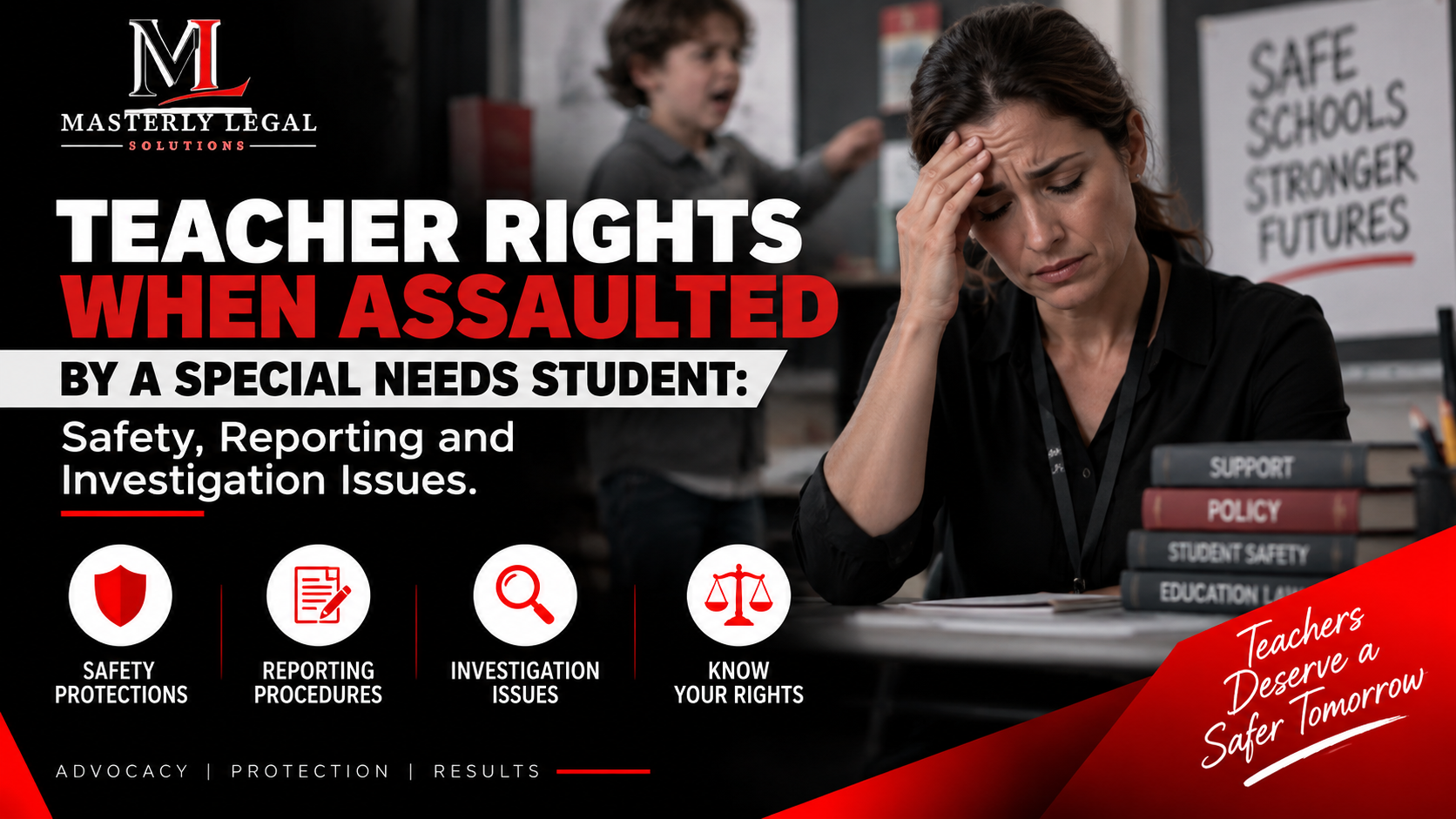
Teacher Rights When Assaulted by a Special Needs Student: Safety, Reporting and Investigation Issues
Looking for Legal & Business Solutions? Contact Us Now
Fill in the form or call us to set up a meeting





