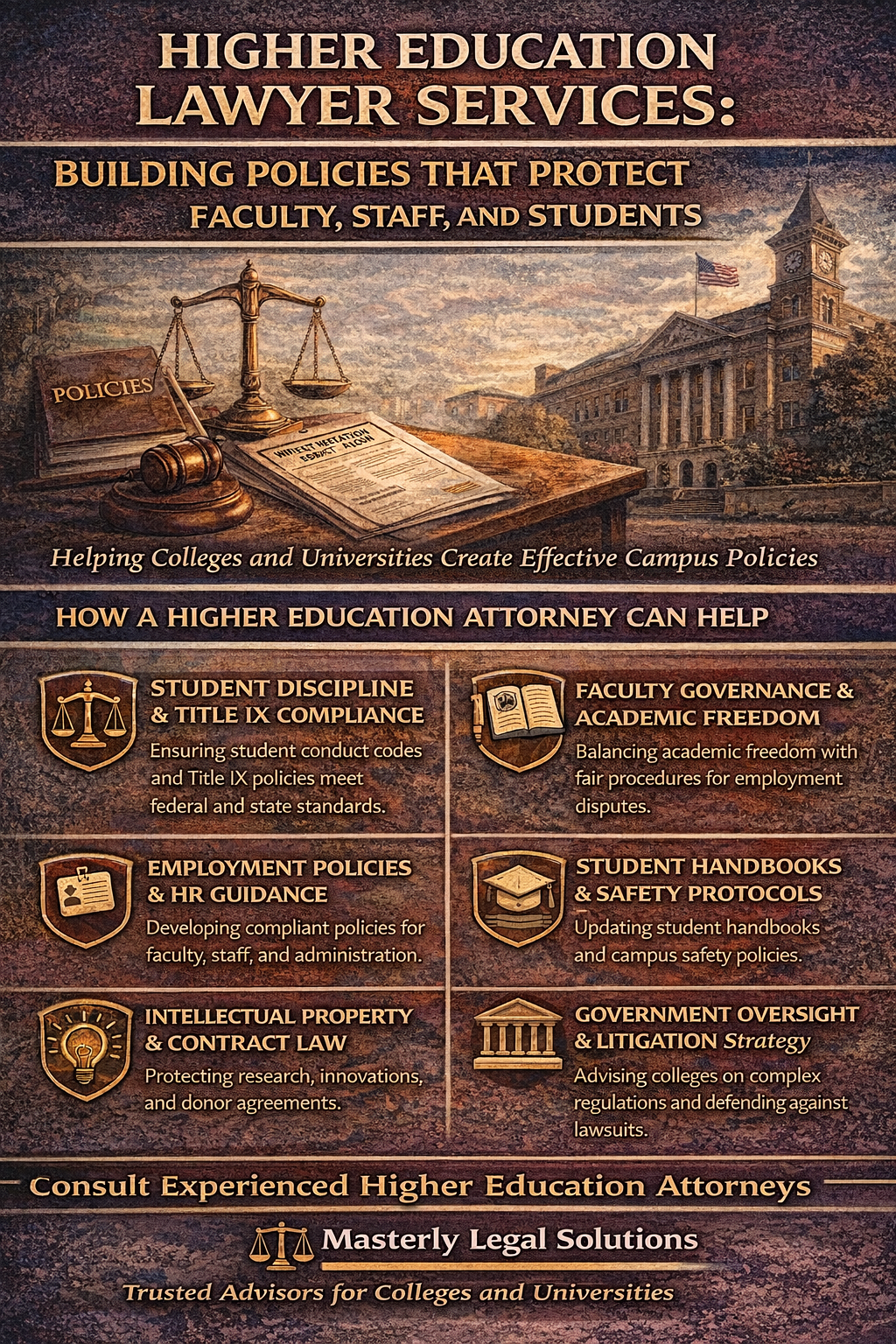
Higher Education Lawyer Services: Building Policies That Protect Faculty, Staff, and Students
Higher education institutions face a level of scrutiny and complexity that few other organizations experience. From student discipline matters to faculty employment disputes, colleges and universities must balance academic freedom with regulatory compliance. Policies that are unclear or outdated can expose educational institutions to serious legal issues.
At Masterly Legal Solutions, our education team works with higher education clients to strengthen policies, reduce risk, and support institutional leadership. Our role as trusted legal advisors is not only to respond to disputes, but to help prevent them. Effective policy development protects faculty, staff, graduate students, and community members while reinforcing institutional integrity.
This article explains how a higher education attorney can help colleges and universities build compliant frameworks that protect the entire campus community.
The Unique Legal Landscape of Higher Education
Higher education operates within a distinct regulatory environment. Colleges and universities must comply with federal and state laws, accreditation standards, and oversight from government agencies.
Educational institutions, including community colleges and major universities, navigate complex legal issues related to employment, student rights, and academic standards. A deep understanding of this landscape is essential for effective governance.
Our higher education team works closely with institutional leaders to anticipate and manage these challenges.
Why Policy Development Matters for Colleges and Universities
Clear policies serve as the foundation for effective campus governance. Without written guidelines, higher education institutions risk inconsistent enforcement and exposure to litigation.
Student handbooks, faculty contracts, and employee benefits documentation must align with regulatory requirements. Private institutions and state university systems alike benefit from updated, legally sound policies.
A proactive approach reduces disputes and strengthens campus culture.
Strengthening Title IX Compliance
Title IX compliance remains one of the most significant responsibilities in higher education. Colleges and universities must investigate allegations of sexual misconduct promptly and fairly.
Higher education clients often seek legal guidance in designing procedures that protect complainants and respondents. Internal investigations must be conducted with precision and neutrality.
Failure to maintain compliance can result in federal investigations and administrative proceedings.
Addressing Sexual Misconduct and Campus Safety
Allegations of sexual misconduct demand immediate and professional response. Educational institutions must balance due process with student safety.
Our experienced attorneys assist institutions in reviewing investigative procedures and hearing protocols. We provide training programs to help staff recognize reporting obligations.
Effective policy ensures that campus communities remain safe while protecting institutional integrity.
Faculty Governance and Academic Freedom
Academic freedom is central to the mission of higher education. At the same time, faculty conduct must comply with institutional policies and the law.
When a faculty member faces allegations of academic misconduct, internal investigations must be handled carefully. Adjunct faculty and tenured professors alike deserve fair procedures.
University attorneys play a key role in advising leadership positions on how to navigate sensitive matters.
Employment Policies and Human Resources
Human resources departments in higher education institutions face distinct challenges. Issues involving gender discrimination, national origin claims, and disability accommodations require careful oversight.
The equal employment opportunity commission may become involved if policies fail to meet legal standards. Colleges and universities must align employee benefits programs with federal regulations and the disabilities act.
Our education team helps counsel clients on compliant employment practices.
Navigating National Labor Relations Board Issues
In recent years, the national labor relations board has taken a greater interest in higher education labor matters. Graduate students and adjunct faculty may assert collective bargaining rights.
Private university systems must monitor these developments closely. Higher education clients benefit from legal resources that address labor concerns proactively.
Work closely with knowledgeable counsel to protect institutional stability.
Student Discipline and Due Process
Student discipline policies must be fair, transparent, and legally sound. When a student dismissed from a program challenges the decision, courts examine procedural safeguards.
Colleges and universities must ensure compliance with family educational rights protections when handling student records.
A higher education attorney can help draft policies that withstand judicial scrutiny and reduce the likelihood of litigation.
Community Colleges and Regional Institutions
Community colleges face unique pressures. They often serve diverse student populations and operate under limited budgets.
Yet community colleges must meet the same regulatory compliance standards as major universities. Our firm assists institutions in updating student handbooks, reviewing governance structures, and preparing for audits.
Higher education clients in the community college space benefit from strategic policy review.
Higher Education Clients and Internal Investigations
Internal investigations are common in the higher education sector. Allegations involving faculty member conduct, financial mismanagement, or athletic conferences require careful handling.
Our higher education team conducts independent reviews and provides objective findings. Representing colleges in sensitive matters requires discretion and professionalism.
Clear documentation and consistent procedures protect both institutions and individuals.
Athletic Conferences and Collegiate Athletics
Collegiate athletics introduces additional regulatory layers. Athletic conferences establish eligibility rules and compliance standards.
Colleges and universities must manage contract disputes, student athlete discipline, and compliance reporting.
Legal services tailored to collegiate athletics protect institutions from unnecessary exposure.
Intellectual Property and Research Compliance
Research universities and academic medical centers generate valuable intellectual property. Policies governing intellectual property rights must address ownership, commercialization, and conflict of interest.
Private institutions engaged in research partnerships with financial institutions and healthcare providers face additional oversight.
Experienced attorneys with expertise in higher education help protect innovation while maintaining compliance.
Contract Disputes and Charitable Giving
Higher education institutions frequently enter agreements with donors and vendors. Charitable giving arrangements must be structured clearly to avoid future disputes.
When contract disputes arise, swift legal action may prevent escalation. Our law firms work with in house counsel and general counsel to resolve issues efficiently.
Strong contracts protect institutional interests.
Regulatory Compliance and Government Oversight
Government agencies regularly audit educational institutions. Regulatory requirements may involve funding eligibility, accreditation, or student financial aid.
Failure to comply can jeopardize institutional stability. Higher education clients depend on legal guidance to navigate complex reporting obligations.
Proactive compliance planning reduces the risk of administrative proceedings.
Litigation Strategy and Summary Judgment
When disputes escalate to court, strategic litigation matters. Our firm has obtained summary judgment for higher education clients in cases involving employment, personal injury, and student claims.
Securing summary judgment can limit financial exposure and protect reputation. Colleges and universities benefit from decisive representation.
Representing clients effectively requires preparation and precision.
Leadership Positions and Board Governance
Leadership positions within colleges and universities carry significant responsibility. Boards of trustees must be informed about evolving legal issues.
We advise boards on governance best practices and risk management. A deep understanding of higher education allows us to counsel clients strategically.
Transparent communication strengthens institutional trust.
Working With General Counsel and Local Counsel
Many colleges and universities employ in house counsel or general counsel. Outside legal support can supplement internal teams during complex cases.
We work closely with general counsel and local counsel to deliver coordinated strategies.
Our higher education team serves as an extension of institutional leadership.
Supporting Private Colleges and State University Systems
Private college administrators and state university leaders face distinct compliance pressures. Private institutions may encounter unique labor and governance issues.
Major universities often manage large student populations and complex research programs.
Higher education clients benefit from tailored legal services aligned with institutional mission.
Training Programs and Risk Prevention
Providing regular training programs helps prevent misconduct and litigation. We provide training for faculty, administrators, and communications professionals.
Training sessions may address title ix compliance, student affairs procedures, and regulatory compliance.
Education is a powerful preventive tool.
Building a Strong Campus Culture
Campus culture reflects institutional values. Clear policies foster respect and accountability.
Community members expect transparency and fairness. When policies align with legal standards, trust grows.
Protecting students, staff, and faculty strengthens the higher education community.
Partner With Masterly Legal Solutions
Higher education institutions deserve legal partners who understand their mission. At Masterly Legal Solutions, our higher education attorney services focus on prevention, compliance, and strategic defense.
Our education team is committed to supporting institutions, advising boards, and representing colleges in court when necessary. We combine expertise with a deep understanding of the higher education environment.
We are dedicated to helping educational institutions thrive in an increasingly complex regulatory landscape.
Speak With a Higher Education Attorney Today
If you represent a college, university, community college, or academic medical center seeking policy review or compliance guidance, our firm is ready to assist. We work with higher education clients throughout the region to strengthen governance frameworks and reduce risk.
Contact us at (972) 236-5051 for a free consultation. Let us discuss your institution’s needs and develop a strategic plan tailored to your campus.
This article is for informational purposes only and does not constitute legal advice. Reading this content does not create an attorney-client relationship. For advice specific to your institution, please contact Masterly Legal Solutions directly.


Teacher Rights When Assaulted by a Special Needs Student: Safety, Reporting and Investigation Issues

Looking for Legal & Business Solutions? Contact Us Now
Fill in the form or call us to set up a meeting