

Retaliation During TEA Investigations: The Risks Teachers Rarely See Coming
When a teacher receives notice of a TEA investigation, the first reaction is often fear about the allegations themselves. Questions about certification, job security, and professional reputation quickly rise to the surface. What many educators do not see coming, however, is the quiet threat of retaliation that can follow behind the scenes. In some cases, the investigation becomes only part of the problem.
At Masterly Legal Solutions, we have worked with teachers and other school employees who were blindsided not just by the investigation, but by how their employer responded afterward. Retaliation can take many forms, and it often hides under routine workplace decisions. Understanding these risks is essential if you want to protect your career, your income, and your future in education.
Understanding the TEA Investigation Process
A TEA investigation typically begins after a complaint or report is made to the Texas Education Agency. The report may involve alleged misconduct, concerns about student safety, or claims of professional wrongdoing, and it is important to understand common causes of TEA investigations and the protections available to teachers. In some situations, school administrators conduct their own internal investigation before notifying TEA.
During this time, teachers may be placed on administrative leave while the district gathers information. Administrative leave is often described as neutral, but it can feel anything but neutral for the educator involved. Even when administrative leave is labeled as paid leave, the professional impact can be immediate and damaging.
What Administrative Leave Really Means
Administrative leave is commonly used during a school district investigation. On paper, administrative leave may appear to be a procedural step. In practice, administrative leave can isolate a teacher from colleagues, students, and daily job duties.
Administrative leave may be paid leave, but it can still carry a stigma. Other employees may speculate about the reasons behind the leave. Rumors can spread quickly in a school environment, affecting employee morale and damaging a teacher’s reputation.
In some cases, administrative leave turns into extended administrative leave without clear communication. When administrative leave drags on for weeks or months, the emotional and financial stress increases. Teachers often wonder whether administrative leave is leading toward disciplinary action or even wrongful termination.
When Retaliation Occurs During an Investigation
Retaliation occurs when an employer takes adverse actions against employees because they engaged in protected activity. In the context of a TEA investigation, retaliation can arise after a teacher files a complaint, reports misconduct, or cooperates with investigators, and working with an experienced retaliation lawyer for workplace retaliation claims can be critical. Retaliation occurs when an employer punishes someone for asserting rights under employment laws.
For example, a teacher who reports discrimination or harassment may suddenly face stricter scrutiny. A supervisor might begin documenting minor performance issues that were previously ignored. The timing of these actions often raises red flags.
Retaliation can also happen after a teacher requests reasonable accommodations for a disability. If the school responds by placing the teacher on administrative leave or reducing job duties, that may signal a deeper problem. Understanding when retaliation occurs is critical to protecting your rights.
Forms of Retaliation Teachers Rarely Expect
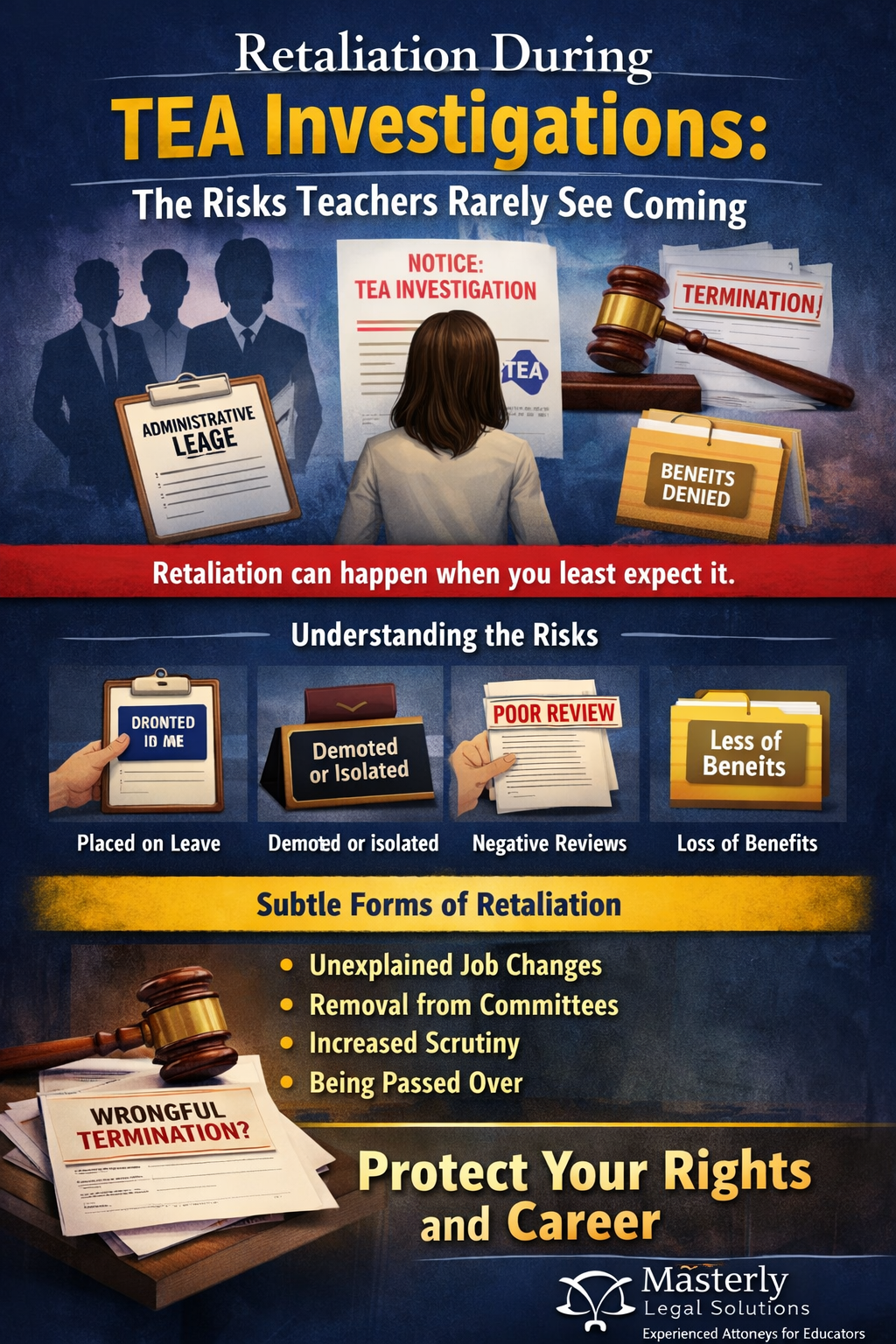
Retaliation is not always loud or obvious. It can take subtle forms that slowly undermine a teacher’s career. Some examples include:
- Sudden changes in job duties without explanation
- Removal from leadership roles or committees
- Negative performance reviews after years of positive feedback
- Denial of overtime pay or other benefits
- Increased surveillance by a supervisor
In more serious situations, retaliation may escalate to wrongful termination. Teachers may feel they were unfairly fired after speaking up about discrimination, harassment, or safety concerns, and may need Texas TEA investigation and teacher certification help to protect their license and career.
The Role of Federal and State Laws
Federal and state laws provide legal protections for employees facing retaliation. Laws such as Title VII of the Civil Rights Act, the Disabilities Act, and the Medical Leave Act prohibit certain forms of discrimination and retaliation. These federal laws apply to many school districts and public employers.
State laws also play a significant role in protecting teachers. Texas employment laws can overlap with federal law, creating multiple layers of protection. Understanding how these laws work together requires careful legal guidance.
Title VII specifically addresses discrimination based on race, color, religion, sex, and national origin. It also prohibits retaliation against employees who file a discrimination complaint. The civil rights act forms the backbone of many workplace protections.
Whistleblower Laws and Teacher Protections
Whistleblower laws are designed to protect workers who report wrongdoing. If a teacher reports a violation of school policy, misuse of funds, or unsafe conditions, whistleblower laws may apply, and understanding TEA investigations, common causes, and teacher protections can help educators recognize when these laws may be triggered. These laws are intended to protect individual employees from retaliation.
For example, if a teacher reports concerns about occupational safety or potential physical harm to students, that report may be protected. If the employer responds by placing the teacher on administrative leave without justification, that could raise legal concerns. Whistleblower laws exist to prevent future discrimination and unfair punishment.
Administrative Leave and Alleged Misconduct
When alleged misconduct is involved, school districts often default to administrative leave. Administrative leave may be used while administrators review written communications, interview witnesses, and collect evidence, so knowing the immediate steps to take after a TEA investigation notice is essential. However, administrative leave should not automatically imply guilt.
Alleged misconduct can range from minor policy violations to serious accusations. Teachers deserve a fair and thorough investigation process. Administrative leave should not be used as a tool for punishment before the facts are determined.
In some cases, administrative leave becomes a stepping stone to disciplinary action. This is why it is important to consult an employment lawyer early in the process. An experienced attorney can help determine whether administrative leave is being used appropriately.
Discrimination and Retaliation in the Workplace
Discrimination can take many forms, including age discrimination, disability discrimination, and harassment based on protected characteristics. When teachers report discrimination, they are engaging in protected activity under employment laws. The employer is prohibited from retaliating against them.
For example, if a teacher files a retaliation complaint with the equal employment opportunity commission, the employer must not take adverse actions in response. The equal employment opportunity commission enforces federal employment laws that protect workers from discrimination and retaliation.
Retaliation during a TEA investigation can be especially complex. A teacher might face discrimination and alleged misconduct claims at the same time, and may benefit from guidance from an education lawyer providing expert legal support for teachers and schools. Untangling these issues requires careful legal analysis.
The Impact on Pay, Benefits, and Job Security
Administrative leave may involve paid leave, but that does not guarantee financial stability. Some teachers lose opportunities for overtime pay, stipends, or coaching pay during administrative leave. Changes in pay and benefits can create significant stress.
If administrative leave turns into unpaid leave, the financial impact becomes even more severe. Teachers may struggle to meet basic obligations while waiting for the outcome of the investigation. Losing access to job protected leave, such as FMLA leave, can further complicate matters.
FMLA leave under the Medical Leave Act provides eligible employees with certain protections. If a teacher takes fmla leave to care for a family member or address a disability, the employer must comply with federal law. Retaliating against someone for using fmla leave may be a violation of employment laws.
The Hidden Risk of Wrongful Termination
Wrongful termination can occur when an employer fires an employee for unlawful reasons. In the context of a TEA investigation, wrongful termination may follow after a teacher reports harassment or discrimination. Sometimes, the termination is framed as part of the investigation outcome.
For example, a teacher who cooperates with police during a criminal investigation might later face termination. If the timing suggests retaliation, that could support a lawsuit. Being unfairly fired is not only emotionally devastating but can also affect future employment opportunities.
Teachers who believe they were wrongfully terminated should seek assistance from retaliation attorneys. A knowledgeable attorney can review the facts and determine whether a violation occurred, and educators in other states may need specialized support such as North Carolina educator misconduct defense to protect their license.
Working with an Employment Lawyer During an Investigation
Hiring an employment lawyer early can change the course of an investigation. An attorney can review written communications, attend meetings, and provide guidance about responding to allegations, especially in TEA investigations that threaten an educator’s license. This proactive approach can protect your rights.
An employment lawyer can also help you document potential retaliation. Keeping records of emails, performance reviews, and conversations with a supervisor can be critical. Proper documentation strengthens your legal options if a lawsuit becomes necessary.
Labor and employment lawyers understand both federal and state laws that apply to teachers. They can determine whether the employer’s actions comply with the employment act and other relevant laws.
Filing a Complaint and Legal Options
If retaliation or discrimination occurs, filing a formal complaint may be necessary. This could involve filing with the equal employment opportunity commission or pursuing remedies under state laws. The filing process must follow specific deadlines.
Before filing, it is important to consult an attorney who can evaluate your legal options. In some cases, mediation or settlement discussions may resolve the issue. In others, a lawsuit may be required to seek punitive damages or other relief, and an experienced education law attorney who guides teachers through investigations can help you navigate those choices.
Filing a retaliation complaint is a serious step. It can protect not only your rights but also the rights of other employees who may face similar treatment. Legal guidance ensures that the process is handled correctly.
Protecting Yourself During Administrative Leave
Administrative leave can feel isolating, but there are steps you can take to protect yourself. First, avoid discussing details of the investigation with other employees. Second, preserve all written communications related to your job.
Stay in contact with your attorney and follow legal guidance carefully. Do not assume that administrative leave will resolve itself quickly. Be proactive in protecting your employment and professional reputation.
If police become involved in the investigation, remain calm and request legal assistance before answering detailed questions. Cooperation is important, but your rights must also be protected.
The Emotional Toll on Teachers and Workers
The stress of an investigation can take a significant emotional toll. Teachers often worry about their students, their job, and their reputation in the community. Administrative leave may create feelings of isolation and uncertainty.
Employee morale can suffer when other employees witness how an investigation is handled. Workers may fear that they could be next. This environment can harm the overall workplace culture.
Seeking support from a union representative, trusted colleagues, or family can be helpful. However, legal guidance from an experienced attorney remains essential.
How Masterly Legal Solutions Can Help
At Masterly Legal Solutions, our retaliation attorneys understand the hidden risks teachers face. We work with individual employees to analyze investigations, review disciplinary action, and challenge unlawful conduct. Our goal is to protect your career and your future.
We evaluate whether retaliation occurs when an employer responds to protected activity. We also assess whether administrative leave, alleged misconduct claims, or termination decisions violate federal law or state laws. Every case is different, and careful analysis is required to determine the best path forward.
Our team provides clear guidance about your legal options. Whether you need assistance with filing a complaint, negotiating a settlement, or preparing for a lawsuit, we stand ready to help, drawing on our broader education law legal services for teacher license defense.
Taking Action Before the Outcome Is Final
Waiting until the outcome of a TEA investigation is announced can limit your options. Early legal intervention can influence how the investigation unfolds. An experienced attorney can communicate directly with the employer and help ensure fair treatment.
If you believe retaliation, discrimination, or harassment is involved, do not ignore the warning signs. Even subtle changes in job duties or pay can signal a deeper issue. Protecting yourself early can prevent more serious consequences later.
Administrative leave does not have to define your career. With the right legal guidance and strong advocacy, you can protect your rights and move forward with confidence.
Paid Administrative Leave and the Role of Human Resources
When a teacher is placed on paid administrative leave, the situation may be presented as routine, but it often carries serious professional implications. Paid administrative leave typically means the educator is relieved of job duties while still receiving pay for a period of time. During this stage, human resources and the school manager are usually involved in coordinating documentation, interviews, and internal procedures tied to the investigation. While paid time away from the classroom may sound protective, it can quickly feel isolating and uncertain. Teachers should request clear written explanations and seek additional information about how long paid administrative leave is expected to last and what steps will follow to protect their rights and professional standing.
Contact Masterly Legal Solutions for a Free Consultation
If you are facing a TEA investigation and are concerned about retaliation, discrimination, or wrongful termination, we encourage you to contact our team. The risks teachers rarely see coming can have lasting consequences on pay, benefits, and professional reputation.
Our experienced attorney team at Masterly Legal Solutions is committed to protecting educators and workers throughout the investigation process. We will listen carefully to your concerns, review your situation, and help determine the strongest legal strategy available.
Call us at (972) 236-5051 to schedule a free consultation. We are here to provide the guidance and assistance you need during this challenging time.
This article is provided for educational purposes only and does not constitute legal advice. Every case is unique, and you should speak directly with a qualified attorney about your specific situation.




Teacher Rights When Assaulted by a Special Needs Student: Safety, Reporting and Investigation Issues



Looking for Legal & Business Solutions? Contact Us Now
Fill in the form or call us to set up a meeting