

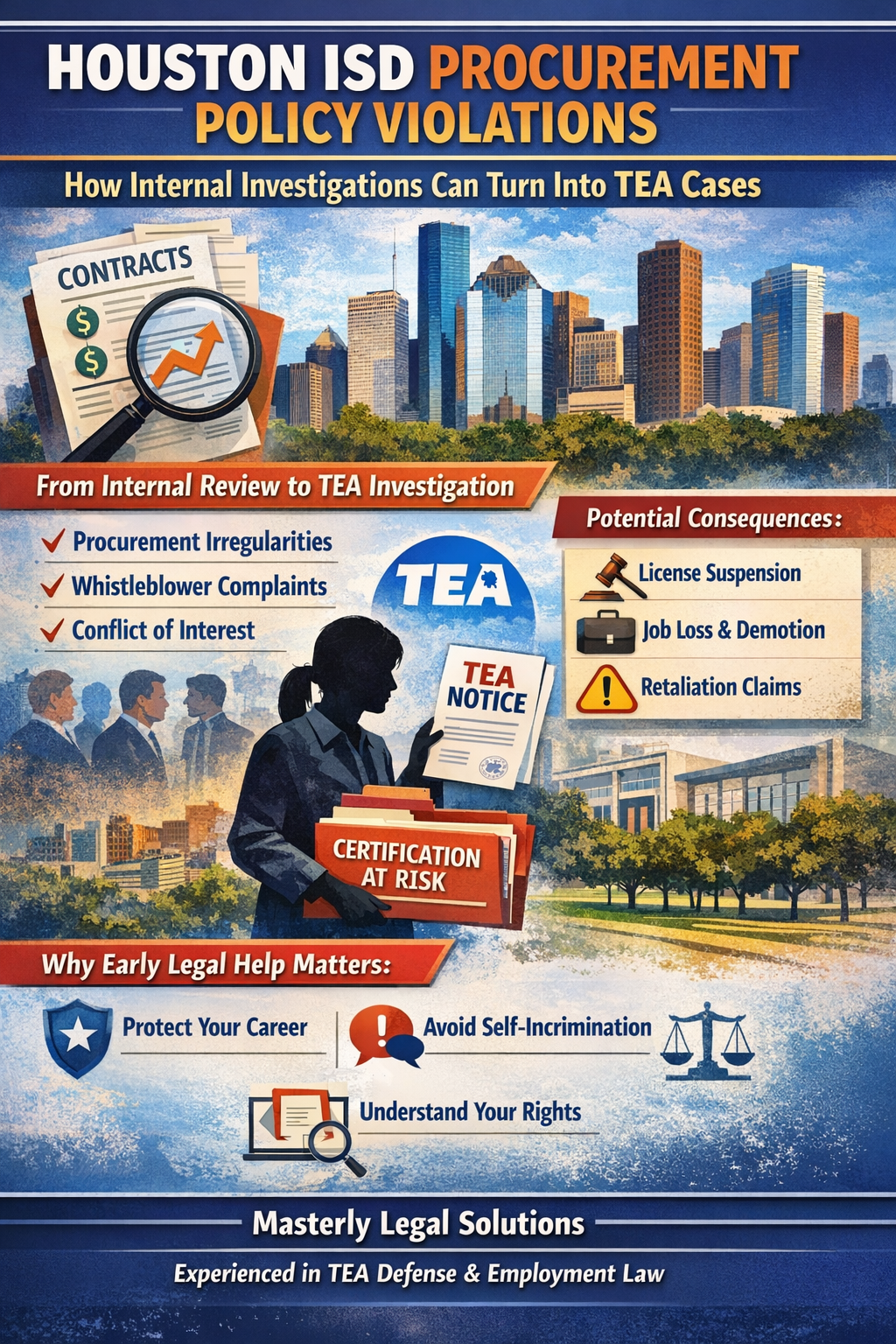
Houston ISD Procurement Policy Violations: How Internal Investigations Can Turn Into TEA Cases
Public school districts operate under strict rules designed to protect public funds, ensure fairness, and maintain trust. In Houston ISD, procurement policies govern how contracts are awarded, how vendors are selected, and how district money is spent. When questions arise about those procedures, what begins as a routine internal review can quickly escalate.
Many teachers and campus administrators do not realize how fast a district inquiry can grow into a formal matter before the Texas Education Agency. By the time a TEA notice arrives, critical decisions may already have been made. Early cooperation without legal guidance can increase exposure and create risks that were never intended.
At Masterly Legal Solutions, we have seen internal reviews transform into serious cases involving employment, certification, and professional standing. Understanding how that process unfolds is essential for anyone working within Houston ISD.
Understanding Houston ISD Procurement Policies
Procurement policies exist to ensure transparency and compliance with federal and state laws. These policies dictate bidding procedures, vendor selection, documentation standards, and conflict-of-interest disclosures. When an employer such as a public school district fails to follow these requirements, the issue may be labeled a possible violation.
For employees, especially those in leadership roles, even minor paperwork issues can raise concerns. An example might involve approving a purchase order without proper documentation or communicating with a vendor outside established procedures. While these situations may appear administrative, they can trigger internal scrutiny.
Because public education is funded by taxpayers, district procurement decisions are subject to strict oversight. That oversight can extend beyond the district itself and into federal and state agencies.
What Triggers an Internal Review
An internal review often begins with a complaint. The complaint may come from a coworker, a vendor, or even an anonymous tip. In some cases, a manager or supervisor flags irregular spending patterns or incomplete documentation.
Other times, workers raise concerns under whistleblower laws, believing that a policy or law has been violated. When retaliation occurs after such a report, the situation becomes even more complex. What began as a procurement issue can expand into allegations of retaliation or discrimination.
Internal investigations may involve document reviews, email audits, and interviews with individual employees. Many educators cooperate willingly, believing transparency will resolve the matter quickly. Unfortunately, that cooperation can sometimes be misinterpreted or used in unexpected ways.
The Escalation From District Review to TEA Referral
A district investigation can escalate when administrators believe the conduct may affect certification standards or professional ethics. At that point, the district may make a referral to TEA. Teachers often do not realize a referral has been made until they receive formal notice.
Once TEA becomes involved, the issue is no longer just an internal employment matter. It may impact licensure, future job opportunities, and even eligibility for certain benefits, which is why understanding immediate steps after receiving a TEA investigation notice is so important. The negative impact can be long lasting.
An example of escalation includes:
- Allegations that procurement irregularities reflect dishonesty
- Claims that a supervisor ignored reporting obligations
- Assertions that a higher level manager attempted to conceal documentation
Even if the original concern involved only procedural errors, the narrative can shift quickly.
Why Early Cooperation Without Counsel Can Increase Risk
Educators are trained to cooperate. Many feel that answering questions honestly will protect them. However, statements made during early interviews can later be used as evidence of a possible violation.
When retaliation occurs after a protected activity such as reporting concerns, statements may be framed differently. Employees may unintentionally admit responsibility for actions that were authorized by a manager or department.
Without guidance from employment lawyers who understand education law, early interviews can shape the direction of the entire case. Education law counsel for teachers and faculty can clarify risks before you speak on the record. What seemed like a minor compliance issue can transform into allegations of wrongdoing.
Teachers Often Do Not Know a Referral Has Been Filed
One of the most alarming realities is that teachers frequently have no idea when a TEA referral is made. The district is not always required to notify the educator immediately. During that time, documentation is reviewed and narratives are formed.
When notice finally arrives, the educator may feel blindsided. At that stage, statements already provided internally can influence the agency’s review, so understanding what to do after a TEA complaint notice can be critical. The lack of early awareness can create a significant disadvantage.
Understanding your legal protections before participating in internal interviews is critical.
Procurement Issues and Allegations of Retaliation
Procurement disputes sometimes overlap with workplace retaliation. If an employee reports irregularities and later faces adverse actions, such as reassignment to a less desirable position, questions arise.
Retaliation occurs when an employer takes adverse actions against workers because they engaged in protected activity. Filing a complaint about procurement practices, reporting misuse of funds, or cooperating with an investigation can qualify as protected activity.
Under federal law and state laws, employers must prohibit retaliation. When retaliation occurs, it may include:
- Demotion to a less desirable position
- Removal from leadership roles
- Changes in work hours
- Reduction in pay or wages
- Increased scrutiny or harassment
The overlap between procurement investigations and retaliation claims can complicate matters significantly, and educators may need guidance on retaliation and labor complaints, including filing with the Department of Labor.
Protected Activity in the Education Workplace
Protected activity extends beyond procurement reporting. It includes filing discrimination complaints, reporting harassment, requesting reasonable accommodations, and taking fmla leave.
For example, eligible employees who request job protected leave under the medical leave act are engaging in protected activity. If adverse actions follow, the timing may raise concerns.
Similarly, employees who report discrimination based on national origin, age discrimination, disability, or genetic information are protected under federal laws such as title vii and the civil rights act.
When retaliation occurs after such related protected activity, the case may expand beyond procurement issues into broader employment disputes.
How Federal and State Employment Laws Intersect
Public school employees are covered by multiple layers of laws. Federal and state laws govern discrimination, wages, overtime pay, and occupational safety. Federal employees have specific protections, and while teachers are typically state employees, many federal standards still apply.
For instance, federal law requires employers to pay overtime pay in certain circumstances. Wage and hour disputes can trigger additional scrutiny.
The disabilities act requires reasonable accommodations for qualified employees with a disability. Failure to provide reasonable accommodations can result in discrimination claims.
When procurement concerns overlap with employment act requirements or labor obligations, the matter becomes more complex.
The Role of Human Resources in Internal Investigations
Human resources departments often manage internal reviews. They collect documentation, schedule interviews, and coordinate with district leadership. While their role is administrative, they represent the employer’s interests.
Employees sometimes assume HR is neutral. However, HR’s responsibility is to protect the district. Statements made during interviews may be documented and preserved for future proceedings.
A reasonable employee should understand that internal communications are not confidential in the same way discussions with employment lawyers are. Early strategic decisions can make a significant difference.
Adverse Actions That Raise Red Flags
Adverse actions are changes that negatively affect employment status. These can include termination, suspension, demotion, or reassignment.
Other examples include:
- Denial of promotion to a desirable position
- Transfer to a less desirable position
- Reduction in pay or benefits
- Negative evaluations
- Removal from projects
When adverse actions follow protected activity, the pattern may support a retaliation complaint.
When Retaliation and Discrimination Claims Arise
Procurement investigations sometimes uncover broader workplace issues. Employees may allege unfair treatment, harassment, or discrimination.
Discrimination based on disability, national origin, or age discrimination can trigger review by the equal employment opportunity commission. Filing with the equal employment opportunity commission is a protected activity under federal law.
If retaliation occurs after filing, additional claims may arise. This can expose the employer to lawsuit risks and even punitive damages in certain circumstances.
Whistleblower Laws and Public School Employees
Whistleblower laws are designed to protect workers who report misconduct. Public school employees who report misuse of funds or legal violations may be protected under federal and state whistleblower laws.
However, proving that retaliation occurs requires careful documentation. A reasonable employee must demonstrate that adverse actions were linked to the protected activity.
An example would be a teacher who reports procurement irregularities and is later unfairly fired. The sequence of events can be critical.
How TEA Reviews Expand the Scope
Once TEA opens a review, the agency may look beyond procurement paperwork. It may evaluate ethics, honesty, and compliance with certification standards, making experienced help in surviving a TEA investigation and protecting your license especially important.
Statements made during district interviews become part of the record. Allegations of discrimination, harassment, or retaliation may be considered in the broader context of professional conduct.
The consequences can include sanctions, reprimands, or even certificate suspension.
The Emotional and Professional Impact
Facing a TEA case can have a negative impact on overall employee morale. It affects not only the individual employees involved but also coworkers who observe the process.
Workers may fear retaliation at work if they raise concerns. This fear can suppress reporting and damage workplace trust.
Employee morale declines when employees feel they are treated differently after engaging in protected activity.
Occupational Safety and Public Accountability
Procurement disputes sometimes involve occupational safety concerns. For example, purchasing equipment that does not meet safety standards could expose workers to physical harm.
Reporting safety issues is also protected activity. Federal and state laws require employers to maintain safe environments.
When employees report unsafe conditions and face adverse actions, the overlap between occupational safety and retaliation becomes clear.
FMLA Leave and Internal Reviews
Taking fmla leave to care for a family member is protected under the medical leave act. Eligible employees are entitled to job protected leave without facing adverse actions.
If an internal investigation begins shortly after fmla leave, the timing can raise questions. A reasonable employee may perceive a connection, especially if disciplinary measures follow.
Understanding the relationship between fmla leave and internal reviews is important for protecting rights.
Filing a Complaint and Preserving Rights
When employees believe retaliation occurs, they may file a complaint internally or externally. Filing a complaint with the equal employment opportunity commission or other agencies can preserve claims.
Documentation is essential. Workers should keep records of communications, evaluations, and any adverse actions.
Early consultation with labor and employment lawyers can clarify options.
The Risk of Wrongful Termination Claims
If an educator is unfairly fired after engaging in protected activity, wrongful termination allegations may arise. While public employment has specific standards, termination decisions must comply with laws.
An employer who fails to prohibit retaliation risks significant legal exposure. A lawsuit may seek damages, reinstatement, or other remedies.
Even the threat of litigation can affect district operations.
The Importance of Early Legal Strategy
Engaging employment lawyers early can help protect rights and shape the narrative. Counsel can attend interviews, review documentation, and advise on responses, and broader legal protection for teachers and school staff can address related employment risks.
This proactive approach can prevent statements from being misinterpreted. It can also identify whether adverse actions violate federal and state laws.
A reasonable employee should not assume that cooperation alone will protect them.
Protecting Your Certification and Career
Your certification is central to your career. A TEA case can impact future employment opportunities and eligibility for certain benefits.
Taking steps to protect yourself during the earliest stages of an internal investigation is critical. This includes understanding the scope of the inquiry and potential consequences, as well as common TEA investigation causes and teacher protections.
Knowledge and preparation can make a measurable difference.
Building a Strong Defense
A defense strategy may involve demonstrating compliance with policies, clarifying misunderstandings, and challenging inaccurate allegations.
An example might include showing that a manager authorized a procurement decision or that documentation was incomplete due to administrative delays.
Context matters. Providing a full picture can reduce exposure.
Preserving Workplace Integrity
Addressing procurement issues responsibly helps protect the integrity of the workplace. Transparency and compliance strengthen public trust.
However, fairness toward individual employees must also be preserved. Investigations should not become vehicles for retaliation or discrimination.
Balancing accountability with fairness is essential.
Taking Action Before It Is Too Late
The window to respond effectively can be short. Once a referral is made, timelines may apply for filing responses or requesting hearings.
Failing to act quickly can limit options. Early intervention can help protect rights and reduce the negative impact on your career.
Understanding your options empowers you to make informed decisions.
Protection Against Future Discrimination
When an internal investigation expands into a TEA matter, many employees worry not only about their current position but also about future discrimination. A record of allegations—even if unproven—can sometimes influence how an employer views promotions, transfers, or leadership opportunities. Federal and state laws are designed to protect workers from being treated unfairly because they previously engaged in protected activity. Taking early steps to address inaccurate findings or retaliation can help safeguard your professional reputation and reduce the risk of long-term harm.
Understanding Other Related Protected Activity
Procurement complaints are not the only actions shielded by law. Other related protected activity may include reporting harassment, raising concerns about occupational safety, requesting reasonable accommodations, or participating in an employment investigation. When employees speak up about potential violations, the law is intended to protect them from adverse actions taken in response. Recognizing what qualifies as protected activity is critical, especially when internal district reviews begin to shift in tone or scope.
Seeking Accountability and Justice
Educators dedicate their careers to serving students and their communities. When allegations escalate or retaliation becomes part of the narrative, seeking justice is not about conflict—it is about protecting your livelihood and professional standing. A fair process ensures that decisions are based on facts rather than assumptions. With informed legal guidance, such as support from Texas education lawyers focused on TEA investigations, employees can pursue accountability while defending their rights and careers.
Recognizing Retaliation at Work
Retaliation at work can take many forms, especially after an employee raises concerns about procurement practices or compliance issues. It may involve subtle changes such as exclusion from meetings, negative performance reviews, or reassignment to a less desirable position. In more serious cases, retaliation can include suspension, demotion, or termination. Employees should understand that the law prohibits an employer from taking adverse actions simply because someone engaged in protected activity.
Filing With the Equal Employment Opportunity Commission
When discrimination or retaliation occurs, one option may involve filing a charge with the equal employment opportunity commission. This federal agency investigates claims involving workplace discrimination under laws such as Title VII and other civil rights statutes. Filing with the equal employment opportunity commission is itself considered protected activity, meaning an employer cannot lawfully retaliate against an employee for doing so. Understanding deadlines and procedural requirements is critical to preserving your rights.
Special Considerations for Federal Employees
Although most educators are employed at the state or local level, federal employees face similar issues involving retaliation and discrimination. Federal standards often influence how public employers structure their compliance policies. Protections for federal employees provide guidance on how investigations should be handled and how due process should be preserved. These principles can also shape expectations for fairness in school district investigations.
The Role of Employment Lawyers in Education Cases
Employment lawyers who understand both labor law and education regulations can provide critical guidance during internal reviews. Early legal advice can help prevent statements from being misinterpreted or taken out of context. Counsel can also evaluate whether adverse actions violate federal or state laws. Seeking advice before a matter escalates can significantly strengthen your position.
Understanding Your Legal Protections
Teachers and staff members are entitled to important legal protections under federal and state laws. These protections guard against discrimination, retaliation, and wrongful termination. They also ensure that employees who report possible violations or request accommodations are not punished for doing so. Knowing these rights empowers workers to respond strategically rather than react out of fear.
The Medical Leave Act and Protected Leave
The medical leave act provides eligible employees with job-protected leave for certain family and medical reasons. Taking leave to care for your own health or that of a family member is a protected activity. If disciplinary action follows shortly after approved leave, the timing may raise concerns. Employers must respect leave rights and avoid retaliatory measures connected to lawful absences.
When Investigations Involve Physical Harm Concerns
Some procurement disputes intersect with safety issues that could result in physical harm. For example, purchasing equipment that fails to meet safety standards may endanger workers or students. Reporting unsafe conditions is a protected activity under occupational safety laws. Employees who raise these concerns should not face adverse actions for prioritizing safety.
Requesting Reasonable Accommodations
Employees with a disability may request reasonable accommodations to perform their job duties effectively. This request is protected under federal law, and an employer must engage in an interactive process to evaluate options. Denying reasonable accommodations without proper justification may constitute discrimination. If adverse actions follow such a request, retaliation concerns may arise.
When Employees Are Unfairly Fired
Being unfairly fired after raising concerns or participating in an investigation can be devastating. Termination under these circumstances may support claims of wrongful discharge or retaliation, especially where an employer pressures an employee to resign, raising questions about whether an employer can force you to quit your job. Each case requires careful review of timelines, documentation, and employer justifications. Swift action can help preserve evidence and strengthen potential claims.
The Possibility of Punitive Damages
In certain serious cases involving intentional misconduct, courts may award punitive damages. These damages are designed to punish particularly harmful behavior and deter similar actions in the future. While not available in every case, punitive damages may be considered when retaliation or discrimination is egregious. Understanding the potential remedies available can help employees evaluate their legal options.
Speak With Experienced Counsel Today
If you are facing a Houston ISD procurement investigation or believe a matter may escalate to TEA, do not wait. Early cooperation without guidance can increase risk.
At Masterly Legal Solutions, we focus on protecting educators and workers when internal reviews threaten their careers. We understand the intersection of procurement policies, retaliation, discrimination, and employment laws.
Contact us at (972) 236-5051 for a free consultation. We can answer your questions, review your situation, and help you understand the next steps. Every case is different, and early action can make a meaningful difference in protecting your future.
This article is provided for informational purposes only and does not constitute legal guidance. Reading this material does not create an attorney-client relationship. For advice about your specific situation, please contact our office directly.



Teacher Rights When Assaulted by a Special Needs Student: Safety, Reporting and Investigation Issues



Looking for Legal & Business Solutions? Contact Us Now
Fill in the form or call us to set up a meeting





