

Sports Attorney: What Athletes and Organizations Should Understand Before Legal Problems Escalate
A contract disagreement, eligibility question, investigation, or governance concern can quickly affect a sports career or organization. What begins as a private issue may soon threaten playing time, employment, revenue, team relationships, and public trust.
A sports attorney helps athletes, coaches, schools, sports organizations, and business professionals understand the legal issues connected to a sports matter. Early legal review can clarify rights, identify deadlines, preserve important records, and help the client respond with greater care.
Masterly Legal Solutions provides attorney-guided support for qualified sports-law matters. We help clients evaluate the legal problem, understand the rules and agreements involved, and determine a practical path forward before the situation becomes harder to control, drawing on comprehensive sports law and consulting services.
Sports Industry Legal Issues Rarely Stay in One Area
Sports operate through overlapping contracts, policies, laws, and governing rules. A single dispute may involve more than one system.
For example, an eligibility concern may involve an athletic association’s rules, school policies, academic records, residency requirements, transfer history, and communications with coaches. A contract dispute may involve payment terms, termination rights, performance duties, intellectual property, and state law. An investigation may raise questions about notice, evidence, interviews, confidentiality, due process, regulatory compliance, and possible sanctions.
This overlap is one reason sports legal issues can become complicated so quickly. We help clients evaluate the legal problem as it arises across the sports industry, including contractual aspects and regulatory matters that may affect the right response. The right response depends on the client’s role, the governing body, the written agreement, the applicable policy, and the facts surrounding the dispute.
General business advice may not address these sports-specific concerns. Clients need legal counsel who can examine the complete matter and recognize how one decision may affect several parts of a career or organization.
When Should You Contact a Sports Attorney?
A sports attorney should be contacted when a sports-related decision affects legal rights or obligations in different parts of the sports industry, including issues involving professional athletes, teams, sports teams, or professional sports, and managing every aspect of a professional athlete's career.
Waiting until a final decision has been issued can limit the available options. A contract may contain a short notice period. An athletic organization may impose a deadline for submitting documents or challenging a ruling. An investigation may move forward while the client is still trying to understand the allegations.
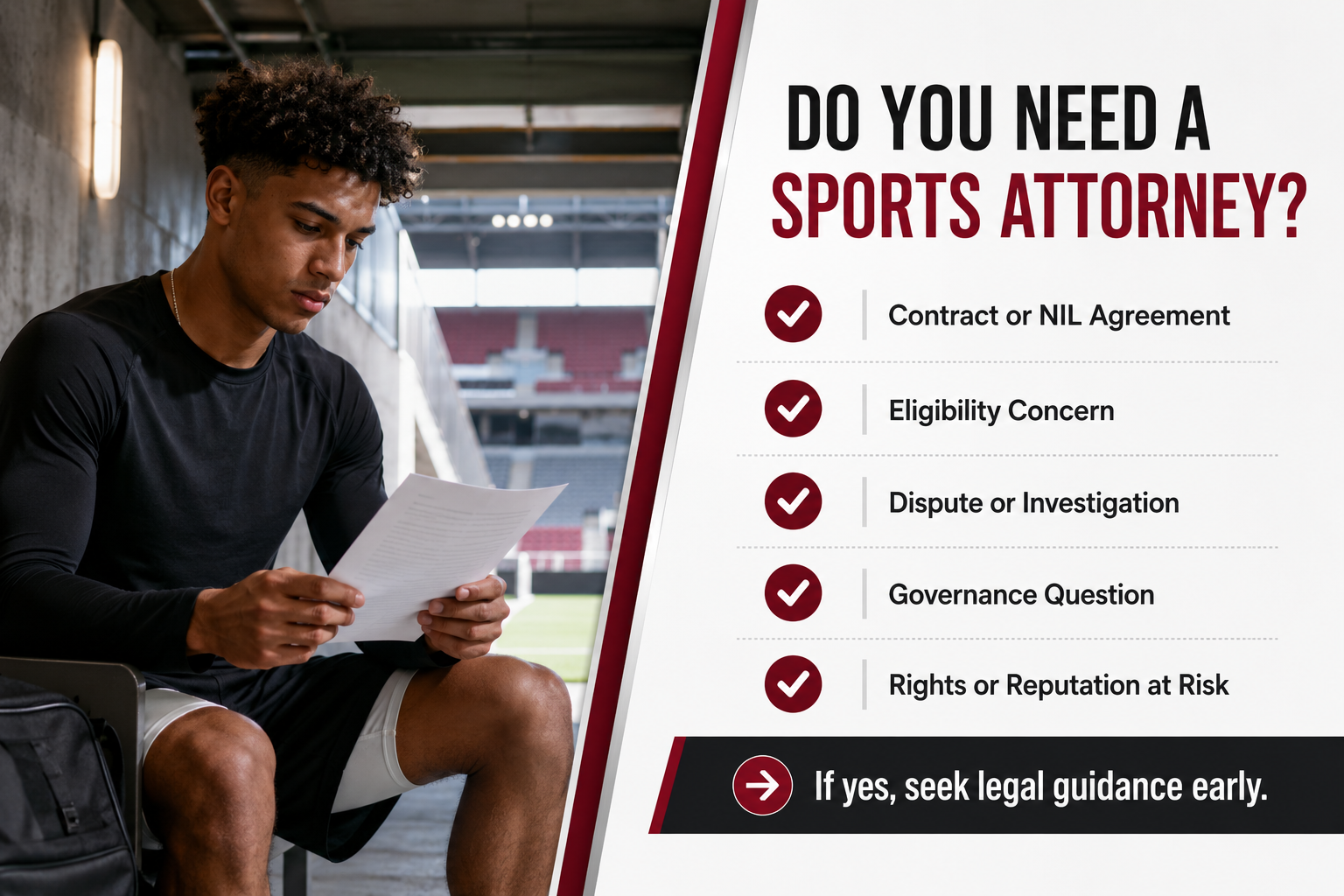
Legal guidance may be useful when:
- An athlete is reviewing or disputing a contract
- A coach is facing discipline, suspension, or termination
- A school receives an eligibility or compliance concern
- A sports organization must address a complaint or internal dispute
- A student-athlete has questions about transfer, residency, recruiting, or amateur status
- A client receives an interview request or notice of an investigation
- An NIL agreement creates payment, performance, disclosure, or termination questions
- A governing body takes action that may affect participation or membership
- A sports-related business relationship is breaking down
Early involvement does not mean every concern will become a lawsuit. It means the client has an opportunity to understand the legal position before making statements, signing documents, or missing important deadlines. General business advice may not address sports-specific rules, regulatory matters, or regulatory compliance.
Eligibility Questions Can Affect an Entire Career
Eligibility rules differ by level of competition, governing body, state, school, conference, and sport, and sports-related decisions may arise in amateur, collegiate, or professional sports contexts. The facts that matter in one system may not control the outcome in another.
At the Texas high school level, University Interscholastic League standards address matters such as enrollment, attendance, age, residency, recruiting, transfers, amateur status, and whether a student changed schools for athletic purposes. Schools may also adopt stricter standards for extracurricular participation, and some families require legal representation for UIL appeals and compliance. UIL Eligibility Standards.
College eligibility can involve academic status, enrollment, transfers, seasons of competition, participation history, and other association or conference rules. The NCAA maintains separate resources addressing eligibility, recruiting, transfers, NIL, governance, infractions, and Title IX compliance issues that can affect equal opportunity in athletics. The applicable rule must be reviewed in the context of the athlete’s division, whether the matter involves collegiate athletes, and the specific circumstances. NCAA student-athlete resources.
An eligibility decision can affect far more than the next competition. It may influence scholarship support, recruitment, roster status, educational plans, and future opportunities. Athlete legal counsel can review the notice, identify the controlling rules, organize relevant facts, and help the client understand the available process.
Contract Terms Should Be Reviewed Before a Dispute Develops
Sports contracts often involve important financial and professional obligations. These agreements may include compensation, services, performance standards, exclusivity, use of intellectual property, confidentiality, termination rights, dispute procedures, conduct expectations, and endorsements.
The meaning of a contract does not depend only on the payment amount. A term that appears minor may control whether a party can end the relationship, recover unpaid compensation, restrict outside opportunities, or use a person’s name and likeness.
Collegiate athletes, coaches, schools, vendors, event professionals, and sports organizations may all enter agreements under NCAA rules that deserve legal review. A sports law attorney can identify unclear language, explain risk, handle contract negotiations, review sponsorship agreements, and help ensure the final document reflects the intended relationship by providing tailored sports attorney support for NCAA compliance and sponsorships. NCAA rule changes in 2021 enabled NIL opportunities for athletes.
When a dispute has already started, counsel can examine what the agreement requires, whether either party failed to perform, and what notice or dispute procedures apply. This helps the client respond based on the contract rather than assumptions or incomplete conversations. Title IX prohibits sex discrimination in federally funded education and requires equal treatment and opportunity in sports when athletics decisions affect participation.
Name Image and Likeness (NIL) Agreements Require Legal and Practical Review
Name, image, and likeness arrangements can create valuable opportunities, but they also introduce legal and compliance concerns. NIL rules and policies continue to change, and the requirements may depend on the athlete’s level of competition, institution, governing body, and the structure of the transaction.
An NIL agreement may address:
- The services the athlete must provide
- The amount and timing of payment
- Approval rights for content
- Use of the athlete’s name, image, voice, or social media
- Exclusivity and conflicts with other agreements
- Disclosure or reporting duties
- Termination and repayment terms
- Morals clauses and conduct standards
- Ownership of photos, videos, and other content
- Dispute resolution
The NCAA continues to publish and revise information concerning student-athlete NIL activities and related Division I rules. This changing NIL context makes current review especially important, particularly for top sports lawyer guidance on NCAA rules and violations. NCAA NIL information
A legal review can help an athlete understand what is being promised, what rights may continue after the agreement ends, and how a Sports Law Attorney can assist with contract negotiations, including endorsements and sponsorship agreements where relevant. Schools, sponsors, collectives, and other businesses may also need counsel to evaluate their obligations, address intellectual property protection, and reduce the risk of unclear or inconsistent terms. Legal review can also help athletes protect and maximize endorsement and branding opportunities.
Investigations Require Careful Legal Judgment
Sports investigations can arise from alleged policy violations, eligibility questions, recruiting concerns, employment matters, discrimination claims, harassment complaints, athlete safety concerns, or violations of governing rules. In some cases, they may also intersect with litigation or related civil litigation.
A request for an interview or written statement should be taken seriously. The client may need to understand who is conducting the investigation, what authority that entity has, what allegations are being reviewed, whether representation is permitted, and how information may be used.
The U.S. Center for SafeSport, for example, uses a defined response and resolution process for matters within the U.S. Olympic and Paralympic Movement. Its process may include jurisdictional review, temporary measures, interviews, evidence collection, formal findings, sanctions, and arbitration. Participants may have an advisor or support person present during the process, and coaches or programs may also need US sports law guidance on investigations and compliance. U.S. Center for SafeSport response and resolution process
Other governing bodies, schools, conferences, and organizations use their own procedures, including internal investigations in some settings. A person should not assume that the rules from one process apply to another.
Legal counsel can help a client understand the notice, preserve relevant records, prepare for interviews, and respond accurately. For organizations, counsel may assist with process planning, policy interpretation, documentation, and decisions that should be consistent and supportable, and some related NIL matters also require coordination around tax and financial planning.
Governance Problems With Governing Bodies Can Put an Organization at Risk
Sports organizations need clear authority and reliable decision processes. Weak governance can lead to disputes over leadership, membership, discipline, finances, policies, conflicts of interest, and who has the power to act. Allegations of coaching abuse can also arise in collegiate and Olympic sports.
Boards and administrators may face questions involving bylaws, voting procedures, officer authority, committee roles, employment relationships, sports investigations, internal investigations, and member rights. These issues may involve team owners, established professional sports leagues, emerging sports leagues, or new leagues still defining governance and compliance. If these matters are handled inconsistently, the organization may face legal exposure and damage to trust.
A sports law attorney can review the governing documents and help leadership understand how a proposed action fits within the organization’s legal structure. This support may be valuable when the organization is considering discipline, responding to a complaint, revising policies, addressing a leadership dispute, or managing a serious internal concern, and often draws on top sports law firm experience with NCAA investigations and governance. Athletes may report coaching abuse through SafeSport or Title IX, depending on the setting.
The goal is to make decisions that are fair, documented, and grounded in the organization’s actual authority. Legal representation may also help athletes facing coaching abuse and related litigation or civil litigation risks.
Why Sports Disputes Can Damage Reputation
Governance problems can affect sports organizations, sports leagues, and professional sports leagues, and sports matters often attract attention because they involve competition, public institutions, known individuals, young athletes, or community organizations. Statements can spread in the news before the facts have been reviewed.
An athlete may feel pressure to respond online. A coach may want to defend a professional record. A school may face questions from parents or the media. An organization or team owner may need to address questions about bylaws, authority, discipline, member rights, or safety concerns without disclosing private information.
A rushed response can make the legal issue more difficult. It may create inconsistent accounts, expose confidential information, affect an investigation, or harm a later claim or defense.
Good legal counsel considers both the immediate dispute and its wider impact. The legal strategy should support accurate communication, preserve important rights, and avoid unnecessary harm to professional relationships or public trust, and experienced counsel can work closely with clients as those decisions unfold.
Done-for-You Support From Masterly Legal Solutions
Masterly Legal Solutions assists qualified clients with sports legal issues involving eligibility, contracts, disputes, investigations, governance, the NIL context, and other matters across the sports sector as part of comprehensive sports law and education law services.
Our work begins with the facts, especially when sports matters may quickly become news before the facts are fully reviewed. We review the documents, identify the governing rules, assess deadlines, and explain the available legal options in clear language. Depending on the matter and the scope of representation, our support may include:
- Reviewing contracts, policies, notices, and governing documents
- Advising athletes, coaches, schools, sports organizations, and professional teams
- Preparing responses and professional correspondence
- Supporting clients through investigations or dispute procedures
- Evaluating eligibility and compliance concerns
- Reviewing NIL-related agreements
- Advising leadership on governance and decision authority, including issues involving private equity
- Negotiating sports-related contracts or disputes
- Assisting organizations tied to sports facilities, player development, or sports technology
Every sports matter is different, and our experienced attorneys understand that representing clients may require attention to timing, jurisdiction, deadlines, conflicts, and the nature of the legal issue. A consultation allows the firm to determine whether the matter fits its services and whether counsel may work closely with the client so legal strategy supports accurate communication and protects important rights.
Sports Law Support Across Teams, Facilities, and Business Operations
Professional sports teams and their business partners face legal concerns that extend far beyond the playing field. A sports attorney may be asked to review employment issues, executive compensation, corporate governance, data privacy, sponsorship rights, and intellectual property matters. These concerns can involve sports clients, agencies, investor groups, private equity firms, and organizations operating across various leagues.
Legal needs may also arise when a team purchases a minority interest, restructures ownership, works with a minor league affiliate, or prepares for a major business transaction. In these situations, outside general counsel can help leadership review agreements, define decision authority, manage risk, and coordinate with other law firms or professional advisers, much like higher education counsel supports colleges and universities with NCAA and Title IX compliance or UIL-focused education law services protect high school programs in Texas.
Legal Issues Involving Stadiums and Sports Facilities
A new stadium or sports arena involves many connected legal and business relationships. Design and construction agreements may define project scope, payment duties, timelines, insurance requirements, approvals, and responsibility for delays. Construction agreements may also affect contractors, architects, developers, local agencies, and the investor group supporting the project.
Disputes involving a stadium can become expensive when the agreement does not clearly assign responsibility. Legal counsel with deep knowledge of contract terms and corporate governance can help clients evaluate the risks connected to facility development, renovation, operations, and event use.
Intellectual Property and Disputes in Sports
Sports organizations often manage valuable names, logos, broadcasts, photographs, digital content, and sponsorship assets. Intellectual property disputes may involve unauthorized use, licensing terms, content ownership, or conflicting commercial rights. These intellectual property matters can affect professional sports teams, football organizations, auto racing businesses, sponsors, and media partners.
Some disputes can be resolved through negotiation or the procedures required by a contract. Others may lead to formal litigation in state court or district court. A sports law attorney can review the facts, identify the parties’ rights, and help the client determine an appropriate response.
Outside General Counsel for Various Sports Matters
Sports clients may need ongoing support across various matters rather than help with only one dispute. Outside general counsel services can provide a consistent legal resource for contracts, employment issues, executive compensation, data privacy, corporate governance, facility agreements, and intellectual property concerns.
Masterly Legal Solutions evaluates qualified inquiries from athletes, teams, organizations, agencies, and sports-related businesses. Call (972) 236-5051 to discuss whether the firm can assist with the legal matter.
Frequently Asked Questions About Hiring a Sports Attorney
What does a sports attorney do?
A sports attorney advises clients about legal matters connected to athletics, including contracts, eligibility, disputes, investigations, governance, and NIL agreements.
Who may need a sports law attorney?
Athletes, coaches, schools, athletic departments, sports organizations, sponsors, team owners, people involved with sports teams, and other business professionals in the sports industry may need legal help when a sports matter affects their rights or obligations. A sports attorney is one of the attorneys or lawyers who advise clients about legal matters connected to athletics.
Can athlete legal counsel help with eligibility?
Yes. Counsel may review the applicable rules, notices, records, and appeal procedures. The available options depend on the governing body and the facts.
Should I speak with an attorney before an investigation interview?
Legal advice may be important before giving a statement or attending an interview. An attorney can explain the process, help you prepare, and determine whether representation is allowed.
Can a sports attorney review an NIL agreement?
Yes. A sports attorney can also prepare you for investigation interviews, including interviews tied to internal investigations, and examine payment terms, required services, intellectual property rights, exclusivity, disclosures, termination terms, dispute provisions, and endorsements.
Can legal counsel help a sports organization with governance?
Yes. Counsel can review bylaws, policies, board authority, disciplinary procedures, conflicts of interest, NIL agreements and related endorsements when they affect payment, services, rights, or restrictions, and other organizational concerns, including regulatory matters.
Does every sports dispute require a lawsuit?
No. Some disputes may be addressed through negotiation, internal review, appeal, mediation, arbitration, civil litigation, or another required process, including regulatory matters. The right option depends on the agreement and governing rules.
When should I contact a sports attorney?
Contact counsel as soon as a legal issue may affect eligibility, participation, employment, compensation, or reputation. Early review may help protect options and prevent missed deadlines.
Request a Qualified Sports-Law Inquiry With Masterly Legal Solutions
If an eligibility concern, contract, dispute, investigation, governance issue, or NIL matter may affect your career or organization, speak with a sports attorney before the problem escalates.
Contact Masterly Legal Solutions at (972) 236-5051 or visit MasterlyLegal.com to request a qualified sports-law inquiry.
This page provides general information and does not create an attorney-client relationship. Legal advice depends on the specific facts, governing rules, and jurisdiction involved.
Teacher Rights When Assaulted by a Special Needs Student: Safety, Reporting and Investigation Issues

Looking for Legal & Business Solutions? Contact Us Now
Fill in the form or call us to set up a meeting





