
Educator Certificate Defense: Protecting Credentials
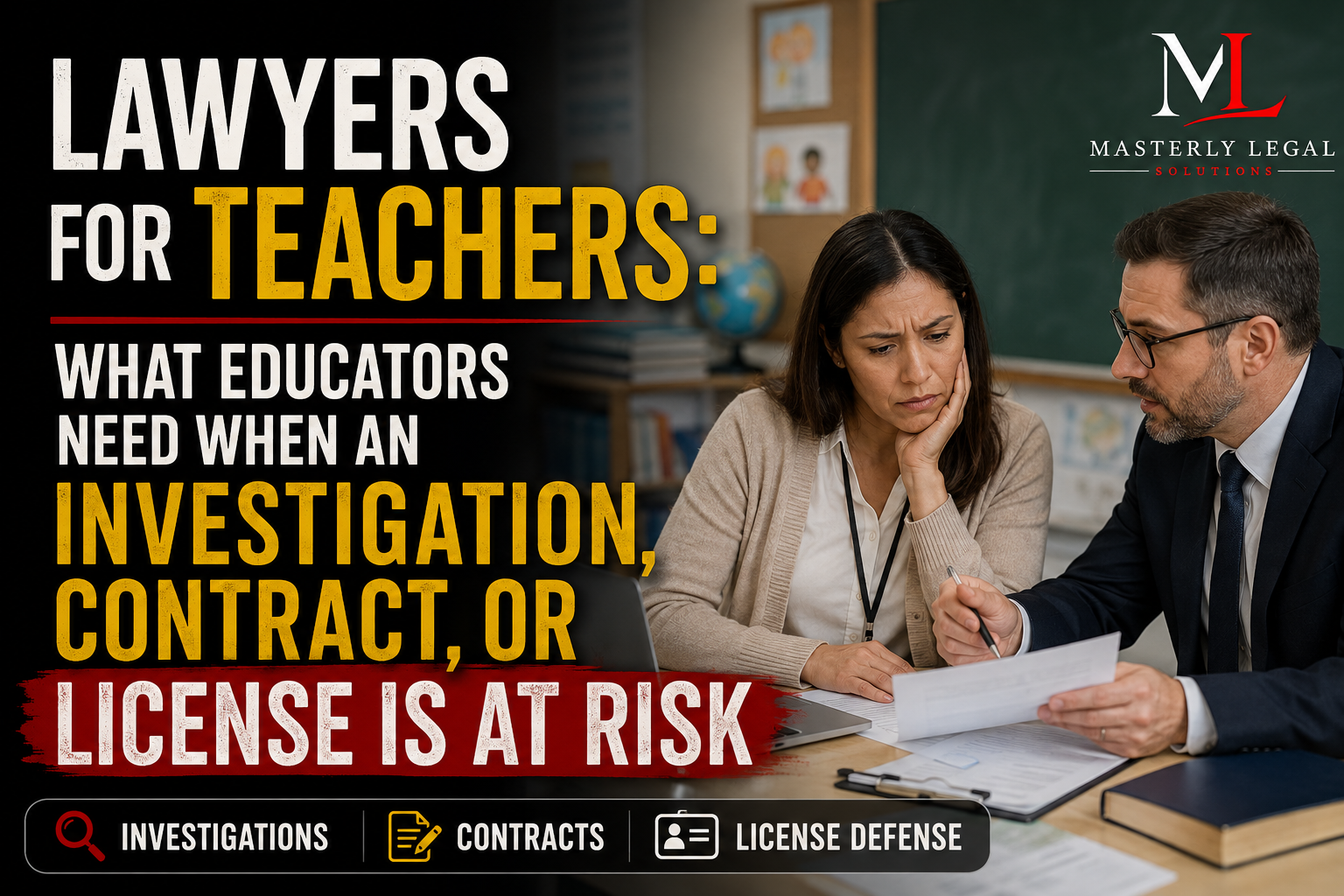
A notice from a school district, the Texas Education Agency, or another license body can put an educator's career at risk. The claim may involve student boundaries, conduct, testing security, reporting duties, criminal history, or a work dispute that has reached the certification level.
Even when a teacher thinks the claim is false or incomplete, the reply matters. Emails, interviews, and work choices can become part of the record. A license case can affect the current job, future job search, income, and reputation.
This educator defense work helps teachers, administrators, and other licensed school staff face an investigation or action against a credential. Masterly Legal Solutions helps qualified clients understand the claim, protect their rights, and respond through the right legal process.
A School Job Matter Can Become a License Matter
Educators may think an internal school review will stay a job issue. That is not always true.
A district may review conduct under its personnel rules, contract, board rules, or student safety steps. Depending on the claim, school leaders may also have a duty to report the matter to the proper state authority, including Texas SBEC, which handles educator certification and discipline. Law enforcement, the Texas Department of Family and Protective Services, or another agency may also get involved.
This means one event can start several proceedings:
- A campus or district review
- A job decision
- A grievance or contract dispute
- A TEA misconduct review
- A criminal case
- A child-protection case
- A certification discipline case
Each process uses different rules. A good result in one does not always end the others. A resignation or job change also may not stop a license review.
Teacher certificate defense should look at the full picture, including common reasons educators may lose a TEA license, rather than treating each notice as a separate work issue.
When Teacher or Educator Certificate Defense May Be Needed
Work in education carries its own ethics and duty rules, so legal help may be important whenever a claim could affect an educator's certificate, job record, or future work in education.
Common concerns include:
- Alleged improper communication with a student
- Claims involving student boundaries or bias
- Physical contact or student-discipline claims
- Testing security or assessment issues
- Failure to report suspected misconduct
- Misuse of school funds, equipment, or property
- Criminal arrests, charges, or convictions
- Alleged dishonesty during hiring or certification
- Contract abandonment
- Reprisal or discrimination tied to a report
- District policy or ethics issues
- Claims involving social media or electronic messages
Not every claim leads to discipline. The Texas Education Agency says some matters close after review because the agency lacks authority, the facts do not meet review rules, or another agency has control. Texas Education Agency educator investigations
Still, educators should not assume the claim will fade. Early attorney review can flag legal risk, deadlines, and records that may shape the result.
Why Informal Statements Can Create Formal Problems
When an educator first hears a complaint, the urge may be to explain it right away. A principal, HR rep, investigator, parent, or coworker may ask for a meeting or statement.
A quick answer can cause new problems. Dates may be unclear. Records may not be ready. A statement in an interview may later be compared with emails, texts, witness notes, or a report to a state agency.
Silence is not always right, but neither is answering serious claims without knowing the process. An educator license defense attorney can help decide why the request was made, what rights apply, and how a reply may affect related matters after a TEA investigation notice.
Counsel can also help avoid guesswork. A careful reply should stick to known facts and the rules without adding confusion that harms credibility.
The Texas Educator Misconduct Investigation Process
TEA's Educator Investigations Division gets information from districts, charter schools, public complaints, criminal history records, law enforcement, and the Department of Family and Protective Services. TEA gathers the record, while SBEC handles discipline under the Texas process described below, a system noted in recent coverage of Texas teachers in trouble and educator discipline.
During review, TEA may check identity, work history, prior cases, records, authority, and how serious the claim is. If the agency sees enough under the law, it may open a formal case.
In a formal case, TEA may send written notice, assign an investigator, request records, interview witnesses, and work with other agencies. A warning may also be added to the certification record. Some cases may lead to a temporary certificate hold or a place on the Do Not Hire Registry when the law allows.
Possible outcomes include closure, an informal deal, or referral for discipline under 19 Texas Administrative Code Chapter 249.
If litigation follows, the case may go to the State Office of Administrative Hearings. There, evidence is shown to an administrative law judge or committee. The judge may issue a Proposal for Decision. Final action may come from SBEC or the Commissioner of Education. Texas Government Code defines final discipline actions for educators. TEA investigation and discipline process, and SBEC discipline reports have been updated quarterly since FY 2015-2016.
This process can affect an educator long after the school event. Teaching license defense should address both the proof and the work impact of each possible result.
Evidence Matters in Teacher Certificate Defense
Certification cases often turn on documents made before a lawyer gets involved. These may include emails, texts, student records, lesson plans, evaluation records, photos, security footage, personnel files, social media posts, and district review files.
Context matters. A message that seems bad by itself may mean something else in the full chat. A witness may know only part of what happened. A school rule may have been used differently in another case. An educator may also have records showing prior reports, supervisor approval, or efforts to follow district steps.
Counsel can help decide which facts matter and how the records fit the claimed rule break. Counsel may also find missing facts, mixed statements, or process concerns that need attention, using Masterly Legal Solutions' focus on protecting educators' licenses.
The goal is not to invent a new story. It is to give the decision-maker a true, clear, and legally relevant account.
Resignation Does Not Always End the Risk
An educator may think about resigning when a school review becomes hard. But leaving a job does not always stop reporting or end a certification case.
The timing and wording of a resignation may also affect contract rights, work records, references, benefits, and claims of contract abandonment. A resignation agreement or separation document may contain terms involving payment, privacy, non-disparagement, return of property, or future employment verification.
Before signing or making a final work choice, an educator should know how that choice may affect the certificate matter. Educator certificate defense may need to handle job issues, including wrongful termination and contract disputes for educators, along with the state discipline process.
Certification Allegations Can Damage a Professional Reputation
Educators build trust over many years. A license review can shake that trust before the facts are fully checked.
Rumors may spread among coworkers, parents, or community members. A warning or public discipline may affect job chances. The educator may feel pressure to defend the matter on social media or in casual talks.
Public comments can add risk. They may reveal protected student data, clash with later testimony, break work rules, or make a private matter more public.
A thoughtful legal plan looks at more than the claim itself. It also looks at the educator's work history, professional ties, future applications, and long-term reputation. Clear legal guidance, such as experienced education law attorney services for teachers, can help the educator speak carefully while the matter is open.
Possible Outcomes and Discipline in an Educator Discipline Matter
The outcome depends on the evidence, the claimed conduct, prior discipline history, the rules that apply, and the stage of the case.
A matter may result in:
- Closure without discipline
- Removal of a warning
- An agreed order or deal
- A formal reprimand
- Limits or conditions on the certificate
- Suspension for a set time
- Certificate revocation
- Surrender of a certificate
- Denial of a certification application
Some outcomes become public through official records. Others can affect whether the educator can work in a role or return to the profession.
An educator should know both the immediate terms and the future effects before accepting a deal. Education lawyers providing expert support for teachers can review the wording, explain the practical effect, and help the client compare options.
Done-for-You Educator Certificate Defense
Masterly Legal Solutions helps teachers, administrators, and other licensed school staff with qualified credential and review matters as part of its broader education law attorney services for teachers and administrators.
Our legal support may include:
- Reviewing notices and claims
- Checking district rules, messages, and records, including help organizing support files or a professional portfolio for the defense
- Advising educators before interviews or written replies, including help with likely deep-dive questions about classroom work and student results
- Preparing replies to districts or state bodies
- Handling certificate warnings and discipline proposals
- Reviewing settlement or agreed-order terms
- Coordinating credential issues with related job concerns
- Preparing for administrative hearings when needed
Masterly Legal Solutions handles each matter with care, privacy, and attention to the educator's work future. We explain the process in clear language and help the client make informed choices based on the facts, with service grounded in quality, inclusion, and a do no harm approach.
Representation depends on the claim, deadlines, authority, possible conflicts, and the firm's ability to take the matter.
Teacher Credentialing Protects Public Trust
Teacher credentialing supports accountability in school communities. Licensure rules help ensure that educators have the knowledge, training, and good judgment needed to serve students. These rules matter because families place real trust in teachers, administrators, and school groups.
An investigation may involve student health, professional conduct, fraud, reporting duties, or whether an educator failed to follow school policy. The result can affect the ability to lead a class, work in administration, join school programs, or get future jobs.
Certification Rules Differ Across the Country
Educator licensure is handled differently across the country. Texas matters may involve TEA and SBEC, while California cases may involve the California Commission on Teacher Credentialing. The California Commission investigates reported misconduct and may consider action against a credential or application, and North Carolina has its own rules for educator misconduct defense and protecting licenses. California Commission licensure enforcement
This shows why educators need legal help in the right state. Rules, reporting duties, courts, and administrative steps can vary by state. General resources may help, but they do not replace legal advice based on the exact claim and the law that controls it.
Legal Assistance Focused on the Educator's Career
Educator-defense lawyers can review notices, rules, witness statements, work records, and other data. These tools help counsel understand the claim and focus on the facts that may affect the educator's certificate, consistent with Masterly Legal Solutions' broader educator-focused legal services.
Legal help may also address job, management, or criminal issues. When a matter enters the legal system, counsel can explain the process and help the educator respond in the proper administrative or court case.
Strong educator defense supports fairness and justice while respecting student safety and professional accountability. It can also give educators a chance to show relevant evidence, fix incomplete facts, and protect the careers they built.

Frequently Asked Questions About Educator Certificate Defense
What is educator certificate defense?
Educator certificate defense is legal help for a teacher, administrator, or licensed education professional facing an investigation or possible discipline against a credential.
When should I contact an educator license defense attorney?
Contact an attorney when you receive an investigation notice, interview request, proposed sanction, or information showing that your conduct may be reported to a licensing authority.
Can a school district investigation affect my teaching certificate?
Yes. Some claims or job actions may be reported to TEA and may lead to a separate certification case.
Should I respond to TEA without an attorney?
You may handle the matter yourself, but a response can affect your certificate and career. Legal review can help you understand the claim, deadlines, and possible effects.
Does resigning stop a teacher certificate investigation?
Not always. A district may still have reporting duties, and TEA may continue a case after the educator leaves the job.
What sanctions can the licensing board, SBEC, impose?
Depending on the case, possible outcomes may include a reprimand, certificate limits, suspension, revocation, surrender, or denial of an application.
Is an educator investigation public?
Investigations may stay private while pending, but final discipline can become public through official records. The rules depend on the type and stage of the matter.
Can teaching credential defense help before a formal case begins?
Yes. Early legal guidance may help an educator judge risk, prepare for an interview, review records, and avoid statements that could make the matter worse.
Request a Confidential Educator-Defense Consultation
If a complaint, review, job action, or proposed sanction puts your credentials at risk, timely educator certificate defense can help you understand the process and protect your work future.
Call Masterly Legal Solutions at (972) 236-5051 or visit MasterlyLegal.com to request a confidential educator-defense consultation.
This page gives general information only. It does not create an attorney-client relationship. Legal advice depends on the facts, the rules, and the state involved.
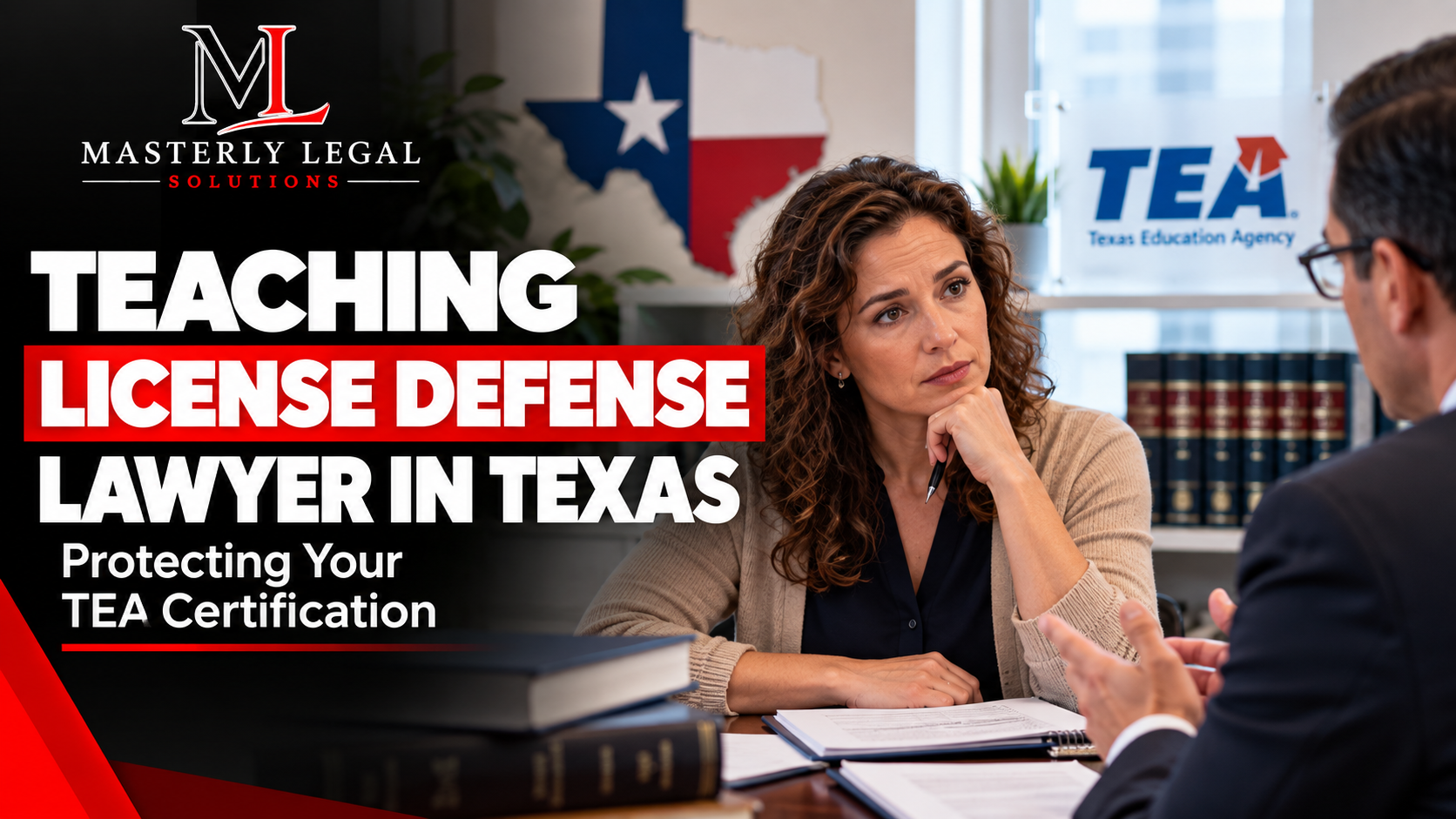

Teacher Rights When Assaulted by a Special Needs Student: Safety, Reporting and Investigation Issues


Looking for Legal & Business Solutions? Contact Us Now
Fill in the form or call us to set up a meeting