
Texas Paraprofessional Misconduct Investigations: What School Employees Should Know Before Responding
A Texas paraprofessional misconduct investigation can put your job, professional reputation, and future in education at risk. A complaint from a student, parent, coworker, or administrator may quickly lead to an interview, administrative leave, or a formal district review.
You may be asked to explain what happened before you fully understand the allegations. Even when you believe the complaint is false or incomplete, your response can become part of an official employment record.
For paraprofessionals, instructional aides, classroom assistants, teachers, and school administrators, the rules can be confusing. Different employment positions may face different reporting requirements, disciplinary procedures, and possible consequences.
Masterly Legal Solutions provides legal guidance and representation for education professionals facing serious employment and misconduct concerns. An education law attorney can help you understand the allegations, evaluate the applicable procedures, and prepare a response that addresses the facts without overlooking your legal interests.
Who Is Covered by a District Educator Misconduct Investigation?
School misconduct investigations are not limited to certified teachers. Texas school districts may investigate allegations of educator misconduct involving paraprofessionals, instructional aides, classroom assistants, administrators, and other school personnel.
The scope of an investigation depends on the employee's responsibilities, the conduct being reviewed, district policy, and applicable state law.
For example, a paraprofessional district investigation may involve allegations concerning student supervision, inappropriate communication, physical contact, professional boundaries, or violations of workplace policies.
A district may also investigate concerns involving noncertified school employee misconduct, even when the individual does not hold a teaching certificate, and the district’s review turns on the employee’s duties, the facts, and applicable law.
How Texas Education Code 22A.052 and the Texas Education Agency Apply
Texas Education Code 22A.052 addresses required reporting of certain misconduct involving noncertified employees and service providers with direct access to students.
The law covers specified student-related misconduct, including certain allegations of abuse, unlawful acts, inappropriate communications, and professional boundary violations that Texas investigates to protect students.
When the statutory conditions are met, school administrators may have reporting duties to the Texas Education Agency (TEA), regardless of whether the employee holds a teaching certificate. Texas law also requires immediate reports of child abuse allegations to law enforcement or DFPS.
Not every workplace complaint triggers state reporting. A disagreement between coworkers, an ordinary performance issue, or a minor policy concern does not automatically become a reportable misconduct case under this section.
The facts, available evidence, and applicable law matter.
Failure to report abuse or attempts to conceal misconduct can be treated as a state jail felony in Texas.
Masterly Legal Solutions can help employees understand whether the matter involves internal district discipline, state reporting, or both.
School District Investigation, Reporting and Employee-Response Stages
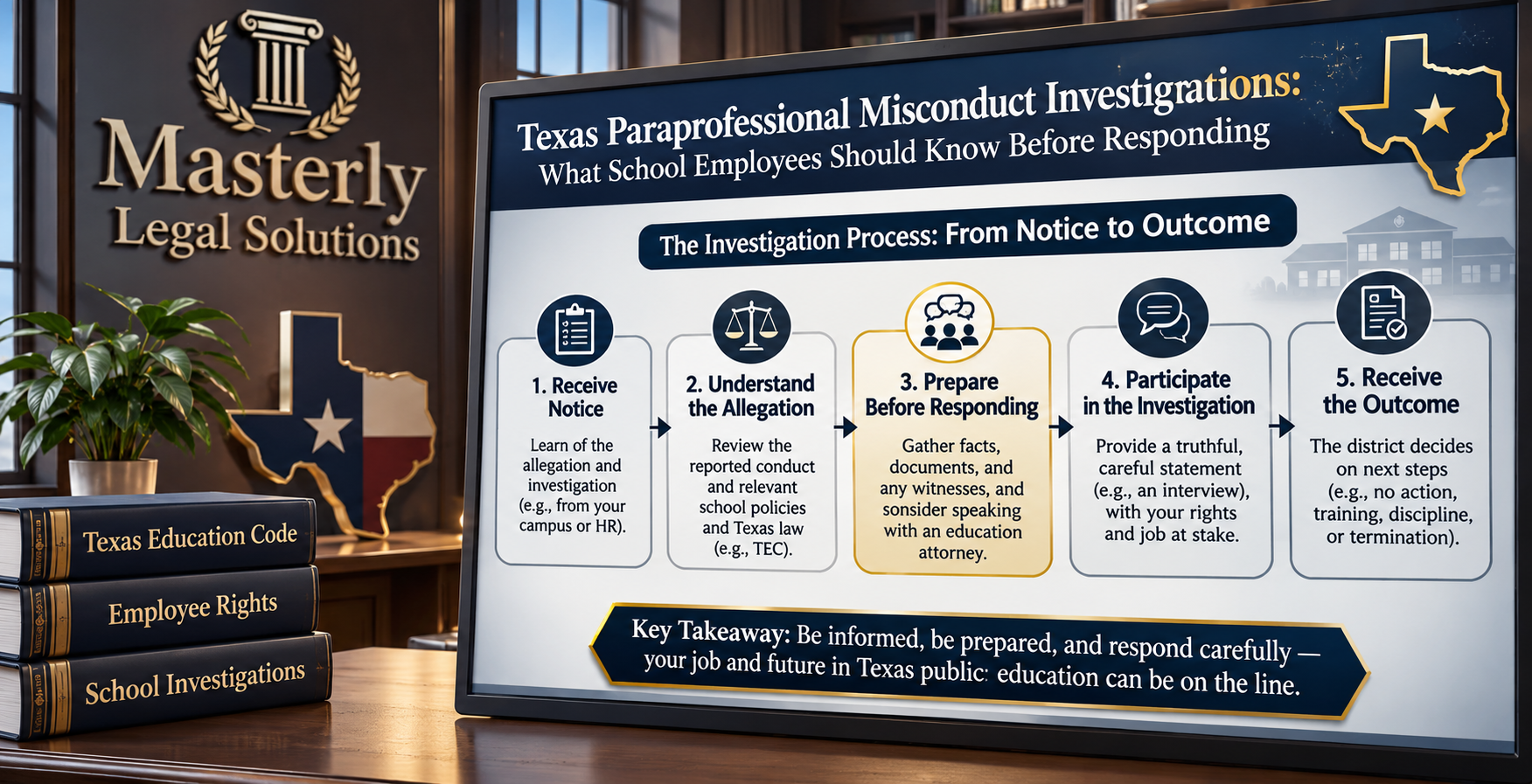
A school district investigation often begins when a concern is reported to campus leadership or human resources. The district may collect records, speak with witnesses, examine school policies, and request a statement from the employee involved as part of the initial process.
Some investigations remain internal employment matters. Others involve allegations serious enough to require notification to state authorities, and those reports can lead to limited public information while a case is still pending. Some student-related allegations also require notifying parents within one school business day.
When an Investigation Becomes More Serious
A district review may involve several overlapping concerns:
- Employment status: The employee may face reassignment, administrative leave, suspension, or possible termination.
- Student safety: District officials may need to respond promptly to allegations involving students.
- State reporting: Certain allegations may trigger mandatory reporting duties under Texas Education Code Chapter 22A.
- Employee response: Statements and supporting records may influence how the district evaluates the complaint.
- Future employment: Findings and applicable reporting or employment restrictions may affect later opportunities in public education, including continued employment and eligibility to work in Texas public schools after TEA review.
Under applicable provisions of Chapter 22A, certain student-related misconduct allegations carry reporting deadlines as short as 48 hours. These are duties imposed on designated school officials, not a universal deadline for an accused employee to submit a response.
A district's internal investigation and any separate TEA review may also proceed on different timelines.
Why Early Statements Matter
An employee may want to explain everything immediately, especially when the complaint seems unfair.
However, an incomplete statement can create questions that become difficult to address later. Dates, witness accounts, electronic messages, and school records may be compared with the employee's version of events.
An employee response to school allegations should address the actual concerns, rather than rely on assumptions about what the investigator already knows.
Legal representation can help clarify what information is being requested, which deadlines apply, and how a statement may affect related proceedings.
How Noncertified and Credentialed Positions Can Differ
One important issue in a texas paraprofessional misconduct investigation is whether the employee holds a state-issued educator certificate or permit.
Paraprofessional is a job title, but it does not always tell the full story about a person's credential status.
Some paraprofessionals hold state-issued educational aide certificates. Others work in noncertified positions.
This difference can affect which agency has authority over the matter, what consequences are possible, and how the TEA’s Educator Investigations Division reviews alleged educator misconduct, criminal history information, available evidence, and applicable law to determine whether certification action or other disciplinary action is warranted for certified educators and other texas educators under professional standards, ethics, and the state’s investigation process.
Noncertified Employees and State Reporting
For a noncertified employee, qualifying misconduct may be reported under Texas Education Code 22A.052.
Depending on the allegations and findings, the matter may lead to district employment action, TEA review of continued employment in Texas public schools, or placement on the registry if eligibility is lost.
Texas also maintains a registry for individuals determined to be ineligible for employment or service with covered educational entities.
A person does not automatically become ineligible for school employment simply because a complaint has been filed.
Employees Who Hold Educator Certification Credentials
Credentialed teachers, administrators, educational aides, and other certificate holders may also face matters involving the State Board for Educator Certification (SBEC).
Depending on the employee's certification status and the alleged conduct, potential consequences may include disciplinary action, certification restrictions, suspension, or revocation.
These outcomes are not automatic. The applicable laws, available evidence, and administrative procedures determine which actions may be considered. For certificate holders, final disciplinary actions are public information in TEA reports and are updated quarterly dating back to FY 2015–2016.
For employees facing possible credential consequences, an education law attorney can assess both the district investigation and any separate certification concerns.
What to Preserve Before an Interview or Statement
Receiving an investigation notice can be stressful, particularly when the district requests a quick meeting or written explanation.
Before responding, it is important to understand which records may help establish the facts.
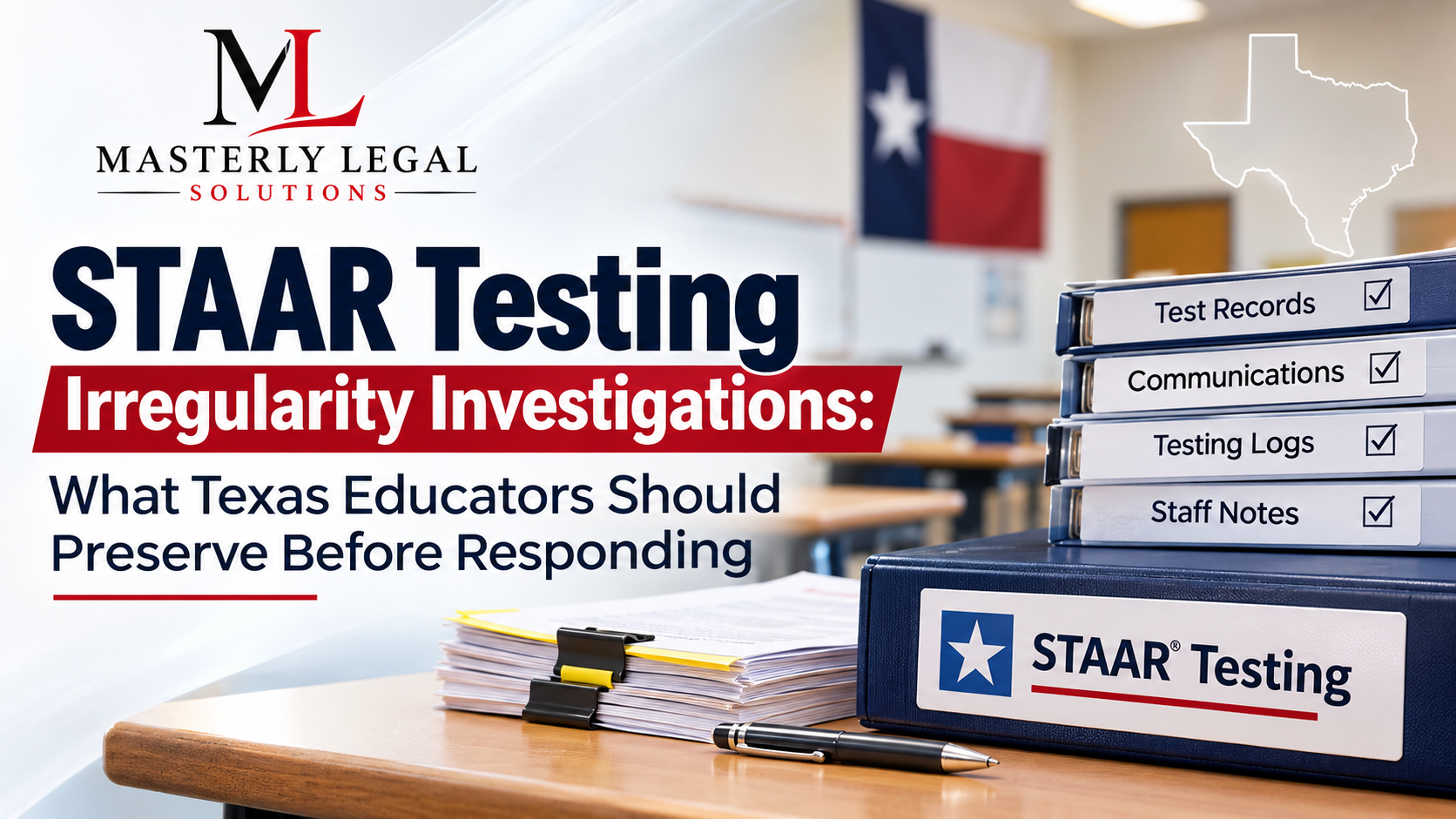
Relevant information may include:
- Written notices, allegations, emails, and instructions received from the district.
- Employment agreements, job descriptions, and applicable workplace policies.
- Dates and timelines connected to the reported incident.
- Names of potential witnesses who may have relevant information.
- Lawfully accessible work-related messages, schedules, or other records.
- Documents showing previous communications or concerns related to the allegation.
Preserved evidence can affect the process and may provide additional details that help explain whether the matter ends in case closure, an informal resolution, administrative discipline, or criminal prosecution, especially when agency reviews rely on records and reports.
Records should be preserved through lawful and authorized means. Employees should not remove confidential student records, access restricted systems, delete messages, or contact potential witnesses in violation of district instructions.
A qualified attorney can advise on appropriate preservation requests and how sensitive evidence should be handled.
Administrative Leave Does Not Automatically Mean Misconduct Was Proven
Being placed on administrative leave can make employees fear that a final decision has already been made.
However, administrative leave may be an interim measure while the district reviews allegations. It does not, by itself, establish that the employee committed misconduct.
The terms of leave, compensation, communication restrictions, and employment rights depend on the circumstances.
For teachers and other employees dealing with administrative leave or district interviews, early legal advice may help clarify the risks before a formal response is submitted.
When Independent Representation Is Warranted
Not every workplace concern requires extensive legal proceedings. However, independent representation becomes particularly important when an investigation may affect employment, professional credentials, or future eligibility to work in education.
Employees should consider speaking with an education law attorney when:
- The district requests a formal statement about serious misconduct allegations.
- The employee receives notice of administrative leave or proposed termination.
- The complaint involves alleged inappropriate student contact or communication.
- TEA or another state authority becomes involved.
- The employee may face certification action or restrictions on future school employment.
- There are concerns about inconsistent evidence, procedural fairness, or retaliation.
- The employee is considering resignation while an investigation remains unresolved.
Resigning does not necessarily prevent continued investigation, mandatory reporting, or other legal consequences.
For administrators and superintendents who are personally accused of misconduct, independent counsel can also help separate their individual legal interests from the interests of the district.
Legal Support From Masterly Legal Solutions
Masterly Legal Solutions works with Texas educators and other education professionals facing employment disputes, investigations, and professional disciplinary concerns.
Our legal team can review the allegations, consider the applicable employment and education laws, evaluate relevant documentation, and provide representation based on the needs of the case.
This may involve preparing for an investigator interview, evaluating a proposed employment action, reviewing state reporting implications, or responding to concerns affecting educator credentials.
The goal is to help clients make informed decisions while navigating a serious professional matter.
An investigation can have consequences beyond one school year or one district. Seeking qualified legal advice early can help employees understand those risks and respond with greater clarity.
How Misconduct Allegations Can Affect Employment, Legal Rights, and Appeals
A Texas paraprofessional misconduct investigation can have serious consequences for school staff and their future in the education profession. Allegations involving sexual conduct, physical abuse, misuse of school property, or other misconduct may require an investigation by the school district, the Texas Education Agency, or another department. When school officials have knowledge that an employee may have engaged in prohibited conduct, they must respond in a manner that complies with applicable state and federal law. Depending on the findings, an educator's termination, loss of pay, or other disciplinary punishment may follow. Employees who refuse to comply with lawful investigation requirements or have failed to respond to official notices may face additional consequences.
However, an allegation does not automatically mean the employee is guilty or has been convicted of a crime. Certain cases may involve a formal hearing, an administrative appeal, or court proceedings in the county where the matter is heard. These procedures are intended to protect legal rights while addressing school safety concerns. Masterly Legal Solutions helps education professionals understand their options, evaluate potential consequences, and seek qualified representation when their employment or reputation is at risk.
Frequently Asked Questions About Texas Paraprofessional Misconduct Investigations
Can a district continue investigating after an employee resigns?
Yes. A district may continue investigating certain allegations after an employee resigns. Texas law also requires continued investigation or reporting in specified misconduct cases, and resignation does not automatically stop district reports, TEA review, the process for possible disciplinary action, or decisions affecting continued employment. Resignation does not automatically end a Texas paraprofessional misconduct investigation or prevent possible state review.
Does a paraprofessional automatically face SBEC certification discipline?
No. SBEC disciplinary action depends on whether the person holds a credential or is otherwise subject to SBEC authority, as well as the circumstances of the allegation and where the case is in the process. Noncertified employees may instead face district action or TEA review involving future school employment eligibility. In general, SBEC matters involve certified educators and are reviewed under professional standards, ethics, and applicable law.
What information should I gather before responding?
Gather the investigation notice, relevant employment policies, a timeline of events, witness information, and lawfully accessible communications. Before making a formal statement in a Texas paraprofessional misconduct investigation, consider having an education law attorney review the allegations and available information, as gathering these materials can help your attorney identify missing additional details before you respond.
Confidential School-Employee Investigation Consultation
If you are facing a Texas paraprofessional misconduct investigation, an early conversation with qualified legal counsel can help you understand the allegations, potential reporting requirements, possible employment consequences, and whether the matter could affect continued employment in Texas public schools as well as professional credentials.
Masterly Legal Solutions represents education professionals dealing with school investigations, misconduct allegations, administrative leave, and disciplinary action involving professional standards.
Whether you are a paraprofessional, teacher, administrator, or superintendent facing allegations, our team can review your circumstances and discuss available legal options within the investigation process without promising a particular outcome.
Call Masterly Legal Solutions at (972) 236-5051 or contact our office to request a confidential school-employee investigation consultation.
Protecting your professional interests begins with understanding the facts, the available evidence, applicable law, and the decisions ahead.





Looking for Legal & Business Solutions? Contact Us Now
Fill in the form or call us to set up a meeting