

The Administrative Leave Trap: Why Teachers Often Damage Their Own Defense
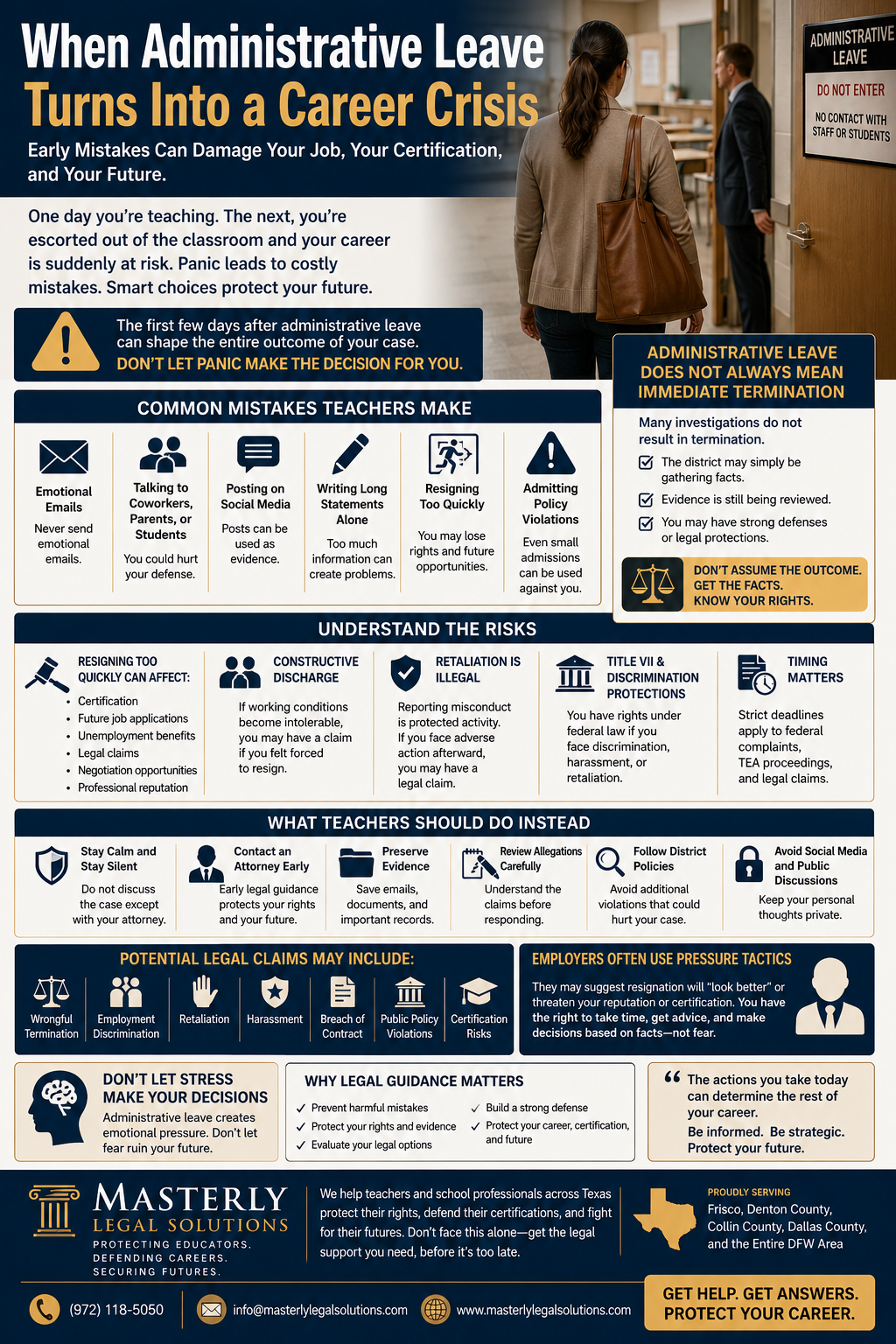
When Administrative Leave Turns Into a Career Crisis
Most teachers never expect to be escorted out of a classroom, told not to contact coworkers, or placed on administrative leave without warning. For many educators, the experience feels humiliating, confusing, and deeply personal. One day they are teaching students and attending staff meetings, and the next they are sitting at home wondering if their career is about to collapse. In many cases, the fear and uncertainty cause teachers to make serious mistakes before ever speaking with an attorney.
Administrative leave is not always the same as termination, but teachers often react as though their careers are already over. Panic can lead to emotional emails, social media posts, rushed resignation letters, or damaging conversations with investigators. School districts and employers may already be building a case while the employee unknowingly weakens their own defense. Unfortunately, these early mistakes can later affect employment opportunities, certification status, and even future legal claims.
At Masterly Legal Solutions, we have seen many cases where teachers accidentally harmed their own position before understanding their rights. Some educators believe cooperating fully without education law attorney guidance will make the problem disappear. Others assume resigning immediately will protect their reputation. In reality, certain actions can create long-term damage that becomes difficult to undo later.
Teachers throughout Texas need to understand that administrative leave is often the beginning of a much larger legal process. Decisions made during the first few days can shape the outcome of investigations, employment disputes, and future proceedings.
Why Teachers Panic After Being Removed From Campus
Administrative leave creates immediate emotional pressure. Educators may worry about finances, family responsibilities, student relationships, and public embarrassment. Some teachers feel shocked because they were never warned an issue existed. Others become afraid that parents, students, or coworkers will assume the worst.
This emotional reaction is completely understandable, but panic often causes poor decision-making. Teachers sometimes focus only on saving their job instead of protecting their long-term interests. An employee who feels desperate may say too much, admit unnecessary details, or make statements that can later be misunderstood.
Employers understand that administrative leave creates stress. In some situations, districts rely on that pressure to encourage a quick resignation. Teachers who do not fully understand the legal process may unintentionally help the employer strengthen its position.
Administrative Leave Does Not Always Mean Immediate Termination
One of the biggest misconceptions educators have is believing administrative leave automatically means they will be terminated. While some investigations eventually lead to firing, many do not. Administrative leave may simply mean the district wants time to review allegations or conduct an internal investigation
Teachers often damage their defense because they assume the outcome has already been decided. For example, an employee may resign immediately because they believe continued employment is impossible. Later, they discover the district did not yet have enough evidence to justify termination.
An employer may still be evaluating witness statements, reviewing records, or determining whether a policy violation even occurred. Resigning too early can remove opportunities to challenge the allegations or negotiate a better outcome.
The Dangerous Mistake of Talking Too Much
Teachers frequently believe that explaining everything immediately will clear up misunderstandings. Unfortunately, excessive communication can create serious problems during an investigation.
Common mistakes include:
- Sending emotional emails to management
- Contacting parents or students about allegations
- Discussing details with a co worker
- Posting frustrations online
- Giving multiple inconsistent explanations
- Volunteering information that investigators never requested
Every statement made by the employee may later become part of the investigation. A harmless comment can be interpreted differently once written in an investigative report.
Educators should remember that districts are often documenting every interaction during administrative leave. Statements that seem casual may later appear in employment records or legal proceedings.
Why Resigning Too Quickly Can Be a Serious Error
Many teachers believe resigning will protect their reputation or prevent future trouble. In reality, a rushed resignation may create additional legal problems.
Some educators resign because they feel forced to do so. Others worry the district will eventually terminate them anyway. However, resignation decisions should never be made out of panic or fear alone.
A resignation may affect:
- Certification proceedings
- Future job applications
- Unemployment benefits
- Potential legal claims
- Negotiation opportunities
- Professional reputation
In some cases, teachers later discover they may have had grounds for wrongful termination claims or workplace retaliation allegations. By resigning too quickly, they unintentionally weaken their ability to challenge the employer’s conduct.
Understanding the Concept of Constructive Discharge
Constructive discharge occurs when working conditions become so intolerable that a reasonable person would feel forced to resign, which is one reason every teacher needs a lawyer for legal protection when pressure to resign increases. This concept is important because many educators believe they had no real choice except resignation.
For example, a teacher may face:
- Extreme harassment
- Retaliation after reporting misconduct
- Public humiliation
- Threats regarding certification
- Unfair accusations
- Constant pressure from management
If an employee resigns under these circumstances, the resignation may not truly be considered voluntary. Constructive discharge claims often arise when an employer creates unbearable conditions designed to push an employee out.
However, proving constructive discharge can be difficult. Teachers should speak with an attorney before resigning if they believe they are being forced out unfairly.
How Forced Resignation Tactics Often Work
School districts and employers do not always directly tell teachers to resign. Instead, they may create pressure designed to encourage resignation without formally terminating the employee.
This pressure may include:
- Suggesting resignation will “look better”
- Warning of possible public embarrassment
- Mentioning certification risks repeatedly
- Limiting communication
- Isolating the employee
- Imposing intimidating deadlines
A forced resignation may seem voluntary on paper even when the employee felt trapped. Many educators later realize they acted emotionally without fully understanding their options.
Teachers should never assume they must make immediate decisions simply because an employer demands quick answers.
Why Teachers Should Avoid Writing Long Statements Alone
Educators often believe detailed written explanations will help their situation. Unfortunately, long written statements frequently create additional issues.
Teachers sometimes:
- Include unnecessary information
- Speculate about events
- Make emotional accusations
- Contradict earlier statements
- Admit policy mistakes unintentionally
Once submitted, written statements become permanent records. Investigators and attorneys may later review every word carefully.
An employee should understand the allegations fully before responding in writing. Legal counsel can help identify whether a statement may accidentally damage the defense.
The Risk of Social Media During Administrative Leave
Social media activity can seriously harm a teacher’s position during an investigation. Even seemingly harmless posts may create problems.
For example, a teacher might:
- Vent frustrations publicly
- Discuss workplace disputes
- Criticize the employer
- Joke about the investigation
- Share emotional reactions
Districts may monitor social media during investigations, and an education law attorney for teachers can advise on how online activity may affect your case. Posts can become evidence in employment disputes, litigation, or TEA proceedings.
Teachers should remain extremely cautious online while an investigation is pending.
Why Some Teachers Accidentally Admit Policy Violations
Not every policy violation justifies termination, but teachers sometimes admit violations without understanding the consequences.
For example, an educator may casually say:
- “I probably should not have done that.”
- “I did not think the rule mattered.”
- “Everyone else does it.”
- “I know it technically violated policy.”
These comments may later appear as admissions in investigative reports. An employer may use the statements to justify disciplinary action even if the underlying conduct was relatively minor.
Educators should carefully consider how statements may be interpreted during investigations.
The Difference Between Administrative Leave and Wrongful Termination
Administrative leave itself is not always wrongful termination. However, the circumstances surrounding leave decisions may still raise legal concerns.
Wrongful termination claims sometimes involve:
- Employment discrimination
- Retaliation for protected activity
- Violations of public policy
- Breaches of employment agreements
- Unlawful firing practices
For example, a teacher who reported harassment or discrimination may later face sudden disciplinary action. In some cases, the employee believes the investigation was retaliation rather than legitimate concern.
Each claim depends heavily on the specific facts and evidence involved.
How Employment Discrimination Can Affect Teacher Investigations
Teachers occasionally face investigations connected to employment discrimination issues. Allegations may involve race, sex, religion, disabilities, or age discrimination.
Federal laws such as Title VII, the Civil Rights Act, and the Disabilities Act provide certain protections for employees facing unlawful workplace treatment.
Examples of discrimination concerns may include:
- Unequal discipline
- Selective enforcement of rules
- Retaliation after reporting misconduct
- Hostile workplace behavior
- Disparate treatment by a supervisor
An employer may still conduct investigations lawfully, but discriminatory motives can create additional legal issues.
Why Reporting Misconduct Sometimes Leads to Retaliation
Some teachers are placed on administrative leave shortly after reporting misconduct, harassment, or policy concerns, making legal protection for teachers and their rights especially important. This creates suspicion that the district’s actions may involve retaliation.
Protected activity may include:
- Reporting discrimination
- Filing workplace complaints
- Participating in investigations
- Opposing unlawful conduct
- Cooperating with government agencies
Retaliation claims often arise when an employee experiences negative treatment after engaging in legally protected conduct.
Educators should document timelines carefully because timing may become important evidence later.
The Role of Title VII in Teacher Employment Claims
Title VII is a federal law prohibiting workplace discrimination based on race, color, religion, sex, or national origin, and an experienced education lawyer for teachers and schools can help explain how these protections apply in practice. Teachers and school employees may have rights under Title VII when facing discriminatory treatment.
Claims involving Title VII may include:
- Harassment
- Retaliation
- Wrongful discharge
- Unequal treatment
- Hostile work environment allegations
Before proceeding with certain federal claims, employees may need to file complaints through the Equal Employment Opportunity Commission. Missing deadlines or resigning too quickly can complicate the legal process.
Why Teachers Often Misunderstand Unemployment Benefits
Some teachers assume they automatically lose unemployment benefits if they resign. Others mistakenly believe termination guarantees benefits approval.
The reality is more complicated. Eligibility may depend on the reason for separation, surrounding circumstances, and available evidence.
For example, a forced resignation connected to constructive discharge may affect benefit determinations differently than a purely voluntary resignation.
Educators should avoid assumptions regarding unemployment benefits without first reviewing their situation carefully.
The Problem With Trying to “Explain Everything”
Teachers often believe the employer simply misunderstood the situation. Because of this, they try repeatedly to explain events in hopes of ending the investigation.
Unfortunately, repeated explanations can create inconsistencies. Small differences between statements may later appear suspicious even when the employee was simply nervous or emotional.
An employer conducting an investigation may compare:
- Emails
- Interview responses
- Written statements
- Witness accounts
- Prior conversations
Even honest employees can unintentionally create contradictions under stress.
Why Teachers Should Not Contact Witnesses
Some educators attempt to contact students, parents, or coworkers during investigations to defend themselves. This often creates additional concerns.
Districts may interpret witness contact as:
- Interference with the investigation
- Intimidation attempts
- Retaliatory conduct
- Improper influence
Even friendly communication can become problematic. Teachers should avoid contacting potential witness individuals unless advised by legal counsel.
How Administrative Leave Affects Mental Health
Being removed from a classroom can feel devastating. Many teachers dedicate years to their students and school communities. Administrative leave often creates embarrassment, anxiety, and isolation.
Educators may experience:
- Sleeplessness
- Depression
- Panic
- Fear about finances
- Relationship strain
- Professional shame
These emotional reactions sometimes push employees into rushed decisions. Teachers may resign simply to escape the stress rather than because resignation is truly necessary.
The Mistake of Trusting Verbal Assurances
Employers sometimes make verbal statements suggesting resignation will “help” the employee. Teachers may hear promises such as:
- “We will keep this quiet.”
- “You can probably find another job.”
- “This is your best option.”
- “Things will go easier if you resign.”
Unfortunately, verbal assurances are not always reliable. Once resignation occurs, the employer’s interests may change.
Employees should carefully evaluate decisions affecting their future employment and professional licenses.
When Wrongful Discharge Claims May Exist
Wrongful discharge claims arise when an employer terminates an employee for unlawful reasons. Although Texas employment law generally favors employers in many situations, important exceptions still exist.
Examples may involve:
- Retaliation
- Discrimination
- Public policy violations
- Statutory protections
- Protected reporting activities
Teachers who believe they were wrongfully terminated should seek legal guidance before making statements or signing agreements.
Public Policy Protections in Employment Cases
Public policy protections prevent certain types of unlawful termination or retaliation. For example, an employer generally cannot terminate an employee for refusing illegal conduct or reporting certain violations.
Public policy concerns may arise when educators report:
- Safety violations
- Student protection concerns
- Financial misconduct
- Illegal activities
- Policy abuse
Teachers sometimes fail to recognize that reporting misconduct may qualify as protected conduct under certain circumstances.
Why Timing Matters in Employment Claims
Legal claims often involve strict filing deadlines. Waiting too long may prevent employees from pursuing certain claims entirely.
Deadlines may affect:
- EEOC complaints
- TEA proceedings
- Civil litigation
- Administrative appeals
- Contract disputes
An educator who delays contacting an attorney may accidentally lose important rights.
The Problem With Signing Agreements Too Quickly
Teachers placed on administrative leave sometimes receive agreements or documents shortly before resignation discussions.
Examples may include:
- Separation agreements
- Settlement offers
- Confidentiality provisions
- Resignation paperwork
Employees should review documents carefully before signing. Certain agreements may affect future claims, benefits, or professional rights.
How Harassment Allegations Complicate Investigations
Harassment allegations create serious risks for both employers and employees. School districts often move aggressively once complaints arise because they fear liability exposure.
However, not every allegation automatically proves misconduct occurred. Employers still must conduct fair investigations while respecting employee rights.
Teachers should avoid assuming the investigation outcome is predetermined, even when the situation feels overwhelming.
Why Teachers Should Preserve Evidence Immediately
Evidence preservation becomes critical during administrative leave. Important records may include:
- Emails
- Text messages
- Performance reviews
- Witness information
- Classroom records
- Prior complaints
Employees should carefully preserve lawful access to records without violating district policies.
Strong evidence may later help challenge inaccurate allegations or support legal claims.
The Role of Statutory Protections in Teacher Cases
Several statutory protections may apply to educators depending on the facts involved. Federal and state statutes sometimes provide remedies for discrimination, retaliation, or wrongful conduct.
Examples include laws connected to:
- Employment discrimination
- Disabilities
- Retaliation
- Protected reporting
- Wage concerns
Each statute has unique requirements, limitations, and procedures.
Why Employers Sometimes Push Quick Decisions
An employer may prefer fast resolutions because quick resignations reduce prolonged disputes. Once an employee resigns, the district may avoid certain procedural complications.
Teachers often feel intense pressure during the first days of administrative leave. Employers may use that emotional period to encourage resignation before the employee fully understands their options.
Employees should not assume immediate action is required simply because management requests quick answers.
How Constructive Discharge Claims Are Evaluated
Constructive discharge claims typically focus on whether working conditions became so intolerable that a reasonable person would feel compelled to resign.
Courts and agencies may evaluate:
- Severity of harassment
- Repeated retaliation
- Threats or humiliation
- Sudden demotions
- Extreme pressure
- Hostile workplace conduct
The analysis is highly fact-specific, which is why documentation matters greatly.
Employment Law Protections Are Not Automatic
Many teachers assume employment law automatically protects them once they report concerns. Unfortunately, legal protections still require evidence, proper procedures, and timely action.
For example, plaintiffs pursuing discrimination or retaliation claims may need to prove:
- Protected activity occurred
- Adverse action followed
- A connection existed between events
- The employer acted unlawfully
The legal process can become complicated quickly without proper guidance.
Why Some Teachers Feel Forced to Resign
Teachers sometimes describe feeling trapped between resignation and public termination. Fear of embarrassment, certification consequences, or professional stigma creates enormous pressure.
A forced resignation may occur without direct threats. Instead, subtle actions from management may create the impression that no real alternative exists.
Educators should carefully evaluate these circumstances before making permanent decisions.
Understanding the Difference Between Voluntary and Forced Separation
School districts often characterize resignations as voluntary even when employees felt pressured heavily. The distinction matters because it may affect future legal claims and unemployment benefits.
Factors considered may include:
- Employer statements
- Time pressure
- Threats
- Investigation conduct
- Available alternatives
Employees should avoid assuming the employer’s characterization is legally correct.
Why Teachers Should Avoid Investigating Themselves
Some educators attempt to gather information independently by questioning coworkers or reviewing district systems. These actions sometimes create new allegations involving policy violations or improper conduct.
Employees should remain cautious during investigations. Attempting to “clear things up” alone may unintentionally worsen the situation.
The Risks of Discussing the Case Publicly
Teachers often feel misunderstood and want to defend themselves publicly. However, public discussions can create major legal risks.
Comments made online, in community groups, or to coworkers may later become evidence. Even truthful statements can complicate investigations or litigation.
Remaining professional and cautious is usually the safer approach.
Why Legal Guidance Matters Early
One of the biggest mistakes educators make is waiting too long before contacting an attorney. By the time many teachers seek help, damaging statements have already been made and critical opportunities may have been lost.
Early legal guidance from an experienced education law attorney for teachers and administrators may help:
- Protect evidence
- Prevent harmful admissions
- Clarify rights
- Evaluate claims
- Reduce unnecessary risks
- Develop a defense strategy
Every case is different, but early decisions often shape the final outcome significantly.
Administrative Leave Cases Often Involve More Than One Issue
Many administrative leave matters involve overlapping concerns such as, and understanding steps to take on administrative leave can help teachers avoid early mistakes:
- Employment discrimination
- Harassment
- Retaliation
- Certification risks
- Wrongful termination
- Contract disputes
A teacher may initially believe the issue involves only workplace conduct when broader legal concerns actually exist.
Protecting Your Career Before the Situation Gets Worse
Teachers dedicate years building professional reputations. Administrative leave can threaten careers quickly if handled improperly.
Educators should avoid acting emotionally or making rushed decisions simply because they feel embarrassed or afraid. The actions taken during the early stages of an investigation often matter more than people realize.
Protecting long-term professional interests requires careful planning and informed decisions.
Can a Job Force You to Resign During an Investigation?
Many teachers ask the same difficult question after being placed on administrative leave: can a job force you to resign? In some situations, an employer may not directly demand resignation, but the pressure placed on an employee can still feel overwhelming. School districts sometimes create stressful circumstances that make educators believe resignation is their only option, especially when termination or public allegations are discussed repeatedly. These situations may raise concerns involving constructive discharge or wrongful termination depending on the facts involved. Teachers should avoid making emotional decisions before understanding their legal rights and options.
Allegations Involving Employing Undocumented Workers Can Trigger Serious Investigations
School districts and educational institutions may face major legal concerns when allegations involving employing undocumented workers arise. Even rumors connected to hiring practices can create investigations involving multiple agencies and significant reputational risks for employers. These cases often become complicated because employment policies, hiring procedures, and federal regulations may all be reviewed at the same time. Teachers and administrators accused of involvement should avoid making assumptions about the investigation before speaking with an attorney. In some situations, allegations may expand far beyond the original complaint once outside agencies become involved.
How the Employment Act Impacts Teacher Rights During Workplace Disputes
Various protections under federal and state employment law may affect how school districts handle investigations, disciplinary actions, and workplace complaints. The employment act protections connected to discrimination, retaliation, and employee rights may apply when teachers face unfair treatment during administrative leave proceedings. Educators often do not realize that certain actions by an employer could violate employment protections depending on the circumstances. Understanding these legal standards can become extremely important when teachers are accused of misconduct or pressured into resignation. Early legal guidance may help employees better understand how these laws apply to their situation.
What Teachers Should Know About Statements From a Former Employer
Comments made by a former employer after a teacher resigns or is terminated can sometimes affect future job opportunities and professional reputation. Educators may struggle to secure new employment if inaccurate information is shared during reference checks or background reviews. In some situations, teachers later discover that statements made after separation damaged their ability to continue working in education. Administrative leave cases often carry long-term consequences that extend beyond the initial investigation. Protecting professional reputation should remain a priority from the beginning of the legal process.
Undocumented Workers and Workplace Investigations in Educational Settings
Cases involving undocumented workers can create serious concerns for school districts, contractors, and educational employers. Even when a teacher or administrator is not directly involved in hiring decisions, allegations connected to employment verification may trigger broader workplace investigations. These situations sometimes lead to increased scrutiny of district procedures, reporting obligations, and hiring practices. Employees questioned during these investigations should respond carefully because statements may later become part of official records or legal proceedings. Legal representation may help protect individuals whose names become connected to larger investigations involving undocumented workers.
Punitive Damages May Become Part of Serious Employment Litigation
In certain employment disputes, plaintiffs may seek punitive damages when they believe an employer acted with extreme misconduct or intentional wrongdoing. These damages are designed to punish especially harmful behavior rather than simply compensate for financial losses. Cases involving retaliation, discrimination, harassment, or wrongful termination sometimes include claims for punitive damages depending on the evidence presented. While not every employment dispute qualifies for these damages, the possibility of significant financial exposure can increase pressure during litigation. Teachers and school employees should understand how serious these claims can become once a dispute reaches the legal system.
When a School District Could Be Held Liable for Unlawful Conduct
A school district or employer may be held liable when investigations reveal unlawful conduct involving discrimination, retaliation, harassment, or improper termination practices. Teachers often assume only individual supervisors face consequences, but institutions themselves may also face legal exposure depending on the circumstances. Liability questions frequently depend on internal policies, reporting procedures, and management responses after complaints are made. An employer’s failure to address serious concerns properly can sometimes strengthen legal claims brought by employees. These situations often require careful review by experienced attorneys familiar with education-related employment disputes.
Labor Issues Can Expand Beyond Administrative Leave
Many educators do not realize that labor concerns can sometimes become part of larger employment disputes involving school districts. Workplace investigations may eventually involve questions about employee treatment, contract rights, reporting procedures, or workplace protections. In some situations, labor issues overlap with claims involving retaliation or discrimination after a teacher raises concerns internally. Administrative leave may appear temporary at first, but the legal consequences can grow quickly when multiple legal issues become involved. Understanding the broader legal risks early may help teachers avoid mistakes that damage their defense.
Why Statements Made on Your Behalf Still Matter
Teachers sometimes believe only their own statements matter during investigations, but comments made on their behalf by coworkers, family members, or community supporters may also affect the situation. A well-meaning friend or colleague may unintentionally create problems by contacting administrators, posting online, or discussing the allegations publicly. School districts often document outside communications during investigations, especially when tensions rise. Educators should be cautious about allowing others to speak for them without legal guidance. Protecting a professional reputation requires careful communication throughout the investigation process.
Established Policies Do Not Always Prevent Unfair Treatment
School districts often rely on established policies when placing employees on administrative leave or conducting investigations. However, the existence of a policy alone does not automatically mean the employer acted fairly or lawfully. In some situations, policies may be enforced inconsistently or used selectively against certain employees. Teachers sometimes discover that similar conduct by other employees resulted in very different outcomes. Reviewing how policies were applied can become an important part of evaluating potential legal claims.
How the Department May Become Involved in Teacher Employment Disputes
Depending on the allegations involved, more than one department or agency may participate in an investigation involving a teacher or administrator. Human resources departments, state education agencies, and federal organizations may all review aspects of the same dispute. This overlap can create confusion for employees who believe they are dealing with only one investigation. Information shared with one department may later appear in other proceedings or employment reviews. Teachers should understand that even routine conversations with investigators may carry long-term consequences.
Why Teachers Should Not Conclude Their Career Is Over Too Quickly
Many educators immediately conclude that administrative leave means their teaching career is finished. This emotional reaction often causes teachers to resign too quickly or make damaging statements before learning the full facts of the investigation. In reality, not every investigation leads to termination, and not every allegation results in permanent career damage. Teachers who remain calm and seek legal guidance early often place themselves in a stronger position than those who react emotionally. Protecting long-term professional interests requires patience, strategy, and informed decision-making.
The Importance of Understanding Every Party Involved in an Investigation
Administrative leave cases often involve more than just the teacher and the employer. Multiple party involvement may include administrators, HR personnel, outside investigators, witnesses, and state agencies reviewing different aspects of the allegations. Teachers sometimes underestimate how many individuals may eventually review their statements, emails, or conduct during the investigation process. Every interaction can become important once disputes escalate into litigation or licensing concerns. Understanding the broader scope of the investigation may help employees avoid costly mistakes early in the process.
Speak With Masterly Legal Solutions About Your Situation
If you are facing administrative leave, pressure to resign, or concerns about wrongful termination, it is important to understand your rights before making decisions that could affect your future. Many teachers unintentionally damage their defense because they respond emotionally before speaking with an attorney. School investigations, resignation requests, and employment disputes can quickly become more serious than they first appear.
At Masterly Legal Solutions, we help educators, school employees, and professionals throughout Texas evaluate their options and protect their careers. Whether you are dealing with allegations involving harassment, retaliation, discrimination, constructive discharge, or pressure from an employer to resign, our legal team can help you better understand the situation and develop a strategy focused on protecting your interests.
Contact us at (972) 236-5051 for a free consultation. We can answer your questions, explain how administrative leave investigations often unfold, and help you determine the best path forward before mistakes are made that could affect your future employment or professional reputation.
Disclaimer: This article is provided for educational and informational purposes only and does not constitute legal advice. Reading this article does not create an attorney-client relationship with Masterly Legal Solutions. Every employment matter involves unique facts and legal circumstances. If you are facing administrative leave, resignation pressure, termination concerns, or employment-related disputes, you should speak directly with a qualified attorney regarding your specific situation.



Teacher Rights When Assaulted by a Special Needs Student: Safety, Reporting and Investigation Issues



Looking for Legal & Business Solutions? Contact Us Now
Fill in the form or call us to set up a meeting





