
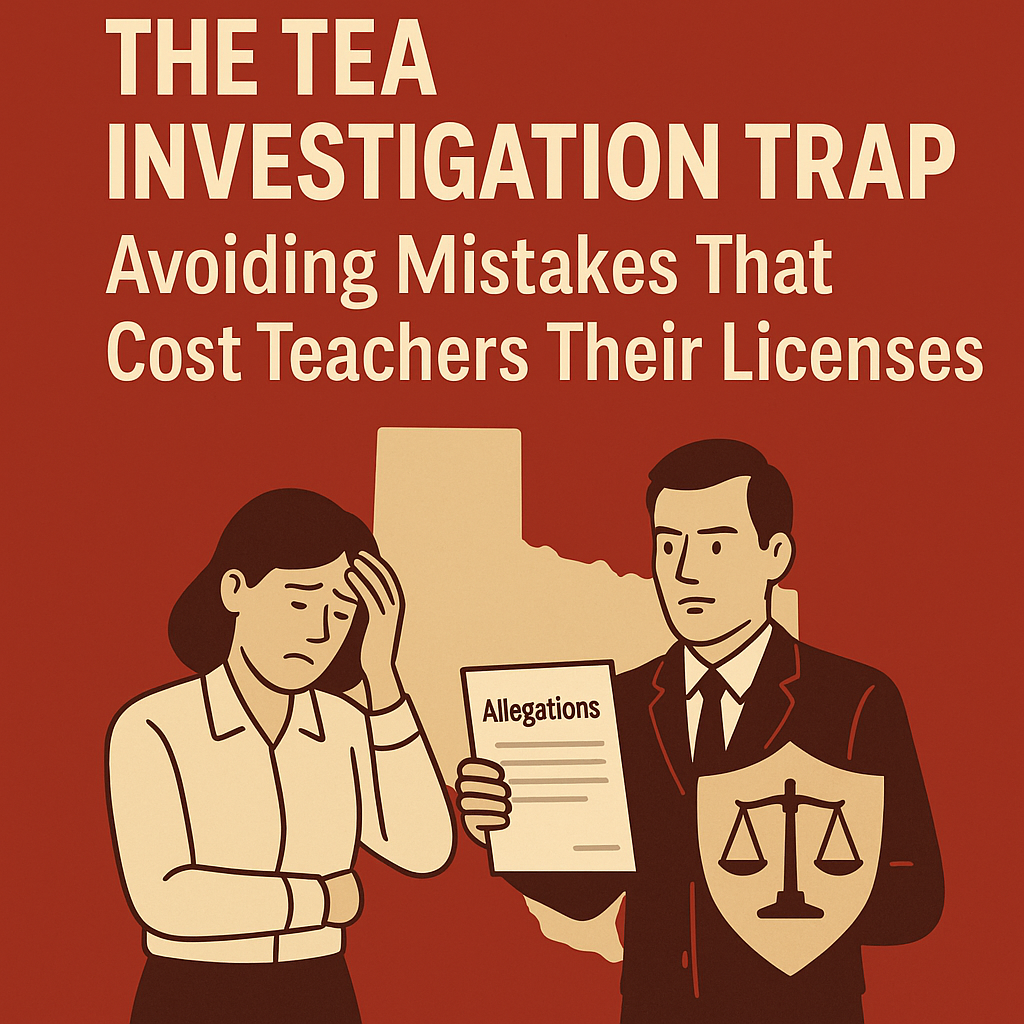
The TEA Investigation Trap: Avoiding Mistakes That Cost Teachers Their Licenses
Understanding the TEA Investigation Process
When a Texas teacher is notified of a Texas Education Agency (TEA) investigation, the experience can feel overwhelming. Educators often underestimate how serious the process is until it’s too late. A TEA investigation has the potential to jeopardize a teacher’s legal career, damage their reputation, and even cost them their professional license.
The agency’s focus is not only on student safety but also on compliance with state and federal standards. That means every allegation is reviewed with scrutiny, regardless of how small it may seem at first.
Why Teachers Often Fall into the TEA Investigation Trap
The "trap" occurs when teachers assume that cooperating informally is enough to clear their name. Many believe that explaining their side of the story without representation will resolve the matter. Unfortunately, that mistake often leads to harmful admissions or missteps that escalate the case.
An investigation is not a friendly discussion—it is a legal proceeding with long-term consequences. Teachers who fail to treat it as such risk disciplinary measures, license suspension, or permanent revocation.
Early Warning Signs of an Investigation
Formal Notice
One of the first warning signs is receiving a formal letter from TEA regarding allegations of misconduct. This correspondence typically outlines the allegations and opens the door to administrative proceedings.
Communication from School Officials
Another early indicator is when administrators begin asking unusual questions about conduct, student relationships, or classroom management. These inquiries may be part of information gathering for TEA.
Involvement of Legal Counsel
If your district’s legal counsel becomes involved, you can be certain that the issue has advanced beyond routine oversight. At this stage, immediate legal representation is critical.
The Role of Administrative Proceedings
Administrative proceedings differ from criminal law trials, but they are just as impactful on a teacher’s future. In many cases, the outcome of administrative hearings determines whether an educator retains their teaching certificate.
These proceedings involve detailed evidence, witness statements, and cross-examination. Teachers often make the mistake of underestimating how complex these hearings can be, believing they can manage without an attorney.
Common Mistakes Teachers Make During TEA Investigations
1. Responding Without Counsel
Attempting to handle the investigation independently often leads to unintentional self-incrimination.
2. Ignoring Deadlines
Failure to respond by TEA deadlines can be treated as an admission of guilt.
3. Discussing the Case With Colleagues
Teachers sometimes confide in coworkers, only to have those conversations used against them.
4. Assuming Good Record Is Enough
Even teachers with spotless records are not immune from disciplinary actions once allegations arise.
How Employment Law Intersects With TEA Investigations
TEA investigations overlap with broader employment law issues. For example, teachers under scrutiny often face contract non-renewals or reassignment while the investigation is pending. In some situations, educators wonder: can a job force you to resign?
Although districts cannot legally force resignation, they sometimes pressure educators into signing resignation letters, which can later be used against them in TEA proceedings. Legal counsel can help teachers navigate these employment traps.
The Broad Range of Legal Issues Teachers May Encounter
Educators in Texas may encounter a wide spectrum of legal issues beyond TEA investigations. These can include:
- Employment law disputes with districts.
- Family disputes when allegations affect custody cases.
- Premises liability claims if incidents occur on school property.
- Business disputes when teachers operate side ventures that create conflicts of interest.
Because the law covers such a broad range of situations, educators benefit from comprehensive representation when legal challenges overlap.
How Personal Injury Allegations Affect Educators
Teachers rarely think of personal injury claims as relevant to their profession, yet situations involving student safety can lead to such allegations. For example, if a child is injured due to negligent supervision, both the school and teacher may face legal scrutiny.
In some instances, these claims evolve into wrongful death or professional negligence cases, requiring defense strategies comparable to those used in medical malpractice or negligent security lawsuits.
Teachers and Criminal Law Investigations
A TEA investigation can also trigger referrals to criminal law enforcement, especially if allegations involve misconduct with students or financial irregularities. In such cases, teachers may find themselves navigating both administrative and criminal systems simultaneously.
An experienced litigator with extensive trial experience is essential to protect against overlapping risks in state and federal courts.
The Overlap With Employment and Business Law
Many educators supplement their income through tutoring, small business ventures, or real estate transactions. However, conflicts can arise when these activities intersect with their teaching role. Business law disputes, intellectual property issues, or commercial litigation may come into play if school districts allege conflicts of interest.
Without guidance, teachers can inadvertently escalate minor disputes into larger legal battles.
The Role of Professional Experience in Defense
Extensive Experience in Litigation
Lawyers with extensive experience defending educators bring invaluable insight into TEA investigations. They understand the traps investigators set and the strategies districts use.
Board Certified Attorneys
Board certified attorneys often provide higher levels of expertise in administrative and employment law, giving teachers stronger defenses during hearings.
Recognized by Best Lawyers and Florida Super Lawyers
Although teachers in Texas face unique challenges, it’s important to know that law firms nationwide, including those in Palm Beach County and West Palm Beach FL, are recognized for their litigation skills. Such recognition reflects the quality of legal strategies that can be brought to bear on behalf of educators.
Medical Malpractice and Professional Negligence Parallels
There are similarities between defending a doctor accused of malpractice and defending a teacher accused of misconduct. Both involve professional negligence claims, both threaten the individual’s license, and both require strong defense strategies.
Just as doctors in health care rely on legal counsel to preserve their careers, teachers must approach TEA investigations with the same seriousness.
Class Actions and Collective Complaints
In some cases, groups of teachers or parents file class actions against districts for systemic issues. These may involve allegations of unsafe facilities, premises liability, or negligent security. For teachers caught in such disputes, having counsel with practice areas in complex commercial litigation, construction litigation, or securities litigation ensures they are not unfairly targeted.
How TEA Investigations Affect Long-Term Legal Careers
A TEA sanction can follow a teacher for the rest of their legal career. Even if they pursue other professions—such as law, financial services firms, or business—disciplinary records can resurface. Educators must understand that administrative proceedings have long-term consequences far beyond their teaching days.
Navigating Business Disputes as an Educator
Teachers may encounter business disputes when districts challenge contracts, tutoring programs, or partnerships. These disputes often escalate into litigation in both state and federal courts, sometimes reaching the supreme court or southern district.
Educators involved in such disputes require lawyers with a unique blend of skills to balance business interests and teaching obligations.
The Importance of Legal Representation
Founding and Senior Partners
At many law firms, founding partners and senior partners lead defense strategies in high-stakes cases. Their leadership ensures that clients benefit from years of accumulated legal knowledge.
Managing Partner Oversight
The managing partner or office managing partner often oversees TEA-related cases, ensuring consistent and comprehensive representation for teachers.
Assistant State Attorney Experience
Attorneys with prior assistant state attorney backgrounds understand how prosecutors build cases, which is invaluable for defending teachers facing criminal law referrals.
The Risks of Resigning During an Investigation
Many teachers are pressured to resign during a TEA investigation. While it may seem like the simplest solution, resignation can create a permanent record suggesting guilt.
Educators should consult with an attorney before signing any documents to avoid sacrificing their rights. Sometimes maintaining employment during an investigation—even under stress—leads to better long-term outcomes.
How Family Law Issues Intersect With TEA Cases
TEA investigations often spill into family court, particularly when allegations involve misconduct with children. Divorce and custody disputes can be influenced by TEA findings, and teachers may need representation in family law alongside education law.
Educators Facing Civil Claims
In addition to administrative and employment consequences, teachers may face civil claims. These claims can involve premises liability, negligent security, or professional negligence.
Lawyers with practice areas covering civil litigation provide the necessary defense to protect both career and personal assets.
The Geographic Reach of Legal Representation
While our practice focuses on Texas teachers, it’s useful to understand how law firms operate nationwide. In places like West Palm Beach, Palm Beach County, and Port St, firms provide comprehensive representation across practice areas including medical malpractice, commercial litigation, and employment law. Teachers in Texas should expect the same level of professional support.
The Intersection With Real Estate and Financial Matters
Educators may also face scrutiny for outside real estate transactions or financial services engagements. Districts may allege conflicts of interest or improper conduct, and such allegations can quickly entangle teachers in disputes requiring litigation strategies typically reserved for corporate clients.
The Role of Universities in TEA Investigations
Universities sometimes collaborate with TEA when student teachers are involved in investigations. Educators mentoring university students must be especially cautious, as allegations in such programs can affect both teaching licenses and university partnerships.
Faculty involved in these cases benefit from attorneys with experience handling administrative proceedings linked to higher education.
Protecting Teachers Through Comprehensive Representation
Teachers under investigation should never settle for partial legal support. Comprehensive representation ensures all related legal issues—employment, business, criminal, or family—are addressed holistically. A piecemeal approach risks missing key defenses that could save a teacher’s license.
When Federal Courts Become Involved
Although TEA cases primarily involve state proceedings, certain disputes escalate to federal courts. For example, constitutional claims regarding due process or free speech may require defense in federal venues. Teachers in such cases must be prepared for litigation strategies that extend beyond the classroom context.
Recognizing the Stakes in Your Legal Career
For teachers, the classroom is more than a job—it’s a calling. A TEA investigation threatens not only employment but an entire legal career. The stakes are high, and the path forward requires skilled legal advocacy. Protecting your license means safeguarding your future and ensuring your passion for teaching can continue without interruption.
Lessons From South Florida Law Firms on Teacher Investigations
Educators facing a TEA inquiry in Texas can draw important parallels from how a law firm in West Palm Beach or South Florida handles professional investigations. At a West Palm Beach office, the office managing partner often oversees complex matters across multiple practice areas, from employment law to professional discipline cases. Teachers in Texas should take the same approach—treat every inquiry as a high-stakes legal matter requiring skilled representation. Some educators even ask, can a job force you to resign? In both Florida and Texas, employers may pressure staff to step aside, but resignation under duress can have long-term consequences. Whether your career is based in Dallas or West Palm Beach FL, the smart move is to seek guidance before making life-changing decisions. With locations spanning from Dallas to Port St, and beyond, Masterly Legal Solutions offers the same caliber of defense as top firms nationwide—always beginning with a free consultation to ensure teachers understand their rights and options.
Insights From Broader Legal Practices That Apply to TEA Investigations
Teachers under TEA scrutiny can learn from the way attorneys in South Florida approach high-stakes professional cases. At a West Palm Beach office or in nearby Boca Raton, lawyers often practice law in diverse fields such as healthcare fraud, international trade, and complex regulatory defense. Many of these professionals began honing their skills from an early age, later earning recognition from organizations like the American Board. Others handle matters spanning the Pacific Rim, with offices along Flagler Dr serving as hubs for international clients. The lesson for educators is clear: whether defending against allegations in global commerce or safeguarding a teaching license in Texas, success requires experienced advocates who understand both local rules and the broader context of professional defense.
Protect Your Career With Skilled Legal Defense
At Masterly Legal Solutions, we understand how frightening a TEA investigation can be. Teachers often ask whether a job can force you to resign, and the truth is that resignation under pressure can permanently harm your record. Before making that mistake, consult with experienced lawyers who have defended educators across a broad range of legal issues, from administrative proceedings to employment law disputes.
Our team includes attorneys with extensive experience, former assistant state attorneys, and managing partners who know how to anticipate every angle of a TEA case. We provide comprehensive representation for educators, ensuring no detail is overlooked. If you are facing a TEA investigation, disciplinary hearing, or related employment dispute,
Contact us today at (972) 236-5051 for a free consultation. We will review your situation, explain your options, and help you make informed decisions that protect your career.
This article does not provide legal advice; rather, it is meant to be instructive. For specific legal guidance, contact Masterly Legal Solutions directly.



Teacher Rights When Assaulted by a Special Needs Student: Safety, Reporting and Investigation Issues



Looking for Legal & Business Solutions? Contact Us Now
Fill in the form or call us to set up a meeting