

Accused by a Student or Parent? How It Can Affect Your TEA License
When an Accusation Changes Everything
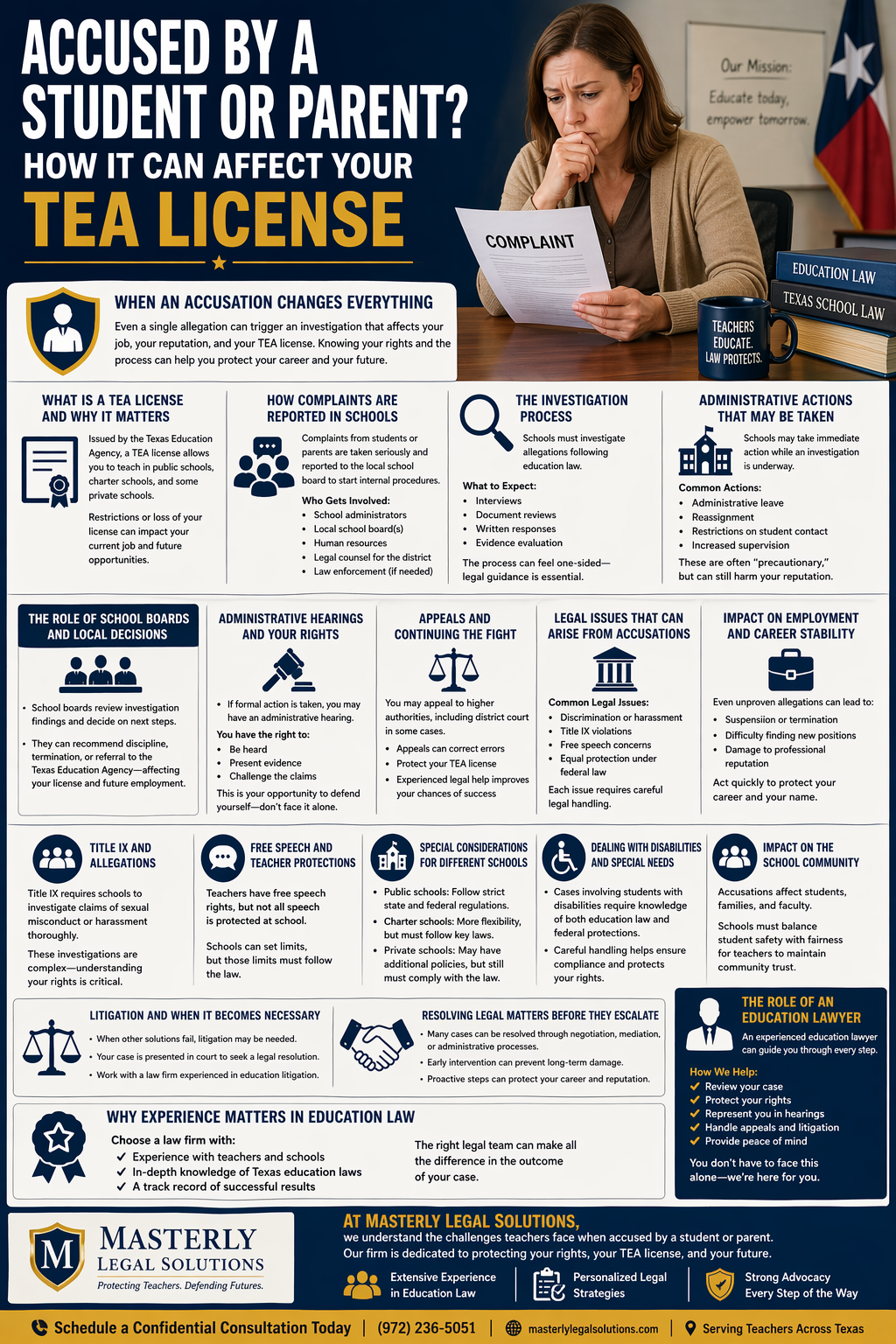
For many teachers, the classroom is more than just a workplace—it is a place where they invest their time, energy, and passion into shaping the future of students. That is why being accused by a student or parent can feel overwhelming and deeply personal. Even a single allegation can trigger a chain reaction that affects your career, your reputation, and your TEA license.
In Texas, the stakes are especially high because the education system places strong emphasis on accountability and student protection. While these goals are important, they can also create situations where teachers are placed under intense scrutiny. Understanding how these accusations are handled—and how they can impact your employment—is critical if you want to protect your future.
Understanding the Seriousness of an Allegation
An accusation in a school setting is never taken lightly. Whether it involves discipline, harassment, or more serious claims such as sexual assault, school districts are required to respond quickly. This often means launching an investigation before all the facts are fully known.
Teachers may find themselves facing immediate changes in their job status, even before any findings are made. This can include removal from the classroom, reassignment, or administrative leave. These early steps are part of the process, but they can also create lasting consequences if not handled properly.
What Is a TEA License and Why It Matters
A TEA license is essential for teachers working within the Texas education system. It is issued by the Texas Education Agency and serves as proof that an educator meets the required standards for teaching.
Losing or having restrictions placed on your TEA license can impact your ability to work in public schools, charter schools, and even some private schools. It can also affect future employment opportunities in colleges, universities, and other education-related organizations. Protecting your license is not just about your current job—it is about your long-term career in education.
How Complaints Are Reported in Schools
When a complaint is made by students or parents, school administrators are required to take action. This often involves notifying the local school board and initiating internal procedures.
Who Gets Involved in the Process
Several parties may become involved when an accusation is reported:
- School administrators and supervisors
- The local school board or school boards
- Human resources personnel
- Legal counsel for the district
- In some cases, law enforcement
These groups work together to determine whether the complaint involves a possible violation of state law or federal law. Their findings can influence whether further action is taken against the teacher.
The Investigation Process in Education Law
Investigations are a central part of how schools handle allegations. These investigations must follow procedures that align with education law and protect both the teacher and the students involved.
What Teachers Can Expect During an Investigation
The investigation process typically includes interviews, document reviews, and evaluation of evidence. Teachers may be asked to provide statements or respond to allegations in writing.
During this time, it is important to understand that the process can feel one-sided. School districts are often focused on protecting students and the community, which can place teachers at a disadvantage without expert legal guidance for teachers.
Administrative Actions That May Be Taken
When an allegation is made, schools may take immediate administrative action to address the situation.
Common Actions Schools May Take
Teachers may experience:
- Placement on administrative leave
- Reassignment to a non-classroom role
- Restrictions on interaction with students
- Increased supervision
While these actions are often described as precautionary, they can still affect your reputation and standing within the school community, making it essential to understand steps to take when placed on administrative leave.
The Role of School Boards and Local School Board Decisions
School boards play a significant role in determining how allegations are handled. The local school board may review findings from investigations and decide whether further action is necessary.
How School Boards Influence Outcomes
School boards have the authority to recommend disciplinary measures, including termination or referral to the Texas Education Agency. Their decisions can directly impact your TEA license and future employment.
Understanding how school boards operate—and how to present your case effectively—can make a significant difference in the outcome.
Administrative Hearings and Your Rights
If an allegation leads to formal action, teachers may be required to participate in administrative hearings. These hearings are a critical stage in the process.
What Happens in Administrative Hearings
Administrative hearings allow both sides to present evidence and arguments. Teachers have the right to defend themselves and challenge the claims being made.
Due process is a key principle in these hearings. This means you have the right to be heard, to present evidence, and to have a fair evaluation of your case. However, navigating these hearings without an experienced education lawyer can be challenging.
Appeals and Continuing the Fight
If a decision does not go in your favor, you may have the option to file appeals. Appeals can be made to higher authorities, including the district court in some cases.
Why Appeals Matter
Appeals provide another opportunity to present your case and correct errors in the original decision. They are an important part of the legal process and can help protect your TEA license.
Working with a law firm that has extensive experience in education law matters can improve your chances of success during appeals, especially one focused on protecting rights for students and teachers.
Legal Issues That Can Arise From Accusations
Accusations in schools can lead to a wide range of legal issues. These issues often extend beyond the initial complaint.
Examples of Legal Issues Teachers May Face
Teachers may encounter:
- Claims of discrimination or harassment
- Allegations involving Title IX violations
- Questions related to free speech
- Concerns about equal protection under federal law
Each of these issues requires careful handling to ensure that your rights are protected throughout the process.
The Impact on Employment and Career Stability
An accusation can have a lasting impact on your employment, even if it is ultimately unproven.
How Employment Can Be Affected
Teachers may face:
- Suspension or termination
- Difficulty finding new positions in schools or colleges
- Damage to professional reputation
These consequences highlight the importance of addressing allegations quickly and effectively.
Title IX and Allegations in Education Settings
Title IX plays a major role in how schools handle allegations involving sexual misconduct or harassment.
Understanding Title IX Investigations
Title IX requires schools to investigate claims thoroughly and take action to prevent discrimination. While these protections are important, they can also create complex legal challenges for teachers that often call for legal insights for teachers and education professionals.
Navigating Title IX investigations requires a clear understanding of both federal law and school policies.
Free Speech and Teacher Protections
Teachers have rights under free speech protections, but these rights are not absolute within the school environment.
Balancing Free Speech and School Policies
Schools may limit certain forms of expression to maintain order and protect students. However, these limitations must comply with the law and respect the rights of teachers.
Understanding where these boundaries lie can help teachers avoid misunderstandings that lead to legal issues and recognize when they may need an experienced education law attorney.
Special Considerations for Different Types of Schools
The process for handling allegations can vary depending on the type of school.
Public Schools, Charter Schools, and Private Schools
Public schools operate under strict state and federal regulations, while charter schools and private schools may have additional flexibility. However, all schools must comply with key principles of education law.
Teachers working in different settings should be aware of how these differences may affect their rights and responsibilities, and how a dedicated education lawyer in Texas can help them navigate school law.
The Role of an Education Lawyer
Facing an accusation without guidance can be overwhelming. An education lawyer can provide critical support throughout the process.
How a Lawyer Can Help
An experienced attorney can:
- Review the details of your case
- Represent you in administrative hearings
- Assist with appeals and litigation
- Protect your rights during investigations
Having a knowledgeable advocate can make a significant difference in how your case is handled, especially one focused on education law and attorneys for teachers.
Why Experience Matters in Education Law
Not all legal professionals have the same level of experience in education law matters. Choosing a law firm with extensive experience can provide a stronger foundation for your case.
What to Look for in Legal Representation
When selecting an attorney or lawyer, consider:
- Experience handling cases involving teachers and schools
- Familiarity with Texas education laws
- A track record of successful outcomes
These factors can help ensure that you receive effective legal services from an experienced education law attorney and legal team.
Dealing With Accusations Involving Disabilities and Special Needs
Cases involving students with disabilities or special needs can add another layer of complexity.
Legal Considerations in These Cases
Teachers must navigate both education law and federal protections related to disabilities. These cases often require careful handling to ensure compliance with all applicable laws.
Understanding these requirements can help prevent additional legal issues during the investigation process and may warrant support from Texas education lawyers.
How Accusations Affect the School Community
Accusations do not just impact the teacher—they can affect the entire school community.
Broader Effects on Schools and Families
Students, families, and faculty may experience stress and uncertainty during an investigation. Schools must balance the need to protect students with the need to ensure fairness for teachers.
Maintaining trust within the community is essential for the long-term success of educational organizations.
Litigation and When It Becomes Necessary
In some cases, disputes may escalate to litigation. This step is often taken when other methods of resolution have not been successful.
Understanding the Litigation Process
Litigation involves presenting your case in court and seeking a legal resolution. This process can be complex and time-consuming, but it may be necessary to protect your rights.
Working with a law firm that has extensive experience in litigation can help you navigate this stage effectively.
Resolving Legal Matters Before They Escalate
Not all cases need to go to court. Many legal matters can be resolved through negotiation or administrative processes.
Strategies for Early Resolution
Early intervention can help resolve issues before they become more serious. This may include working with school administrators or participating in mediation.
Taking proactive steps can help protect your career and reduce the impact of an accusation.
How Masterly Legal Solutions Supports Teachers
At Masterly Legal Solutions, we understand the challenges teachers face when dealing with accusations and legal issues. Our firm is dedicated to providing comprehensive legal services tailored to the needs of educators.
Our Commitment to Clients
We work closely with our clients to understand their unique circumstances and develop effective strategies. Our team has extensive experience in education law and is committed to protecting the rights and interests of teachers.
Whether you are dealing with administrative hearings, appeals, or other legal matters, we are here to provide the guidance and support you need.
How Texas Education Lawyers Support Educators at Every Stage
Texas education lawyers play a critical role in helping teachers, administrators, and even college professors navigate complex legal issues within the public school system and beyond. These professionals understand how education law intersects with other areas such as family law, civil matters, and even personal injury cases that may arise in a school setting. When educators face disciplinary hearings, wrongful termination concerns, or other employment-related disputes, having the right assistance can make a meaningful difference. An experienced attorney can answer legal questions, guide employees through the administration process, and advocate on their behalf in a city or district setting. Whether you need to file a formal request, respond to allegations, or protect your rights, working with a knowledgeable legal team ensures that both your career and the well-being of the children you serve are properly safeguarded.
Speak With Our Team About Your TEA License Concerns
If you have been accused by a student or parent, it is important to act quickly. Your TEA license, your employment, and your future in education may all be at risk. At Masterly Legal Solutions, we take these situations seriously and are prepared to stand by your side every step of the way.
We offer a personalized consultation where we listen to your concerns, evaluate your situation, and provide clear guidance on your options. Our goal is to help you resolve the issue efficiently while protecting your professional reputation and career.
Call us today at (972) 236-5051 to schedule your free consultation. Let our experienced attorneys and education lawyers help you navigate this challenging time with confidence.
Disclaimer: This article is for educational purposes only and does not constitute legal advice. Every case is different, and you should consult with a qualified attorney to discuss your specific situation.




Looking for Legal & Business Solutions? Contact Us Now
Fill in the form or call us to set up a meeting





