
Performance Reviews Suddenly Negative? Retaliation at Work Warning Signs for Teachers
When a Strong Career Suddenly Takes a Turn
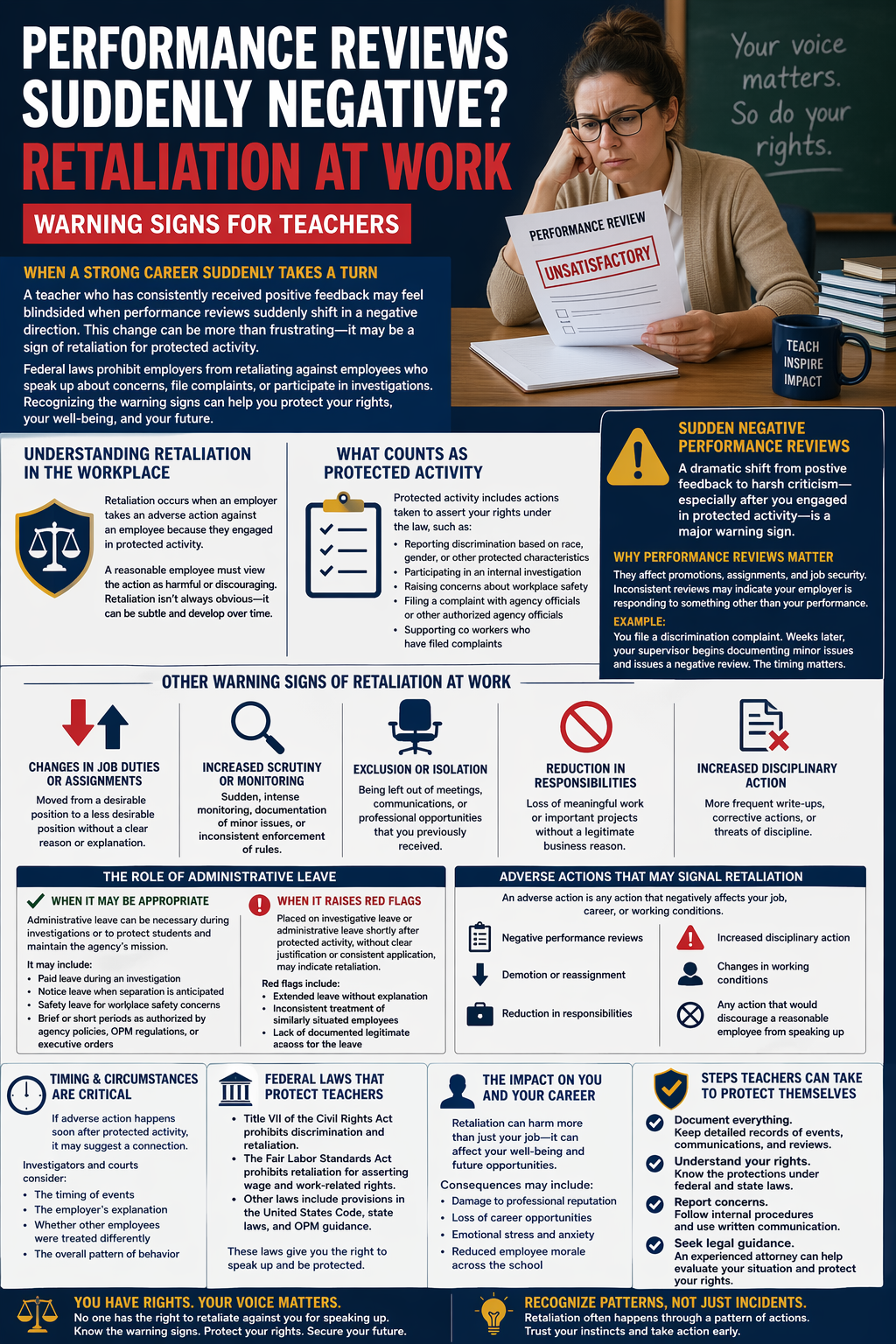
A teacher who has consistently received positive feedback may feel blindsided when performance reviews suddenly shift in a negative direction. This change is more than frustrating—it can raise serious concerns about retaliation in the workplace. When an employee speaks up about a concern, files a complaint, or participates in an investigation, the law provides protections against unfair treatment. However, retaliation at work can still occur, often in subtle ways that are difficult to recognize at first.
For educators, these situations can feel especially personal because their careers are built on trust, student impact, and professional reputation. When an employer begins taking actions that affect a teacher’s standing, it may signal something deeper. Understanding the warning signs of retaliation can help teachers protect their rights and their future.
Understanding Retaliation in the Workplace
When an employer treats a worker unfairly because they participated in protected behavior, this is known as retaliation. Protected activity includes reporting discrimination, participating in an investigation, or raising concerns about workplace safety or policy violations. Federal laws like Title VII and the Fair Labor Standards Act are designed to prevent this type of behavior, and many employees seek help from an experienced retaliation lawyer for workplace retaliation when their rights are threatened.
A retaliation claim often depends on whether a reasonable employee would view the employer’s actions as harmful or discouraging. Even changes that seem minor on the surface can have a negative impact when viewed in context. Teachers must be aware that retaliation is not always obvious—it can develop gradually through changes in working conditions or treatment by a supervisor.
What Counts as Protected Activity
Protected activity is a key concept in any retaliation claim. It refers to actions an employee takes to assert their rights under the law. This includes filing a discrimination complaint, reporting harassment, or assisting other employees with concerns.
Common Forms of Protected Activity
Teachers may engage in protected activity in several ways, including:
- Reporting discrimination based on race, gender, or other protected characteristics
- Participating in an internal investigation
- Raising concerns about workplace safety
- Filing a formal complaint with agency officials or other authorized agency officials
- Supporting co workers who have filed complaints
These actions are directly related to legal protections under federal and state laws. When retaliation occurs after such activity, it may be evidence of a violation.
Sudden Negative Performance Reviews as a Warning Sign
A sudden shift in performance evaluations is one of the most common warning signs of retaliation. If a teacher has a history of positive reviews and then receives harsh criticism shortly after engaging in protected activity, this change deserves attention.
Why Performance Reviews Matter
Performance reviews affect an employee’s career path, promotions, and job security. A negative review can lead to disciplinary action or placement in a less desirable position. When these reviews are inconsistent with past evaluations, it may suggest that the employer is responding to something other than actual performance.
Example of Retaliation Through Reviews
Imagine a teacher who files a complaint about discrimination. Within weeks, their supervisor begins documenting minor issues and issuing negative feedback. This pattern can support a retaliation claim if the timing and circumstances indicate a connection.
Other Warning Signs of Retaliation at Work
Retaliation can take many forms beyond performance reviews. Teachers should be aware of additional warning signs that may indicate an employer is acting improperly.
Changes in Job Duties or Assignments
An employee may be moved from a desirable position to a less desirable position without a clear reason. These changes can impact morale and career growth, especially if they are not consistent with the employee’s current position or experience.
Increased Scrutiny or Monitoring
A supervisor may begin closely monitoring a teacher’s work, documenting minor issues, or enforcing rules inconsistently. While oversight is part of personnel management, sudden changes in scrutiny can signal retaliation.
Placement on Administrative Leave
Administrative leave is sometimes necessary during an investigation. However, when an employer places an employee on paid administrative leave or investigative leave without clear justification, it may raise concerns, making it especially important to understand administrative leave and pay at work. In some cases, agency officials may grant administrative leave for brief or short periods, but extended leave without explanation can feel punitive.
Administrative leave may include:
- Paid leave during an investigation
- Notice leave when separation is anticipated
- Safety leave if there are workplace safety concerns
While these actions may be specifically authorized under agency policies or OPM regulations, they must be applied fairly and not used as a form of retaliation.
The Role of Administrative Leave in Retaliation Cases
Administrative leave is a complex issue, especially in education settings. Employers may grant administrative leave for various reasons, including investigations or concerns about workplace safety.
When Administrative Leave Is Appropriate
In some circumstances, placing employees on administrative leave is necessary to protect students or maintain the agency's mission. For example, an agency head may determine that temporary removal is needed during an investigation.
Administrative leave may also be used for:
- Blood donations or officially sponsored activities
- Brief periods of excused absence
- Situations outlined in a presidential directive or executive order
When Administrative Leave Raises Red Flags
Problems arise when administrative leave is used inconsistently or without justification. If an employee is placed on investigative leave shortly after engaging in protected activity, it may indicate retaliation. Agency judgments must be based on legitimate reasons, not personal motives.
Adverse Actions That May Signal Retaliation
An adverse action is any action taken by an employer that negatively affects an employee’s job. These actions are central to most retaliation claims.
Common Adverse Actions in Schools
Teachers may experience adverse action in several ways:
- Negative performance reviews
- Demotion or reassignment
- Reduction in responsibilities
- Increased disciplinary action
- Changes in working conditions
Each of these actions can have a negative impact on both the employee and overall employee morale. When these actions follow protected activity, they may support a retaliation claim.
The Importance of Timing and Circumstances
Timing is often a critical factor in determining whether retaliation occurs. If adverse action happens soon after protected activity, it may suggest a connection.
Evaluating the Evidence
Courts and investigators often look at:
- The timing of events
- The employer’s explanation
- Whether other employees were treated differently
A reasonable employee standard is used to assess whether the employer’s actions would discourage someone from engaging in protected activity.
Federal Laws That Protect Teachers
Teachers are protected under several federal laws that prohibit retaliation and discrimination, and many benefit from legal protection for teachers to navigate these complex rights and options.
Title VII and Workplace Protections
Title VII prohibits discrimination and retaliation based on protected characteristics. It also protects employees who report harassment or participate in investigations.
Fair Labor Standards Act
The Fair Labor Standards Act includes protections related to wages and working conditions. It also prohibits retaliation against workers who assert their rights under the law.
Additional Legal Frameworks
Other laws and regulations may apply, including:
- United States Code provisions
- OPM guidance and regulations
- State laws governing education and employment
These frameworks help ensure that agency policies and internal policies are consistent with legal requirements, and an experienced education lawyer for teachers and schools can help interpret and apply them in specific cases.
How Agency Policies and Internal Procedures Play a Role
Employers must issue internal policies consistent with federal and state laws. These policies guide how agency officials handle complaints, investigations, and personnel decisions.
The Role of Agency Officials
Agency officials and authorized agency officials are responsible for making decisions that align with the agency's mission. Their actions must be based on legitimate concerns, not retaliation.
Balancing the Agency’s Mission and Employee Rights
An agency head must consider both the needs of the organization and the rights of the employee. This balance is essential to maintaining workplace safety and overall employee morale.
Investigations and Their Impact on Teachers
An investigation can be a stressful experience for any teacher. Whether it involves a complaint or a possible violation, the process must be handled fairly, and working with an education law attorney for teachers can help ensure your rights are respected.
What Happens During an Investigation
Investigations may involve many steps, and educators often turn to legal support for educators in school investigations to navigate them. Investigations may involve:
- Interviews with co workers
- Review of documents
- Temporary placement on administrative leave
These steps are meant to ensure fairness, but they must not be used as a tool for retaliation.
When Investigations Become Problematic
If an investigation appears to target a teacher unfairly or lacks a clear basis, it may raise concerns. The employer must demonstrate that their actions are directly related to legitimate concerns, not retaliation.
The Impact on Employee Morale and Career
Retaliation does not just affect one teacher—it can have a ripple effect throughout the workplace. Other employees may feel discouraged from reporting concerns, leading to a decline in overall employee morale.
Long-Term Consequences
The negative impact of retaliation can include:
- Damage to professional reputation
- Loss of career opportunities
- Emotional stress and anxiety
These consequences highlight the importance of addressing retaliation early.
Steps Teachers Can Take to Protect Themselves
Teachers who suspect retaliation should take proactive steps to protect their rights.
Document Everything
Keeping detailed records of events, communications, and performance reviews can provide valuable evidence.
Understand Your Rights
Familiarity with laws like Title VII and the Fair Labor Standards Act can help teachers recognize when their rights are being violated.
Seek Legal Guidance
Consulting with experienced legal professionals can provide clarity and direction. A strong legal strategy can make a significant difference in the outcome of a retaliation claim.
Recognizing Patterns of Behavior
Retaliation often involves patterns rather than isolated incidents. Teachers should look for consistent changes in how they are treated and may need guidance on retaliation and labor complaints with the Department of Labor when workplace conditions deteriorate.
Example of a Pattern
A teacher who reports discrimination may experience a range of responses, and some will need education law legal services for teacher defense to protect their license and career. A teacher who reports discrimination may experience:
- Increased scrutiny
- Negative performance reviews
- Placement on administrative leave
When these actions occur together, they may indicate retaliation.
The Role of Employers in Preventing Retaliation
Employers have a responsibility to create a workplace free from retaliation. This includes implementing fair policies and training supervisors, and in some cases consulting a retaliation lawyer for workplace law help to design compliant practices.
Best Practices for Employers
Employers should:
- Enforce consistent policies
- Train supervisors on legal requirements
- Address complaints promptly
These steps help protect both the employee and the organization, and in some states educators may also require dedicated educator misconduct defense to protect their license when allegations arise.
Taking Action When You Suspect Retaliation
If you believe retaliation has occurred, it is important to act quickly. Filing a complaint or seeking legal advice can help protect your rights.
Building a Strong Case
A successful retaliation claim often requires:
- Evidence of protected activity
- Proof of adverse action
- A connection between the two
Working with legal professionals can help ensure that your case is properly evaluated.
Why Early Intervention Matters
Addressing retaliation early can prevent further harm. It can also help preserve your career and professional reputation.
Protecting Your Future
Teachers dedicate their lives to education. They deserve to work in an environment where they are treated with fairness and respect.
Speak With Masterly Legal Solutions About Your Situation
If your performance reviews have suddenly turned negative or you suspect retaliation at work, you do not have to navigate this situation alone. At Masterly Legal Solutions, we understand the unique challenges teachers face when dealing with workplace retaliation, discrimination, or unfair treatment. Our team is committed to helping you understand your rights, evaluate your circumstances, and take the appropriate steps to protect your career.
We offer a free consultation to discuss your concerns, review your situation, and provide guidance tailored to your needs. Whether you are dealing with administrative leave, an investigation, or other adverse action, we are here to help you move forward with confidence.
Contact us today at (972) 236-5051 to speak with a legal professional who understands the complexities of retaliation claims and employment law. Let us help you take the next step toward protecting your future.
Disclaimer: This article is for educational purposes only and does not constitute legal advice. Every situation is different, and you should consult with a qualified attorney to discuss your specific circumstances.





Looking for Legal & Business Solutions? Contact Us Now
Fill in the form or call us to set up a meeting