

Administrative Leave During a School Investigation: Why You Should Never Face Investigators Alone
The Phone Call Every Educator Hopes Never Comes
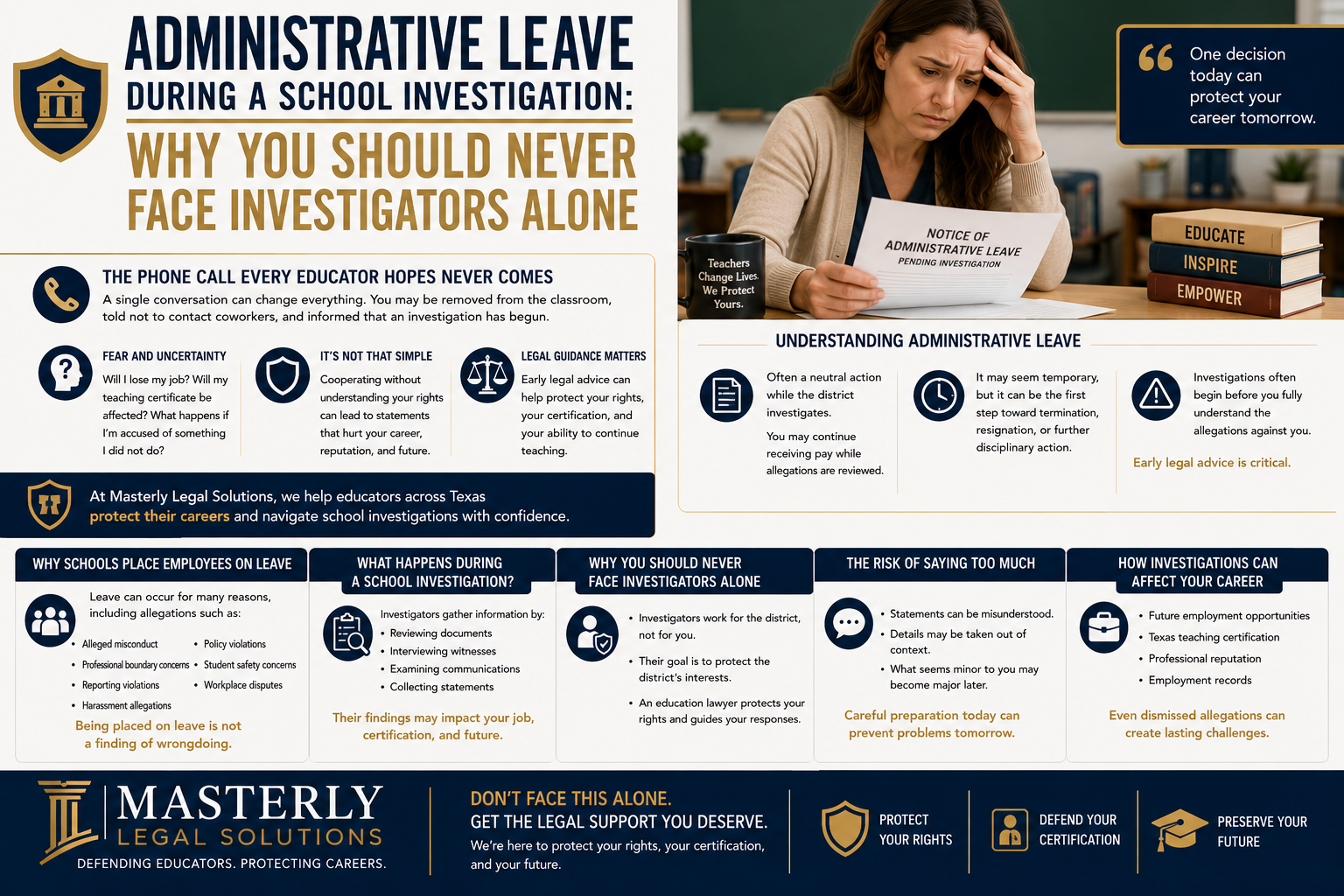
Few moments are more unsettling for an educator than being told they have been placed on administrative leave pending a school investigation. One conversation with a supervisor can instantly change everything. A teacher who walked into work expecting a normal day may suddenly find themselves removed from the classroom, instructed not to contact coworkers, and informed that an investigation has begun.
For many educators, administrative leave creates immediate fear and uncertainty. Questions begin racing through their minds. Am I going to lose my job? Will my teaching certificate be affected? What happens if investigators accuse me of something I did not do? These concerns are understandable because a school investigation can have serious consequences for both your career and your reputation.
Many employees mistakenly believe that if they simply cooperate, everything will work itself out. Unfortunately, that is not always how investigations unfold. Statements made during the early stages of an investigation can affect future employment decisions, TEA proceedings, and even legal claims that may arise later.
At Masterly Legal Solutions, we have seen firsthand how quickly an investigation can escalate. We also understand how important it is for educators to receive legal guidance before responding to allegations or participating in interviews.
Understanding Administrative Leave
Administrative leave is often presented as a neutral employment action while an employer conducts an investigation. In many situations, the employee continues receiving compensation while the school district gathers information and evaluates the allegations.
Although administrative leave may appear temporary, educators should never assume that the situation is harmless. In some cases, administrative leave becomes the first step toward termination, resignation, or additional disciplinary proceedings.
The reality is that many investigations begin long before an employee fully understands the allegations. This is one reason why obtaining legal advice for Texas teachers on administrative leave early is often critical.
Why Schools Place Employees on Leave
School districts place employees on leave for many different reasons. Sometimes the allegations involve student complaints. Other times they may involve workplace conduct, policy violations, or concerns raised by parents or coworkers.
Common reasons include:
- Alleged misconduct
- Professional boundary concerns
- Reporting violations
- Harassment allegations
- Policy violation claims
- Student safety concerns
- Workplace disputes
Being placed on leave does not automatically mean wrongdoing occurred. However, it does indicate that the employer considers the matter serious enough to warrant further review.
What Happens During a School Investigation?
A school investigation typically involves gathering information from multiple sources. Administrators may review documents, interview witnesses, examine electronic communications, and collect statements from individuals involved.
Investigators are often focused on determining whether district policies were violated. Their findings may later influence decisions regarding continued employment, termination, or reporting obligations to outside agencies.
Many employees underestimate the significance of these investigations. Even a seemingly minor allegation can lead to substantial professional consequences.
Why You Should Never Face Investigators Alone
One of the biggest mistakes an employee can make is assuming that investigators are there to help them. School investigators work for the employer, not the employee.
Their responsibility is to gather facts and protect the interests of the school district. While they may appear friendly and professional, their questions are designed to collect information that may later be used when making employment decisions.
Having an education lawyer involved helps ensure that your rights and interests remain protected throughout the process. Legal counsel can help you understand what questions to answer, what documents to provide, and how to avoid statements that may be misinterpreted.
The Risk of Saying Too Much
Educators often feel pressure to explain themselves immediately. They may believe that providing extensive details will quickly resolve the matter.
Unfortunately, statements made without preparation can create new problems. Investigators may misunderstand comments, interpret statements differently than intended, or focus on details that seem insignificant to the employee.
An education law attorney can help evaluate the circumstances and provide guidance before important interviews occur. Careful preparation often helps prevent unnecessary complications.
How Investigations Can Affect Your Career
Many educators focus only on the immediate investigation and fail to consider long-term consequences. However, an investigation may affect future employment opportunities, Texas teaching certification status, and professional reputation.
Even when allegations are ultimately dismissed, the existence of an investigation can create challenges. Future employers may ask questions about prior disciplinary matters, and certain findings may remain part of employment records.
Protecting your professional future requires thoughtful decision-making from the beginning of the process.
When Administrative Leave Leads to Termination
While not every investigation ends in termination, many educators are concerned about that possibility. Employers sometimes determine that disciplinary action is necessary after reviewing evidence and witness statements.
A termination decision can have significant consequences, particularly when the allegations involve professional misconduct. In some situations, termination may also trigger reporting obligations to licensing agencies.
Because termination can affect future employment opportunities, employees should take every investigation seriously.
Understanding Wrongful Termination Claims
Not every termination is lawful. In some situations, employees may have grounds to pursue a wrongful termination claim if their employer violated legal protections.
For example, wrongful termination may occur when an employee is terminated for engaging in protected activity, reporting illegal conduct, or exercising rights guaranteed by law. Every case is unique, which is why a detailed legal review is essential.
An attorney can help determine whether a wrongful termination claim may exist based on the specific facts involved.
How Wrongful Discharge Can Occur
Wrongful discharge claims often arise when an employer takes adverse employment actions for improper reasons. These cases frequently involve allegations that an employee was punished for conduct protected by state law or public policy.
An example might involve an employee who reports violations and is later terminated after raising concerns. In these situations, the law may provide remedies that help protect employees from retaliation, especially when immediate education law legal services are involved.
Understanding the difference between lawful termination and wrongful discharge is important when evaluating legal options.
Reporting Illegal Conduct Can Create Legal Protections
Educators occasionally find themselves in difficult situations where they must report illegal conduct occurring within a school environment. Although reporting misconduct may be uncomfortable, employees often have legal protections when engaging in protected activity.
When an employee reports violations involving student safety, financial wrongdoing, or other serious concerns, retaliation may create additional legal issues for the employer.
The law recognizes that employees should not be punished simply for doing the right thing.
The Connection Between Public Policy and Employment Rights
Many employment protections are based upon public policy considerations. Courts and lawmakers generally recognize that society benefits when employees can report misconduct without fear of retaliation.
Public policy protections may apply in situations involving illegal conduct, safety concerns, discrimination complaints, and other protected activities.
These protections exist because allowing retaliation would discourage employees from speaking up when important issues arise.
What Employees Should Do Immediately After Being Placed on Leave
The first few days after being placed on administrative leave are often the most important. Decisions made during this period may affect the direction of the entire matter.
Employees should consider:
- Preserving relevant documents
- Saving emails and text messages
- Reviewing performance documents
- Avoiding discussions on social media
- Consulting an attorney
- Following employer instructions carefully
Taking proactive steps early may help protect important evidence and strengthen future legal options.
Why Documentation Matters
Documentation often becomes critical during employment disputes. Emails, evaluations, text messages, and performance records may help clarify what actually occurred.
In many cases, employers rely heavily on written records when making disciplinary decisions. Employees should therefore maintain copies of important communications whenever legally permissible.
Accurate documentation frequently becomes valuable if disputes later involve termination, retaliation, or other legal claims.
Protecting Yourself Before the Investigation Escalates
The best time to seek legal assistance is before the investigation reaches a critical stage. Once statements are made and decisions are finalized, available options may become more limited.
Early legal involvement allows an attorney to evaluate the situation, identify potential concerns, and help develop an appropriate response strategy.
Being proactive often provides greater opportunities to protect your rights, your reputation, and your career.
When Administrative Leave Turns Into a Forced Resignation
One of the most frustrating situations employees face is being pressured to resign before an investigation is completed. In some cases, an employer may suggest that resignation is the "best option" or imply that leaving voluntarily will produce a better outcome.
Many educators feel trapped during these conversations. They may fear termination, damage to their professional reputation, or the possibility of future disciplinary action. As a result, some employees resign without fully understanding their rights or the long-term consequences of that decision.
Before agreeing to any resignation, it is important to speak with an attorney. A resignation may affect future employment opportunities, unemployment benefits, and potential legal claims.
Understanding Constructive Discharge
Not every resignation is truly voluntary. Under certain circumstances, constructive discharge may occur when working conditions become so intolerable that a reasonable person would feel compelled to resign.
Constructive discharge cases often involve situations where an employee experiences ongoing mistreatment, retaliation, discrimination, or other conduct that makes continued employment extremely difficult.
Although employers may characterize the departure as voluntary, the law sometimes recognizes that an employee was effectively forced out of the workplace.
What Creates a Constructive Discharge Claim?
A constructive discharge claim typically requires more than dissatisfaction with a job. Courts often examine whether the working conditions became objectively intolerable.
Examples may include:
- Severe harassment
- Ongoing retaliation
- Significant pay reduction
- Repeated discrimination
- Unreasonable disciplinary actions
- Hostile workplace treatment
Each case depends on its specific facts. An attorney can evaluate whether the circumstances may support a constructive discharge claim.
When Employees Feel Forced to Resign
Many employees facing investigations describe feeling forced to resign. They may be told that termination is inevitable or that resignation is the only way to avoid further consequences.
While employers are permitted to discuss employment options, there are situations where excessive pressure creates legal concerns. Employees who felt compelled to leave their position should carefully evaluate their circumstances before assuming they have no legal remedies.
An attorney can help determine whether a resignation was truly voluntary or whether additional legal issues may be involved.
The Difference Between Resignation and Termination
Many people assume resignation and termination produce the same outcome. However, the distinction can significantly affect future legal rights and employment opportunities.
A resignation generally involves an employee choosing to leave employment. Termination occurs when the employer makes the decision to end employment.
Understanding how the separation occurred may influence eligibility for unemployment benefits, potential legal claims, and future employment prospects.
How Retaliation Often Appears During Investigations
Retaliation is a common concern in employment disputes. Employees sometimes face negative treatment after reporting misconduct, raising concerns, or participating in protected activity.
Retaliation can take many forms, including:
- Increased scrutiny
- Demotion
- Unfavorable assignments
- Disciplinary actions
- Termination
- Forced resignation
Federal and state law provide protections against retaliation in many situations. Understanding these protections is critical when evaluating legal options.
Protected Activity and Your Legal Rights
Certain employee actions are considered protected activity under employment law. Employees generally cannot be punished simply for exercising rights granted by law.
Protected activity may include:
- Reporting illegal conduct
- Filing complaints
- Participating in investigations
- Reporting safety concerns
- Opposing discrimination
When adverse employment actions occur after protected activity, employees should carefully review whether retaliation may have played a role.
Employment Discrimination in Educational Settings
Unfortunately, discrimination issues sometimes arise within schools and other educational institutions. Employment discrimination may involve unequal treatment based upon legally protected characteristics.
Protected categories may include:
- National origin
- Sexual orientation
- Military status
- Disability
- Race
- Religion
When discrimination contributes to disciplinary decisions, employees may have grounds to pursue legal action. These matters require careful investigation and legal analysis.
The Role of the Equal Employment Opportunity Commission
The Equal Employment Opportunity Commission investigates certain employment discrimination complaints. Depending on the circumstances, employees may need to file complaints with the agency before pursuing additional legal remedies.
The EEOC process can involve strict deadlines and procedural requirements. Missing important deadlines may affect an employee's ability to pursue a claim later.
Because these requirements can be complex, legal guidance is often beneficial during the process.
Why Performance Documents Matter
Performance documents often become important evidence during employment disputes. Evaluations, commendations, disciplinary notices, and other records may help establish the history of an employee's performance.
In some cases, performance documents contradict allegations made during an investigation. Positive evaluations may raise questions about sudden disciplinary actions or termination decisions.
Employees should preserve relevant records whenever possible. These materials may become valuable evidence later.
Can You Receive Unemployment Benefits After Leaving?
Many educators worry about financial stability after losing a position. Whether an individual may qualify for unemployment benefits often depends on the circumstances surrounding the separation from employment.
In some situations, employees who are terminated may still qualify for unemployment benefits. In other cases, individuals who resign may also be eligible if specific conditions exist.
Understanding eligibility requirements requires careful evaluation of the facts and applicable law.
Understanding Unemployment Claims
An unemployment claim is not automatically denied simply because an investigation occurred. Eligibility often depends on why employment ended and whether misconduct is established.
Employees should not assume they are disqualified without reviewing the circumstances carefully. Many individuals successfully obtain benefits even after employment disputes arise.
If an unemployment claim is challenged, legal assistance may help address issues raised during the process.
Unemployment Insurance Benefits and Constructive Discharge
Employees who resign due to constructive discharge sometimes wonder whether unemployment insurance benefits remain available. The answer depends on the specific circumstances and applicable regulations.
When working conditions become intolerable, benefits may still be available under certain conditions. However, these cases often require supporting evidence and detailed explanations.
Proper documentation may strengthen the employee's position when seeking benefits after leaving employment.
When a Severance Package Is Offered
Some employers offer a severance package during or after an investigation. While severance payments may appear beneficial, employees should review any proposed agreement carefully.
A severance package often includes legal language that affects future rights. Signing an agreement without understanding its implications can create significant consequences.
Before accepting any severance offer, employees should consult an attorney to evaluate the terms and potential impact.
Understanding Severance Rights
Employees frequently assume they are entitled to severance pay after termination. In reality, severance rights often depend upon contracts, policies, and negotiated agreements.
Every situation is different. Some employers voluntarily offer severance, while others do not.
Understanding available options requires a careful review of employment documents and relevant facts.
Medical Leave and School Investigations
Investigations sometimes occur while an employee is dealing with serious health concerns. Medical leave may provide certain protections depending on the circumstances.
The Family and Medical Leave Act, sometimes referred to as the medical leave act, establishes protections for eligible employees who need time away from work due to qualifying medical conditions, and it operates alongside other education law protections for teachers.
When investigations overlap with medical leave issues, legal guidance can help employees understand their rights and obligations.
Why Timing Matters in Employment Disputes
Many cases are won or lost because of timing. Delays in seeking legal advice, preserving evidence, or responding to employer actions can create unnecessary challenges.
Employees should act promptly when concerns arise. Waiting too long may affect the ability to pursue legal remedies, gather evidence, or challenge adverse employment actions.
Being proactive often provides greater opportunities to protect both immediate and long-term interests.
When Administrative Leave Leads to Wrongful Termination
Administrative leave may begin as a temporary measure, but for some employees, it eventually results in termination. When that happens, it is important to determine whether the employer acted lawfully throughout the process.
Wrongful termination occurs when an employee is terminated for reasons that violate legal protections. An employer cannot simply ignore established legal rights when making employment decisions. If the facts suggest that a violation occurred, employees may have grounds to pursue legal action.
Many employees do not realize they may have a wrongful termination case until after speaking with an attorney. A detailed review of the circumstances often reveals issues that were not immediately obvious.
Recognizing the Signs of Wrongful Discharge
Wrongful discharge can occur in many different situations. Sometimes the issue involves retaliation. Other times it involves discrimination, reporting illegal conduct, or actions that conflict with public policy.
An example may involve an employee who reports violations and is later terminated under questionable circumstances. Another example may involve an educator who experiences retaliation after participating in a protected activity.
Because every situation is unique, employees should avoid assuming that a termination decision is automatically lawful. Careful legal analysis is often necessary.
How Public Policy Protects Employees
Public policy plays a significant role in employment law. Courts have long recognized that employees should not be punished for engaging in conduct that benefits society or complies with legal obligations.
Public policy protections may apply when an employee reports illegal conduct, refuses to participate in unlawful activities, cooperates with investigations, or exercises rights protected by law. In these situations, termination may raise serious legal concerns.
The law seeks to balance the interests of employers and employees while encouraging ethical conduct in the workplace, and educators facing misconduct allegations may need North Carolina educator misconduct defense or similar support depending on their jurisdiction.
The Department of Labor and Employment Rights
The Department of Labor oversees a variety of employment-related regulations designed to protect workers. Certain employment disputes may involve wage issues, leave rights, and other workplace protections.
For educators and other employees, understanding these protections can be important when employment actions occur during or after an investigation. The labor laws that apply to your situation may affect available remedies and legal options.
Seeking legal guidance can help clarify whether labor-related protections apply to your circumstances.
Wage Violations and Employment Investigations
Although school investigations often focus on workplace conduct, other issues sometimes emerge during the process. Wage violations may become relevant if compensation practices raise legal concerns.
For example, disputes regarding compensation, deductions, or pay practices may create additional legal issues beyond the original investigation. Employees should not overlook these matters when evaluating their overall situation.
An attorney can help determine whether wage-related concerns warrant additional review.
Filing a Legal Claim After Termination
Employees who believe their rights have been violated may consider filing a legal claim. The specific type of claim depends on the facts involved and the legal protections that apply.
A legal claim may involve:
- Wrongful termination
- Wrongful discharge
- Retaliation
- Discrimination
- Constructive discharge
- Employment contract disputes
Understanding which claims may apply requires a careful review of the evidence and surrounding circumstances.
Why Filing Deadlines Matter
Many employment-related claims are subject to strict deadlines. Waiting too long to pursue legal remedies may affect an employee's ability to recover damages or seek relief.
This is particularly true when complaints involve discrimination, retaliation, or agency filings. Certain matters require employees to act within relatively short time periods.
Prompt legal advice can help ensure that important deadlines are not missed.
When Employees May Pursue Legal Action
Not every workplace dispute results in a lawsuit. However, there are circumstances where employees may decide to pursue legal action to protect their rights and seek accountability.
Examples may include situations involving:
- Wrongful termination
- Employment discrimination
- Retaliation
- Constructive discharge
- Violation of employment agreements
- Unlawful workplace conduct
The decision to pursue legal action should be based on a thorough review of the facts and available evidence.
The Importance of Preserving Evidence
Evidence often determines the strength of a claim. Employees should preserve relevant documents whenever possible, including emails, evaluations, policies, text messages, and other communications.
Even seemingly minor records may become important later. Documentation can help establish timelines, support allegations, and challenge inaccurate claims.
Preserving evidence early often improves an employee's ability to protect their interests.
Understanding Adverse Employment Actions
An adverse employment action is not limited to termination. Employers may take a variety of actions that negatively affect an employee's job status or working conditions.
Examples may include:
- Demotions
- Suspensions
- Pay reduction
- Loss of responsibilities
- Unfavorable transfers
- Termination
When adverse employment actions occur after protected activity, additional legal concerns may arise.
Why Employees Should Never Navigate Investigations Alone
School investigations often move quickly, and the consequences can be significant. An employee who faces investigators alone may unknowingly make statements that affect future employment opportunities or legal rights.
Having legal counsel provides protection during a vulnerable time. An attorney can help evaluate allegations, prepare responses, and ensure that the employee's interests remain protected throughout the process.
The earlier legal assistance is obtained, the greater the opportunity to avoid costly mistakes.
Protecting Your Career, Reputation, and Future
For many educators, a school investigation affects more than a current job. It can impact future employment, professional reputation, financial stability, and long-term career goals.
Employees who are wrongfully terminated, forced to resign, or subjected to retaliation often face difficult decisions regarding their future. Understanding available options is critical before making choices that could have lasting consequences.
With the right legal support, employees can better protect their rights and position themselves for future success.
How Masterly Legal Solutions Helps Educators
At Masterly Legal Solutions, we understand that administrative leave can feel overwhelming. Many employees are uncertain about what to expect, whom to trust, and how to respond when an investigation begins.
Our attorney team works closely with educators and school employees to evaluate allegations, review evidence, and develop strategies designed to protect their interests. We understand the unique challenges that arise during school investigations and employment disputes.
Whether your concerns involve wrongful termination, constructive discharge, retaliation, discrimination, or other employment law issues, we are committed to helping you understand your options and move forward with confidence.
Speak With Masterly Legal Solutions Today
If you have been placed on administrative leave, pressured to resign, subjected to retaliation, or are concerned about possible termination, do not wait until critical decisions have already been made. The actions you take today may significantly affect your career, your benefits, and your future opportunities.
At Masterly Legal Solutions, we help educators and employees understand their rights, evaluate potential claims, and respond strategically to workplace investigations. Our team is prepared to answer your questions, discuss your concerns, and provide the guidance needed during this difficult time.
Contact Masterly Legal Solutions today at (972) 236-5051 for a free consultation. We will review your situation, explain your options, and help you determine the best path forward. Protecting your career starts with understanding your rights before the investigation goes any further.
Disclaimer: This article is provided for educational and informational purposes only. It is not legal advice and should not be relied upon as a substitute for professional legal counsel. Reading this article does not create an attorney-client relationship with Masterly Legal Solutions. Employment law matters, school investigations, wrongful termination claims, constructive discharge issues, and other workplace disputes depend on the specific facts of each case. Individuals facing these situations should consult a qualified attorney regarding their particular circumstances.


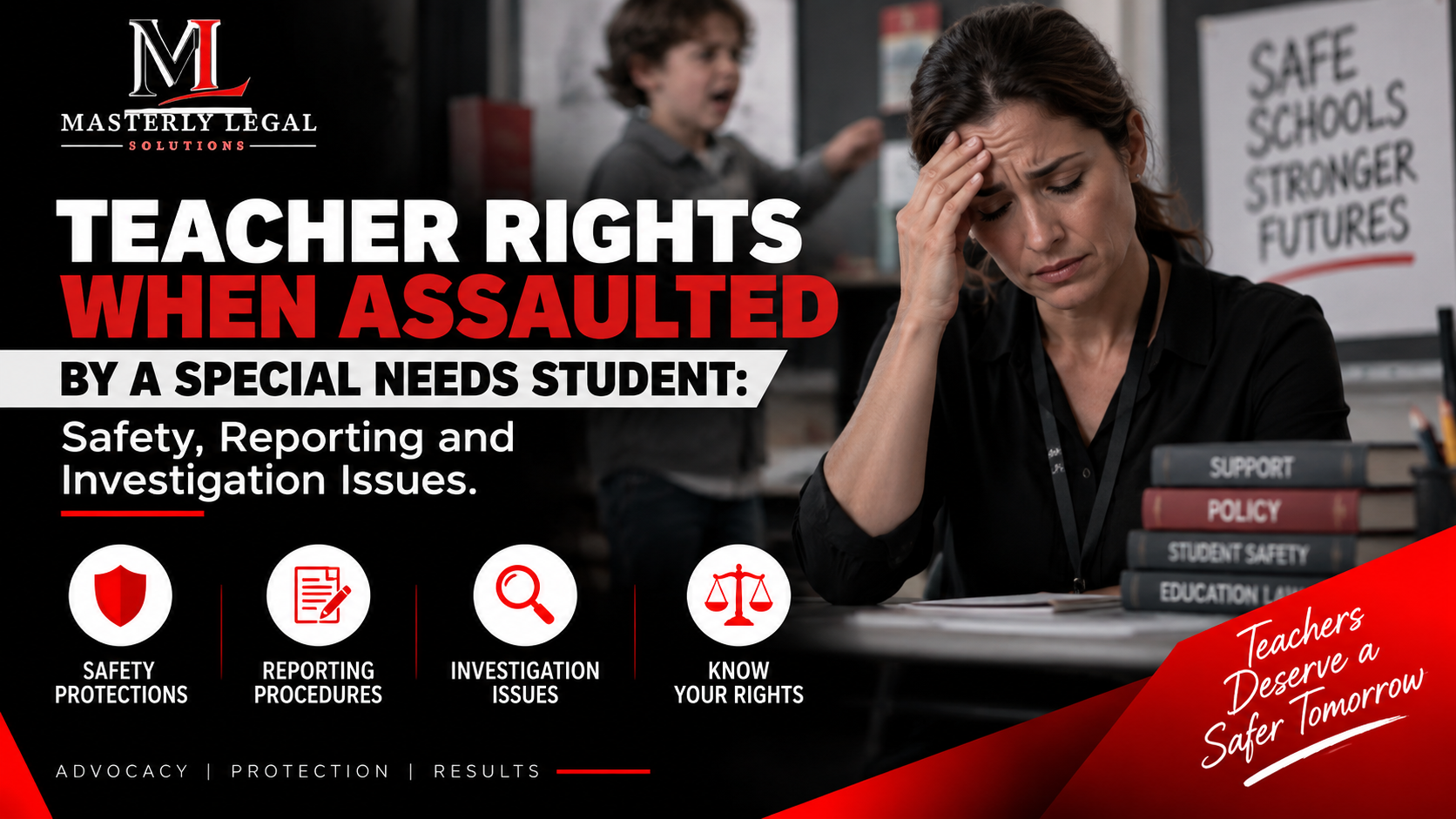
Teacher Rights When Assaulted by a Special Needs Student: Safety, Reporting and Investigation Issues



Looking for Legal & Business Solutions? Contact Us Now
Fill in the form or call us to set up a meeting