

Understanding the Title IX Investigation Process: What to Expect and How to Prepare
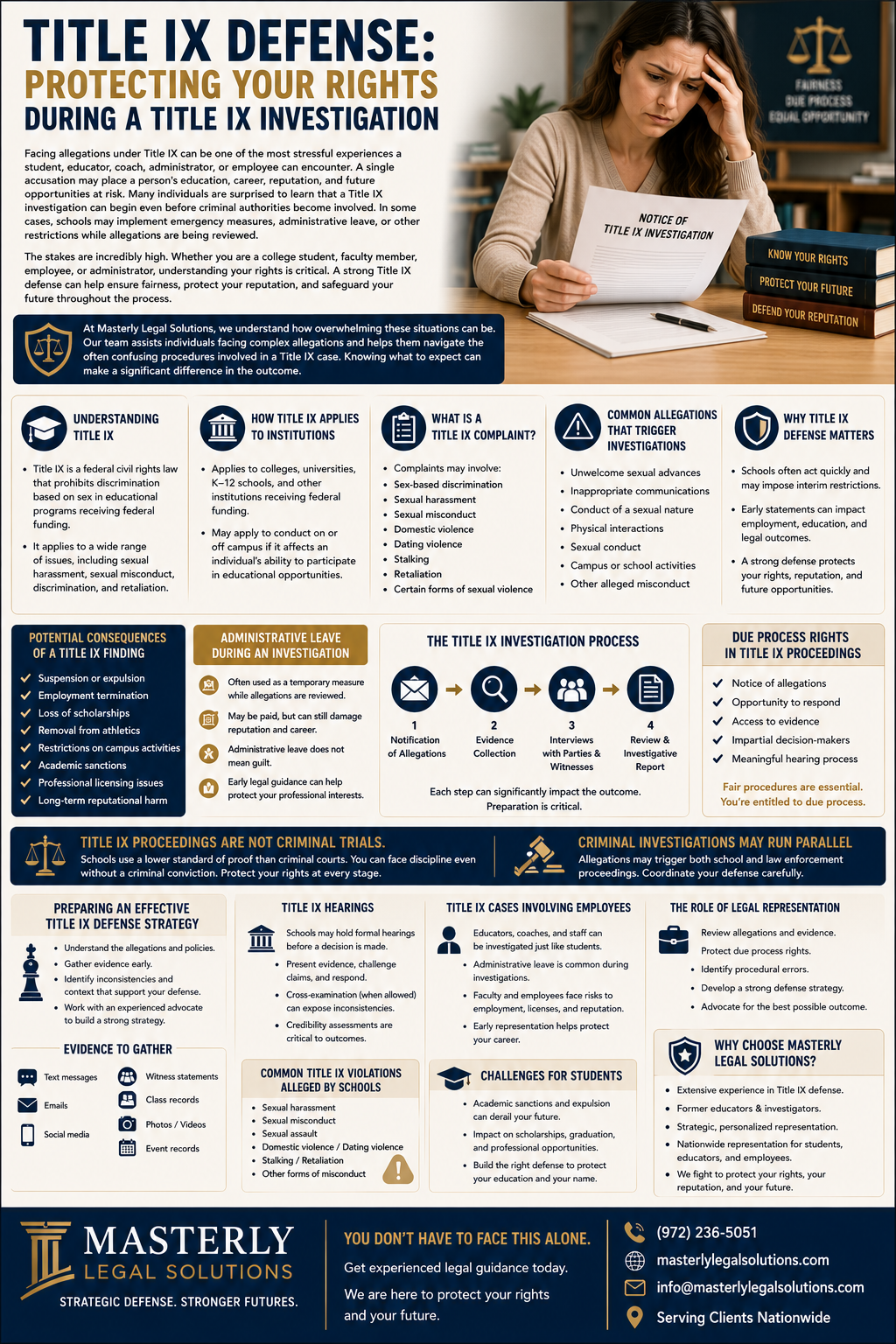
Facing allegations under Title IX can be one of the most stressful experiences a student, educator, coach, administrator, or employee can encounter. A single accusation may place a person's education, career, reputation, and future opportunities at risk. Many individuals are surprised to learn that a Title IX investigation can begin even before criminal authorities become involved. In some cases, schools may implement emergency measures, administrative leave, or other restrictions while allegations are being reviewed.
The stakes are incredibly high. Whether you are a college student, faculty member, employee, or administrator, understanding your rights is critical. A strong title ix defense can help ensure fairness, protect your reputation, and safeguard your future throughout the process.
At Masterly Legal Solutions, we understand how overwhelming these situations can be. Our team assists individuals facing complex allegations and helps them navigate the often confusing procedures involved in a title ix case. Knowing what to expect can make a significant difference in the outcome.
Understanding Title IX
Title IX is a federal civil rights law that prohibits discrimination based on sex in educational environments receiving federal funding. The law originates from the education amendments of 1972 and applies to a broad range of educational settings throughout the United States.
Most people associate title ix with athletics, but its reach extends much further. The law governs how schools address complaints involving discrimination, harassment, misconduct, and violence occurring within an educational setting.
Schools receiving federal financial assistance must comply with title ix regulations and maintain policies designed to investigate and address complaints. Failure to comply may place a school's access to federal funding at risk.
How Title IX Applies to Educational Institutions
Virtually every major educational institution that receives federal assistance is required to follow Title IX requirements. This includes colleges, universities, community colleges, and many K-12 institutions.
The law may apply to conduct occurring within an education program, during school-sponsored events, or in circumstances that affect a student's ability to participate in educational opportunities. A public or private school may be required to investigate allegations even when the conduct occurred off campus under certain circumstances.
Title IX obligations extend to students, employees, coaches, and administrators. As a result, both a college student and a faculty member may become involved in proceedings governed by Title IX, often requiring guidance from an experienced education lawyer for teachers and schools.
What Is a Title IX Complaint?
A title ix complaint generally involves allegations that an individual engaged in prohibited conduct covered by Title IX policies. These complaints can be submitted by students, employees, or other members of an educational community.
A complaint may involve:
- Sex based discrimination
- Sexual harassment
- Sexual misconduct
- Domestic violence
- Dating violence
- Stalking
- Retaliation
- Certain forms of sexual violence
Once a title ix complaint is received, the institution generally evaluates whether the allegations fall within its jurisdiction and whether a formal investigation should begin.
Common Allegations That Trigger Investigations
Many people assume that Title IX only covers extreme situations. In reality, schools may investigate a wide range of allegations.
Examples may include:
- Allegations of unwelcome sexual advances
- Inappropriate communications
- Claims involving conduct of a sexual nature
- Reports involving physical interactions
- Claims of sexual conduct
- Alleged misconduct occurring on a college campus
- Allegations involving a school-sponsored activity
Even an allegation that ultimately proves unsupported may trigger significant consequences for the accused individual.
Why Title IX Defense Matters
The importance of a strong title ix defense cannot be overstated. Schools often move quickly once allegations are reported. Interim restrictions may be imposed before all facts are known.
Individuals facing title ix allegations frequently experience anxiety, confusion, and uncertainty about their future. Without proper guidance, mistakes made early in the process can significantly affect the outcome.
An effective ix defense strategy helps protect rights, preserve evidence, and ensure procedures are followed appropriately.
Consequences of a Title IX Finding
A finding against a respondent can result in serious consequences.
Potential outcomes may include:
- Suspension
- Expulsion
- Employment termination
- Loss of scholarships
- Removal from athletic participation
- Restrictions from campus activities
- Academic sanctions
- Professional licensing issues
In some situations, the long-term effects can last more than a year and continue to impact educational and employment opportunities.
Administrative Leave During a Title IX Investigation
Many educators and employees are placed on administrative leave while a title ix investigation is pending. This action is often presented as temporary, but it can have significant personal and professional consequences.
In certain cases, an employee may receive paid administrative leave while allegations are reviewed. Schools often argue that this measure protects all parties involved while investigators gather information.
For teachers, administrators, coaches, and other professionals, administrative leave can create uncertainty and damage reputations even before any findings have been made, particularly when educators must also protect their teaching licenses and professional standing.
Administrative Leave Does Not Mean Guilt
Being placed on leave should not be viewed as proof of wrongdoing. Educational institutions frequently use leave as a precautionary measure.
However, individuals should still take the situation seriously. Early intervention and legal guidance can help protect professional interests while the investigation proceeds.
A proactive approach often provides the best opportunity to address allegations effectively.
The Title IX Investigation Process
The title ix investigation process typically begins after a complaint is accepted for review. Schools assign trained personnel to evaluate the allegations and collect evidence.
The exact procedures vary among institutions, but most investigations follow a similar framework.
The title ix process generally includes notification of allegations, witness interviews, evidence gathering, review of records, and preparation of investigative findings.
Notification of Allegations
The respondent should receive notice describing the allegations being investigated.
The notice often includes:
- The alleged conduct
- Applicable policies
- Names of involved individuals when appropriate
- Available resources
- Rights during proceedings
Understanding the allegations early is essential for preparing an effective title ix defense strategy.
Evidence Collection
During a title ix investigation, schools typically seek documentation and witness testimony.
Evidence may include:
- Emails
- Text messages
- Social media communications
- Security footage
- Academic records
- Witness statements
Individuals should immediately begin efforts to gather evidence that may support their position.
Interviews Conducted by Investigators
Most investigations involve interviews conducted by title ix investigators.
These interviews may include:
- Complainants
- Respondents
- Witnesses
- School personnel
Statements provided during interviews can significantly influence outcomes. Careful preparation is often beneficial before participating in any formal interview.
Due Process Rights in Title IX Proceedings
One of the most important aspects of any title ix defense involves protecting due process rights.
Although Title IX proceedings differ from criminal courts, institutions must still provide fairness throughout the process.
Basic fairness requires that respondents have meaningful opportunities to understand allegations, review evidence, and respond to accusations.
Understanding Due Process Protections
The concept of due process centers on fairness.
Important protections may include:
- Notice of allegations
- Opportunity to respond
- Access to evidence
- Impartial decision-makers
- Meaningful participation in hearings
These basic due process protections help ensure that decisions are not made based solely on unverified accusations.
The Difference Between School Proceedings and Criminal Cases
Many people mistakenly assume that a Title IX investigation operates like a criminal trial.
In reality, the standards are very different.
A criminal court may require proof beyond a reasonable doubt, while educational institutions generally apply lower evidentiary standards.
Because of these differences, a person may face school discipline even when no criminal conviction occurs.
Criminal Investigations and Title IX Cases
Some allegations involve conduct that may also trigger law enforcement involvement.
For example, allegations involving sexual assault, domestic violence, or other serious offenses may lead to a separate criminal investigation.
Educational proceedings and criminal investigations often occur simultaneously.
How Criminal Charges Affect Title IX Proceedings
When allegations result in potential criminal charges, individuals face two separate challenges.
The school may continue its investigation even while law enforcement is conducting its own review.
Because statements made during school proceedings can potentially affect criminal matters, coordination between legal strategies becomes extremely important.
An individual accused of sexual assault should carefully evaluate all communications and responses before participating in interviews.
The Role of a Title IX Defense Attorney
Working with a qualified title ix defense attorney can help individuals understand their rights and responsibilities.
An attorney can assist with evaluating evidence, preparing responses, reviewing policies, and identifying procedural concerns.
Strong advocacy often becomes particularly important when allegations threaten educational or professional futures.
Benefits of Legal Representation
Effective legal representation provides numerous advantages.
An attorney may help:
- Review allegations
- Analyze evidence
- Prepare written responses
- Identify procedural violations
- Protect due process rights
- Develop defense strategies
For many individuals, having experienced guidance reduces uncertainty and improves preparedness throughout proceedings.
Choosing the Right Title IX Lawyer
Selecting a knowledgeable title ix lawyer is an important decision.
Look for professionals who understand educational procedures, disciplinary systems, and institutional investigations.
A qualified experienced title ix attorney can evaluate the strengths and weaknesses of a case while helping clients make informed decisions.
Not all attorneys have experience handling Title IX matters, making careful selection essential.
Challenges Faced by Students and Faculty Members
Title IX allegations affect people from many different backgrounds.
A college student accused of misconduct may face suspension or expulsion. A faculty member may face disciplinary action, termination, or reputational damage.
The emotional impact can be significant regardless of the individual's role within the institution.
Both students and employees deserve fair treatment throughout proceedings.
Protecting Educational Opportunities
One purpose of Title IX is to protect students and ensure equal access to educational opportunities.
At the same time, fairness requires that accused individuals receive appropriate protections.
Balancing these interests is one of the most difficult aspects of the Title IX system.
Proper procedures help educational institutions fulfill their obligations while respecting individual rights.
Continue to Part 2 for advanced defense strategies, hearings, cross-examination issues, Title IX violations, faculty investigations, and the Masterly Legal Solutions contact section.
Preparing an Effective Title IX Defense Strategy
Every case is different, which means there is no one-size-fits-all approach to title ix defense. A successful defense often begins with understanding the specific allegations and reviewing the evidence available to both parties.
Individuals facing title ix allegations should avoid assuming the facts will speak for themselves. Schools frequently make decisions based on interviews, documents, and reports collected during the investigation. A well-prepared ix defense strategy can help ensure critical information is presented effectively.
Gathering Evidence Early
One of the most important steps in building a defense is to gather evidence as soon as possible.
Helpful evidence may include:
- Text messages
- Emails
- Social media communications
- Witness statements
- Class records
- Event attendance records
- Photographs
- Video recordings
Evidence that appears insignificant initially may later become essential in disproving allegations or providing important context.
The Importance of Early Intervention
Early intervention often allows respondents to address concerns before misunderstandings escalate.
When schools launch investigations, timelines may move quickly. Missing deadlines or failing to respond appropriately can negatively impact outcomes.
An effective ix defense attorney can help identify potential issues early and assist with strategic planning throughout the process.
Understanding Title IX Hearings
Many institutions utilize a formal title ix hearing process before issuing final determinations, making it critical for respondents to understand each step of the Title IX investigation process and their rights..
These hearings provide opportunities for both sides to present information and challenge evidence.
Depending on institutional policies, hearing panels or designated decision-makers review the evidence and determine whether policy violations occurred.
Presenting Evidence During Hearings
A hearing often represents a critical stage of the title ix process.
Respondents may have opportunities to:
- Present documents
- Submit witness testimony
- Challenge factual assertions
- Address inconsistencies
- Respond to allegations
Preparation is essential because hearing outcomes frequently influence final disciplinary decisions.
Cross-Examination and Credibility Issues
Some proceedings allow advisors or attorneys to conduct cross examination of witnesses.
Cross-examination can help identify inconsistencies, omissions, or conflicting accounts.
Credibility assessments often play a major role in determining outcomes, particularly when allegations rely heavily on witness testimony rather than physical evidence.
Careful preparation can significantly improve a respondent's ability to challenge unsupported claims.
Common Title IX Violations Alleged by Schools
Schools investigate a wide range of conduct under Title IX policies.
A reported title ix violation may involve allegations of misconduct occurring on campus, during educational activities, or within an institution's jurisdiction.
Each alleged violation requires careful review of the facts and applicable policies.
Sexual Harassment Allegations
One of the most common allegations involves sexual harassment.
Educational institutions must investigate complaints involving unwelcome behavior that allegedly interferes with an individual's educational experience.
Not every uncomfortable interaction constitutes harassment. Context, intent, frequency, and institutional policies often play important roles in evaluating allegations.
Sexual Misconduct Investigations
Many schools use broad definitions when investigating sexual misconduct allegations.
These cases may involve:
- Communication disputes
- Relationship conflicts
- Consent issues
- Alleged inappropriate conduct
Because definitions vary between institutions, understanding specific policies is essential.
Sexual Assault Allegations
Cases involving sexual assault are among the most serious matters addressed under Title IX.
An individual accused of sexual assault may face severe educational and professional consequences if found responsible.
In addition to school discipline, allegations may result in separate criminal investigations or future employment challenges.
Strong title ix defense representation can be critical in protecting a respondent's rights throughout the process.
Domestic Violence and Related Allegations
Certain complaints involve allegations of domestic violence or dating violence, which may also trigger internal investigations and broader labor and employment law concerns for institutions.
Educational institutions often investigate these claims when they impact an educational environment or fall within school jurisdiction.
These allegations can create significant emotional and legal challenges for everyone involved.
A thorough review of evidence and witness testimony is often necessary to determine what actually occurred.
Understanding the Rights of Respondents
Individuals accused of misconduct frequently feel overwhelmed by the process.
However, respondents still possess important rights.
Protecting those rights is one of the primary goals of a comprehensive ix defense strategy.
Reviewing Evidence Before Decisions Are Made
Many institutions permit respondents to review evidence before final determinations.
This opportunity allows individuals to identify inaccuracies, omissions, or misunderstandings.
Careful review may reveal procedural errors or evidence supporting the respondent's position.
Failure to review evidence thoroughly can place respondents at a significant disadvantage.
Responding to Alleged Conduct
Every alleged conduct report deserves careful evaluation.
Respondents should avoid assumptions regarding how investigators may interpret statements or evidence.
Providing accurate information and maintaining consistency throughout proceedings can strengthen credibility.
Thoughtful preparation is often more effective than emotional reactions.
Title IX Cases Involving Employees
Title IX does not apply solely to students.
Employees, coaches, administrators, and educators may also become subjects of investigations.
A student or faculty member accused of misconduct may face disciplinary consequences under similar institutional procedures.
Faculty Member Investigations
A faculty member accused of misconduct may face administrative action even before findings are issued.
Investigations involving employees often raise concerns regarding employment status, reputation, and future career opportunities.
Schools may place employees on administrative leave while investigations proceed.
Although temporary leave is not a finding of responsibility, it can still create substantial professional challenges.
Administrative Leave and Employment Risks
Employees placed on paid administrative leave frequently worry about long-term consequences.
Potential concerns include:
- Professional reputation
- Contract renewal
- Future employment opportunities
- Licensing issues
- Workplace relationships
Seeking guidance early may help minimize unnecessary risks during investigations.
Challenges Facing Graduate Students
Title IX proceedings can be particularly difficult for individuals attending graduate school, especially when delayed or suspended investigations create additional uncertainty about their rights and require strategic defense against suspended Title IX cases.
Graduate students often have research obligations, teaching responsibilities, internships, and professional licensing considerations.
An adverse finding may affect future academic opportunities and career development.
Because so much is at stake, careful preparation becomes extremely important.
The Role of Title IX Administrators
Most institutions designate title ix administrators to oversee compliance efforts, often working closely with higher education law counsel for colleges and universities to manage compliance obligations.
These professionals help coordinate investigations, ensure procedural requirements are followed, and manage institutional responses.
Although administrators play an important role, they are not personal advocates for respondents or complainants.
Individuals should understand the distinction between institutional personnel and independent legal advisors.
Educational Institutions and Compliance Requirements
Every educational institution receiving federal support must comply with applicable Title IX obligations, and many colleges rely on dedicated higher education attorneys to navigate these complex requirements.
Schools are expected to maintain policies, investigate complaints, and address allegations appropriately.
Failure to comply with title ix regulations may create risks for institutions.
These requirements reflect broader federal efforts to promote fairness and protect educational access.
Educational Programs Covered by Title IX
Title IX applies to many activities connected to an educational program or education program.
Coverage may extend to:
- Academic programs
- Athletic activities
- Student organizations
- Campus housing
- School-sponsored events
Understanding jurisdictional issues is often an important component of any ix defense strategy.
The Importance of Due Process
One of the most significant concerns in Title IX cases involves due process.
Respondents deserve fair procedures regardless of the allegations involved.
When schools fail to provide adequate notice, access to evidence, or meaningful opportunities to respond, significant concerns may arise.
Due Process Protects Everyone
Strong due process protections benefit everyone involved.
Fair procedures help improve confidence in outcomes and reduce the likelihood of arbitrary decisions.
Educational institutions should strive to ensure all parties receive fair treatment throughout proceedings.
Protecting procedural rights remains a fundamental component of effective title ix defense representation.
When Criminal Proceedings Overlap With Title IX
Some allegations may result in both school proceedings and criminal investigations.
A respondent may face criminal charges while simultaneously responding to a Title IX complaint.
The existence of one proceeding does not necessarily prevent the other from continuing.
Criminal Prosecution Versus School Discipline
A school disciplinary matter differs significantly from a criminal prosecution.
Educational proceedings focus on policy compliance, while criminal courts address violations of criminal law.
Because standards differ, a person may avoid criminal liability yet still face institutional sanctions.
This distinction often surprises respondents unfamiliar with Title IX procedures.
Criminal Charges and Long-Term Consequences
Even when criminal charges are never filed, Title IX findings can create serious consequences.
Potential impacts include:
- Educational restrictions
- Transcript notations
- Employment difficulties
- Professional licensing concerns
- Reputational damage
These risks highlight the importance of a well-developed ix defense strategy.
Representing Students and Employees Nationwide
Masterly Legal Solutions understands the unique challenges faced by students, educators, coaches, and professionals, and offers comprehensive legal support for schools and teachers.
Our team has assisted represented students and employees confronting complex disciplinary matters.
We recognize that every case involves unique facts, institutional policies, and procedural concerns.
Whether allegations involve sexual harassment, sexual misconduct, domestic violence, or another claimed title ix violation, strategic preparation can make a meaningful difference.
Working With Experienced Advocates
Individuals facing investigations often benefit from consulting an experienced title ix attorney or knowledgeable advocate familiar with these proceedings.
A qualified title ix defense lawyer, ix defense lawyer, title ix attorney, or title ix lawyer can help evaluate evidence, identify procedural issues, and develop an effective response strategy.
For those seeking assistance, access to experienced professionals and even nationwide title ix lawyers may provide valuable support during a difficult time.
Title IX Cases Involving Accused Students in Higher Education
An accused student in a Title IX matter often faces significant uncertainty regarding their academic future. Colleges and universities within higher education institutions frequently initiate investigations after receiving complaints that may involve misconduct, discrimination, or other alleged policy violations, including matters that can affect athletes and coaches who may also need sports law and NCAA compliance representation. These cases can affect enrollment status, participation in campus activities, scholarships, and future educational opportunities, and may overlap with UIL disciplinary defense issues for Texas students and coaches.
Because Title IX proceedings are governed by federal law, students should understand that the outcome of an investigation may have consequences beyond the classroom. Even before a final determination is made, an accused individual may experience restrictions that impact their educational experience and reputation.
Understanding the Risks of Violating Title IX
Schools are required to address allegations involving potential violating title ix policies. However, an allegation alone does not establish responsibility. Institutions must evaluate evidence, interview witnesses, and review the circumstances surrounding the complaint before reaching a decision.
A finding that an individual was violating title ix requirements may lead to disciplinary sanctions and other legal consequences. Depending on the nature of the allegations, the impact may extend beyond the educational environment and affect future employment and professional opportunities.
Title IX Claims and the Rights of the Respondent
Many investigations begin when an individual files one or more title ix claims alleging misconduct or discrimination. These claims often require schools to conduct a formal review of the allegations and determine whether institutional policies were violated.
The individual responding to the allegations, sometimes referred to as a title ix defendant, should understand the importance of participating in the process thoughtfully and strategically. A strong response supported by evidence can help ensure that decision-makers receive a complete picture of the facts.
The Importance of Legal Counsel During a Challenging Process
For many students and employees, a Title IX matter becomes a highly challenging process. Investigations may involve interviews, evidence review, hearings, and strict procedural requirements.
Seeking experienced legal counsel can help respondents better understand their rights and obligations throughout the proceedings. Proper guidance may assist in identifying procedural concerns, preparing responses, and protecting important due process rights.
Educational Oversight and Institutional Responsibilities
Title IX compliance is monitored through the U.S. Department of Education and the education's office responsible for enforcing civil rights protections. Educational institutions receiving federal support must maintain policies designed to address complaints fairly and consistently.
These obligations extend across colleges, universities, and even certain school districts. Institutions are expected to investigate allegations thoroughly while balancing the rights of complainants and respondents.
Evaluating Allegations Involving Physical Conduct
Some investigations involve allegations concerning physical conduct between the parties involved. These cases often require investigators to examine witness statements, communications, timelines, and other available evidence.
Because allegations involving physical interactions can carry substantial legal consequences, respondents should approach the matter seriously and ensure that all relevant evidence is preserved and presented appropriately.
Protect Your Future With Masterly Legal Solutions
Being the subject of a title ix investigation, title ix proceedings, or a formal title ix case can feel overwhelming. Whether you are a student, educator, coach, administrator, or employee, your education, career, and reputation may be on the line. The decisions made during these proceedings can affect opportunities for years to come.
At Masterly Legal Solutions, we understand the stress that accompanies facing title ix allegations. Our team works with individuals seeking strong title ix defense, strategic guidance, and experienced advocacy throughout the process. From reviewing evidence and identifying procedural concerns to preparing for hearings and protecting your due process rights, we are committed to helping clients navigate these challenging situations.
If you are facing a Title IX matter and have questions about your rights, do not wait until critical deadlines have passed. Contact Masterly Legal Solutions today at (972) 236-5051 for a free consultation. We can discuss your situation, explain potential options, and help you better understand the next steps. A conversation today may help protect your future tomorrow.
Important Disclaimer: This article is provided for educational and informational purposes only. It is not legal advice and does not create an attorney-client relationship. Every Title IX matter involves unique facts and circumstances. If you have questions regarding a Title IX investigation, Title IX complaint, Title IX hearing, administrative leave, or any related legal issue, consult a qualified attorney regarding your specific situation.




Teacher Rights When Assaulted by a Special Needs Student: Safety, Reporting and Investigation Issues



Looking for Legal & Business Solutions? Contact Us Now
Fill in the form or call us to set up a meeting





