

Charlotte CPS: How a Minor Concern Can Turn Into a Major CPS Case
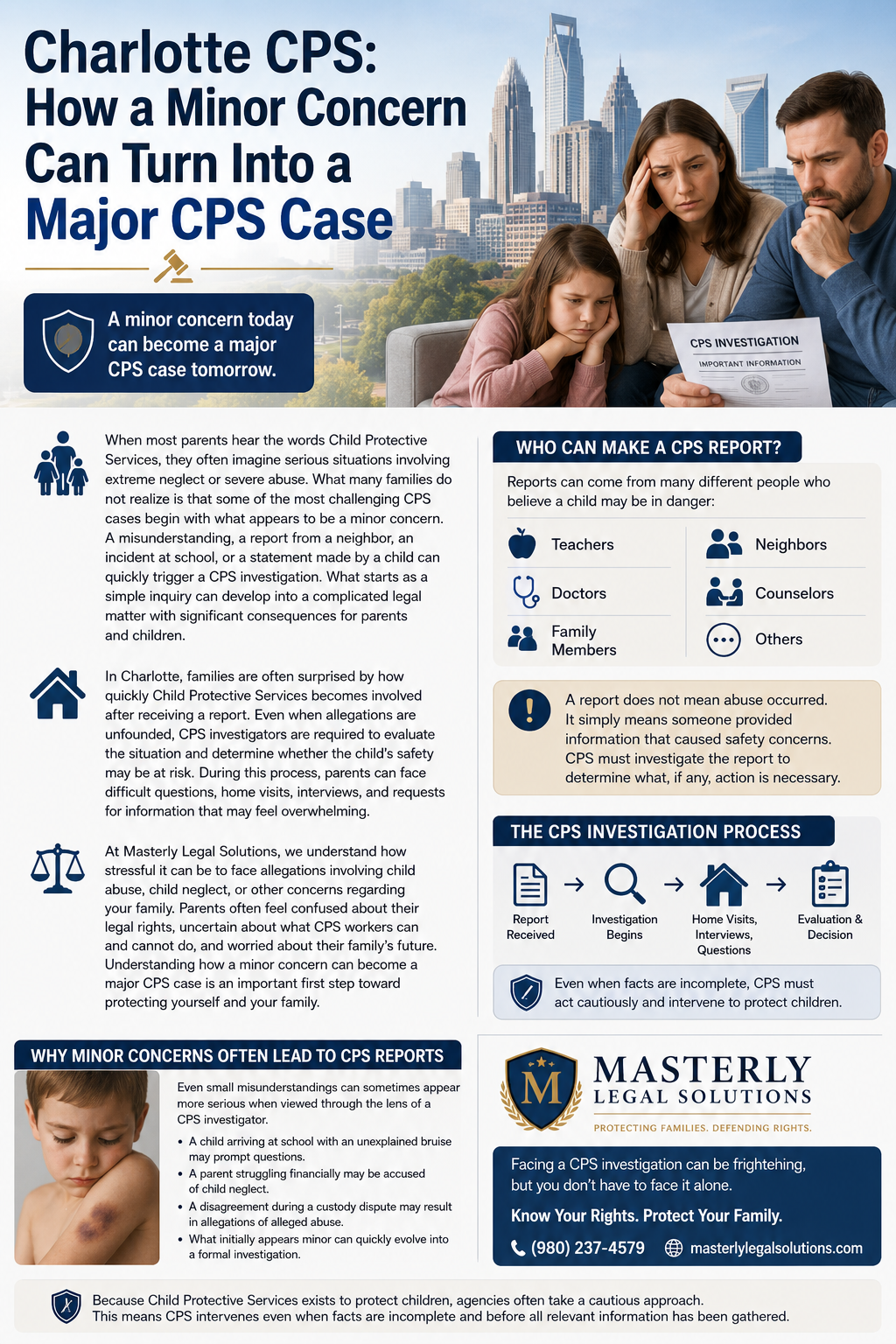
When most parents hear the words Child Protective Services, they often imagine serious situations involving extreme neglect or severe abuse. What many families do not realize is that some of the most challenging CPS cases begin with what appears to be a minor concern. A misunderstanding, a report from a neighbor, an incident at school, or a statement made by a child can quickly trigger a CPS investigation. What starts as a simple inquiry can develop into a complicated legal matter with significant consequences for parents and children.
In Charlotte, families are often surprised by how quickly Child Protective Services becomes involved after receiving a report. Even when allegations are unfounded, CPS investigators are required to evaluate the situation and determine whether the child's safety may be at risk. During this process, parents can face difficult questions, home visits, interviews, and requests for information that may feel overwhelming.
At Masterly Legal Solutions, we understand how stressful it can be to face allegations involving child abuse, child neglect, or other concerns regarding your family. Parents often feel confused about their legal rights, uncertain about what CPS workers can and cannot do, and worried about their family's future. Understanding how a minor concern can become a major CPS case is an important first step toward protecting yourself and your family.
Why Minor Concerns Often Lead to CPS Reports
Many people assume CPS only becomes involved when there is clear evidence of abuse or neglect. In reality, Child Protective Services CPS investigates reports whenever someone raises concerns about a child's well being. Reports can come from teachers, doctors, counselors, neighbors, family members, or other individuals who believe a child may be in danger.
A report does not mean abuse occurred. It simply means that someone provided information that caused safety concerns. Once the report is received, CPS investigates reports to determine whether further action is necessary. Unfortunately, even small misunderstandings can sometimes appear more serious when viewed through the lens of a CPS investigator.
For example, a child arriving at school with an unexplained bruise may prompt questions. A parent struggling financially may be accused of child neglect. A disagreement during a custody dispute may result in allegations of alleged abuse. What initially appears minor can quickly evolve into a formal investigation.
Because Child Protective Services exists to protect children, agencies often take a cautious approach. This means CPS intervenes even when facts are incomplete and before all relevant information has been gathered.
The Importance of Mandatory Reporting
Certain professionals are legally required to report suspected child abuse or neglect. Teachers, healthcare workers, counselors, and social services personnel may be obligated to notify authorities if they believe a child may be at risk.
The individual making the report does not need proof. In many situations, they only need a reasonable suspicion. As a result, reports can be filed based on misunderstandings, incomplete information, or observations that later turn out to be harmless.
Once the report reaches Child Protective Services, the legal process begins regardless of whether the concerns are ultimately substantiated.
Reports Are Not Findings
One of the biggest misconceptions among parents is believing that a report automatically means they have done something wrong. A report simply initiates an investigation.
Unfortunately, many families become alarmed when a CPS caseworker contacts them. While the situation should be taken seriously, it is important to remember that allegations are not the same as CPS findings. The purpose of the investigation is to gather information and determine whether abuse, neglect, or safety concerns actually exist.
How a CPS Investigation Begins
After receiving a report, Child Protective Services evaluates the information to determine the level of risk involved. If the agency believes the child may face immediate danger, the response can occur very quickly.
A CPS investigator may contact parents by phone, arrive at the home unexpectedly, or request interviews with family members. In some cases, schools may be contacted before parents are notified.
This early stage is often where mistakes occur. Parents who believe the matter is minor may underestimate the seriousness of the investigation. Statements made during initial interviews can later become important evidence in the case.
The Role of the CPS Caseworker
A CPS caseworker is responsible for gathering facts and assessing the child's safety. This process may include:
- Interviewing parents
- Speaking with the child involved
- Contacting teachers or medical providers
- Inspecting the home environment
- Reviewing records
- Speaking with family members
The CPS caseworker's observations can significantly influence the direction of the case. Because of this, parents should be careful when responding to questions and providing information.
Why Parents Often Feel Unprepared
Most people never expect to interact with Child Protective Services. When CPS workers appear unexpectedly, parents may become nervous, defensive, or confused.
Even innocent explanations can sometimes be misunderstood. A stressed parent may make inconsistent statements. A child may communicate information inaccurately due to fear, confusion, or misunderstanding. These situations can cause concerns to escalate unnecessarily.
Having legal representation early in the process can help families navigate these interactions more effectively.
Common Minor Concerns That Escalate Into Major CPS Cases
Not every CPS case begins with allegations of severe abuse. In fact, many investigations originate from everyday situations that later become more complicated.
Understanding these common triggers can help parents recognize potential risks and respond appropriately, and firms with experience in education law and related school investigations can help families navigate reports that start in the classroom.
School-Related Concerns
Schools frequently generate CPS reports because educators spend significant time observing children. Concerns may arise when a child repeatedly appears tired, hungry, withdrawn, or injured.
A teacher may report suspected child abuse after noticing bruises. A counselor may report concerns about emotional well being. Even comments made casually by children can trigger an investigation.
While educators are acting with the child's best interests in mind, reports are sometimes based on incomplete information.
Medical Concerns
Healthcare providers are often required to report suspected abuse or neglect. Missed appointments, untreated injuries, or concerns regarding medical care can result in a CPS investigation.
Parents dealing with financial hardship, transportation challenges, or communication issues may unintentionally appear neglectful even when they are actively caring for their child.
Medical reports can carry substantial weight during CPS matters because they often involve professional observations and documentation.
Custody Disputes
Child custody conflicts are among the most common sources of CPS allegations. During contentious disputes, one parent may accuse another of child abuse, child neglect, substance abuse, or unsafe behavior.
Although some reports involve legitimate concerns, others arise from ongoing disagreements between parents. CPS investigators must evaluate these claims regardless of the motivation behind the report.
The existence of a custody battle can make investigations significantly more complex.
Household Safety Concerns
Many families are surprised to learn that household conditions can lead to CPS involvement.
Examples may include:
- Lack of utilities
- Excessive clutter
- Unsafe sleeping arrangements
- Dangerous household hazards
- Inadequate supervision
In some situations, poverty-related challenges are mistaken for neglect. CPS workers may interpret living conditions differently than parents do, leading to disagreements regarding safety concerns.
When Allegations Become More Serious
A minor concern can quickly become a major case when additional allegations emerge during the investigation. What begins as one issue may expand into a broader review of family circumstances.
This expansion often occurs because investigators are trained to examine multiple aspects of a child's environment once a report has been filed.
Additional Interviews Can Reveal New Concerns
As CPS workers gather information, they may identify issues unrelated to the original report. Statements from teachers, doctors, relatives, or neighbors can introduce new allegations.
For example, an investigation initially focused on school attendance may later involve questions regarding supervision, discipline practices, or substance abuse.
Each new concern increases the complexity of the case and may require additional investigation.
Misunderstandings Can Grow Over Time
Parents often assume they can clear up confusion with a simple explanation. Unfortunately, misunderstandings sometimes become larger issues as information passes through multiple sources.
A statement made by a child may be interpreted differently by a teacher. The teacher's report may be summarized differently by a CPS investigator. These layers of communication can result in significant inaccuracies.
Without experienced legal representation, families may struggle to correct these misunderstandings before they influence CPS findings.
Documentation Becomes Increasingly Important
As investigations progress, documentation often plays a critical role.
Relevant information may include:
- Medical records
- School records
- Counseling records
- Photographs
- Witness statements
- Communication records
The ability to present evidence effectively can make a substantial difference in the outcome of CPS cases.
Understanding Allegations of Abuse and Neglect
One reason minor concerns escalate so quickly is that allegations involving child abuse and neglect are treated with extreme seriousness.
Even when evidence is limited, CPS investigators must thoroughly examine claims involving potential harm to a child.
What Constitutes Child Abuse
Child abuse can include physical injury, emotional harm, sexual abuse, or other conduct that places a child at risk.
Examples may include:
- Physical abuse
- Emotional abuse
- Sexual abuse
- Exploitation
- Excessive discipline
Because these allegations are serious, they often trigger intensive investigations.
Importantly, an allegation of abuse does not mean abuse occurred. However, the accusation alone can create significant challenges for parents.
Understanding Child Neglect
Child neglect generally involves the failure to provide adequate care, supervision, medical treatment, education, or basic necessities.
Neglect allegations often arise from circumstances such as:
- Inadequate supervision
- Poor living conditions
- Failure to obtain medical care
- Educational neglect
- Lack of food or necessities
Many neglect allegations involve complex family circumstances rather than intentional misconduct. Nevertheless, CPS may still view these situations as threats to the child's safety.
The Impact of Alleged Abuse Claims
Alleged child abuse claims can affect multiple areas of a parent's life.
Potential consequences include:
- CPS intervention
- Child custody disputes
- Administrative hearings
- Court proceedings
- Criminal prosecution in severe cases
- Foster care placement concerns
Because the stakes are so high, parents facing allegations should take immediate steps to understand their legal rights.
The Difference Between a CPS Investigation and Criminal Charges
Many parents assume a CPS investigation automatically means criminal charges are coming. While some cases overlap, the two processes are different.
Child Protective Services focuses on protecting children, while law enforcement focuses on enforcing criminal law.
A CPS investigation may occur without criminal charges. Similarly, criminal investigations may occur alongside CPS involvement when allegations are particularly serious.
Why Both Systems Matter
Information gathered by CPS can sometimes affect criminal cases. Statements made during interviews may later be reviewed by law enforcement or prosecutors.
For this reason, families should understand the potential legal implications of every interaction with investigators.
An attorney experienced in CPS defense can help evaluate risks and provide guidance throughout the legal process.
How Courts Become Involved
When CPS believes intervention is necessary, the agency may seek a court order. Courts may review evidence, hear testimony, and determine what actions are appropriate.
Judges typically focus on the child's safety and best interests. Depending on the circumstances, court involvement may range from limited oversight to more significant restrictions affecting parental rights.
How CPS Findings Can Shape the Future of a Family
Once a CPS investigation moves beyond the initial stage, the agency will eventually reach conclusions regarding the allegations. These CPS findings can have a lasting impact on parents, children, and the family's future.
Many parents mistakenly believe that if their child remains in the home, the case is over. In reality, CPS findings can influence future interactions with Child Protective Services, child custody proceedings, employment opportunities in certain fields, and other legal matters
.
The findings reached by CPS may become part of agency records and can affect how future reports are evaluated. This is one reason why families should take every stage of the investigation seriously, even when the allegations seem minor.
Types of CPS Findings
Depending on the evidence gathered, Child Protective Services may determine that allegations are:
- Substantiated
- Unsubstantiated
- Unable to be determined
- In need of ongoing monitoring
The terminology may vary depending on agency procedures, but the practical consequences can be significant.
When CPS concludes that abuse or neglect occurred, parents may face additional requirements, monitoring, or court involvement. Even findings that fall short of a formal determination can still create challenges for families.
Why Evidence Matters
Investigators make decisions based on the information available to them. Unfortunately, incomplete information sometimes leads to inaccurate conclusions.
Parents often possess relevant information that investigators have not yet considered. Medical records, school reports, witness statements, photographs, and other documentation can provide important context.
The ability to present evidence effectively can help ensure fair treatment throughout the process.
When CPS Intervenes in Family Life
Many parents are shocked by how quickly CPS intervenes after concerns arise. While the agency's mission is to protect children, intervention can feel invasive and overwhelming.
Even when parents are doing their best, CPS involvement may create stress, uncertainty, and disruption within the family.
The agency may request compliance with various CPS requirements while the investigation remains active. Families who fail to understand these requirements may unintentionally create additional complications.
Safety Plans and Voluntary Agreements
In some situations, CPS may ask parents to participate in safety plans designed to address concerns while the investigation continues.
These plans may include recommendations involving:
- Supervision arrangements
- Counseling services
- Parenting classes
- Substance abuse evaluations
- Temporary living arrangements
Although certain agreements may appear voluntary, parents should fully understand their implications before signing documents or accepting conditions.
Legal assistance can help families evaluate proposed agreements and make informed decisions.
Temporary Changes to Living Arrangements
When investigators believe immediate action is necessary, temporary changes may be requested or ordered.
In some cases, children may stay with family members while concerns are evaluated. In more serious situations, foster care placement may be considered.
These decisions can have a profound emotional impact on both parents and children. Taking prompt action is often critical when CPS seeks to alter living arrangements, and working with a full-service family-focused law firm can help you understand your options.
Foster Care Concerns in Serious CPS Cases
One of the greatest fears parents face during a CPS investigation is the possibility that their child could be removed from the home.
While removal is not appropriate in every case, it can occur when investigators believe a child's safety is at immediate risk.
The possibility of foster care often becomes a major concern when allegations escalate or when CPS believes less restrictive alternatives are unavailable.
Factors Considered Before Removal
Child Protective Services generally evaluates multiple factors before seeking removal of a child.
These factors may include:
- Alleged abuse severity
- Risk of future harm
- Availability of safe relatives
- Cooperation during the investigation
- Prior CPS cases
- Evidence of ongoing safety concerns
Courts typically become involved before long-term removal decisions are finalized.
The Emotional Impact on Families
Even temporary separation can create significant emotional hardship.
Parents often experience anxiety, frustration, and fear regarding the future of their family. Children may struggle to understand why changes are occurring and may experience confusion or emotional distress.
Protecting the child's well being while safeguarding parental rights requires careful attention to every aspect of the legal process.
Protecting Parental Rights During a CPS Investigation
Parents retain important legal rights even when Child Protective Services becomes involved.
Unfortunately, many families are unaware of these rights and unknowingly make decisions that complicate their cases.
Understanding parental rights is one of the most important aspects of an effective CPS defense strategy, and partnering with a client-centered Texas law firm can provide the guidance needed to protect those rights.
Parents Have the Right to Seek Legal Representation
One of the most valuable protections available to families is the right to obtain legal representation.
An experienced attorney can help parents:
- Understand the allegations
- Review agency actions
- Evaluate legal options
- Protect constitutional rights
- Prepare responses to investigators
- Present evidence effectively
Early legal involvement often allows families to address concerns before they escalate into larger disputes.
The Importance of Understanding Legal Rights
Every interaction with CPS may have legal implications.
Parents should understand:
- What information may be requested
- How interviews are conducted
- When court involvement is possible
- What documents should be reviewed carefully
- How findings may affect future proceedings
Knowledge empowers families to make informed decisions during challenging circumstances.
Avoiding Common Mistakes
Parents facing allegations frequently make mistakes because they are frightened or overwhelmed.
Common errors include:
- Ignoring investigator requests
- Becoming confrontational
- Providing inconsistent statements
- Failing to preserve records
- Delaying legal assistance
These mistakes can unintentionally strengthen the agency's concerns and make resolution more difficult.
Administrative Hearings and Court Proceedings
As CPS matters become more serious, administrative hearings and court proceedings may become necessary.
These proceedings provide opportunities for evidence to be reviewed and decisions to be challenged.
However, they can also be intimidating for families unfamiliar with the legal system.
Administrative Hearings
Administrative hearings may address issues such as CPS findings or agency decisions.
During these proceedings, parties may:
- Present evidence
- Challenge conclusions
- Submit documentation
- Question agency actions
Preparation is critical because hearing outcomes may affect future legal matters.
Court Involvement
When CPS seeks judicial intervention, the court becomes responsible for evaluating evidence and determining appropriate action.
The court may review:
- Investigation findings
- Witness testimony
- Safety concerns
- Compliance with CPS requirements
- Recommendations from protective services
Judges focus heavily on the child's safety while balancing parental rights and family integrity.
Presenting Evidence Effectively
Success in court often depends on the ability to present evidence clearly and persuasively.
Relevant information may include:
- Medical documentation
- School records
- Expert opinions
- Witness testimony
- Photographs
- Communication records
Strong preparation can significantly influence the outcome of a case, especially when you work with a firm experienced in internal investigations and complex hearings.
Substance Abuse Allegations and CPS Investigations
Substance abuse allegations frequently cause minor concerns to evolve into major CPS cases.
Even allegations involving legal substances may trigger investigations if CPS believes the child's safety could be affected.
These cases often involve complex factual and legal issues.
Why CPS Focuses on Substance Abuse
The agency's primary concern is whether substance use creates a risk of harm to a child.
Investigators may evaluate:
- Frequency of use
- Impact on parenting ability
- Household environment
- Supervision concerns
- Prior incidents
Parents should not assume that allegations alone prove misconduct. Each case requires a careful examination of the facts.
Addressing Concerns Proactively
When substance abuse allegations arise, proactive steps may help demonstrate responsibility and commitment to the child's well being.
Appropriate responses vary depending on individual circumstances and should be evaluated carefully with legal guidance, particularly when long-term planning through personalized estate planning in Dallas is also part of protecting your family's future.
Child Custody Issues and CPS Cases
A CPS investigation can significantly affect child custody disputes.
Family courts often consider CPS findings when making custody determinations. Even unproven allegations may create complications during ongoing disputes between parents.
Because of this overlap, families should view CPS matters and custody matters as interconnected issues, and may also benefit from tailored estate planning services in Frisco to address long-term concerns affecting their children.
How Allegations Influence Custody Cases
Judges evaluating custody arrangements focus on the best interests of the child.
When allegations involve abuse or neglect, courts may consider:
- CPS findings
- Safety concerns
- Parenting history
- Compliance with recommendations
- Witness testimony
Addressing CPS allegations effectively can be critical to preserving custody rights.
False or Exaggerated Allegations
Unfortunately, some allegations arise during contentious custody battles.
One parent may accuse another of alleged abuse in an effort to gain leverage during litigation.
Although investigators work to verify claims, false allegations can still create substantial disruption and stress for families.
Why Early Legal Assistance Matters
Many families wait until court proceedings begin before seeking help. By that point, significant decisions may already have been made.
Obtaining legal assistance early often provides important advantages.
An attorney experienced in CPS matters can help families understand risks, preserve evidence, and avoid common pitfalls.
The Value of Experienced Legal Representation
Experienced legal representation can make a meaningful difference throughout a CPS investigation.
Benefits may include:
- Strategic guidance
- Protection of legal rights
- Communication assistance
- Case preparation
- Evidence review
- Advocacy during hearings
Every CPS case presents unique challenges, making individualized legal support especially important, and many families choose to pair that support with trust-based estate planning in DFW to safeguard their children and assets.
Working With a CPS Defense Attorney
A CPS defense attorney understands the procedures, standards, and concerns that frequently arise during investigations.
Families facing allegations often need more than general information. They need guidance tailored to their specific circumstances.
An attorney experienced in CPS defense can help evaluate agency actions and develop strategies designed to protect both parents and children.
How Masterly Legal Solutions Helps Families Facing CPS Allegations
At Masterly Legal Solutions, we understand that a CPS investigation can affect every aspect of a family's life. Whether concerns involve alleged child abuse, child neglect, substance abuse allegations, custody disputes, or other CPS matters, families deserve knowledgeable support during difficult times, including help with estate planning services in Houston that can further protect their family's stability.
We recognize that many investigations begin with misunderstandings, incomplete information, or concerns that quickly grow beyond what parents expected. What appears to be a minor issue today can become a major legal challenge tomorrow.
Our team works closely with families facing allegations involving abuse or neglect, helping them understand the legal process, evaluate their options, and protect their rights. We believe every parent deserves fair treatment and the opportunity to present relevant information before decisions affecting their family are made.
From responding to a CPS investigator and addressing CPS findings to preparing for administrative hearings and court proceedings, experienced legal representation can provide valuable guidance during every stage of the case.
Taking Action Before Problems Escalate
The earlier parents address CPS concerns, the more opportunities they may have to protect their interests.
Waiting too long can allow misunderstandings to grow, evidence to become harder to obtain, and agency concerns to become more difficult to challenge.
Taking prompt action may help preserve parental rights, strengthen your position, and improve the likelihood of a favorable outcome.
Why Choosing the Right Law Firm Matters in CPS Cases
When families find themselves involved in child protective services cases, selecting the right law firm can make a significant difference. CPS investigations often move quickly, leaving parents with little time to understand their rights or prepare a response. A knowledgeable law office can help explain the legal process, identify potential risks, and provide guidance during every stage of the case. Having experienced advocates on your side can help ensure your concerns are heard and that your family receives fair treatment throughout the investigation.
Understanding Written Requests and CPS Documentation
During an investigation, parents may receive a written request for records, interviews, or additional information. While these requests may seem routine, the documents and statements provided can play an important role in the outcome of the case. Families should carefully review any written request and understand how the information may be used during the investigation. Providing accurate and complete documentation can help clarify misunderstandings and ensure that CPS receives relevant information about the family's circumstances.
In some cases, records from schools, healthcare providers, counselors, or social services agencies may be requested as part of the investigation. Understanding what information is being sought and how it relates to the allegations can help families make informed decisions as the case progresses.
How Child Protective Services Evaluates Reports of Abuse or Neglect
Child Protective Services is responsible for investigating reports involving potential risks to a child's safety and well-being. When concerns are raised, the agency reviews the available information to determine whether abuse or neglect may have occurred and whether further action is necessary. While the goal of Child Protective Services is to protect children, investigations can be stressful for families, especially when allegations are based on misunderstandings or incomplete information. Understanding how the process works can help parents respond appropriately and protect their legal rights throughout the investigation.
The Serious Impact of Child Protective Services Cases
Child protective services cases can affect nearly every aspect of a family's life. Depending on the allegations, parents may face home visits, interviews, requests for records, and possible court involvement. Even when claims are ultimately unfounded, the investigation itself can create emotional and legal challenges. Because the outcome of child protective services cases may influence custody arrangements, future reports, and other legal matters, families should take every stage of the process seriously and seek guidance when concerns arise.
When Allegations of Abuse or Neglect Become a Major Concern
Many CPS investigations begin with allegations involving abuse or neglect. These claims may involve concerns about supervision, living conditions, medical care, or other aspects of a child's environment. Once allegations are reported, investigators are required to gather facts and evaluate the circumstances surrounding the complaint. What initially appears to be a minor concern can quickly become a significant legal matter if investigators believe there are ongoing safety risks. Taking prompt action and providing accurate information can help families address concerns before they escalate further.
The Connection Between Child Support and CPS Matters
Although child support issues are generally separate from CPS investigations, the two can sometimes overlap in family law disputes. For example, disagreements involving custody, visitation, or financial responsibilities may lead to additional allegations that attract the attention of Child Protective Services. When child support disputes occur alongside CPS concerns, families may find themselves navigating multiple legal issues at the same time. Understanding how these matters interact can help parents make informed decisions and protect their interests throughout the legal process.
Why Child Abuse and Neglect Allegations Require Immediate Attention
Allegations involving child abuse and neglect are among the most serious issues a family can face. Even before investigators reach any conclusions, the claims alone can affect parental rights, family relationships, and future legal proceedings. Because child abuse and neglect allegations often involve detailed investigations and substantial documentation, families should be prepared to present relevant information and respond carefully to agency inquiries. Early legal guidance can be critical in helping parents protect their rights while demonstrating their commitment to their child's safety and well-being.
Free Initial Consultation for Families Facing CPS Allegations
Facing a CPS investigation can leave parents with many questions about their future, their rights, and their family. Speaking with an attorney during a free initial consultation allows families to discuss their concerns and gain a better understanding of the legal issues involved. A complimentary consultation can provide an opportunity to review the facts of the case, explore possible legal strategies, and learn what steps may help protect parental rights moving forward, as well as discuss essential legal documents for families before age 40 that can offer additional security for children.
Although CPS procedures can vary between jurisdictions, many of the challenges families face are similar regardless of location. Whether concerns involve agencies such as the Texas Department of Family and Protective Services, child support disputes connected to custody matters, or cases that arise in places such as Long Island and other regions across the country, obtaining experienced legal guidance early can be an important step toward protecting your family's future.
How CPS Lawyers Help Protect Families
Many parents are unsure when they should contact CPS lawyers after learning that an investigation has begun. The reality is that early legal involvement can often prevent minor concerns from becoming larger legal disputes. CPS lawyers can review allegations, help families respond to requests from investigators, and ensure that parents understand their legal rights. Whether the matter involves allegations of abuse, neglect, custody concerns, or other family-related issues, legal guidance can provide valuable peace of mind during a stressful situation.
Speak With a CPS Attorney About Your Situation
A call from Child Protective Services can leave parents with countless questions and concerns. You may be worried about allegations, confused about the investigation process, or uncertain about what steps to take next. Whether you are facing claims of child abuse, child neglect, abuse or neglect, custody-related accusations, or other CPS issues in Charlotte, understanding your options is critical.
Masterly Legal Solutions is committed to helping families navigate complex CPS cases with confidence. Our team understands how stressful these situations can be and works to provide the guidance families need during uncertain times. Every case deserves careful attention, and every family deserves the opportunity to have its side of the story heard.
If CPS has contacted you, if a CPS caseworker has requested information, or if you are concerned about an ongoing investigation, now is the time to learn more about your legal rights and available options.
Contact Masterly Legal Solutions today at (972) 236-5051 for a free consultation. We can answer your questions, discuss your concerns, and help you better understand the legal process surrounding CPS cases in Charlotte.
Disclaimer: This article is provided for informational and educational purposes only and should not be considered legal advice, legal guidance, or a substitute for speaking directly with an attorney. Every CPS case is unique, and outcomes depend on the specific facts and circumstances involved. Reading this article does not create an attorney-client relationship with Masterly Legal Solutions. If you need legal advice regarding a Child Protective Services investigation or related legal matter, consult a qualified attorney regarding your specific situation.







Looking for Legal & Business Solutions? Contact Us Now
Fill in the form or call us to set up a meeting