
Accused of Violating UIL Eligibility Rules? Protect Your Future Today
When a UIL Eligibility Allegation Becomes More Than a School Issue
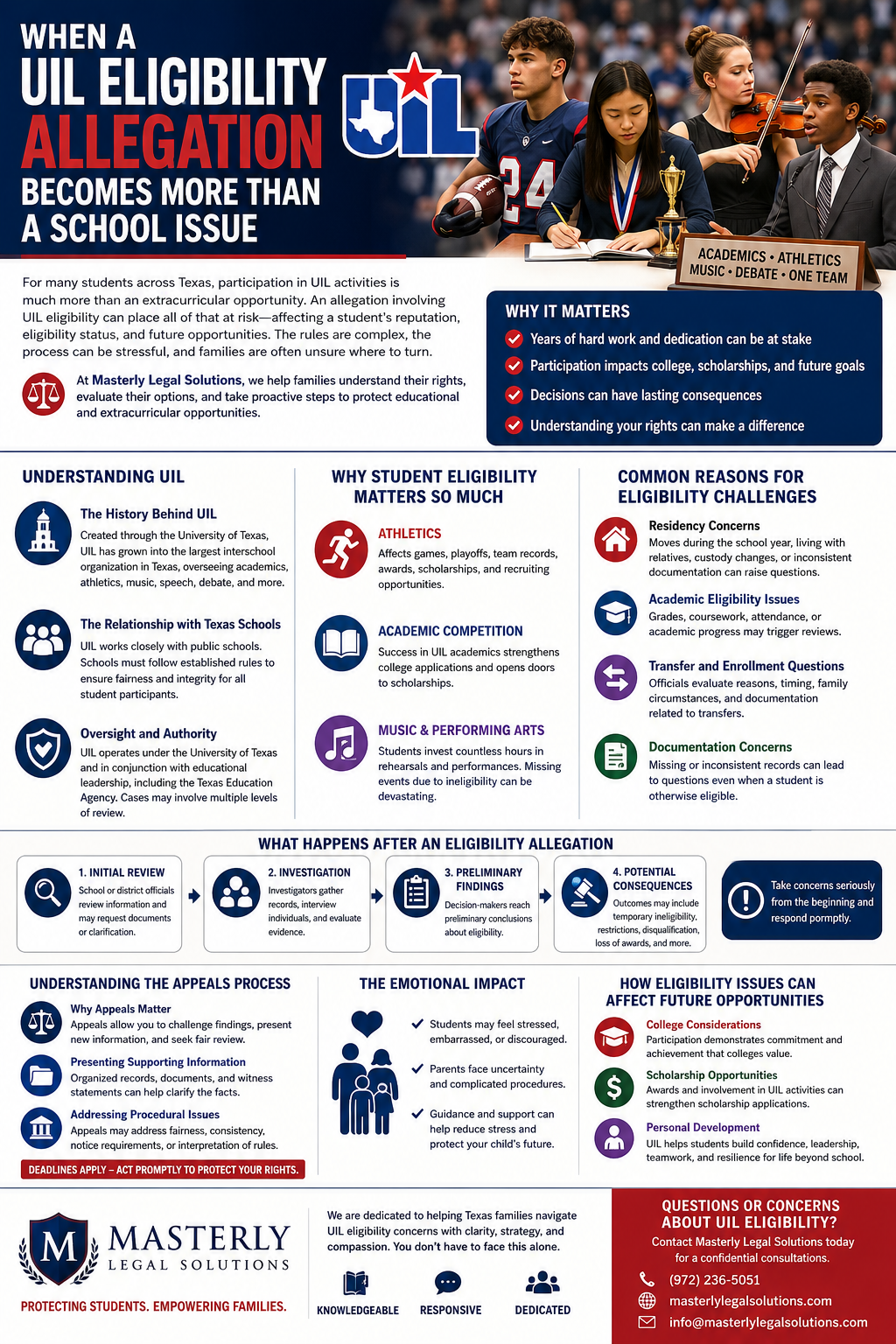
For many students across Texas, participation in UIL activities is much more than an extracurricular opportunity. Whether a student competes in athletics, academics, music, debate, or other events, involvement in the University Interscholastic League often represents years of dedication, practice, and personal growth. Students invest countless hours preparing for competition, earning awards, building records, and creating opportunities that may help them pursue college goals in the future.
An allegation involving UIL eligibility can place all of that at risk. What may begin as a question about paperwork, residency, grades, or participation requirements can quickly develop into a serious matter affecting a student's reputation, eligibility status, and future opportunities. Families are often surprised by how rapidly these situations evolve and how complicated the rules can become.
The stress can be overwhelming. Students may worry about losing the ability to compete, while parents may struggle to understand the policies, procedures, and appeals process. In many cases, families are unsure where to turn for accurate information or how to respond when concerns are raised by school officials or governing authorities.
At Masterly Legal Solutions, we understand how much is at stake when a student's eligibility is questioned. Our goal is to help families understand their rights, evaluate their options, and take proactive steps to protect educational and extracurricular opportunities, including through our dedicated UIL Texas high school sports legal services.
Understanding the University Interscholastic League
The University Interscholastic League, commonly known as UIL, serves as one of the most recognized organizations supporting student activities throughout Texas. The organization oversees a wide variety of programs that allow students to showcase their talents, develop leadership skills, and participate in meaningful competition.
The History Behind UIL
The University Interscholastic League was created through the University of Texas to help establish standards and opportunities for schools throughout the state. Over time, the organization has grown into what many consider the largest inter school organization in Texas.
Today, UIL administers numerous academic and athletic contests involving thousands of schools and millions of students. Its influence reaches nearly every region of the state, providing opportunities for students from diverse backgrounds to compete and develop valuable life skills.
The organization has evolved significantly since its founding. What started as a limited collection of contests has expanded into a comprehensive framework that supports academics, athletics, performing arts, music, speech, debate, and many other activities.
The Relationship Between UIL and Texas Schools
UIL works closely with public schools across Texas. Schools that participate must comply with established rules and standards governing student participation and competition.
These rules exist to promote fairness among competing schools while maintaining integrity within academic and athletic programs. Every school year, administrators, coaches, directors, and teachers work to ensure students meet applicable eligibility requirements.
Although the organization provides guidance and oversight, individual schools often play a major role in monitoring compliance. As a result, questions regarding eligibility frequently begin at the local school level before advancing through additional review processes.
Oversight and Authority
UIL operates under the authority granted through the University of Texas at Austin and works in conjunction with educational leadership throughout the state. The Texas Education Agency also plays an important role in establishing educational standards that affect student participation.
Because multiple entities may become involved in certain cases, understanding who has authority over a specific issue can be challenging. Families often encounter school administrators, district representatives, UIL officials, and appeal panels throughout the process.
When eligibility concerns arise, it is important to recognize that decisions may involve several levels of review rather than a single individual or department.
Why Student Eligibility Matters So Much
Eligibility rules are designed to create a fair environment for all participants. However, when questions arise regarding compliance, the consequences can be significant, and families may benefit from expert legal help with UIL disputes.
Students often spend years preparing for state contests, regional competitions, and championship events. A finding that a student is ineligible may affect not only current participation but also future opportunities.
Impact on Athletics
Athletics represent one of the most visible areas of UIL participation. Student athletes devote extensive time to practice, conditioning, competition, and team development.
An eligibility dispute may affect:
- Participation in scheduled games
- Eligibility for playoff competition
- Team records and standings
- Individual awards and recognition
- Scholarship opportunities
- Recruiting visibility
Even a temporary suspension can create setbacks that may influence future opportunities at the college level.
Impact on Academic Competition
UIL academics provide students with opportunities to compete in a wide variety of subject areas. Students participate in contests involving mathematics, science, writing, journalism, speaking, and numerous other disciplines.
Academic competitions often help students demonstrate achievement beyond classroom grades. Success at the district, region, and state level may strengthen college applications and scholarship opportunities.
When eligibility is questioned, students may lose access to events they have spent months preparing to enter, making knowledgeable UIL and education law support especially important.
Impact on Music and Performing Activities
Many students participate in music, theater, and other performing arts programs governed by UIL rules. These activities promote creativity, teamwork, discipline, and personal growth.
Performing arts students frequently dedicate substantial time to rehearsals, performances, and competitions. Missing a major event due to an eligibility dispute can be particularly disappointing after months of preparation.
For some students, participation in these programs influences future educational and professional aspirations.
Common Reasons Students Face UIL Eligibility Challenges
Many families assume eligibility violations involve intentional misconduct. In reality, some allegations arise from misunderstandings, administrative errors, or confusion regarding complicated requirements.
Residency Concerns
Residency issues are among the most common reasons eligibility questions arise.
School districts and UIL officials may review whether a student resides within appropriate attendance boundaries or whether a transfer complies with applicable rules.
Questions may emerge when:
- Families relocate during the school year
- Students live with relatives
- Custody arrangements change
- Documentation appears inconsistent
- Transfer requests are submitted
Even when families act in good faith, residency investigations can become complex.
Academic Eligibility Issues
Academic performance frequently affects student eligibility.
Students generally must meet certain academic standards to participate in many UIL activities. Questions regarding grades, coursework, attendance, or academic progress may trigger reviews.
Schools often monitor academic eligibility throughout the year. However, disagreements sometimes arise regarding calculations, reporting procedures, or interpretations of requirements.
Transfer and Enrollment Questions
Transfers between schools can create additional scrutiny.
UIL rules governing transfers are designed to discourage improper recruiting and maintain competitive balance. As a result, transfer situations often receive careful review.
Officials may evaluate:
- Reasons for the transfer
- Timing of enrollment
- Family circumstances
- Documentation supporting the move
- Participation history
These investigations can become particularly stressful when important competitions are approaching.
Documentation Concerns
Eligibility decisions often depend upon records and supporting documents.
Missing paperwork, inconsistent information, or administrative mistakes may raise concerns even when a student is otherwise eligible.
Examples include enrollment records, residency documentation, academic reports, participation forms, and related materials.
Because documentation plays a significant role in many cases, families should take allegations seriously from the beginning and avoid common mistakes in UIL investigations.
What Happens After an Eligibility Allegation
Many parents are uncertain about what occurs once an allegation is raised. While procedures vary depending on the circumstances, several common stages frequently occur.
Initial Review
The process often begins with a review conducted by school administrators or district personnel.
Officials may gather information, examine records, and speak with relevant individuals. During this stage, families may receive requests for documentation or clarification regarding specific concerns.
Prompt responses can help prevent misunderstandings from escalating.
Investigation and Fact Gathering
If questions remain unresolved, additional investigation may occur.
Investigators may review records, interview individuals, and evaluate supporting evidence. They may seek information from parents, students, coaches, teachers, and other sources.
Because statements made during this phase may influence future decisions, careful preparation is important, and educators involved in related inquiries may need legal support for educators in Texas.
Preliminary Findings
Following an investigation, decision-makers may reach preliminary conclusions regarding eligibility.
At this point, families often learn whether concerns appear substantiated or whether additional information may be required.
The findings may significantly influence upcoming participation opportunities, making timely action essential.
Potential Consequences
Consequences vary depending on the nature of the alleged violation.
Possible outcomes may include:
- Temporary ineligibility
- Restrictions on participation
- Disqualification from contests
- Loss of awards
- Adjustments to team records
- Additional school-level consequences
The specific facts of each case determine what penalties, if any, may apply.
Understanding the Appeals Process
An unfavorable decision does not always represent the end of the matter. In many situations, families have opportunities to pursue appeals.
Why Appeals Matter
Appeals provide an opportunity to challenge findings, present additional information, and seek review by appropriate authorities.
A well-prepared appeal may clarify misunderstandings, correct factual errors, or provide context that was not previously considered.
Because deadlines may apply, families should act promptly when considering their options.
Presenting Supporting Information
Successful appeals often depend on clear and organized information.
Supporting materials may include records, correspondence, witness statements, academic documentation, residency evidence, and other relevant information.
The quality of the presentation can influence how decision-makers evaluate the matter.
Addressing Procedural Issues
In some cases, concerns involve not only the underlying allegations but also the procedures used during the investigation.
Questions may arise regarding fairness, consistency, notice requirements, or interpretation of applicable rules, issues that often parallel those addressed through higher education law and compliance services.
Identifying procedural concerns may play an important role during the appeals process.
The Emotional Impact on Students and Families
Eligibility disputes affect more than schedules and competition opportunities. They often create emotional challenges for everyone involved.
Students may feel embarrassed, frustrated, or discouraged. They may worry about how teammates, classmates, coaches, and teachers view the situation.
Parents frequently experience similar concerns while attempting to navigate complicated procedures and protect their child's future.
The uncertainty associated with investigations can place strain on the entire family. Understanding available options and obtaining reliable guidance can help reduce some of that stress.
How Eligibility Issues Can Affect Future Opportunities
Many families focus primarily on immediate participation concerns. However, eligibility disputes can have broader implications.
College Considerations
College admissions offices frequently consider student involvement in academics, athletics, music, leadership activities, and community engagement, similar to how colleges rely on higher education law services to manage student participation and compliance.
Participation demonstrates commitment, discipline, teamwork, and achievement. Losing opportunities to compete may affect a student's ability to showcase these strengths.
For students pursuing athletic recruitment, interruptions in participation may be especially concerning.
Scholarship Opportunities
Many scholarships evaluate extracurricular involvement alongside academic performance.
Awards earned through UIL programs can help students distinguish themselves from other applicants. Missing opportunities to compete may reduce the ability to build a strong record of achievement.
This is one reason families often take eligibility concerns very seriously.
Personal Development
Participation in UIL activities contributes to growth that extends beyond competition results.
Students develop confidence, communication skills, leadership abilities, teamwork, resilience, and discipline. These qualities often influence future success in college and professional environments, where institutions increasingly depend on dedicated higher education attorneys to support safe and compliant learning spaces.
Protecting participation opportunities helps preserve these valuable developmental experiences.
The Purpose of UIL Participation Extends Beyond Competition
The purpose of UIL programs reaches far beyond determining winners at the end of a contest. Students learn valuable lessons about teamwork, responsibility, leadership, and perseverance that can benefit them throughout the world of higher education and future careers. Whether competing against other schools in a local area or advancing through regional and state competitions, participants gain experiences that help shape character and personal growth. The spirit of competition encourages students to strive for excellence while respecting opponents and representing their school with pride.
Building Diversity, Leadership, and Lasting Achievement
One reason UIL has remained successful across TX for generations is its commitment to diversity and inclusion. Students from different backgrounds, interests, and academic levels can find a kind of activity that matches their strengths, whether through athletics, academics, music, debate, or performing arts. Many programs are supported by educational leaders, administrators, and committees that may include a vice president and other officials who help maintain fairness and integrity. Along the way, students often earn medals, awards, and recognition, but the true value lies in the skills and confidence they develop through participation.
Why High School Records and Documentation Matter
Maintaining accurate records is an important part of protecting student eligibility throughout the high school years. Families should keep organized notes regarding enrollment, residency, academic performance, and participation requirements to ensure compliance with UIL rules. Proper documentation can help address questions quickly and provide important information if concerns arise regarding eligibility status. Taking these steps in an orderly manner may help students remain focused on their activities and continue pursuing opportunities to compete at the highest levels available.
Protect Your Student's Future With Experienced Guidance
A UIL eligibility allegation can create uncertainty at a time when students should be focused on academics, athletics, music, debate, and other important activities. Whether you are facing questions involving residency, transfers, grades, participation requirements, or an appeal, taking prompt action may help protect valuable opportunities. The decisions made during an eligibility review can have lasting effects on a student's educational experience, competitive record, and future goals.
At Masterly Legal Solutions, we understand how stressful these situations can be for students and their families. We are committed to helping families understand the process, evaluate their options, and respond effectively when eligibility concerns arise. Every situation is unique, and obtaining reliable information early can make a meaningful difference.
If your student has been accused of violating UIL eligibility rules or you have concerns about an ongoing investigation, contact Masterly Legal Solutions today. Call (972) 236-5051 for a free consultation. We can answer your questions, discuss your circumstances, and help you better understand the next steps available to protect your student's future.
Disclaimer: This article is provided for informational purposes only and does not constitute legal advice, legal guidance, or create an attorney-client relationship. Every case is different, and readers should consult a qualified legal professional regarding their specific situation.








Looking for Legal & Business Solutions? Contact Us Now
Fill in the form or call us to set up a meeting