

By the Time CPS Arrives, the Investigation May Already Be Underway
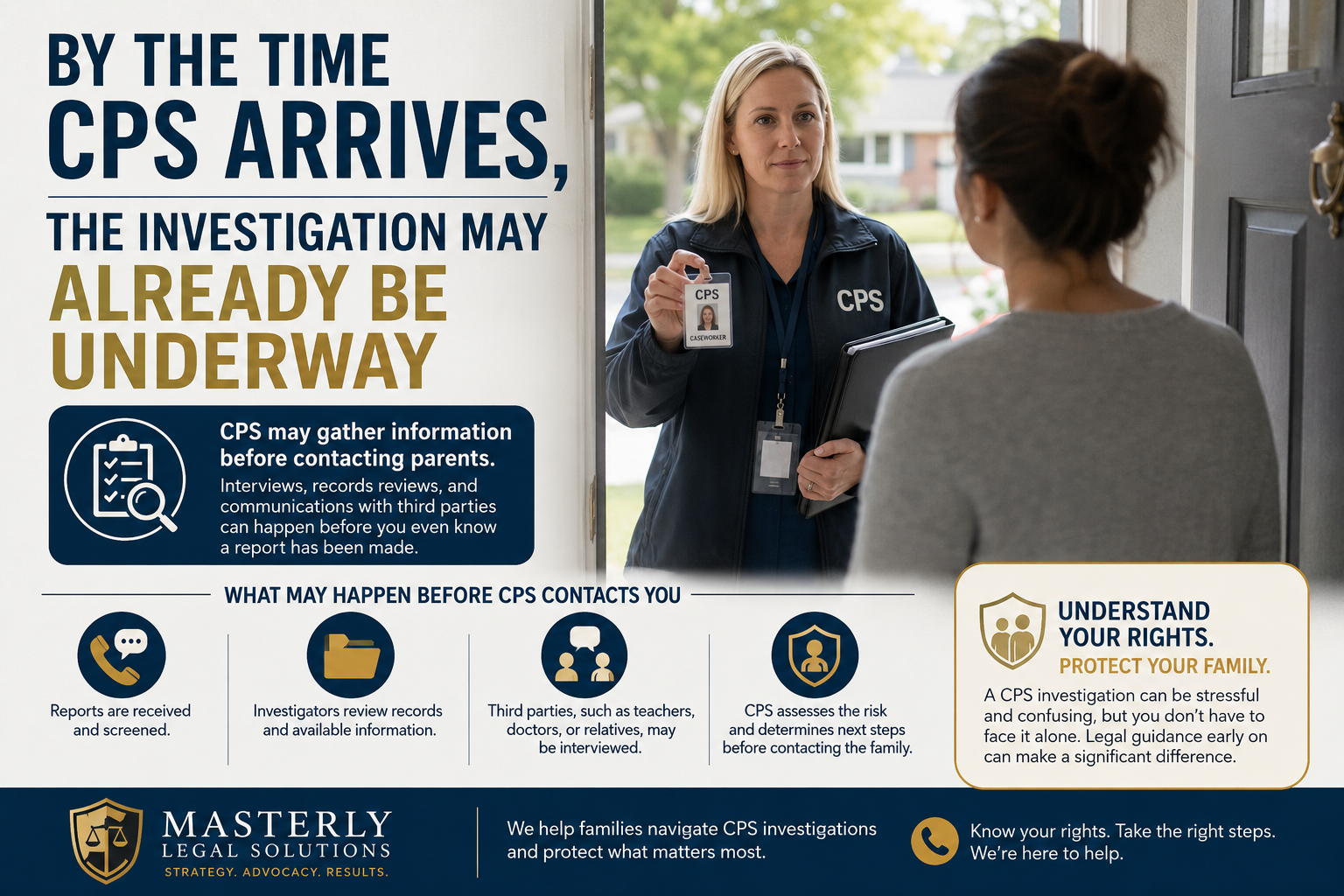
For many parents, the first sign of trouble comes when a CPS caseworker knocks on the door or calls unexpectedly. The sudden appearance of Child Protective Services can leave families feeling confused, anxious, and unsure of what happens next. What many people do not realize is that by the time CPS arrives, the investigation may already be underway.
In many situations, Child Protective Services begins gathering information before parents are even aware that a report has been made. Interviews, records reviews, and communications with third parties may occur before the family receives direct contact from the agency. This often catches parents off guard because they assume the investigation starts when CPS makes contact. In reality, the process may have begun days or even weeks earlier.
At Masterly Legal Solutions, we understand how overwhelming a CPS investigation can be. Families facing allegations of child abuse, neglect, or other concerns often feel unprepared for the legal process that follows. Understanding how investigations begin and what steps may occur before a CPS caseworker reaches out can help parents protect their rights and make informed decisions.
Why CPS Often Begins Gathering Information Before Contacting Parents
Many families assume that Child Protective Services immediately contacts parents after receiving a report. However, CPS receives thousands of reports every year and follows procedures designed to evaluate potential risks before making direct contact.
The agency's primary responsibility is protecting a child's safety. To accomplish this goal, investigators often collect preliminary information from available sources before conducting home visits or interviews with parents. This approach allows CPS to better understand the allegations and determine how quickly intervention may be necessary.
As a result, parents may find that portions of the investigation have already taken place before they know a report exists.
Reports Can Trigger Immediate Review
Once CPS receives a report involving suspected child abuse, abuse or neglect, or safety concerns, investigators begin reviewing the information provided. The agency assesses the severity of the allegations and determines the appropriate response level.
Even when allegations appear minor, Child Protective Services CPS investigates reports to determine whether a child may be at risk. Depending on the circumstances, the agency may classify the matter as requiring immediate attention or schedule a more routine response.
The seriousness of the report often dictates how quickly the investigation moves forward.
Multiple Sources May Be Contacted
Before speaking with parents, investigators may gather information from other individuals who have knowledge of the situation.
These sources may include:
- Teachers
- Medical providers
- Counselors
- Social services professionals
- Family members
- Witnesses connected to the report
This early information gathering helps investigators identify concerns and prepare for future interviews.
Understanding How a CPS Investigation Typically Begins
A CPS investigation generally starts when someone reports concerns involving a child. The report may involve allegations of child abuse, child abuse and neglect, substance abuse, inadequate supervision, unsafe living conditions, or other issues affecting the child's well being.
The person making the report does not necessarily need proof that wrongdoing occurred. In many cases, a reasonable suspicion is enough to trigger agency involvement.
Because Child Protective Services exists to protect children, investigators often take reports seriously even when information is incomplete.
Mandatory Reporting Requirements
Certain professionals are required by law to report suspected child abuse or neglect. These mandatory reporters play a significant role in the investigation process.
Common mandatory reporters include:
- Teachers
- Physicians
- Nurses
- Therapists
- School administrators
- Childcare providers
When concerns are reported by mandatory reporters, CPS often treats the allegations as requiring prompt evaluation.
Anonymous Reports and Community Concerns
Not every report comes from a professional. Neighbors, relatives, friends, and other community members may also contact Child Protective Services if they believe a child is in danger.
Some reports are anonymous, making it difficult for parents to determine where concerns originated. Even when allegations are unfounded, the agency may still investigate to ensure the child's safety.
This uncertainty can be particularly frustrating for families who have never interacted with CPS before.
The Information CPS May Review Before Home Visits
Many parents are surprised to learn that investigators may review various records before conducting home visits.
Depending on the allegations, Child Protective Services may seek relevant information from multiple sources to better understand the situation.
This preliminary review often shapes how the investigation proceeds.
School Records and Educational Information
Schools frequently become involved in CPS matters because educators spend significant time with children.
Investigators may review information related to:
- Attendance patterns
- Behavioral concerns
- Academic performance
- Reports of injuries
- Statements made by the child involved
School personnel may also be interviewed regarding observations they have made.
Medical Information and Health Concerns
Healthcare providers may possess information relevant to allegations involving child abuse or neglect.
Medical documentation can help investigators evaluate concerns involving:
- Unexplained injuries
- Missed appointments
- Developmental concerns
- Signs of alleged abuse
- Child abuse or neglect allegations
Because medical records often carry significant weight, they frequently become important evidence in CPS cases.
Prior CPS Matters
If a family has prior involvement with Child Protective Services, investigators may review historical records.
Previous CPS findings do not automatically determine the outcome of a new investigation. However, prior reports, services, or agency interactions may influence how current concerns are evaluated.
Understanding the family's history helps investigators assess potential risks and determine appropriate next steps.
Why Parents Are Often Caught Off Guard
One reason CPS investigations become so stressful is that many parents are unprepared when contact occurs.
A parent may be focused on work, school, child support issues, family responsibilities, or other daily obligations when a CPS caseworker suddenly appears.
The unexpected nature of these encounters can lead to anxiety and confusion.
The Emotional Impact of Unexpected Contact
Being accused of abuse, neglect, or other misconduct involving a child can be emotionally overwhelming.
Parents often experience:
- Fear
- Anger
- Frustration
- Confusion
- Uncertainty
These emotions are understandable, but they can also affect how parents respond during interviews and investigations.
Remaining calm and seeking experienced legal representation can help families navigate these challenges more effectively.
Misunderstanding the Purpose of the Investigation
Many parents immediately assume that CPS involvement means they have already been found responsible for wrongdoing.
In reality, the investigation exists to determine whether allegations are supported by evidence.
A report is not the same as a finding. Likewise, allegations do not automatically establish abuse or neglect.
Understanding this distinction can help families approach the process more strategically.
Common Allegations That Trigger Early Investigations
CPS investigates reports involving a wide variety of concerns. Some allegations involve severe cases requiring immediate action, while others involve circumstances that may ultimately prove unfounded.
Regardless of the nature of the report, investigators are generally obligated to evaluate the claims.
Alleged Child Abuse
Alleged child abuse is one of the most common reasons investigations begin.
Reports may involve concerns related to:
- Physical abuse
- Emotional abuse
- Sexual abuse
- Excessive discipline
- Threats of harm
Because child abuse allegations are treated seriously, investigators often begin gathering information quickly.
Concerns About Neglect
Neglect allegations frequently arise from concerns involving a child's basic needs or supervision.
Examples may include claims involving:
- Inadequate food
- Unsafe housing
- Lack of supervision
- Missed medical care
- Educational concerns
Not every neglect allegation reflects intentional misconduct, but CPS may still investigate to ensure the child's safety.
Substance Abuse Concerns
Substance abuse allegations can also trigger agency involvement.
Investigators may evaluate whether alcohol or drug use affects parenting abilities or creates safety concerns for the child involved.
These cases often require careful examination because allegations alone do not establish risk.
What Happens When CPS Intervenes
After reviewing available information, CPS intervenes when investigators believe further action is necessary.
The agency's response depends on the severity of the allegations and the perceived level of risk.
In some situations, intervention may be limited to interviews and information gathering. In others, more extensive involvement may occur.
Interviews With Family Members
Investigators commonly interview family members to better understand household circumstances.
Questions may focus on:
- Daily routines
- Discipline practices
- Living arrangements
- Medical care
- School attendance
These interviews often become an important part of the overall investigation.
Requests for Additional Documentation
Parents may receive a written request seeking records or other relevant information.
The agency may request documents relating to:
- Medical care
- School performance
- Counseling services
- Custody arrangements
- Child support matters
Responding appropriately to these requests can play an important role in the outcome of the investigation.
Why Early Legal Assistance Matters
One of the biggest mistakes families make is waiting too long to seek legal assistance.
By the time CPS arrives, investigators may already have gathered substantial information. Early legal guidance can help families understand what has occurred and what steps should be taken moving forward.
An attorney experienced in CPS matters can help evaluate the situation, explain legal rights, and develop a strategy designed to protect the family's future.
When facing allegations involving child abuse, neglect, custody concerns, or other CPS proceedings, obtaining legal representation early may significantly improve a family's ability to respond effectively.
What Happens During a CPS Caseworker Interview
Once Child Protective Services begins direct contact with a family, one of the first steps often involves interviews conducted by a CPS caseworker. These conversations are designed to gather additional facts and evaluate the circumstances surrounding the report. While the interview may seem informal, the information discussed can play a significant role in how the investigation develops.
Parents are often surprised by the number of questions they are asked. A CPS caseworker may inquire about household routines, discipline methods, medical care, school attendance, and relationships among family members. Investigators are looking for information that helps them determine whether a child may be at risk.
Because emotions often run high during these conversations, misunderstandings can occur. Parents may unintentionally provide incomplete information or make statements that are later interpreted differently than intended. This is one reason many families seek legal assistance early in the process.
Questions Investigators Commonly Ask
Although every CPS investigation is unique, certain topics frequently arise during interviews.
These topics may include:
- The child’s living arrangements
- Caregiving responsibilities
- Medical history
- School attendance
- Family relationships
- Previous involvement with protective services
The answers provided can influence how the agency evaluates the allegations and whether additional investigation is necessary.
Speaking With the Child Involved
In many cases, investigators will also speak directly with the child involved. These interviews may occur at school, at home, or in another approved setting.
The purpose is to obtain information directly from the child regarding the concerns raised in the report. While investigators are trained to communicate with children, statements made during these interviews can sometimes be misunderstood or taken out of context.
Parents are often surprised to learn that the agency may interview a child before discussing all details of the allegations with them.
Understanding Home Visits During a CPS Investigation
Home visits are among the most stressful parts of many CPS cases. Families often feel uncomfortable having government investigators enter their homes and evaluate their living conditions.
However, home visits are a common part of the investigative process. Child Protective Services uses these visits to assess safety concerns, observe interactions, and gather additional information regarding the child's environment.
The condition of the home does not have to be perfect. Investigators generally focus on whether the environment is safe and suitable for the child.
What Investigators Look For
During home visits, CPS may evaluate a variety of factors.
Common areas of concern include:
- General safety conditions
- Availability of food
- Sleeping arrangements
- Access to utilities
- Potential hazards
- Signs of abuse or neglect
The agency’s goal is to determine whether conditions create a risk to the child's safety or well being.
Why Preparation Matters
Many families feel embarrassed or anxious when CPS arrives unexpectedly. While these feelings are understandable, remaining cooperative and organized can help reduce misunderstandings.
Providing accurate information and maintaining appropriate documentation may help demonstrate that concerns raised in the report are unfounded or exaggerated.
Preparation can also help families feel more confident throughout the investigation process.
How CPS Findings Can Affect Your Family
Eventually, the investigation reaches a stage where CPS findings are made. These findings can have a lasting impact on both parents and children.
Many families assume that if a child remains in the home, the case is no longer a concern. In reality, CPS findings may influence future agency interactions, family law proceedings, and other legal matters.
Because the consequences can be significant, it is important to understand how findings are reached and what options may be available afterward.
Substantiated and Unsubstantiated Findings
Depending on the evidence collected, investigators may determine that allegations are substantiated or unsubstantiated.
A substantiated finding generally means the agency believes sufficient evidence exists to support the allegations. An unsubstantiated finding indicates the evidence did not support the claims.
The distinction can be important because findings may affect future CPS matters and legal proceedings.
The Importance of Presenting Evidence
One of the most effective ways to challenge inaccurate conclusions is to present evidence that supports your position.
Relevant information may include:
- Medical records
- School documentation
- Witness statements
- Photographs
- Communication records
The ability to present evidence effectively often plays a critical role in protecting parental rights and achieving fair treatment.
When CPS Proceedings Move Into the Court System
Not every CPS investigation results in court involvement. However, when concerns are serious or disputed, CPS proceedings may move into the legal system.
Court involvement typically occurs when Child Protective Services believes judicial oversight is necessary to protect children or enforce certain requirements.
These proceedings can have a substantial impact on the family's future.
Court Hearings and Judicial Review
Court hearings allow a judge to evaluate evidence and determine appropriate action.
During these proceedings, the court may consider:
- CPS findings
- Witness testimony
- Safety concerns
- Recommendations from social services
- Compliance with agency requirements
The judge's primary focus is often the best interests of the child while balancing parental rights.
Court Orders and Their Impact
If the court determines intervention is necessary, it may issue a court order requiring specific actions.
These orders can address issues such as:
- Temporary custody arrangements
- Services participation
- Visitation conditions
- Safety plans
Understanding the requirements of any court order is essential for protecting your interests throughout the legal process.
Administrative Hearings and Appeals
Some families may have opportunities to challenge agency findings through administrative hearings.
These proceedings provide a forum for reviewing decisions and presenting additional information. While less formal than traditional court hearings, administrative hearings can still have significant consequences.
Preparation is often critical because the outcome may affect future CPS cases and legal matters.
Why Administrative Hearings Matter
Administrative hearings may provide parents with an opportunity to challenge conclusions they believe are inaccurate.
These hearings often involve:
- Review of evidence
- Testimony from witnesses
- Examination of agency actions
- Presentation of relevant information
Experienced legal representation can be especially valuable during these proceedings.
Foster Care and Removal Concerns
One of the greatest fears parents face during a CPS investigation is the possibility of removal, which is why planning tools like a power of attorney for your children and other legal safeguards can be so important.
Understanding how these decisions are made can help families respond appropriately.
Factors Considered Before Removal
Before seeking removal, Child Protective Services generally evaluates multiple factors.
These may include:
- Alleged abuse severity
- Prior reports
- Safety concerns
- Availability of family members
- Immediate risk to the child
The agency often considers whether less restrictive alternatives are available before pursuing foster care placement.
The Emotional Impact of Separation
Even temporary separation can create significant emotional challenges for both parents and children.
Families often experience stress, uncertainty, and frustration while trying to navigate the process. Protecting the child while preserving family relationships requires careful attention to legal rights and procedural requirements.
Protecting Parental Rights Throughout the Investigation
Parents continue to possess important legal rights during CPS proceedings. Unfortunately, many individuals are unaware of these rights until after critical decisions have already been made.
Understanding parental rights can help families make informed decisions and avoid common mistakes.
The Right to Seek Legal Representation
One of the most important protections available to parents is the ability to obtain legal representation.
A CPS attorney can help:
- Explain the legal process
- Review allegations
- Protect legal rights
- Prepare responses
- Evaluate evidence
- Develop defense strategies
Early legal involvement often provides families with a clearer understanding of their options.
Avoiding Common Errors
Parents facing allegations frequently make mistakes because they are overwhelmed by the situation.
Examples include:
- Ignoring requests from investigators
- Failing to preserve records
- Providing inconsistent statements
- Delaying legal assistance
These errors can unintentionally strengthen the agency's concerns and make resolution more difficult.
The Role of a CPS Defense Attorney
When Child Protective Services becomes involved, families often need more than general information. They need experienced legal representation tailored to their specific circumstances.
A CPS defense attorney helps clients understand their rights, respond strategically to allegations, and navigate the complex legal process, much like an experienced education lawyer supporting teachers and schools during investigations and disciplinary matters.
Why Experience Matters
An attorney experienced in CPS matters understands the procedures, standards, and challenges commonly associated with investigations.
Families benefit from working with professionals who have extensive experience handling allegations involving:
- Child abuse
- Child abuse and neglect
- Neglect
- Sexual abuse
- Substance abuse
- Child custody disputes
Knowledge of these issues can help families build stronger responses and protect their interests.
Family Law Issues Often Overlap With CPS Cases
Many CPS investigations occur alongside family law disputes.
Issues involving custody, visitation, child support, and parental responsibilities may become intertwined with CPS allegations. As a result, decisions made during an investigation can affect multiple aspects of a family's life.
Understanding this connection is critical when evaluating legal options.
Child Custody and CPS Matters
Child custody disputes frequently generate allegations that lead to CPS involvement.
In some situations, one parent may accuse another of abuse or neglect during an ongoing dispute. Even when allegations are ultimately disproven, the investigation itself can influence custody proceedings.
Protecting parental rights often requires careful coordination between CPS and family law strategies.
The Importance of Informed Decisions
Every decision made during an investigation can affect future legal outcomes.
Whether responding to a written request, attending court hearings, or communicating with investigators, families should strive to make informed decisions based on accurate legal guidance.
Seeking assistance early can help reduce uncertainty and improve preparedness throughout the process.
Why Families Turn to a CPS Lawyer San Antonio Parents Trust
Although every case is different, families facing CPS investigations often share similar concerns. They want answers, they want to protect their child, and they want to preserve their family's future.
Working with a CPS lawyer San Antonio families trust can provide valuable guidance during difficult times. An experienced attorney can evaluate allegations, explain legal obligations, and help families understand what steps may be appropriate under the circumstances.
When Child Protective Services becomes involved, having knowledgeable support can make a meaningful difference.
How Masterly Legal Solutions Helps Families Facing CPS Allegations
At Masterly Legal Solutions, we understand that CPS investigations often begin long before parents realize they are under scrutiny. By the time a CPS caseworker contacts your family, information may already have been gathered, interviews may have occurred, and important decisions may be developing behind the scenes, and our broader legal services in education and business consulting reflect this focus on proactive guidance.
Our law firm works with families facing allegations involving child abuse, neglect, child abuse or neglect, substance abuse concerns, custody disputes, and other CPS matters. We believe every family deserves fair treatment and an opportunity to present relevant information before decisions affecting their future are made.
Whether you are dealing with home visits, CPS findings, court proceedings, administrative hearings, or ongoing investigations, experienced legal representation can help you understand your options and protect your rights.
How Law Offices Help Families Navigate CPS Investigations
Many families feel overwhelmed when Child Protective Services becomes involved in their lives. Texas-based law firms that offer broad legal and business services can provide valuable guidance during this difficult time by helping parents understand their rights, obligations, and legal options. Because CPS investigations often move quickly, having knowledgeable legal professionals available to answer questions and explain procedures can help families avoid common mistakes. Working with a legal team that understands CPS matters can make it easier to respond effectively while protecting both parental rights and the child's well-being.
Why a Family Law Attorney Can Be Important in CPS Cases
A family law attorney may play a critical role when CPS allegations overlap with issues involving custody, visitation, or other family-related disputes. Many investigations involve concerns that affect multiple areas of a family's life, making it important to understand both CPS procedures and broader family law issues, as well as essential legal documents for families before age 40 that can provide additional protection. A family law attorney can help parents evaluate how an investigation may impact existing court orders, child custody arrangements, and future legal proceedings. Early legal guidance often helps families make informed decisions during stressful situations.
Understanding CPS Requirements During an Investigation
Throughout a CPS investigation, parents may be asked to comply with various CPS requirements intended to address safety concerns and allow the agency to evaluate the family's circumstances. These requirements may involve interviews, documentation requests, home visits, counseling recommendations, or participation in certain services, which can intersect with broader planning needs that a Dallas estate planning firm crafting wills and trusts can help address. Understanding what is being requested and why it matters is essential. Failing to comply with CPS requirements can sometimes create additional challenges, even when the original allegations are unfounded.
The Role of the Texas Department in Child Protection Cases
In Texas, child welfare investigations are generally handled through the Texas Department responsible for overseeing child protection services and related programs. When reports involving abuse, neglect, or safety concerns are received, the agency evaluates the allegations and determines what action may be necessary to protect children, just as families often rely on
Texas estate planning services for wills and trusts to prepare for the future. Although every case is unique, understanding how the Texas Department approaches investigations can help families better prepare for interactions with investigators and understand the legal process ahead.
Similar CPS Concerns Affect Families Across the Country
While this article focuses on Texas CPS matters, families in other locations often face many of the same concerns. Whether a case arises in Texas, Long Island, or another jurisdiction, parents frequently experience similar fears about investigations, allegations, custody issues, and the future of their families. Although laws and procedures may differ from one state to another, the importance of understanding legal rights and obtaining experienced legal guidance remains the same, including access to convenient options like mobile estate planning services in Texas that can come directly to a family’s home. Families facing CPS involvement should take every allegation seriously and seek reliable information as early as possible.
Speak With Our Team About Your CPS Case
Learning that Child Protective Services is investigating your family can feel overwhelming. You may have questions about the allegations, concerns about your child’s safety, or uncertainty regarding what happens next. The reality is that by the time CPS arrives, the investigation may already be underway, making early action especially important.
Masterly Legal Solutions is committed to helping families navigate complex CPS cases with confidence. We understand the challenges parents face when allegations arise and work diligently to help clients protect their rights, their relationships, and their family's future, while also offering trust-based estate planning services in Texas to provide additional long-term security.
Contact Masterly Legal Solutions at (972) 236-5051 for a free consultation. Our team is available to discuss your concerns, answer your questions, and provide the experienced legal guidance you need during this difficult time. We also offer a complimentary consultation so families can better understand their rights and options before making important legal decisions.
Disclaimer: This article is intended for informational and educational purposes only. It is not legal advice, legal guidance, and should not be relied upon as a substitute for consulting an attorney regarding your specific situation. Reading this article does not create an attorney-client relationship with Masterly Legal Solutions. Every case is unique, and outcomes depend on the specific facts and circumstances involved. If you need legal advice concerning Child Protective Services or any related legal matter, consult a qualified attorney.







Looking for Legal & Business Solutions? Contact Us Now
Fill in the form or call us to set up a meeting