

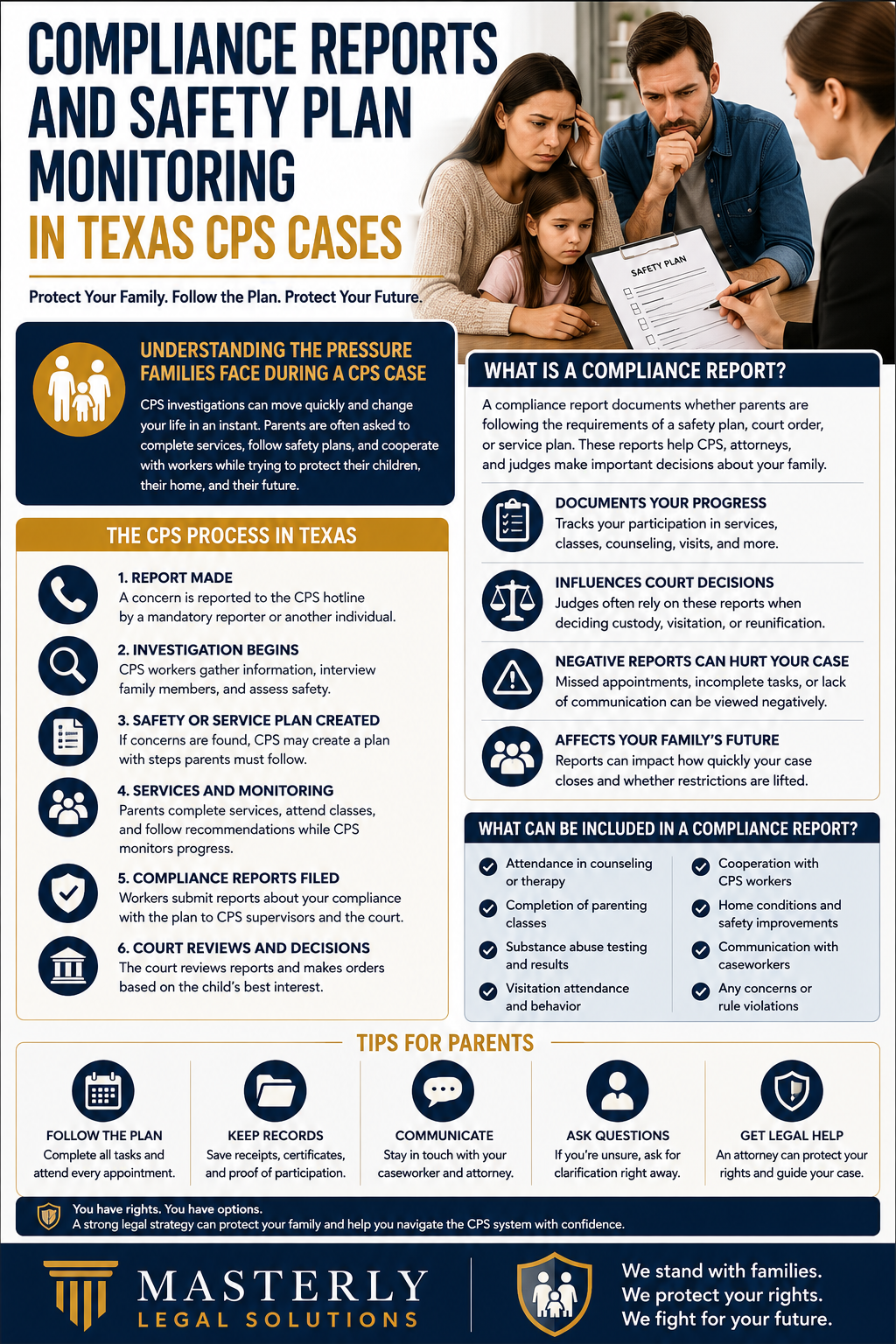
Compliance Reports and Safety Plan Monitoring in Texas CPS Cases
Understanding the Pressure Families Face During a CPS Case
Few situations create more fear for a parent than hearing that Child Protective Services is investigating their family. A simple phone call, an unexpected home visit, or a notice from cps workers can suddenly change daily life. Many parents feel overwhelmed because they do not fully understand the cps investigation process, what rights they have, or how a compliance report may affect their future. In many situations, families are trying to cooperate while also protecting their child, their reputation, and their home life.
In Texas, cps investigations often move quickly. Families may be asked to complete classes, counseling, evaluations, or supervised visitation while the agency monitors the child's safety. These requests can become part of a safety plan or service plan that parents are expected to follow. Even when parents are doing their best, confusion about deadlines, documentation, or communication with cps workers can create serious legal problems.
A compliance report becomes especially important during a cps case because it helps determine whether parents are following the recommendations or orders connected to the investigation. Courts, attorneys, and protective services agencies often review these reports when making decisions about custody, visitation, reunification, or additional restrictions. A negative report can affect how a judge views a parent’s ability to provide proper care for a child.
At Masterly Legal Solutions, we understand how stressful these situations can become for families. Many parents are not trying to avoid responsibility. Instead, they simply want fair treatment, accurate reporting, and a chance to protect their family while addressing concerns raised during the investigation. Having experienced legal representation can help parents respond appropriately while protecting their parental rights throughout the process.
What Is a Compliance Report in a Texas CPS Case?
A compliance report is a document used to monitor whether parents or guardians are following the requirements connected to a cps case. The report may include updates about counseling, parenting classes, substance abuse treatment, visitation attendance, therapy participation, housing stability, employment progress, and other conditions required by cps workers or the court. The purpose is to evaluate whether the family is reducing risk factors connected to alleged abuse or neglect.
In many cases, the compliance report is reviewed during a court hearing or presented to a juvenile dependency court handling the case. Judges often use the information to determine whether the child should remain in foster care, return home, or continue under protective supervision. Because these reports can influence major decisions, accuracy is critical.
Some parents believe they are making good progress only to discover that the written report does not reflect their efforts. Missing documents, scheduling conflicts, misunderstandings, or communication failures can negatively affect the case record. Even small details may be interpreted as signs of noncompliance if they are not properly explained.
A compliance report may also contain statements from social workers, therapists, service providers, or cps workers assigned to the investigation. These observations can shape how the court views the family's progress. Parents who do not have legal counsel often struggle to challenge inaccurate information or incomplete findings in the report.
How CPS Cases Usually Begin in Texas
Most cps investigations begin after someone files a cps report alleging child abuse or neglect. Reports may come from teachers, doctors, neighbors, relatives, law enforcement officers, or other individuals who believe a child may be in danger. In some cases, the allegations are serious and involve sexual abuse, physical injury, or drug exposure. In other situations, the report may involve concerns about supervision, unstable housing, or domestic conflict.
Once a report is received, child protective services cps may decide to investigate reports involving possible abuse or neglect. The local department handling the matter will assign cps workers to begin gathering information. This often includes interviews with parents, the child, family members, teachers, or medical professionals.
The investigation stage can feel intimidating because families are often unsure what information they must provide. Parents may worry that anything they say could later be used against them in court. At the same time, refusing to cooperate without guidance may increase concerns about the child's safety.
During the investigation process, cps workers may inspect the child's home, request a drug test, review medical records, or ask parents to participate in voluntary services. In more serious cases involving immediate danger, the agency may seek temporary custody of the child through a court order.
The Role of CPS Workers During Investigations
Cps workers play a major role in gathering information and assessing the family's situation. Their job is to evaluate whether the child is safe and whether intervention is necessary. Although many cps workers genuinely want to protect children, families sometimes feel that the system moves too quickly or makes assumptions before hearing the full story.
During child protective investigations, cps workers often conduct interviews separately with parents and children. They may ask questions about discipline methods, substance use, relationships in the home, financial stability, and previous incidents involving child abuse or neglect. These interviews can later appear in court documents and compliance reports.
Cps workers may also evaluate the physical condition of the child's home. Concerns about cleanliness, utilities, sleeping arrangements, or supervision may become part of the agency’s findings. Sometimes parents are surprised to learn that conditions they viewed as temporary hardships are being treated as safety issues.
Communication with cps workers is extremely important during a cps case. Families should remain respectful and cooperative while also understanding their legal rights. Having legal representation can help ensure that parents do not unintentionally provide confusing or incomplete information that later affects the investigation results.
Safety Plans and Their Purpose in Texas CPS Cases
A safety plan is one of the most common tools used during cps investigations. The purpose of the plan is to address concerns about the child's safety while allowing the child to remain in the home whenever possible. Safety plans may include rules about supervision, living arrangements, visitation, counseling, substance testing, or restrictions involving certain individuals.
Many parents feel pressured to agree to a safety plan immediately. They may fear that refusing the plan will cause cps workers to remove the child from the home. Although some plans are reasonable and temporary, others may contain difficult conditions that significantly affect family life.
A safety plan may require another adult, such as a relative or family friend, to supervise contact between the parents and child. In some situations, the agency may request that one parent temporarily leave the home while services are completed. These arrangements can become emotionally and financially difficult for families.
Parents should fully understand the terms before signing any voluntary agreement connected to a safety plan. The wording of the agreement can later affect court proceedings and compliance evaluations. Legal counsel can help parents review whether the proposed conditions are fair, realistic, and legally appropriate.
How Compliance Monitoring Impacts Parents
Once a safety plan or service plan is in place, cps workers begin monitoring the parents’ compliance. This monitoring may involve home visits, meetings with counselors, requests for records, and communication with treatment providers. Every interaction can become part of the compliance report submitted to the court.
Parents are often surprised by how detailed the monitoring process becomes. Missing a counseling appointment, arriving late to a parenting class, or failing to provide paperwork may be interpreted as a lack of cooperation. Even when there is a valid explanation, the issue may still appear negatively in the report unless properly documented.
Compliance monitoring can also create stress because families are balancing work, transportation, childcare, and court obligations at the same time. Some services recommended by cps workers may require frequent travel or scheduling flexibility that working parents struggle to manage. These challenges can affect compliance even when the parents are trying to cooperate.
Strong legal representation can help parents document their efforts, communicate effectively with service providers, and address concerns before they become larger legal problems. Attorneys often help families organize records and prepare responses when inaccurate information appears in the compliance report.
The Importance of Accurate Documentation
Documentation is one of the most important parts of defending a cps case. Parents should maintain copies of attendance records, certificates, text messages, emails, appointment confirmations, and other proof showing compliance with services. Without documentation, it may become difficult to challenge negative statements made by cps workers or service providers.
Families should also keep notes about interactions involving cps investigations. Recording dates, times, and details of conversations may help clarify misunderstandings later. If a parent believes a statement in a report is inaccurate, detailed records may become valuable evidence in court.
In some situations, cps workers manage large caseloads and may unintentionally confuse details between families. Clear documentation can help correct errors before they affect custody decisions. Courts generally place significant weight on written records during juvenile dependency court proceedings.
Parents should never assume that service providers automatically send correct updates to the agency. Following up and confirming that records were submitted can reduce the risk of incomplete compliance reports. A proactive approach often strengthens a parent’s credibility throughout the case.
Family Assessments and Risk Evaluations
A family assessment is commonly used to evaluate the environment surrounding the child and identify risk factors connected to abuse or neglect. During this process, cps workers review household conditions, parenting practices, family relationships, emotional stability, and other concerns affecting the child’s well being.
The agency may evaluate whether neglect occurred or whether there is a continuing risk of future abuse. Sometimes allegations involve isolated incidents, while other cases involve long-term concerns connected to substance abuse, domestic violence, or mental health challenges. Each situation is treated differently based on the investigation findings.
Risk assessment tools are often used during cps investigations to determine whether the child may face immediate danger or ongoing safety concerns. These evaluations can influence whether the agency seeks removal, supervision, or voluntary placement arrangements.
Because these assessments can affect major decisions, families should take them seriously. Parents often benefit from legal counsel before participating in interviews or evaluations connected to the investigation process.
When Foster Care Becomes Part of the Case
In more serious situations, the agency may seek temporary custody through a court order and place the child in foster care. This usually occurs when cps workers believe the child cannot safely remain in the home. Although removal is intended to protect the child, it can be traumatic for both children and parents.
Once a child enters foster care, parents are typically required to complete a service plan before reunification can occur. The court may order services involving therapy, counseling, parenting education, substance treatment, or supervised visitation. Compliance reports become even more important during this stage because they heavily influence reunification decisions.
Parents sometimes believe that completing most requirements guarantees the return of the child. Unfortunately, courts also examine consistency, communication, and overall progress when reviewing compliance reports. Missing appointments or violating safety plan conditions can delay reunification efforts.
Families facing removal cases should seek legal representation as early as possible. These proceedings move quickly, and decisions made during the early stages of the case may affect long-term custody outcomes.
Voluntary Placement Agreements and Their Risks
Some parents are offered a voluntary placement agreement instead of immediate court intervention. Under this arrangement, the child may temporarily stay with another caregiver while the parents complete certain services. This could involve a relative, foster placement, or voluntary placement with another approved individual.
Although voluntary placement may appear less severe than court removal, parents should still understand the legal implications before agreeing. These arrangements can affect future custody decisions and may later be referenced in compliance reports.
In some cases, cps workers encourage parents to agree quickly without fully explaining how long the placement may last or what conditions must be met for reunification. Parents may feel pressured into accepting terms they do not fully understand.
Legal counsel can help families review the agreement, clarify expectations, and protect parental rights during the process. Parents should understand whether the agreement is truly voluntary and how it may affect future proceedings.
Court Orders and Mandatory Services
A court order often outlines the services parents must complete during a cps case. These orders may include parenting classes, counseling, psychological evaluations, supervised visitation, drug treatment, or anger management programs. Failure to comply with court ordered requirements can significantly affect the outcome of the case.
Judges in juvenile dependency court rely heavily on compliance reports when determining whether parents are following the court order. Positive reports may support reunification efforts, while negative findings may lead to additional restrictions or extended supervision.
Parents sometimes struggle because services recommended by the agency conflict with work schedules or transportation limitations. Unfortunately, courts still expect parents to make substantial efforts toward compliance. Missing services without proper communication may be viewed negatively.
An attorney can help parents request reasonable accommodations when necessary. Courts may sometimes modify schedules or requirements if legitimate barriers exist and proper evidence is presented.
Drug Testing and Substance Abuse Allegations
Substance abuse allegations are common during cps investigations. When cps workers suspect drug use, parents may be asked to complete a drug test as part of the investigation. Positive results, missed tests, or diluted samples can all create complications in a cps case.
Parents are often surprised to learn that even legal medications or marijuana use may affect how the court views the child's safety. The agency may argue that substance use creates risk factors that increase the possibility of abuse or neglect.
Compliance reports frequently include detailed information about testing history, treatment attendance, counseling participation, and sobriety progress. Courts carefully review these reports when evaluating whether the child can safely return home.
Parents accused of substance-related neglect should seek legal representation immediately. Early legal guidance can help families understand testing procedures, challenge inaccurate findings, and protect their rights during the investigation process.
The Connection Between CPS Cases and Criminal Investigations
Some cps investigations overlap with a criminal investigation. Allegations involving serious physical injuries, sexual abuse, or drug exposure may trigger involvement from law enforcement. When this occurs, parents may face both family law proceedings and possible criminal charges at the same time.
An ongoing criminal investigation creates additional legal risks because statements made to cps workers could later be used in a criminal case. Parents often make the mistake of speaking extensively without first consulting an attorney.
The alleged perpetrator may face questioning from both law enforcement and child protective services cps investigators. In these situations, coordinated legal strategy becomes extremely important. Actions taken in one proceeding may affect the outcome of the other.
Families facing both cps investigations and a criminal case should seek experienced legal counsel immediately. Protecting parental rights while avoiding self-incrimination requires careful planning and professional guidance.
Understanding Service Plans in Texas CPS Cases
A service plan outlines the actions parents must complete to address concerns identified during the investigation. These plans are designed to reduce risk factors and improve the child's care environment. The plan may include counseling, parenting education, therapy, stable housing requirements, or supervised visitation.
Many parents underestimate how important the service plan becomes during court proceedings. Judges often treat compliance with the plan as evidence of whether the parents are taking the situation seriously. Even partial noncompliance can create long-term problems.
The services recommended in a service plan are usually tailored to the agency’s concerns. For example, allegations involving domestic conflict may result in anger management or counseling requirements, while allegations involving neglect may focus on parenting education or housing stability.
Parents should review the service plan carefully with legal representation. Some requirements may be unrealistic, unclear, or unsupported by evidence gathered during the investigation.
How Juvenile Dependency Court Handles CPS Cases
Juvenile dependency court oversees many cps case proceedings involving allegations of child abuse or neglect. The court’s primary responsibility is protecting the child while balancing the rights of parents and families. Judges review compliance reports, testimony, evaluations, and service records when making decisions.
The court may issue temporary orders regarding custody, visitation, and services during the investigation. These decisions often change as the case progresses and additional information becomes available. Compliance monitoring remains a major factor throughout the process.
Parents should take every court hearing seriously. Missing hearings or failing to comply with court instructions can negatively affect the case. Courts expect parents to demonstrate consistent effort toward resolving concerns identified by protective services.
Experienced legal representation can help families prepare for hearings, challenge inaccurate reports, and advocate for fair treatment in juvenile dependency court proceedings.
Child Safety Concerns and Home Evaluations
One of the primary goals of protective services is determining whether the child is safe in the home environment. Cps workers may inspect sleeping arrangements, cleanliness, supervision practices, food availability, and other conditions affecting the child's safety.
Sometimes concerns arise from temporary hardships rather than intentional abuse or neglect. Financial struggles, housing instability, or family conflict may lead cps workers to question whether the child is receiving adequate care. Families often feel embarrassed or misunderstood during these evaluations.
Home evaluations may also involve interviews with family members, neighbors, or teachers. Statements from these individuals can become part of the compliance report reviewed by the court. Because these reports influence major decisions, accuracy matters greatly.
Families should understand that cooperation does not mean surrendering their rights. Legal counsel can help parents navigate inspections and interviews while protecting their interests throughout the investigation.
Voluntary Services and Community Support Programs
In some cases, cps workers recommend voluntary services instead of immediate court intervention. These programs may involve counseling, parenting classes, substance treatment, or other support resources aimed at improving the family situation.
Voluntary services can benefit families who genuinely need assistance addressing concerns affecting the child. However, parents should still understand how participation may affect the case. Information shared during services may later appear in compliance reports or court proceedings.
Community services and social services programs sometimes help families address issues involving housing, food insecurity, mental health, or childcare support. These programs may strengthen the family’s ability to provide a stable environment for the child.
Families should carefully document participation in all services recommended by the agency. In some situations, organizations or employers may also need to conduct independent internal investigations to review concerns about misconduct or safety issues that overlap with CPS involvement. Keeping proof of attendance and completion can help demonstrate commitment and progress during the cps case.
The Impact of Allegations on Parents and Children
Even when allegations are ultimately unsubstantiated, a cps case can create significant emotional stress for parents and children. Families often experience fear, embarrassment, financial strain, and emotional exhaustion during the investigation process.
Children may become confused or anxious when interviewed by cps workers or removed from familiar routines. Parents may feel frustrated because they believe the agency does not fully understand their family dynamics. These emotional pressures can make compliance with services even more difficult.
The alleged victim may also experience stress from repeated interviews, medical examinations, or court appearances. Courts and social workers generally try to minimize trauma while still gathering necessary information for the investigation.
Having strong legal representation often helps families feel more informed and supported during this difficult time. Attorneys can explain procedures, prepare clients for hearings, and advocate for fair treatment throughout the process.
Common Mistakes Families Make During CPS Cases
Many families unintentionally hurt their case by making avoidable mistakes during cps investigations. Some parents become defensive or argumentative with cps workers because they feel falsely accused. Others ignore deadlines, miss appointments, or fail to maintain documentation.
Another common mistake involves discussing the case extensively on social media. Statements, photos, or online arguments may later appear in court proceedings or compliance reports. Families should remain cautious about what they post during an active cps case.
Some parents also assume that cooperation alone guarantees a positive outcome. While cooperation is important, parents should still seek legal counsel to ensure their rights are protected throughout the investigation process.
Ignoring court orders or failing to complete required services may significantly damage reunification efforts. Consistency, communication, and organization are extremely important during these cases.
How Legal Representation Can Protect Families
Legal representation plays a critical role during cps investigations and court proceedings. Parents facing allegations of abuse or neglect often feel overwhelmed by the legal system and unsure how to defend themselves effectively.
An experienced attorney can review compliance reports, challenge inaccurate findings, prepare evidence, and communicate with cps workers on behalf of the family. Legal counsel may also help parents understand court expectations and avoid mistakes that could harm the case.
Family law matters involving child protective services are often emotionally charged and legally complex. Attorneys help clients navigate hearings, service requirements, and visitation disputes while protecting parental rights, drawing on comprehensive legal services for families and individuals that address related issues such as estate planning, employment, or education concerns.
At Masterly Legal Solutions, we understand how deeply these cases affect families. Our goal is to help parents respond strategically, protect the child’s interests, and pursue the best possible outcome during every stage of the cps case.
Monitoring Progress Throughout the Case
Compliance monitoring does not end after the first few weeks of a cps case. Courts and protective services agencies often continue reviewing progress for months. Parents may be required to submit updates, attend follow-up evaluations, or participate in ongoing counseling.
Consistency is extremely important during this stage. Missing appointments or failing to communicate with service providers can negatively affect compliance reports even after substantial progress has been made.
Cps workers frequently evaluate whether the parents are applying the lessons learned through counseling or parenting programs. They may observe visitation interactions, review home conditions, and assess whether the child remains safe.
Parents who remain organized and proactive often improve their chances of achieving successful reunification or case closure. Maintaining strong communication with legal representation can also help address concerns before they escalate.
The Importance of Communication During CPS Cases
Communication problems often create unnecessary complications during cps investigations. Parents may misunderstand instructions, miss deadlines, or fail to provide requested documents because expectations were not clearly explained.
Maintaining respectful communication with cps workers and service providers can help reduce conflict during the case. At the same time, parents should avoid making emotional statements that could later be misunderstood or included negatively in reports.
Families should also communicate regularly with their attorneys. Legal counsel can help clarify expectations, review documents, and respond appropriately to concerns raised by protective services.
Clear communication often helps prevent small issues from becoming major legal problems. Parents who stay informed and engaged throughout the process generally navigate the case more effectively.
How Courts Evaluate the Child’s Best Interests
Every major decision in a cps case revolves around the child’s best interests. Courts examine whether the child is physically safe, emotionally supported, and receiving appropriate care. Compliance reports, evaluations, and testimony all contribute to these decisions.
Judges often consider factors such as housing stability, mental health, parenting skills, school attendance, and the ability of parents to meet the child's needs. Courts may also examine whether family members can provide additional support if necessary.
The child's parents sometimes feel frustrated because they believe isolated mistakes are being used to judge their entire ability to parent. However, courts generally focus on whether concerns creating risk to the child have been properly addressed.
Strong legal representation helps ensure that parents have an opportunity to present their progress, explain circumstances, and challenge unfair assumptions during court proceedings.
Long-Term Effects of CPS Cases on Families
Even after a cps case ends, families may continue feeling the emotional and financial impact for years. Parents sometimes struggle rebuilding trust within the family after months of court involvement and monitoring.
Children may experience anxiety, confusion, or emotional distress related to the investigation and court process. Counseling and supportive family services can sometimes help families heal and rebuild stability after the case concludes.
A cps report and related records may also affect future family law disputes involving custody or visitation. This is one reason why parents should take every stage of the investigation seriously and seek legal representation early.
Families facing allegations of child abuse or neglect deserve fair treatment, accurate reporting, and the opportunity to protect their rights throughout the legal process.
Protecting Your Family During a CPS Investigation
Parents facing cps investigations should remain calm, organized, and informed throughout the process. Although the situation may feel overwhelming, early action can significantly affect the outcome of the case.
Families should keep detailed records, attend all required services, maintain respectful communication, and seek legal counsel as soon as possible. Waiting too long to obtain legal guidance may allow problems to grow before they are addressed.
The cps investigation process often moves faster than parents expect. Compliance reports, court hearings, and service requirements can quickly shape how the court views the family’s situation. Taking the matter seriously from the beginning is essential.
At Masterly Legal Solutions, we help families understand their rights, respond strategically, and navigate complex child protective services matters with professionalism and compassion.
Guidance for Parents Facing Compliance Report Issues
Parents should never ignore concerns involving a compliance report. If information appears inaccurate, incomplete, or misleading, immediate action may be necessary to protect the family’s position in court.
An attorney can help review records, gather evidence, and challenge unfair findings before they significantly affect the cps case. In many situations, correcting errors early may improve reunification efforts and reduce unnecessary delays.
Families should remember that cps workers, social workers, and service providers are human and capable of making mistakes. Clear documentation and legal representation often become critical tools when resolving disputes involving compliance monitoring.
Protecting the child's safety remains important, but families also deserve fairness, transparency, and respect throughout the investigation and court process.
The Role of Child and Family Services During CPS Monitoring
Many Texas families become involved with child and family services after allegations involving abuse or neglect are reported to the agency. These services are often designed to help stabilize the home, improve parenting skills, and address concerns affecting the child’s safety. In some situations, families may receive counseling referrals, supervised visitation support, or educational programs focused on reducing future risks. While these programs can provide valuable support, parents should also understand how participation may affect compliance monitoring and court proceedings. Working with an attorney can help families protect their rights while cooperating with services intended to strengthen the home environment.
How the Texas Legal Services Center May Help Families
Families dealing with a CPS investigation sometimes search for outside resources to better understand the legal system and their rights. The Texas Legal Services Center may provide educational information, referrals, and resources for qualifying individuals facing family-related legal matters. While not every family will qualify for assistance, understanding available resources can help parents make informed decisions during a difficult time. CPS cases often move quickly, and families should avoid relying only on internet research or general information when serious allegations are involved. Seeking experienced legal guidance early, including from firms that offer broad legal support for families and organizations, can help parents avoid mistakes that may negatively affect the outcome of the case.
Addressing Child Safety Issues Before They Escalate
Concerns involving child safety issues can quickly become the focus of a CPS investigation if parents do not respond appropriately. Problems involving supervision, unsafe living conditions, domestic conflict, or substance abuse may raise concerns about whether the child is protected from harm. In many situations, parents are already dealing with financial stress, emotional pressure, or family conflict before CPS becomes involved. Taking proactive steps to improve the home environment and document positive changes may help demonstrate commitment to the child’s well-being. Legal representation can also help families respond strategically when accusations or misunderstandings threaten to escalate the case.
Understanding Legal Aid Options in CPS Matters
Some families facing CPS investigations search for legal aid because they feel overwhelmed by the financial pressure of court proceedings and required services. While certain organizations may provide limited assistance or referrals, many parents discover that CPS cases involve complex legal and procedural issues requiring focused legal attention. Decisions made during the early stages of a case can affect custody, visitation, and reunification efforts for years to come. Parents should understand that even temporary agreements or statements made to investigators may later appear in court proceedings. Having experienced legal support from a full-service Texas law firm can help families better understand their options while protecting their rights throughout the case.
Creating a Stable Environment to Keep a Child Safe
One of the primary goals in any CPS case is ensuring the home environment remains stable enough to keep the child safe. Courts and cps workers often evaluate housing conditions, supervision practices, emotional stability, and access to basic necessities when determining whether a child can remain in the home. Parents who actively address concerns and cooperate appropriately with reasonable requests may improve their position during the investigation. However, families should also understand that not every allegation automatically means a child is in danger. Proper legal guidance, including proactive planning such as essential legal documents for families, can help parents respond effectively while demonstrating their ability to provide a secure and supportive environment.
Why Written Notice Matters in CPS Cases
In many CPS proceedings, parents may receive written notice regarding hearings, required services, visitation restrictions, or court expectations. These notices are important because they often contain deadlines and instructions that can directly affect the case. Missing a hearing or misunderstanding a notice may create additional legal problems for families already under stress. Parents should carefully review all documents received from CPS, the court, or service providers and keep copies for their records. Attorneys can help explain legal terminology, prepare important paperwork such as powers of attorney for children and other directives, and ensure families fully understand what actions must be taken to remain compliant during the case.
Understanding Legal Requirements During CPS Proceedings
Texas CPS cases involve strict legal requirements that parents are expected to follow throughout the investigation and court process. These requirements may include attending services, completing evaluations, participating in visitation schedules, or following specific court instructions connected to the child’s care. Many parents feel overwhelmed because the system moves quickly and expectations are not always clearly explained. Failure to comply with legal obligations may negatively affect compliance reports and reunification efforts. Working with experienced legal counsel, such as a firm that handles CPS, education, and compliance matters, can help families stay organized and better prepared to meet court expectations during every phase of the case.
How CPS Procedures Can Vary Outside Texas
Families sometimes search online and become confused after reading information based on laws from Southern California or other states with very different CPS systems. Although there are similarities between child welfare agencies across the country, Texas has its own procedures, timelines, and court standards involving protective services cases. Information from another state may not accurately explain how Texas courts handle safety plans, removals, or compliance monitoring. Relying on inaccurate information can lead parents to make decisions that unintentionally harm their case. Speaking directly with a Texas attorney familiar with local CPS procedures, including those experienced in employment and HR compliance issues that sometimes intersect with CPS concerns, is often the best way to receive accurate guidance.
Preparing for Changes That May Affect the Near Future
Parents involved in a CPS case often worry about how the investigation may affect their family in the near future. Concerns about custody, visitation, employment, housing, and court requirements can create constant stress for both parents and children. Many families feel uncertain because they do not know whether the child will remain in the home or whether additional restrictions may be imposed later in the case. Staying proactive, organized, and informed can help families respond more effectively as circumstances change. Legal representation may also help parents prepare for upcoming hearings and avoid surprises during the legal process, especially when CPS allegations intersect with education law and educator license issues.
How General Allegations Can Become Serious CPS Matters
Some CPS investigations begin with general allegations that initially seem vague or unsupported. Even when a report lacks detailed evidence, cps workers may still open an investigation to evaluate the child’s safety and determine whether further action is necessary. Parents sometimes assume that unclear accusations will quickly disappear, only to discover that interviews, home visits, and compliance monitoring continue for months. Because these allegations can still influence court decisions, families should take every investigation seriously from the beginning. Seeking legal guidance early may help parents avoid misunderstandings and better protect their rights throughout the case.
Providing Services to Support Family Stability
In many CPS cases, the agency focuses on providing services intended to improve family stability and reduce safety concerns involving the child. These services may include counseling, parenting education, substance abuse treatment, or supervised visitation programs designed to address issues identified during the investigation. While some families benefit from additional support, others may feel overwhelmed by the number of requirements imposed during the case. Understanding which services are voluntary and which are court ordered is extremely important for protecting parental rights. An experienced attorney can help families navigate these expectations while working toward a safer and more stable future for the child.
Speak With Masterly Legal Solutions About Your CPS Case
When a cps case places your family under pressure, having the right legal team can make a meaningful difference. At Masterly Legal Solutions, we understand how emotionally exhausting compliance monitoring, court proceedings, and child protective investigations can become for parents trying to protect their family and their future.
Our legal team helps clients address concerns involving compliance reports, safety plan disputes, court ordered services, foster care matters, temporary custody issues, and allegations involving abuse or neglect. We work closely with families to help them understand the process, protect their parental rights, and respond effectively during every stage of the case.
If cps workers have contacted your family, requested services, or presented a safety plan, it is important to seek legal guidance as early as possible. Delays in responding to compliance concerns can create additional legal complications and affect how the court views your case.
Contact Masterly Legal Solutions at (972) 236-5051 for a free consultation. We can answer questions about compliance report concerns, safety plan monitoring, cps investigations, and protective services proceedings while helping your family understand the legal options available.
Disclaimer: This article is provided for educational and informational purposes only. It is not legal advice and does not create an attorney-client relationship. Every cps case is different, and legal outcomes vary depending on the facts and circumstances involved. If you are facing allegations involving child abuse or neglect, child protective services investigations, or court proceedings, you should speak directly with qualified legal counsel regarding your specific situation.

Teacher Rights When Assaulted by a Special Needs Student: Safety, Reporting and Investigation Issues


Looking for Legal & Business Solutions? Contact Us Now
Fill in the form or call us to set up a meeting