

Facing a UIL Investigation? Steps to Protect Your Eligibility and Reputation
When a UIL Investigation Suddenly Changes Everything
For many students in Texas, participating in UIL activities is more than just an extracurricular experience. Athletics, academics, music contests, and leadership events often shape friendships, scholarships, future opportunities, and personal confidence. Families invest years supporting students as they train, study, travel, and compete through the University Interscholastic League system. That is why receiving notice of a UIL investigation can feel overwhelming and deeply personal.
A UIL investigation can place enormous pressure on students, parents, coaches, and schools. Allegations involving eligibility violations, recruiting concerns, residency disputes, or academic misconduct may quickly threaten a student’s reputation and future participation. Even when the allegations are inaccurate or exaggerated, the process itself can create stress and uncertainty for everyone involved.
The University Interscholastic League operates under strict rules designed to maintain fairness across Texas schools. However, many families discover that understanding those rules is far more complicated than expected. Misunderstandings involving enrollment, transfers, grades, or participation requirements can suddenly place a student’s eligibility at risk.
At Masterly Legal Solutions, we understand how damaging a UIL investigation can become for students and families. Our goal is to help clients protect their reputation, respond strategically, and pursue the best possible outcome when facing questions involving UIL compliance, athletic eligibility, or academic contest participation, drawing on our broader experience providing legal representation in Texas UIL sports and education matters.
Understanding the University Interscholastic League
The University Interscholastic League, often referred to as UIL, is the largest inter school organization governing public school extracurricular activities in Texas. Created by the University of Texas, the organization oversees athletic contests, academic contests, music competitions, and other educational extracurricular academic activities involving schools throughout the state.
The University Interscholastic League has grown significantly over the years and now manages events involving thousands of students and schools across Texas. The organization establishes rules for competition, eligibility, safety, sportsmanship, and participation in various programs. Schools that participate in UIL activities are expected to follow detailed guidelines covering academics, athletics, and conduct.
Many families are surprised to learn how broad the authority of the University Interscholastic League can be. UIL investigations may involve athletes, fine arts participants, academic teams, coaches, sponsors, administrators, or even parents connected to a program. Because of this wide reach, even small disputes can quickly become serious matters.
The University Interscholastic League also works closely with schools to maintain fairness during the school year. Whether students participate in softball, football, debate, theater, academics, or music contests, eligibility requirements apply to nearly every form of competition governed by UIL.
Why UIL Investigations Happen
UIL investigations can begin for many different reasons. In some situations, another school reports concerns about recruiting violations or residency issues. Other investigations begin after anonymous complaints involving grades, transfers, recruiting practices, or improper participation in contests.
The University Interscholastic League may investigate allegations involving student eligibility, improper coaching conduct, falsified records, or violations connected to athletic or academic competition. Sometimes the issue involves misunderstandings rather than intentional misconduct, but the investigation can still threaten a student’s future opportunities.
Certain investigations focus on whether students were properly enrolled or whether residency information was accurate during the school year. Others may involve recruiting concerns connected to athletic programs, particularly in highly competitive sports such as softball and football.
Regardless of how the issue begins, families should take every UIL investigation seriously. The outcome may affect eligibility, awards, team standings, scholarships, and long-term reputation within schools and athletic communities throughout Texas.
The Connection Between UIL and the University of Texas
The University Interscholastic League was created by the University of Texas and remains connected to the university system today. Although UIL operates independently in many ways, the University of Texas continues to provide oversight and administrative support for the organization.
Many people outside Texas do not realize how influential the University Interscholastic League has become. The organization impacts schools across nearly every region of the state and oversees a massive number of athletic, academic, and music events each year.
Because UIL was established through the University of Texas, the organization has developed into one of the most recognized systems for extracurricular competition in the country. Participation often serves as preparation for college opportunities, scholarships, leadership development, and future careers.
The University Interscholastic League also reflects the importance Texas places on educational extracurricular academic activities. Students involved in academics, music, athletics, and performing arts often dedicate years of hard work to earning recognition at the district, region, and state level.
How UIL Rules Affect Students and Schools
UIL rules apply to schools, coaches, students, administrators, and programs participating in sanctioned activities. These rules are designed to create consistency and fairness while protecting educational standards across Texas.
Many investigations involve questions about eligibility. Students generally must meet grade requirements, enrollment standards, attendance rules, and residency guidelines to remain eligible for competition. Even technical mistakes involving paperwork or scheduling may trigger a review.
Schools are expected to understand and comply with University Interscholastic League requirements throughout the year. Administrators and coaches often work closely with compliance staff to ensure students can participate without violating eligibility standards.
Unfortunately, not every situation is clear-cut. Families sometimes believe their child followed every rule only to discover the school made an administrative mistake or another party filed a complaint questioning eligibility.
Common Types of UIL Investigations
UIL investigations can involve a wide range of allegations depending on the type of activity and the circumstances involved. Athletic programs often receive the most public attention, but investigations may also involve academic contests, music contests, and leadership activities.
Common UIL investigation issues include:
- Residency disputes
- Improper recruiting allegations
- Academic eligibility concerns
- Transfer violations
- Participation during periods of ineligibility
- Recruiting connected to softball or football programs
- Coaching violations
- Improper assistance during academic contests
- Misconduct during events
The University Interscholastic League may also investigate whether schools improperly allowed students to compete while academically ineligible. These situations may result in penalties affecting teams, awards, district standings, or state contests, and may require specialized legal help for UIL disputes in Texas.
Families should understand that even allegations without clear evidence can create serious consequences if not addressed properly.
Student Eligibility and Academic Performance
Student eligibility is one of the most important issues in any UIL investigation. Eligibility standards generally involve grades, enrollment status, attendance, age requirements, and residency rules.
Students participating in athletic contests, academic contests, and music competitions are often required to maintain certain grades throughout the school year. Schools must verify academic eligibility before students can compete in official UIL events.
Families sometimes encounter problems after transferring schools or changing enrollment status. Questions may arise regarding whether the student was properly enrolled full time or whether residency documentation meets UIL standards.
When eligibility becomes disputed, students may suddenly lose the ability to participate in sports, academics, or music contests while the investigation continues. This can affect scholarships, team positions, awards, and emotional well-being.
Athletic Programs and UIL Scrutiny
Athletic programs in Texas often receive significant attention because competition is deeply woven into school culture. Football, basketball, softball, baseball, volleyball, and other athletic activities attract large crowds and intense community support.
Because athletic success carries high visibility, the University Interscholastic League closely monitors schools for recruiting violations and eligibility issues. Investigations may involve whether students were improperly encouraged to transfer schools for athletic reasons.
Softball programs, in particular, sometimes face scrutiny when successful teams appear to attract athletes from other schools or regions. Even innocent conversations between coaches and families may later become part of a UIL investigation.
Athletic directors, coaches, and parents should remain cautious when discussing transfers or participation opportunities. Statements made casually can later be interpreted as recruiting attempts if complaints arise, similar to the risks coaches face in NCAA and broader sports law compliance matters.
Academic Contests and Educational Standards
UIL is not limited to athletics. Academic contests are a major part of the University Interscholastic League and include activities involving debate, mathematics, journalism, spelling, science, and other educational extracurricular academic competitions.
Students participating in academics often dedicate countless hours preparing for competition at the district, region, and state level. Success in these contests may strengthen college applications and scholarship opportunities.
Investigations involving academic contests may focus on improper coaching assistance, eligibility concerns, or alleged violations during competition. Even small procedural issues can create disputes affecting schools and teams, particularly when they intersect with higher education compliance and NCAA regulatory concerns.
The University Interscholastic League expects schools to maintain integrity throughout all academic activities. Families should take these investigations seriously because findings may impact future participation and reputation.
Music Contests and Performing Arts Investigations
Music contests are another major area governed by the University Interscholastic League. Band, choir, orchestra, and solo performance competitions involve students from schools throughout Texas each year.
Many students spend years developing their skills in music and performing arts programs. Participation often becomes a source of pride for families, schools, and communities. Allegations involving improper conduct or eligibility can therefore become emotionally difficult.
UIL investigations involving music contests may focus on unauthorized assistance, improper classification, participation violations, or procedural concerns during events. Schools are expected to follow all University Interscholastic League requirements carefully.
The competitive nature of music and performing arts continues to grow throughout Texas. As programs expand and competition intensifies, disputes involving participation and contest procedures may become more common.
The Role of Schools During Investigations
Schools play a major role in responding to UIL investigations. Administrators, coaches, and compliance officials often gather records, provide statements, and communicate with the University Interscholastic League during the review process.
Many schools try to cooperate fully with UIL officials while also protecting the interests of students and programs. However, families sometimes discover that school priorities may differ from the personal concerns of the student facing eligibility questions.
Schools may conduct internal reviews before responding to allegations. These reviews can involve transcripts, attendance records, transfer documents, financial records, communication logs, and statements from staff or students.
Because schools are under pressure to protect their own reputation, students and parents should consider seeking independent legal guidance when serious allegations arise, especially when the matter could escalate into formal UIL disciplinary hearings and appeals.
Residency and Transfer Disputes
Residency disputes are among the most common issues investigated by the University Interscholastic League. Questions may arise regarding whether students truly live within the attendance boundaries required for participation.
Families sometimes relocate during the school year due to divorce, employment changes, financial hardship, or other personal circumstances. Even legitimate moves may trigger scrutiny if the student participates in competitive athletic or academic programs.
Transfer cases often become complicated when another school questions whether the move occurred for athletic purposes. The University Interscholastic League may review housing records, enrollment documents, utility records, and other information during the investigation.
Students who transfer schools should ensure all records remain accurate and updated. Inconsistent information may unintentionally create eligibility concerns even when the family acted honestly.
The Emotional Impact on Students and Parents
A UIL investigation can place enormous emotional strain on students and parents. Many students feel embarrassed, isolated, or anxious after learning their eligibility may be questioned publicly.
Parents often feel frustrated because years of hard work and dedication may suddenly appear threatened by allegations they believe are unfair. Families may also worry about how the investigation could affect scholarships, recruiting opportunities, or college admissions.
Students involved in athletic, academic, and music activities frequently build their identity around competition and team involvement. Losing the ability to compete can affect confidence, friendships, and motivation.
At Masterly Legal Solutions, we understand that UIL investigations affect more than just participation in contests or games. These situations can impact emotional well-being, academic focus, and future opportunities.
The Importance of Protecting Your Reputation
In today’s world, reputation matters more than ever. Rumors connected to a UIL investigation can spread quickly through schools, social media, and local communities.
Even when allegations are ultimately dismissed, students and coaches may continue facing questions or criticism. This is especially true in highly competitive athletic programs where rival schools closely follow successful teams.
Protecting your reputation requires careful communication and strategic decision-making throughout the investigation process. Emotional responses, online arguments, or inaccurate statements can sometimes create additional complications.
Families should avoid discussing sensitive details publicly while the investigation remains active. Working with experienced legal counsel may help minimize unnecessary damage to the student’s reputation and future opportunities.
Understanding State Level Competition Pressure
Competition at the state level creates intense pressure for schools, teams, coaches, and students throughout Texas. Advancing to region and state contests often brings significant attention from communities, local media, and college recruiters.
As programs become more competitive, allegations involving recruiting or eligibility may increase. Rival schools sometimes question whether successful programs gained unfair advantages through improper conduct or violations of UIL rules.
Students participating at the state level often face higher expectations because the stakes become larger. Championships, awards, scholarships, and public recognition may all depend on maintaining eligibility.
The pressure surrounding state contests can make investigations especially stressful for families trying to protect both their reputation and future opportunities.
Appeals and Responding to UIL Decisions
Not every UIL decision is final. In certain situations, schools or families may have opportunities to pursue appeals or challenge findings connected to eligibility or rule violations.
Appeals often require detailed documentation and a clear understanding of University Interscholastic League procedures. Families who attempt to navigate the process alone may struggle to present information effectively.
An appeal may involve residency disputes, transfer decisions, eligibility rulings, or disciplinary findings affecting participation. Strong preparation is essential because timelines can move quickly, and understanding how to avoid common mistakes in UIL investigations can significantly influence the outcome.
Legal representation can help families gather evidence, organize records, and present arguments more effectively during UIL proceedings.
Academic Excellence and Extracurricular Participation
The University Interscholastic League places strong emphasis on balancing academics with extracurricular participation. Students are expected to maintain educational standards while competing in athletics, music, and academic contests.
Schools throughout Texas often promote UIL activities because they encourage leadership, discipline, teamwork, and personal growth. Participation in these programs may also strengthen college applications and scholarship opportunities.
Educational extracurricular academic programs continue to grow because families recognize the long-term value of involvement beyond the classroom. Students often gain confidence, communication skills, and leadership experience through competition.
However, maintaining eligibility requires students to remain focused academically throughout the year. Falling grades or attendance problems may jeopardize participation even for highly talented competitors.
The Influence of Community Engagement
UIL programs often create strong community engagement within schools and local areas across Texas. Families attend games, concerts, academic competitions, and awards ceremonies to support students and celebrate achievement.
Athletic teams, music programs, and academic groups frequently become important sources of local pride. Successful programs may unite communities and inspire younger students to participate in future activities.
Because community engagement surrounding UIL events is so strong, investigations can sometimes become highly publicized. Rumors and speculation may spread quickly when successful schools or teams face allegations.
Protecting a student’s reputation during these situations requires careful communication and strategic legal guidance, including support from counsel experienced in education law and UIL-related investigations.
Diversity and Inclusion Within UIL Programs
The University Interscholastic League includes students from diverse backgrounds, regions, and communities throughout Texas. The organization’s reach extends into urban, suburban, and rural schools across the state.
As participation has grown, UIL programs have become more diverse in terms of culture, opportunity, and educational focus. Students from different backgrounds compete together in athletics, academics, music contests, and leadership events.
Diversity within schools and programs helps create broader educational experiences while encouraging teamwork and mutual respect. Many families value UIL participation because it allows students to build relationships beyond their immediate community.
Maintaining fairness and equal opportunity remains an important purpose of the University Interscholastic League and its eligibility standards.
How Coaches and Administrators Should Respond
Coaches and administrators play an important role when a UIL investigation begins. Their communication, documentation, and cooperation may significantly influence how the situation develops.
School officials should remain organized and professional throughout the process. Gathering accurate information early often helps clarify misunderstandings before they escalate into larger disputes.
Coaches should avoid discussing sensitive matters publicly or encouraging students to respond emotionally online. Statements made during investigations may later become part of official proceedings.
Programs that prioritize transparency and compliance are often better positioned to respond effectively when allegations arise.
Why Documentation Matters During Investigations
Accurate documentation is one of the most important tools for protecting eligibility during a UIL investigation. Families and schools should maintain copies of enrollment records, transcripts, residency documents, attendance records, schedules, and communication logs.
Investigations sometimes involve conflicting accounts regarding transfers, grades, or participation requirements. Strong documentation may help clarify facts and challenge inaccurate allegations.
Students and parents should also keep notes regarding conversations with coaches, administrators, and UIL officials. Organized records may become valuable during appeals or hearings.
Without proper documentation, misunderstandings may become difficult to correct once the investigation progresses.
The Growing Competitive Nature of UIL Activities
UIL competition has grown tremendously throughout Texas over the years. Athletic programs, academic teams, and music groups often train year-round to compete successfully at district, region, and state contests.
As participation has grown, so has the pressure to succeed. Families may invest significant time, travel, and financial resources supporting students in athletics, academics, and performing arts.
The increasing competitiveness surrounding UIL activities sometimes contributes to disputes involving recruiting, transfers, and eligibility questions. Rival schools may closely monitor successful programs and raise concerns when they suspect violations, much like issues that arise under broader U.S. sports law and athletics regulations.
Understanding UIL rules and maintaining compliance are more important than ever for schools and families navigating modern competition.
How State Law Impacts UIL Procedures
UIL procedures operate within the framework of Texas state law and educational regulations. Schools participating in University Interscholastic League programs must follow both UIL standards and broader requirements established by the Texas Education Agency.
The Texas Education Agency oversees public education throughout Texas and works alongside organizations like UIL to support educational standards and extracurricular activities.
State law may affect eligibility standards, transfer procedures, student enrollment requirements, and disciplinary processes connected to schools and extracurricular programs, particularly when navigating Texas UIL appeals and related legal processes.
Families facing investigations should understand that UIL disputes sometimes involve complex legal and administrative issues extending beyond simple school policies.
Preparing Students for the Future
Participation in UIL activities often prepares students for success beyond high school. Athletics, academics, music, and leadership programs help students develop discipline, communication skills, teamwork, and confidence.
Many students who participate in University Interscholastic League activities later continue competing or studying at the college level. Scholarships and university opportunities may depend heavily on maintaining eligibility and positive reputation during high school.
Students also learn valuable life lessons about preparation, leadership, and resilience through competition. The ability to advance through district, region, and state contests often reflects years of dedication and practice.
Protecting eligibility during a UIL investigation therefore becomes about more than one contest or game. It may affect long-term educational and professional opportunities.
The Purpose of UIL Standards
The purpose of UIL standards is to maintain fairness, integrity, and educational balance throughout extracurricular competition in Texas schools. The University Interscholastic League aims to ensure that students compete under consistent expectations regardless of region or program size
.
Rules involving eligibility, transfers, grades, and participation are intended to protect students while preventing unfair advantages. Although disputes sometimes arise regarding interpretation, the overall goal remains promoting fair competition.
Schools and programs that understand the purpose behind these standards are often better prepared to avoid violations and respond appropriately when concerns arise.
Families should remember that even when mistakes happen, students still deserve fair treatment and the opportunity to protect their reputation.
Handling Public Attention During High-Profile Cases
Certain UIL investigations attract significant public attention, particularly when successful athletic programs or well-known schools are involved. Rumors may spread quickly online, creating additional stress for students and parents.
High-profile investigations often involve intense scrutiny from communities, rival schools, and local media. Students may feel embarrassed or pressured while waiting for decisions regarding eligibility.
Families should remain cautious about social media activity during investigations. Emotional responses or public arguments may unintentionally worsen the situation.
Professional legal guidance can help families respond strategically while protecting the student’s future opportunities and reputation.
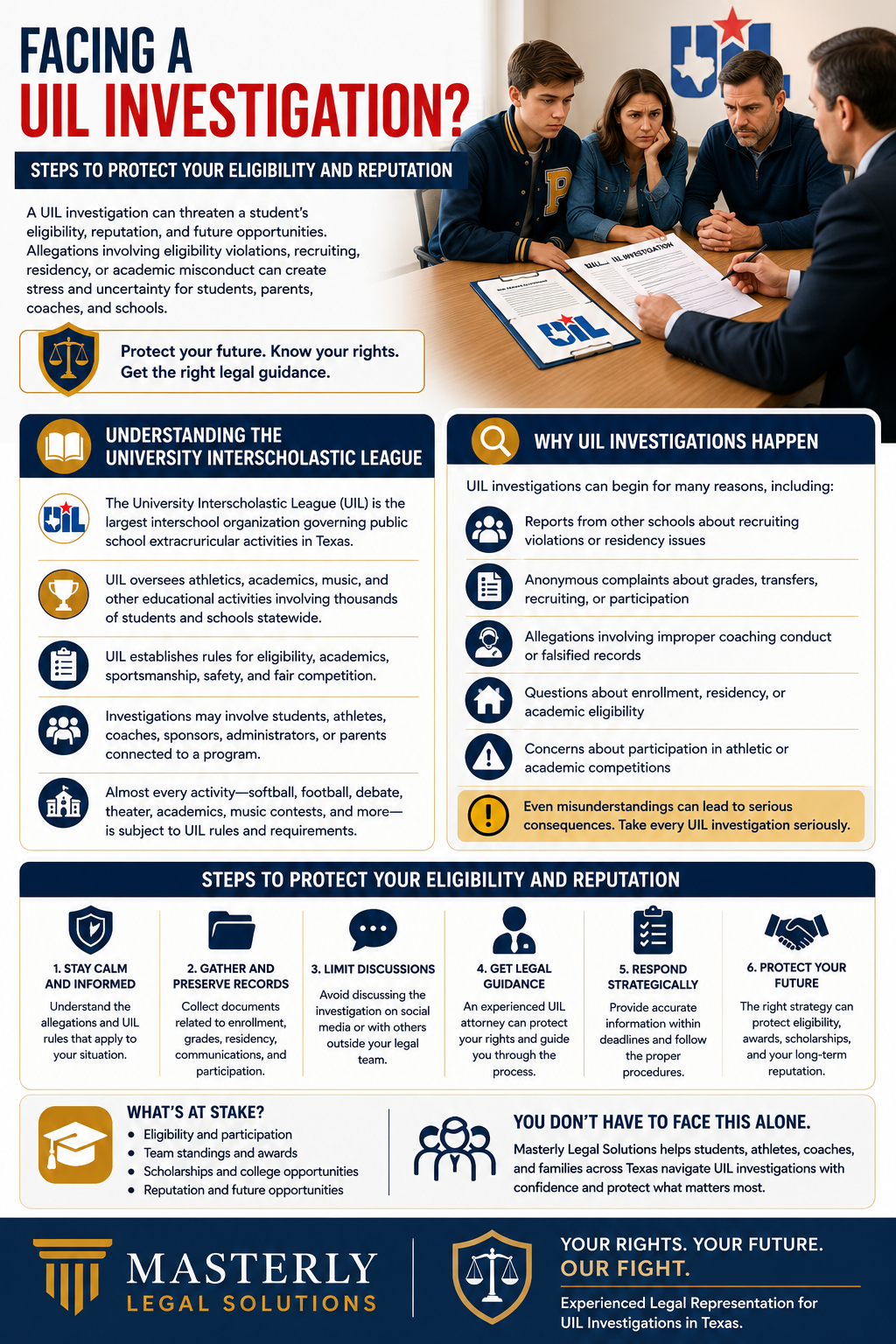
Why Early Legal Guidance Matters
Many families wait too long before seeking legal help during a UIL investigation. Unfortunately, statements, paperwork, or decisions made early in the process may significantly affect the outcome later.
An attorney familiar with University Interscholastic League procedures can help families understand their rights, gather supporting evidence, and respond effectively to allegations involving eligibility or participation.
Legal representation may also help students and parents communicate more confidently with schools, administrators, and UIL officials. This support becomes especially important during appeals or complex disputes involving transfers and recruiting allegations.
Early legal guidance often helps reduce confusion and allows families to approach the investigation with a clearer strategy.
Protecting Eligibility and Future Opportunities
Protecting eligibility requires careful attention to detail throughout the school year. Students, parents, coaches, and schools should remain proactive about understanding UIL rules and maintaining accurate records.
Families should never assume minor issues will automatically resolve themselves. Questions involving grades, transfers, enrollment, or participation may quickly escalate if not addressed properly.
Students who remain eligible can continue competing, earning awards, advancing through contests, and pursuing future opportunities at the college level. Protecting those opportunities is often worth the effort required to respond strategically during investigations.
Masterly Legal Solutions works with families facing these difficult situations and understands the pressure surrounding UIL disputes in Texas, drawing on our broader sports law and education-focused legal services.
Speak With Masterly Legal Solutions About Your UIL Investigation
Facing a UIL investigation can feel overwhelming, especially when your reputation, eligibility, and future opportunities are on the line. Whether the issue involves athletic participation, academic contests, music programs, transfers, or recruiting allegations, the decisions made early in the process can have lasting consequences.
At Masterly Legal Solutions, we understand how stressful these investigations can become for students, parents, coaches, and schools. Our team works closely with clients to address eligibility concerns, respond to allegations, protect reputations, and navigate complex University Interscholastic League proceedings.
If you or your child are facing questions involving UIL rules, participation, transfers, or eligibility disputes, it is important to seek guidance before the situation escalates further. Early action may help preserve opportunities and strengthen your position during the investigation process.
Contact Masterly Legal Solutions at (972) 236-5051 for a free consultation. We can answer your questions regarding UIL investigations, eligibility disputes, athletic concerns, academic competition matters, and related legal issues affecting students and schools throughout Texas.
Disclaimer: This article is provided for educational and informational purposes only. It is not legal advice and does not create an attorney-client relationship. Every UIL investigation involves unique facts and circumstances that may affect the outcome of the matter. If you are facing eligibility concerns, disciplinary proceedings, or disputes involving the University Interscholastic League, you should speak directly with qualified legal counsel regarding your specific situation.





Teacher Rights When Assaulted by a Special Needs Student: Safety, Reporting and Investigation Issues



Looking for Legal & Business Solutions? Contact Us Now
Fill in the form or call us to set up a meeting





