

CPS Administrative Findings and the Appeal Process in Texas
When parents first learn that CPS has made an administrative finding against them, the weight of that moment can feel overwhelming. Many parents believe the hardest part of a cps investigation ends once the investigation closes, only to discover that an adverse finding can follow them for years. These findings can affect employment, custody, and even future interactions with child protective services. Understanding what these findings mean and how the appeal process works is essential for protecting your family and your future.
At Masterly Legal Solutions, we help parents navigate some of the most stressful moments of their lives. Our law firm focuses on cps defense, guiding families through investigations, administrative findings, and appeals with clarity and purpose, including understanding why a power of attorney for your children matters. This article explains how CPS administrative findings work in Texas, why they matter, and how early involvement from cps defense attorneys can make a meaningful difference.
Understanding CPS Administrative Findings
Administrative findings are determinations made by child protective services CPS after completing an investigation. These findings state whether CPS believes abuse or neglect occurred. Unlike criminal convictions, these findings are made by a government agency, not a court.
Even though they are administrative, these findings carry serious consequences. They can affect a parent’s reputation, employment opportunities, and standing in future cps cases. Many parents do not realize the long-term impact until it is too late.
How CPS Reaches Administrative Conclusions
During the cps investigation process, cps workers gather information through interviews, records, and home visits. The assigned cps caseworker evaluates whether the allegations meet CPS standards. This decision is often based on internal policies rather than courtroom rules of evidence.
Because the standard is lower than in criminal court, findings can occur even without sufficient evidence to support criminal charges. This makes administrative findings particularly challenging for parents to confront without legal guidance.
Common Types of CPS Administrative Findings
CPS findings typically fall into categories related to child abuse, child neglect, or abuse or neglect combined. These determinations may involve claims of physical harm, emotional harm, or failure to provide proper care. Allegations of child abuse and neglect are treated with particular seriousness.
In some cases, findings involve allegations of sexual abuse or broader child maltreatment. Each category carries different implications for parents and future interactions with protective services.
Why Administrative Findings Matter So Much
Administrative findings can follow parents for years, especially when recorded in state databases. These records may be accessible to employers, licensing agencies, and schools. Parents are often shocked to learn how widely these findings can be shared.
A single finding can influence future court intervention, custody disputes, or juvenile dependency matters. Understanding the stakes early allows parents to respond strategically.
The Difference Between Administrative Findings and Court Rulings
Administrative findings are not the same as a court order. They are made internally by child protection services without a judge reviewing evidence or hearing testimony. This lack of judicial oversight is why appeals are so important.
However, these findings are often referenced in family court proceedings. Judges may view them as indicators of risk, even when the findings were never tested in court.
How Findings Affect Parental Rights
Adverse findings can limit parental rights, even without a court ruling. Parents may face restrictions on custody, visitation, or decision-making authority. These consequences often extend beyond the original investigation.
Protecting parental rights requires understanding how findings are used and knowing when to challenge them. Early action can prevent long-term harm to family stability.
The Impact on Family Life and Stability
CPS findings can disrupt family life in unexpected ways. Parents may experience stress, stigma, and anxiety long after the investigation ends. Children may sense the tension, affecting their emotional well-being.
Addressing findings through the appeal process can help families move forward. Clearing a record often restores peace of mind and stability.
When Findings Lead to Further Investigation
In some cases, administrative findings trigger additional investigation or monitoring. Protective services may continue involvement, citing ongoing safety concerns. This can prolong CPS oversight.
Legal representation helps limit unnecessary extensions. A defense attorney can push back against continued intrusion without cause.
Understanding the Appeal Process in Texas
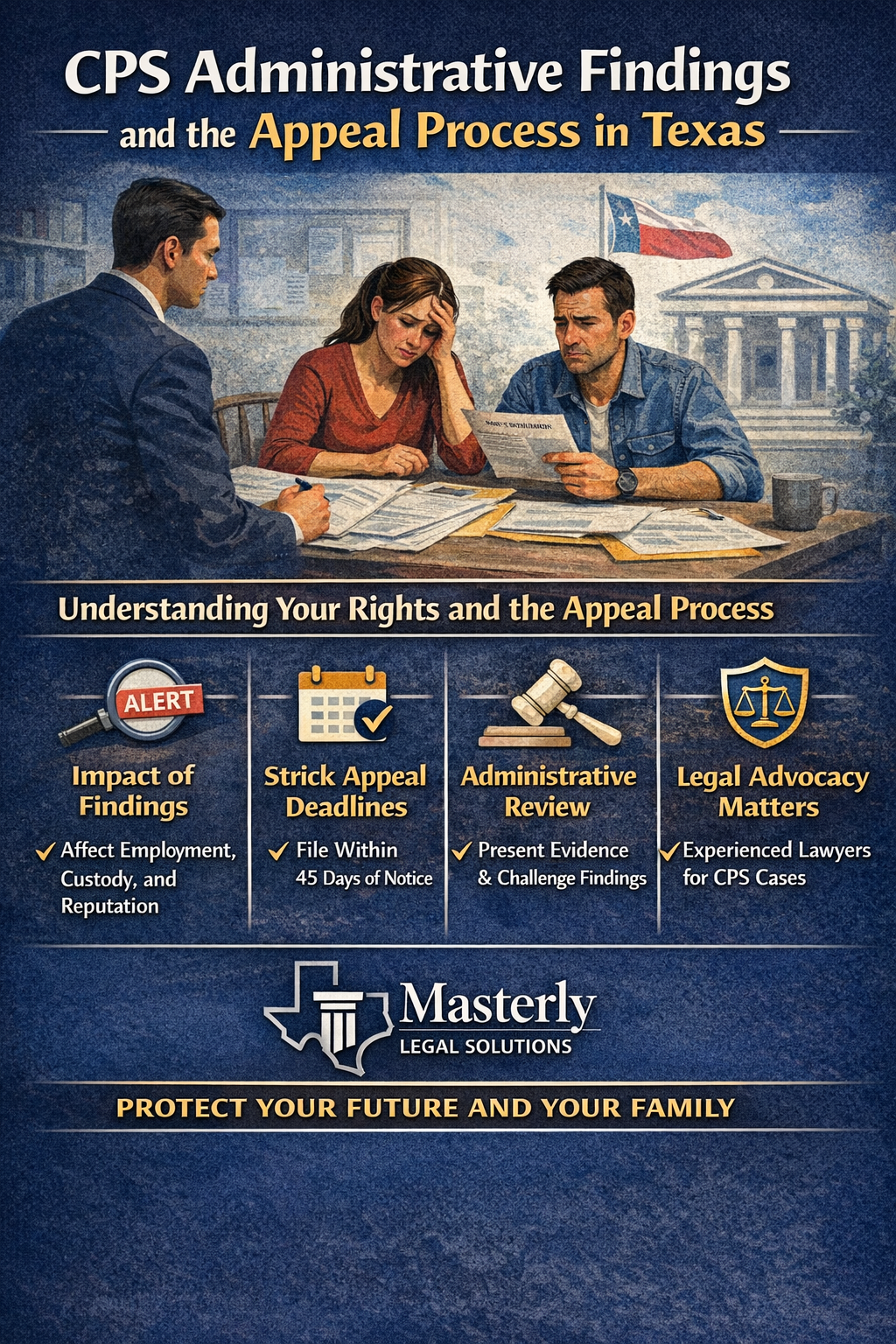
Texas law allows parents to appeal CPS administrative findings. The appeal process provides an opportunity to challenge conclusions and present evidence. However, strict deadlines apply.
Missing an appeal deadline can lock a finding in place permanently. Knowing what to expect early is critical.
Deadlines and Filing Requirements
Appeals must be requested within a specific timeframe after notification. This involves formal filing and adherence to procedural rules. Errors in filing can result in dismissal.
An attorney ensures that deadlines are met and paperwork is accurate. This precision protects parents’ rights from procedural mistakes.
What Happens During an Administrative Appeal
During an appeal, an administrative review or hearing examines the CPS finding. Evidence is reviewed, and arguments are presented. This process is separate from criminal court.
Parents may present documents, witness statements, and other evidence. Legal advocacy helps ensure the record is complete and persuasive.
The Role of Evidence in Appeals
Evidence is central to overturning findings. This includes medical records, school reports, and testimony. Evidence that contradicts allegations can significantly weaken CPS conclusions.
A lawyer helps organize and present evidence effectively. Strong evidence supports compelling arguments that challenge CPS determinations.
Why Early Legal Representation Matters
Early involvement from cps defense attorneys often shapes appeal outcomes. Attorneys can identify weaknesses in the investigation and preserve favorable evidence.
Waiting too long can limit options. Early legal representation provides strategic advantages.
How CPS Defense Attorneys Advocate for Parents
CPS defense focuses on protecting families from unfair outcomes. Attorneys review investigative steps, challenge assumptions, and hold CPS accountable to its own standards.
At Masterly Legal Solutions, our attorneys bring focused expertise to each case. Our proven track record reflects our commitment to defending families.
Addressing Allegations of Abuse or Neglect
Allegations of child abuse or neglect are emotionally charged. CPS may interpret ambiguous situations as risk factors. Parents must respond carefully.
Legal guidance helps parents address allegations without admissions. This protects both parents and children.
When Allegations Involve Criminal Charges
Some findings overlap with potential criminal charges. Statements made during CPS investigations can be shared with prosecutors.
An experienced attorney protects against self-incrimination. This coordination is essential when criminal exposure exists.
Juvenile Dependency and Administrative Findings
Administrative findings can influence juvenile dependency cases. Courts often consider CPS history when making decisions.
Challenging findings early reduces negative impact. This helps protect families during dependency proceedings.
Supervised Visitation and Ongoing Restrictions
Findings may lead to supervised visitation or service requirements. These restrictions can persist even after investigations close.
Legal advocacy helps limit unnecessary conditions. Protecting parent-child relationships remains a priority.
The Role of Counseling and Services
Parents may be required to complete counseling or other services. While helpful in some cases, services can also be used as compliance measures.
An attorney helps evaluate whether services are appropriate. This ensures requirements are fair and relevant.
Investigating Reports and Procedural Errors
Many appeals succeed by exposing flaws in investigating reports. Missing documentation, biased interviews, or inconsistent conclusions weaken CPS findings.
A lawyer reviews the entire process for errors. Procedural mistakes can be powerful grounds for appeal.
County Differences Across Texas
Practices vary by county, including areas like Orange County. Some counties apply standards more aggressively than others.
Local experience matters. A law firm familiar with regional practices offers stronger representation.
Comparing Texas and Southern California Systems
Families relocating or with prior cases in Southern California may notice differences in procedures. While standards differ, administrative findings carry similar consequences.
Understanding these distinctions helps parents navigate multi-jurisdictional concerns.
Protecting the Best Interest of the Child
CPS decisions are framed around the best interest of the child. However, administrative findings do not always reflect a child’s actual needs.
Legal advocacy ensures decisions truly support child welfare. Protecting families aligns with child well-being.
How Appeals Can Restore Family Stability
Successful appeals can remove damaging findings from records. This restoration benefits employment, custody, and peace of mind.
Appeals offer families a chance to move forward. Clearing a record can be life-changing.
Choosing the Right Defense Attorney
Not all attorneys handle CPS matters effectively. Parents need attorneys with specific experience in administrative appeals and cps cases.
Masterly Legal Solutions focuses on this area of law. Our clients benefit from targeted advocacy.
Preparing for an Initial Consultation
An initial consultation helps parents understand options and next steps. Preparation ensures productive conversations.
Early consultations often reveal opportunities parents did not realize existed.
Standing Up and Fighting Unfair Findings
Parents have the right to fight findings they believe are wrong. Silence can be interpreted as acceptance.
Legal support empowers parents to defend their reputation and family.
What Parents Should Expect Moving Forward
Appeals require patience and persistence. The timeline can vary, but preparation improves outcomes.
Knowing what to expect reduces stress. Support makes the process manageable.
Navigating Child Protective Services Cases and Protecting Your Family
Child protective services cases often begin with concerns about child safety, placing families under immediate stress and uncertainty. When social services or a Texas Department agency becomes involved in a neglect case, parents may suddenly find themselves facing allegations that threaten their stability and their relationship with their child. These cases move quickly, and decisions made early can influence whether a child remains at home or is placed into foster care. Understanding the process and focusing on ensuring child safety while protecting parental rights is critical, which is why early legal guidance can help families respond effectively and avoid unnecessary long-term consequences.
Contact Masterly Legal Solutions for Trusted Guidance
If you are facing CPS administrative findings or considering an appeal, timely guidance can make a significant difference. At Masterly Legal Solutions, we focus on helping parents challenge unfair determinations and protect their families from lasting consequences. Our team understands the emotional toll these cases take and works diligently to provide clear direction at every stage.
We invite you to contact our office to schedule a free consultation. This conversation allows us to review your situation, explain your options, and determine how our cps defense attorneys can assist you. Call (972) 236-5051 today to take the next step toward protecting your future.
Disclaimer: This material does not provide legal advice; it is merely meant to be informative. An attorney-client relationship is not established by reading this content. Please speak with an experienced lawyer for situation-specific legal advice.




Teacher Rights When Assaulted by a Special Needs Student: Safety, Reporting and Investigation Issues


Looking for Legal & Business Solutions? Contact Us Now
Fill in the form or call us to set up a meeting





