

How Long Can a District Keep a Teacher Under Investigation? What to Do While You Wait
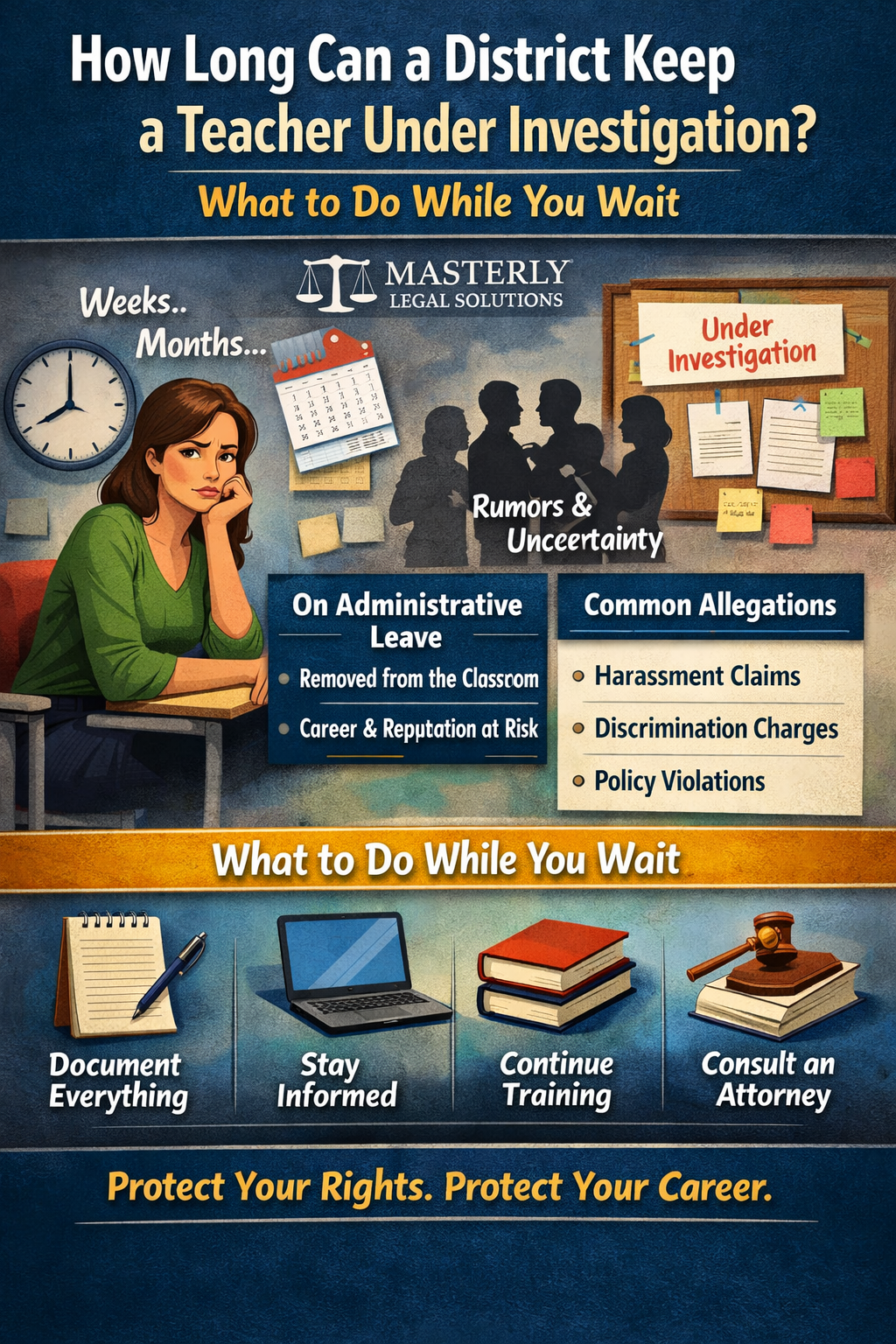
When a teacher is placed under investigation, time seems to slow down. Days turn into weeks, and weeks can stretch into months. During that period, your career, reputation, and income may feel like they are hanging by a thread. Many educators call us asking the same question: how long can this last, and what can I do while I wait?
At Masterly Legal Solutions, we understand that an employment investigation is not just a bureaucratic process. It affects your family, your future, and your sense of identity as a professional. Whether the issue involves allegations of harassment, discrimination, or other misconduct, the uncertainty can be overwhelming. This article explains how long a district may keep a teacher under review and what steps you can take to protect yourself during administrative leave.
Understanding Administrative Leave in School Districts
Administrative leave is often the first step when a district begins reviewing allegations. In many cases, a teacher is placed on paid administrative leave while the district conducts an internal investigation. This means you may continue receiving pay and benefits, but you are removed from the classroom.
While administrative leave can sound neutral, it often feels anything but. Colleagues notice your absence. Students and parents ask questions. Rumors can spread quickly in a tight-knit work environment. Even though you have not been found guilty of any violation, the stigma can begin immediately.
Districts typically justify administrative leave as a way to preserve the integrity of the investigation. However, there is no universal rule under federal law that sets a strict deadline for how long a district may keep an employee out of work.
How Long Can an Investigation Last?
There is no single answer. Some investigations wrap up in a few weeks. Others can continue for months, especially if law enforcement, such as the police, becomes involved. In more complex cases involving allegations of sexual harassment, discrimination based on national origin, or claims under title vii of the civil rights act, timelines can expand.
Federal and state laws do not always provide a clear time limit for a district to complete its review. Instead, they focus on whether the employer acts reasonably and in good faith. If a district drags its feet without justification, that delay may become part of a later lawsuit.
The longer the investigation continues, the greater the damage to your professional standing. Even if you are eventually cleared, the emotional and reputational toll can be significant.
Paid Administrative Leave Versus Unpaid Leave
In most teacher cases, districts use paid administrative leave rather than unpaid suspension. Paid administrative leave generally means your regular pay continues, and you may retain benefits. However, being paid does not eliminate the stress or reputational harm.
Unpaid leave raises even more serious concerns. Loss of pay and benefits may create immediate financial hardship. If a district shifts from paid administrative leave to unpaid status without due process, that may raise issues under federal and state laws.
It is important to understand the difference between paid administrative leave and disciplinary action. Administrative leave is supposed to be temporary and non-punitive. Disciplinary action, on the other hand, may signal that the employer has already made up its mind.
Why Delays Can Be Dangerous
Extended administrative leave can feel like a silent punishment. You may be isolated from coworkers, cut off from students, and excluded from meetings. Over time, employee morale can suffer, and your professional network may weaken.
Delays also increase the risk of retaliation. When an employee has engaged in protected activity, such as reporting harassment or filing a complaint about discrimination, retaliation occurs if the employer treats that employee differently because of that action. Prolonged administrative leave without clear justification can sometimes be evidence of retaliation at work.
For example, if you report sexual harassment or discrimination resisting sexual advances and are then placed on administrative leave for months while others are not treated the same way, that timeline may matter.
Common Reasons Teachers Are Placed Under Investigation
Investigations in schools can arise from a wide range of allegations. Some involve accusations of harassment or inappropriate conduct. Others may involve claims of discrimination, grade manipulation, or policy violations.
Allegations may include:
- Claims of sexual harassment involving students or coworkers
- Accusations of discrimination based on a person's race, national origin, or disability
- Alleged violations of district policy or state laws
- Claims involving social media posts or classroom conduct
- Complaints tied to age discrimination or failure to provide reasonable accommodations
In certain cases, police may open a parallel investigation, including inquiries by agencies such as the Texas Education Agency (TEA) into educator misconduct. When law enforcement is involved, the district may extend administrative leave until the police complete their review.
The Role of Federal and State Laws
Federal law and state laws provide important legal protections for employees in the public sector. Teachers employed by local governments are often covered by multiple layers of protection.
The Civil Rights Act's Title VII forbids discrimination on the basis of race, national origin, and other protected groups. The disabilities act requires employers to provide reasonable accommodations for qualified employees with a disability. The medical leave act allows eligible employees to take job protected leave under certain conditions.
These federal and state laws also protect employees from retaliation when they engage in protected activity. That includes reporting harassment, filing a retaliation complaint, or participating in an investigation.
What Is Protected Activity?
Protected activity includes actions such as:
- Reporting sexual harassment or discrimination to human resources
- Filing a complaint with the equal employment opportunity commission
- Cooperating in an internal investigation
- Requesting reasonable accommodations under the disabilities act
- Taking fmla leave or job protected leave
When an employee engages in protected activity, the employer cannot take adverse actions because of it. If retaliation occurs, that can form the basis of a lawsuit.
When Administrative Leave Feels Like Punishment
Administrative leave is not supposed to be punitive. However, when a district isolates a teacher, cuts off communication, or publicly implies wrongdoing, it can feel like a disciplinary action.
If an employer treats an employee differently after reporting harassment, that may suggest retaliation. For example, if a teacher reports sexual advances from a supervisor and is suddenly placed on administrative leave while the accused remains in the workplace, that imbalance can raise serious concerns.
Courts look at whether the leave was reasonable under the circumstances. If delays are excessive or appear targeted, they may be considered unlawful.
The Emotional Toll of Waiting
Waiting during an investigation can be emotionally draining. Teachers often describe feelings of anxiety, anger, and fear. Concerns about future discrimination or being unfairly fired are common.
Isolation from the work environment can make things worse. You may feel cut off from colleagues and unsure what information is being shared about you. Even though you are technically still an employee, the experience can feel like exile.
If you are on paid administrative leave, you may still worry about long-term career damage and the risk of protecting your teaching certificate, especially in states like North Carolina where educator misconduct defense to protect your license is critical. Prospective employers and job applicants in other districts may ask questions about gaps in employment.
Protecting Your Reputation
One of the most important steps you can take is to protect your professional reputation. Avoid discussing the details of the investigation with coworkers or posting about it on social media. Even innocent comments can be misinterpreted.
Document everything. Keep copies of emails, performance evaluations, and any communication with human resources or your supervisor. This record may become critical if a lawsuit becomes necessary.
If police are involved, speak with counsel before giving statements. Statements made during an investigation can later be used in employment proceedings.
The Risk of Retaliation
Retaliation is one of the most common claims in employment law. It can happen when an employer punishes an employee for filing a complaint, reporting harassment, or engaging in protected activity.
Retaliation may include:
- Prolonged administrative leave without clear reason
- Negative performance reviews after a complaint
- Demotion or reduction in pay
- Exclusion from opportunities
- Wrongful termination
If you suspect retaliation at work, early legal advice can help protect your rights.
Federal Employees and Public School Teachers and How Labor and Employment Law Services for Individuals and Organizations Can Help
Although teachers are not typically federal employees, federal law still plays a major role in their protection. Federal employees have specific procedures for filing claims, but public school teachers must also follow federal guidelines when alleging discrimination or harassment.
For example, filing a charge with the equal employment opportunity commission is often required before pursuing a federal lawsuit under title vii. Strict deadlines apply. Missing those deadlines can prevent you from moving forward, which is why working with an education law attorney who guides teachers through investigations and lawsuits can be so important.
Understanding these timelines is critical while you are on administrative leave.
Filing a Complaint with the EEOC
If your case involves discrimination or harassment under federal law, you may need to file a charge with the equal employment opportunity commission. This step is often required before filing a lawsuit in court.
The filing process includes submitting details about the alleged unlawful conduct. The commission may investigate, attempt mediation, or issue a right to sue letter.
Deadlines are short. In many cases, you must file within 180 or 300 days, depending on the circumstances and applicable state laws.
Whistleblower Laws and Reporting Misconduct
Some teachers are placed on administrative leave after reporting misconduct. Whistleblower laws may protect workers who report fraud, safety issues, or violations of occupational safety standards, and in some situations overlap with education law services that defend teacher licenses and navigate investigations.
If you report concerns about student safety, misuse of funds, or other serious issues, you may be engaging in protected activity. If the employer responds by isolating you or extending administrative leave without justification, that could raise legal issues.
Whistleblower protections vary under federal and state laws, so individualized advice is essential.
Disability, Medical Leave, and Accommodations
Teachers with a disability may request reasonable accommodations under the disabilities act. If an employer treats that request as a reason to push you out of the workplace, that may constitute discrimination.
Similarly, taking fmla leave under the medical leave act is protected. Eligible employees have the right to job protected leave for certain medical or family reasons, and employers often need HR consulting services and training to navigate these employment law obligations.
If you request accommodations or take fmla leave and are then placed on administrative leave, the timing may matter. Courts often look closely at the sequence of events.
Harassment and Sexual Harassment Allegations
Sexual harassment allegations can lead to immediate administrative leave. Districts often act quickly to reduce potential liability. However, acting quickly does not mean they can ignore fairness.
Both the accused and the accuser deserve a fair investigation. False accusations can damage careers. At the same time, victims of harassment must feel safe reporting misconduct.
In cases involving sexual favors, sexual advances, or hostile work environment claims, the district must follow established procedures under federal and state laws, including those that govern TEA investigations and educator license defense in Texas.
The Impact on Pay and Benefits
Even when on paid administrative leave, teachers may worry about overtime pay, stipends, or extra duties. Certain forms of compensation may be affected.
If your pay or benefits are reduced without clear explanation, that could be an adverse action. Carefully review your pay statements and any written notices.
If you are eventually terminated, you may have claims for wrongful termination, lost pay, and in some cases punitive damages.
When to Speak with Employment Lawyers
You do not have to wait until you are terminated to seek legal help. Early guidance from education lawyers who provide expert legal support for teachers and schools or labor and employment lawyers can shape how the investigation unfolds.
An experienced lawyer can communicate with the district, request updates, and ensure deadlines are met. Legal counsel can also help prepare you for interviews or hearings.
Taking action early may protect your career and prevent further retaliation.
Preparing for a Possible Lawsuit
If the investigation results in termination or other serious consequences, a lawsuit may be necessary. Claims may involve discrimination, harassment, retaliation, or violation of federal and state laws.
Evidence is key. Preserve documents, witness names, and timelines. Keep notes about conversations with your supervisor, manager, or human resources.
A well-prepared case can increase your chances of recovering lost pay, benefits, and other damages.
The Role of Human Resources
Human resources departments are supposed to ensure compliance with employment laws. However, they ultimately represent the employer.
When you report harassment or discrimination to human resources, document the report. Ask for written confirmation. Follow up if you do not receive a response.
Remember that statements made to human resources can become part of the official record.
The Importance of Acting Before It Is Too Late
Investigations that drag on can quietly erode your position. Waiting passively may limit your options.
If you feel that the employer treats you unfairly, consult legal counsel. Delays in filing a complaint or charge with the equal employment opportunity commission can jeopardize your rights.
Time limits under federal and state laws are strict. Protecting your career requires timely action.
Protecting Yourself While You Wait
While on administrative leave, focus on practical steps and consider these specific steps Texas teachers should take while on administrative leave:
- Maintain professional communication
- Avoid discussing details publicly
- Continue professional development
- Keep detailed records
- Seek legal advice if needed
These steps can help protect your position while the investigation continues.
Protections for Every Employee or Job Applicant
Whether you are a current employee or job applicant, you are protected by important workplace laws. School districts and other employers cannot ignore your rights simply because you are under investigation or seeking a new position. Anti-discrimination statutes and federal law apply not only to those currently employed but also to individuals applying for jobs. If an investigation or allegation affects your future employment opportunities, it is critical to understand how these protections extend beyond your current role.
Understanding Your Rights Under the Employment Act
Various provisions within the employment act and related federal and state laws are designed to protect workers from discrimination, retaliation, and unlawful treatment. These laws outline what an employer can and cannot do during an investigation, disciplinary process, or termination decision. If a district violates these standards, it may face legal consequences. Knowing how the employment act applies to your situation can help you respond strategically and protect your professional future.
Allegations Involving Physical Harm
In some cases, investigations arise from accusations involving physical harm to a student or colleague. These allegations are taken seriously and may involve both district officials and police. While student safety is critical, an employer must still conduct a fair and unbiased investigation. Being accused of physical harm does not mean you are guilty, and you have the right to defend yourself and present evidence before conclusions are reached.
The Importance of Paid Time During an Investigation
When a teacher is placed on administrative leave, remaining on paid time can make a significant financial difference. Paid time helps ensure that you can continue meeting your obligations while the investigation moves forward. However, even when you are receiving pay, prolonged absence from the workplace can still damage your professional standing. If paid time is suddenly withdrawn without explanation, that action may raise additional legal concerns.
When Allegations Involve a Family Member
Occasionally, a complaint may involve a family member, such as accusations tied to a spouse or relative who interacts with the school community. While districts must address concerns, they cannot hold you responsible for actions beyond your control. Employment decisions must be based on your conduct, not assumptions about a family member. If an employer attempts to discipline you based on guilt by association, that may violate established workplace protections.
Genetic Information and Workplace Protections
Federal law restricts employers from making decisions based on genetic information. This includes data about inherited medical conditions or family health history. A district cannot use genetic information as a basis for discrimination, discipline, or termination. If such details surface during an investigation and are improperly considered, that may create grounds for legal action.
Seeking Additional Information to Protect Your Rights
During a prolonged investigation, requesting additional information can be an important step. You may have the right to know the nature of the allegations, the policies involved, and the expected timeline. Clear communication can reduce uncertainty and help you prepare a response. If the employer refuses to provide reasonable additional information, legal counsel can assist in determining your next steps.
Contact Masterly Legal Solutions for Guidance
If you are a teacher facing a prolonged investigation, you do not have to navigate this alone. Extended administrative leave, unresolved harassment allegations, and fear of retaliation at work can create enormous pressure. We understand how damaging uncertainty can be to your reputation, your pay, and your future employment.
At Masterly Legal Solutions, we represent individual employees who are dealing with discrimination, harassment, retaliation, and wrongful termination. Our team of experienced employment lawyers works to protect your rights under federal and state laws. Whether your situation involves reporting harassment, filing a retaliation complaint, or responding to allegations, we are prepared to help you evaluate your options.
Call us at (972) 236-5051 for a free consultation. We will listen to your story, review the facts, and explain what steps may be available to protect your career. This article is provided for educational purposes only and does not constitute legal advice. Every situation is different, and speaking directly with an attorney is the best way to receive guidance tailored to your circumstances.
Disclaimer:: The information provided in this article and in the contact section above is for general educational and informational purposes only. It is not intended to serve as legal advice, nor does it create an attorney-client relationship between you and Masterly Legal Solutions. Every employment situation is unique, and the outcome of any matter depends on the specific facts and applicable federal and state laws. You should not rely on this content as a substitute for speaking directly with a qualified attorney about your individual circumstances. Contacting our office does not establish an attorney-client relationship unless and until a formal agreement is signed.




Teacher Rights When Assaulted by a Special Needs Student: Safety, Reporting and Investigation Issues



Looking for Legal & Business Solutions? Contact Us Now
Fill in the form or call us to set up a meeting