

CPS Ruled Against You Here’s What You Can Do Next in Texas
When you receive notice that Child Protective Services ruled against you, it can feel like your world stops. Fear, confusion, and frustration often set in immediately. You may be worried about your child’s future, your parental rights, and what this means for your family’s reputation. If CPS has made findings of abuse or neglect, you are not alone—and you are not without options.
At Masterly Legal Solutions, we understand how overwhelming a CPS investigation can be. Parents often feel like decisions were made before they had a chance to fully explain their side. The truth is, the CPS process is complex, and the outcome is not always the end of the road. Knowing what steps to take next can make a critical difference in protecting your rights and your child’s well being.
Understanding the Role of Child Protective Services in Texas
Child Protective Services, often referred to as child protective services CPS, operates under the Texas Department of Family and Protective Services. Its mission is to investigate reports of child abuse or neglect and to protect children from serious harm. CPS workers are tasked with responding to allegations involving abuse or neglect in a child’s home or other environments.
The primary goal of child protective services is to ensure the child’s safety. While this goal is important, the methods used during a CPS investigation can feel intrusive. Investigators may interview the child involved, the child’s parents, and other family members. They may also gather evidence from teachers, doctors, or neighbors.
How a CPS Investigation Begins
A CPS investigation typically starts with a report of suspected child abuse or suspected abuse. Reports can come from mandatory reporters such as teachers or medical professionals, or from private individuals. Once the report is accepted, CPS workers begin the investigation process.
The initial contact may involve a visit to the child’s home. A CPS investigator will assess safety concerns and conduct a risk assessment. During this stage, the agency evaluates whether there is an immediate risk or immediate danger to the child’s safety.
The CPS Investigation Process Explained
The CPS investigation process involves several structured steps. First, CPS determines whether the allegations meet the legal definition of abuse or neglect under the Texas Family Code. If so, child protective investigations begin in earnest.
During the investigation stage, CPS workers interview the alleged victim, the alleged perpetrator, and other relevant individuals. They may request medical records, school records, and police reports. In some cases, a criminal investigation runs parallel to the CPS investigation, and educators under scrutiny may require an education lawyer offering legal support for teachers and schools. .
The agency must complete investigations within certain timeframes, although delays are common. The CPS investigation timeline in Texas is different from the CPS investigation timeline California families may experience, but both involve strict procedural requirements.
What It Means When CPS Rules Against You
When CPS rules against you, it typically means the agency found reason to believe abuse or neglect occurred. This finding may be labeled as “reason to believe” rather than confirmed guilt. However, the consequences can be serious.
A CPS case with adverse findings can affect your employment, custody arrangements, and reputation. It may also be entered into a state registry. In some cases, CPS believes there is ongoing risk and may seek further intervention, making it important to work with a Texas-based law firm offering broad legal and business services. .
Possible Investigation Outcomes
Investigation outcomes generally fall into a few categories. CPS determines whether allegations are ruled out, unable to determine, or reason to believe. If reason to believe is found, additional actions may follow.
Those actions can include a safety plan, court proceedings, or even the child’s removal. Understanding these outcomes is crucial to determining your next move.
The Impact on Parental Rights
One of the most frightening aspects of a CPS investigation is the threat to parental rights. If CPS believes the child’s safety cannot be ensured, they may seek a court order for temporary custody. This can lead to placement in foster care.
Losing temporary custody does not automatically mean permanent loss of parental rights. However, failing to respond appropriately can increase that risk. The juvenile dependency court may become involved in reviewing the case.
Court Orders and Legal Proceedings
If CPS seeks to remove a child from the child’s home, they must typically obtain a court order. Emergency removals may occur in situations involving immediate danger. After removal, court hearings are scheduled quickly.
Juvenile dependency court proceedings determine whether neglect occurred and whether continued state involvement is necessary. These legal proceedings can feel intimidating. Having strong legal representation during court proceedings is essential, and some families may also benefit from a law firm that serves corporations, nonprofits, and individuals with tailored legal services. .
Understanding Safety Plans
In many cases, CPS implements a safety plan rather than seeking immediate removal. A safety plan may require supervised contact, temporary relocation of the alleged perpetrator, or compliance with certain services, similar to how organizations use outside counsel to conduct impartial internal investigations when serious allegations arise.
While safety plans are often presented as voluntary, they can feel mandatory. Agreeing to a safety plan without legal counsel may have long-term consequences. A service plan may follow, outlining specific requirements such as counseling or parenting classes.
Voluntary Services and Service Plans
CPS may offer voluntary services to address identified risk factors. These services can include counseling, substance abuse treatment, or domestic violence programs. The stated purpose is to support families and prevent future abuse.
A service plan outlines what the parent must complete to resolve the CPS case. Failing to comply can result in further legal action. Understanding your rights before agreeing to voluntary services is critical.
Risk Assessments and Family Assessments
A risk assessment is conducted to evaluate the likelihood of future abuse or serious harm. CPS workers review family history, prior reports, and environmental conditions. They may conduct a family assessment to determine strengths and weaknesses within the household.
These assessments influence whether CPS believes the child’s well being is at risk. Even minor concerns can be interpreted as significant if not properly addressed.
When Foster Care Becomes a Factor
If the child’s removal occurs, foster care placement may follow. This is one of the most traumatic outcomes for families. The child’s placement may be with relatives or licensed foster parents.
CPS must demonstrate that removal was necessary to protect the child’s safety. Parents retain certain parental rights during this period, but those rights may be limited.
Allegations Involving Serious Harm or Sexual Abuse
Cases involving sexual abuse or serious harm are treated with heightened urgency. CPS workers coordinate closely with law enforcement during these child protective services investigations. A criminal investigation may proceed simultaneously.
The alleged perpetrator may face both criminal charges and CPS findings. Legal counsel is absolutely critical in these circumstances.
Domestic Violence and Child Welfare Concerns
Domestic violence allegations often intersect with child welfare cases. Even if the child was not directly harmed, exposure to domestic violence can be cited as child neglect. CPS may argue that the child’s well being is compromised, which also highlights the importance of essential legal documents for families before age 40 to help safeguard children and other loved ones.
Understanding how the Texas Family Code defines abuse or neglect is essential. Not every argument or conflict rises to the level of legal abuse.
Your Right to Legal Representation
You have the right to legal representation during a CPS investigation. An experienced attorney can review the findings, challenge errors, and advocate for your parental rights, much like an education law attorney for teachers and administrators protects due process in school-related investigations. Legal protections exist, but they must be asserted properly.
At Masterly Legal Solutions, we provide legal counsel to parents facing CPS action. We help gather evidence, analyze reports, and prepare for court hearings. Early intervention can significantly influence the outcome.
Challenging CPS Findings
If CPS ruled against you, you may have options to challenge the findings. An administrative review or appeal process may be available. Acting quickly is important because deadlines are strict.
An experienced attorney can guide you through the CPS process and identify potential weaknesses in the investigation. In some cases, incomplete investigations or flawed evidence can be exposed, just as dedicated higher education attorneys help colleges manage complex regulatory investigations. .
Working With Legal Aid and Other Resources
Some families seek assistance from legal aid organizations or the Texas Legal Services Center. While these resources can provide helpful information, complex cases often require dedicated representation, similar to how colleges rely on higher education law services for FERPA and compliance support. Every CPS case is unique. .
Community resources and family and community resources may also support compliance with service plans. However, legal strategy should remain a priority.
The Importance of Acting Quickly
The CPS investigation timeline moves quickly once court proceedings begin. Missing a hearing or failing to respond to a safety plan can damage your case. Judges expect parents to take allegations seriously.
If CPS determines that neglect occurred and believes there is ongoing risk, further intervention may follow. Proactive action is key to protecting your family.
Protecting Your Child’s Education and Stability
A CPS case can disrupt a child’s education and emotional stability. Changes in the child’s placement may affect school attendance and well being. Courts consider the child’s education and continuity when making decisions.
Parents who demonstrate commitment to the child’s well being and cooperation with lawful requirements often improve their standing, just as coaches and athletic programs benefit from guidance by a top sports lawyer providing expert NCAA compliance solutions.
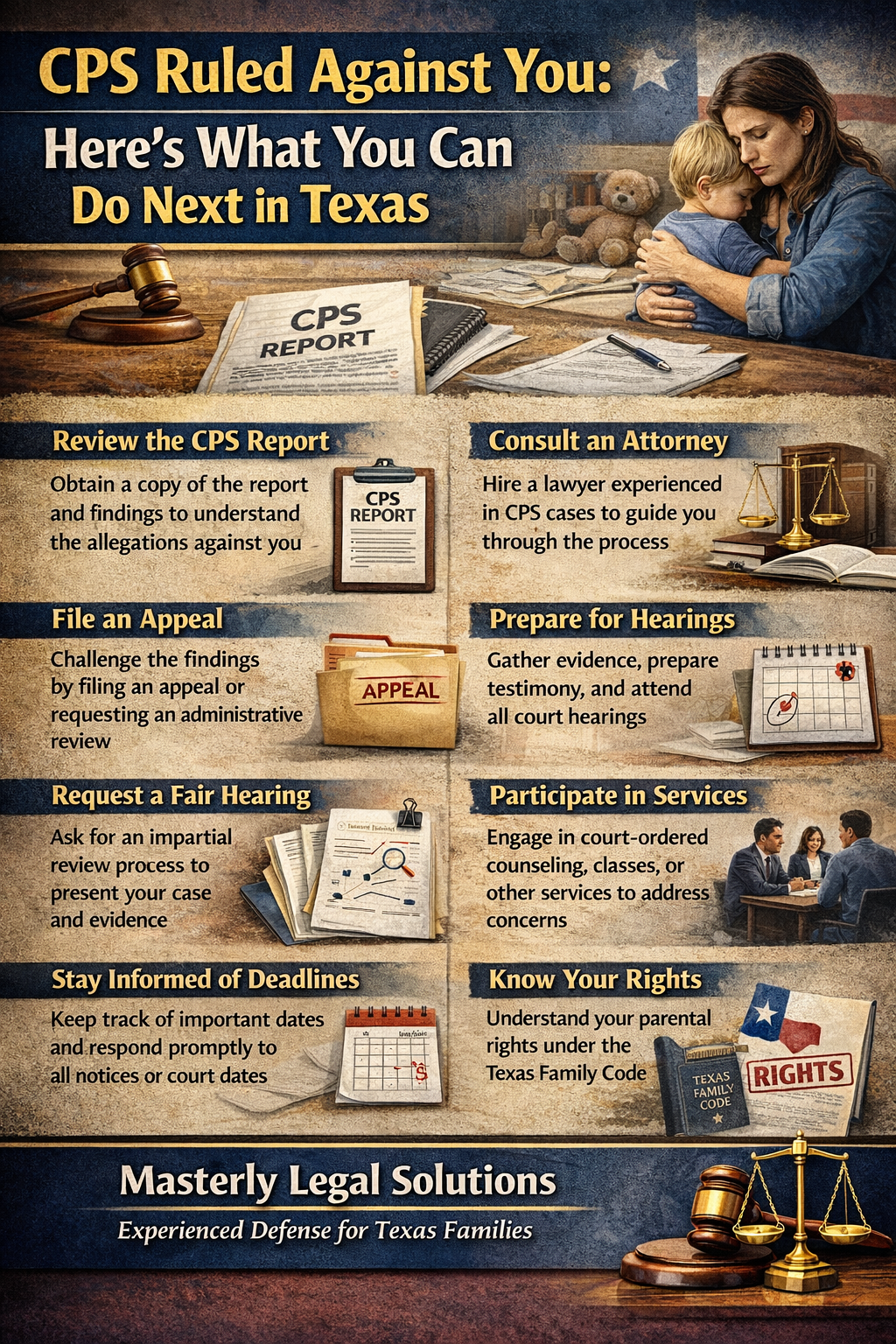
What to Do Immediately After a Negative CPS Ruling
If CPS ruled against you, take these steps:
- Request a copy of the investigation findings
- Contact an experienced attorney immediately
- Preserve documents and communications
- Avoid discussing details publicly
These actions can protect your legal position and strengthen your defense.
How Masterly Legal Solutions Can Help
At Masterly Legal Solutions, we understand how devastating a CPS finding can feel. Our firm focuses on protecting parental rights and guiding families through complex legal matters. We provide strategic legal representation tailored to your specific situation.
We analyze the CPS investigation process carefully and identify procedural errors or unsupported conclusions. Our goal is to secure the best possible outcome while safeguarding your family’s future.
Speak With Us About Your CPS Investigation Today
If CPS ruled against you, do not assume that the decision is final. There may be legal avenues to challenge the findings, modify a safety plan, or protect your parental rights. Every day matters when your child’s safety and your family’s future are at stake.
At Masterly Legal Solutions, we offer a free consultation to review your CPS case and explain your options. We understand how frightening this process can be, and we are here to provide clear answers and strong advocacy.
Call (972) 236-5051 today to speak with our team. Let us help you navigate the CPS investigation process, protect your rights, and work toward restoring stability for your family.
This article is provided for informational purposes only and does not constitute legal guidance. Reading this material does not create an attorney-client relationship. For advice specific to your situation, please contact Masterly Legal Solutions directly.


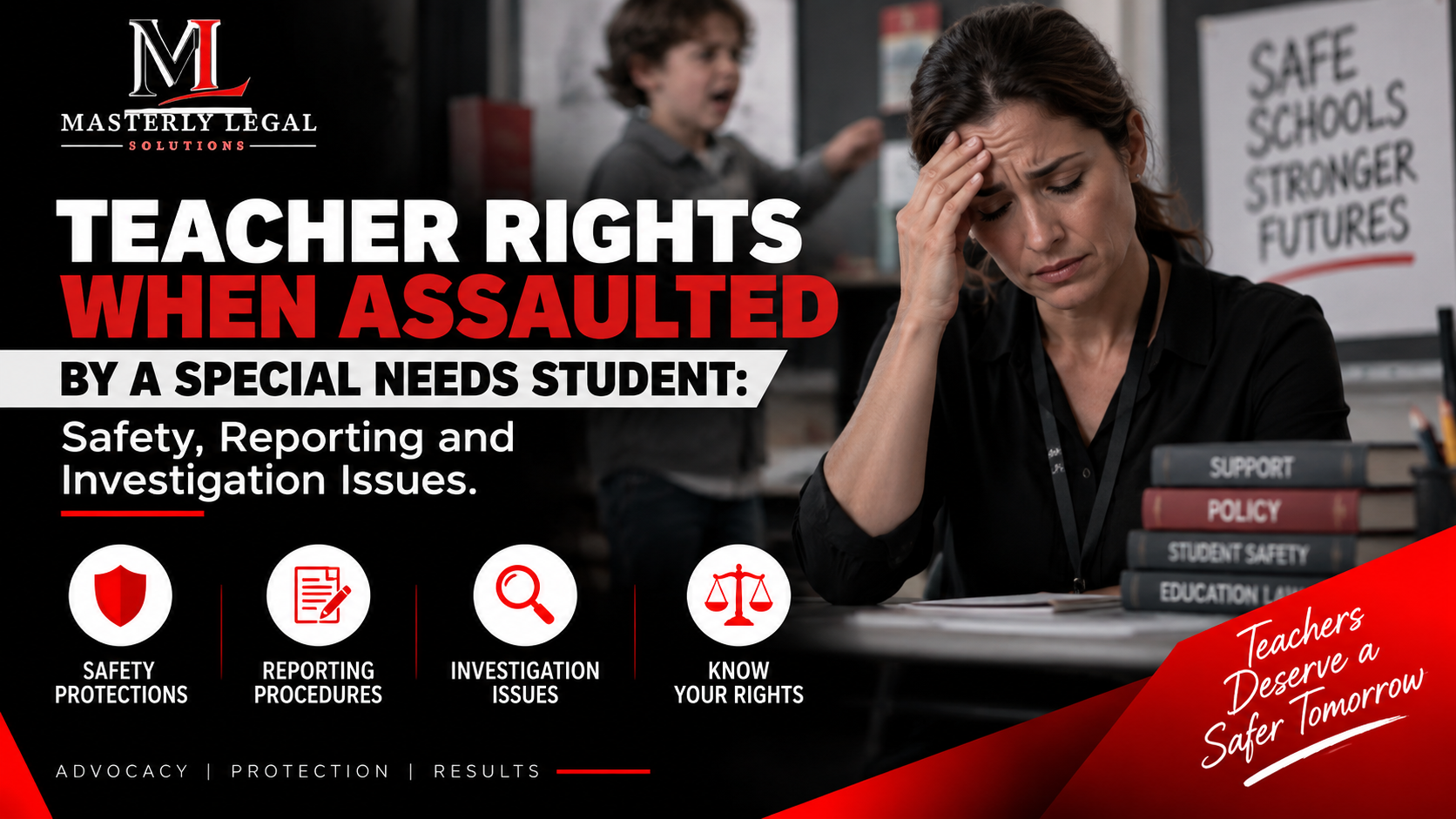
Teacher Rights When Assaulted by a Special Needs Student: Safety, Reporting and Investigation Issues


Looking for Legal & Business Solutions? Contact Us Now
Fill in the form or call us to set up a meeting





