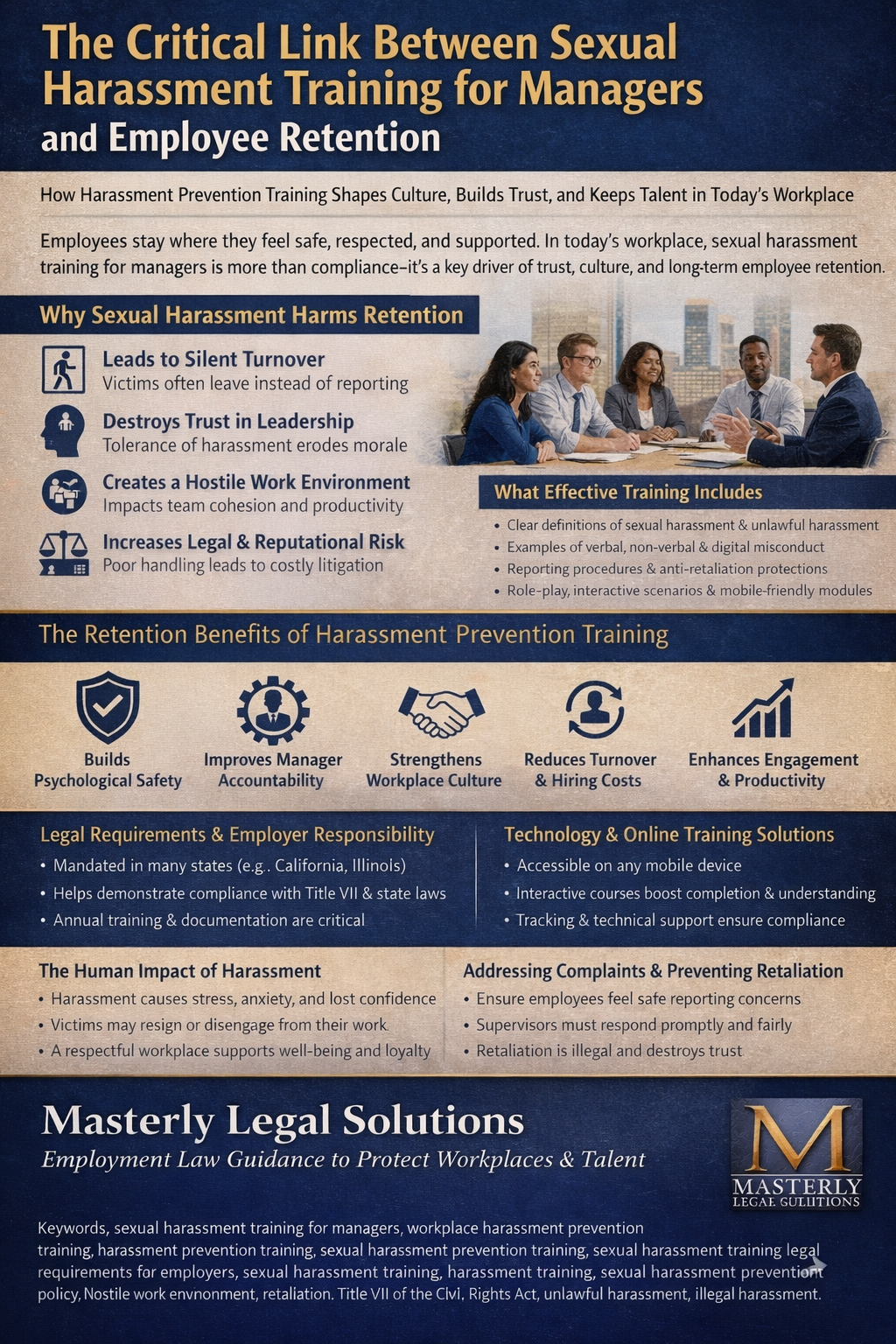
The Critical Link Between Sexual Harassment Training for Managers and Employee Retention
When employees decide whether to stay with a company, they rarely base that decision on salary alone. They consider how they are treated, whether they feel safe, and whether leadership takes harassment seriously. In today’s workplace, sexual harassment training for managers plays a central role in shaping those experiences. Companies that ignore this reality often struggle with turnover, low morale, and legal exposure.
At Masterly Legal Solutions, we regularly advise employers on how sexual harassment training impacts more than just compliance. It affects culture, trust, and long-term employee retention. Organizations that invest in meaningful harassment prevention training send a clear message that respect and accountability matter. That message can be the difference between retaining top talent and constantly searching for replacements.
Why Sexual Harassment Remains a Workplace Retention Issue
Sexual harassment continues to be a major concern across industries. Despite increased awareness, harassment in the workplace still occurs in subtle and overt forms. Employees who feel sexually harassed often leave quietly, rather than filing formal complaints.
This silent exit can create a hidden retention crisis. When workers feel that management ignores inappropriate conduct or tolerates unlawful harassment, trust erodes. A single hostile work environment can ripple through an entire workforce.
Employers who fail to address harassment risk losing skilled professionals. Replacing experienced employees costs time, money, and institutional knowledge. Preventing harassment is not only a legal obligation under Title VII and the Civil Rights Act, it is a business necessity.
The Legal Framework Behind Sexual Harassment Training
Under federal law, including Title VII of the Civil Rights Act, employers must protect employees from discrimination and sexual harassment. Harassment based on sex, national origin, or other protected characteristics is illegal. Courts evaluate whether employers took reasonable steps to prevent and address misconduct, including whether they understand and follow sexual harassment training legal requirements for employers.
Sexual harassment prevention training is often a critical part of demonstrating compliance. While not every state mandates annual training, many states such as California and Illinois have specific requirements. Other states have adopted similar regulations to strengthen workplace protections.
Failing to comply with these laws can expose employers to litigation and reputational damage. Beyond legal risk, inadequate training can signal that leadership does not prioritize a respectful work environment.
How Sexual Harassment Training for Managers Shapes Culture
Managers and supervisors set the tone for workplace conduct. When they are properly trained, they are better equipped to recognize early warning signs of harassment. Sexual harassment training for managers focuses on key concepts such as power dynamics, retaliation, and manager accountability in sexual harassment prevention.
A well-designed course goes beyond definitions. It addresses acceptable behaviors, bystander intervention, and conflict resolution. It also teaches supervisors how to respond when a victim reports harassment.
This proactive approach fosters awareness and accountability. Employees are more likely to remain with an organization that demonstrates genuine commitment to prevention.
The Connection Between Harassment Prevention Training and Retention
Employee retention is closely tied to psychological safety. Workers who believe their employer will protect them from harassment are more likely to stay. Harassment prevention training creates a structured way to communicate expectations.
Additionally, consistent training reduces confusion about policies. New employees understand from the start that inappropriate conduct will not be tolerated, and they benefit from regular sexual harassment training that reinforces these expectations. Clear standards help prevent incidents before they escalate.
When organizations fail to address harassment in the workplace, turnover often increases. High turnover disrupts teams and undermines productivity.
What Effective Sexual Harassment Training Includes
Not all sexual harassment training programs are equal. Effective harassment training should include:
- Clear definitions of sexual harassment and unlawful harassment
- Real-world examples of verbal and non-verbal misconduct
- Guidance on reporting procedures
- Discussion of retaliation and legal protections
Training should also highlight the organization’s sexual harassment prevention policy. Employees need to know where to report concerns and what happens after a complaint is filed, which should be clearly outlined in a well-drafted employee handbook.
Interactive components improve completion rates and understanding. Online training modules accessible on a mobile device can increase participation and flexibility.
The Role of Workplace Harassment Prevention Training
Workplace harassment prevention training goes beyond sexual misconduct. It addresses discrimination, bullying, and inappropriate conduct that can create an offensive work environment. Comprehensive workplace harassment training supports broader inclusion training efforts and often draws on HR consulting services and training to ensure consistency and legal compliance.
When employees see leadership investing in education, they feel valued. A respectful workplace becomes part of the organization’s identity. This directly supports retention and morale.
Employers who adopt workplace harassment prevention training demonstrate commitment to compliance and ethical leadership. This is especially important in highly regulated industries.
Compliance, Accountability, and Employer Responsibility
Employers have a legal duty to prevent harassment and respond promptly to complaints. Compliance is not optional. Courts look at whether employers took reasonable steps to educate supervisors and staff, sometimes considering whether they partnered with a labor and employment law firm like Masterly Legal Solutions to design and implement those measures.
Sexual harassment prevention training serves as evidence of good faith efforts. Additionally, documented completion of annual training can strengthen defenses in litigation. Without proof of education and awareness, employers may struggle to defend claims.
Accountability must extend beyond policy documents. Supervisors must model respectful behavior and address concerns immediately.
State-Specific Requirements and Multi-State Employers
States like California and Illinois have strict sexual harassment training regulations. In California, supervisors must complete specific hours of training within defined timelines. Illinois has enacted similar requirements for annual training.
Employers operating in multiple states must ensure they comply with each jurisdiction’s law. A one-size-fits-all approach can create gaps in compliance. Understanding both federal and state regulations is crucial, and when issues arise, using outside counsel for internal investigations and probes can help maintain neutrality and compliance.
Multi-state employers often benefit from customized training programs. This ensures consistent standards while addressing local requirements.
The Human Impact of Workplace Harassment
Behind every harassment complaint is a person affected. A victim of sexual harassment may experience stress, anxiety, and loss of confidence. Some feel forced to leave their job to escape a hostile work environment.
Harassment in the workplace can also damage team cohesion. Employees may fear retaliation or doubt that concerns will be taken seriously, especially in sensitive settings like schools where education lawyer support for teachers and schools may be necessary. This environment drives turnover and undermines loyalty.
A respectful workplace reduces these risks. Employees who feel safe are more engaged and productive.
Addressing Complaints and Responding Effectively
Training must include guidance on responding to complaints. Supervisors should understand how to document concerns, avoid retaliation, and escalate issues appropriately. Responding promptly can prevent escalation into formal litigation.
Employers should encourage open communication. Employees must feel comfortable raising concerns without fear. This reduces the likelihood of hidden problems festering.
Addressing harassment early protects both the individual and the organization. Delayed responses often increase legal exposure.
The Business Case for Investing in Training
Some employers view training as a compliance expense. In reality, it is an investment in stability. High turnover leads to recruitment costs, onboarding expenses, and lost productivity.
Sexual harassment prevention training strengthens the workforce by reinforcing respect and shared values. It also reduces the risk of costly lawsuits. Additionally, it supports diversity and inclusion goals.
Retention improves when employees believe their employer genuinely cares about their well-being. This connection is crucial for long-term success.
Technology and Online Training Solutions
Online training has become a practical solution for modern employers, including colleges and universities that must coordinate compliance across campuses and may rely on higher education law services for guidance. Courses accessible via mobile device allow employees to complete modules at convenient times. Technical support ensures smooth participation.
Interactive online training programs often include quizzes and scenario-based learning. These key features enhance understanding and retention of material. Completion tracking provides documentation for compliance audits.
Employers should evaluate whether their online training aligns with current law and best practices. Regular updates are essential as regulations evolve.
Preventing Retaliation and Building Trust
Retaliation is one of the most common claims associated with harassment complaints. Training must clearly explain that retaliation is illegal. Supervisors need to understand subtle forms of retaliatory conduct.
Employees are more likely to report incidents when they trust leadership. Building that trust requires transparency and consistent enforcement of policies. Additionally, organizations must demonstrate that no one is above the rules.
Trust is the foundation of employee retention. Without it, even minor issues can drive workers to seek opportunities elsewhere.
When to Seek Legal Advice
Employers should seek legal advice when developing or revising sexual harassment prevention policy and training materials. Laws change, and outdated programs can create compliance gaps. Legal guidance ensures alignment with federal and state requirements.
If an employer is dealing with complaints or potential litigation, early legal consultation is crucial. Proactive measures can reduce liability and protect the organization’s interests.
At Masterly Legal Solutions, we help employers design legally sound training programs. Our focus is on practical solutions that support both compliance and retention.
Building a Sustainable, Respectful Organization
A sustainable organization prioritizes respect, fairness, and education. Sexual harassment training is not a one-time event. It should be part of ongoing professional development.
When employees see consistent reinforcement of policies, they understand expectations clearly. This creates a culture where harassment is not tolerated. Over time, this stability strengthens retention and performance.
Leadership commitment is crucial. Managers and supervisors must actively support training initiatives and model appropriate conduct.
Partner With Masterly Legal Solutions
If your organization wants to strengthen retention while reducing legal risk, effective sexual harassment training for managers is a crucial step. At Masterly Legal Solutions, our law firm works closely with employers to design and implement comprehensive harassment prevention training programs.
We offer guidance on compliance with federal and state law, including requirements in California and Illinois. Our team helps employers address concerns proactively and create policies that protect both workers and the organization.
Call (972) 236-5051 to contact our firm and schedule a free consultation. We can review your current training program, identify potential gaps, and provide practical recommendations tailored to your workforce. Let us help you build a respectful, legally compliant workplace that supports long-term employee retention.
This article is for informational purposes only and does not constitute legal guidance. Reading this content does not create an attorney-client relationship. For advice specific to your organization, please contact Masterly Legal Solutions directly.



Teacher Rights When Assaulted by a Special Needs Student: Safety, Reporting and Investigation Issues


Looking for Legal & Business Solutions? Contact Us Now
Fill in the form or call us to set up a meeting