

CPS Investigations Involving Alleged Unsafe Living Conditions: How Parents Can Prepare
When a CPS Investigation Suddenly Enters Your Life
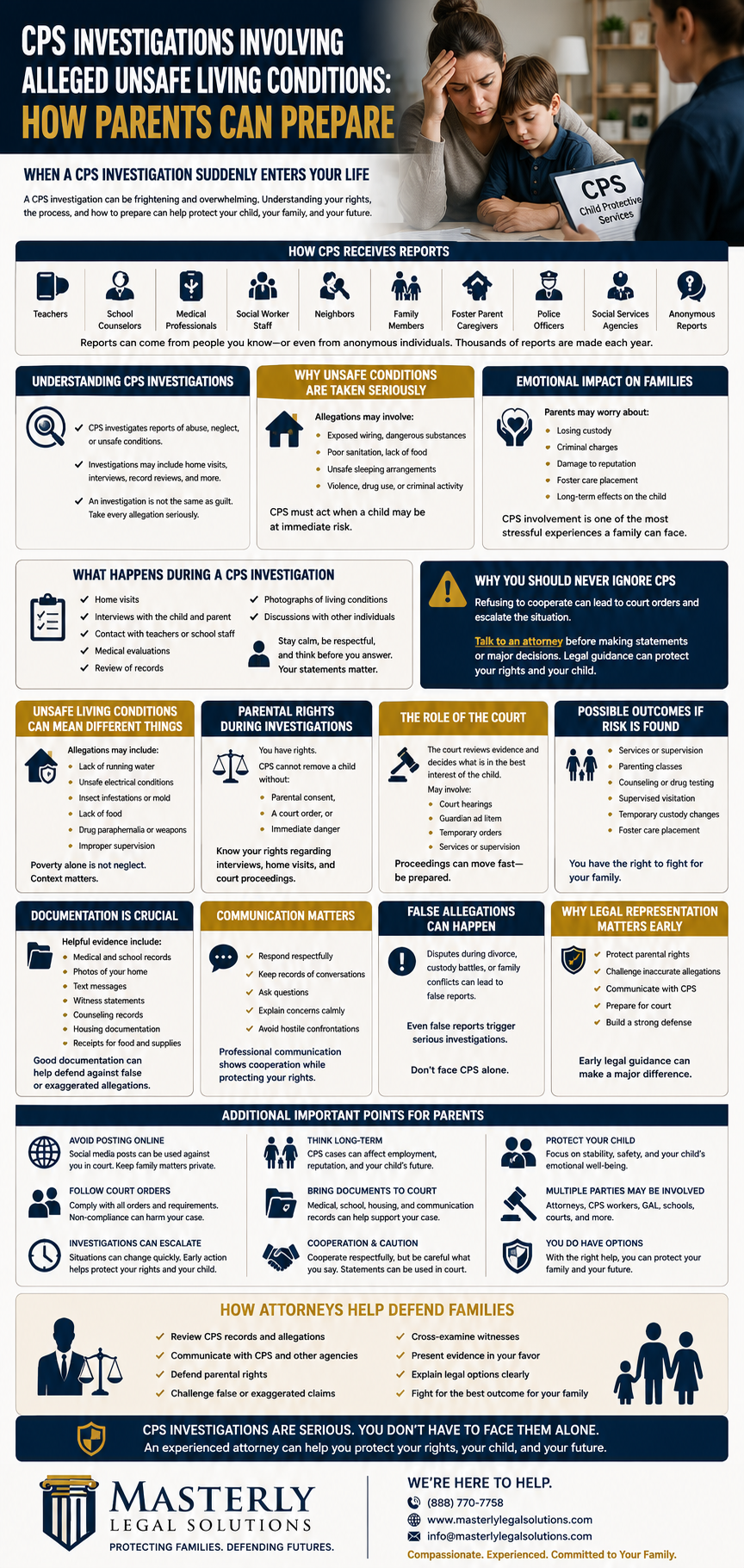
Few experiences are more frightening for a parent than hearing that Child Protective Services is investigating their family. Many parents feel shocked, embarrassed, angry, or completely overwhelmed when a CPS caseworker unexpectedly appears at their home asking questions about alleged unsafe living conditions. Even parents who know they love and care for their child often panic because they do not fully understand the investigation process or what could happen next.
In many situations, a CPS investigation begins after someone files a report involving suspected child abuse, neglect, or concerns about the safety of a child. Sometimes the allegations involve dangerous living conditions, lack of supervision, unsafe housing, or accusations connected to child abuse or neglect. Other times, the report may come from teachers, neighbors, medical professionals, or other individuals who believe a child could be at risk.
At Masterly Legal Solutions, we understand how emotionally difficult CPS cases can become for parents and families. Child Protective Services CPS investigations can affect every part of a person’s life, including parental rights, custody, employment, and family relationships. Parents often feel pressured to answer questions immediately without understanding how their statements could later affect them in court or during the investigation.
Understanding your rights, responsibilities, and legal options early may help you better protect your child, your family, and your future.
Understanding Child Protective Services Investigations
A government organization called Child Protective Services, or CPS, is in charge of looking into allegations of child abuse and neglect. The primary goal of child protective services is to determine whether a child may be living in unsafe conditions or facing harm.
When CPS receives a report involving suspected child abuse or unsafe living conditions, the agency may begin an investigation quickly. Depending on the allegations, CPS workers may visit the family home, interview the parent, speak with the child, contact teachers or school officials, and review records connected to the allegations.
Many parents assume a CPS investigation automatically means they are guilty of abuse or neglect. However, an investigation is not the same as a criminal conviction. In many CPS cases, the allegations are exaggerated, based on misunderstandings, or completely false.
Still, parents should take every investigation seriously because CPS determines whether additional action is necessary to protect the child.
Why Unsafe Living Condition Allegations Are Taken Seriously
Allegations involving unsafe living conditions often receive immediate attention because CPS and protective services agencies are legally required to investigate situations that may threaten a child’s safety or well being.
For example, a report may claim the home contains exposed wiring, dangerous substances, severe sanitation issues, lack of food, or unsafe sleeping arrangements. In some situations, allegations may involve concerns about violence, drug use, or criminal activity occurring near the child.
CPS workers are trained to investigate whether the child is living in an environment that creates immediate danger. If the investigator believes the child faces serious risk, the agency may seek protective custody or request a court order removing the child from the home.
Even when parents believe the allegations are unfair or misleading, they should understand how seriously CPS and the court system view these claims.
How CPS Receives Reports
Many parents are surprised to learn how often reports come from people they know. Child Protective Services CPS investigations may begin after reports from:
- Teachers
- School counselors
- Medical professionals
- Social worker staff
- Neighbors
- Family members
- Foster parent caregivers
- Police officers
- Social services agencies
In some situations, anonymous individuals file reports based on suspicions or misunderstandings. Other reports involve disputes during divorce or custody conflicts where one parent accuses another parent of abuse or neglect.
Regardless of who made the report, CPS receives thousands of calls each year involving child abuse, neglect, and child protection concerns.
The Emotional Impact on Families
A CPS investigation can create enormous stress for both the parent and child. Families often feel embarrassed, isolated, and fearful about what could happen next.
Parents may worry about:
- Losing custody
- Damage to their reputation
- Criminal charges
- School involvement
- Foster care placement
- Court hearings
- Long-term effects on the child
Children may also become confused or frightened during the investigation process, especially if CPS workers interview them at school or discuss sensitive allegations.
Many families describe CPS involvement as one of the most difficult times they have ever faced.
What Happens During a CPS Investigation
Every CPS investigation is different, but many investigations follow a similar process. Once Child Protective Services receives a report, a CPS caseworker may contact the family within hours or days depending on the seriousness of the allegations.
The investigation may involve:
- Home visits
- Interviews with the child
- Interviews with the parent
- Contact with teachers or school staff
- Medical evaluations
- Review of records
- Photographs of living conditions
- Discussions with other individuals involved
The investigator may ask questions about the child’s health, sleeping arrangements, discipline methods, supervision, and home environment.
Parents should remain calm and professional during interactions with CPS workers, even if they strongly disagree with the allegations.
Why Parents Should Never Ignore CPS
Some parents become defensive or refuse to cooperate because they feel angry about the allegations. While frustration is understandable, completely ignoring CPS can sometimes make the situation worse.
If parents refuse communication entirely, CPS may believe the family is hiding dangerous conditions or refusing to protect the child. In certain situations, the agency may seek a court order to continue the investigation.
This does not mean parents should answer every question without understanding their rights. Instead, parents should strongly consider speaking with an experienced attorney before making major decisions during the investigation.
Legal representation may help parents better understand the process and avoid unnecessary mistakes.
Unsafe Living Conditions Can Mean Different Things
One important issue parents should understand is that unsafe living condition allegations vary significantly from case to case. Not every messy home or financial struggle qualifies as neglect or child abuse.
For example, CPS may investigate allegations involving:
- Lack of running water
- Unsafe electrical conditions
- Insect infestations
- Mold exposure
- Dangerous structural damage
- Lack of food
- Improper supervision
- Drug paraphernalia
- Weapons accessible to a child
However, poverty alone does not automatically mean abuse or neglect occurred. Families struggling financially may still provide loving and appropriate care for their child.
An experienced attorney may help explain how CPS and the court evaluate these situations.
How Schools Often Become Involved
Schools frequently play a major role in CPS investigations. Teachers, counselors, coaches, and administrators are often legally required to report suspected child abuse or neglect.
For example, a teacher may notice signs that raise concerns about a child’s hygiene, attendance, clothing, injuries, or emotional behavior. School officials may then contact child protective services to file a report.
Children are also commonly interviewed at school during investigations. Parents are often shocked to learn their child spoke with CPS workers before the parent even knew an investigation existed.
Because school staff are mandatory reporters under the law, many investigations begin through school-related concerns.
The Difference Between Civil and Criminal Investigations
Some parents mistakenly believe a CPS investigation is only a family matter. In reality, allegations involving child abuse or neglect may sometimes lead to a criminal case as well.
For example, serious allegations involving physical abuse, dangerous drugs, or severe neglect may result in police involvement alongside the CPS investigation.
This is why parents should take allegations seriously and carefully consider speaking with a lawyer before making statements that could later affect them in court.
A CPS investigation and a criminal case may occur at the same time, even though they involve different legal standards.
Why Legal Representation Matters Early
Many parents wait too long before seeking legal representation because they hope the investigation will end quickly. Unfortunately, delays can sometimes hurt the parent’s ability to protect their rights.
An experienced attorney may help:
- Explain the investigation process
- Review allegations
- Protect parental rights
- Prepare for court hearings
- Review records
- Communicate with CPS workers
- Challenge inaccurate allegations
- Develop a legal strategy
Early guidance may also help parents avoid statements or actions that unintentionally complicate the case.
At Masterly Legal Solutions, our legal team understands how stressful CPS cases can become for families dealing with allegations involving child abuse and neglect, and our broader legal services and education law practice help support clients facing complex investigations.
The Importance of Documentation
Parents should begin gathering evidence as soon as possible after learning about a CPS investigation.
Helpful evidence may include:
- Medical records
- School records
- Photographs of the home
- Text messages
- Witness statements
- Counseling records
- Housing documentation
- Receipts for food and household supplies
Strong evidence may help defend against inaccurate allegations involving unsafe living conditions or neglect, much like how independent internal investigations rely on clear documentation to assess and resolve serious concerns.
For example, a parent accused of failing to provide food may be able to show grocery receipts, photographs, or testimony proving the child’s needs were being met.
Understanding Parental Rights During Investigations
Parents still have parental rights during a CPS investigation. Many individuals mistakenly believe CPS can automatically remove a child without legal procedures.
In most situations, CPS must either:
- Obtain parental consent
- Receive a court order
- Demonstrate immediate danger requiring emergency action
Parents should understand their rights regarding interviews, home visits, and court proceedings.
However, parents should also avoid making emotional decisions that could worsen the situation. Working with a knowledgeable attorney may help families navigate the process more effectively.
How CPS Workers Evaluate Safety Concerns
CPS workers are trained to investigate whether conditions place the child at risk of harm. During home visits, investigators often examine the environment carefully.
They may evaluate:
- Cleanliness
- Food availability
- Sleeping arrangements
- Utilities
- Physical hazards
- Supervision
- Medication storage
- Access to dangerous items
Parents sometimes feel judged or embarrassed during these visits. However, remaining cooperative and respectful may help reduce unnecessary conflict during the investigation.
What Happens if CPS Determines There Is Risk
If CPS determines the child may face danger, the agency may recommend services, supervision, or additional court involvement.
In more serious situations, CPS may seek:
- Temporary custody changes
- Protective custody
- Foster care placement
- Mandatory parenting classes
- Counseling requirements
- Drug testing
- Supervised visitation
A judge ultimately reviews many of these requests during court proceedings.
Parents should never assume removal is automatic simply because allegations were made.
Foster Care and Temporary Placement Concerns
One of the greatest fears for parents during a CPS investigation is the possibility of foster care placement. If the court believes the child cannot safely remain in the home, temporary placement may occur.
Sometimes placement occurs with relatives instead of foster parent caregivers. In other situations, the child may enter the foster care system temporarily while the investigation continues.
Parents facing possible removal should seek legal assistance immediately to help protect their parental rights and relationship with the child.
Why Communication Matters During the Process
Parents dealing with CPS often feel overwhelmed and emotionally exhausted. However, communication still matters throughout the investigation process, just as it does in workplace and organizational investigations where clear records and responses are critical.
Parents should:
- Respond respectfully
- Keep records of conversations
- Ask questions when confused
- Explain concerns calmly
- Avoid hostile confrontations
For example, if a CPS caseworker requests certain documents, parents should document the request and respond appropriately whenever possible.
Professional communication may help demonstrate cooperation without giving up important rights.
False Allegations and Family Conflict
Unfortunately, false allegations sometimes arise during divorce disputes, custody battles, or family disagreements.
One parent may accuse another parent of abuse or neglect in an attempt to gain leverage during custody disputes. In other cases, neighbors or extended family members file exaggerated reports out of anger or misunderstanding.
Even false allegations can trigger serious investigations by child protective services.
Parents should never assume CPS will automatically recognize inaccurate accusations immediately.
The Role of the Court in CPS Cases
The court plays a major role in many CPS cases, especially when child removal, protective custody, or parental restrictions are requested.
During hearings, the judge may review:
- Evidence presented by CPS
- Testimony from witnesses
- Medical records
- School information
- Investigator findings
- Recommendations from social services
The judge focuses heavily on the best interest and safety of the child.
Parents should understand that court proceedings involving CPS can move quickly, making early legal guidance extremely important.
How a Guardian Ad Litem May Become Involved
In some CPS cases, the court appoints a guardian ad litem to represent the child’s interests during proceedings.
A guardian ad litem may investigate the situation independently and provide recommendations to the judge regarding custody, visitation, and safety concerns.
Parents should understand that multiple individuals may become involved in CPS investigations, including attorneys, social worker representatives, counselors, and school officials.
Child Abuse and Neglect Allegations Require Serious Attention
Allegations involving child abuse and neglect can permanently affect families if not handled properly.
Examples of abuse or neglect allegations may include:
- Physical injuries
- Inadequate supervision
- Unsafe housing
- Lack of medical care
- Emotional abuse
- Educational neglect
Even when allegations are inaccurate, CPS investigations may still create lasting emotional and professional consequences.
Parents should take every allegation seriously while remaining calm and focused on protecting the child and family.
Why Parents Should Avoid Posting Online
Many parents turn to social media during stressful investigations. Unfortunately, online posts can sometimes create additional problems.
Photos, comments, arguments, or emotional statements may later become evidence during court proceedings or investigations.
Parents should avoid discussing the CPS investigation publicly online or attacking CPS workers, teachers, or other individuals involved.
Protecting the family’s interests often requires careful communication throughout the process.
How CPS Cases Affect Families Long-Term
Even after investigations end, families may continue experiencing emotional and financial effects.
For example, parents may struggle with:
- Anxiety
- Reputation damage
- Employment issues
- Custody disputes
- Emotional stress for the child
- Ongoing court requirements
Children may also experience confusion or fear after interactions with protective services agencies.
Strong support systems and experienced estate-planning guidance may help families move forward more effectively after investigations by protecting assets and providing long-term security.
What Parents Should Bring to Court Hearings
Preparation matters during court proceedings involving CPS.
Helpful items may include: many of the same records and documents that appear in essential legal planning for families.
- Medical records
- School documents
- Counseling information
- Housing documentation
- Witness contact information
- Photographs
- Communication records
An attorney may help organize evidence and explain what information is most relevant during hearings.
Being prepared may help parents present themselves more effectively before the judge.
The Importance of Following Court Orders
If the court issues a court order during the CPS case, parents should follow the requirements carefully.
Court orders may involve:
- Counseling
- Parenting classes
- Drug testing
- Supervised visitation
- Housing improvements
- School attendance requirements
Failure to follow court instructions may negatively affect custody decisions and parental rights.
Even when parents disagree with the court, compliance is often important while legal options are being addressed.
Why Experienced Legal Guidance Matters
CPS investigations often involve complicated legal issues, emotional stress, and significant risks to families.
An experienced attorney may help parents:
- Understand their rights
- Defend against false allegations
- Protect parental rights
- Respond strategically
- Challenge inaccurate evidence
- Prepare for court hearings
- Build a stronger defense
At Masterly Legal Solutions, our law firm understands how important these cases are to the families involved, and our broad, client-centered legal services are designed to guide them through complex legal challenges.
Child Protection Investigations Can Escalate Quickly
Many parents underestimate how quickly CPS investigations can escalate. A routine home visit may suddenly lead to emergency hearings, removal requests, or expanded investigations involving multiple agencies.
For example, if an investigator believes the child faces immediate danger, CPS may request emergency protective custody through the court system.
Parents should avoid assuming the situation will simply resolve itself without preparation.
Early action may help families better protect their interests and respond effectively.
Why Cooperation and Caution Both Matter
Parents often struggle to balance cooperation with protecting their legal rights during CPS investigations.
While respectful communication is important, parents should also recognize that statements made during the investigation may later appear in court records or reports.
An attorney may help explain how to cooperate appropriately without unintentionally damaging your case.
Understanding this balance is often critical during CPS investigations involving alleged unsafe living conditions.
Dealing With CPS While Protecting Your Family
Families dealing with CPS investigations often feel emotionally exhausted and uncertain about the future. Parents may fear losing custody, damaging their relationship with the child, or facing public embarrassment.
However, remaining proactive may help reduce long-term harm.
Parents should focus on:
- Maintaining stable housing
- Documenting important information
- Following court instructions
- Communicating respectfully
- Seeking legal assistance early
- Protecting the child’s emotional well being
Strong preparation may help families navigate these difficult situations more effectively.
How Attorneys Help Defend Families
A CPS attorney does more than appear in court. Strong legal representation may help families understand the investigation, gather evidence, and challenge inaccurate allegations.
For example, a lawyer may:
- Review CPS records
- Communicate with protective services
- Defend parental rights
- Cross-examine witnesses
- Present evidence on behalf of the parent
- Explain legal options clearly
At Masterly Legal Solutions, our team is committed to helping families protect their future during difficult CPS cases.
Why Parents Should Not Face CPS Alone
Many parents initially believe they can handle CPS matters without legal assistance. However, CPS investigations often involve complicated procedures, strict timelines, and serious consequences.
Parents facing allegations involving child abuse or neglect should understand how much may be at stake.
Issues involving:
- Custody
- Foster care
- Court hearings
- Child protection findings
- Criminal investigations
- Long-term records
can all affect the family for years to come.
Working with a knowledgeable attorney may help parents better protect themselves and their child throughout the process.
CPS Investigations Can Affect Families Across the Country
Although many CPS investigations follow similar procedures, laws and agency practices can vary depending on the location. For example, families dealing with Child Protective Services matters in Palm Beach may face different court procedures, reporting systems, or local agency policies than families in other states. Regardless of where the investigation occurs, parents should take allegations involving child abuse or neglect seriously and seek guidance from an experienced attorney as early as possible. CPS investigations involving unsafe living conditions, custody concerns, or allegations of abuse can quickly become overwhelming without proper preparation. Understanding your legal rights and responsibilities may help protect both your child and your family during the investigation process.
Investigations Sometimes Involve Vulnerable Adults in the Home
Some CPS investigations expand beyond the child and involve vulnerable adults living in the household. For example, if an elderly grandparent, disabled relative, or dependent adult resides in the home, protective services agencies may also examine whether their safety and well being are affected by the alleged living conditions. In certain cases, social services workers coordinate with other agencies when they believe multiple individuals in the household may require protection or assistance. Families should understand that concerns involving vulnerable adults can complicate the investigation and create additional legal issues related to caregiving responsibilities and household safety. Working with a knowledgeable lawyer may help families better understand how these concerns could affect the overall case.
Why Communication With the CPS Office Matters
Parents often feel intimidated when communicating with the CPS office during an active investigation. However, keeping organized records of phone calls, letters, emails, and requests from Child Protective Services can become extremely important throughout the process. If a CPS caseworker schedules meetings, requests documents, or discusses allegations involving child abuse and neglect, parents should carefully document those interactions whenever possible. Professional communication may help demonstrate cooperation while also protecting the parent’s interests during the investigation. Families should avoid emotional confrontations and instead focus on responding calmly and strategically when dealing with the agency.
Parents Have the Right to Fight for Their Family
A CPS investigation can leave parents feeling powerless, especially when allegations threaten their custody rights or relationship with their child. However, parents still have the right to fight for their family and defend themselves against inaccurate or exaggerated accusations. Gathering evidence, following court instructions, and working closely with an experienced attorney may help parents challenge unfair allegations involving abuse or neglect. Many families feel overwhelmed during the investigation process, but proactive preparation can make a significant difference in protecting parental rights and presenting important facts to the court. Taking the situation seriously while remaining calm and organized may help strengthen a parent’s position moving forward.
Protecting Youth During CPS Investigations
One of the primary goals of child protective services is protecting youth from dangerous situations involving abuse, neglect, or unsafe living conditions. At the same time, investigations must also respect the rights of parents and families throughout the legal process. Children involved in CPS cases may experience confusion, anxiety, or emotional stress, especially when school officials, social workers, or investigators become involved in their daily lives. Parents should focus on supporting the child emotionally while also taking proactive steps to protect the family’s legal interests. Maintaining stability, communication, and proper support systems may help reduce the emotional impact investigations can have on youth during these difficult situations.
Parents Should Demonstrate They Are Taking Responsible Steps
During a CPS investigation involving alleged unsafe living conditions, it is important for parents to show they are taking responsible steps to address any concerns raised by Child Protective Services. Even when allegations are exaggerated or false, demonstrating cooperation, organization, and concern for the child’s safety may help strengthen the parent’s position during the investigation process. For example, parents may improve household conditions, organize important records, attend recommended meetings, or document efforts to provide a safe and stable environment for their child. CPS workers and the court often look at whether the parent appears willing to protect the child and respond appropriately to concerns involving abuse or neglect allegations. Remaining calm, prepared, and proactive may help families better protect their parental rights and future throughout the investigation.
Speak With Masterly Legal Solutions About Your CPS Investigation
If your family is facing a CPS investigation involving alleged unsafe living conditions, accusations of child abuse or neglect, or concerns involving child protective services, you do not have to handle the situation alone. At Masterly Legal Solutions, our legal team understands how frightening and emotionally draining these cases can become for parents trying to protect their child and preserve their parental rights.
Our law firm works with families dealing with CPS cases, custody disputes, court hearings, child protection investigations, and allegations involving abuse or neglect, while also offering trust-based estate planning services to help protect their long-term interests. Whether you are responding to a report, preparing for a hearing, or trying to understand your legal rights during a CPS investigation, we are prepared to provide experienced guidance and fierce advocacy on behalf of your family.
We understand how quickly child protective services CPS investigations can escalate and how important it is to protect both your child and your future. Our team is committed to helping parents defend themselves, gather evidence, challenge unfair allegations, and navigate the legal process with confidence during this difficult time.
Contact Masterly Legal Solutions at (972) 236-5051 for a free consultation. We can answer your questions, explain the investigation process, and help you better understand the legal options available to protect your family and your child’s best interest moving forward.
Disclaimer: This article is provided for informational and educational purposes only and does not constitute legal advice. Reading this article does not create an attorney-client relationship with Masterly Legal Solutions. Every CPS investigation and family situation is different. Individuals dealing with child protective services investigations, allegations of child abuse or neglect, or related court proceedings should consult directly with a qualified attorney regarding their specific circumstances.

Teacher Rights When Assaulted by a Special Needs Student: Safety, Reporting and Investigation Issues


Looking for Legal & Business Solutions? Contact Us Now
Fill in the form or call us to set up a meeting





