

The Medical Directive Mistakes That Put Families in Conflict
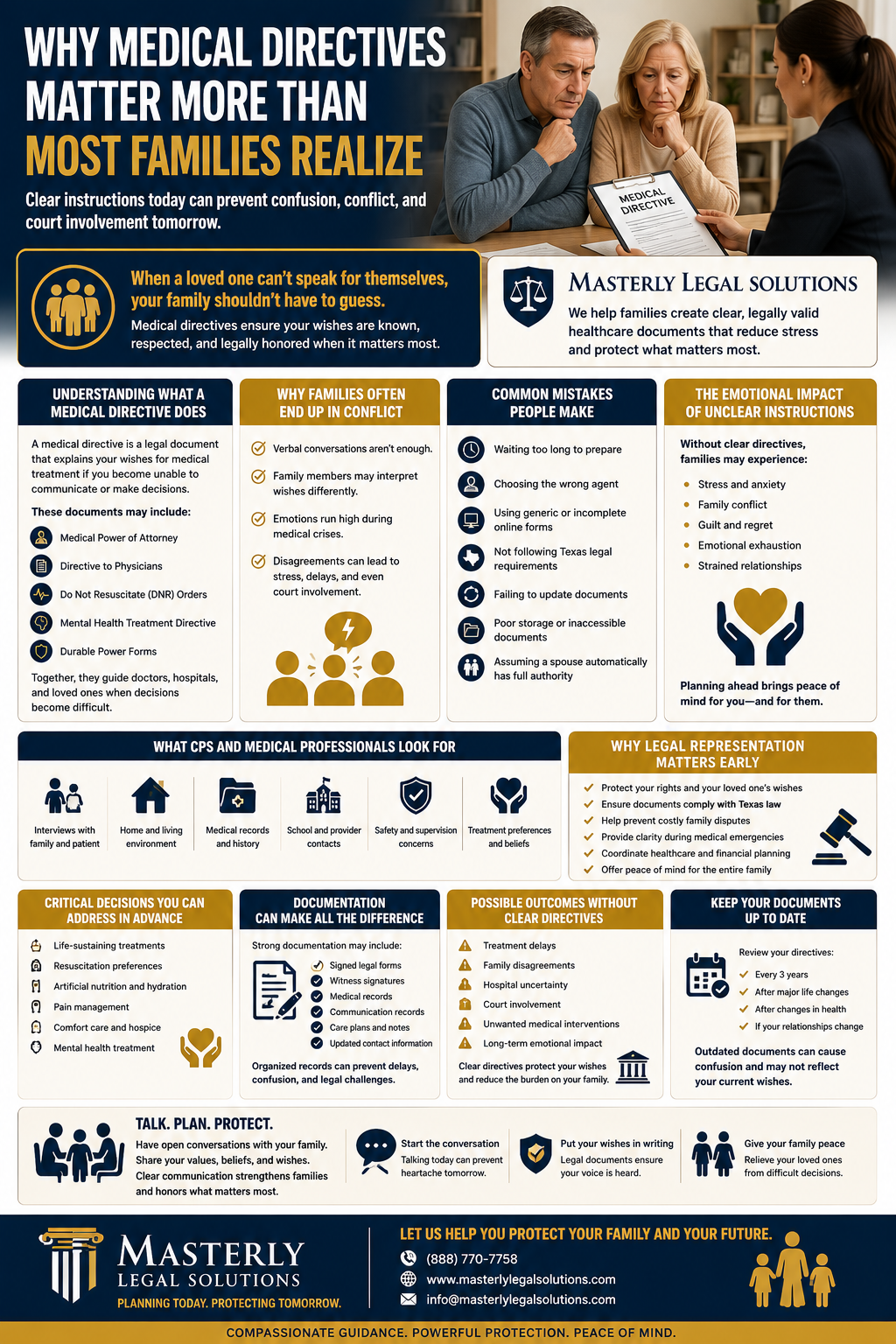
Why Medical Directives Matter More Than Most Families Realize
Most people assume their family will naturally know what to do during a medical emergency or serious illness. Unfortunately, many families discover too late that unclear instructions, missing legal documents, or outdated healthcare forms can create painful disagreements during some of the most emotional moments of life.
When a loved one becomes incapacitated or unable to communicate, confusion about medical decisions can quickly lead to stress, conflict, and even court involvement.
At Masterly Legal Solutions, we regularly speak with families who believed everything was properly prepared, only to discover major issues involving advance directives, medical power of attorney forms, or end of life care instructions. In many situations, family members disagree about treatment decisions because the patient’s wishes were never clearly documented. Some families discover that important paperwork was never signed correctly, while others realize the wrong person was chosen to act as the health care agent.
These situations can become even more difficult when hospitals, physicians, or emergency medical personnel are forced to make quick healthcare decisions without clear legal authority from the patient. Instead of focusing on emotional support and healing, families often find themselves overwhelmed by confusion, stress, and disagreements during critical medical situations.
Understanding the common mistakes people make when creating advance directives and Texas medical power of attorney documents may help families avoid unnecessary conflict and better protect their loved ones in the future.
Understanding What a Medical Directive Does
A medical directive is a legal document that explains a person’s wishes regarding medical treatment if they become unable to communicate or make decisions independently. In Texas, several different forms may work together to address healthcare decisions, medical treatment preferences, and end of life care instructions.
These legal documents often include:
- Medical power of attorney
- Directive to physicians
- Hospital do not resuscitate orders
- Mental health treatment declarations
- Durable power forms related to healthcare authority
Each document serves a different purpose, but together they help guide doctors, hospitals, and family members during difficult medical situations.
Without proper planning, family or surrogates may struggle to determine what the patient actually wanted regarding medical care or life sustaining treatments.
Why Families Often End Up in Conflict
Many conflicts begin because families assume verbal conversations are enough. A person may casually mention certain wishes over the years without ever formally completing the proper forms required under Texas law.
For example, one adult child may believe their parent wanted every possible medical treatment, while another adult child believes the parent wanted comfort-focused care only. Without written instructions or a properly completed directive, disagreements may quickly escalate.
These conflicts become even more stressful when the patient is incapacitated and unable to communicate their wishes directly. Doctors and health care professionals are often placed in difficult positions when family members disagree about treatment decisions or who should act as the decision maker.
In some cases, disputes become serious enough to involve attorneys, hospitals, or the court system.
The Mistake of Waiting Too Long to Prepare
One of the biggest mistakes families make is delaying advance planning until a medical crisis occurs. Many people assume they have plenty of time to complete medical power forms or healthcare directives later in life.
Unfortunately, illness, accidents, or sudden emergencies can happen without warning. Once a person loses the ability to communicate or becomes mentally incapacitated, creating valid legal documents may become impossible.
For example, a patient suffering a severe stroke may suddenly become unable to make medical decisions. If no medical power of attorney exists, family members may disagree about treatment, placement in a nursing home, or end of life care decisions.
Planning early may help families avoid confusion during already emotional situations.
Why Choosing the Wrong Agent Creates Problems
Selecting the wrong health care agent is another common mistake that creates family conflict. A medical power of attorney allows one person to make healthcare decisions on behalf of another person when they become unable to make decisions independently.
Some individuals choose an agent based on family expectations instead of practical realities. However, the chosen agent should be someone capable of remaining calm, communicating with physicians, and respecting the patient’s wishes under pressure.
For example, naming multiple adult children who strongly disagree with one another may lead to ongoing disputes regarding medical treatment or hospital care. In other cases, the chosen person may struggle emotionally and become unable to act effectively during a crisis.
An experienced attorney may help families better understand how to choose the right decision maker when preparing advance directives.
Conflicts Over End of Life Care
End of life care decisions often create some of the most emotional disagreements families experience. When no clear directive exists, family members may struggle to agree about life sustaining treatments, feeding tubes, resuscitation efforts, or comfort care.
One spouse may believe every medical option should continue, while reasonably available adult children believe the patient wanted a natural death without prolonged intervention.
These disagreements can place enormous emotional pressure on everyone involved, including physicians and hospital staff.
Clear written instructions within advance directives may help reduce confusion and ensure the patient’s wishes are respected.
Medical Power of Attorney Misunderstandings
Many people misunderstand what a medical power of attorney actually does. This document only becomes active when the patient is unable to make medical decisions independently.
A medical power does not allow the agent to override the patient’s wishes while the patient still has decision-making ability. The patient remains in control of healthcare decisions until physicians determine otherwise.
Confusion often occurs when family members incorrectly assume the designated agent automatically controls every aspect of medical care.
Understanding the limits and responsibilities of a medical power of attorney may help avoid unnecessary family disputes later.
Why Generic Online Forms Can Cause Problems
Some families attempt to prepare advance directives using incomplete online forms or generic templates without understanding Texas legal requirements.
Unfortunately, improperly prepared forms may create serious issues during medical emergencies. Missing witness signatures, incomplete instructions, or incorrect execution may cause hospitals or health care professionals to question the validity of the document.
For example, some forms may fail to comply with Texas law regarding witness requirements or execution procedures.
Working with an attorney may help ensure advance directives satisfy certain requirements and accurately reflect the individual’s wishes.
The Importance of Proper Witness Signatures
Many healthcare directives require proper witness signatures in order to remain legally valid. Families sometimes overlook these technical details when completing documents quickly.
For example, certain individuals may not legally qualify as witnesses under Texas law. Improper witness signatures may later create challenges regarding the validity of the document.
These issues often arise during emergencies when families are already under stress.
Proper execution of advance directives may help reduce legal complications later.
Why Medical Decisions Become More Complicated During Emergencies
Medical emergencies often require rapid treatment decisions. During these moments, emergency medical personnel, physicians, and hospitals may need immediate direction regarding life sustaining treatments or resuscitation efforts.
If no valid directive or medical power of attorney exists, confusion can delay important healthcare decisions.
For example, a hospital may struggle to determine who has authority to consent to treatment when multiple family members disagree. In some cases, the nearest living relative may attempt to act without understanding the patient’s actual wishes.
Clear legal documents may help medical providers act more confidently and appropriately during emergencies.
Mental Health Treatment Directives Are Often Overlooked
Many people prepare basic healthcare directives while forgetting to address mental health treatment preferences.
Mental health treatment directives may become extremely important if a person later experiences conditions affecting judgment, communication, or decision-making ability.
For example, an individual with severe mental health challenges may want specific instructions regarding medications, facilities, or treatment preferences.
Including mental health treatment instructions within advance planning may help families and healthcare providers better respect the patient’s wishes during difficult situations.
Why Religious and Moral Beliefs Should Be Clearly Stated
Religious and moral beliefs often play a major role in healthcare decisions. Unfortunately, families sometimes assume everyone understands those beliefs without documenting them properly.
For example, disagreements may arise regarding blood transfusions, life sustaining treatments, artificial nutrition, or other medical procedures.
A directive to physicians may include instructions reflecting religious beliefs or moral beliefs related to medical treatment and end of life care.
Clear documentation may help avoid conflict between family members and medical providers later.
The Mistake of Failing to Update Documents
Advance directives should not remain untouched for decades without review. Major life changes may affect who should serve as an agent or what healthcare decisions a person prefers, and reviewing essential legal documents for families before age 40 can be especially important as circumstances change.
For example, divorce, remarriage, illness, relocation, or changing family relationships may require updates to legal documents.
Some people create directives years earlier and forget to revise them even after significant life events. In some situations, outdated forms still list former spouses or individuals no longer involved in the person’s life.
Reviewing documents every three years or after major life changes may help keep instructions accurate and current.
How Hospital Do Not Resuscitate Orders Work
A hospital do not resuscitate order gives physicians and emergency medical personnel instructions regarding resuscitation efforts if the patient stops breathing or loses cardiac function.
Many families confuse these orders with other advance directives. However, hospital do not resuscitate instructions serve a very specific medical purpose.
Without proper documentation, hospitals may perform aggressive interventions even when the patient previously expressed different wishes.
Clear communication between patients, doctors, and family members may help prevent confusion regarding these orders.
Why Families Disagree About Treatment Decisions
Treatment decisions become emotionally difficult when loved ones fear losing a family member. Even when instructions exist, family members sometimes interpret the patient’s wishes differently.
For example, one person may believe continuing aggressive treatment honors the patient’s life, while another believes comfort-focused care better reflects the patient’s wishes.
Physicians and family members often face emotionally exhausting conversations during these moments.
Detailed instructions within advance directives may help reduce uncertainty and conflict regarding treatment decisions.
The Risks of Naming Multiple Decision Makers
Some individuals attempt to avoid family conflict by naming several people equally responsible for healthcare decisions. Unfortunately, this approach may create even more confusion.
If multiple agents disagree about medical treatment, doctors and hospitals may struggle to determine how to proceed.
For example, one child may support continued intervention while another opposes further treatment.
Selecting one clear decision maker while discussing wishes openly with the family may help avoid these disputes.
Why Clear Communication Matters
Even the best legal documents cannot replace honest family conversations. Many conflicts occur because loved ones never discussed healthcare wishes openly before a crisis happened.
Families should discuss:
- End of life preferences
- Life sustaining treatments
- Religious concerns
- Mental health treatment
- Hospital care expectations
- Long-term nursing home care preferences
These conversations may feel uncomfortable, but they often reduce confusion later.
Helping family members understand the reasons behind medical choices may also reduce emotional disagreements.
The Role of Physicians During Medical Crises
Physicians play a critical role during healthcare emergencies and end of life situations. Doctors often rely heavily on advance directives and medical power documents when patients become unable to communicate.
However, physicians also face legal and ethical responsibilities regarding patient care. If directives are unclear or disputed, doctors may hesitate before making major treatment decisions.
This uncertainty can increase emotional stress for both healthcare providers and families.
Clear documentation may help physicians and family members work together more effectively during difficult situations.
When Court Involvement Becomes Necessary
Unfortunately, some family conflicts become so serious that court involvement becomes necessary.
For example, disputes may arise regarding:
- Authority of the agent
- Validity of signatures
- Consent to treatment
- End of life decisions
- Guardianship requests
Court proceedings involving healthcare disputes are often emotionally exhausting and expensive for families.
Proper planning may help reduce the likelihood of future legal battles.
Why Financial Decisions and Healthcare Decisions Should Be Coordinated
Many people mistakenly believe financial decisions and healthcare decisions are completely separate. In reality, both areas often affect one another during serious illness.
For example, long-term medical care, nursing home placement, or specialized treatment may involve significant financial considerations.
A durable power addressing financial matters may work alongside medical power documents to help ensure someone can manage both healthcare and financial responsibilities appropriately, and in some situations parents may also need a power of attorney for their children’s important decisions.
Coordinating these legal documents carefully may help families avoid unnecessary complications later.
The Importance of Proper Consent Procedures
Consent issues frequently create conflict in medical settings. Hospitals and physicians generally require proper legal authority before performing certain procedures or releasing medical information.
If directives are unclear, providers may hesitate regarding treatment decisions or information sharing.
This may become especially stressful when family members disagree about who should act on behalf of the patient.
Clearly executed forms and instructions may help reduce delays involving consent and healthcare decisions.
Why Digital or Electronic Signatures Can Create Confusion
Technology has changed how many legal documents are completed, but digital or electronic signatures sometimes create questions regarding validity.
Families may incorrectly assume electronic signatures automatically satisfy all Texas legal requirements for advance directives.
However, some healthcare forms require specific execution procedures depending on the type of directive involved.
Working with an attorney may help ensure electronic signatures or digital forms comply properly with Texas law.
Medical Directive Mistakes Often Affect Entire Families
Healthcare disputes rarely affect only one individual. Entire families often experience emotional stress, resentment, and confusion when advance planning is incomplete.
For example, adult children may stop speaking to one another after disagreements involving end of life care or medical treatment decisions.
These conflicts may continue long after the medical crisis itself ends.
Thoughtful planning may help protect family relationships while ensuring healthcare wishes are respected.
Why Many Families Delay Discussing End of Life Issues
Many families avoid conversations involving illness, incapacity, or natural death because the topics feel uncomfortable or emotionally painful.
People often assume there will always be more time later to discuss these issues. Unfortunately, emergencies and sudden illness may occur unexpectedly.
Avoiding these conversations may leave loved ones unprepared when important healthcare decisions suddenly arise.
Advance planning is not only about legal protection. It is also about reducing emotional burdens for the people you care about most, whether you are arranging medical directives or deciding to create a legal will online with professional support.
The Mistake of Assuming a Spouse Automatically Controls Everything
Many married couples assume a spouse automatically has complete authority regarding all medical decisions.
While spouses often play important roles under Texas law, hospitals and healthcare providers may still require proper legal documentation in certain situations.
For example, disagreements between a spouse and reasonably available adult children may complicate healthcare decisions when no formal directive exists.
Proper planning may help clarify authority and reduce future disputes.
Why Healthcare Directives Should Be Easily Accessible
Some families carefully prepare advance directives but fail to store them where anyone can actually access them during emergencies.
A medical power of attorney locked in a forgotten safe or hidden filing cabinet may not help physicians during a hospital emergency.
Families should ensure healthcare providers, agents, and loved ones know where important documents are located.
Keeping updated copies available may help avoid delays during medical crises.
The Importance of Following Texas Legal Requirements
Texas has specific laws governing advance directives, medical power forms, and healthcare decision-making authority.
Failure to follow Texas legal requirements may create uncertainty regarding the validity of directives during emergencies.
For example, certain forms may require witness signatures, a person’s signature, or compliance with specific statutory language.
An experienced attorney may help ensure directives comply with Texas law and reflect the individual’s wishes appropriately.
Why Mental Health Planning Matters for Families
Mental health situations may create especially difficult healthcare decisions for families.
For example, individuals experiencing severe mental health crises may become temporarily unable to communicate or make decisions safely.
Mental health treatment directives may provide guidance regarding medications, facilities, physicians, or treatment preferences during those periods.
Proper planning may help families avoid confusion while ensuring the person’s wishes remain respected to the fullest extent possible.
Understanding the Directive to Physicians
A directive to physicians allows individuals to explain their wishes regarding life sustaining treatments if they develop terminal or irreversible conditions.
These forms often address issues involving:
- Artificial nutrition
- Ventilators
- Resuscitation
- Pain management
- Comfort care
Physicians and family members may rely heavily on these instructions when making difficult healthcare decisions.
Clear and thoughtful instructions may reduce uncertainty during emotionally difficult situations.
The Emotional Burden Families Carry Without Clear Instructions
When no clear instructions exist, family members often carry enormous emotional guilt after medical decisions are made.
For example, children may spend years wondering whether they honored their parent’s wishes correctly regarding end of life care.
Disagreements between family or surrogates may also create lasting resentment and emotional damage.
Advance planning may help reduce these emotional burdens while giving loved ones greater confidence during difficult medical situations.
Why Working With an Attorney Can Help Prevent Mistakes
Advance directives involve much more than simply filling out forms online. Families often benefit from legal guidance when preparing healthcare documents involving complex personal, medical, and family considerations, and many choose to work with a Texas estate planning attorney for wills, trusts, and advance directives.
An attorney may help:
- Explain healthcare directives
- Review medical power forms
- Ensure compliance with Texas law
- Address mental health treatment concerns
- Clarify healthcare wishes
- Coordinate financial and healthcare planning
At Masterly Legal Solutions, we help clients create legally sound advance directives designed to reduce confusion and protect families during medical emergencies.
The Importance of Making Health Care Decisions Before a Crisis Happens
One of the greatest gifts a person can give their family is clear guidance before a medical emergency occurs.
Making health care decisions in advance allows loved ones to focus on emotional support instead of legal confusion during stressful situations.
Clear planning may help reduce disagreements regarding treatment, physicians, hospital care, and end of life wishes.
Advance directives are ultimately about preserving dignity, protecting wishes, and helping families navigate difficult healthcare moments with greater peace and clarity.
Why Families Should Not Rely Solely on a Legal Hotline
Many people facing urgent healthcare questions attempt to rely on a legal hotline for quick answers about advance directives, medical power forms, or end of life care decisions. While hotlines may provide general information about advance directives and healthcare planning, they often cannot fully evaluate the unique family dynamics, medical concerns, or legal issues involved in a person’s situation. Every family has different concerns involving physicians, healthcare decisions, mental health treatment, and long-term medical care, which is why personalized guidance from an experienced attorney may become extremely important. Families dealing with complicated medical situations often benefit from legal advice tailored specifically to their wishes, relationships, and healthcare goals rather than relying only on general information. Taking time to properly prepare legal documents may help reduce confusion and conflict during future medical emergencies.
Problems That Arise When One Person Becomes the Sole Decision Maker
Naming one individual as the sole decision maker through a medical power of attorney can sometimes help reduce confusion during medical emergencies, but it may also create tension if family members were never informed about the decision beforehand. For example, reasonably available adult children or a spouse may feel excluded if they disagree with the treatment decisions being made by the chosen agent. In some situations, family conflict becomes worse because loved ones believe the designated person is not acting in accordance with the patient’s wishes or moral beliefs. Clear communication before a medical crisis occurs may help families better understand why a specific individual was selected to make healthcare decisions. Discussing these choices openly may also reduce emotional disputes during already stressful situations involving hospital care or end of life treatment.
Why Working With a Lawyer Can Help Prevent Future Conflict
Advance directives and healthcare planning documents involve important legal and personal decisions that may affect an entire family during a medical emergency. Working with a lawyer may help individuals better understand Texas legal requirements, properly complete forms, and avoid mistakes that could later create confusion or conflict, especially when putting together a comprehensive Frisco estate plan with wills, trusts, and medical directives. An attorney may also explain how different healthcare directives work together, including medical power of attorney forms, directive to physicians documents, and hospital do not resuscitate orders, as part of a broader Houston-focused estate planning and medical power of attorney service. Many people do not realize that even small mistakes involving witness signatures, instructions, or healthcare provisions can create major problems later when physicians and hospitals need immediate guidance, which is why some families appreciate mobile estate planning services that come to their home to carefully review every document. Careful legal planning may help ensure a person’s wishes are respected and properly documented before a medical crisis occurs.
Certain Provisions in Medical Directives Can Create Confusion
Some advance directives contain vague or incomplete provision language that may later create disagreements between family members, physicians, or healthcare providers. For example, instructions involving life sustaining treatments, mental health treatment, or end of life care may be interpreted differently if the wording is unclear. A person may believe they explained their wishes properly, while family members later disagree about what the healthcare directive actually means. This confusion can become especially stressful during emotional hospital situations where quick medical decisions are necessary. Reviewing healthcare documents carefully with an experienced attorney may help ensure important provisions are written clearly and accurately reflect the individual’s intentions.
Healthcare Decisions Should Be Made in Accordance With the Patient’s Wishes
One of the primary goals of advance directives is ensuring healthcare decisions are made in accordance with the patient’s personal wishes, values, and beliefs, just as a comprehensive Dallas estate planning strategy with wills and trusts is designed to honor those wishes in financial and legacy matters. When legal documents are incomplete, outdated, or unclear, family members and health care professionals may struggle to determine what type of medical treatment the person truly wanted. This can create unnecessary emotional stress during already difficult situations involving serious illness, incapacity, or end of life care. Clear instructions regarding medical treatment, moral beliefs, and healthcare preferences may help guide physicians and loved ones during moments when the patient is unable to communicate independently, similar to how customized trust-based estate planning in the Dallas–Fort Worth area can guide families through financial decisions after a person’s passing. Proper planning allows families to focus more on emotional support instead of uncertainty and conflict over medical decisions.
Speak With Masterly Legal Solutions About Advance Directives in Texas
If you have questions about medical directive Texas planning, advance directives, medical power of attorney forms, or healthcare decision-making authority, Masterly Legal Solutions is here to help. Our team understands how emotionally difficult healthcare planning conversations can feel, especially when families are trying to protect loved ones while avoiding future conflict.
We work with individuals and families throughout Texas to prepare advance directives, directive to physicians forms, durable power documents, hospital do not resuscitate instructions, and healthcare planning documents designed to reflect each person’s wishes clearly and legally. Whether you need guidance involving mental health treatment directives, end of life care planning, or choosing the right health care agent, our services are focused on helping families avoid confusion and protect their future.
Our attorneys understand the importance of creating legally sound healthcare documents that comply with Texas law and address the unique needs of every client. We take time to explain your options carefully, answer questions about healthcare decisions, and help ensure your instructions are properly documented before a medical crisis occurs.
Contact Masterly Legal Solutions at (972) 236-5051 for a free consultation. We can provide information about advance directives, medical power planning, healthcare decision-making authority, and other important legal documents designed to protect you and your loved ones during life’s most difficult moments.
Disclaimer: This article is intended for informational and educational purposes only and does not constitute legal advice. Reading this article does not create an attorney-client relationship with Masterly Legal Solutions. Every healthcare and legal situation is different. Individuals seeking guidance regarding advance directives, medical power of attorney forms, healthcare decisions, or Texas legal requirements should consult directly with a qualified attorney regarding their specific circumstances.




Teacher Rights When Assaulted by a Special Needs Student: Safety, Reporting and Investigation Issues



Looking for Legal & Business Solutions? Contact Us Now
Fill in the form or call us to set up a meeting





