
Don’t Wait: Why Early Legal Guidance in CPS Houston Cases Changes Outcomes

April 24, 2026


When a CPS Case Begins, Everything Changes Quickly

The moment a CPS case begins, many parents feel overwhelmed, confused, and unsure of what will happen next. In CPS Houston matters, the process can move faster than expected, often leaving families struggling to respond in time. When Child Protective Services becomes involved, it is not just a routine check—it can directly affect your child, your parental rights, and your entire family life. For many families, working with a Texas-based law firm offering a broad range of legal services provides additional support beyond the CPS case itself.


At Masterly Legal Solutions, we have seen how early decisions can shape the direction of a CPS investigation. The first steps you take can determine whether your case resolves quickly or becomes a long and difficult legal battle. Acting early with the right legal guidance is not just helpful—it can be the difference between keeping your family together and facing serious consequences.


Understanding the Role of Child Protective Services

Child Protective Services (CPS) is part of the Texas Department responsible for investigating reports of abuse or neglect. Their mission is to protect children, but their involvement can feel intimidating for any family. Once CPS receives a report, they begin investigating reports to determine whether a child may be at risk.

These CPS investigations often involve interviews, home visits, and communication with other relevant individuals. While the goal is to protect children, the process can quickly escalate if concerns are not addressed properly.


How CPS Investigations Begin in Houston

In Houston, CPS investigations typically start with a report from mandatory reporters such as teachers, doctors, or law enforcement. Once the report is received, a CPS caseworker is assigned to begin the investigation process.


The caseworker may visit your home, speak with your child, and gather information about your family. This stage can feel intrusive, but it is important to understand that everything said and done can impact your CPS case.


The First Contact With a CPS Caseworker

The first interaction with a CPS caseworker is critical. Many parents feel afraid or unsure of how to respond, which can lead to mistakes that affect the outcome.

A caseworker may ask questions about your home, your child’s safety, and your daily routine. While cooperation is important, it is equally important to understand your rights and avoid providing unnecessary information without legal guidance.


Why Early Legal Guidance Matters

Seeking legal help early in a CPS investigation can significantly change the outcome. An experienced CPS attorney understands the CPS system and, much like an education lawyer providing expert legal support for teachers and schools, can guide you through each step with focused knowledge of the rules and procedures that apply to your case.


Early legal representation helps ensure that your rights are protected and that you do not unintentionally harm your case. It also allows your attorney to begin building a defense strategy before the situation escalates.


The Risk of Waiting Too Long

Waiting to seek legal help can create serious risks. CPS investigations move quickly, and decisions may be made before you fully understand what is happening.

Without early legal guidance, you may agree to terms that negatively affect your parental rights or your child custody situation. Acting quickly allows you to take control of the process rather than reacting to it.


Understanding the CPS Investigation Process

The CPS investigation process involves several steps, including interviews, home visits, and document reviews. Caseworkers assess whether there is evidence of abuse or neglect and determine the level of risk to the child.


In some cases, CPS may develop a safety plan or recommend services. In more serious situations, they may seek a court order or consider child removal.


What Happens During CPS Investigations

CPS investigations often include:

  • Interviews with parents, the child, and other relevant individuals
  • Home inspections to evaluate the child’s living conditions
  • Requests for records, such as medical or school documents
  • Collaboration with law enforcement or other agencies


Each step is part of the investigation process and can influence the outcome of your CPS case.


The Impact on Your Family Life

A CPS case can have a major impact on your family life. Parents may feel powerless as decisions are made about their child’s safety and living arrangements.

Even if the case does not result in removal, the stress and uncertainty can affect relationships, work, and overall well-being. Early legal guidance helps reduce this uncertainty by providing clarity and direction.


When CPS Considers Child Removal

In severe cases, CPS may determine that a child is in immediate danger and pursue child removal. This can lead to temporary placement in foster care or with another caregiver.


Child removal is one of the most serious outcomes of a CPS investigation. It can happen quickly, often before parents have time to respond effectively without legal help.


Understanding Safety Plans

A CPS safety plan is often introduced as an alternative to removal. This plan may require parents to follow specific conditions to ensure the child’s safety.

While a safety plan may seem like a reasonable solution, it can have long-term consequences. It is important to have an attorney review any agreement before signing.
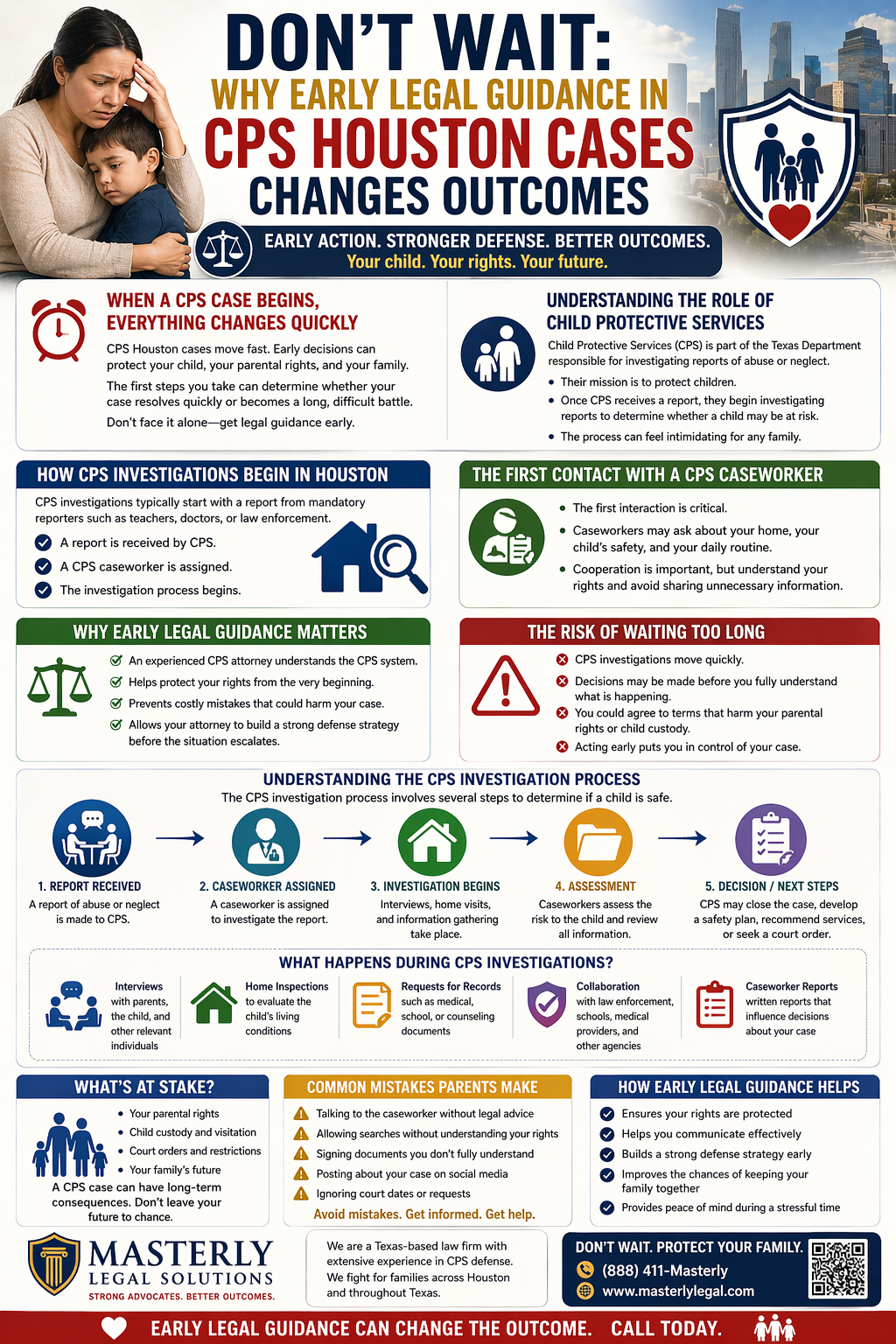
Don’t Wait: Why Early Legal Guidance in CPS Houston Cases Changes Outcomes.” The design explains how CPS cases begin and emphasizes the importance of early action to protect parental rights and family stability. Sections outline the role of Child Protective Services, how CPS investigations start in Houston, and what happens during the first contact with a caseworker. Additional panels highlight why early legal guidance matters, the risks of waiting too long, and the steps involved in a CPS investigation process—from report and caseworker assignment to assessment and final decisions. The infographic also covers common mistakes parents make, what is at stake (including custody and parental rights), and how legal support can improve outcomes. The footer promotes Masterly Legal Solutions and encourages families to seek legal help immediately to protect their future.


The Role of Family Based Safety Services

Family based safety services may be offered as part of the CPS process. These services are designed to help families address concerns without removing the child.

While these programs can be beneficial, they also involve ongoing monitoring. Understanding your rights and obligations is essential before agreeing to participate.


How CPS Caseworkers Influence Outcomes

CPS caseworkers play a significant role in your case. Their reports and recommendations can influence decisions made by the court and the judge.

This is why it is important to approach every interaction carefully. What you say and how you respond can shape how the caseworker views your family.


The Importance of Building a Defense Strategy

A strong defense strategy is essential in CPS defense cases. Your attorney can help gather evidence, prepare responses, and present your case effectively.

Building this strategy early allows you to address concerns before they escalate. It also helps ensure that your side of the story is clearly communicated.


Protecting Your Parental Rights

Parental rights are at the center of every CPS case. These rights can be affected by decisions made during the investigation and court proceedings.

In extreme situations, CPS may seek termination of parental rights. This is a permanent outcome that can have long lasting consequences for your family.


The Role of the Court in CPS Cases

CPS cases often involve the court, especially when decisions about custody or removal are required. A judge reviews the evidence and determines what is in the child’s best interests.


In Harris County family courts, these decisions can happen quickly. Having an attorney present evidence and advocate on your behalf is critical, and understanding how to contact Masterly Legal Solutions’ offices across Texas ensures you can reach help when you need it.


Navigating Harris County Family Courts

Harris County family courts handle a wide range of CPS issues. These courts follow specific procedures and timelines that must be carefully managed.

Understanding how the court operates can help you prepare for hearings and avoid mistakes. An experienced CPS attorney can guide you through this process.


The Role of Evidence in CPS Defense

Evidence plays a crucial role in CPS defense. This may include documents, witness statements, and expert opinions.

Your attorney can help you gather and present evidence effectively. This strengthens your case and supports your efforts to protect your family’s future.


Addressing Allegations of Abuse or Neglect

Allegations of abuse or neglect are taken very seriously by CPS. Even if the claims are unfounded, they can still impact your case.

Responding to these allegations with a clear and strategic approach is essential. Legal guidance ensures that your response is both accurate and effective.


How CPS Cases Affect Child Custody

CPS cases can directly impact child custody arrangements. Decisions made during the investigation can influence long-term custody outcomes.

This is especially important for parents involved in family law matters. For some families, proactive planning may also include tools like a power of attorney for your children to address medical or other decisions if you become unavailable. Protecting your custody rights requires a proactive approach from the start.


The Emotional Impact on Parents and Children

CPS investigations can be emotionally challenging for both parents and children. Families often feel afraid, uncertain, and under pressure.

These feelings are normal, but they can make it difficult to think clearly. Having an attorney provides support and helps you focus on the steps needed to protect your family.


Common Mistakes Parents Make Early On

Many parents make critical mistakes during the early stages of a CPS case. These mistakes can include:

  • Speaking without understanding their rights
  • Agreeing to conditions without legal review
  • Failing to document interactions with CPS
  • Ignoring the importance of early legal help


Avoiding these mistakes can significantly improve your chances of achieving the best outcome.


The Value of an Experienced CPS Attorney

Working with an experienced CPS attorney provides a significant advantage. They understand the CPS process, the law, and how to navigate complex situations.

An attorney can also communicate with CPS on your behalf, reducing stress and ensuring that your rights are protected throughout the investigation.


How Early Action Leads to Better Outcomes

Taking action early allows you to shape the direction of your CPS case. It gives your attorney time to build a defense strategy and address concerns before they escalate.

Early action also demonstrates to CPS and the court that you are committed to protecting your child and resolving the situation responsibly.


Why Families in Houston Need Strong Representation

Families in Houston face unique challenges when dealing with CPS. The size of the city and the volume of cases can make the process more complex, especially when issues overlap with school or educator concerns that may also call for legal support for educators facing investigations.


Having strong legal representation ensures that your case receives the attention it deserves. It also helps you navigate the system more effectively, much like organizations benefit from outside counsel for internal investigations and compliance issues.


Protecting Your Family’s Future

A CPS case is not just about the present—it can affect your family’s future for years to come. Decisions made today can influence your child’s well-being and your parental rights, including how you structure estate planning in Houston to protect your family and assets.


Taking the right steps early can help protect your family and avoid unnecessary complications.


Contact Masterly Legal Solutions for CPS Houston Cases

If you are facing a CPS Houston situation, do not wait to get the help you need. At Masterly Legal Solutions, we provide experienced CPS defense and personalized legal guidance to protect your rights and your family, backed by our broader experience in education law, estate planning, business, and employment matters.

We understand how overwhelming CPS investigations can be, and we are here to help you navigate every step. Our firm also assists professionals in other states, such as North Carolina educators facing misconduct investigations and license risks.


Contact us at (972) 236-5051 for a confidential consultation so we can answer your questions and help you build the strongest possible defense for your case.


Disclaimer: This article is for educational purposes only and does not constitute legal advice. For advice specific to your situation, please contact Masterly Legal Solutions directly.


(972) 236-5051
Atlanta estate planning attorney
June 8, 2026
Atlanta estate planning attorney helping families create estate plans, trusts, wills, and probate solutions. Contact our law firm for experienced guidance today.
Charlotte child protection services
June 8, 2026
Learn how Child Protective Services addresses child abuse and neglect, CPS reporting duties, and legally mandated responsibilities to protect children and families.
June 8, 2026
Protect your parental rights with an experienced CPS attorney. Strong defense for CPS investigations, child welfare cases, and juvenile dependency matters.
Dallas retaliation lawyer.
June 8, 2026
Dallas retaliation lawyer providing legal services including employment law. Fight workplace discrimination, employer misconduct, and retaliation cases in TX.
Retaliation lawyer consulting employee
June 8, 2026
Protect your rights with a workplace retaliation lawyer. Our employment law firm offers a free consultation for retaliation, discrimination, and employer disputes.
HR consulting firm helping businesses with workforce management.
June 8, 2026
Need an HR consulting firm? Our human resources consultants provide HR compliance, employee training, risk management, recruiting support, and workforce solutions.
CPS defense attorneys protecting parents during child welfare investigations..
June 8, 2026
Need a CPS defense attorney? Our CPS attorneys help parents in Texas with CPS investigations, custody disputes, parental rights, DCFS cases, and court hearings.
June 8, 2026
When a CPS Investigation Suddenly Changes Everything Few events are more stressful for a parent than hearing that Child Protective Services wants to speak with them. For many families, the phone call comes without warning. One day life feels normal, and the next day there are questions about the safety of a child, interviews being scheduled, and concerns about what might happen next. Most parents immediately begin wondering what evidence CPS is gathering and how decisions will be made. Unfortunately, many families enter CPS investigations without understanding the types of information investigators rely upon. This lack of knowledge can create anxiety, confusion, and mistakes that may affect the outcome of the case. At Masterly Legal Solutions , we regularly help families navigate complex CPS investigations throughout Texas. Understanding the evidence commonly used during an investigation can help parents make informed decisions, protect their rights, and better prepare for what lies ahead. Understanding the Role of Child Protective Services Child Protective Services is a division of the Texas Department responsible for investigating reports involving child abuse or neglect. The agency's primary mission is protecting children from serious harm while also attempting to preserve families whenever possible. When Child Protective Services receives allegations involving abuse or neglect, the agency must determine whether intervention is necessary. Depending on the circumstances, the agency may offer services, monitor the family, seek court involvement, or close the case without further action. The focus of every investigation is determining whether a child is safe and whether any ongoing risks exist within the household. Why Evidence Matters During CPS Investigations Many parents assume that CPS investigations are based solely on accusations. In reality, investigators typically gather information from multiple sources before reaching conclusions. Evidence allows CPS to evaluate allegations, assess risk factors, and determine whether additional action is necessary. The strength and reliability of that evidence often influence the direction of a CPS case. Understanding what information investigators collect can help parents recognize the importance of documentation, preparation, and obtaining legal representation when necessary. How CPS Investigations Usually Begin Most CPS investigations start when someone reports suspected abuse or neglect. Reports may come from teachers, medical professionals, neighbors, family members, counselors, law enforcement officers, or other individuals who believe a child may be at risk. Once a report is received, CPS evaluates the allegations and determines whether an investigation is warranted. If the allegations meet statutory requirements, a CPS investigator may be assigned to begin investigating allegations involving the child and family. The severity of the allegations often influences how quickly CPS responds and the level of scrutiny involved. The Initial Risk Assessment One of the first steps in many CPS investigations involves a risk assessment. During this stage, CPS attempts to determine whether a child faces an immediate risk of harm. Investigators evaluate available information to identify safety concerns and assess the likelihood that future abuse could occur. This assessment helps determine whether emergency action is necessary. If CPS believes the child's safety may be threatened, the agency may take additional steps to protect the child while the investigation continues. Interviews With the Child Perhaps the most important evidence gathered during many child protective investigations comes directly from the child. Investigators often conduct interviews designed to obtain information regarding the reported incident and the child's living environment. The child's statements can significantly influence how a CPS case develops. Investigators may ask questions about daily routines, discipline methods, household relationships, and any incidents involving alleged abuse. The age of the child, communication abilities, and consistency of statements can all affect how investigators interpret the information provided. Statements From Family Members Family members are another critical source of evidence during CPS investigations. Parents, grandparents, siblings, and other individuals living in the home may be interviewed. Investigators often compare statements from different family members to identify inconsistencies or corroborating details. These interviews may provide insight into household dynamics, parenting practices, and the overall well being of the child. Because statements can become important evidence, families should carefully consider seeking legal counsel before participating in extensive interviews. The Child's Home Environment The condition of a child's home frequently plays a significant role in CPS investigations. Investigators may request access to observe the living environment and evaluate whether safety concerns exist. Factors often considered include: Cleanliness of the residence. Availability of food. Sleeping arrangements. Utilities and basic services. Physical hazards. Supervision practices. The child's living conditions may influence whether CPS believes neglect occurred or whether intervention is necessary to protect the child. Physical Evidence Collected During Investigations Physical evidence can be extremely important when allegations involve child abuse or neglect. Depending on the circumstances, investigators may review photographs, medical records, damaged property, or other tangible evidence. For example, photographs documenting injuries may be compared with witness accounts and medical evaluations. Physical evidence often helps investigators determine whether reported events are consistent with available facts. When physical evidence exists, it frequently becomes a significant factor in the final determination. Medical Records and Healthcare Evidence Medical records are among the most influential forms of evidence used during CPS investigations. Physicians, hospitals, therapists, and other healthcare providers may possess information relevant to the allegations. Medical professionals often document injuries, behavioral concerns, developmental issues, and treatment histories. These records may help investigators evaluate whether abuse or neglect occurred. When allegations involve serious injuries, medical evidence frequently becomes one of the most important components of the investigation. School Records and Educational Information Schools are often valuable sources of information during child protective services CPS investigations. Attendance records, disciplinary reports, counselor notes, and academic performance may provide insight into a child's circumstances. Teachers and school personnel may also provide observations regarding behavior changes, emotional concerns, or indicators of possible abuse or neglect, and in some situations may themselves need legal support for school investigations and TEA license issues . Because children spend significant time in educational settings, school-related evidence can play an important role in helping investigators assess overall safety. Witness Statements and Independent Observations Witness statements are commonly used to support or challenge allegations made during a CPS investigation. Witnesses may include neighbors, relatives, teachers, childcare providers, medical professionals, or other individuals familiar with the family. Independent observations often carry significant weight because the individuals providing information may not have a direct personal interest in the outcome of the case. Investigators frequently compare witness statements against other evidence to determine whether allegations appear credible and supported by available facts. Social Services Records and Prior Agency Involvement Social services records can provide important context regarding a family's history. Prior involvement with protective services, family services, or other agencies may be reviewed during the investigation. Previous reports do not automatically establish wrongdoing. However, investigators may consider patterns, recurring concerns, and prior interventions when evaluating current allegations. Understanding how these records are used is important because historical information sometimes influences the direction of a CPS case. Domestic Violence as Evidence in CPS Cases Domestic violence allegations often receive significant attention during CPS investigations. Even when a child is not the direct victim, exposure to violence within the home may create safety concerns. Investigators frequently examine police reports, protective orders, witness accounts, and other evidence related to domestic violence incidents. The presence of domestic violence may affect how CPS evaluates a child's safety and whether protective measures are necessary. Why Parents Should Take Every CPS Case Seriously Some parents assume that cooperating fully will automatically result in a favorable outcome. While cooperation is often important, parents should recognize that every statement, document, and interaction may become part of the evidence reviewed during the investigation. A CPS case can affect parental rights, child custody arrangements, and even future court proceedings. Understanding the evidence being gathered is an important step toward protecting both your family and your legal interests. Early guidance from family law attorneys can help families navigate the investigation process while avoiding mistakes that may complicate the case later. Safety Plans and Why CPS Uses Them One of the most common tools used during CPS investigations is a safety plan. A safety plan is often created when CPS believes there are concerns that need to be addressed while the investigation remains open. These plans may include restrictions on who can be around the child, requirements for supervision, or agreements regarding living arrangements. Many parents mistakenly believe signing a safety plan is a simple formality. In reality, the terms of a safety plan can significantly affect a family's life and may influence future decisions made by Child Protective Services. Before agreeing to any plan, parents should fully understand their rights and obligations. A safety plan may be presented as voluntary, but it can still have important consequences. Understanding how the plan fits into the larger CPS process is critical. Interviews With the Alleged Victim When a report involves an alleged victim, investigators generally devote substantial attention to obtaining detailed information from that child. The child's statements often become one of the most heavily relied upon pieces of evidence in a CPS case. Investigators may conduct interviews at school, at a child advocacy center, or in another setting designed to make the child comfortable. Questions often focus on family relationships, discipline methods, daily routines, and the specific allegations being investigated. The consistency of statements provided by the alleged victim may significantly influence how CPS evaluates the allegations. Interviews With the Alleged Perpetrator The alleged perpetrator is also frequently interviewed during the investigation. These interviews allow investigators to hear the accused individual's explanation and gather additional information regarding the allegations. Many parents underestimate the importance of these conversations. Statements made during interviews can become evidence that is reviewed throughout the investigation and may later be referenced in court proceedings. Because of the potential consequences, families often benefit from seeking legal representation before participating in extensive interviews with investigators. Criminal History Reviews A person's criminal history is another form of evidence commonly reviewed during CPS investigations. Investigators may examine past arrests, convictions, protective orders, or other records that could relate to child safety concerns. A criminal history does not automatically mean a parent is unfit. However, CPS may consider whether prior conduct creates risk factors affecting the child's safety. The nature of the offense, the amount of time that has passed, and evidence of rehabilitation often play important roles in how these records are evaluated. When CPS Reviews Prior Neglect Reports Investigators frequently review previous neglect reports involving the family. While prior reports do not prove that abuse or neglect occurred, they may provide context regarding recurring concerns. Patterns can be important during child protective investigations. Multiple reports involving similar allegations may receive closer scrutiny than an isolated allegation with no prior history. Parents should remember that even reports that were previously closed can sometimes be reviewed as part of a new investigation. Family Assessments and Household Evaluations Many CPS investigations include a family assessment. This process allows investigators to evaluate the overall functioning of the household and identify strengths as well as concerns. A family assessment may examine: Parenting practices. Household relationships. Financial stability. Child supervision. Emotional well being. Access to support systems. The goal is not simply to investigate allegations but also to understand whether the family can safely meet the child's basic needs moving forward, which may include long-term planning such as putting essential legal documents in place for the family . Evaluating the Child's Basic Needs Investigators carefully examine whether a child's basic needs are being met. This evaluation extends beyond food and shelter. Factors often considered include access to healthcare, educational support, supervision, emotional care, and a stable living environment. CPS wants to determine whether the child receives appropriate care and whether additional support may be necessary. When concerns arise regarding unmet needs, investigators may recommend services designed to improve family stability. The Role of Community Resources and Family Services One objective of Child Protective Services is to support families whenever possible. Rather than immediately seeking removal, investigators often evaluate whether community resources or family services can address concerns. Services may include counseling, substance abuse treatment, parenting education, housing assistance, or other programs designed to improve household stability. In many cases, connecting families with appropriate resources helps address safety concerns without requiring more significant intervention, and some families may also benefit from proactive trust-based estate planning services that support long-term stability for children. Parenting Classes and Other Recommended Services Parenting classes are among the most frequently recommended services provided during CPS investigations. These programs are often intended to help parents strengthen skills and improve family functioning. Participation in parenting classes does not necessarily mean CPS has determined that abuse or neglect occurred. Instead, investigators may view these programs as preventive measures designed to reduce future abuse concerns, similar to how establishing powers of attorney and other protections for children can serve as proactive safeguards. Parents should understand that participation may still become part of the evidence considered throughout the case. Voluntary Services and Their Impact CPS sometimes offers voluntary services to families during the investigation process. These services may be intended to address concerns identified through interviews, assessments, or evidence gathered during the investigation stage. Although participation is described as voluntary, parents should carefully consider how accepting or declining services may affect the case. Every decision can influence how investigators assess risk and safety. Obtaining legal counsel before agreeing to extensive services may help families understand potential implications. Service Plans and Compliance Expectations A service plan is often created when CPS believes specific actions are necessary to address concerns. These plans may require counseling, evaluations, treatment programs, parenting classes, or other activities. Compliance with a service plan may affect how CPS views a family's progress. Failure to complete required services can sometimes become an issue during court hearings or other proceedings. Because service plans can affect parental rights, families should fully understand the expectations involved before agreeing to any requirements. How CPS Evaluates Child Custody Concerns Child custody issues frequently arise during CPS investigations. If investigators believe a child faces substantial risks, they may evaluate whether custody arrangements need to be modified. Evidence reviewed during this process often includes household conditions, parenting history, witness accounts, and risk assessments. The primary focus remains protecting the child's safety. Parents involved in custody disputes should understand that CPS findings may influence future family law proceedings, including related issues such as estate planning and protecting family assets through wills and trusts . Temporary Custody and Emergency Interventions In some situations, CPS may seek temporary custody of a child. This generally occurs when investigators believe the child faces immediate risk or serious harm if left in the current environment. Emergency removals are among the most serious actions available to Child Protective Services. These decisions often involve judicial oversight and may require a court order authorizing intervention. The evidence supporting removal is usually scrutinized carefully because of the significant impact on both the child and family. Foster Care Placement Decisions When a child is removed from the home, foster care placement may become necessary. CPS evaluates available options while attempting to identify environments that can keep the child safe. Investigators may consider relatives, licensed foster homes, or other approved placements. Placement decisions are influenced by the child's needs, safety concerns, and available resources. Whenever possible, CPS generally seeks placements that maintain family connections while addressing safety risks. Ongoing Criminal Investigations and CPS Cases Some CPS investigations occur alongside an ongoing criminal investigation. Allegations involving physical abuse, sexual abuse, severe neglect, or other serious conduct may attract the attention of law enforcement. When a criminal investigation is active, information may be shared between agencies. Statements made during CPS interviews can sometimes have implications beyond the protective services matter. Families facing both CPS and criminal concerns should seek experienced attorney guidance as early as possible. The Relationship Between Criminal Charges and CPS Findings Criminal charges are not required for CPS to take action. Likewise, the absence of criminal charges does not automatically result in the closure of a CPS case. The standards used in criminal cases differ from those used during CPS investigations. As a result, CPS may continue evaluating allegations even when prosecutors decline to pursue criminal charges. Understanding this distinction is important for families attempting to navigate multiple legal processes simultaneously. Understanding the CPS Investigation Timeline Many parents ask about the CPS investigation timeline immediately after learning a report has been made. While every case is unique, investigations typically involve several stages including evidence gathering, interviews, assessments, and review.  The length of an investigation depends upon factors such as the complexity of allegations, availability of witnesses, and the amount of evidence that must be reviewed. Families should understand that delays do not necessarily indicate a particular outcome. Thorough investigations often require time to complete properly.

Looking for Legal & Business Solutions? Contact Us Now

Fill in the form or call us to set up a meeting

(972) 236-5051
A black and white drawing of a straight line on a white background.