

The Moment a Teacher Receives a TEA Notice: What Should Happen Next
The First Reaction Can Shape Everything
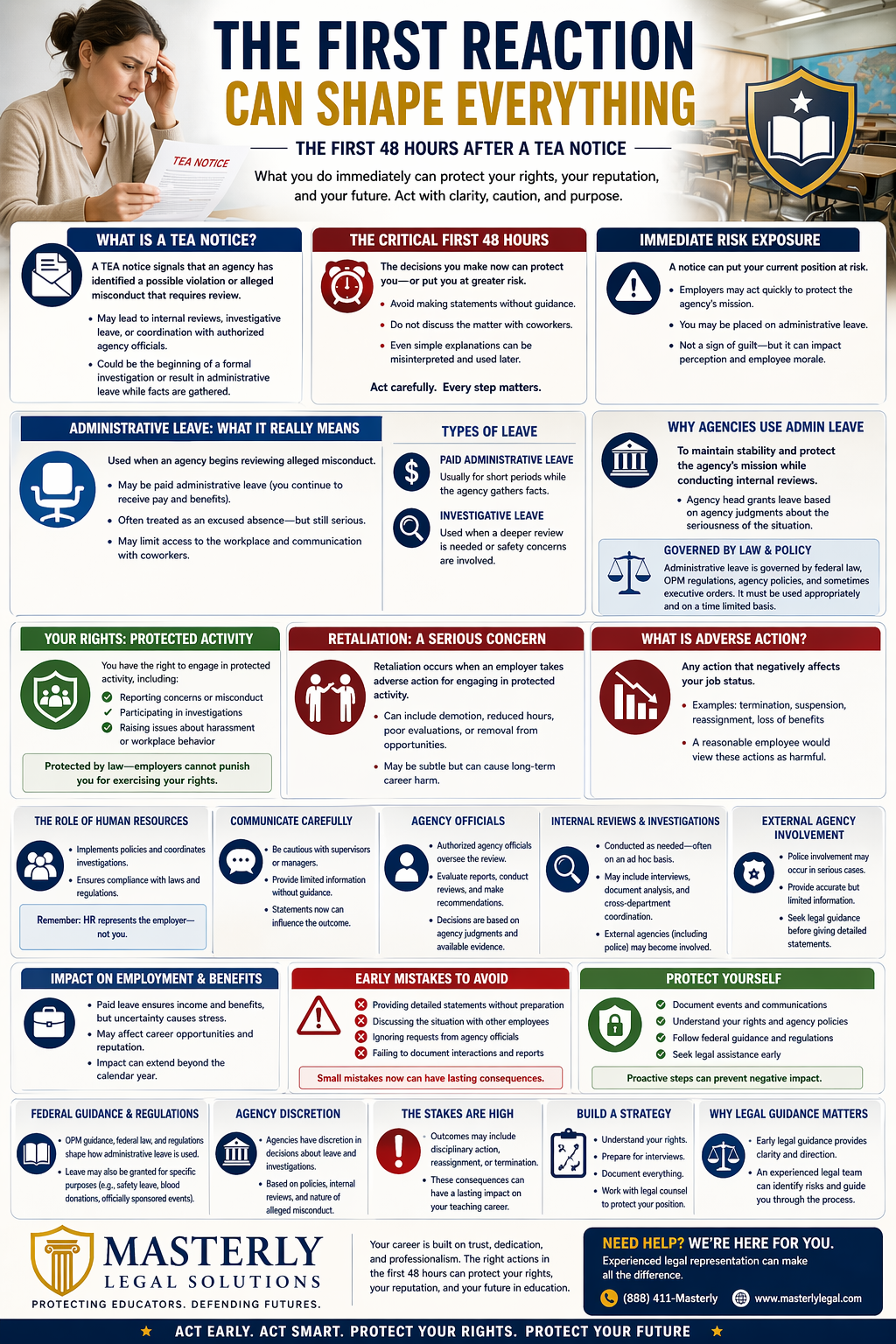
The moment a teacher receives a TEA notice, everything can feel uncertain and overwhelming. Questions about employment, reputation, and future opportunities often surface immediately. Many educators are unsure whether the situation will involve administrative leave, a formal investigation, or possible disciplinary action. What happens in the first 48 hours can significantly influence the direction of the case.
At Masterly Legal Solutions, we understand how quickly these situations escalate. Teachers are not just workers; they are professionals whose careers depend on trust, credibility, and compliance with law and regulations. Acting with clarity and purpose during this critical window is essential to protect your rights and your future.
Understanding What a TEA Notice Means
A TEA notice is more than just a warning. It signals that an agency has identified a possible violation or alleged misconduct that requires review. This can involve internal reviews, investigative leave, or coordination with authorized agency officials.
The agency determines the scope of the issue based on the facts presented. In some cases, the notice is the beginning of a formal investigation. In others, it may lead to administrative leave while additional information is gathered.
The Critical First 48 Hours
The first 48 hours after receiving a TEA notice are often the most important. This is the period where decisions are made that can either protect or expose an employee to greater risk.
During this time, teachers should avoid making statements without guidance, especially to supervisors, human resources, or agency officials. Even a simple explanation can be misinterpreted or used later in the process. A careful and informed approach is necessary to prevent adverse action.
Immediate Risk Exposure
Receiving a notice can place an employee’s current position at risk. Employers may respond quickly to protect the agency’s mission, sometimes placing employees on administrative leave.
This response is not always a sign of guilt, but it can still have a negative impact on employee morale and overall employee morale within the workplace. The perception created during this stage can influence how other employees and managers respond moving forward.
Administrative Leave: What It Really Means
Administrative leave is commonly used when an agency begins reviewing alleged misconduct. This may include paid administrative leave, where employees continue to receive pay and benefits during the investigation.
Administrative leave is often treated as an excused absence, but it is still a serious step. It may limit access to the workplace, restrict communication with coworkers, and create uncertainty about future employment.
Paid Administrative Leave vs. Investigative Leave
There is an important distinction between paid administrative leave and investigative leave. While both remove an employee from the workplace, their purpose can differ.
Paid administrative leave is often used for brief or short periods while an agency gathers facts. Investigative leave may be applied when the situation requires a deeper review or when safety concerns are involved.
Why Agencies Use Administrative Leave
Agencies rely on administrative leave to maintain stability and protect the agency's mission. This approach allows them to conduct internal reviews without disruption.
In some cases, the agency head may grant administrative leave based on agency judgments about the seriousness of the situation. These decisions are often guided by agency policies and federal regulations, and teachers should understand the steps to take when placed on administrative leave.
The Legal Framework Behind Administrative Leave
Administrative leave is governed by a combination of federal law, OPM regulations, and agency policies. In certain situations, it may also be influenced by a presidential directive or executive order.
These rules ensure that administrative leave is used appropriately and for a time limited basis. They also help protect employees from unnecessary or prolonged removal from their duties.
Understanding Protected Activity
Teachers have rights when they engage in protected activity. This includes reporting concerns, participating in investigations, or raising issues related to harassment or workplace behavior, and many benefit from legal protection through an experienced education lawyer.
Protected activity is covered under various laws and regulations, ensuring that employees are not punished for speaking up. Understanding these protections is critical when responding to a TEA notice.
Retaliation: A Serious Concern
Retaliation occurs when an employer takes adverse action against an employee for engaging in protected activity. This can include reassignment to a less desirable position, reduced hours, or negative performance evaluations, making it critical for educators to have experienced legal support to protect their license and job.
In some cases, retaliation may be subtle. For example, a teacher may be removed from a desirable position or excluded from opportunities. These actions can have long-term effects on employment and career growth.
Recognizing Adverse Action
Adverse action refers to any decision that negatively affects an employee’s job status. This can include termination, suspension, or reassignment.
A reasonable employee would view these actions as harmful. This standard is often used to evaluate whether retaliation has occurred.
The Role of Human Resources
Human resources plays a key role in managing TEA-related issues. They are responsible for implementing internal policies, coordinating investigations, and ensuring compliance with regulations.
However, employees should remember that HR represents the employer. Their primary responsibility is to the agency or company, not the individual employee.
Communicating With Your Supervisor or Manager
Communication during the first 48 hours must be handled carefully. A supervisor or manager may request information or ask for a statement.
While cooperation is important, employees should avoid providing detailed responses without proper guidance. Statements made during this stage can influence the outcome of the investigation.
The Role of Agency Officials
Agency officials, including authorized agency officials and other authorized agency officials, oversee the review process. They evaluate reports, conduct internal reviews, and make recommendations.
These officials rely on agency judgments and available evidence to determine next steps. Their decisions can affect whether an employee remains on administrative leave or returns to work.
Internal Reviews and Investigations
Internal reviews are often conducted on an ad hoc basis, depending on the circumstances. These reviews may involve interviews, document analysis, and coordination with multiple departments, especially in TEA investigations where common causes and teacher protections are at issue.
An investigation may also include input from external agencies, such as police or other government entities. This is especially true when alleged misconduct involves serious concerns.
When Police or External Agencies Are Involved
In certain cases, police involvement may occur if the alleged misconduct involves potential criminal activity. This adds another layer of complexity to the situation.
Employees should exercise caution when interacting with police or external agency representatives. Providing accurate but limited information is often the safest approach until legal guidance is obtained.
The Impact on Employment and Benefits
Being placed on administrative leave can affect more than just daily responsibilities. It may influence pay, benefits, and long-term employment opportunities, particularly when it is connected to Texas TEA investigations and teacher certification issues.
While paid leave ensures continued income, the uncertainty can still create stress. Employees may worry about how the situation will impact their career over the calendar year and beyond.
Maintaining Professional Conduct
Maintaining professionalism is essential during this period. This includes avoiding discussions with coworkers about the situation.
False rumors can spread quickly, leading to additional complications. Protecting your reputation requires careful communication and discretion.
Examples of Early Mistakes to Avoid
During the first 48 hours, certain mistakes can increase risk. For example:
- Providing detailed statements without preparation
- Discussing the situation with other employees
- Ignoring requests from agency officials
- Failing to document interactions and reports
Each example highlights how small actions can have significant consequences.
Protecting Yourself From Negative Impact
Taking proactive steps can help protect your career. This includes documenting events, understanding your rights, and seeking legal assistance, especially by following immediate steps after receiving a TEA investigation notice.
Employees should also be aware of agency policies and how they apply to their situation. This knowledge can help prevent unnecessary adverse action.
The Role of Federal Guidance and Regulations
Federal guidance, including OPM guidance and regulations, plays a role in how administrative leave is applied. These rules help ensure fairness and consistency across agencies, and educators often need experienced education-law attorneys who understand these frameworks.
For example, administrative leave may be granted for specific purposes, such as safety leave or officially sponsored events like blood donations. These provisions demonstrate how structured the system can be.
Understanding Agency Discretion
Agencies have discretion in how they respond to TEA notices. This includes decisions about administrative leave, investigative leave, and other actions, and those choices can significantly affect the course of TEA investigations and potential disciplinary outcomes for educators.
These decisions are often based on agency policies, internal reviews, and the nature of the alleged misconduct. Understanding this discretion can help employees anticipate possible outcomes.
Managing Workplace Relationships
Workplace relationships can be affected during an investigation. Coworkers may react differently, and communication may become limited.
Maintaining respect and professionalism is essential. Employees should focus on protecting their rights while avoiding unnecessary conflict.
The Importance of Timely Action
Time is critical when responding to a TEA notice. Delays can lead to missed opportunities to protect your position.
Acting within the first 48 hours allows employees to gather information, understand their situation, and take appropriate steps. This proactive approach can make a significant difference.
How Employers Approach Risk Management
Employers often take swift action to manage risk. This includes placing employees on administrative leave and conducting internal reviews.
These actions are designed to protect the agency's mission and ensure compliance with law and regulations. However, they can also create challenges for the employee involved.
Navigating Complex Circumstances
Each TEA case is unique. The circumstances surrounding the notice will influence how the situation unfolds.
Employees should focus on understanding the specifics of their case and how it relates to their employment. This includes reviewing reports, policies, and any additional information provided.
Recognizing the Stakes Involved
The stakes in a TEA case can be high. Outcomes may include disciplinary action, reassignment, or termination.
These consequences can have a lasting impact on a teacher’s career. This is why it is essential to approach the situation with care and preparation.
Building a Strategy for Response
Developing a clear strategy is key to navigating the process. This includes understanding your rights, preparing for interviews, and documenting interactions, often with guidance from an education lawyer for teachers in Texas.
A thoughtful approach can help protect your position and reduce the risk of adverse action.
Why Legal Guidance Matters Early
Seeking legal assistance early can provide clarity and direction. An experienced legal team can help evaluate the situation and identify potential risks.
This guidance is especially important during the first 48 hours, when decisions have the greatest impact.
Protecting Your Future in Education
Your career in education is built on trust and professionalism. Protecting that reputation requires careful action during challenging times.
Understanding the process, your rights, and your options can help you navigate a TEA notice with confidence.
Administration Leave and How It Is Applied
Administration leave is often used interchangeably with administrative leave, but it generally refers to situations where an employee is temporarily removed from their duties while a matter is being reviewed. This type of leave can be granted during investigations or when an agency determines that the employee’s presence in the workplace could affect internal reviews. In many cases, administration leave is treated as a precaution rather than a disciplinary step. Understanding how and why this leave is applied helps employees better navigate the process and protect their position.
Legal Foundations Under United States Code and Personnel Management
Administrative actions involving employees are often guided by the United States Code and principles of personnel management. These legal frameworks provide structure for how agencies handle investigations, leave decisions, and employee rights. They also help ensure that agencies issue internal policies consistent with federal standards. When actions are specifically authorized by law, it gives employers the authority to act while still protecting employee rights.
Notice Leave, Presidential Memorandum, and Other Provisions
Notice leave is another form of administrative leave that may be used during brief periods when an employee is transitioning out of their role or awaiting further decisions. In some cases, a presidential memorandum or executive directive may influence how agencies apply these policies. These guidelines ensure that leave decisions align with federal expectations and other provision requirements. Employees should understand that these rules exist to create consistency across agencies while maintaining fairness, especially when responding to a TEA complaint notice and related disciplinary procedures in Texas.
Protected Activity and Actions Directly Related to Workplace Rights
Employees are protected when they engage in other related protected activity, including actions directly related to reporting concerns or participating in an investigation. Related protected activity may involve assisting coworkers, providing statements, or cooperating with agency officials. These protections exist to ensure that employees can raise concerns without fear of retaliation. Recognizing what qualifies as protected activity is essential for safeguarding your rights during a workplace issue.
Workplace Context: Business, Office Environment, and General Expectations
Workplace policies apply across different environments, whether in a school, business setting, or traditional office. Generally, agencies and employers are expected to follow consistent standards when addressing employee concerns and investigations. This includes maintaining professionalism, protecting confidentiality, and ensuring fair treatment. Understanding these expectations helps employees respond appropriately and maintain their standing during challenging situations.
Contact Masterly Legal Solutions for Immediate Assistance
If you have received a TEA notice or have been placed on administrative leave, the next steps you take matter. At Masterly Legal Solutions, we help teachers understand their rights, respond to investigations, and protect their careers during critical moments.
Our team is ready to provide guidance tailored to your situation, whether you are dealing with paid administrative leave, internal reviews, or concerns about retaliation. Contact us at (972) 236-5051 for a free consultation so we can answer your questions and help you take control during this critical time.
Disclaimer: This article is for educational purposes only and does not constitute legal advice. For advice specific to your situation, please contact Masterly Legal Solutions directly.






Looking for Legal & Business Solutions? Contact Us Now
Fill in the form or call us to set up a meeting





